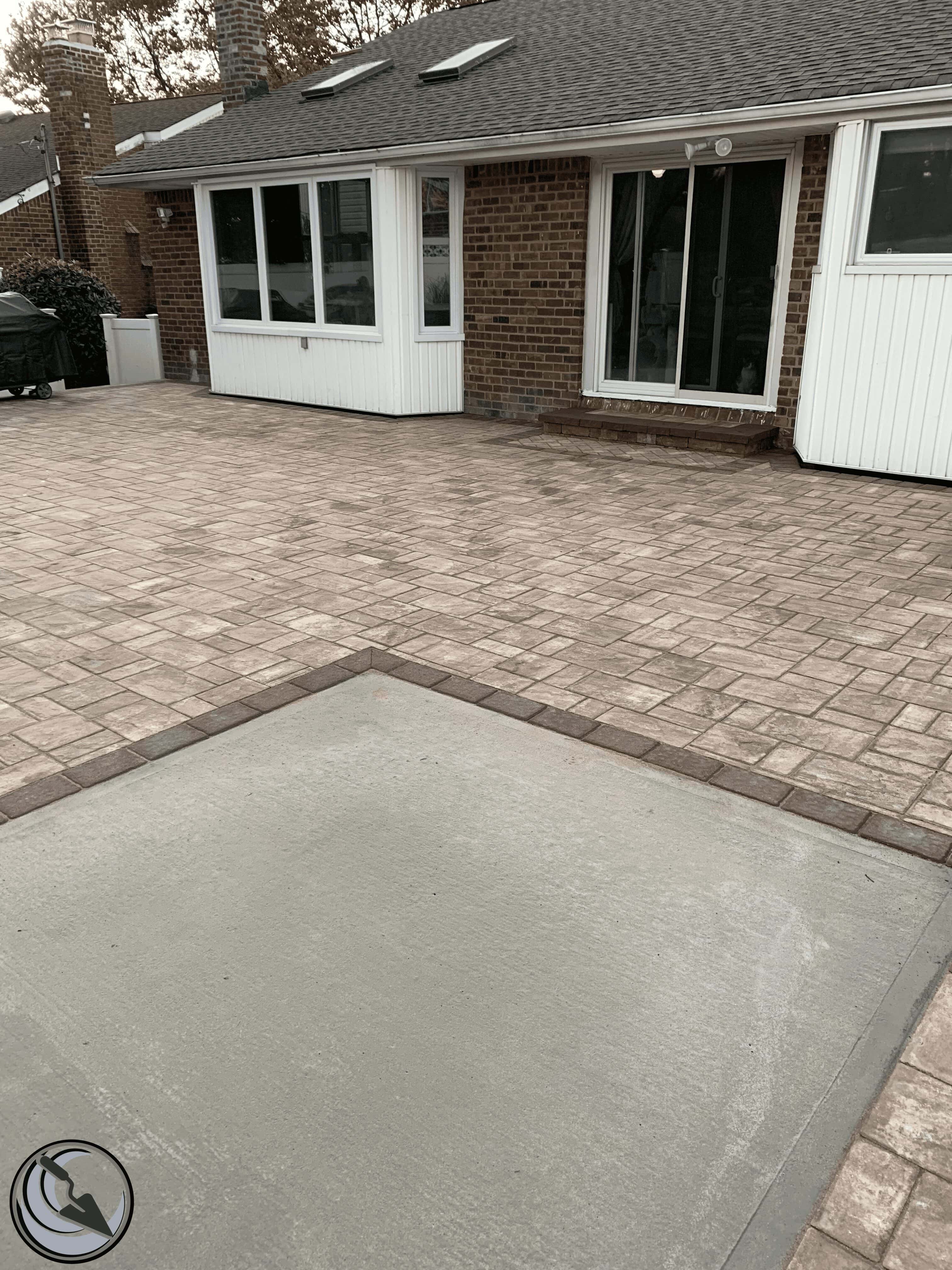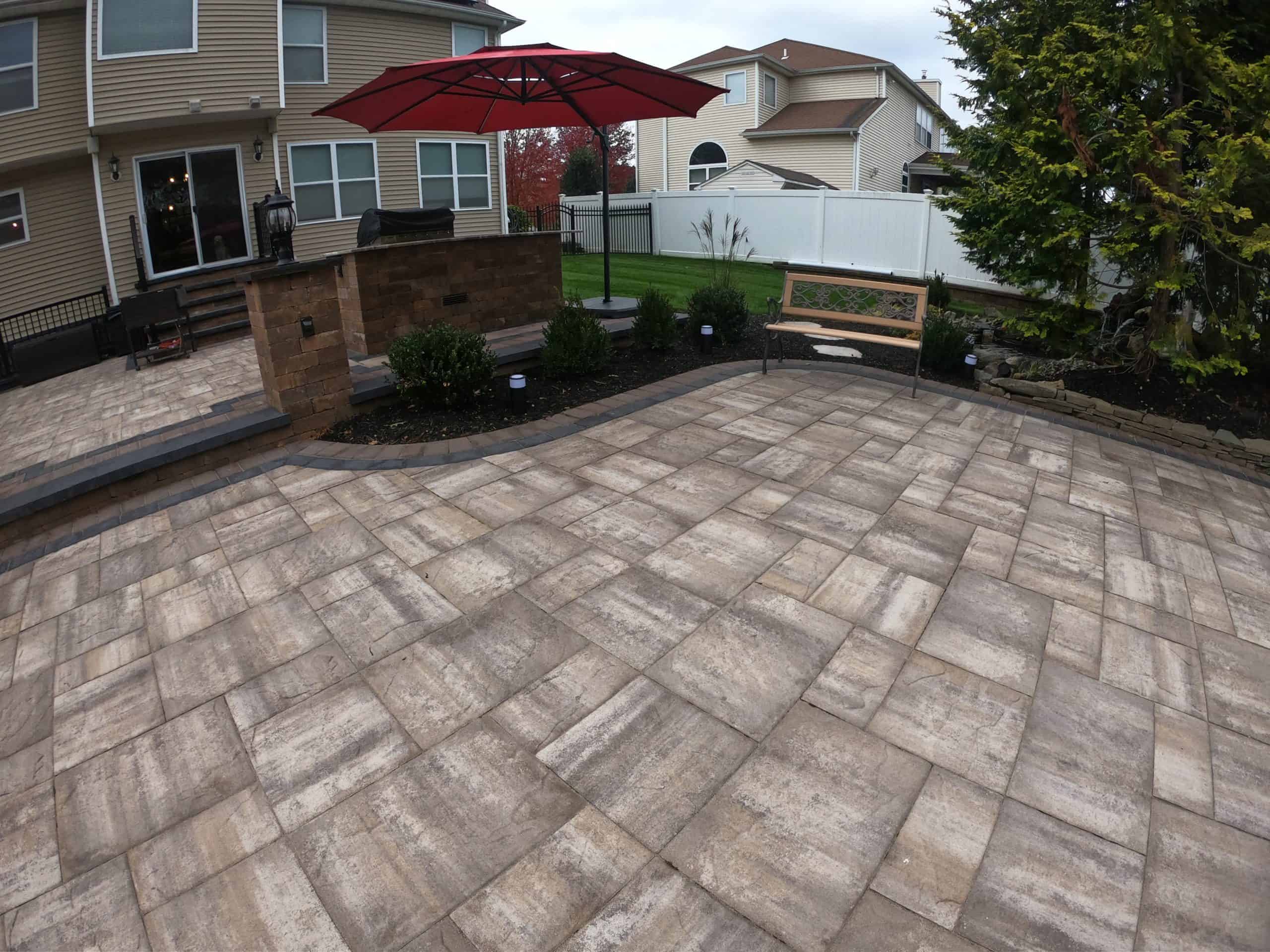
What does a paver patio really cost on Long Island — and what should you watch out for before hiring? Here's what you need to know.
Share:
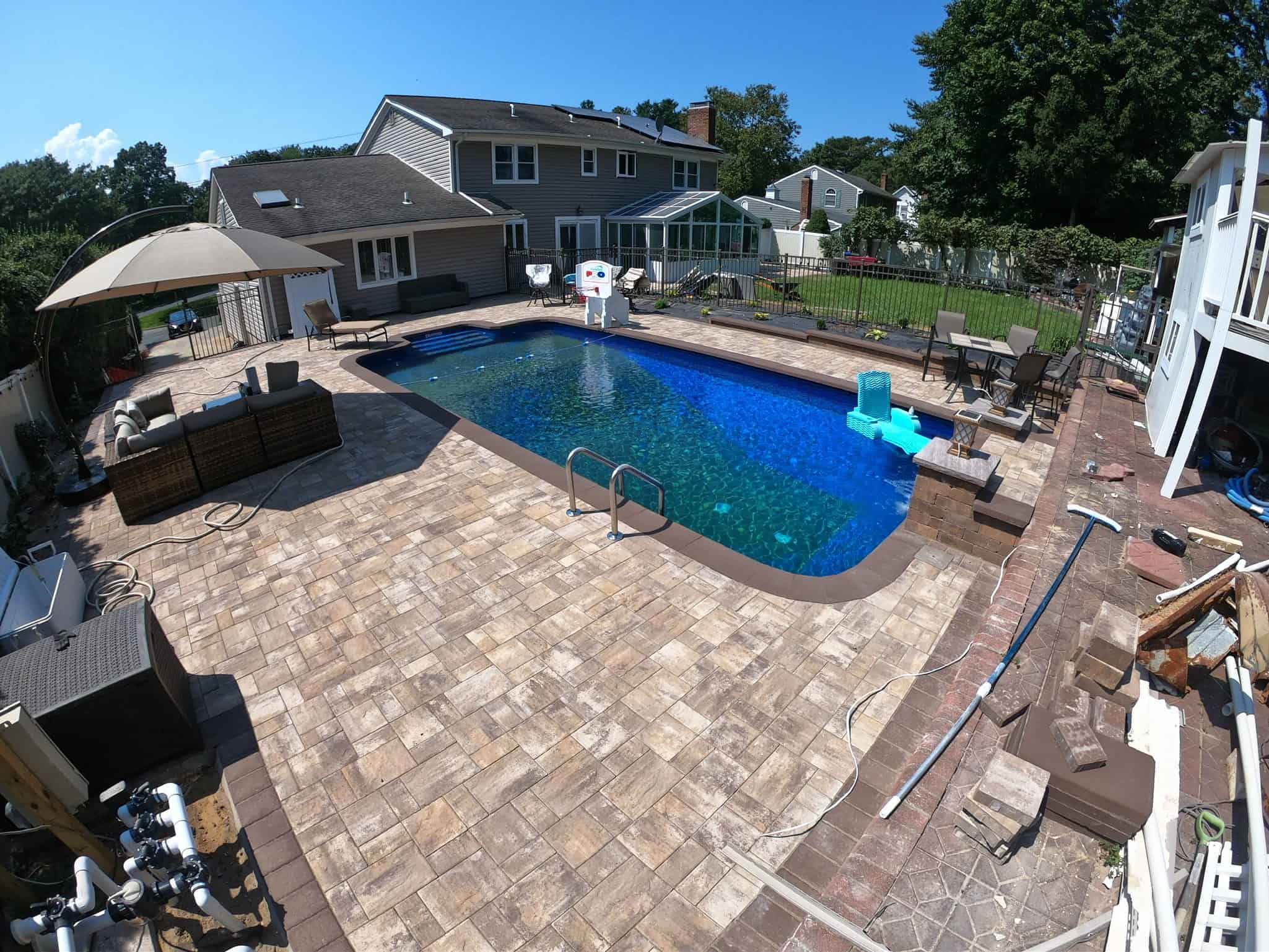
Summary:
If you’re looking into a paver patio for your backyard in Suffolk County, you’ve probably already run into the frustrating reality that national pricing guides don’t match what local contractors are actually quoting. You may have also noticed that quotes from different contractors vary by thousands of dollars for what sounds like the same job. That’s not an accident — and understanding why is the key to making a decision you won’t regret in a few years. This guide covers what paver patios actually cost on Long Island, what good installation looks like from the ground up, and what to ask before you sign anything.
The national average for paver patio installation gets thrown around a lot online, but those numbers reflect markets where labor and materials cost significantly less than they do here. On Long Island, a fully installed paver patio — excavation, base, pavers, edge restraints, polymeric sand, and cleanup — runs $20 to $35 per square foot. A 20×20 patio lands somewhere between $8,000 and $14,000 depending on the material you choose and the complexity of the layout.
What drives that range? Mostly the base. Contractors who quote at the lower end are often cutting corners underground — shallower excavation, thinner base material, skipping proper compaction. The surface looks identical on day one. The difference shows up when the pavers start to shift.
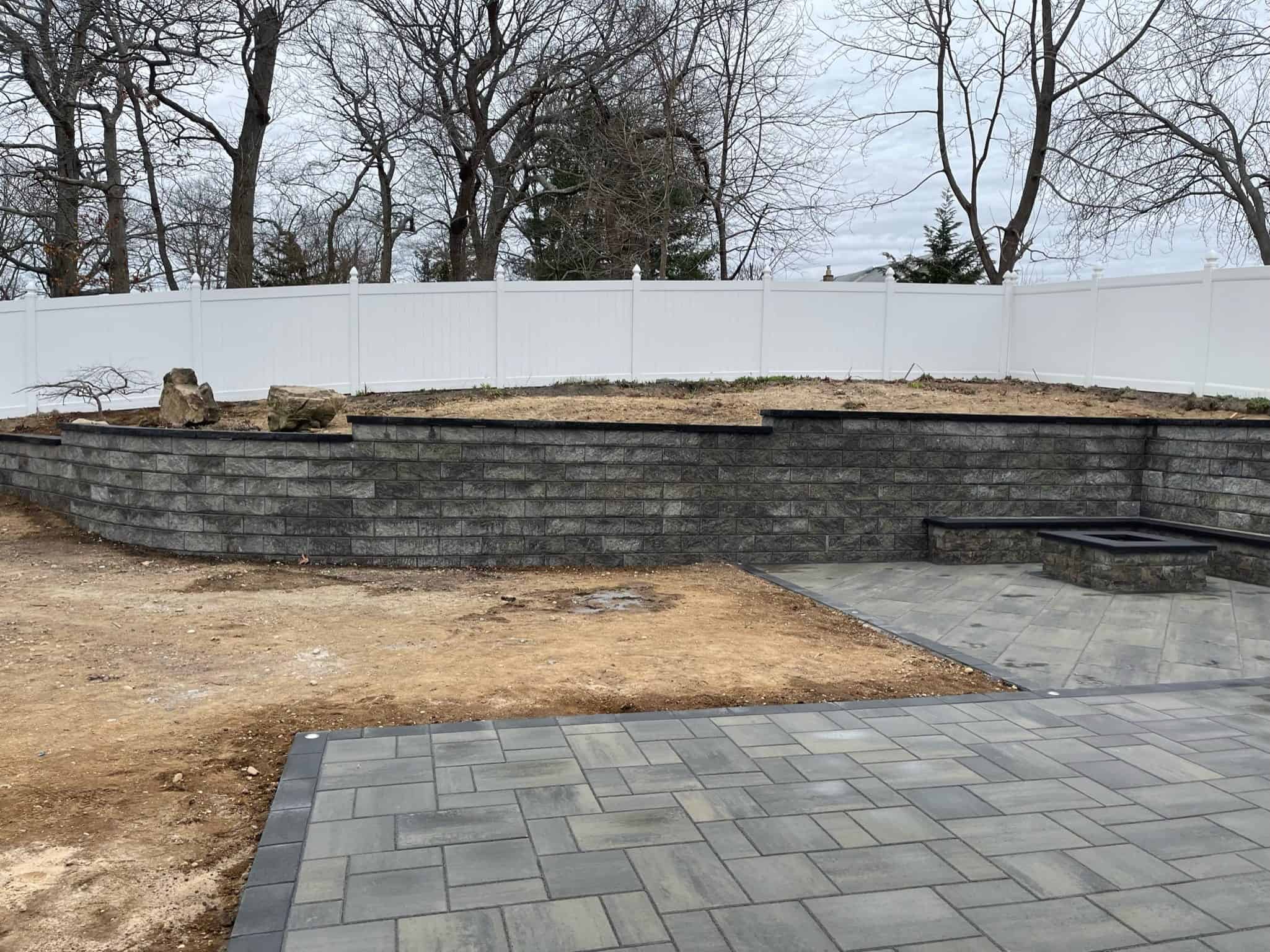
When you get a paver patio quote, a significant portion of that number is labor — and that’s not a bad thing. Labor is where quality lives. An experienced crew that excavates properly, compacts the base in lifts, installs edge restraints correctly, and takes the time to set pavers with consistent joint spacing is doing work that directly determines how long your patio holds up. A crew rushing through those steps to hit a lower price point is doing work that looks fine until it doesn’t.
On Long Island, labor costs reflect local market rates, but they also reflect something specific to this geography: the conditions here are harder on patios than most of the country. Suffolk County sits on sandy glacial soil — the result of the last ice age pushing sediment across the island. That soil drains well, but it’s also highly susceptible to shifting under load if it isn’t properly compacted. Add in the freeze-thaw cycles Long Island sees every winter — temperatures crossing 32°F repeatedly rather than holding at a steady deep freeze — and you have a combination that punishes shortcuts in a way that warmer or clay-soil markets simply don’t.
This is why the excavation depth matters so much here. Most contractors excavate to 6 inches. We excavate to 8 to 10 inches as a standard — not as an upsell. That extra depth allows for a thicker compacted base that can absorb the seasonal movement of Long Island’s sandy soil without transferring that movement to the surface. It’s not glamorous, but it’s the difference between a patio that holds for 30 years and one that needs attention in year four.
When you’re comparing quotes, ask each contractor how deep they excavate and how they compact the base. If they can’t answer specifically, that tells you something.
The visible part of a paver patio — the pattern, the color, the finished surface — is the last 10 percent of the job. Everything that determines whether that surface holds up happens underground, and most homeowners never see it. Understanding what proper paver base preparation looks like is the single most useful thing you can do before getting quotes.
Preparing a base for pavers starts with excavation. The soil is removed to the required depth — 8 to 10 inches in Long Island conditions — and the subgrade is graded to direct water away from the house and toward appropriate drainage paths. This grading step is often skipped or done carelessly by contractors trying to move fast, and it’s the reason some patios develop puddles or water intrusion problems that have nothing to do with the pavers themselves.
Once the subgrade is set, crushed stone is brought in and compacted in layers — not dumped all at once. Each lift is compacted separately with a plate compactor before the next layer goes down. This lift-by-lift process is what creates a truly stable base; compacting a thick layer all at once leaves the bottom portion loose. On top of the compacted stone goes a thin bedding layer of coarse sand or stone dust, screeded level, which gives the pavers a precise, consistent surface to sit on.
Edge restraints go in before the pavers are laid — plastic or metal edging spiked into the base along the perimeter. This is the component that prevents pavers from migrating outward over time, which is one of the most common failure modes in installations where it’s skipped or done poorly. After the pavers are set and the pattern is complete, polymeric sand is swept into the joints and activated with water. This locks the pavers together, resists weed growth, and helps the surface move as a unified structure rather than as individual loose pieces.
Every one of these steps matters. Skipping or shortcutting any of them creates a specific, predictable failure mode — and in Long Island’s freeze-thaw conditions, those failures tend to arrive faster than homeowners expect.
Once you understand what goes into a properly built patio, the next decision is what it looks like. Material selection for paver patios in Suffolk County involves more than aesthetics — Long Island’s coastal moisture, salt air on the south shore and East End, and seasonal temperature swings all affect how different materials perform over time.
The good news is that modern concrete pavers from manufacturers like Cambridge, Techo-Bloc, Unilock, and Nicolock are engineered specifically for climates like ours. These aren’t generic products — they’re rated for freeze-thaw cycles and, in many cases, coastal conditions. Choosing a manufacturer-certified installer matters here because certified installers understand which products are appropriate for specific conditions and how to install them in ways that keep the manufacturer’s warranty intact.

The comparison between pavers, poured concrete, and traditional brick comes up in almost every backyard design conversation, and the answer isn’t as straightforward as cost per square foot. Poured concrete typically costs less upfront, but it cracks — and when it cracks, repair is expensive, often requiring full section replacement. Pavers, by contrast, can be removed and reset individually without disturbing the surrounding surface. Over a 20-year horizon, the maintenance math often favors pavers even when the installation cost is higher.
Brick patios have a classic look that works well in older Suffolk County neighborhoods — think the historic streetscapes of Smithtown or the colonial-style homes common through Huntington and Islip. Natural brick is durable but heavier and more expensive to install than concrete pavers, and the color variation in natural brick is harder to control. Manufactured pavers give you more consistency in both color and dimension, which makes pattern work cleaner and installation more precise.
The cost of stone patio materials — meaning natural bluestone, flagstone, or similar — sits at the higher end of the range. Natural stone has a look that’s hard to replicate, and it performs well in Long Island’s climate, but the material cost is significantly higher and the installation requires more skill to execute properly. For poolscapes in East Hampton or Southampton, where design expectations are higher, natural stone or premium concrete pavers from Techo-Bloc or Cambridge are common choices. For a functional backyard patio in West Islip or St. James, mid-range concrete pavers deliver excellent results at a more accessible price point.
The right material for your project depends on your budget, your design goals, and the specific conditions of your property. That’s a conversation worth having before you commit to anything — and it’s why we do every estimate in person, on your property, rather than over the phone.
This is the part most guides skip, and it’s probably the most important section on this page. Long Island has no shortage of contractors who will give you a competitive quote, show up looking professional, and then send a crew you’ve never met to do the actual work. It’s one of the most common complaints homeowners in Suffolk County have about the contracting industry, and it’s a legitimate frustration. The person you trust with your project shouldn’t disappear after you sign.
Start by verifying licensing. In Suffolk County, home improvement contractors are required to hold a valid county license — you can ask for the number and verify it directly. If a contractor is doing work in Southampton or East Hampton, they need township-specific licenses on top of the county license. Those townships have stricter permitting requirements, and hiring an unlicensed contractor there creates real legal and financial risk. Our licenses are public record: Suffolk County #HI-62761, Nassau County #167041, Southampton #L005914, and East Hampton #9808.
Ask about manufacturer certifications. Certifications from Cambridge, Techo-Bloc, Unilock, and Nicolock aren’t just logos on a website — they mean the installer has been trained on the specific technical requirements of those products and can install them in ways that keep the manufacturer’s warranty valid. If a contractor claims to install Techo-Bloc but isn’t certified, you have no warranty coverage if something goes wrong with the material.
Ask who will actually be on your job site. Will the owner be present? Will it be the same crew from start to finish, or will the work be handed off to subcontractors? These aren’t trick questions — they’re reasonable things to know before you write a check. At Stone Escapes Masonry & Outdoor Design Inc, Iain Traynor handles every estimate personally and stays present on every job site. The crew that starts your project is the crew that finishes it. There are no handoffs to project managers, no client portals, no automated status updates. You deal directly with the person making decisions from day one.
Finally, ask about the base preparation process specifically — excavation depth, how the base is compacted, whether edge restraints are included. A contractor who can answer those questions in plain, specific terms is a contractor who actually knows what they’re doing. One who gives you a vague answer about “quality materials” and “years of experience” probably isn’t thinking about the parts of the job you’ll never see.
A paver patio is a real investment — in your property, your outdoor space, and how you use your backyard for the next few decades. Getting it right means understanding what’s happening below the surface, not just what it looks like when it’s done. It means hiring a contractor who will be present and accountable throughout, not just at the estimate.
If you’re in Suffolk County — whether you’re in Smithtown, East Islip, Westhampton, East Hampton, or anywhere in between — the conditions here are specific enough that who installs your patio matters as much as what they install. Sandy soil, freeze-thaw cycles, and coastal moisture aren’t abstract concerns. They’re the reason some patios last 30 years and others need repair in three.
When you’re ready to get a real answer on what your project will cost and what it will take to do it right, reach out to Stone Escapes Masonry & Outdoor Design Inc. Every estimate is done in person, by the owner, at no cost to you.
Article details:
Share:
Continue learning: