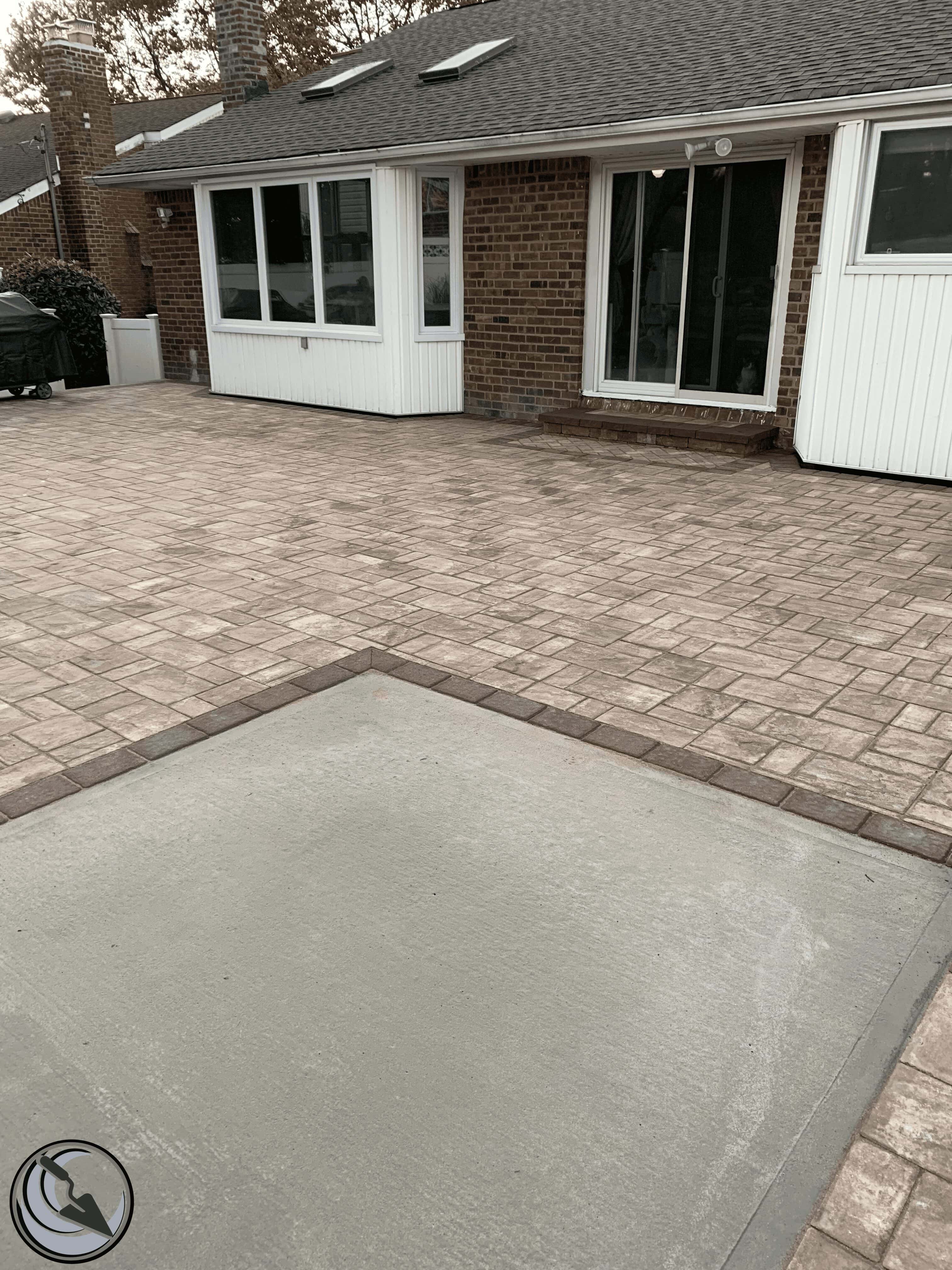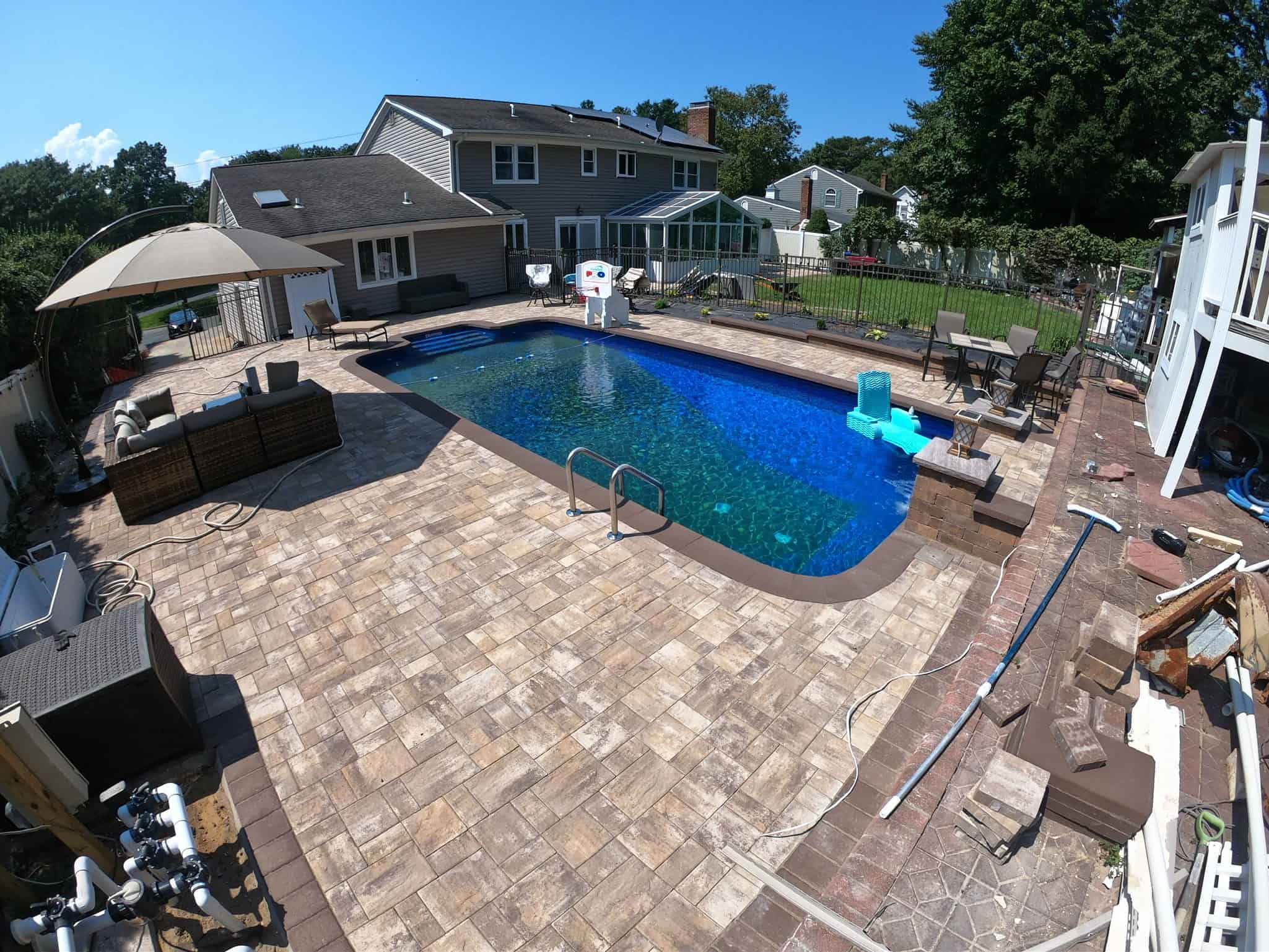
Not all masonry contractors operate the same way. Here's what actually separates an owner-operated shop from a large company — and why it matters on Long Island.
Share:
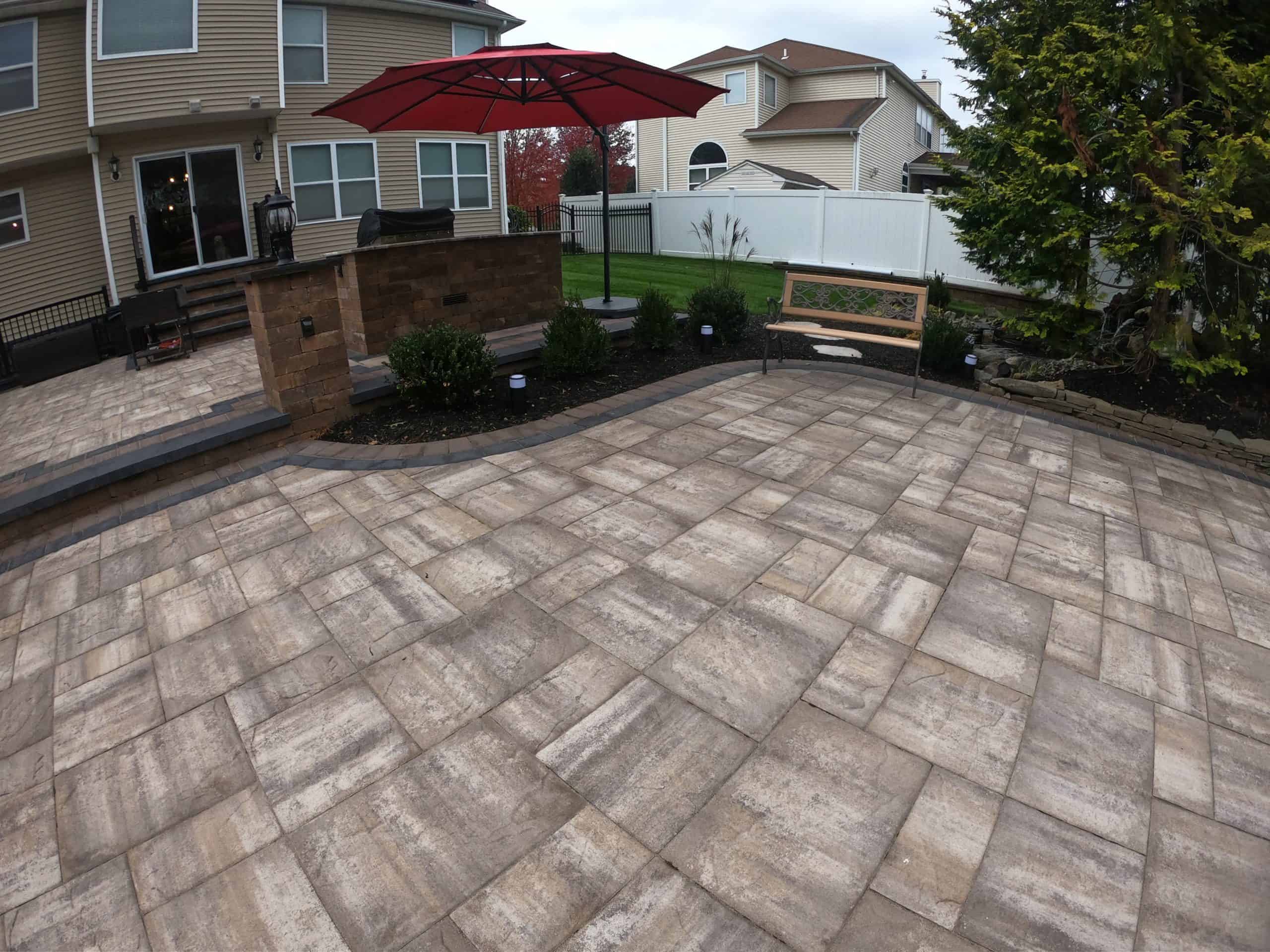
Summary:
You’ve probably typed “masonry contractor near me” into Google, scrolled through a few websites, and ended up more confused than when you started. They all look professional. They all say the right things. And the bids come back wildly different with no clear explanation for why.
Here’s the thing — the gap between a good masonry experience and a frustrating one usually comes down to one question: who is actually running the job? Not who sold you on it. Who’s on your property every day, making decisions, managing the crew, and standing behind the work. That’s what this page is about.
The difference isn’t always obvious from a website. Both types of contractors can have nice photos, strong reviews, and a professional pitch. But the way they operate day-to-day is often completely different — and those differences tend to show up right when you need them most.
With a large company, the owner or sales rep who impresses you during the estimate is rarely the person running your job. Work gets handed off to a project manager, who may hand it off further to subcontractors. That’s not always a disaster, but it creates distance between the person who made promises and the people responsible for keeping them.
We work differently. When the owner is present at every estimate and every job site, there’s no hand-off. The person who looked at your yard, understood what you wanted, and gave you a number is the same person showing up to make sure it gets done right.
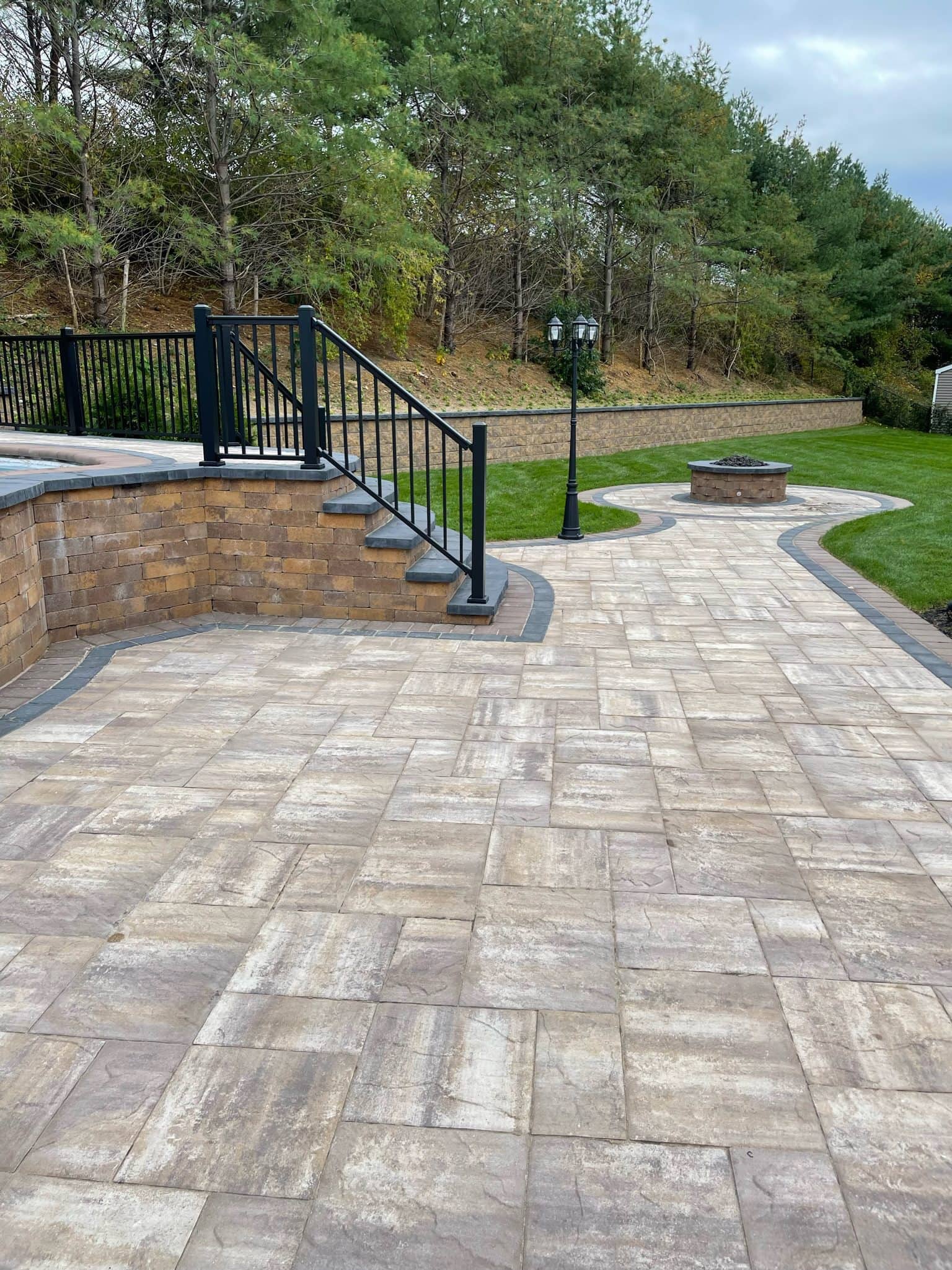
This is one of the most common complaints homeowners have after a bad contractor experience. The estimate goes well — the contractor is knowledgeable, communicates clearly, and seems to really understand the project. Then a crew shows up that you’ve never met, with no one from the original conversation in sight. You have questions. You’re not sure who to ask. Things start moving in a direction that doesn’t match what you discussed.
It’s not always malicious. Large masonry operations scale by delegating. The owner or sales team handles the front end, and crews handle the back end. But when those two sides aren’t tightly connected, details fall through. The drainage plan that was discussed doesn’t get communicated to the crew. The specific paver pattern you agreed on gets swapped for something easier. The timeline slips because no one with authority is on-site to keep things moving.
For Suffolk County homeowners, this matters more than it might elsewhere. Long Island’s soil conditions — the sandy, glacially deposited ground that runs across much of Suffolk County — require precise base preparation. Proper excavation to 8–10 inches, the right base layering, drainage planning that accounts for the water table and coastal rainfall patterns — these aren’t things you can cut corners on and hope nobody notices.
If they’re not done correctly underground, you won’t see the problem until after the first hard winter. By then, the crew that did the work may be long gone.
At Stone Escapes Masonry & Outdoor Design Inc, our owner Iain Traynor is personally on every estimate and every job site. That’s not a marketing line — it’s how we’re structured. There’s no sales team, no project manager layer, no subcontractor rotation. The same crew works each project from start to finish, with direct oversight throughout. If you have a question on day three, you’re calling the same person who walked your property on day one.
That kind of continuity is rarer than it should be. And for a project that’s going into the ground and staying there for decades, it’s worth knowing who’s accountable before you sign anything.
Almost every contractor you call will tell you they’re licensed and insured. That phrase has become so common it’s nearly meaningless on its own. What actually matters is which licenses they hold and whether those licenses cover the specific municipality where your project is located.
In New York, masonry and home improvement work requires licensing at multiple levels. Suffolk County has its own Home Improvement Contractor License, administered by the Suffolk County Department of Labor, Licensing and Consumer Affairs. Nassau County has a separate one. And if your property is in Southampton or East Hampton, those townships require their own licensing on top of the county-level credentials — a step that many contractors quietly skip.
This isn’t a technicality. An unlicensed contractor can’t legally pull permits in those jurisdictions. If something goes wrong — a structural issue, a drainage failure, a property damage claim — you may find yourself in a difficult position if the contractor wasn’t properly licensed to do the work in the first place.
We hold all four: Suffolk County (#HI-62761), Nassau County (#167041), Southampton (#L005914), and East Hampton (#9808). Those are public records. You can look them up. When you’re comparing contractors — and you should be comparing at least two or three — asking for specific license numbers by jurisdiction is one of the fastest ways to separate legitimate operators from those who are cutting corners on compliance.
Beyond licensing, manufacturer certifications matter too. Being a certified installer for Cambridge, Techo-Bloc, Unilock, or Nicolock isn’t just a logo on a website. These programs require demonstrated technique and ongoing training. They also unlock manufacturer warranty coverage for the homeowner — meaning if a product fails due to a material defect, you have a path to recourse that doesn’t exist with a non-certified installer.
That’s a real financial protection, not just a badge.
“Best” is a word every contractor uses about themselves. It’s not useful on its own. What is useful is knowing what specific factors actually predict a good outcome — and then asking direct questions to see which contractors can back up their claims with evidence.
The contractors who tend to deliver the best results across Suffolk County share a few things in common: they understand Long Island’s specific conditions, they can tell you exactly how they prepare a site and why, and they can point to verifiable credentials rather than just repeating “quality workmanship” until you stop asking questions.
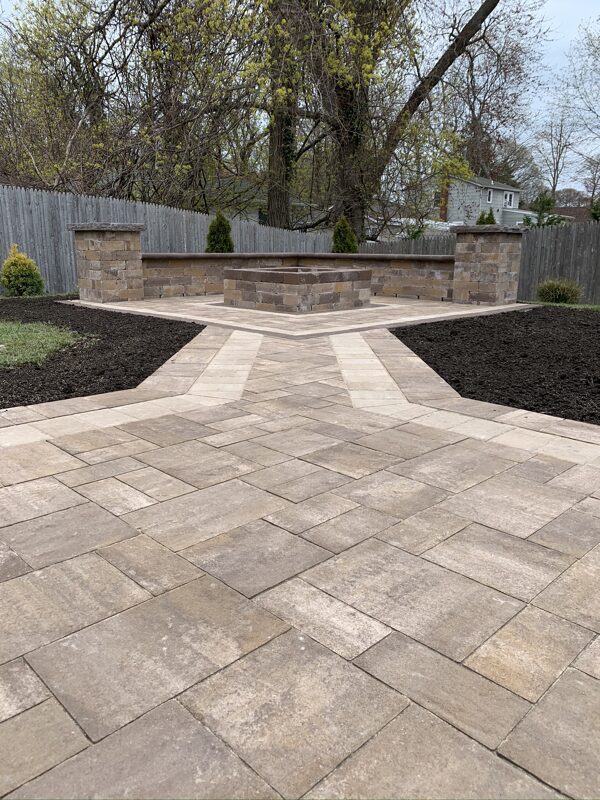
This is one of the most important technical questions you can ask a contractor — and one of the clearest ways to tell whether they actually know what they’re doing in Suffolk County.
Long Island’s soil is largely sandy and loamy, a result of the glacial deposits that formed the Ronkonkoma and Harbor Hill moraines running across Suffolk County. Sandy soil drains well, but it shifts. Without a deep, properly compacted base, pavers settle unevenly, retaining walls bow, and driveways develop cracks that get worse every winter.
The freeze-thaw cycles that hit Long Island from November through March accelerate that process significantly. Water gets into small gaps, freezes, expands, and widens those gaps. A shallow installation that looks fine in October can look noticeably wrong by April.
The standard for quality masonry installation on Long Island is excavation to 8–10 inches, followed by proper base layering — typically compacted gravel — and edge restraints to prevent lateral movement of the pavers over time. Drainage planning happens during the design phase, not as an afterthought. If a contractor can’t explain their excavation depth or their drainage approach without hesitation, that’s a meaningful signal.
A low bid almost always means something is being cut. The labor cost difference between a 4-inch excavation and a 10-inch excavation is a few hours of work. The cost difference to the homeowner — in repairs, in replacement, in frustration — can be thousands of dollars spread over the next several years. That’s the math behind why the cheapest bid often becomes the most expensive decision.
We design every project with Long Island’s specific conditions in mind. That means the right excavation depth, the right drainage solution for your property’s water table and grade, and material selection that handles salt air exposure for properties near the South or North Shore. These aren’t upgrades — they’re the baseline for work that actually lasts.
One of the most consistent fears homeowners express when hiring a masonry contractor is simple: what happens if something goes wrong after the job is done? Will they answer the phone? Will they come back? Or will the company that was easy to reach before the deposit become suddenly unavailable once the final payment clears?
This is a legitimate concern, and it’s worth evaluating directly rather than hoping for the best. A few things to look at: How long has the business been operating under the same name and ownership? Do they have a physical address, not just a phone number? Are there reviews from customers who came back to leave a second review months or years later — not just a wave of five-star posts from the week the job finished?
Unprompted, multi-year reviews are one of the strongest signals of a contractor who delivers lasting results. When someone returns to a platform a year or two after their project to say the work still looks great and the neighbors keep asking about it, that’s a different kind of endorsement than a review written the day the crew packed up.
Stone Escapes Masonry & Outdoor Design Inc has been BBB A+ accredited since June 2020 — maintained continuously since our first full year of operation. We hold certifications from six manufacturers: Cambridge, Techo-Bloc, Unilock, Nicolock, Eldorado, and Boral. In our first year of business, we were featured in Cambridge Pavingstone’s magazine — a recognition that doesn’t come from volume alone.
We also offer an installation warranty, and financing is available for homeowners who want to move forward on a project without waiting. Estimates are done in person, scheduled directly with Iain — not through a booking portal or a call center. You talk to the person doing the work from the first conversation to the last.
For homeowners across Suffolk County — whether you’re in Huntington, Babylon, Brookhaven, or out in Southampton or East Hampton — that kind of direct accountability is what separates a contractor you’ll recommend to your neighbors from one you’ll warn them about.
The decision comes down to this: who is actually responsible for your project, and can they prove it with something more than a tagline? Ask for license numbers by jurisdiction. Ask how deep they excavate and why. Ask who will be on your property every day and whether that person is the same one who gave you the estimate.
The answers will tell you more than any website will. A contractor who can speak specifically to Long Island’s soil conditions, drainage challenges, and freeze-thaw cycles — and who can point to verifiable credentials rather than generic claims — is a contractor who has actually done this work here, not just somewhere.
If you’re ready to talk through a project in Suffolk County, Stone Escapes Masonry & Outdoor Design Inc offers free on-site estimates scheduled directly with the owner. No sales team, no runaround — just a straightforward conversation about what you want and what it actually takes to build it right.
Article details:
Share:
Continue learning: