What does a driveway project involve in Wainscott? From base prep to material selection, here is what to know before calling anyone.
Share:
Summary:
If you own property in Wainscott, you already know this isn’t a typical Long Island neighborhood. The homes are high-value, the standards are high, and a driveway that looks tired or drains poorly stands out in the wrong way. But beyond aesthetics, there’s a more practical problem: most driveway contractors aren’t set up to work in East Hampton Township at all, and the ones who are don’t always understand what coastal South Fork conditions demand from an installation.
We’ve built Stone Escapes Masonry & Outdoor Design around these realities. This guide covers what the process should look like, what it costs, and how to know if the contractor you’re considering is the right fit for a property like yours.
A lot of homeowners assume driveway paving is pretty straightforward. They think you just rip out the old surface and put down a new one. In most of the country, that’s close enough. In Wainscott, it’s not.
The combination of sandy glacial soil, Atlantic-facing salt air exposure, and Long Island’s relentless freeze-thaw cycling means that what goes underneath the surface matters as much as what goes on top of it. A driveway installed without accounting for those conditions might look fine for a season. By the second or third winter, you’re looking at heaving, cracking, and drainage problems that could have been avoided entirely with proper prep from the start.
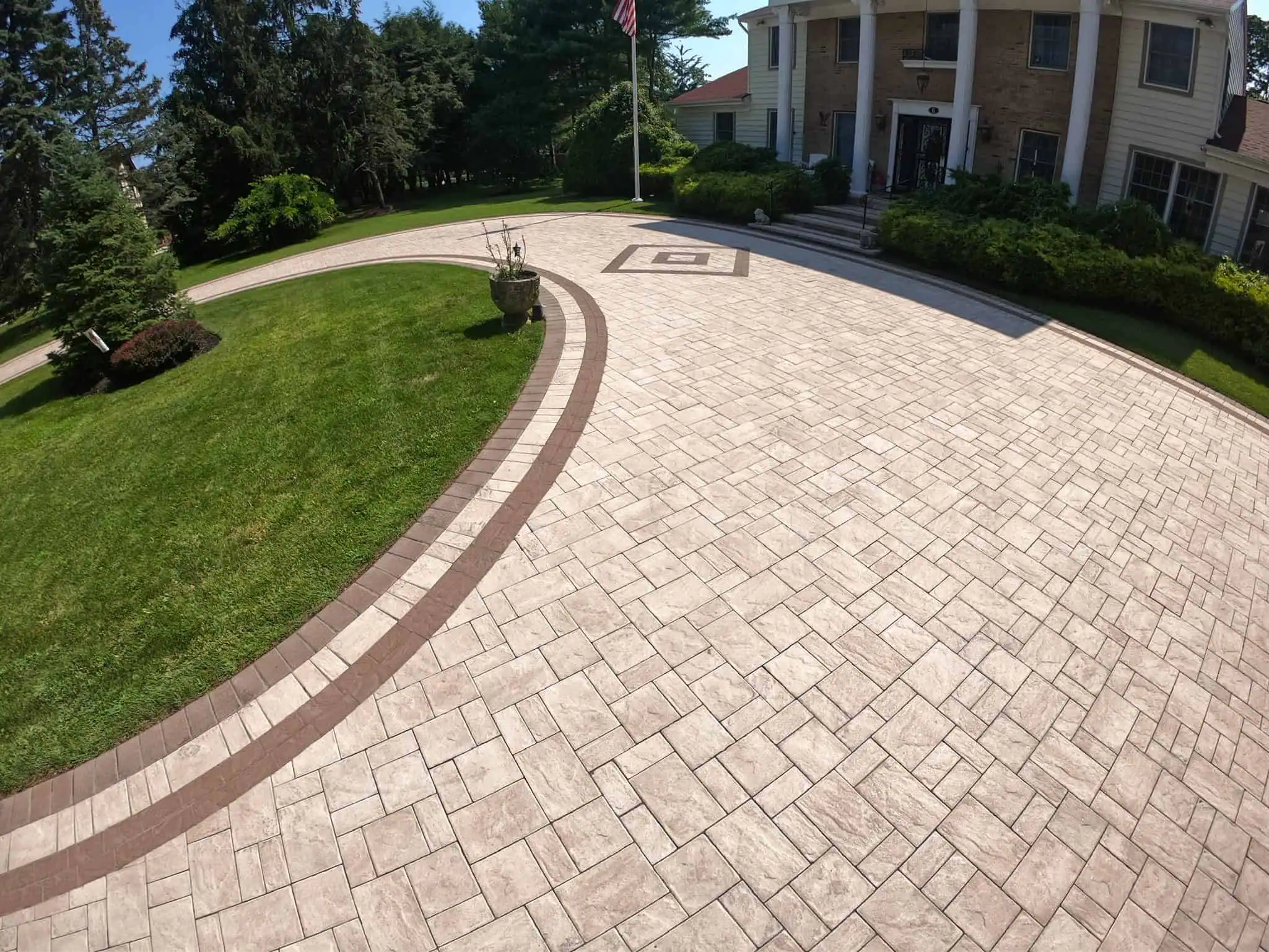
The base is where most driveway failures start. It is not the surface material, not the pattern, and not the finish. The base.
Long Island’s soil is predominantly sandy glacial material. It drains reasonably well near the surface but behaves unpredictably below grade, especially in coastal communities like Wainscott where the water table runs closer to the surface than it does further inland. That instability is why we excavate to 8 to 10 inches on every project, which is deeper than what a lot of contractors will quote you, and deeper than what’s strictly required in other parts of the country. But in Suffolk County’s coastal zones, it’s not optional. It’s what separates a driveway that lasts from one that doesn’t.
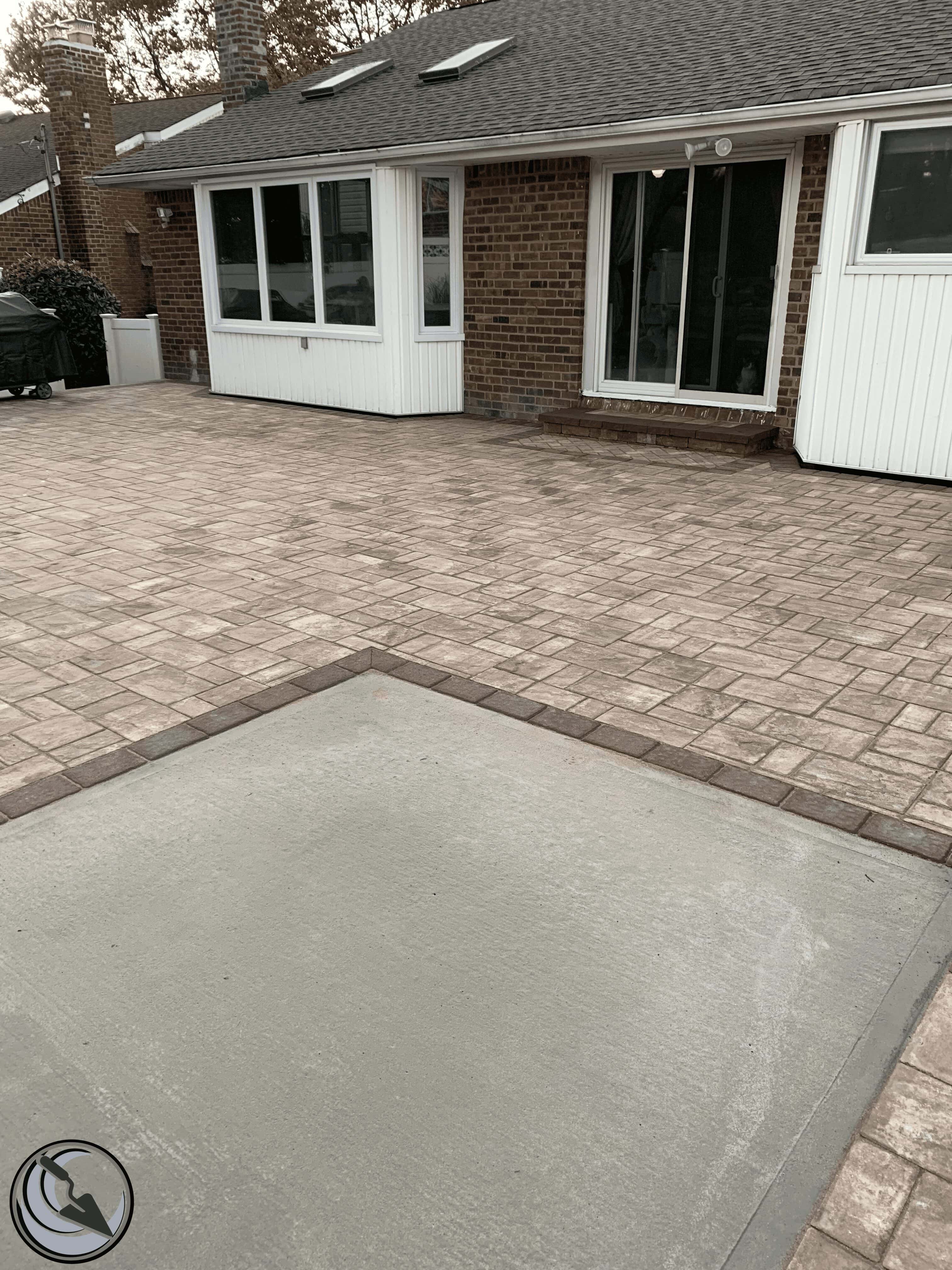
After excavation, the base layers go in: compacted crushed stone, a sand setting bed, and then the surface material on top. Each layer serves a purpose. The crushed stone distributes load and resists movement. The sand bed allows for minor flex without cracking. The edge restraints, which a surprising number of contractors skip or undersize, keep the entire surface from spreading laterally over time. Skip any of these steps and you’re just delaying the inevitable.
Drainage planning happens before any of this, not after. Wainscott’s proximity to the water and the South Shore’s generally high water table mean that runoff and subsurface water need somewhere to go. If the grade isn’t right, or if catch basins aren’t part of the plan where they’re needed, water ends up pooling near foundations or backing up toward the garage. We assess drainage as part of every estimate, rather than waiting to treat it as an add-on conversation after the contract is signed.
This is also why the question “how deep do you excavate, and why?” is one of the most useful things you can ask any contractor before hiring them. A contractor who can answer it specifically and explain the reasoning is demonstrating that they understand the environment they’re working in. A vague answer, or no answer at all, tells you something important.
This is one of the questions we hear most often, and the honest answer is that it depends on what you’re optimizing for. However, in this market, the calculus tends to point in one direction.
Asphalt is less expensive upfront. In Suffolk County, asphalt driveway paving typically runs $5 to $8 per square foot installed. It’s a functional surface and it handles traffic well. The tradeoff is that asphalt requires resurfacing every 15 to 20 years, it doesn’t offer much design flexibility, and in a community like Wainscott, where the driveway is part of the first impression a property makes, it rarely matches the look of the home.
Paver driveways cost more to install. In Suffolk County, professionally installed paver driveways run $25 to $45 per square foot, with a standard two-car driveway landing somewhere between $10,000 and $27,000 depending on material, size, and site conditions. But the long-term math is different. Stone pavers are rated to last 50 years or more, and if a paver cracks or gets damaged, you replace that unit instead of the entire surface. That’s a meaningful advantage over asphalt, which requires full resurfacing when it fails, and over poured concrete, which cracks under freeze-thaw cycling and can’t be repaired invisibly.
Stamped concrete comes up occasionally, and it is worth addressing directly. It is not a good fit for Long Island’s climate. The freeze-thaw cycles that characterize Suffolk County winters are exactly what stamped concrete struggles with most. It looks appealing in a showroom and fails faster than most homeowners expect once it’s exposed to a few hard winters. We don’t recommend it for driveways in this area.
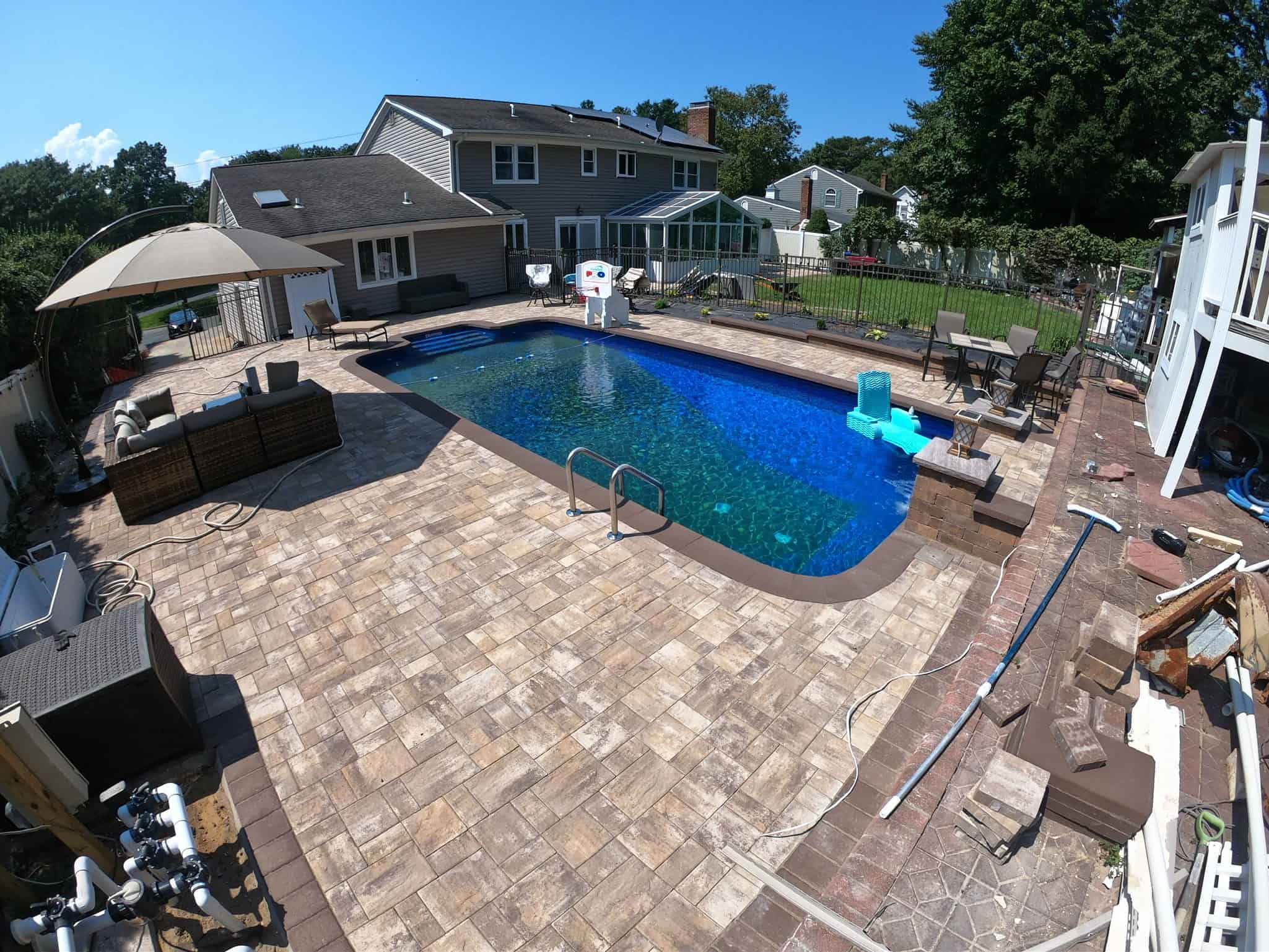
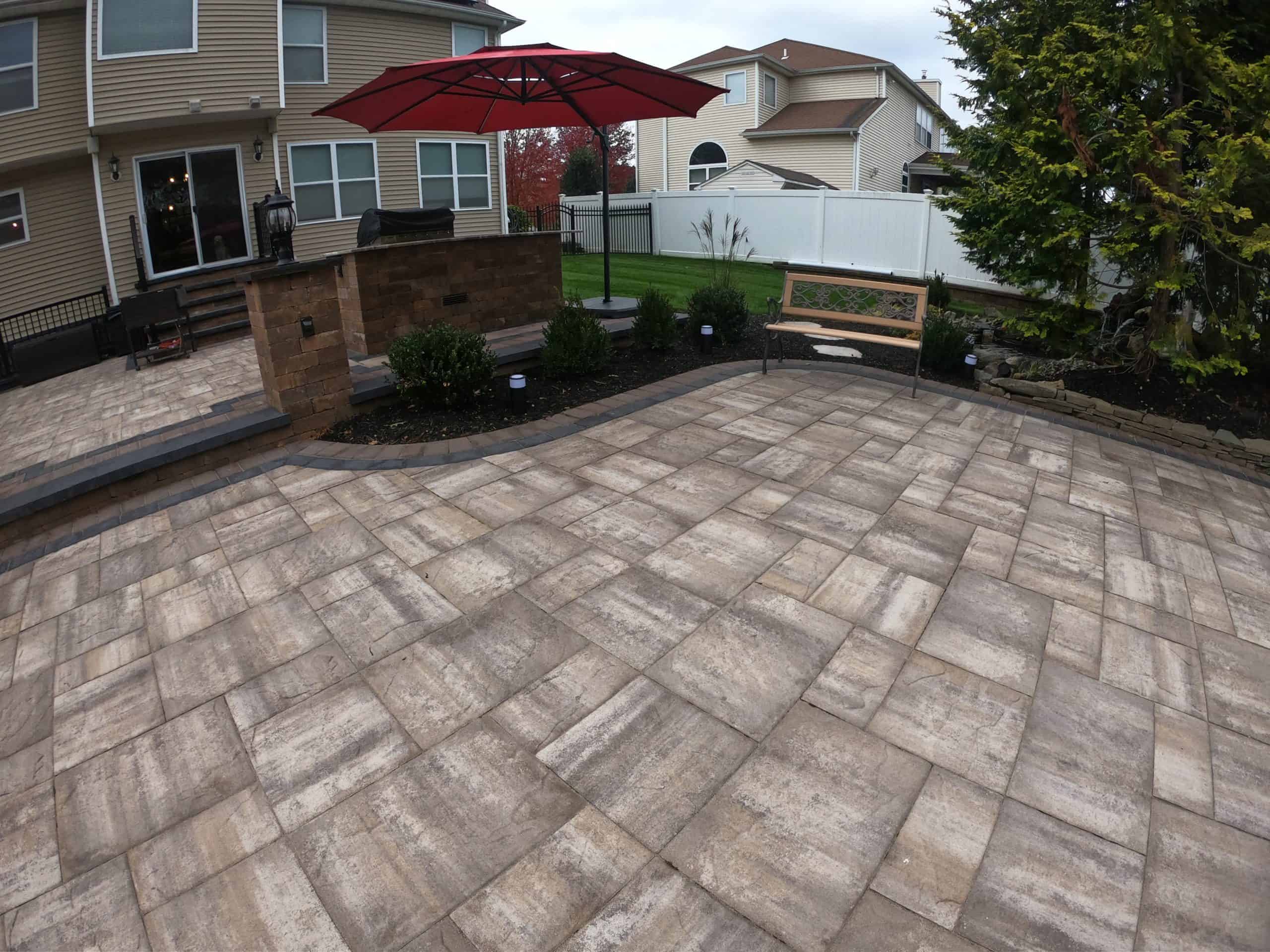
For Wainscott properties specifically, paver driveways also offer something asphalt and concrete don’t: design cohesion. If you’re working on a poolscape, a patio, or an outdoor kitchen alongside the driveway, pavers allow you to carry a consistent material and color palette across the entire property. That matters in a market where the outdoor living space is as much a part of the home’s value as the interior.
This is where a lot of homeowners run into a problem they didn’t see coming. Suffolk County licensing and East Hampton Township licensing are not the same thing. A contractor can be fully licensed at the county level and still not be authorized to work in Wainscott, which falls within the Town of East Hampton. Many contractors who advertise throughout the Hamptons area haven’t cleared the township-level authorization, and most homeowners don’t know to ask.
We’re licensed in Suffolk County, Nassau County, Southampton Township, and East Hampton Township. That last one is what makes us eligible to work on properties in Wainscott specifically, and it’s worth verifying with any contractor you’re considering before you go any further in the conversation.
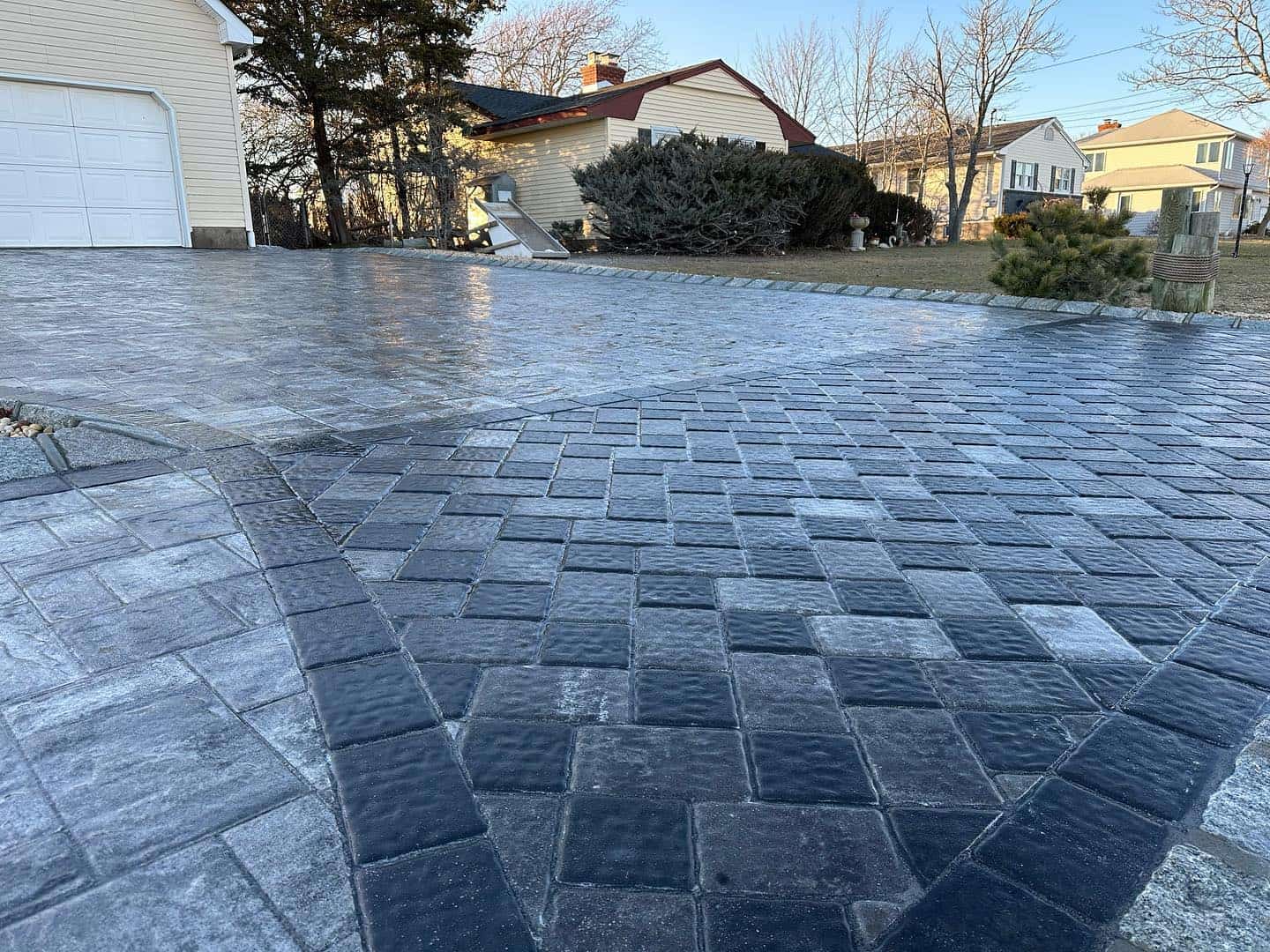
The estimate appointment is your best opportunity to evaluate a contractor, observing not just the price they give you, but how they think and communicate.
Start with licensing. Ask if they are licensed in East Hampton Township specifically, not just Suffolk County. Ask them to show you their certificate of insurance. Suffolk County requires a minimum of $500,000 in liability coverage for licensed home improvement contractors, and you want to confirm they carry it before anyone breaks ground on your property.
Then ask about the installation process. How deep do they excavate? What does the base consist of? How do they handle drainage before paving begins? These aren’t trick questions. They are the basics of a properly installed driveway in this environment. A contractor who has done this work correctly many times will answer without hesitation. One who hasn’t may get vague or redirect the conversation toward material options and design choices, which are easier to talk about than base prep.
Ask about manufacturer certifications. We hold certifications from Cambridge, Techo-Bloc, Unilock, Nicolock, Eldorado, and Boral. This matters because certified installation is what activates manufacturer warranties on the materials themselves. Without it, you’re relying entirely on the contractor’s word if something goes wrong. With it, you have two layers of coverage: our craftsmanship warranty and the manufacturer’s material warranty.
Finally, ask about crew consistency. Subcontracting mid-project is one of the most common sources of quality problems in this industry. The crew that starts your project should be the crew that finishes it. That’s how we operate. You get the same people from start to finish, with Iain Traynor directly involved in estimates, planning, and execution. For homeowners who aren’t on-site every day, which describes a lot of Wainscott property owners, that direct accountability matters more than almost anything else on the list.
A few questions come up consistently when we talk with homeowners in this area, and they are worth addressing directly.
Do I need a permit for a new driveway in Wainscott? The answer depends on the scope of the project and what’s being replaced, but East Hampton Township has its own permitting requirements that are separate from Suffolk County-level rules. We handle the permit process as part of our project planning. It is not something you should have to navigate on your own, and a contractor who leaves that entirely to you is leaving out a meaningful part of the service.
Why did my last driveway fail so quickly? In almost every case, the answer comes back to base preparation. Either the excavation wasn’t deep enough for Long Island’s soil conditions, drainage wasn’t addressed before paving began, or edge restraints weren’t installed properly, and the surface eventually paid the price. A driveway that looks fine at installation can hide base problems for a year or two before they show up as cracking, heaving, or pooling water. By then, the contractor is long gone and the repair cost falls to you.
Can you do the driveway and the rest of the outdoor space at the same time? Yes, and in many cases, doing it together produces a better result. When a driveway, patio, poolscape, and fire feature are all designed and installed as a single project, the materials coordinate, the grades work together, and the drainage plan covers the whole property rather than each surface in isolation. We work across all of these areas, which is part of what makes us a different kind of contractor for Wainscott properties than a company that only paves driveways.
The short version of everything above is that driveway paving in Wainscott requires a contractor who understands the local environment, holds the right licensing for East Hampton Township, and doesn’t cut corners on the base work that determines how long the surface lasts.
Price matters, but it’s rarely the right place to start the conversation. A low quote that skips excavation depth, drainage planning, or proper edge restraints will cost you more in the long run than a thorough installation done correctly the first time.
If you’re planning a driveway project in Wainscott as a standalone replacement or as part of a larger outdoor renovation, Stone Escapes Masonry & Outdoor Design is worth a conversation. Estimates are done in person, and you’ll be talking directly with the person responsible for the work from start to finish. Reach out to us today to schedule your on-site estimate and get your driveway project started the right way.
Article details:
Share:
Continue learning: