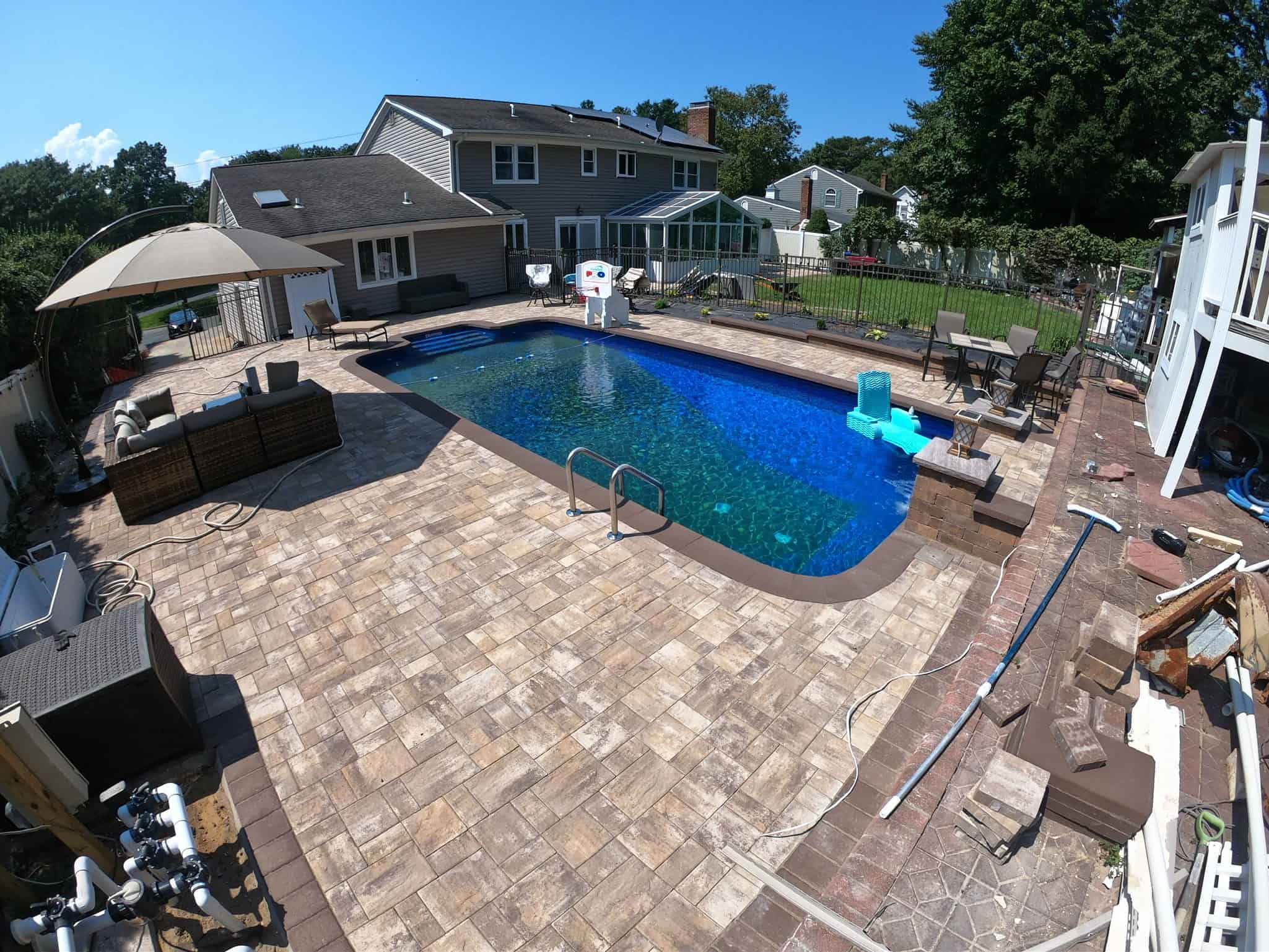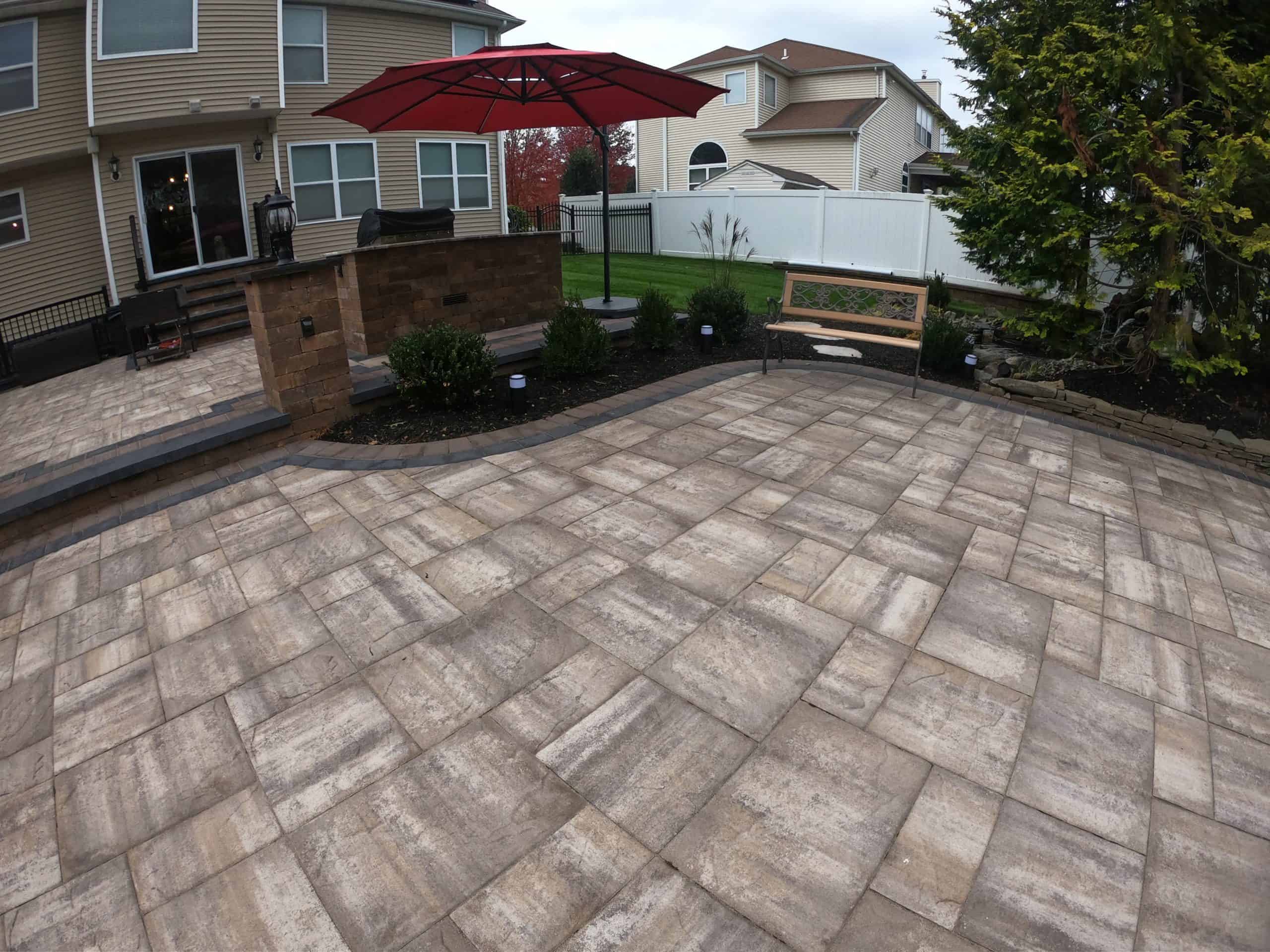
Two estimates, thousands of dollars apart, and they both say the same thing. Here's what's actually different — and why it matters more than you'd think.
Share:
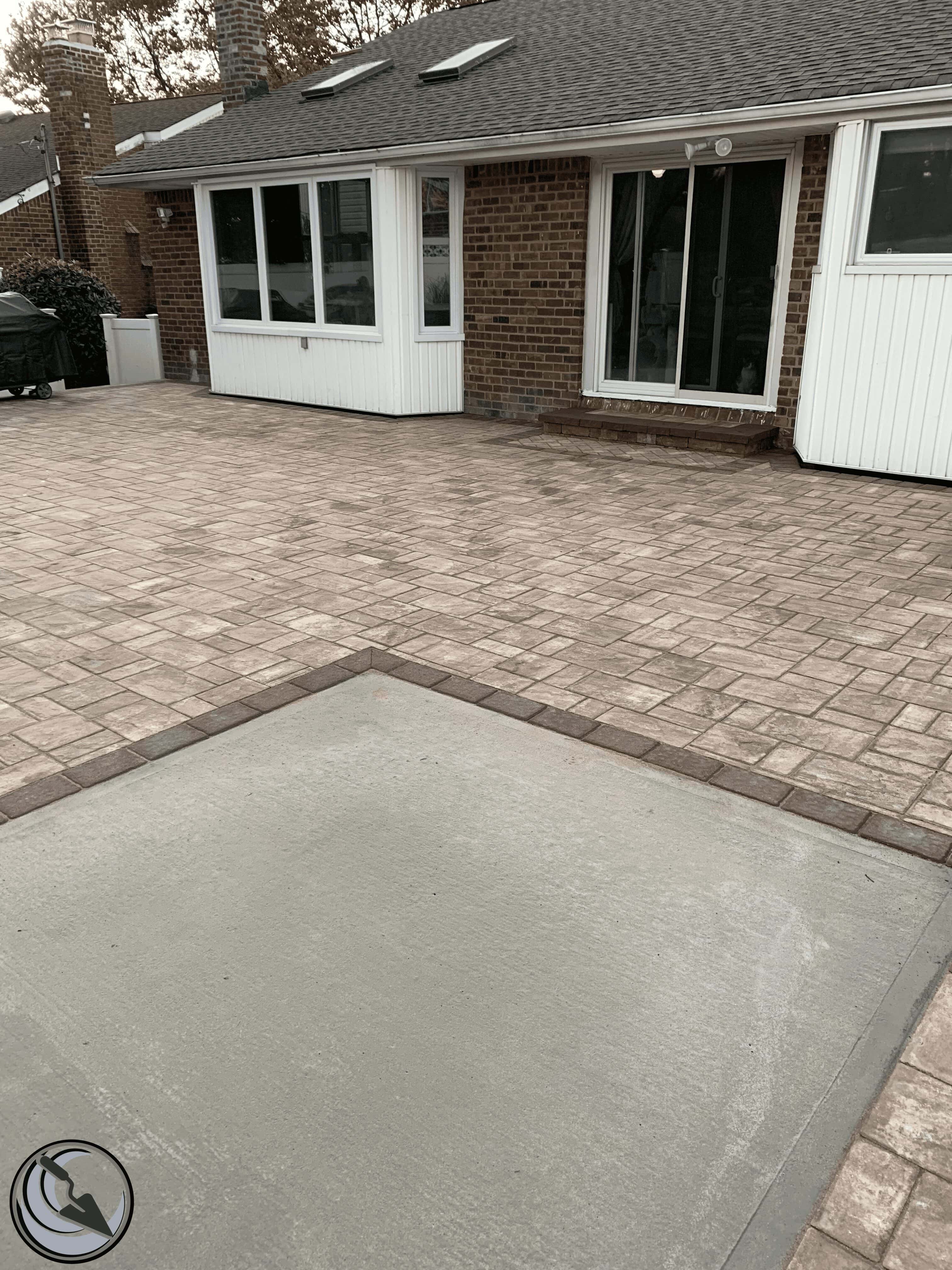
Summary:
You asked three contractors for an estimate. You got back numbers that are thousands of dollars apart. The proposals all say roughly the same things — excavation, paver installation, cleanup — so you’re left wondering whether someone is padding their quote or whether the cheapest bid is cutting corners you can’t see yet. It’s one of the most common situations homeowners in Suffolk County, NY run into before a paver project, and it’s genuinely confusing. The good news is that once you understand what actually separates a $9,000 estimate from a $16,000 one, the decision gets a lot clearer.
Here’s the thing most homeowners don’t realize until it’s too late: the part of a paver patio that determines whether it lasts is entirely underground. You can’t see it when the job is done. You can’t photograph it to compare. And most estimates don’t describe it in enough detail to tell you what’s actually included.
The surface — the pavers themselves — is almost the least important variable in a quote. What separates a patio that holds up through ten Long Island winters from one that starts shifting and cracking after two is the preparation underneath: how deep we excavate, what we put in the base, how well we compact it, and whether we account for drainage. That’s where the money goes in a quality installation, and that’s exactly where a low bid quietly cuts corners.
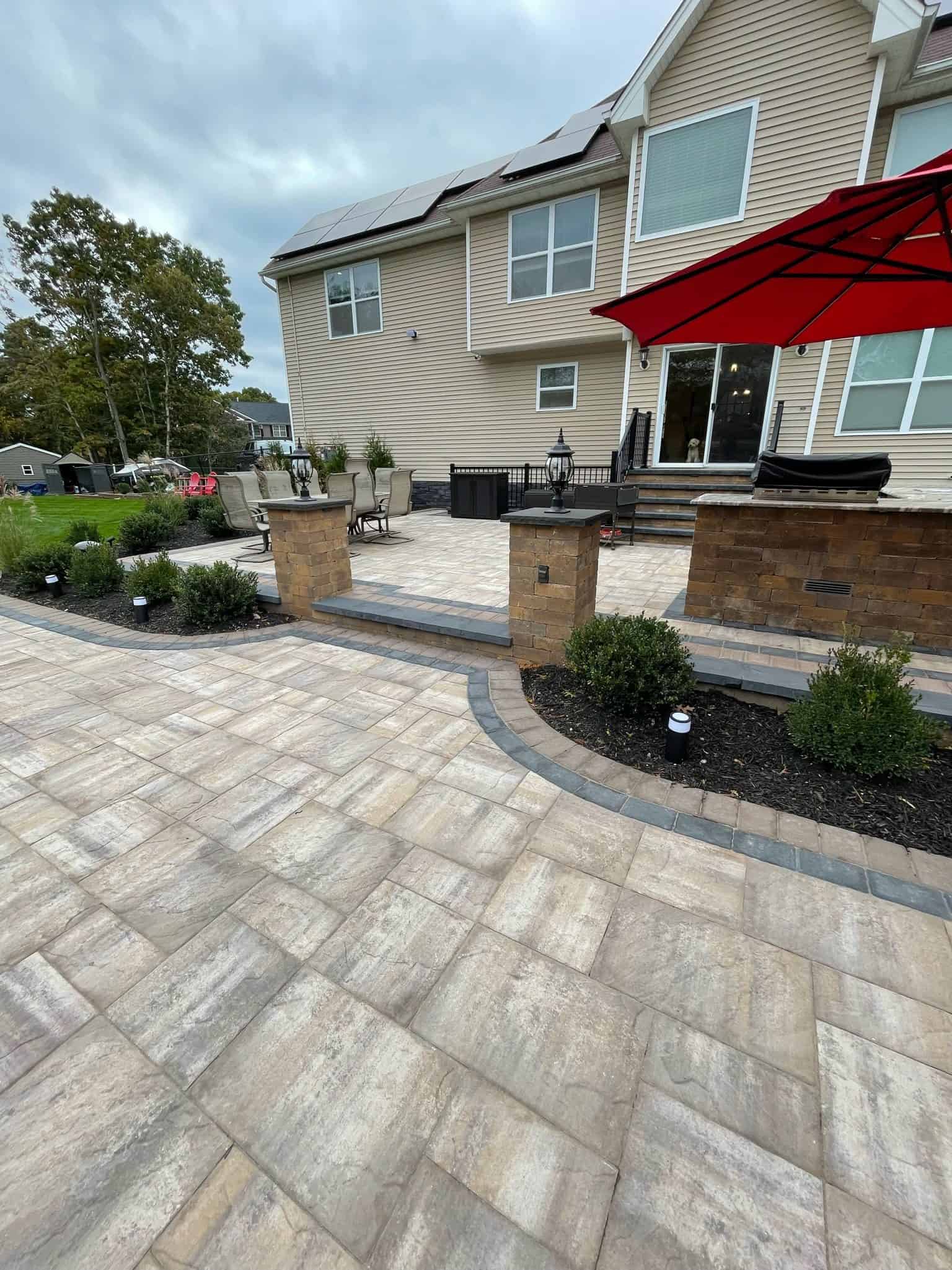
Long Island’s soil is primarily sandy glacial outwash — a legacy of the last Ice Age. That might sound like a geography lesson, but it has real consequences for any paved surface you install on it. Sandy soil drains quickly, which sounds like a good thing, but it also shifts and compresses unevenly under load and with moisture changes. It doesn’t hold a base the way denser, clay-heavy soils do in other parts of the country.
In Suffolk County, the standard excavation depth for a paver patio is 8 to 10 inches. That’s not a number we picked arbitrarily — it’s the correct response to this specific soil type and this specific climate. A lot of contractors dig 4 inches, throw down a base, and call it done. On paper, it looks like the same job. In practice, you’ve got a patio sitting on a foundation that was never designed to handle what Long Island’s ground actually does.
Add to that the freeze-thaw cycles. Long Island experiences roughly 20 to 30 of them every year. Every time the temperature swings above and below freezing, water in the soil and the base layer expands and contracts. Over a season, that movement adds up. A shallow base doesn’t absorb that stress — it transfers it directly to the pavers. That’s where you get heaving, cracking, and sections that sink unevenly over time.
When you’re comparing two estimates and one is significantly lower, there’s a real chance the excavation depth is different. The word “excavation” appears in both proposals, but it doesn’t tell you how deep. Four inches and ten inches are not the same job, and they don’t produce the same result — especially here in Suffolk County.
A thorough estimate isn’t just a number — it’s a description of what’s being built. If you’re comparing quotes and you can’t tell what’s actually different between them, that’s a signal worth paying attention to. The scope of work matters as much as the total.
Proper base preparation involves multiple steps that each add time and material cost. After excavation, the base layer should be crushed stone — not sand, not loose fill — laid in lifts and compacted. Compaction is critical because loose material settles unevenly over time. The bedding layer on top of that needs to be screeded level. Then the pavers go down, followed by edge restraints along the perimeter to prevent lateral movement and spreading, and finally joint sand — ideally polymeric sand, which locks in place and resists weed intrusion — worked into the gaps.
Drainage is another line item that often disappears in a low bid. A properly pitched patio moves water away from the house. If the slope isn’t calculated and built in from the start, you end up with standing water that accelerates deterioration and creates hazards. On Long Island, where coastal moisture and sandy soil create drainage complexity even in dry conditions, this isn’t optional.
Edge restraints are a small cost that makes a significant difference over time. Without them, pavers gradually spread outward, especially along the edges, and the joints widen in ways that let weeds establish and water infiltrate. It’s one of the easiest things to skip in an installation and one of the easiest things to regret later.
When you’re reviewing estimates, ask each contractor specifically: how deep are you excavating, what goes in the base and in what order, how are you addressing drainage, and are edge restraints included? The answers will tell you more than the bottom line will.
Price is one variable. It’s not the only one, and for a permanent addition to your property, it probably shouldn’t be the deciding one. The contractor you choose is making decisions about your home that will be invisible once the job is done — which means trust and competence matter more here than they do for almost any other home improvement project.
Licensing is a baseline, not a differentiator. In Suffolk County, legitimate paver contractors carry a Home Improvement Contractor license. But beyond the license, look at whether the contractor has manufacturer certifications, how long they’ve been operating in this specific market, and whether the person giving you the estimate is the same person overseeing the work.
It depends on the scope of the project and where your property is located, but it’s a question worth asking before work begins — not after. In certain parts of Suffolk County, particularly in Southampton and East Hampton townships, permit requirements are more stringent than in other areas. Projects near property lines or those that involve drainage modifications are more likely to require approval.
The reason this matters beyond the paperwork is that unpermitted work can create real problems when you sell your home or file an insurance claim. We know the local permitting landscape in Suffolk County and will tell you upfront what’s required and handle the process as part of the project. That’s not a small thing — navigating the varying requirements across Suffolk County’s towns and townships takes familiarity with each municipality’s building department.
If a contractor doesn’t mention permits at all during your estimate conversation, it’s worth asking directly. The answer will tell you something about how they operate. A contractor with genuine local experience in Suffolk County — someone who has pulled permits in Islip, Smithtown, Southampton, and East Hampton — knows what each jurisdiction requires and won’t leave you holding the liability.
One question most homeowners never think to ask: who is actually doing the work? Not the company name — the specific people on site. In a lot of cases, a contractor sells the job and then hands it off to a subcontracted crew they may have never worked with before. The person who gave you the estimate has no relationship with the people pouring your base or setting your pavers.
That arrangement creates accountability gaps. Technique varies from crew to crew. Compaction standards aren’t uniform. And if something goes wrong, the conversation about whose responsibility it is gets complicated quickly.
We use consistent crews — the same people project to project — because it produces more consistent results. They’ve developed shared standards, they know what we expect, and there’s a clear line of responsibility if anything needs to be addressed. It also means the quality of the work doesn’t depend on which subcontractor happened to be available that week.
Owner involvement matters for similar reasons. When the person who owns the business is personally handling your estimate, staying involved in the planning, and present through execution, you’re not dealing with a project manager who’s juggling twelve jobs and passing messages up a chain. You have direct access to the person who is accountable for the outcome. In a market where communication gaps are one of the most common contractor complaints, that’s not a minor convenience — it’s a structural difference in how the project runs.
The price gap between paver estimates isn’t random, and it’s rarely about one contractor being more efficient than another. It almost always comes down to what’s underneath — excavation depth, base materials, drainage planning, and the details that don’t show up in a photo of the finished patio but absolutely show up over time.
In Suffolk County, where sandy glacial outwash soil and 20 to 30 freeze-thaw cycles a year put real mechanical stress on any paved surface, those details aren’t optional. They’re the difference between a patio that looks the same in year ten as it did in year one and one that you’re already regretting by year three.
If you’re still sorting through estimates and want to talk through what you’re seeing — or just want an honest assessment of what your project actually requires — we offer free onsite estimates scheduled directly with the owner. No sales team, no automated follow-up. Just a straight conversation about what the job involves and what it takes to do it right here on Long Island.
Article details:
Share:
Continue learning: