Replacing a driveway in Suffolk County isn't just about price per square foot. Here's what actually drives the cost — and what to watch out for.
Share:
Summary:
Every spring, it becomes obvious. The driveway that looked fine in October has new cracks, a heaved edge, or a soft spot that wasn’t there before. You’ve patched it. Maybe more than once. And now you’re wondering whether it’s finally time to replace it — and what that’s actually going to cost.
If you’ve been searching for a number online, you’ve probably found a wide range and not much explanation. That’s because driveway replacement cost in Suffolk County isn’t the same as the national average. The soil is different. The winters are different. The licensing requirements are different. Here’s what you actually need to know before you start making calls.
On Long Island, asphalt driveway replacement typically runs $5 to $8 per square foot for a standard 3-to-4-inch installation. For a two-car driveway — roughly 24 by 40 feet — that puts the total somewhere between $4,600 and $8,100, depending on site conditions, access, and what’s being removed.
Those numbers assume proper installation. They also assume you’re not comparing apples to oranges when you get quotes, because two contractors can quote very different prices for what looks like the same job. The difference usually lives underground, where you can’t see it.
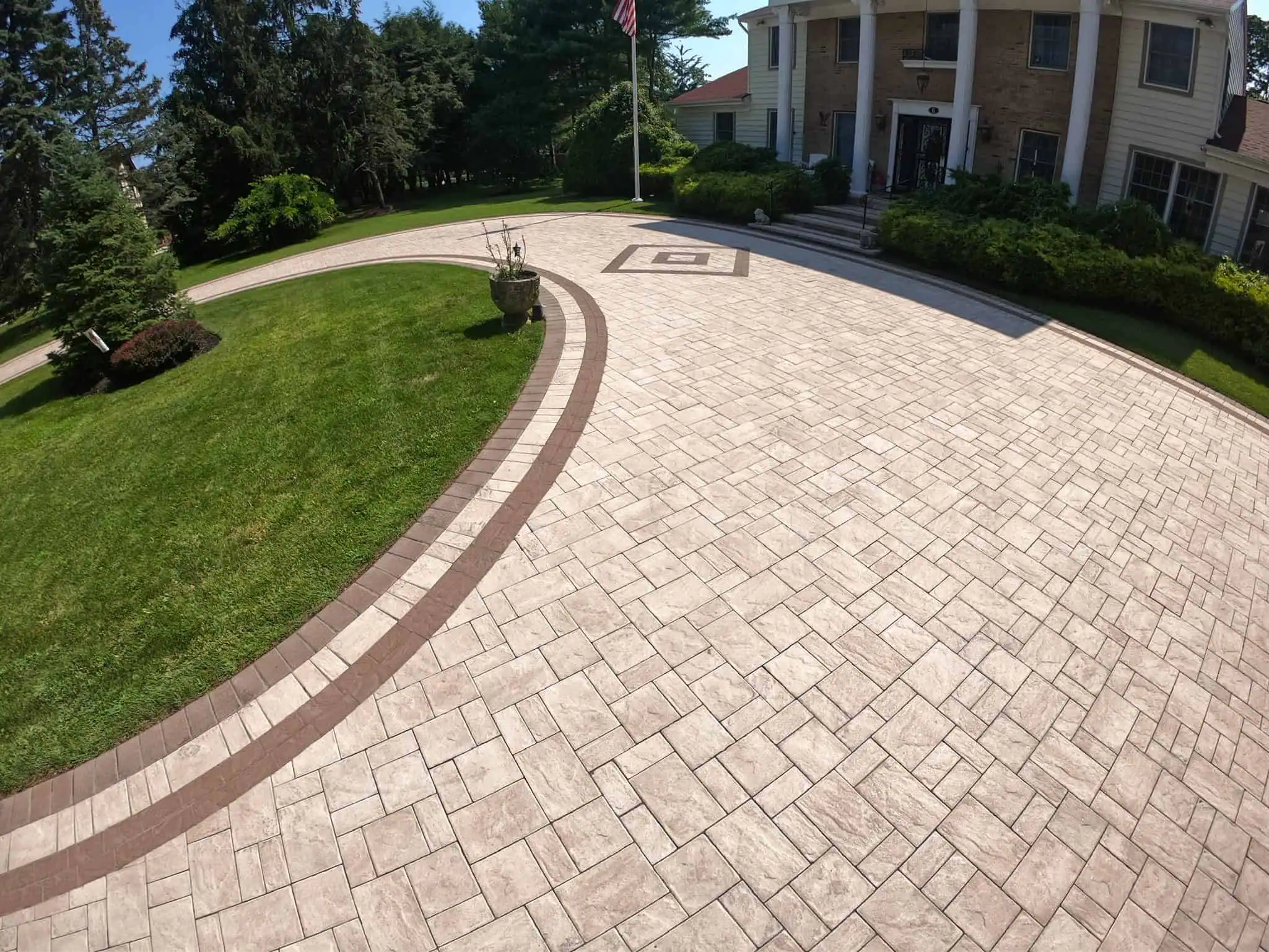
Most of Suffolk County sits on sandy, glacially deposited soil. That’s not a problem you can ignore when you’re paving a driveway. Sandy soil is less stable than clay-based soil, and without the right base preparation, a new driveway can start to shift, settle, and crack within a few years — regardless of how good the asphalt itself is.
The standard excavation depth for a driveway in Suffolk County is 8 to 10 inches. That’s deeper than what you’d see in other parts of the country, and it’s necessary here. It gives enough room for a compacted gravel sub-base that can handle the soil movement underneath and the freeze-thaw cycles above. Contractors who excavate only 4 to 6 inches — which some do to save time and materials — are skipping the step that determines how long your driveway actually lasts.
This is the part homeowners rarely think about when they’re comparing bids. A quote that comes in significantly lower than others almost always reflects a shallower excavation or thinner asphalt, not a contractor who found a better deal on materials. The consequences don’t show up immediately. They show up three, four, or five years later, when you’re back to cracking and patching.
Drainage planning matters here too. Suffolk County has a high water table in many areas, and without proper grading and drainage built into the installation, water can pool under the surface and accelerate deterioration. We account for this before the first shovel goes in — not as an afterthought.
Understanding what a proper installation looks like helps you evaluate the contractors you’re talking to — and ask better questions.
After the old surface is removed (which typically costs $2 to $8 per square foot in demolition and hauling fees), the ground is excavated to the appropriate depth. Then a compacted gravel base is laid and graded to direct water away from the surface and away from your foundation. Edge restraints are installed to prevent the asphalt from migrating outward over time. Then the asphalt is laid, compacted, and finished.
For residential asphalt paving, the asphalt itself should be 3 to 4 inches thick. Two inches is not enough for a surface that’s going to see regular vehicle traffic, and it’s especially not enough on Long Island’s sandy base. If you’re parking a truck, boat, or RV on the driveway, 4 inches is the right call.
Once the driveway is installed, sealcoating every two to three years is what keeps it looking good and extends its lifespan. Asphalt is a durable surface — 15 to 25 years is a realistic lifespan with proper maintenance — but it does require that periodic attention. Skipping sealcoating is one of the most common reasons driveways deteriorate faster than they should.
Labor typically accounts for about half the total cost of a residential driveway paving project. That’s worth keeping in mind when you’re evaluating bids. A contractor who quotes dramatically less than others isn’t doing the same job for less money — they’re doing less of the job.
If your asphalt driveway is at the end of its life, you’re not just deciding whether to replace it — you’re deciding what to replace it with. And that’s a question more Long Island homeowners are taking seriously.
Asphalt has the lowest upfront cost. Concrete runs higher. Pavers are higher still — but the cost gap is smaller than most people expect when they’re already at the replacement stage, because the excavation and base prep are required regardless of which material you choose.
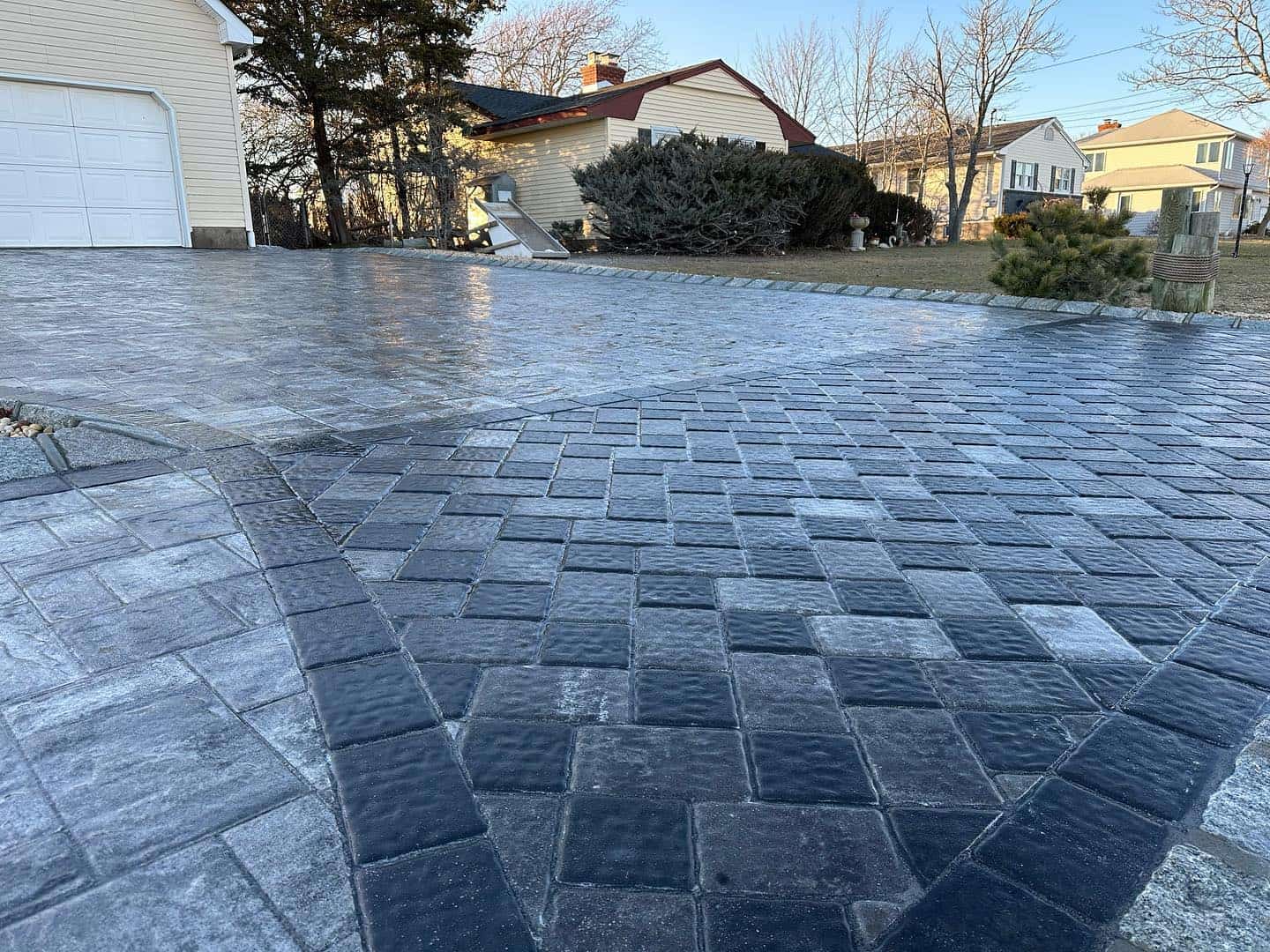
Concrete driveways in Suffolk County typically run $8 to $18 per square foot installed. For a standard two-car driveway, that’s roughly $7,200 to $15,000. Concrete lasts 25 to 40 years in ideal conditions — but Long Island’s conditions are not ideal for concrete.
The freeze-thaw cycles that Suffolk County experiences every winter are hard on rigid surfaces. Concrete doesn’t flex. When water seeps into micro-cracks and freezes, it expands, and the concrete breaks. Road salt — which is everywhere on Long Island from November through March — accelerates that process. Coastal communities from Babylon to Brookhaven to Southampton deal with the additional factor of salt air, which degrades concrete surfaces over time even without direct salt application.
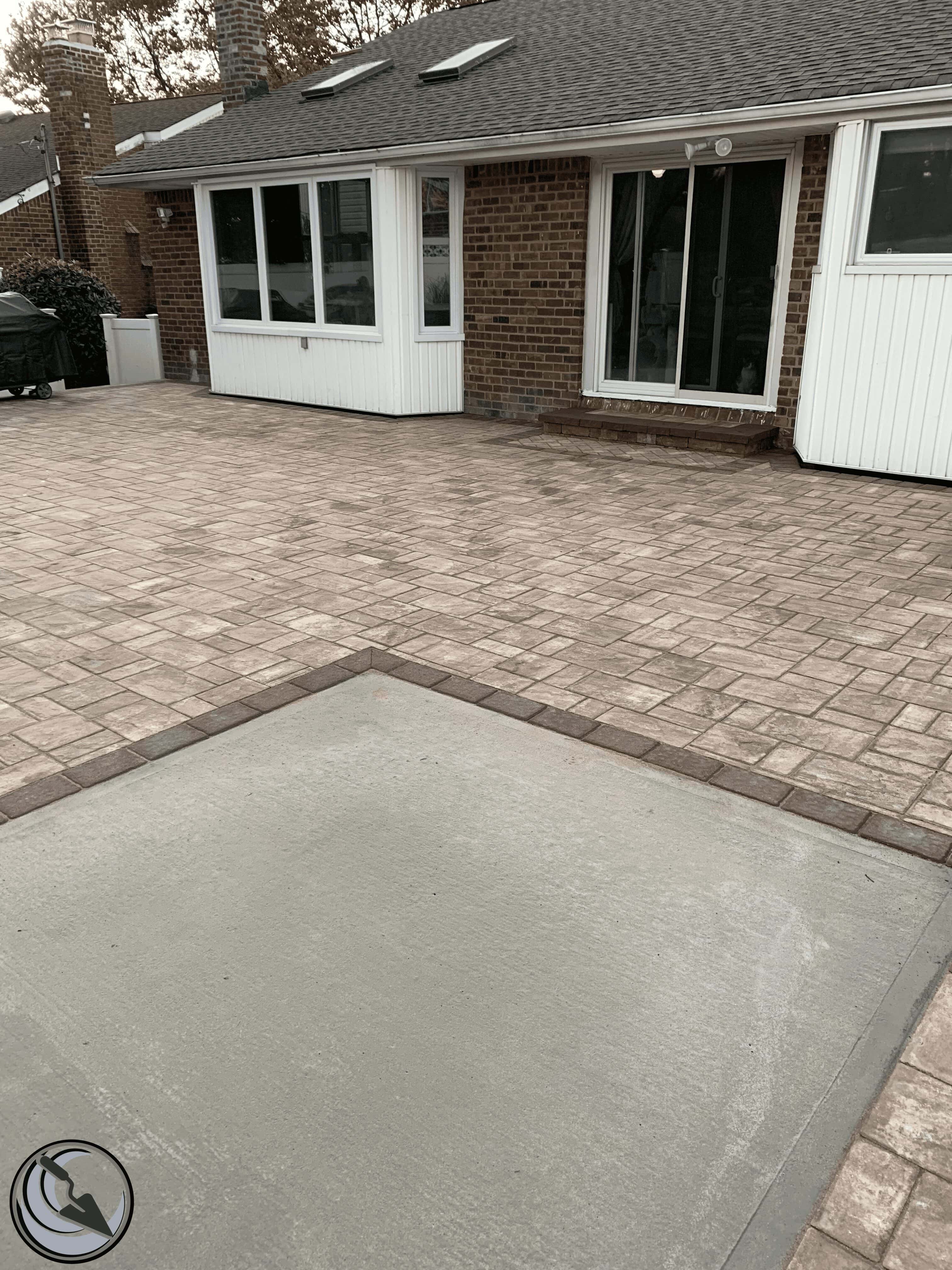
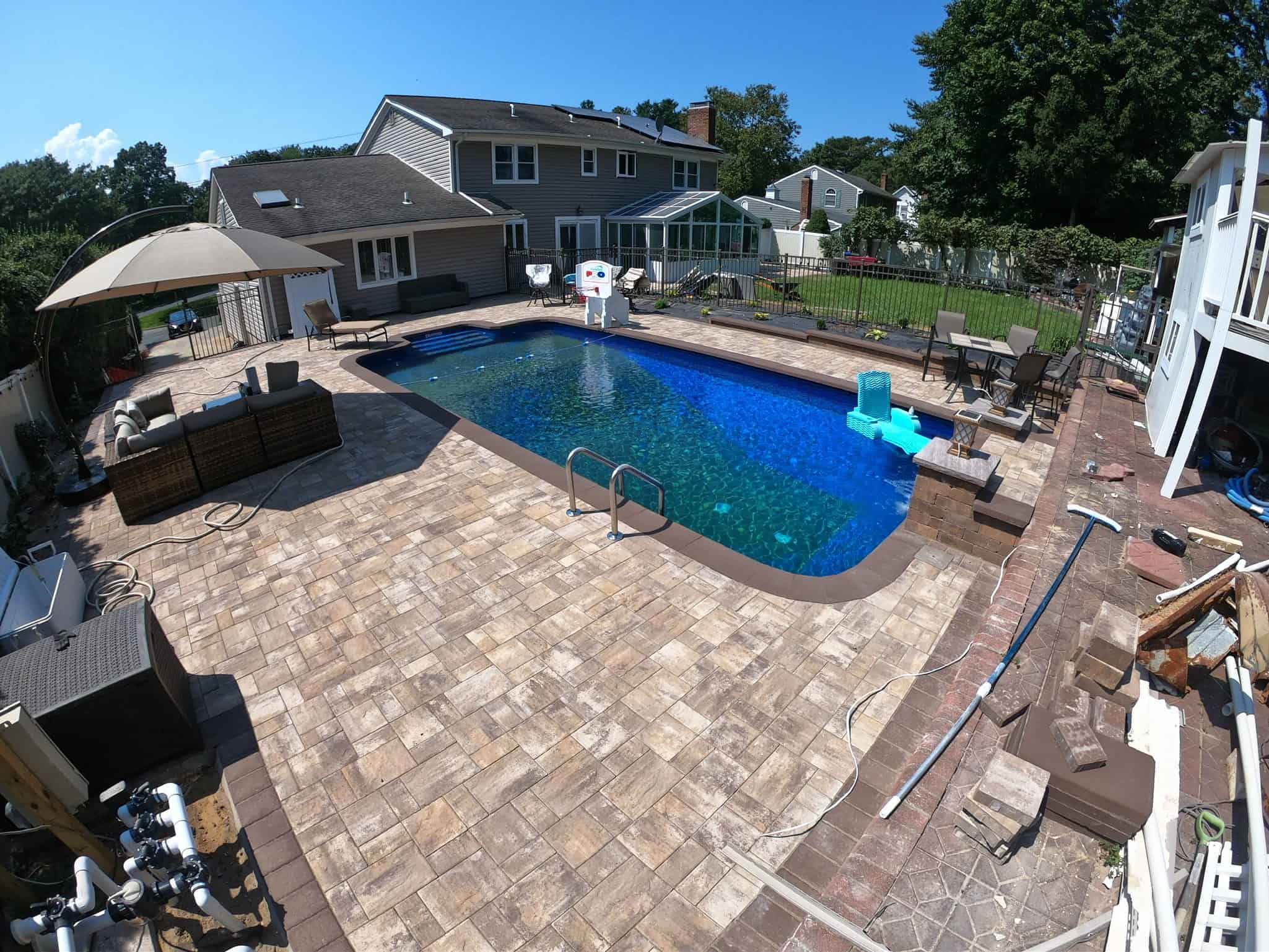
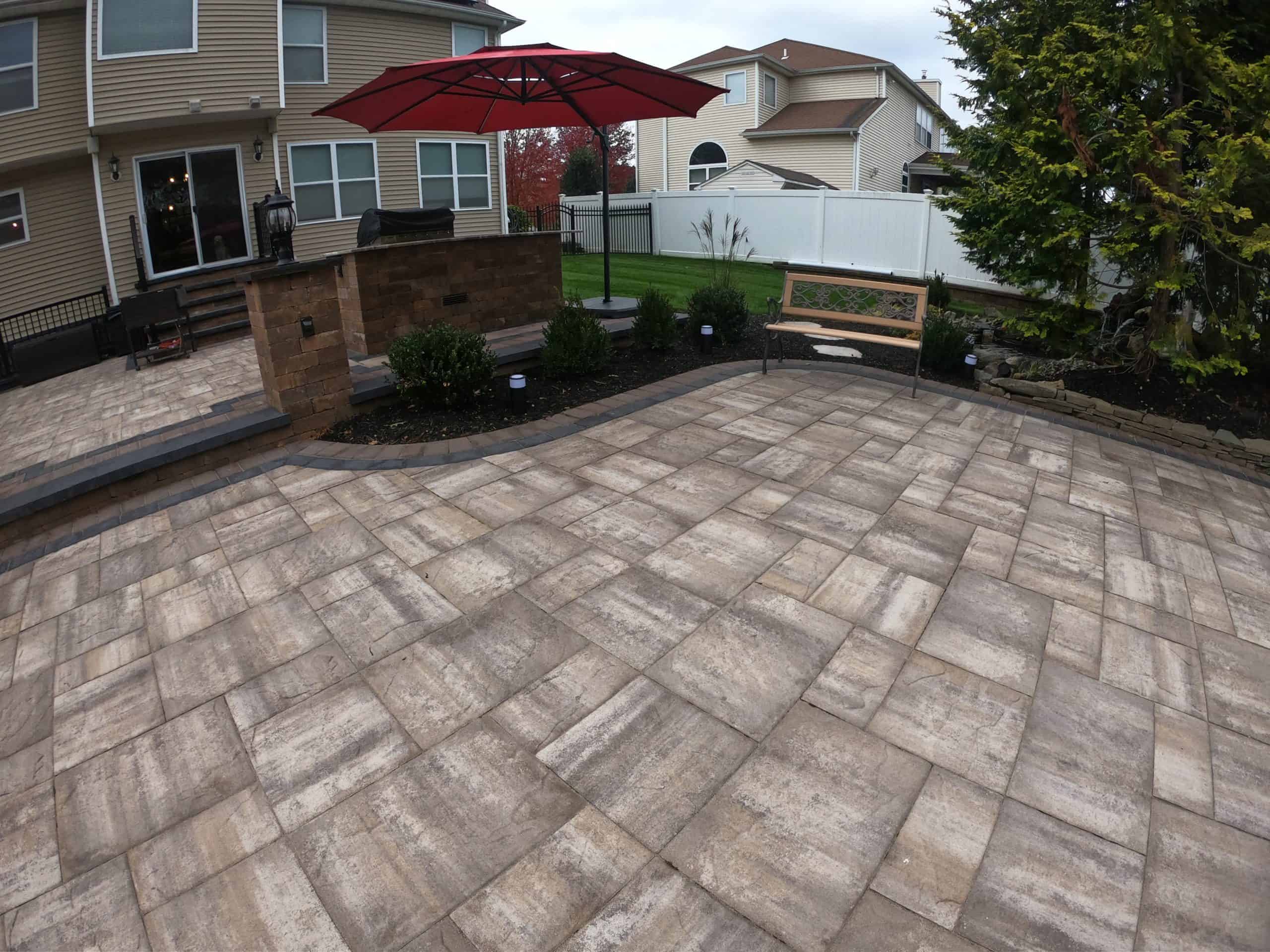
Pavers behave differently. Because they’re individual units set on a flexible base, they move with freeze-thaw cycles rather than cracking under them. If a paver shifts or breaks, you replace that paver — not the whole driveway. The installed cost runs $20 to $35 per square foot in Suffolk County, putting a two-car driveway somewhere between $12,000 and $21,000 depending on the material and pattern. That’s a meaningful difference upfront. But a paver driveway installed correctly can last 50 years or more with minimal maintenance, which changes the math considerably when you’re thinking about cost per year rather than cost today.
The moment you’re already replacing an asphalt driveway is actually the most cost-effective time to consider upgrading to pavers. The excavation and base preparation — the most labor-intensive part of any driveway project — are happening either way. The incremental cost of choosing pavers over asphalt at that point is lower than starting from scratch later.
Beyond standard concrete pavers, many Suffolk County homeowners are choosing natural stone, brick, or Belgian block for their driveways — particularly in communities like Huntington, Smithtown, and the Hamptons, where curb appeal and property values both run high.
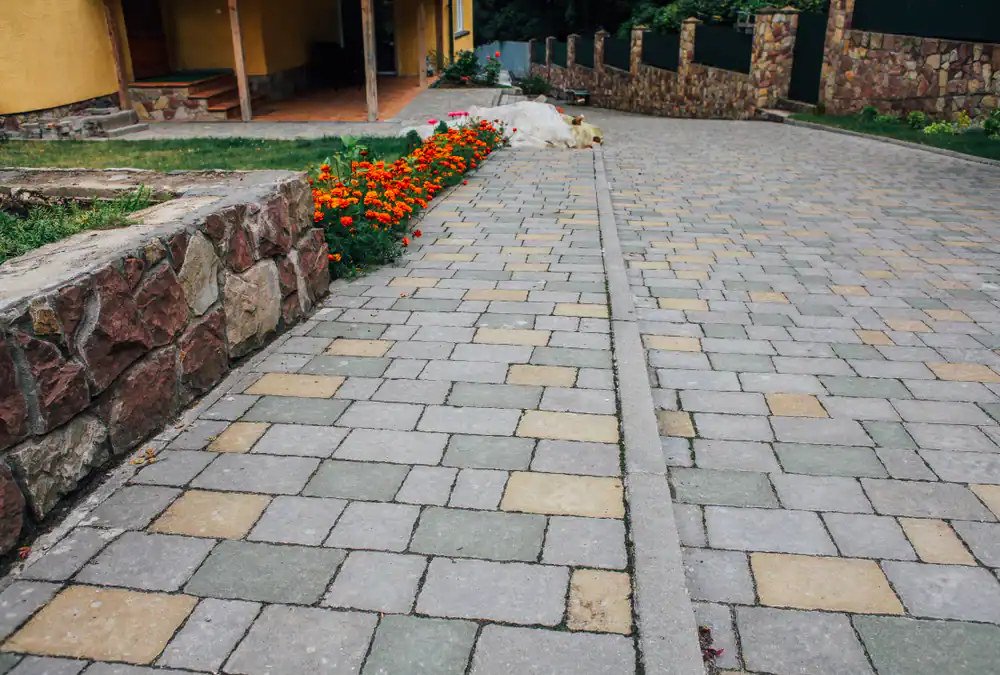
Belgian block driveways — the classic cobblestone-style surface you’ll see on older Long Island properties and estate driveways — run $30 to $70 per square foot installed. That’s the premium tier, and the cost reflects both the material and the skilled labor required to set it properly. Brick driveway cost falls in a similar range depending on the specific product and pattern.
These materials aren’t the right choice for every home or every budget, but they’re worth understanding if you’re doing a full exterior renovation or if you’re in a neighborhood where the aesthetic matters. Stamped concrete is sometimes pitched as a lower-cost alternative that mimics the look of pavers or stone — but in Suffolk County, stamped concrete carries the same freeze-thaw vulnerabilities as standard poured concrete, and repairs are harder to execute cleanly because the pattern is difficult to match after the fact.
For homeowners considering permeable pavers — a system that allows water to drain through the surface rather than run off — the cost is generally comparable to standard paver installation and can offer meaningful benefits in areas with drainage challenges or where local regulations are moving toward impervious surface limits. Suffolk County’s high water table makes permeable systems worth discussing with your contractor, particularly on properties that already have pooling or drainage issues.
Whatever material you’re considering, the contractor you choose matters as much as the material itself. Certifications from manufacturers like Cambridge, Techo-Bloc, Unilock, and Nicolock aren’t honorary — they require formal installation training specific to each product line. A certified installer understands the base preparation requirements, the installation tolerances, and the warranty conditions for the materials they’re working with. That’s not something you can assume just because a contractor has been in business for a while.
The most important thing you can do before signing anything is understand what you’re actually comparing. When you get multiple quotes, ask each contractor what excavation depth they’re planning, how they’re handling drainage, and what thickness of asphalt or what base specification they’re using. Those answers tell you more than the bottom-line number does.
Verify licensing before you commit. In Suffolk County, residential driveway contractors are required to hold a Home Improvement Contractor License — and if you’re in Southampton or East Hampton, that means a separate township license on top of the county one. These are publicly verifiable. A contractor who can’t or won’t provide their license number is a contractor you should move on from.
We offer free onsite estimates in Suffolk County scheduled directly with the owner — no call centers, no automated forms, no salesperson who hands the job off to someone else. Just a real conversation about your driveway and what it’s going to take to do it right.
—
**What is the average cost of driveway paving in Suffolk County?**
For asphalt, the typical range is $5 to $8 per square foot in Suffolk County. A standard two-car driveway runs between $4,600 and $8,100 depending on size, site conditions, and what’s being removed. Concrete driveways run $8 to $18 per square foot, and paver driveways run $20 to $35 per square foot. These are Suffolk County-specific figures — national averages tend to run lower because they don’t account for the deeper excavation and base preparation that Long Island’s sandy soil requires.
**Is a paver driveway cheaper than concrete?**
Not upfront — but the comparison shifts when you factor in lifespan and maintenance. Concrete in Suffolk County is more susceptible to freeze-thaw cracking and salt damage than in other markets, which means repairs come sooner and cost more. Pavers last 50 years or more, and individual units can be replaced without tearing out the whole surface. If you’re already replacing an asphalt driveway, the incremental cost of upgrading to pavers is lower than it would be starting fresh, because the excavation and base work are happening either way.
**What is the cost of concrete driveway resurfacing in Suffolk County?**
Resurfacing — applying a new layer over an existing concrete surface — is typically less expensive than full replacement, but it’s not always the right solution. If the existing concrete has structural cracks or base failure, resurfacing won’t fix the underlying problem. In Suffolk County specifically, freeze-thaw damage often compromises the base, not just the surface, which means resurfacing can look good for a season or two before the same problems reappear. A contractor who looks at the driveway in person — not just quotes over the phone — can tell you whether resurfacing makes sense or whether full removal and replacement is the better call.
Article details:
Share:
Continue learning: