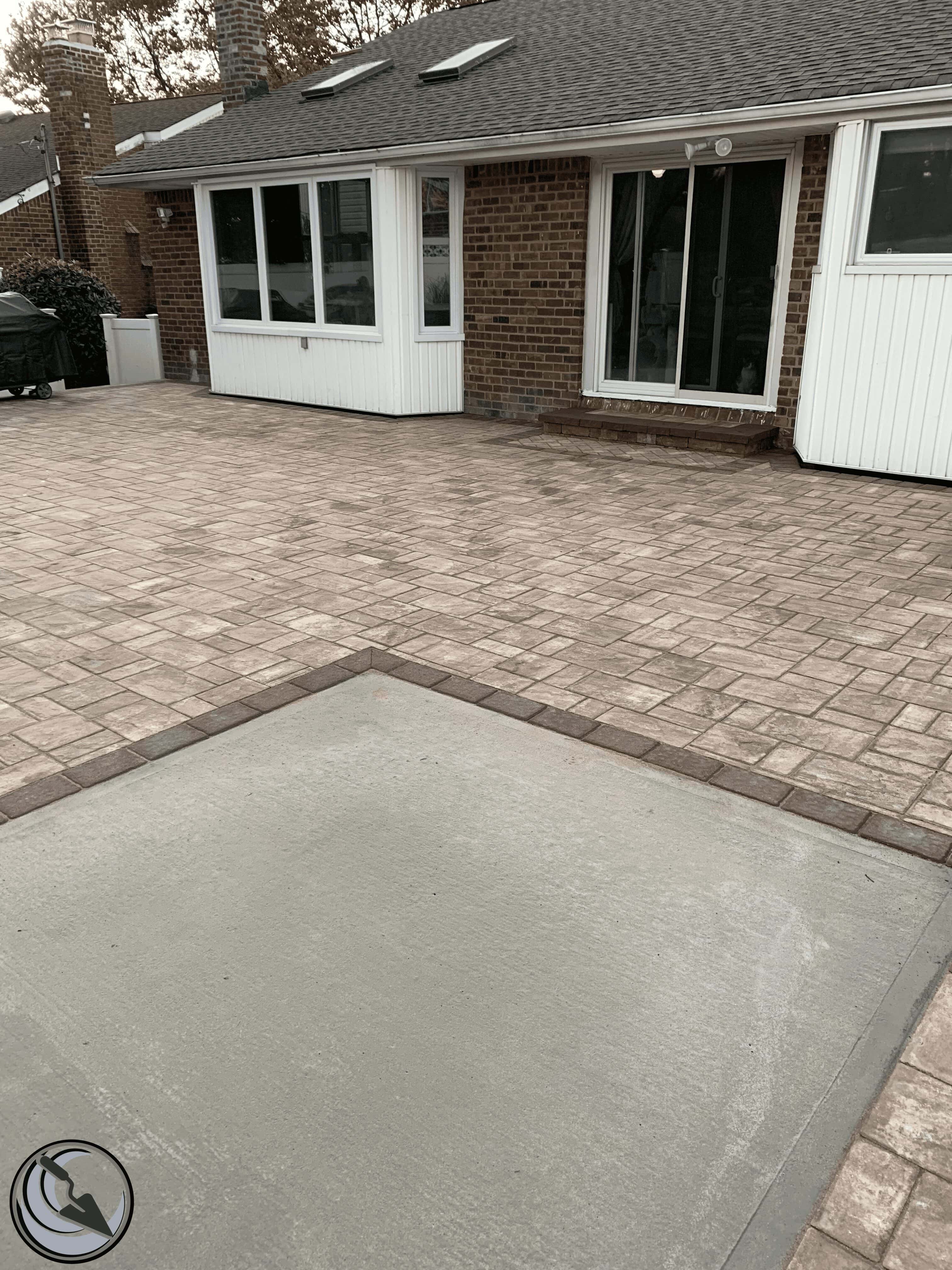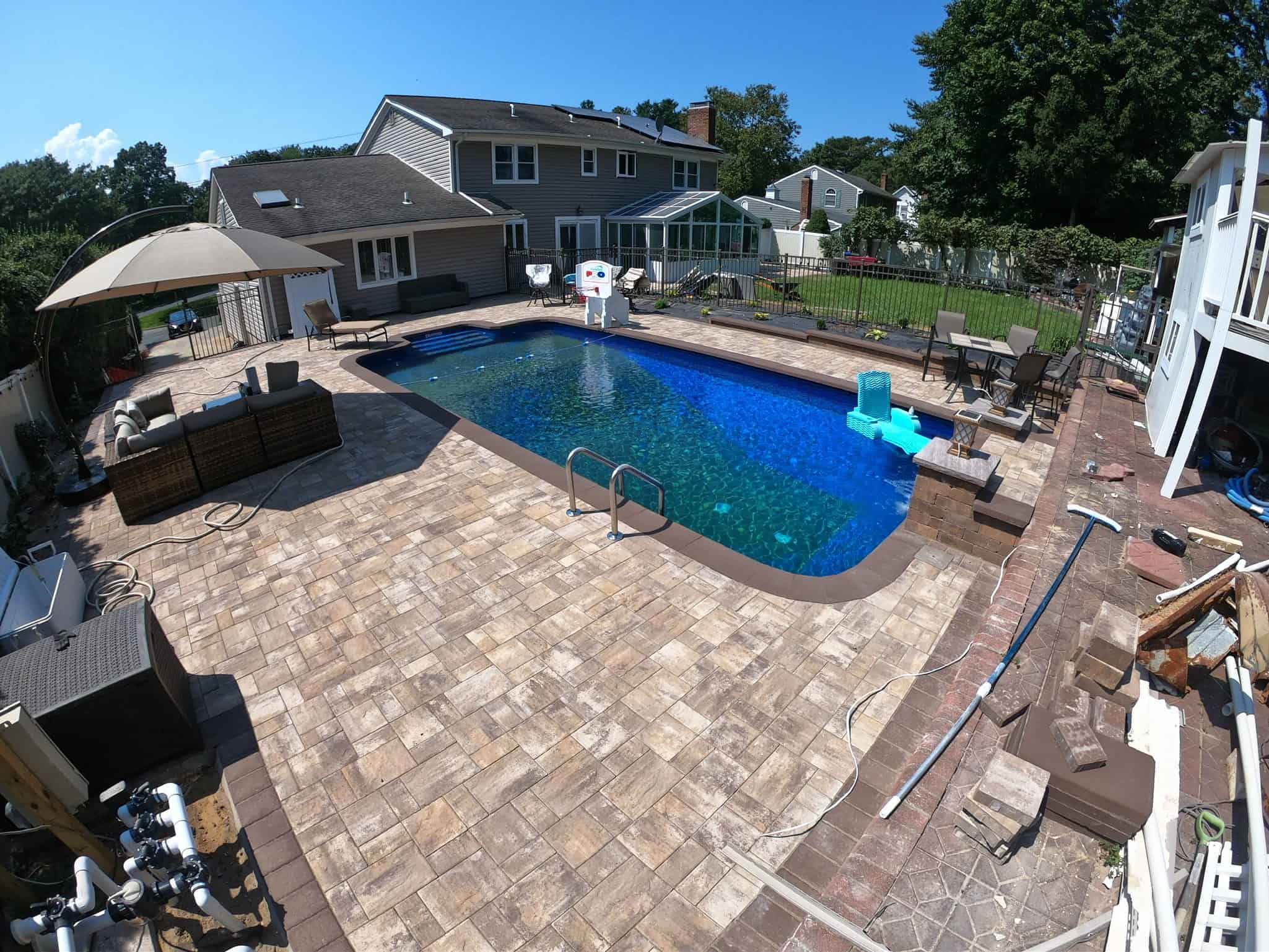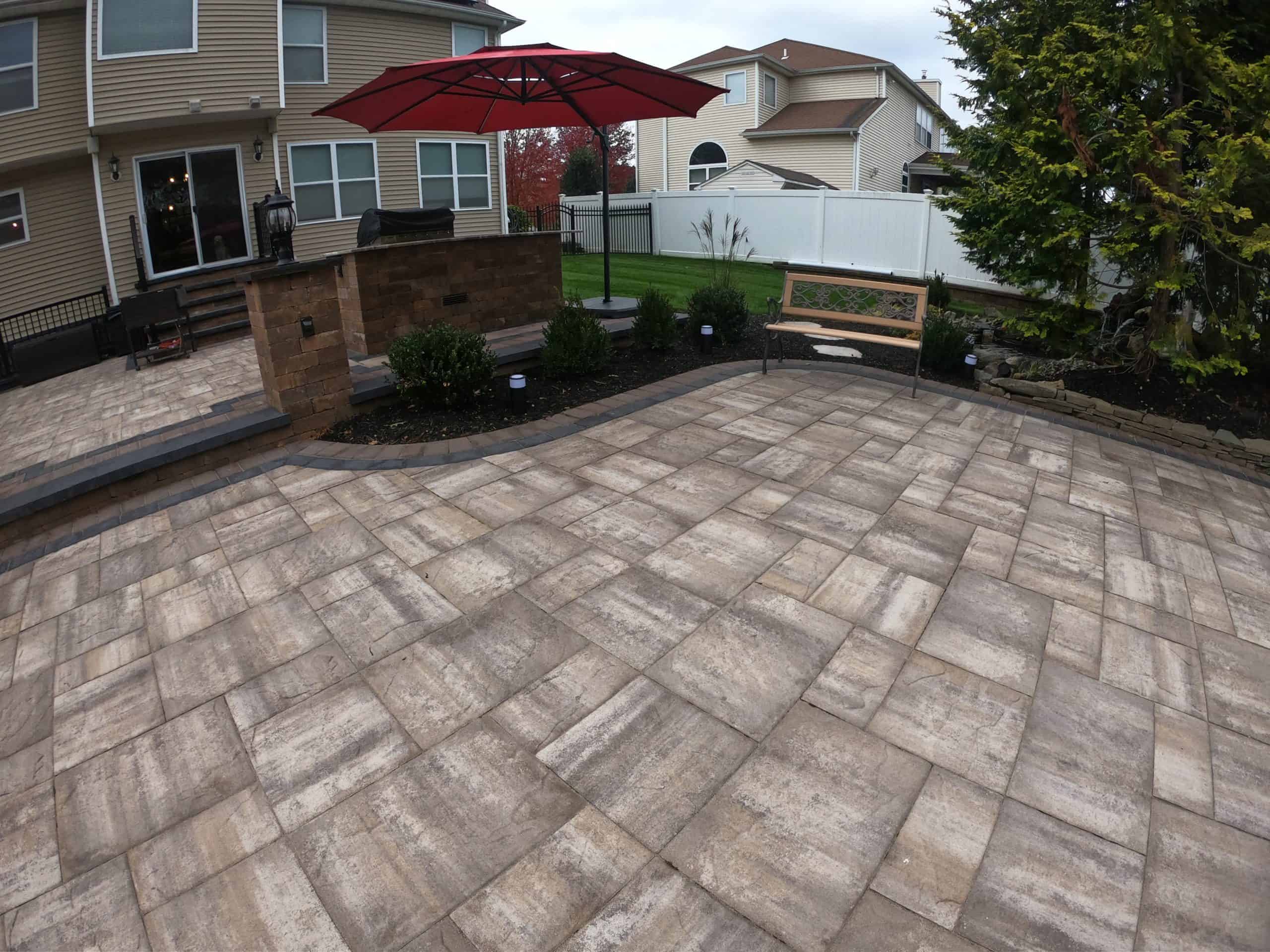
Choosing between asphalt and pavers isn't just a materials question — it's a contractor question. Here's what Long Island homeowners need to know before hiring.
Share:

Summary:
You’ve got quotes in hand. Maybe three of them. One is from a paving company, one from a masonry contractor, and one from someone who does both — or says they do. The numbers are all over the place, and nobody has explained why.
Here’s the thing: “driveway contractor” isn’t a single category. Asphalt paving and interlocking paver installation are different trades, with different equipment, different base preparation standards, and different training requirements. Hiring the wrong type for your project doesn’t just affect how it looks — it affects how long it lasts. And in Suffolk County, that difference shows up fast.
Asphalt contractors specialize in hot mix paving — the dark, flexible surface you see on most residential driveways across Long Island. We work with specialized equipment: paving machines, rollers, and dump trucks that deliver and spread material at the right temperature. When the job is done right, asphalt is a practical, cost-effective surface that runs $5–$8 per square foot installed in Suffolk County and can last 20–25 years with proper maintenance.
But asphalt paving and interlocking paver installation are not the same trade. An asphalt contractor who also offers pavers isn’t necessarily trained to install them correctly. Manufacturer certifications — the kind issued by Cambridge, Techo-Bloc, Unilock, and Nicolock — require specific training and demonstrated competency. A contractor without those credentials may not follow the base preparation standards those manufacturers require, and that matters more than most homeowners realize.
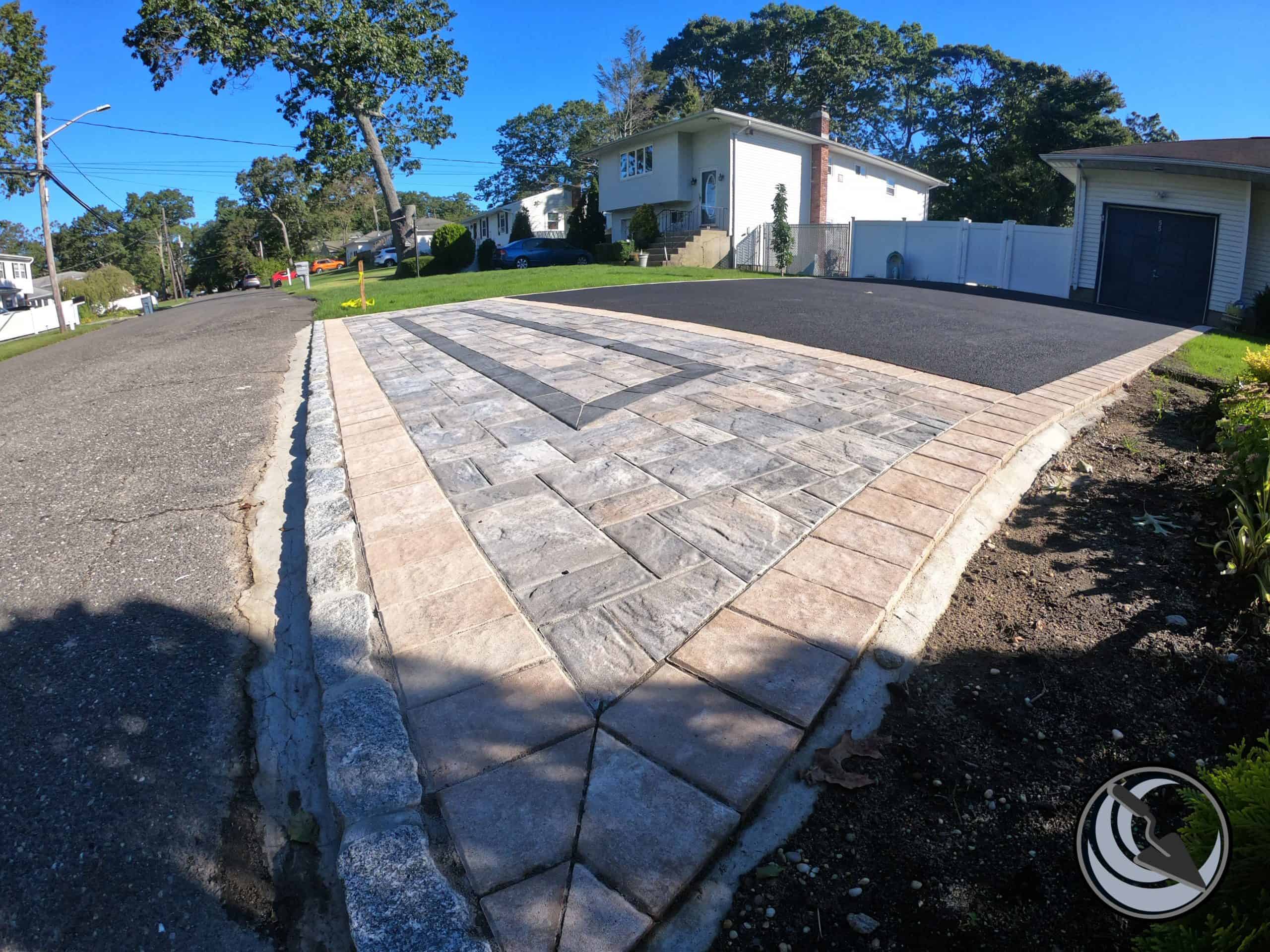
Most driveway failures on Long Island aren’t caused by the material. They’re caused by what’s underneath it.
Suffolk County sits on a glacial outwash plain — the soil here is predominantly sandy, which drains reasonably well but shifts and settles more than clay-heavy soils. That movement puts stress on whatever surface sits above it. Add in the freeze-thaw cycles Long Island gets through winter — not just one seasonal freeze, but repeated oscillations above and below 32°F, sometimes multiple times in a single week — and you have conditions that will expose any shortcut in base preparation within a few years.
For asphalt, the industry standard calls for 6–8 inches of compacted gravel base plus 2.5–3 inches of asphalt. For pavers, the requirements are even more specific: each unit needs to sit on a stable, level base that can handle independent movement without creating trip hazards, drainage problems, or visible sinking. We excavate to 8–10 inches as our standard — deeper than many contractors go — because Suffolk County’s sandy soil demands it.
What does poor base preparation actually look like in practice? It looks like an asphalt driveway that develops depressions near the garage apron within a couple of years. It looks like pavers that sink in one corner after a wet winter. It looks like cracks that run diagonally across the surface, which is almost always a sign of inadequate base depth or drainage that wasn’t planned properly. These aren’t material failures. They’re installation failures — and they’re entirely preventable when the base work is done right from the start.
Edge restraints are another piece that gets skipped more often than it should. Without them, the material at the perimeter of a driveway spreads laterally over time. On a sandy base, that process happens faster. Proper edge restraints lock the perimeter in place and protect the integrity of the entire surface — not just the edges.
The most useful question you can ask any driveway contractor isn’t about price. It’s about depth. Ask them how deep they’re excavating and what the base consists of. If they can’t give you a specific answer — or if the answer is vague — that tells you something.
Suffolk County requires home improvement contractors to hold a county-level license. It’s worth asking for the actual license number, not just confirmation that they’re “licensed and insured.” Our Suffolk County license number is #HI-62761. We’re also licensed in Nassau County (#167041), Southampton (#L005914), and East Hampton (#9808). These are numbers you can verify. Any legitimate contractor operating in this county should be able to give you theirs.
For paver work specifically, manufacturer certifications matter in a way that goes beyond marketing. Certified installers for Techo-Bloc, Cambridge, Unilock, and Nicolock have been trained by the manufacturer and vetted for installation quality. In many cases, that certification unlocks access to the manufacturer’s extended warranty — something a non-certified contractor simply cannot offer you, regardless of how good their pitch sounds.
One more thing to pay attention to: who shows up for the estimate, and who shows up for the job. On a lot of projects, the person who sells you the work is not the person who does it. That gap — between what was promised and what gets executed — is where most contractor complaints originate. When the owner is present at both the estimate and on the job site, that gap closes. It’s a simple thing, but it changes everything about accountability.
Concrete comes up in almost every driveway conversation, usually because someone heard it lasts longer or looks cleaner. On Long Island, the reality is more complicated. Concrete costs $8–$18 per square foot installed and can last 25–40 years under the right conditions — but those conditions don’t fully describe what Suffolk County homeowners deal with.
Concrete is a rigid surface. It doesn’t flex. When freeze-thaw cycles put pressure on a rigid slab from below, it cracks — and once concrete cracks, repair options are limited. Road salt, which is unavoidable on most Suffolk County properties given the county’s winter maintenance schedule, accelerates that process by penetrating surface cracks and breaking down the material from the inside. The result is spalling: a flaking, pitted surface that’s difficult and expensive to restore.

If you’ve been searching for “cement driveway contractors,” you’re not alone — but it’s worth clarifying what that term actually refers to. Cement is an ingredient, not a finished surface. It’s the binding agent in concrete, mixed with water, sand, and aggregate to create the poured material you see in driveways, sidewalks, and foundations. There’s no such thing as a pure cement driveway — what people typically mean when they use that phrase is a poured concrete driveway.
That distinction matters because it affects what you’re evaluating. A contractor who specializes in poured concrete work operates differently from an asphalt paving company and differently again from a masonry contractor who installs interlocking pavers. They use different equipment, different mix specifications, and different finishing techniques.
On Long Island, the main concern with poured concrete — regardless of what you call it — is its performance in the climate. Concrete expands and contracts with temperature changes, which is why you see control joints cut into concrete driveways and sidewalks. Those joints are designed to control where cracking happens. But in a climate with as many freeze-thaw cycles as Suffolk County gets, even well-placed control joints don’t fully protect the surface. Water gets into the joints, freezes, expands, and works the crack wider over time.
If you’re drawn to concrete for its appearance or its lower upfront cost compared to pavers, it’s a reasonable option — but go in with clear expectations about maintenance and longevity in this specific climate. A contractor who is honest with you about those limitations before you sign is a better sign than one who promises 40-year performance without any caveats.
“Driveway bricks” is a term that comes up often in homeowner searches, and it’s worth a quick clarification. Traditional clay brick pavers are a real product — they have a classic look and have been used in driveways and walkways for generations. But for modern residential driveways, especially in a climate like Long Island’s, concrete interlocking pavers are generally the stronger choice. They’re engineered to handle vehicle loads, resist freeze-thaw damage, and maintain color consistency over time in ways that clay brick doesn’t always match.
The installation process for both is similar — both require proper base preparation, edge restraints, and joint sand — but the performance characteristics differ. Concrete pavers from manufacturers like Cambridge and Techo-Bloc are designed specifically for the conditions they’ll face: vehicle weight, salt exposure, temperature swings, and UV fading. Clay bricks can be beautiful, but they’re more porous and more susceptible to the kind of moisture penetration that accelerates freeze-thaw damage in Suffolk County winters.
If you’re drawn to a brick-like aesthetic, there are concrete paver options that replicate that look closely — without the durability trade-offs. This is one of the areas where working with a certified installer makes a real difference, because they can show you the full range of what’s available and help you match the look you want to a product that will actually hold up over time in Suffolk County.
The material you choose matters. But the contractor you hire matters more. A well-installed asphalt driveway will outlast a poorly installed paver driveway every time — and the reverse is equally true. What separates a driveway that holds up through twenty Long Island winters from one that starts cracking in year three isn’t the product on the surface. It’s the depth of the base, the quality of the drainage planning, and whether the person doing the work actually knows what they’re doing in this specific soil and climate.
If you’re in Suffolk County and trying to make sense of the options, we’re happy to walk through it with you in person. Stone Escapes Masonry & Outdoor Design Inc offers free onsite estimates scheduled directly with the owner — no sales reps, no call centers. You get a straight answer from someone who will be on the job from the first day to the last.
Article details:
Share:
Continue learning: