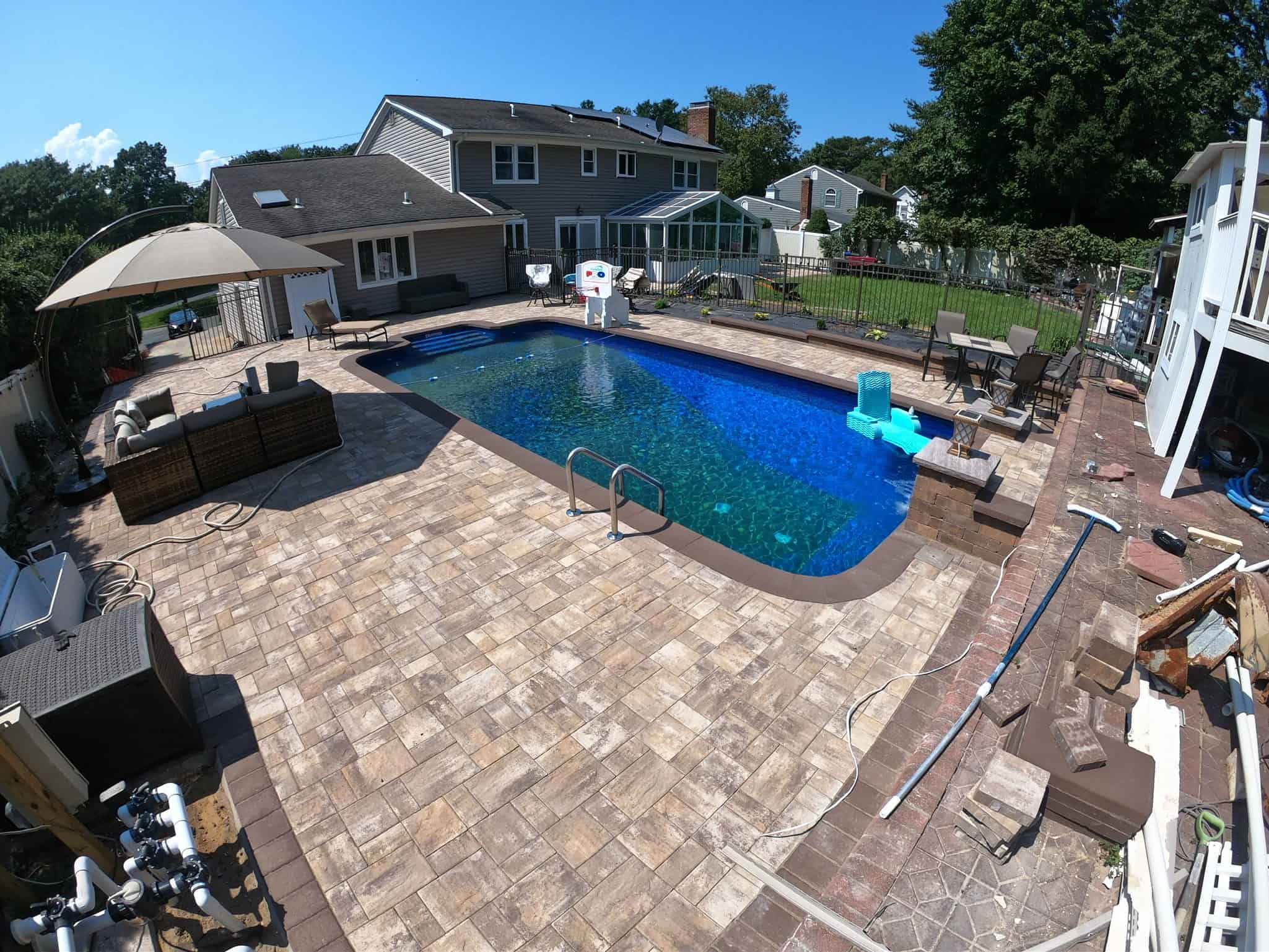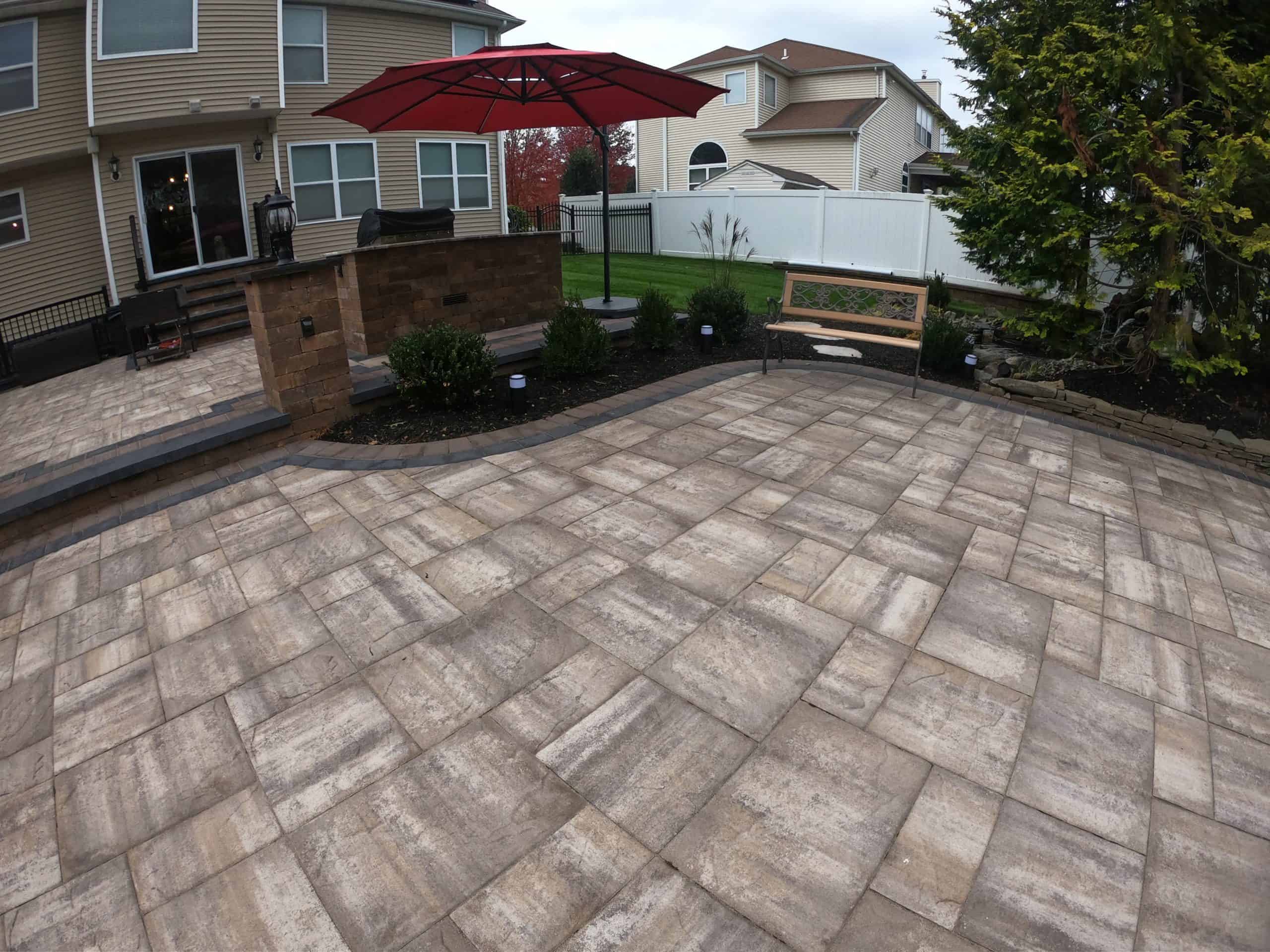
Hiring a landscaper to install pavers seems convenient — until the patio shifts after one winter. Here's what to know before you call anyone.
Share:
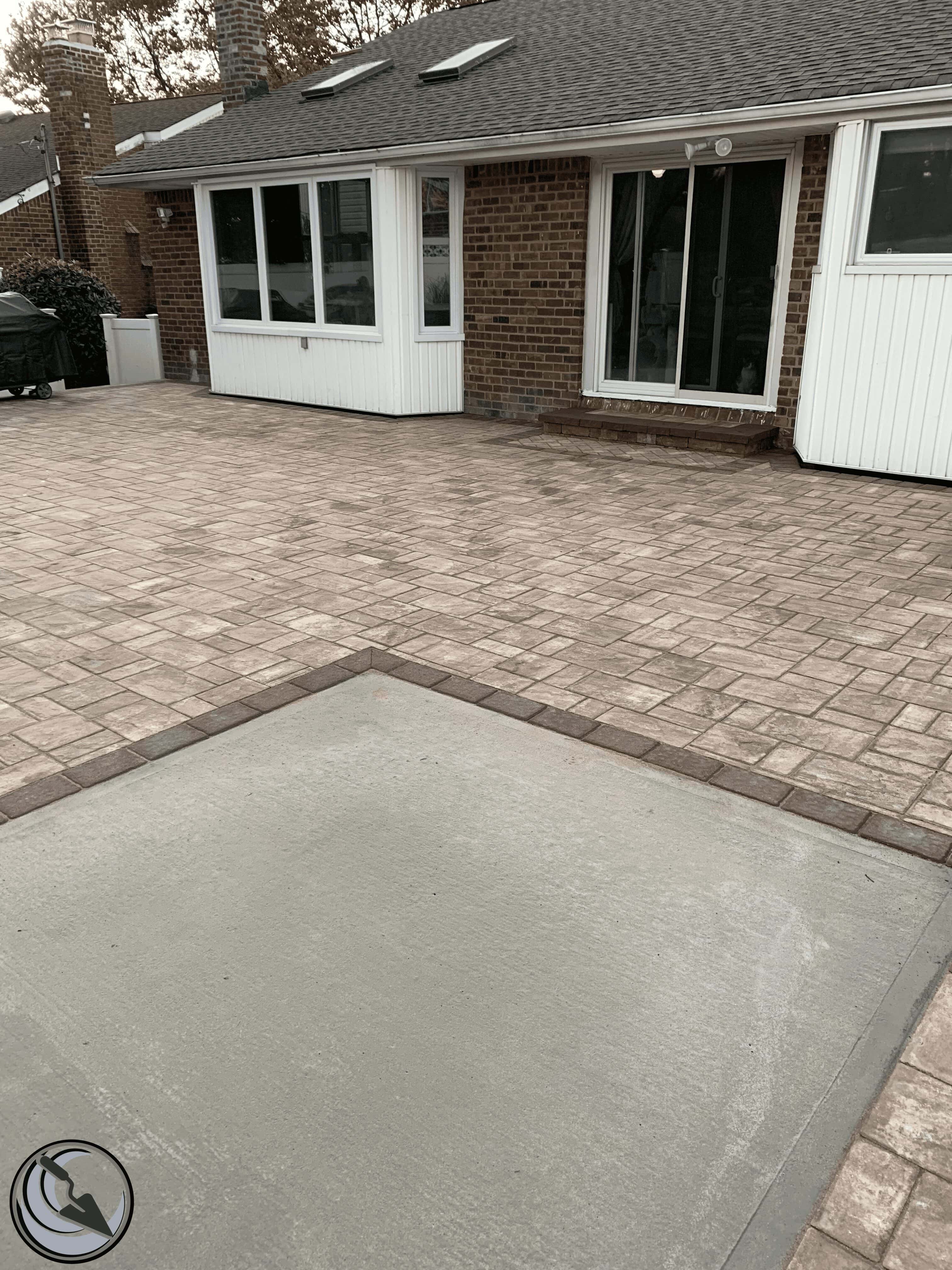
Summary:
You call your landscaper because you already know them. They do good work on the lawn, they show up when they say they will, and they mention offhand that they also do patios. It seems like the obvious move.
But paver installation and landscaping are not the same trade. The training is different, the licensing is different, and the technical demands are different — especially on Long Island, where sandy soil and freeze-thaw cycles will expose a poorly built base within a season or two. Before you sign anything, it’s worth understanding what you’re actually hiring for.
A brick patio contractor’s entire focus is structural. The job starts well below the surface — excavating to the right depth, evaluating soil stability, planning for drainage, compacting the aggregate base, and setting edge restraints that keep everything locked in place over time. The visible patio you walk on is the last step, not the main one.
Landscaping, by contrast, is primarily about plants, soil preparation for growing things, irrigation, and outdoor aesthetics. A skilled landscaper is genuinely good at what they do. But their training is built around a different set of problems. When a landscaping company adds paver installation to their service list, they’re often applying general construction knowledge to a trade that has its own certification standards, its own base preparation requirements, and its own licensing structure.
That distinction matters more in Suffolk County, NY than it might somewhere else.
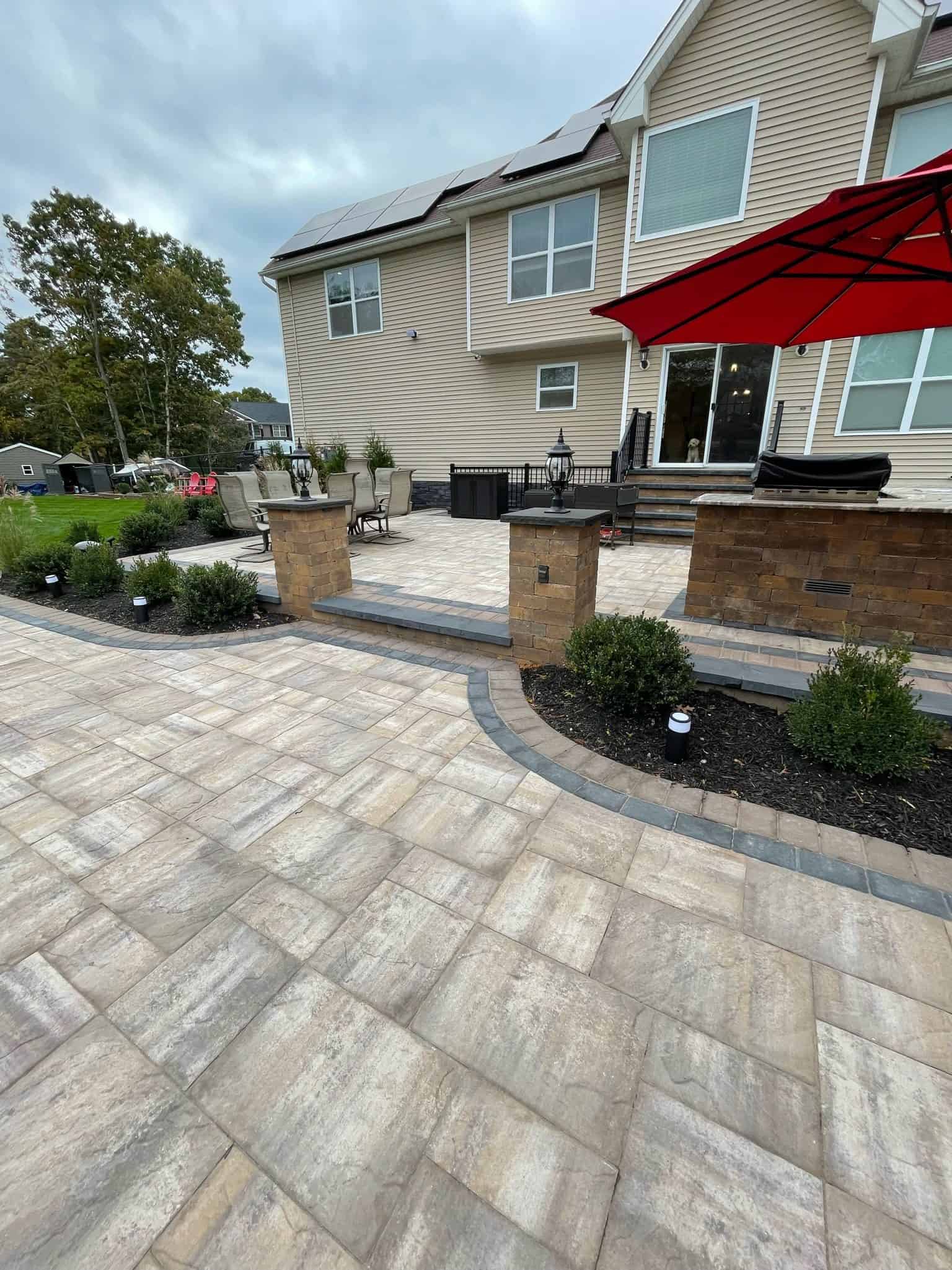
Long Island’s soil is not forgiving of shortcuts. Much of Suffolk County sits on glacial outwash — predominantly sandy soil that drains quickly in some spots and holds water in others. That variability means the base preparation under a paver patio has to be done right the first time. There’s no universal formula you can apply without actually assessing the site.
On top of that, Long Island experiences roughly 15 to 25 freeze-thaw cycles every winter. Each one puts stress on whatever is under your pavers. Water gets into the base, freezes, expands, and slowly works its way through any weak point in the installation. A patio built on a 4-inch base — which is a common shortcut — won’t survive many Long Island winters before it starts shifting, cracking, or heaving.
The industry standard for freeze-thaw climates is 6 to 12 inches of compacted aggregate base. Our standard at Stone Escapes Masonry & Outdoor Design Inc is 8 to 10 inches, with proper base layering, drainage planning, and edge restraint installation built into every project. That’s not a premium upgrade — it’s just how the job is supposed to be done in Suffolk County, NY.
A landscaper who installs pavers on the side may not be accounting for any of this. They may not know what the soil looks like two feet down on your specific property. They may not have assessed your drainage situation at all. And when the patio starts to fail two or three winters in, the conversation about who’s responsible gets complicated fast — especially if the contractor wasn’t licensed for structural hardscape work to begin with.
In Suffolk County, the Home Improvement Contractor license is a separate credential from a landscape contractor registration. A landscaper who holds a pesticide applicator license or a standard landscape registration is not automatically licensed for hardscape construction. That matters for your homeowner’s insurance. It matters if something goes wrong. And it matters when you’re trying to figure out who’s accountable.
If you’re planning to use premium pavers — Techo-Bloc, Unilock, Cambridge, Nicolock — there’s something worth knowing before you hire anyone. These manufacturers run authorized contractor programs. Their lifetime material warranties typically only attach when the installation is done by a certified, authorized installer. If someone who isn’t certified installs your Techo-Bloc pavers, the materials may be genuine, but the warranty may not transfer to you.
That’s not a technicality buried in fine print. It’s a real financial risk on a project that can run tens of thousands of dollars.
We hold certified installer status with Cambridge, Techo-Bloc, Unilock, Nicolock, Eldorado, and Boral. Not because the paperwork is impressive to hang on a wall, but because those certifications mean we’ve been vetted by the manufacturers themselves, we use their materials correctly per specification, and your warranty is actually valid when the project is complete.
Most landscape contractors who do pavers on the side won’t hold certifications across multiple manufacturers — or any at all. That’s not a criticism of their landscaping work. It’s just a different trade. When you hire a masonry specialist, you’re hiring someone whose entire professional identity is built around getting this specific type of work right. The certifications, the base preparation standards, the drainage planning — none of it is an add-on. It’s the whole job.
There’s also the question of what happens when something does go wrong. A certified contractor working with manufacturer-approved materials and installation methods has a clear path to resolution. A landscaper who installed your pavers as a side job, without certification, without the right license, and without a warranty in place — that path is a lot murkier.
The estimate conversation is where most of this gets sorted out — if you know what to ask. A contractor who understands Long Island hardscape will talk about your soil, your drainage, your base depth, and your edge restraints before they ever talk about paver styles. If the first conversation is mostly about aesthetics and price, that’s a signal worth paying attention to.
Ask for their Suffolk County Home Improvement Contractor license number. Ask which manufacturer certifications they hold. Ask whether the same crew will be on your project from start to finish, or whether they subcontract. These aren’t trick questions — they’re basic vetting, and a contractor who does this work seriously will have clear answers.
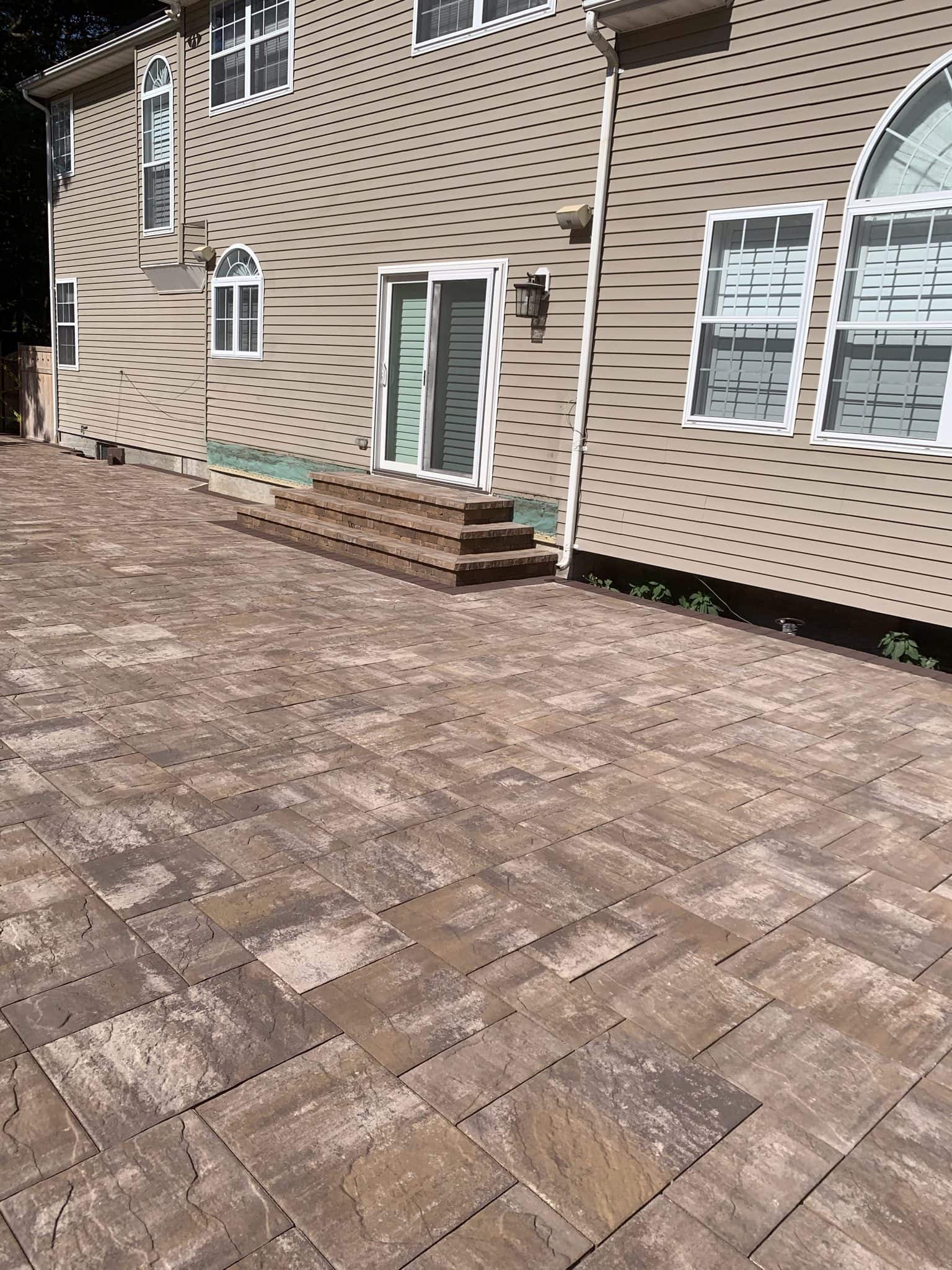
Licensing in New York’s hardscape space is more layered than most homeowners realize. Suffolk County requires a Home Improvement Contractor (HIC) license for outdoor construction work. But if your project is in Southampton or East Hampton — two of the most actively enforced townships on Long Island — those municipalities issue their own licenses on top of the county requirement. A contractor who is licensed in Suffolk County but not in Southampton cannot legally do the work in Southampton.
We’re licensed in Suffolk County (#HI-62761), Nassau County (#167041), Southampton (#L005914), and East Hampton (#9808). Those are real license numbers you can verify. When a contractor gives you a license number, look it up. It takes two minutes and it tells you whether they’re current and in good standing.
The reason this matters beyond legal compliance is liability. If an unlicensed contractor does work on your property and someone is injured — a guest trips on an improperly installed step, a retaining wall fails — your homeowner’s insurance may not cover it. The coverage depends in part on whether the work was done by a licensed contractor. That’s a significant exposure that most homeowners don’t think about until after the fact.
Licensing also signals something about the contractor’s commitment to the trade. Getting licensed in multiple jurisdictions, maintaining certifications, carrying the right insurance — these things require ongoing effort. A contractor who has done all of that is telling you something about how seriously they take the work.
One of the most common complaints about paver contractors — and contractors in general — is the rotating crew problem. You meet one person at the estimate, a different team shows up on day one, and by day three you’re explaining your drainage concerns to someone who has no idea what was discussed. Every handoff is an opportunity for something to get lost.
This is especially common with larger landscape companies that take on hardscape as part of a broader service offering. They may have the equipment and the materials, but the crew doing your patio today might be doing a lawn job across town tomorrow. There’s no continuity, and continuity is what makes a complex project go smoothly.
At Stone Escapes Masonry & Outdoor Design Inc, owner Iain Traynor is on every estimate and every job site. Not a salesperson, not a project manager — the person who scoped your project is the same person overseeing its execution. The crew that starts your patio finishes it. One of our clients put it plainly in a review: “It was the same guys every day, from start to finish.”
That consistency isn’t just about comfort. It’s functional. When the same crew works a project through, they understand the drainage plan, they know where the edge restraints need extra attention, they’ve seen the soil variation across your yard. They’re not starting from scratch every morning.
Iain’s background runs through carpentry — learned from his father, a master carpenter — and then into union masonry work with Local 1 Bricklayers Union in Manhattan. That combination of structural carpentry and professional masonry training shapes how every project gets approached: not as a landscaping add-on, but as a construction project that has to perform for 20 to 30 years in one of the more demanding climates in the Northeast.
Communication stays direct throughout. No client portals, no automated status updates. When you have a question about your project, you get an answer from someone who actually knows what’s happening on your job site.
The difference between a brick paver contractor and a landscape contractor isn’t about which one is better at their job. It’s about which one is trained and licensed to do yours. Paver installation in Suffolk County, NY — with its sandy soil, coastal conditions, and hard winters — is a structural trade. It requires the right base depth, the right drainage planning, the right certifications, and the right licensing for your specific township.
A landscaper who adds pavers to their service list may do fine work. But “fine” and “built to last 25 years in East Hampton’s freeze-thaw climate” are not the same standard.
If you’re planning a paver patio, driveway, or poolscape in Suffolk County, NY and want a straight conversation about what the job actually involves, Stone Escapes Masonry & Outdoor Design Inc offers free on-site estimates scheduled directly with the owner — no phone quotes, no middlemen. Come see what a real assessment looks like before you commit to anything.
Article details:
Share:
Continue learning: