Choosing the right paving company in Suffolk County isn't just about price. Here's what actually separates a quality local contractor from a national one.
Share:
Summary:
Every spring, homeowners across Suffolk County step outside, look at their driveway, and think: this year, I’m finally fixing it. Then comes the hard part — figuring out who to actually hire.
There’s no shortage of options. National brands with polished websites. Local companies with yard signs. Door-to-door guys offering deals on “leftover asphalt.” It’s a lot to sort through, especially when most homeowners have no easy way to tell a quality installation from a rushed one until it’s already failing.
This page is here to help with that. We’ll walk through what separates local paving companies from national ones, why it matters more in Suffolk County than most places, and what to look for before you commit.
On the surface, a national paving company and a local one might look similar — both have websites, both offer free estimates, both claim to be licensed and insured. But the way they operate is fundamentally different, and those differences tend to show up in the finished product.
National companies typically rely on local subcontractors to do the actual work. The estimate comes from a sales rep, the job gets handed off to a rotating crew, and the person who assessed your property is rarely the same person overseeing the installation. That gap in accountability is where corners get cut.
We operate differently. Our name and reputation are directly tied to every job we do. In a place like Suffolk County — where neighbors talk, Nextdoor is active, and word travels fast from Huntington Station to Farmingdale — a bad job follows you. That community accountability is a real motivator that no corporate structure can replicate.
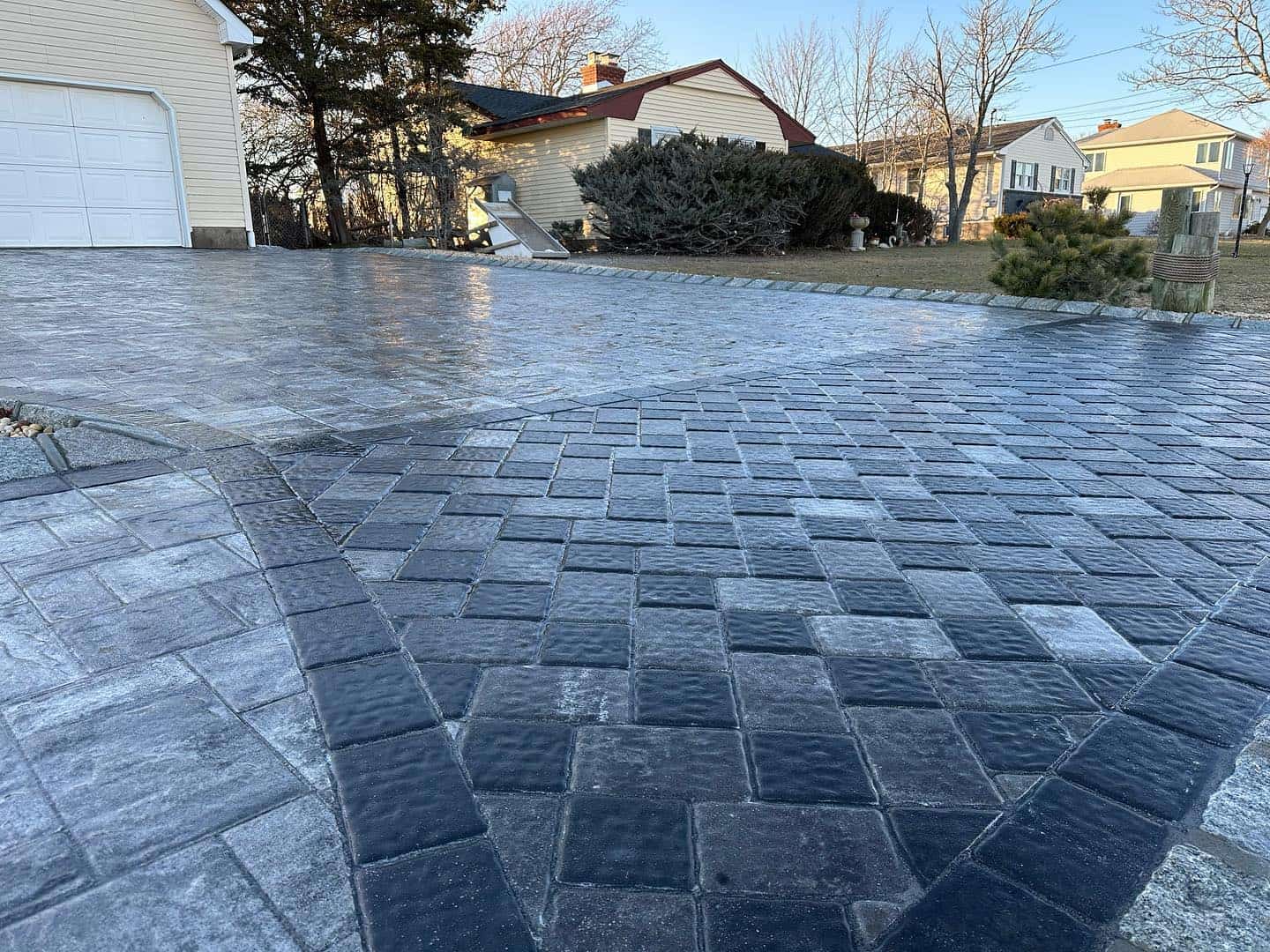
Long Island sits on glacial outwash — sandy, well-draining soil left behind when the glaciers retreated thousands of years ago. It behaves differently than the clay-heavy or loam-based soils you’d find in other parts of New York, and it has real implications for how a driveway should be built.
Sandy soil compacts well but shifts more easily under load and freeze-thaw pressure. Without proper excavation depth and a compacted gravel base, that movement transfers directly into the asphalt above it — leading to rutting, cracking, and uneven surfaces that homeowners often chalk up to bad luck rather than bad preparation. It’s not bad luck. It’s a skipped step.
We excavate to 8 to 10 inches on Suffolk County projects because the soil demands it. That’s deeper than what many contractors default to, and it’s not something you’ll see in a proposal unless the contractor actually knows why it matters. When you’re comparing quotes, ask specifically about excavation depth. A vague answer — or no answer at all — tells you something important.
Beyond the base, Long Island’s coastal exposure adds another layer of complexity. Properties near Long Island Sound or the South Shore face elevated humidity and salt air year-round. Those conditions accelerate surface degradation on materials that weren’t specified with that environment in mind. A contractor who’s spent their career working inland won’t naturally account for this. We’ve been working in Suffolk and Nassau Counties for years, so we do.
Drainage is the third piece. High water tables in coastal areas, combined with the region’s flat terrain, mean water has nowhere to go unless the grading is planned carefully. Poor drainage doesn’t just create puddles — it accelerates freeze-thaw damage, erodes the base, and turns minor surface cracks into structural failures within a season or two. Getting the drainage right from the start isn’t optional on Long Island. It’s the job.
Most homeowners assume that if a contractor has a Suffolk County license, they’re covered. That’s a reasonable assumption — but it’s not accurate, and the gap can create real problems.
Suffolk County issues home improvement contractor licenses through the Department of Labor, Licensing & Consumer Affairs, and those licenses include specific sub-categories: H7 for driveways, H8 for masonry. A contractor needs the right category, not just any county license. But here’s what a lot of homeowners in the eastern part of the county don’t realize: a Suffolk County license alone does not authorize work in East Hampton, Southampton, or Shelter Island. Those townships have their own separate licensing requirements, and a contractor without the correct township credentials is technically unlicensed for that work — regardless of what their Suffolk County paperwork says.
This matters most for homeowners in the Hamptons and surrounding areas, where property values are high and the stakes of a bad hire are even higher. If something goes wrong with an unlicensed contractor — a worker gets hurt, a dispute arises, property gets damaged — your legal protections are significantly weaker. Your homeowners insurance may be pulled into the situation, and you may have limited recourse against the contractor.
We hold licenses in Suffolk County, Nassau County, Southampton, and East Hampton. That’s four separate licensing jurisdictions, each with its own requirements. It’s not a minor administrative detail — it’s the difference between a contractor who can legally and properly work throughout Long Island and one who can’t.
When you’re vetting any paving company for a project in Suffolk County, ask them directly which jurisdictions they’re licensed in. Then verify it. Suffolk County’s licensing records are publicly accessible, and a legitimate contractor will have no hesitation pointing you toward them.
Once you’ve narrowed your list down to a few contractors, the comparison process starts — and price is usually the first thing people look at. It shouldn’t be the only thing.
A low bid often means something was removed from the scope. Base preparation, excavation depth, edge restraints, drainage grading — these are the line items that disappear when a contractor needs to sharpen their pencil. They’re also the items that determine whether your driveway holds up for two decades or starts showing problems in two years.
What you’re really evaluating is whether the contractor understands your specific property and can explain what they’re going to do and why. A detailed written estimate, a clear explanation of the process, and direct communication with the person actually running the job — those are the signals that matter.
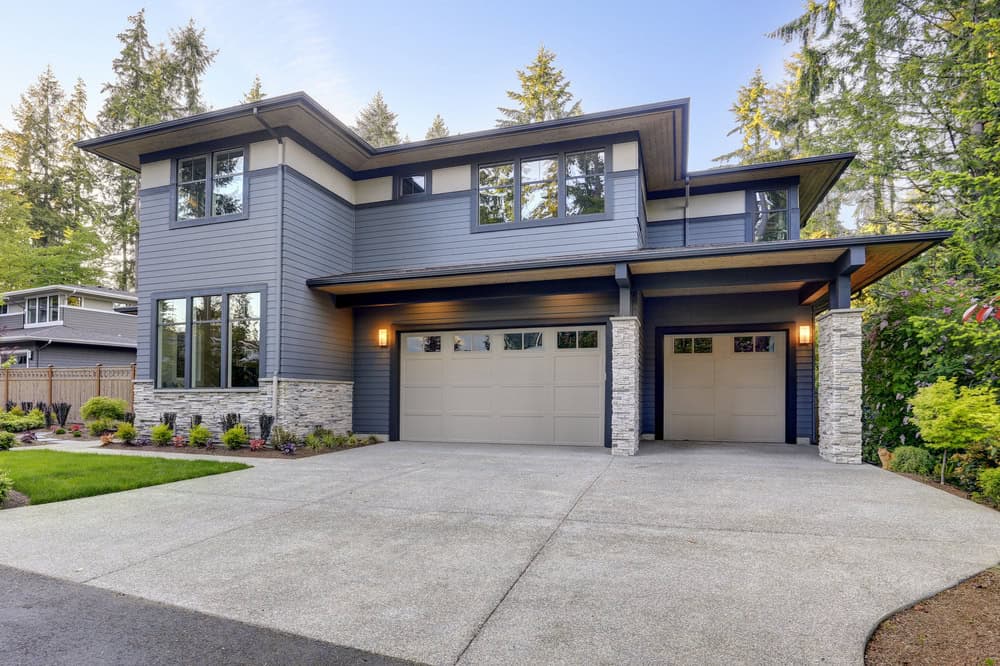
Long Island has a well-known problem with door-to-door paving solicitors — crews that knock on doors offering deals on “leftover asphalt from a nearby job.” It sounds like a bargain. It isn’t.
Legitimate hot-mix asphalt is laid at around 300 degrees Fahrenheit and has to be worked quickly after it leaves the plant. It can’t be transported between jobs and reused — the material cools, loses its workability, and won’t bond properly. Anyone offering leftover asphalt is either using cold, degraded material or running a scam.
Beyond the door-to-door angle, there are other red flags worth knowing. A contractor who demands full payment upfront before any work begins is a serious warning sign — standard practice is a deposit followed by final payment on completion. A contractor who can’t provide proof of general liability insurance (Suffolk County requires a minimum of $500,000) is another. If a worker gets hurt on your property and the contractor isn’t properly insured, your homeowners policy gets pulled in, and your premiums can follow.
Vague or verbal-only estimates are also a problem. If the scope of work isn’t written down — materials, excavation depth, drainage plan, edge treatment — there’s no accountability when something is skipped. A detailed written estimate isn’t just a formality. It’s the document you’d reference if anything goes wrong.
One more: if the contractor can’t tell you specifically who will be on your job site, that’s worth asking about. Companies that use rotating subcontractor crews often have no consistent quality control. The person who sold you the job may never show up again after the contract is signed.
A well-done asphalt driveway in Suffolk County starts well before the first truckload of material arrives. The site has to be evaluated — grading, drainage, existing sub-base condition, proximity to utilities. In New York, any excavation requires a call to 811 before digging begins. That’s state law, and we follow it without being reminded.
From there, excavation goes down to the appropriate depth for the soil conditions. On Long Island, that typically means 8 to 10 inches to account for sandy subgrade and freeze-thaw stress. A compacted gravel base goes in next, followed by proper grading to direct water away from the structure. Edge restraints are installed to prevent lateral movement over time — one of the most commonly skipped steps on budget jobs, and one of the first things to show up as cracking along the driveway perimeter.
The asphalt itself is hot-mix, laid fresh from the plant and compacted while it’s still workable. A quality crew keeps pace with the paver to avoid seams and cold joints, which are weak points where water can infiltrate and accelerate failure. The finished surface should be smooth, properly sloped, and free of low spots where water can pool.
After installation, the driveway needs time to cure — typically 30 days before sealcoating. Sealcoating on a schedule of every two to three years after that protects the surface from UV degradation, oil stains, and moisture intrusion, and it’s one of the most cost-effective ways to extend the life of an asphalt driveway significantly.
A properly built driveway in Suffolk County, with the right base preparation and maintenance, should last 20 years or more. One that cuts corners on excavation or drainage may look fine for a season — and then start showing the consequences. The difference between those two outcomes is almost entirely in what happens before the asphalt goes down.
The best asphalt paving companies aren’t necessarily the biggest or the cheapest. They’re the ones who understand the ground they’re working on, carry the right credentials for the jurisdiction, and communicate directly with you from estimate to completion.
In Suffolk County, that means knowing how sandy soil behaves, planning for freeze-thaw cycles and coastal moisture, and holding the correct licenses — not just a county-level credential, but township-level authorization for East Hampton, Southampton, and anywhere else the work is happening.
If you’re evaluating contractors, ask the hard questions. What’s the excavation depth? Who specifically will be on site? Can you verify their licensing? A contractor who knows their craft will answer those questions without hesitation. We do. If you’re ready to talk through your project with someone who understands Suffolk County’s specific challenges, reach out to Stone Escapes Masonry & Outdoor Design Inc for a conversation.
Article details:
Share:
Continue learning: