Not all landscape designers on Long Island are built for Long Island. Here's what to look for — and what to ask — before you hire.
Share:
Summary:
You’ve probably already looked at a few websites, maybe gotten a quote or two, and noticed the prices are all over the place. One contractor comes in at $12,000. Another says $28,000. Same job, same square footage — completely different numbers. Nobody explains why.
That gap isn’t random. It almost always comes down to what’s happening underground, work you’ll never see once the project is done. This guide is for Suffolk County homeowners who want to understand what they’re actually buying before they sign anything — and how to find a landscape designer who builds things to last on Long Island specifically.
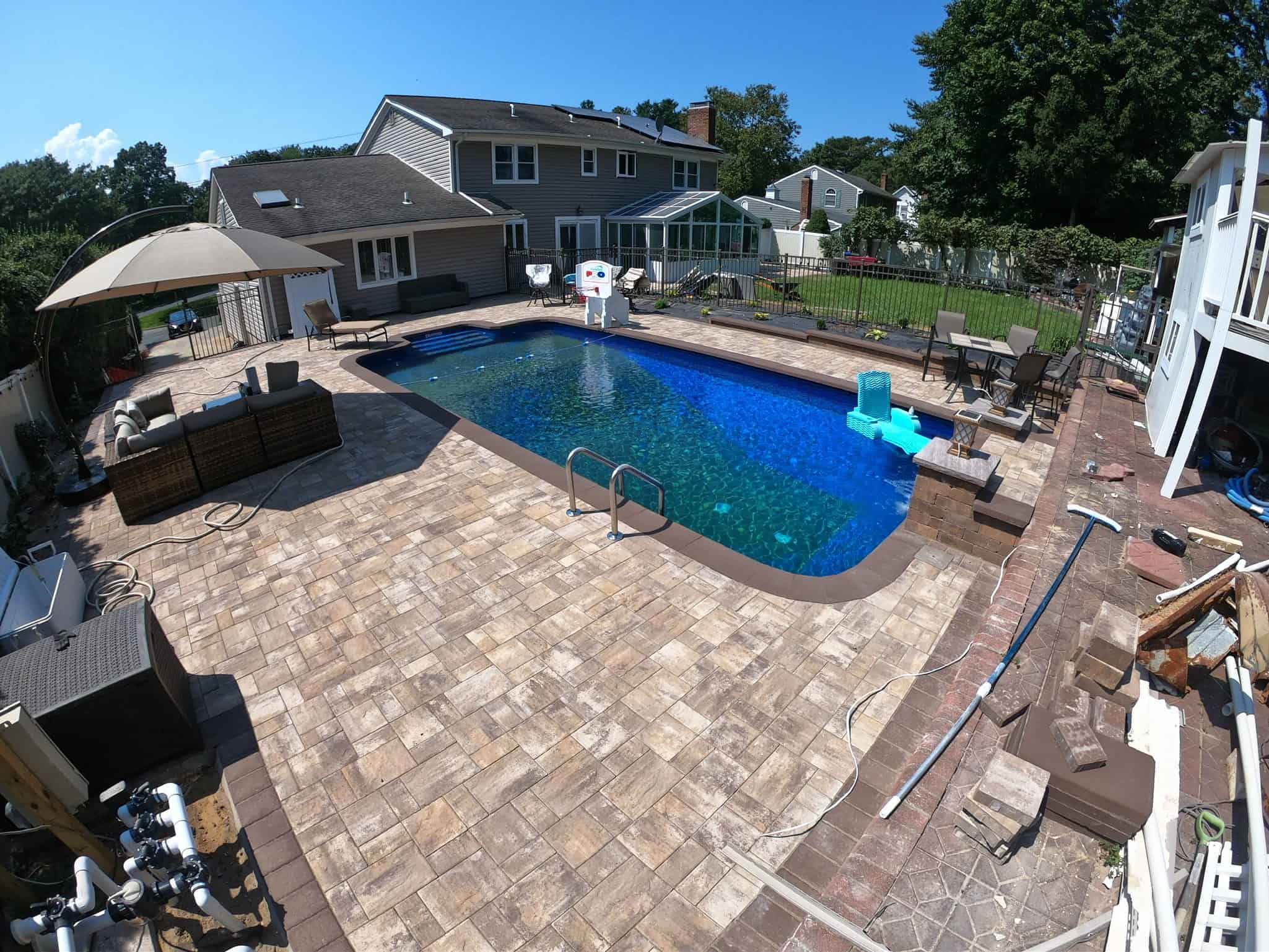
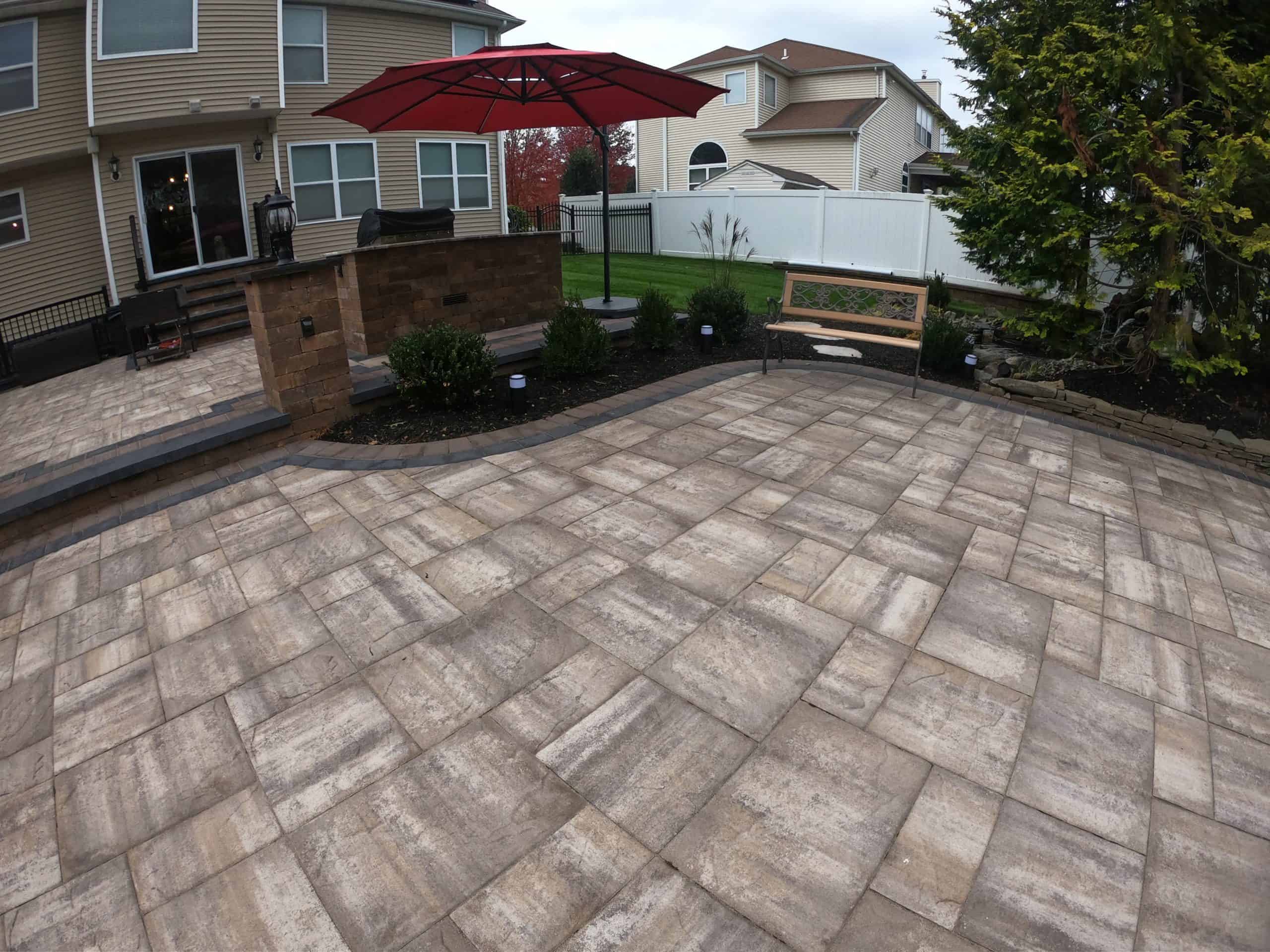
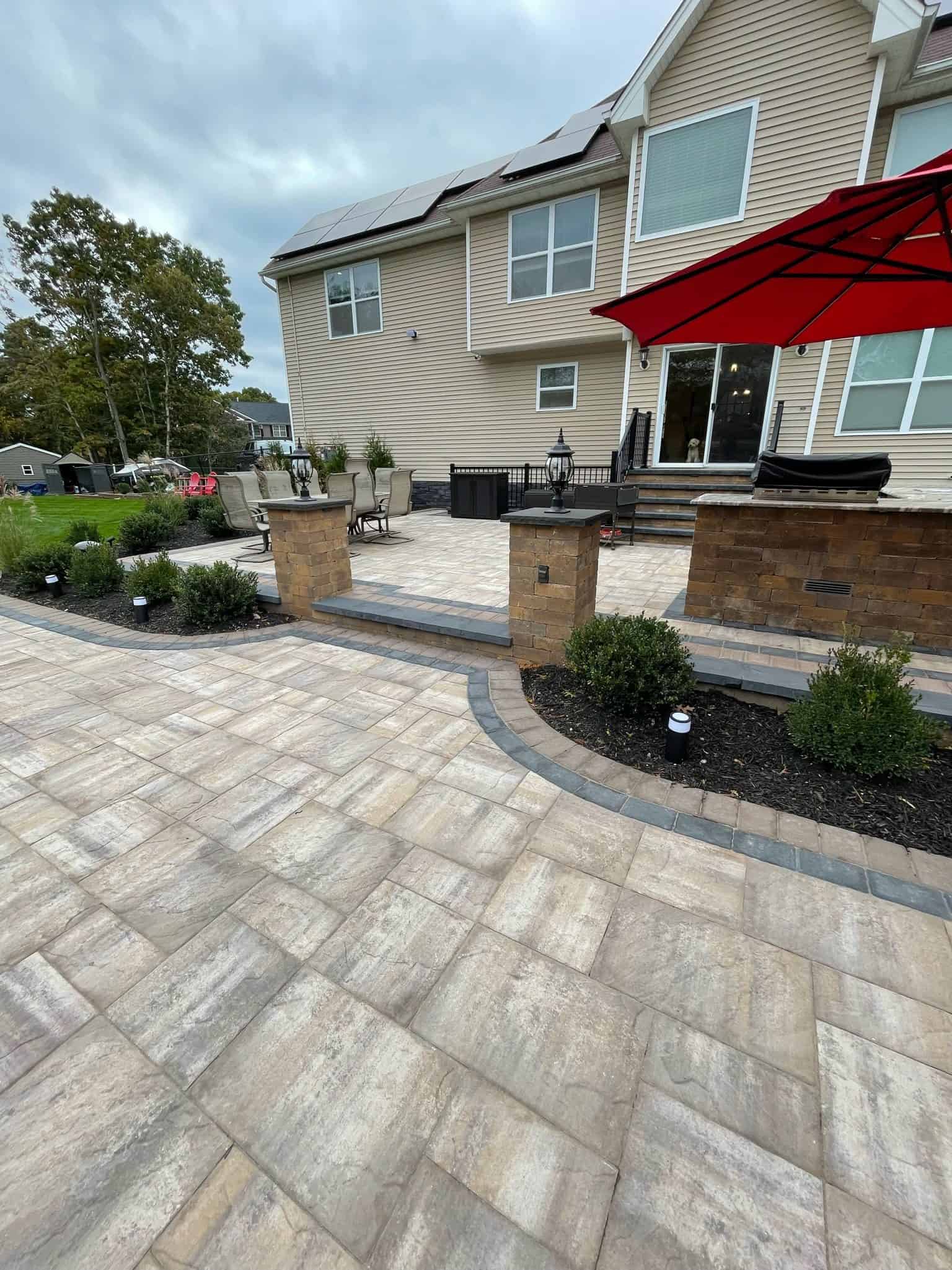
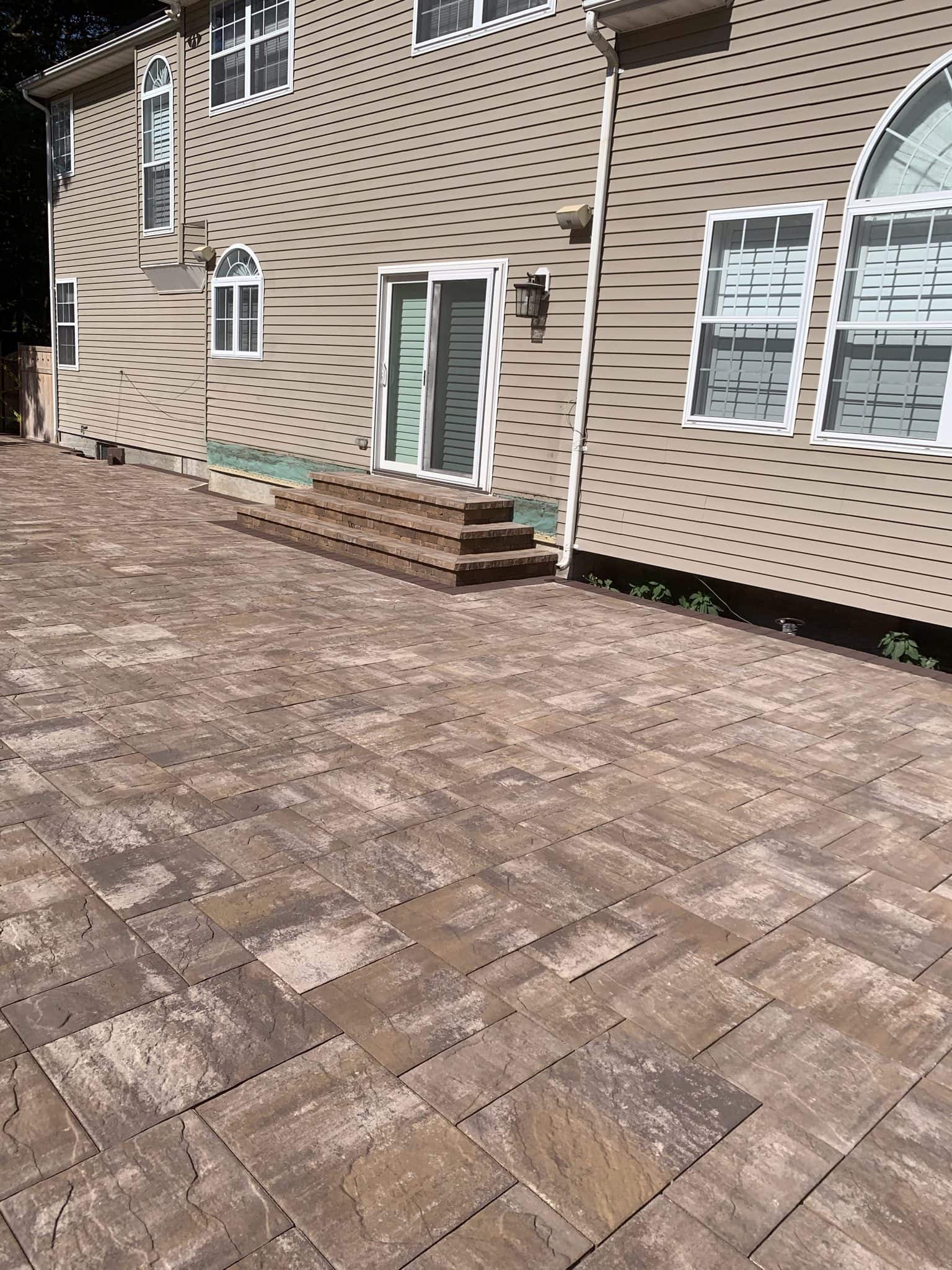
The term “landscape designer” gets used loosely. Some companies focus almost entirely on plants — lawns, garden beds, shrubs. We specialize in hardscape: the patios, driveways, walkways, retaining walls, outdoor kitchens, fire features, and pool surrounds that form the permanent structure of an outdoor space.
These are two different skill sets, and they require different credentials. A contractor licensed for softscape work — planting, grading, basic lawn installation — isn’t automatically qualified to build a retaining wall over three feet, install a structural paver patio, or construct a masonry outdoor kitchen. In New York, those categories require separate licensing, and not every company holds both.
When you’re searching for landscape designers near you in Suffolk County, it’s worth getting specific about what you actually want built. A beautiful planting plan and a durable paver patio are both valuable, but they’re not the same job.
Here’s what most homeowners don’t realize until it’s too late: the part of a hardscape project that determines whether it lasts ten years or two years is completely invisible once the work is done.
On Long Island, the ground beneath your patio or driveway is working against you in ways that don’t apply to most other markets. The soil across Suffolk County is predominantly sandy and glacial — it shifts, it drains unevenly, and it doesn’t provide a stable base on its own. Layer on top of that the coastal moisture and salt air that affects properties from Babylon to East Hampton, and you have conditions that will expose every shortcut a contractor took within a few winters.
Then there’s the freeze-thaw cycle. Long Island typically sees somewhere between 20 and 40 of these cycles every winter season. Each one puts hydraulic pressure on any water trapped in a poorly prepared base. If the excavation wasn’t deep enough, if the aggregate wasn’t properly compacted, if drainage wasn’t planned — the surface above starts to heave, crack, and separate.
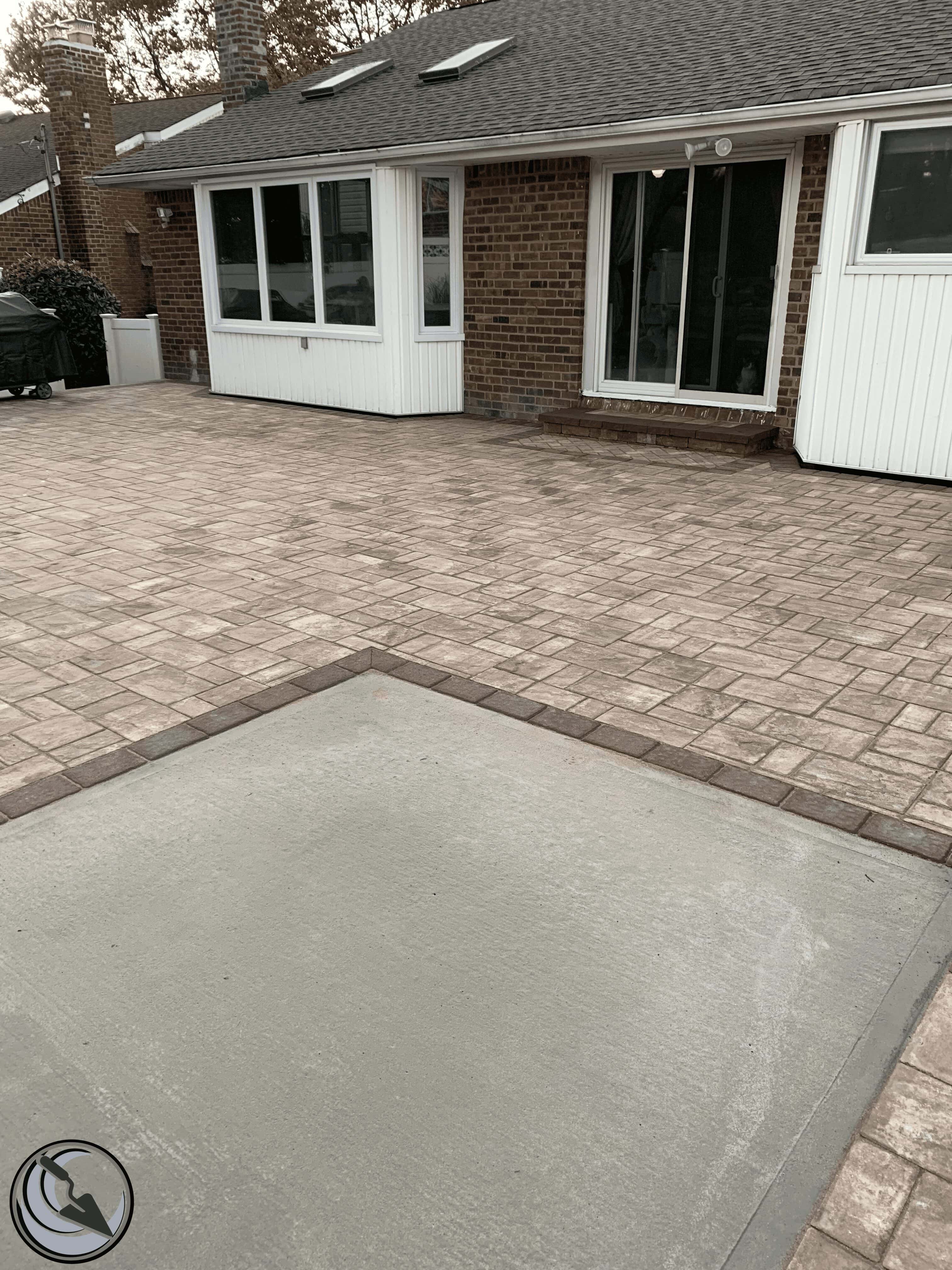
It doesn’t happen all at once. It happens gradually, and by the time it’s obvious, the fix is expensive. Quality outdoor landscape design on Long Island starts with excavation to 8–10 inches, compacted stone aggregate base layers, proper drainage planning, and edge restraint installation to prevent lateral spread over time. This is standard practice for us on every project. It’s also the single biggest variable between a quote that seems cheap and one that seems high — the cheaper contractor is almost always skipping some or all of this.
When you’re comparing estimates, ask each contractor directly: how deep are you excavating, and what’s going in the base? If they can’t answer that question clearly, that tells you something.
This is the part most homeowners skip, and it’s the part that can come back to bite them years later — especially when selling a home.
In New York, there’s no single statewide home-improvement license. Licensing is driven by local law. Suffolk County has its own home improvement contractor license, and to hold it, a contractor must carry at least $500,000 in liability insurance and maintain active workers’ compensation coverage. But here’s what a lot of homeowners don’t know: a Suffolk County license alone doesn’t make a contractor legal to work in every town within the county.
Individual municipalities layer their own requirements on top. Southampton and East Hampton — the two most prominent Hamptons towns — each require a separate municipal license. A contractor who holds a Suffolk County license but not the specific Southampton or East Hampton license is not legally permitted to pull permits in those towns. If unpermitted work is discovered during a home sale or an insurance claim, the liability falls on you, not the contractor.
We hold licenses in Suffolk County (#HI-62761), Nassau County (#167041), Southampton (#L005914), and East Hampton (#9808). Those numbers are publicly searchable — you can verify any of them directly through the relevant municipal offices. We mention them because we know this is exactly the kind of thing you should be checking before hiring anyone.
Beyond licensing, manufacturer certifications are worth understanding. Being a certified installer for Cambridge, Techo-Bloc, Unilock, or Nicolock isn’t a self-declared title — it requires completing training programs and demonstrating actual installation competency. Most of these manufacturers maintain public directories of certified installers that homeowners can look up independently.
Once you’ve narrowed your list to contractors who are licensed, insured, and credentialed, the estimate process itself tells you a lot. The best signal isn’t the price — it’s how the contractor behaves before you’ve committed to anything.
Do they show up in person? Does the owner come out, or do they send a salesperson? Do they ask questions about how you use your yard, whether you have drainage issues, what happened to the last project on your property? A contractor who shows up, listens, and talks through the process before quoting anything is giving you a preview of how the project will go.
One of the most consistent complaints about home improvement contractors — and one of the most consistently overlooked factors when hiring — is crew rotation. Many larger companies send whoever is available on a given day. Different faces, different familiarity with the project, no continuity between what was done yesterday and what’s happening today.
This matters more than it sounds. A hardscape project isn’t a series of independent tasks — it’s a sequence where each phase depends on what came before it. If the crew installing your paver field didn’t do the base prep, they may not know what drainage decisions were made, where the grade was set, or why a certain edge was handled a specific way. Small miscommunications compound, and the result is a project that looks fine on the surface but has inconsistencies underneath.
We use the same crew from start to finish on every project. It’s not a marketing line — it’s something our clients specifically notice and mention. Reviews from past customers reference it directly: the same crew showed up every day, they knew the project, and the work reflected that continuity. In an industry where rotating subcontractors are the default, this is genuinely uncommon.
Owner Iain Traynor is also present throughout — not just at the estimate, not just at the final walkthrough, but checking in during active phases of the project. That kind of direct oversight keeps quality consistent and keeps communication clear. If something comes up mid-project, you’re not waiting for a message to travel through a project manager to a crew lead. You’re talking to the person who designed the project and knows every decision that went into it.
For homeowners who’ve been burned before — who hired someone who was great at the estimate and then disappeared — this distinction tends to land immediately.
**How much does a hardscape project cost on Long Island?**
Costs vary significantly based on scope, materials, and site conditions. A basic patio-and-walkway project in Suffolk County typically runs anywhere from $8,000 to well over $30,000 for the same square footage, depending on material selection, base requirements, and site complexity. Outdoor kitchens generally start around $15,000 for a basic setup and can reach $35,000 or more for a full build. Full outdoor living transformations — combining a patio, outdoor kitchen, fire features, seating walls, and lighting — can exceed $150,000. National cost guides are nearly useless as a reference point for Suffolk County homeowners because labor rates here are substantially higher than the national average.
**Do I need a permit for a patio or retaining wall in Suffolk County?**
It depends on the scope and your specific town within Suffolk County. Many hardscape projects require permits, particularly retaining walls above a certain height, structural paving, and anything that affects drainage or grading. We know the permit requirements for each municipality and pull the necessary permits before work begins. If a contractor tells you permits aren’t needed and you’re not sure that’s accurate, it’s worth verifying directly with your town’s building department.
**What’s the difference between a landscape designer and a landscape architect?**
A landscape architect is a licensed professional who can stamp structural plans and is trained to manage large-scale or complex projects involving grading, drainage engineering, and environmental compliance. A landscape designer typically focuses on the aesthetic and functional design of outdoor spaces without the structural engineering component. For most residential hardscape projects in Suffolk County — patios, driveways, outdoor kitchens, retaining walls — what matters most is the contractor’s construction credentials, their manufacturer certifications, and their track record with projects like yours in similar local conditions.
**How do I know if a contractor has actually done work in my area?**
Ask. A reputable contractor should be able to point you to completed projects in your general area — ideally in your town or a neighboring one. Neighbors who’ve had work done are the most reliable reference point because you can actually walk over and look at the project a year or two after it was finished. A large part of our work comes through referrals from neighbors who saw a project nearby and wanted the same result.
The search for a landscape designer on Long Island comes down to one thing more than any other: does this contractor actually understand what they’re building on? Sandy glacial soil, coastal salt air, and a winter that runs 20 to 40 freeze-thaw cycles — these aren’t minor factors. They’re the reason hardscape fails here when it’s built to a national standard instead of a Long Island one.
Look for someone who’s licensed at every level your municipality requires, who can name the certifications they hold and explain what those certifications mean, and who shows up personally to understand your project before quoting it. The price difference between a well-built patio and a poorly built one isn’t just cosmetic — it’s the difference between a surface that holds for decades and one that needs to be torn out and rebuilt in five years.
If you’re planning an outdoor project in Suffolk County and want a straightforward conversation about what it actually takes to do it right, Stone Escapes Masonry & Outdoor Design Inc offers free onsite estimates scheduled directly with the owner. No call centers, no automated systems — just a direct conversation with someone who’s been building on Long Island for over 15 years.
Article details:
Share:
Continue learning: