Suffolk County homeowners face unique challenges finding reliable masons who understand local soil, coastal conditions, and proper installation techniques that actually last.
Share:

Summary:
Suffolk County’s masonry market is like a crowded diner: everyone’s shouting, but not everyone is a chef. The real difficulty starts when you try to separate the licensed pros from the guys working out of a mystery van. The county legally requires home improvement licensing for masonry, but that doesn’t stop unlicensed operators from trying their luck. You’ll find door-to-door solicitors claiming they have “leftover materials”—which is contractor-speak for “I’m hoping you don’t ask for my paperwork.”
You’ll get phone quotes from guys who’ve never even seen your backyard. You’ll encounter bids so suspiciously low they make a 99-cent steak look like a safe bet. Legitimate masonry contractors stay busy through referrals and repeat customers; we don’t need to knock on your door while you’re eating dinner to beg for work. When someone pushes for a “sign now or lose the deal” decision, that’s your signal to run.
The challenge isn’t finding a human who can lift a brick—it’s finding an insured professional who understands that living on a giant sandbar requires a very specific set of skills.
Masonry work that performs perfectly in other states often fails spectacularly on Long Island. Our sandy soil drains well, which is lovely for your basement but terrible for stability; it shifts and settles if you don’t treat the base like a fortress. Coastal moisture acts like a slow-motion wrecking ball on materials not rated for salt, and our freeze-thaw cycles expand water in joints until your patio looks like a topographical map of the Alps.
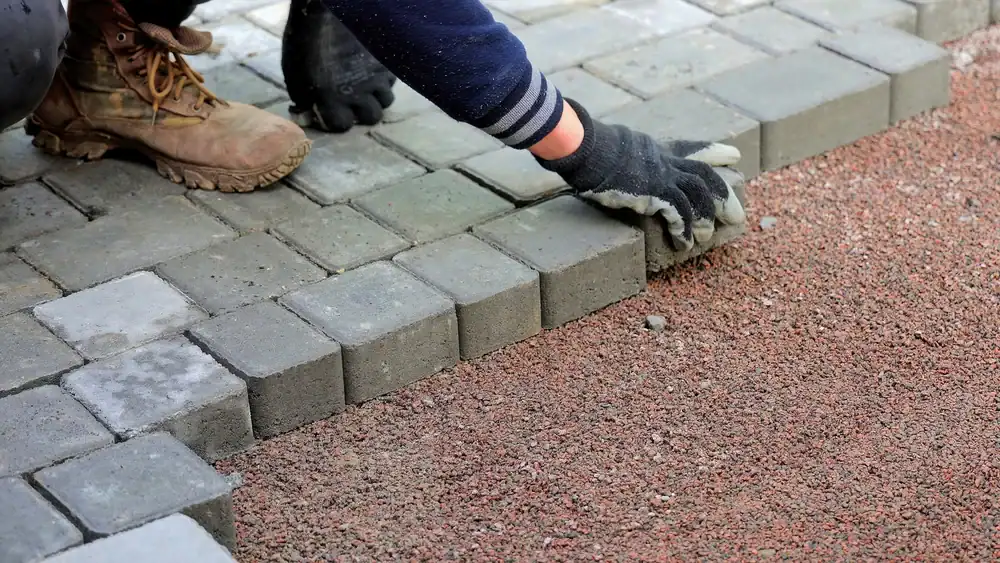
Generic contractors excavate 6 inches, toss in some dirt, and call it a day. That might work in Georgia clay, but in Suffolk, you need 8 to 10 inches minimum—deep enough to actually stay put when the ground decides to heave. Professional installations use crushed stone base material in layers, compacting each one with commercial equipment that sounds like a small earthquake. A loose base is essentially a countdown to a sinkhole.
Drainage planning is what separates the pros from the “puddle-makers.” Poor drainage causes 90% of retaining wall failures here. Water builds up behind walls during those lovely Nor’easters, creating enough “hydrostatic pressure” to push a wall right over. Standard solutions just don’t cut it when the sky opens up and saturates our sandy ground.
An experienced masonry contractor won’t even pick up a shovel until they’ve assessed your specific grade and soil. They know that existing water flow patterns determine whether your patio stays level for thirty years or starts sinking by next autumn. We select materials specifically for “Long Island durability.” Drainage systems are baked into the cake from day one, not added as a “whoops” after your backyard becomes a swamp.
The difference between decades of BBQs and a five-year disaster is pure engineering. Contractors who don’t grasp these fundamentals might build something pretty, but it’ll start “migrating” the moment the first blizzard hits.
Certain warning signs are the contractor equivalent of a “Check Engine” light. Door-to-door solicitation is the biggest one. If a guy “just happened to be in the neighborhood” with a truck full of extra pavers, he’s either a terrible planner or he’s looking for a quick buck. Professional contractors are usually booked weeks in advance; we aren’t roaming the streets like ice cream trucks looking for business.
Phone quotes are another giant “No.” A good contractor wants to see your property, measure the slope, and check if your soil is more “beach” than “dirt.” If someone gives you a price without seeing the site, they are guessing—and on Long Island, guessing usually costs the homeowner an extra $5,000 in “unexpected” fees later on.
Then there’s the “Magic Bid.” If one estimate is $10,000 and another is $4,000, that cheaper guy isn’t a philanthropist—he’s cutting corners on the stuff you can’t see, like the base and the drainage. The cheapest quote is often the most expensive one in the long run. You want a fair price from someone who actually knows how to use a level.
If they can’t show you a license, the conversation should end faster than a New York minute. It is illegal to run a home improvement business in Suffolk without one. Ask for the number. If they dodge the question or say their license is “in the mail,” walk away. You can verify their standing with the Office of Consumer Affairs—and you definitely should.
Poor communication is a preview of the nightmare to come. If they don’t return your initial call within 48 hours, they definitely won’t return it when your driveway is half-excavated and it’s starting to rain. Communication is the foundation of any good project.
Finally: Insurance. Licensed contractors must carry certificates for liability and workers’ comp. Don’t just take a pinky-promise—ask for a current certificate. If a worker gets hurt on your property and the contractor isn’t covered, your homeowner’s insurance is going to have a very bad day.
A professional mason does more than just play “Tetris” with pavers. The real magic happens underground. Site evaluation, drainage math, deep excavation, and specific material selection—all of this happens before the first stone is even un-palletized. We know that the preparation you’ll never see is exactly what keeps the patio from looking like a wavy ocean in three years.
We understand that foundation work is the “boring” part that makes the “pretty” part possible. When a contractor rushes the prep to save a few bucks on labor, they are essentially gambling with your backyard. A real pro obsesses over the layers of crushed stone and the compaction rate.
The assessment phase is where we play detective. We look at where the water goes now and where it’s going to go once we change the grade. Every Suffolk property is its own puzzle—some have high water tables, some are pure sand, and some have drainage patterns that would baffle a civil engineer.
Start with the “Paper Trail.” Suffolk County requires specific licenses, but places like East Hampton or Shelter Island have their own extra rules. Your contractor should hold a valid license for every town they set foot in. It’s not just red tape; it’s proof that they are a legitimate business that follows the law.
Call the Office of Consumer Affairs to check their complaint history. This is the best five minutes you’ll ever spend. You can see if they have a trail of angry homeowners behind them or a record of solid work. Licensed contractors are accountable to the county, which gives you actual leverage if things go sideways during the build.
Ask to see local work. A proud mason will happily give you the addresses of three recent projects. If they’re cagey about references, it might be because their last three clients are currently filing lawsuits. Call those references and ask: “Did they show up on time?” and “Would you let them back in your yard?” Satisfied customers love to brag about their contractors.
Verify insurance with a quick phone call to the agent listed on the certificate. Policies lapse all the time, and a “valid” certificate from six months ago might be worthless today. Insurance with a $1M per-occurrence limit is the standard. It provides the assurance that your house is protected if a bobcat accidentally meets your sunroom.
Manufacturer certifications (like Cambridge or Techo-Bloc) are like a Master’s degree for masons. These companies don’t just give those badges out; they require training in proper installation. It also means you get better access to warranties on the stones themselves, which is a nice “insurance policy” for your aesthetics.
Finally, grill them on “Long Island Science.” Ask how they handle the high water table or the sandy shifts. If they can’t explain their base-prep philosophy in detail, they haven’t done this enough times to be trusted with your yard. A real pro will geek out on these details because they know it’s the secret to a job well done.
Start with the “Deal-Breaker”: What is your Suffolk license number? If they fumble for an answer, the interview is over. This is the single most frequent citation handed out on Long Island, and you don’t want to be the one caught in the middle of a “Stop Work” order from the county.
Next, get technical: How deep are you digging? What’s your plan for the drainage? How do you handle the freeze-thaw? You want specific answers about base depth and compaction, not “don’t worry, we’ve got it.” If they don’t talk about things like polymeric sand and edge restraints, they’re leaving your patio’s future up to luck.
Clarify the “Chain of Command.” Will I be talking to the owner or a rotating cast of project managers? Some companies sub out everything to the lowest bidder, which is how you end up with a crew that doesn’t know what you discussed during the quote. Direct owner involvement usually results in much better quality control.
Don’t be shy about the money: What’s the payment schedule? Suffolk County law generally limits upfront deposits to one-third of the total contract. If a guy asks for 75% before he even unloads the truck, he might be using your deposit to finish his last client’s job. Reputable pros tie payments to actual milestones.
Get a written estimate that reads like a book, not a sticky note. It should list the stone brands, the excavation depth, and even the cleanup plan. Vague estimates are where “surprise” charges live. You want to know exactly what is included—from the gas line for the fire pit to the last bag of mulch.
Finally, ask about the “Boring Stuff”: Permits. Will you handle the paperwork? Most big masonry projects—especially walls over four feet—need a permit. A pro knows the local building department better than their own mother and will handle the filing for you. If they suggest “skipping the permit,” they are leaving you with a massive liability when you eventually sell your home.
Ask what happens if you find a loose stone next year. A real warranty isn’t a “tail-light warranty” (meaning it expires once you can’t see their tail-lights). Get the guarantee in writing. A reputable contractor stands by their work and will be back to fix a punch-list item without charging you an arm and a leg.
Finding a reliable “mason near me” in Suffolk County is definitely a marathon, not a sprint. You need someone who understands that Long Island isn’t just “land”—it’s a living, breathing ecosystem of sand, salt, and frost. You need a pro with the right licenses, the right insurance, and enough technical expertise to make a scientist blush.
The difference between a backyard you love and a backyard you regret is the person you hire to build the foundation. When masonry is done right for our local conditions, it’s a permanent upgrade to your life. When it’s done wrong, it’s just a very expensive pile of rocks.
Verify the credentials, grill the references, and make sure your contractor respects the “Suffolk Shuffle” of soil and climate. A little extra effort today keeps you from a massive headache tomorrow. At Stone Escapes Masonry & Outdoor Design Inc, we bring that “built-to-last” Long Island expertise to every project, guaranteeing your patio stays exactly where we put it.
Article details:
Share:
Continue learning: