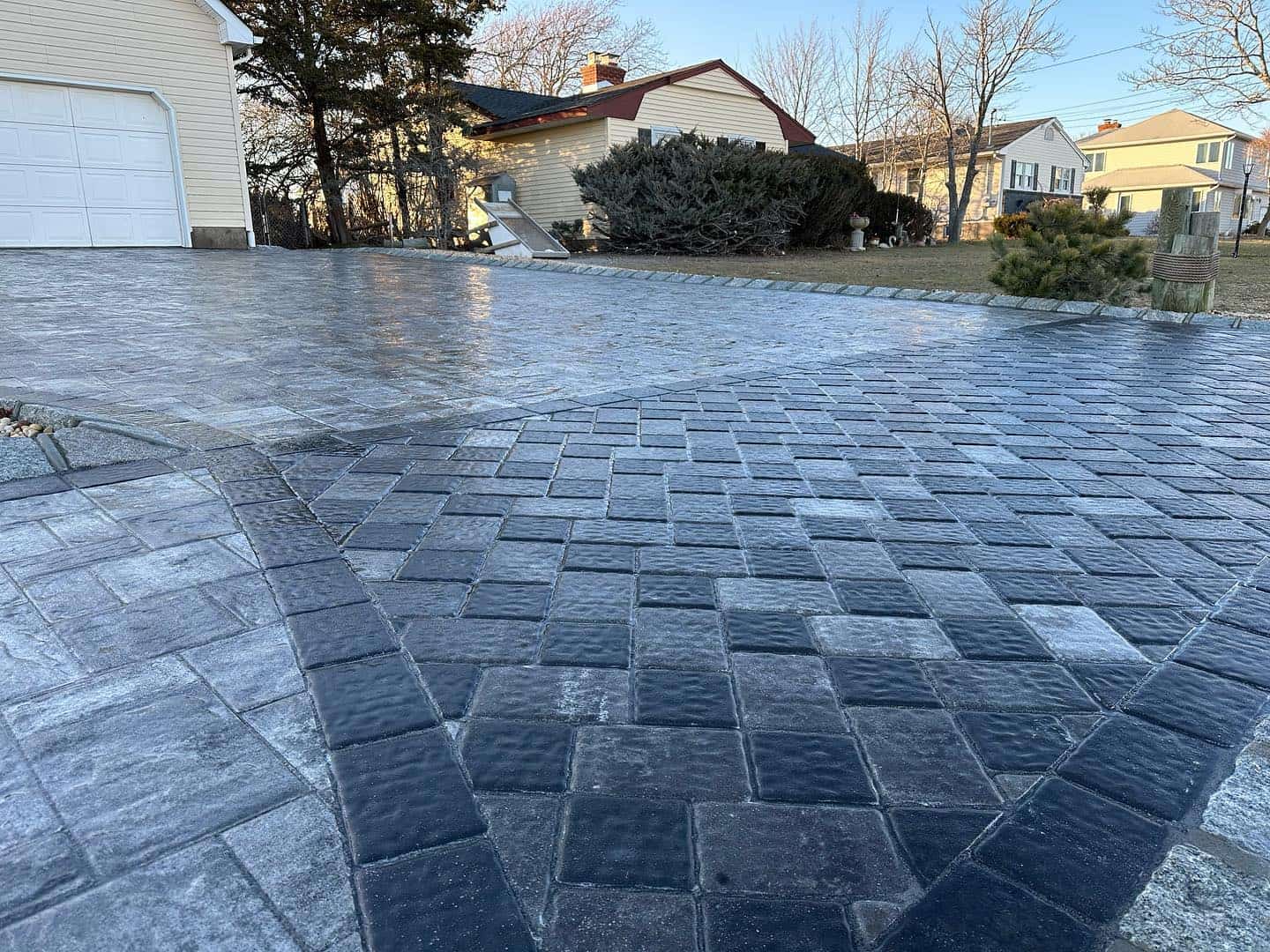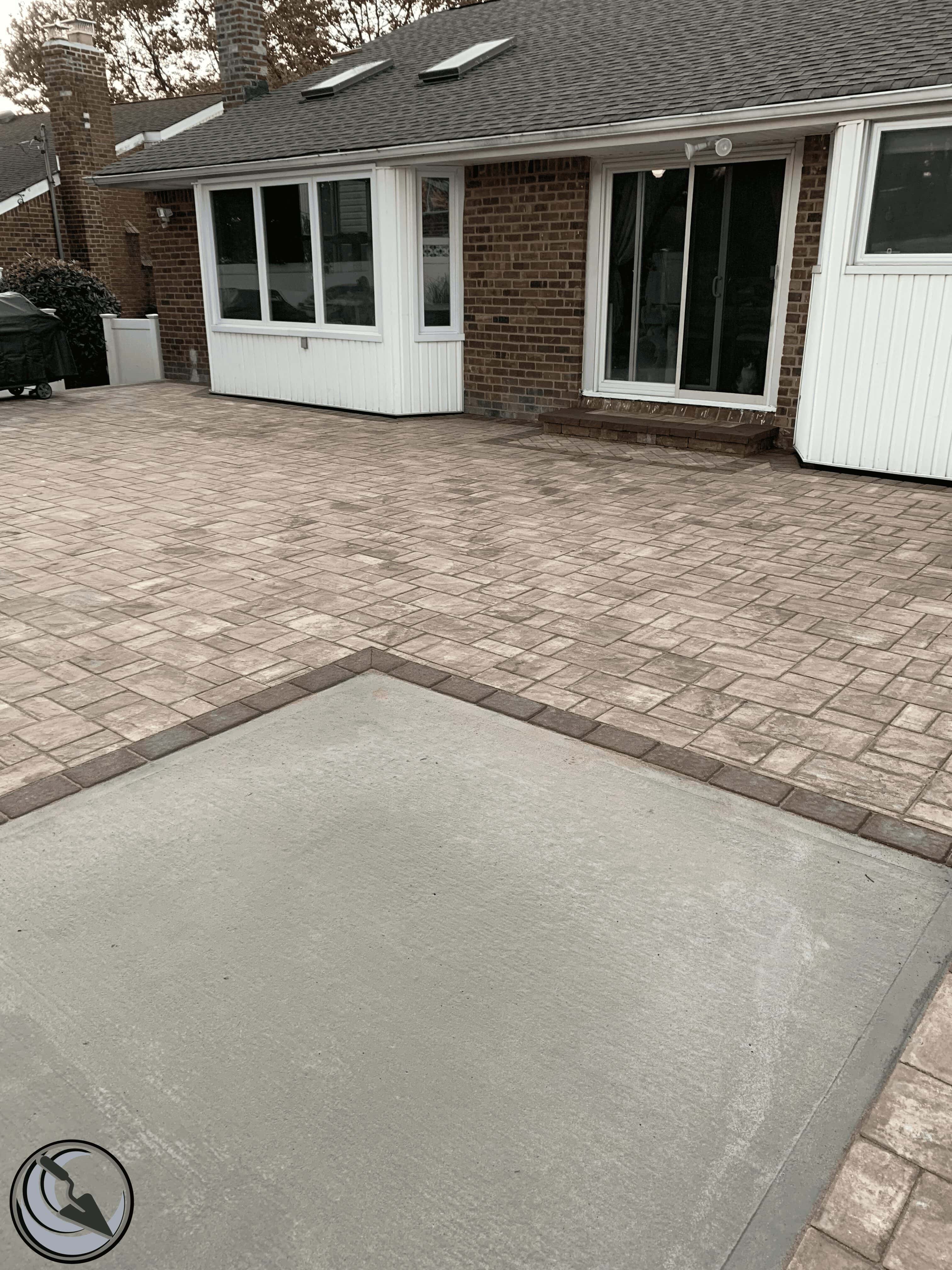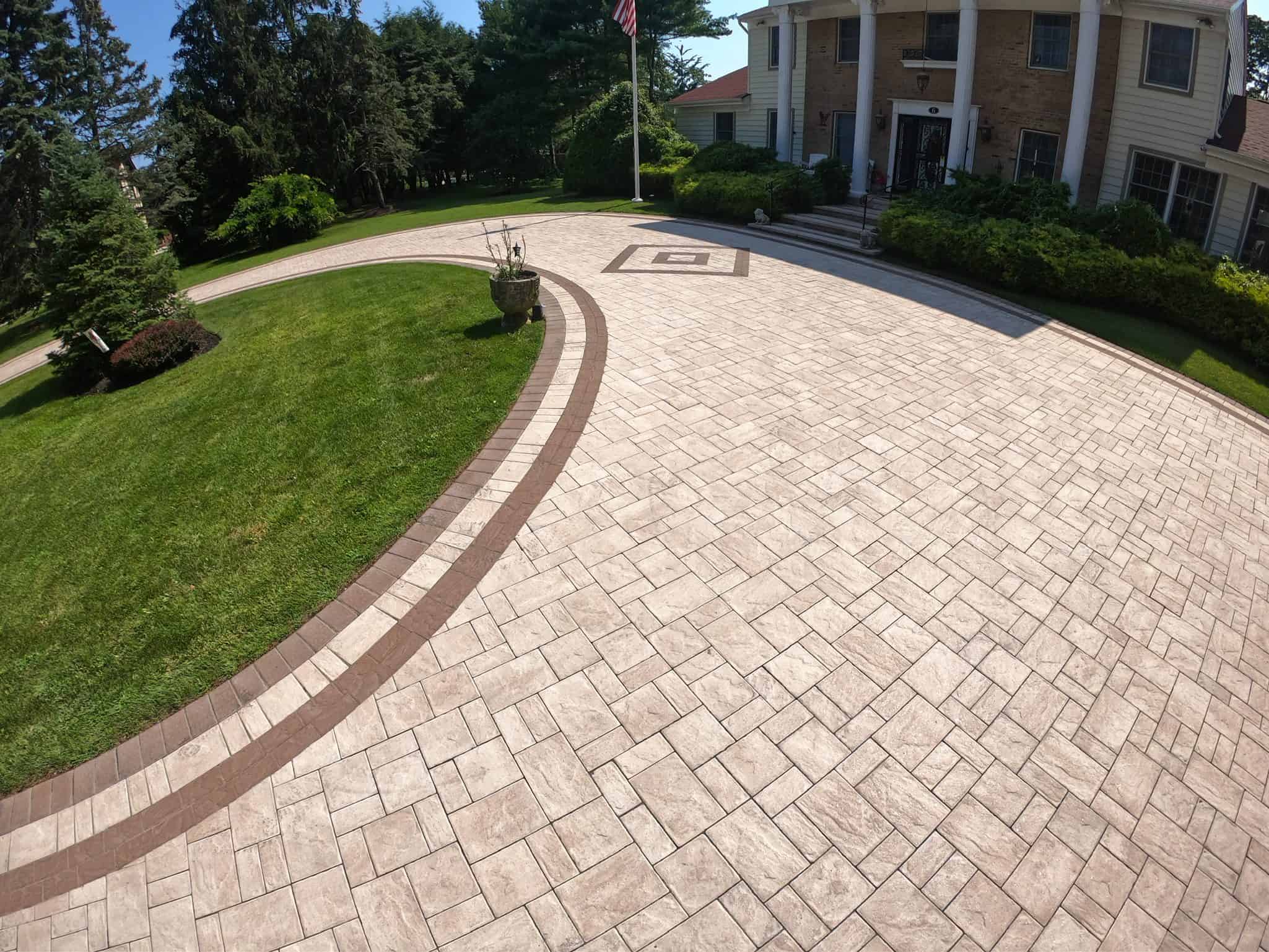
Most paver failures start underground. Here's what proper base preparation actually looks like — and why it matters even more on Long Island.
Share:
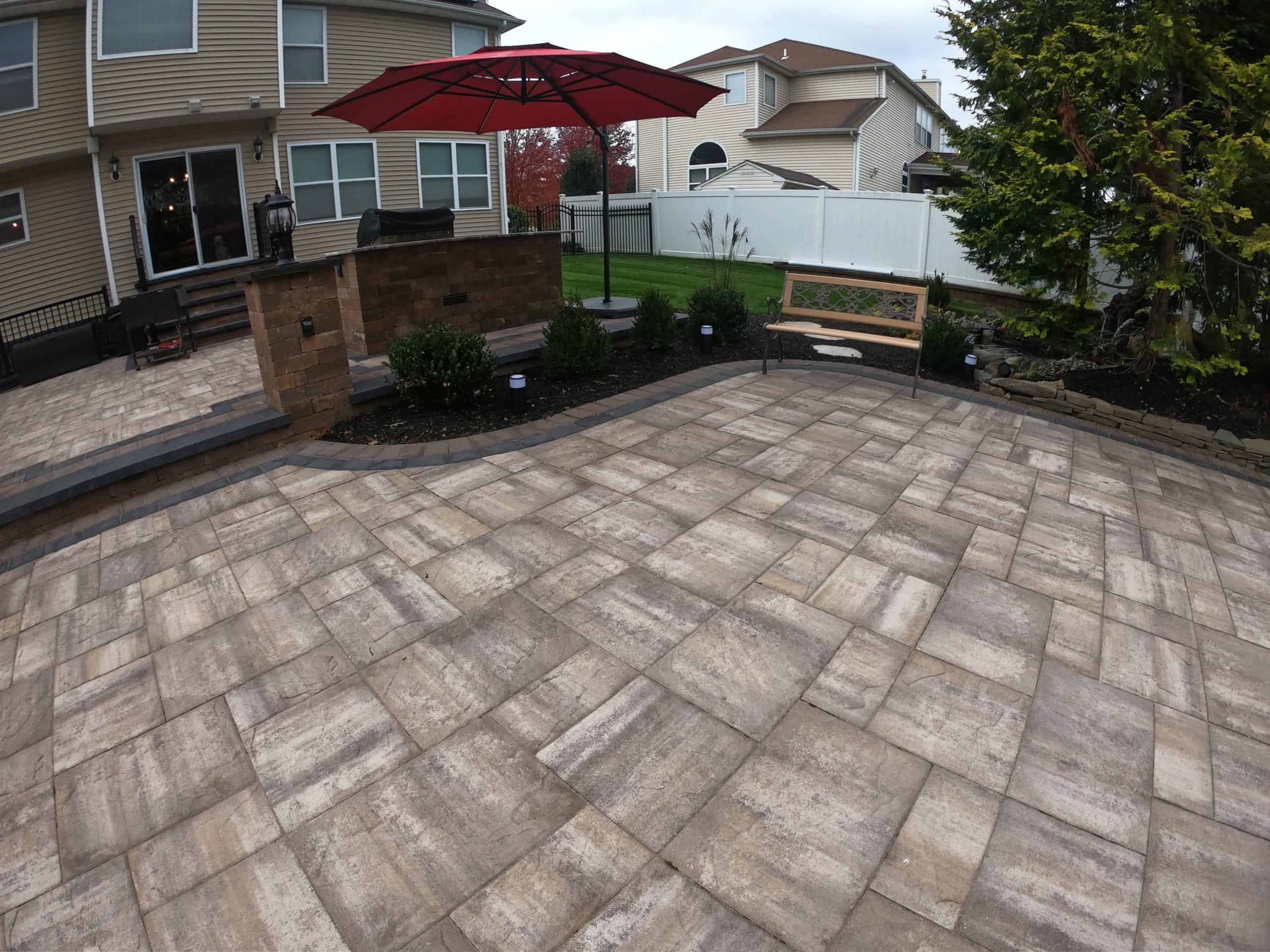
Summary:
Most paver problems aren’t paver problems at all. The cracking, the settling, the water pooling near your foundation — almost all of it traces back to what happened before a single paver was laid. The base is the whole story, and it’s the part you can’t see once the job is done.
If you’re a homeowner in Suffolk County thinking about a new patio, driveway, or walkway — or trying to figure out why an existing one is already failing — this is the part nobody explains clearly. We’re going to change that. By the end of this, you’ll know exactly what proper base preparation looks like, what shortcuts to watch out for, and what questions to ask any contractor before you sign anything.
Base preparation isn’t one step — it’s a sequence of decisions, each one building on the last. It starts with excavation. For pedestrian areas like patios and walkways, the standard is 7 to 10 inches below finished grade. For driveways carrying vehicle weight, you’re looking at 9 to 13 inches. In Suffolk County’s climate, where the ground freezes and thaws repeatedly every winter, staying at the lower end of that range is a gamble most homeowners don’t realize they’re taking.
After excavation, the native subgrade gets compacted mechanically — not by hand, but with a gas-powered plate compactor. Then angular crushed stone goes in, installed in 2 to 4 inch lifts and compacted between each one. This isn’t a technicality. It’s the difference between a base that locks together under pressure and one that shifts the first time the ground freezes.
On top of the compacted stone base goes exactly one inch of bedding sand — screeded flat and level. Then the pavers. Then edge restraints along every perimeter edge. Then polymeric sand swept into the joints and activated with water. Miss any of these steps, or rush through them, and the clock starts ticking on when something goes wrong.
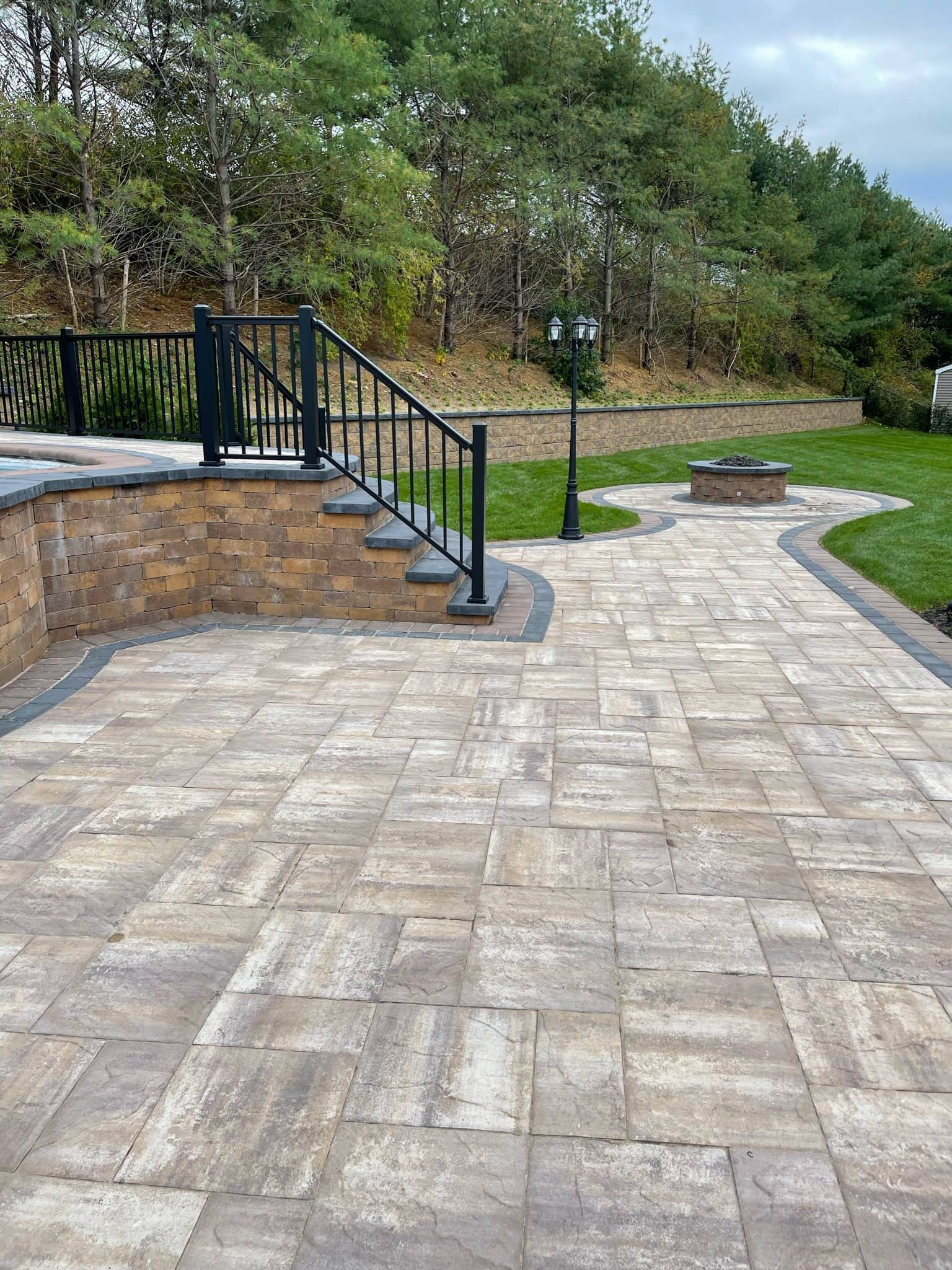
Long Island’s soil is fundamentally different from what you’d find in most of the country. The island is essentially a glacial deposit — layers of sand, gravel, and silt left behind by retreating glaciers thousands of years ago. That’s not a generalization. It’s the geological reality of why Suffolk County soil behaves the way it does, and why base preparation here requires a different level of attention than it would in a clay-heavy region upstate.
Sandy soil drains quickly, which sounds like an advantage — and it is, partially. But it doesn’t compact the same way clay does. Without the right aggregate, a sandy subgrade will keep shifting under load, especially when freeze-thaw cycles are adding upward pressure from below. The fix isn’t to use more sand. It’s to use angular crushed stone — quarry-processed material with jagged edges that interlock under mechanical compaction, creating a stable matrix that sandy soil alone can’t provide.
This is also why base depth matters more here than in a lot of other markets. A 6-inch base might hold up reasonably well in a mild climate with stable clay soil. In Holbrook, Patchogue, or Dix Hills, where the ground freezes hard every winter and the native soil is loose by nature, that same 6-inch base is likely to start showing problems within a couple of years. We excavate to 8 to 10 inches on every project specifically because of these conditions — not because it’s the easiest approach, but because it’s what Suffolk County actually requires.
One more thing worth knowing: rounded river rock or pea gravel cannot be used as base material, no matter how often you see it suggested. Rounded stones don’t interlock. They roll under pressure. Any contractor who uses them as a base is setting up the installation — and you — for failure.
Here’s the uncomfortable truth about paver base preparation: once the pavers are down, you can’t verify any of it. The excavation depth, the compaction, the aggregate type — all of it is buried. You’re trusting the contractor to have done it correctly, and there’s no way to check after the fact without tearing the whole thing up.
That’s why the questions you ask before the job starts matter so much. Ask specifically how deep they plan to excavate. Ask what base material they use and why. Ask whether they compact in lifts or all at once. Ask whether edge restraints are included. These aren’t trick questions — they’re basic ones. A contractor who knows what they’re doing will answer them without hesitation. One who doesn’t will get vague.
Watch for red flags during the project too. If the crew is moving fast and you never see a plate compactor running, that’s a problem. If the excavation looks shallow — anything under 7 or 8 inches for a patio in this climate — ask about it directly. If the answer is that “it’ll be fine,” that’s not a technical answer. It’s a dismissal.
We’ve seen what happens when these steps get skipped. A homeowner in Shoreham or Wading River calls us two winters after a different contractor finished their patio, and the surface has already settled in multiple spots. The pavers themselves are often fine. The base underneath them isn’t. Re-doing it correctly means lifting every paver, excavating properly, and starting over — which costs more than doing it right the first time would have.
Knowing what to look for puts you in a much stronger position, regardless of who you hire.
Drainage is the part of base preparation that gets the least attention in most contractor conversations — and the most complaints from homeowners after the fact. Water pooling on a finished patio, running toward the foundation instead of away from it, or sitting in low spots after every rain: these aren’t design problems. They’re base preparation problems.
The industry standard for surface drainage is a 1-inch drop for every 8 feet of distance away from a structure. That slope has to be built into the base from the beginning. You can’t add it later by adjusting the pavers. The base sets the elevation, and the pavers follow it. If the base isn’t graded correctly, no amount of resetting individual pavers will fix the drainage.
In Suffolk County, this matters more than it might elsewhere. The water table in many coastal communities — along the South Shore, near the bays, and throughout the East End — sits close enough to the surface that drainage has to be actively managed, not just hoped for. Combine that with Long Island’s winter freeze-thaw cycling, and a drainage problem isn’t just an inconvenience. It’s an accelerant for every other failure mode.
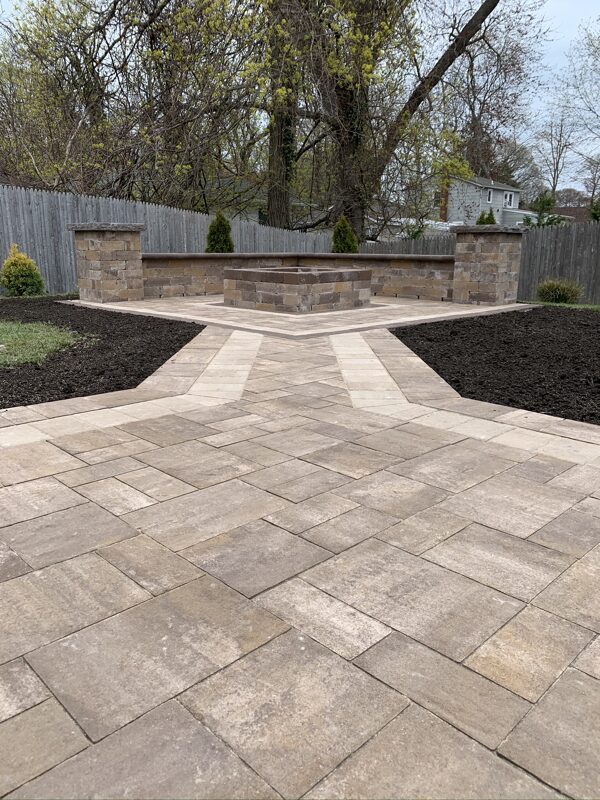
Water that can’t drain away from a paver installation doesn’t disappear. It finds the path of least resistance — and that path is usually straight down into the base and subgrade. Once it’s there, it does two things: it softens the base material, reducing its load-bearing capacity, and it freezes in winter, expanding roughly 9 percent in volume and pushing the pavers upward from below.
That’s the mechanism behind frost heave. It’s not a mystery, and it’s not bad luck. It’s physics, and it happens predictably when water is allowed to accumulate in a base that wasn’t designed to drain it away. The pavers that were perfectly level in October look like a topographic map by March.
Communities along the South Shore — Mastic Beach, Islip, Babylon — deal with this more aggressively than inland Suffolk towns because the water table is closer to the surface. But it’s a real consideration throughout the county. Even in Holbrook or Medford, where the water table is deeper, poor drainage planning creates saturated zones in the base that freeze hard every winter and work against the installation year after year.
The fix isn’t complicated, but it has to happen at the planning stage. Drainage slope gets designed into the base grade before excavation begins. Aggregate is selected not just for compaction strength but for permeability — so water moves through the base rather than pooling in it. In areas with particularly challenging drainage, geotextile fabric gets placed between the native soil and the base stone to prevent fine particles from migrating upward and clogging the aggregate over time. None of this is visible in the finished product. All of it determines whether the finished product holds up.
There’s a meaningful difference between a masonry specialist and a general landscaping company that offers paver installation as one of a dozen services. It shows up most clearly in the base preparation — in the excavation depth, the aggregate selection, the drainage planning, and whether the crew doing the work has done it enough times to know when something isn’t right.
When you’re evaluating concrete paver contractors in Suffolk County, a few things are worth looking for beyond the price. Manufacturer certifications matter — brands like Cambridge, Techo-Bloc, Unilock, Nicolock, and Eldorado have their own authorized contractor programs that require documented installation experience and compliance with specific technical standards. A certified installer isn’t automatically a great one, but an uncertified installer putting down premium pavers voids the manufacturer warranty. That’s worth knowing before you sign.
Licensing is another real filter. Suffolk County, Nassau County, Southampton, and East Hampton each have their own home improvement contractor licensing requirements. A contractor licensed across all four jurisdictions has cleared multiple separate compliance processes. That’s not a guarantee of quality, but it is a meaningful signal of professionalism.
Owner involvement matters. We handle every estimate personally and are on every job site. That’s not a marketing line. It’s how we’ve operated since day one, and it’s why a large portion of our work comes from referrals. A neighbor in Huntington Station or Bohemia sees the finished patio next door and asks who did it. That’s the kind of reputation that only builds one job at a time, and it starts with the base preparation nobody sees.
We hold certifications from Cambridge, Techo-Bloc, Unilock, Nicolock, Eldorado, and Boral, and we’re licensed throughout Long Island — including Southampton and East Hampton, where contractor requirements are among the strictest on the island. We carry a 5.0 rating across 129 Google reviews. But none of that matters as much as the fact that the work holds up. That’s the only metric that counts.
The foundation of any paver installation — literally and figuratively — is what happens before the first paver goes down. Excavation depth, aggregate selection, mechanical compaction, drainage planning, edge restraints: these are the steps that determine whether your patio or driveway looks the same in five years as it did the day it was finished.
In Suffolk County, the stakes are higher than in most markets. Sandy soil, coastal moisture, a high water table in many communities, and winters that freeze and thaw repeatedly all put more pressure on the base than a temperate climate with stable soil ever would. A contractor who understands these conditions — and builds every installation to account for them — is a different thing entirely from one applying generic standards to a market that requires something more specific.
If you’re planning a paver project on Long Island and want to talk through what it actually involves, we’re happy to walk you through it. No automated systems, no sales team — just a direct conversation with the people who will plan and build the project.
Article details:
Share:
Continue learning: