Not all masons handle Long Island's sandy soil and coastal weather the same way. Learn what separates qualified contractors from those who'll leave you with settling pavers and cracking walls.
Share:
Summary:
Long Island isn’t like other places. Your soil drains fast but shifts constantly. Salt air from the coast corrodes materials that work fine inland. Winter freeze-thaw cycles crack structures that seemed solid in summer.
Most masonry contractors can stack pavers or build walls. What separates qualified professionals from expensive mistakes is understanding how Suffolk County’s environment attacks outdoor structures. Generic installation methods that work in other regions fail here within a few seasons, leaving you with settling walkways, bowing retaining walls, and drainage problems that get worse every time it rains.
When you’re vetting contractors, you’re not just comparing prices or checking reviews. You’re looking for specific expertise in handling conditions that most of the country never deals with.
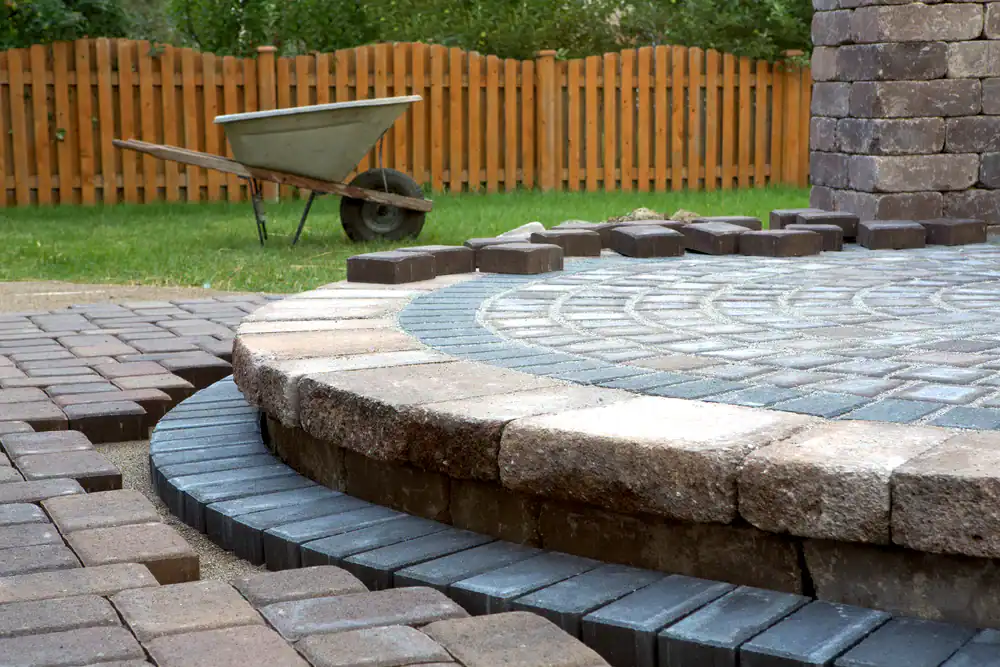
Here’s something that catches homeowners off guard: Suffolk County has strict licensing requirements for masonry contractors, and working without proper licenses voids any right to payment. That’s not a technicality. It’s a legal protection that keeps unlicensed operators from taking your money and disappearing.
Every legitimate masonry contractor in Suffolk County needs a valid home improvement contractor license from the county. But it doesn’t stop there. Individual townships like Southampton and East Hampton require separate licenses for work within their jurisdictions. Nassau County has its own requirements if your project crosses county lines.
Don’t just take a contractor’s word that they’re licensed. Ask for license numbers and verify them directly with local authorities. Check that licenses are current and in good standing. Look for any public complaints filed against the contractor.
Beyond basic licensing, look for certifications from manufacturer programs like Cambridge, Techo-Bloc, or Unilock. These certifications mean the contractor has been trained in proper installation techniques for specific products and materials. They also typically come with better warranties and access to technical support if issues arise.
Insurance matters just as much as licensing. Your contractor needs general liability insurance and workers’ compensation coverage. If someone gets hurt on your property during installation and the contractor isn’t properly insured, you could be held financially responsible. Ask to see current certificates of insurance and verify coverage directly with the insurance provider.
The Mason Contractors Association of America provides certification that establishes objective standards for quality contractors. It’s not required, but it’s a good indicator that someone takes their trade seriously and meets industry standards.
All of this might seem like overkill when you just want a patio installed. But these credentials separate professionals who stand behind their work from operators who cut corners and leave you dealing with the consequences.
Here’s what happens when contractors don’t understand Long Island soil: they excavate to standard depth, install a basic base layer, and move on to the next job. Everything looks great for six months. Then you notice a paver section that’s slightly lower than it used to be. A year later, your walkway has a noticeable dip. Two years in, you’re dealing with significant settling that requires expensive repairs.
Sandy soil drains quickly, which sounds like an advantage until you realize it also shifts and settles without proper foundation work. Standard excavation depth for most regions is 4-6 inches. On Long Island, qualified contractors excavate 8-10 inches deep, sometimes more depending on specific soil conditions and project requirements.
That extra depth isn’t arbitrary. It gets below the frost line, preventing heaving when the ground freezes. It allows for proper base layering with crushed stone that’s compacted in stages, not dumped in all at once. Each layer gets compacted with commercial equipment because loose base material leads to settling and premature failure.
Edge restraints become critical in sandy soil because there’s more movement during freeze-thaw cycles. Without proper restraints, your pavers will gradually shift outward, creating gaps and uneven surfaces. Polymeric sand application locks everything together and prevents weed growth, but only if the base preparation was done correctly in the first place.
Drainage planning has to account for how water moves through sandy soil. Long Island’s high water table and seasonal fluctuations mean water management systems need to be engineered during construction, not added later when problems develop. This includes proper backfill materials, weep holes or drainage pipes where needed, and grading that directs water away from structures and foundations.
Coastal properties face additional challenges. Salt air exposure requires materials specifically rated for marine environments. Standard pavers or mortar that work fine a few miles inland will deteriorate faster near the water. Contractors familiar with Suffolk County’s coastal conditions know which products hold up and which ones fail.
The difference between work that lasts decades and work that fails within years comes down to understanding what Long Island’s environment does to outdoor structures and engineering every layer of the project to handle it. When you’re interviewing contractors, ask specific questions about excavation depth, base preparation methods, and how they address sandy soil conditions. Their answers will tell you if they actually understand what they’re doing here.
You’ve verified licensing and insurance. You’ve confirmed the contractor understands Long Island soil conditions. Now you need to dig into the specifics of how they actually work.
Start with their portfolio. Don’t just look at pretty finished photos. Ask to see projects similar to yours in terms of scope and location. If you’re in a coastal area, you want to see completed work in similar environments. If you’re dealing with significant grade changes, you need evidence they’ve successfully handled retaining walls and drainage on sloped properties.
Get references you can actually contact. Talk to previous clients about their experience. Were there unexpected delays or cost overruns? Did the contractor communicate clearly throughout the project? Most importantly, how is the work holding up years later? Problems with masonry installations often don’t show up immediately, so speaking with clients whose projects are a few years old gives you valuable insight.

At Stone Escapes, we follow a process that accounts for local conditions from the first site visit through final cleanup. Here’s what that looks like.
Every project starts with a thorough site assessment. That means evaluating your specific soil composition, existing drainage patterns, grade requirements, and exposure to coastal elements. This isn’t a quick walkthrough. It’s an analysis that determines how the installation needs to be engineered for your exact situation.
Excavation depth varies based on what you’re building and where it’s located. Patios and walkways typically require 8-10 inches of excavation. Retaining walls need deeper foundations, often 30-36 inches to get below the frost line and prevent heaving. Contractors who give you a quote without discussing these specifics are guessing, not planning.
Base preparation happens in layers. Crushed stone gets installed in 2-3 inch lifts, with each layer compacted before the next goes down. This creates a stable foundation that accommodates sandy soil characteristics and prevents the settling issues common with shallow or improperly compacted bases.
Drainage systems get integrated during construction. For retaining walls, that means perforated pipes at the base, proper backfill materials, and weep holes that allow water to escape. For patios and walkways, it means establishing proper slope for water runoff and planning how drainage connects to existing systems or natural flow patterns.
Material selection matters more on Long Island than in many other regions. Pavers need to be rated for freeze-thaw resistance. Sealers need to handle salt air exposure. Polymeric sand needs to be appropriate for coastal moisture levels. As certified installers for Cambridge, Techo-Bloc, Unilock, Nicolock, Eldorado, and Boral, we have access to technical specifications and can recommend products that perform well in these conditions.
Edge restraint installation prevents the gradual shifting that happens in sandy soil. This isn’t optional or cosmetic. It’s structural support that keeps your installation stable over time. We use commercial-grade restraints and install them properly, not just stake down plastic edging and call it done.
Throughout the process, you have direct communication with the person overseeing your project. At Stone Escapes, owner Iain Traynor personally supervises every project from estimate to completion. You’re not dealing with different people every time you have a question or concern.
Permit handling is another indicator of experience. Many masonry projects in Suffolk County require building permits, especially for structures over certain sizes or when electrical and plumbing connections are involved. Retaining walls over 4 feet, outdoor kitchens, and fire features typically need permits. We’re licensed in Suffolk County, Nassau County, Southampton, and East Hampton, and we handle this process because we know what each jurisdiction expects.
Some warning signs are obvious. Others are subtle until you know what to look for. Here’s what should make you move on to the next contractor.
If someone can’t provide current license numbers or proof of insurance, you’re done. No exceptions. The risk isn’t worth whatever deal they’re offering.
Vague proposals are a red flag. Professional contractors provide detailed estimates that break down excavation, base preparation, materials, labor, drainage work, and any additional costs. If you’re getting a single number without explanation of what’s included, you’re setting yourself up for surprise costs and scope disputes.
Pressure to decide immediately suggests the contractor needs your deposit more than they need to do quality work. Legitimate professionals are busy but not desperate. They’ll give you time to compare options and make an informed decision.
Reluctance to provide references or show completed local projects means they either don’t have satisfied customers or haven’t actually done much work in the area. Either way, it’s not someone you want handling your project.
The lowest bid isn’t always a red flag, but it often is. Masonry work has real costs for proper excavation, quality materials, and skilled labor. If someone’s quote is significantly lower than everyone else’s, they’re either cutting corners on preparation, using inferior materials, or planning to hit you with change orders once work starts.
Generic answers about how they handle Long Island conditions tell you they don’t actually understand what makes this region different. If a contractor can’t explain their specific approach to sandy soil, drainage planning, or freeze-thaw resistance, they’re probably using the same methods they’d use anywhere else—and those methods fail here.
Subcontracting critical work reduces quality control and accountability. Some specialization makes sense—you might need an electrician for outdoor kitchen wiring or a plumber for water features. But the core masonry work should be handled by consistent crews who work directly for the contractor, not farmed out to whoever’s available that week.
No written contract or contracts that are vague about scope, timeline, and payment terms create problems you don’t want to deal with. Everything should be documented clearly before work begins, including what happens if there are delays, how changes to the original plan are handled, and what warranties or guarantees apply to the finished work.
Trust your instincts about communication. If getting clear answers during the estimate process is difficult, imagine how frustrating it’ll be when you have concerns during installation or need support after the project’s complete. Contractors who are responsive, transparent, and willing to explain their process tend to deliver better results and better experiences.
Searching “mason near me” gives you options. Lots of them. But not all masonry contractors understand what it takes to build structures that survive Long Island’s environmental challenges for decades instead of failing within a few seasons.
The right contractor brings proper licensing for every jurisdiction where they work. They carry current insurance that protects you if something goes wrong. They understand how sandy soil, coastal moisture, and freeze-thaw cycles affect installations and engineer every project accordingly.
Most importantly, they communicate clearly, stand behind their work, and have a track record of satisfied customers whose projects are still performing well years later. Take the time to verify credentials, check references, and ask specific questions about their approach to Long Island conditions. The extra effort upfront saves you from years of problems and gives you the outdoor space you actually want to enjoy.
At Stone Escapes Masonry & Outdoor Design Inc, we bring the licensing, local expertise, and installation techniques that Suffolk County homeowners need for lasting results. We’ve served Holbrook and Long Island since 2019, with owner Iain Traynor’s masonry experience going back decades—from learning the trade working with his father, a master carpenter from Scotland, to honing his skills with Local 1 Bricklayers Union in Manhattan. Our BBB A+ rating and licensing in multiple counties reflects the quality standards we maintain on every project.
Article details:
Share:
Continue learning: