Planning a backyard fire pit in Suffolk County? Learn which styles work best for Long Island's climate, essential safety tips, and why professional installation protects your investment.
Share:

Summary:
The fire pit you choose needs to match how you actually use your outdoor space. Some homeowners want a permanent centerpiece that anchors their patio. Others prefer flexibility or specific fuel types based on convenience.
Stone fire pits bring that classic, timeless look that blends naturally with Long Island landscaping. They’re built to last, handling high temperatures without cracking or degrading over time. The weight and permanence mean they stay put through storms and winter weather. Gas fire pits offer a different kind of appeal—instant ignition, adjustable flame height, and no wood storage or ash cleanup. You press a button and you’ve got fire.
Modern designs lean toward clean lines and integrated features. Linear fire pits stretch horizontally rather than sitting in a traditional round shape, creating a contemporary focal point that works especially well with rectangular patios or pool areas. The style you pick should complement your home’s architecture and your outdoor space, not fight against it.

The gas versus stone decision comes down to how you want to interact with your fire feature. Gas fire pits run on natural gas or propane, delivering consistent flames without the effort of building and maintaining a wood fire. You control the flame height with a valve or remote. There’s no smoke blowing in your face when the wind shifts, no sparks popping out onto your patio, and no leftover ash to clean up the next morning.
The trade-off is installation complexity. Running a gas line requires professional work—this isn’t a weekend DIY situation. You need proper permits, correctly sized lines, pressure regulation, and connections that won’t leak. Done wrong, you’re looking at safety hazards and code violations. Done right, you’ve got a fire feature that lights instantly and burns clean every single time.
Stone fire pits, whether limestone, granite, or natural fieldstone, give you that authentic fire experience. The crackling wood, the smell of smoke, the ritual of building and tending the fire—some people genuinely prefer that hands-on interaction. Stone materials handle the heat beautifully. Limestone and granite both withstand high temperatures without breaking down, and they absorb heat gradually, which means the stone stays warm long after the fire dies down.
Wood-burning means you’re dealing with more maintenance. You need to source and store firewood, clean out ash regularly, and stay on top of local burn regulations. Some municipalities restrict wood-burning fires during dry conditions or high wind. But the upfront cost is lower since you’re not running gas lines, and many homeowners feel the experience is worth the extra effort.
The real answer? It depends on your priorities. If convenience and clean burning matter most, gas makes sense. If you want the full campfire experience and don’t mind the upkeep, stone with wood fuel delivers. Either way, the installation quality matters more than the fuel type when it comes to longevity and safety.
Long Island’s soil and weather patterns create specific challenges that affect how your fire pit performs over time. The sandy soil common across Suffolk County drains well, which sounds great until you realize it also means less stable foundations. Fire pits need proper excavation and base preparation—typically eight to ten inches deep with compacted gravel and edge restraints—to prevent settling and shifting through freeze-thaw cycles.
Coastal moisture is the other factor most homeowners underestimate. Salt air accelerates corrosion on metal components. High water tables and seasonal water level changes mean drainage planning isn’t optional, it’s essential. A fire pit installed without accounting for these conditions might look fine initially, but give it a few seasons and you’ll see cracking, tilting, or water pooling around the base.
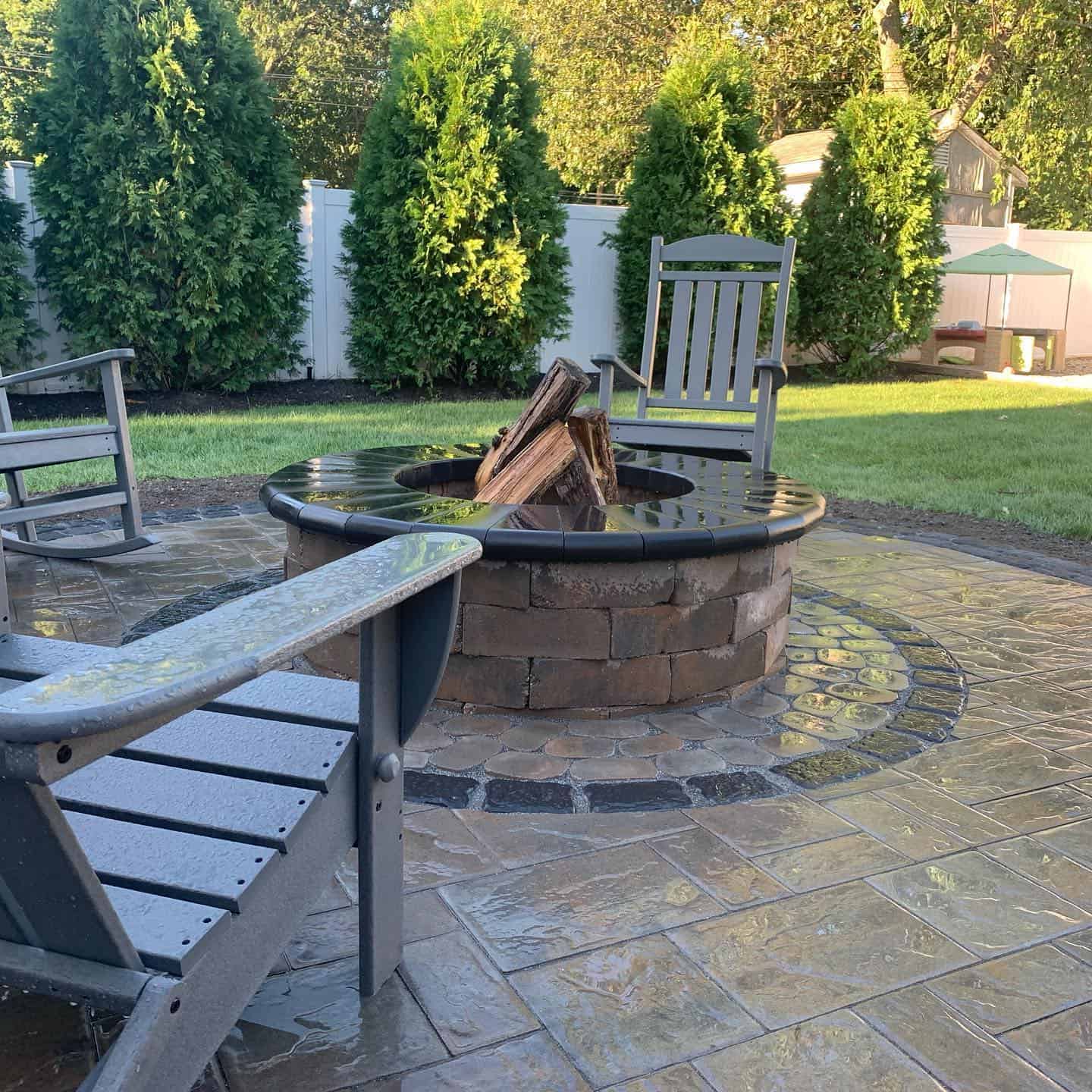
Integrated patio fire pit designs work particularly well for Long Island properties because they address multiple issues at once. When your fire pit is built into a properly constructed paver patio, you’ve already solved the drainage and foundation problems. The patio provides a stable, level surface with built-in water management. It also creates a defined entertaining area with clear boundaries, which matters for both aesthetics and safety.
Standalone fire pits offer flexibility in placement, but they still need that same foundation work. You can’t just set a stone fire pit ring on grass and call it done. The ground needs to be excavated, leveled, and prepared with a proper base. Otherwise, you’re looking at uneven settling, poor drainage, and potential safety issues when the structure shifts.
Consider wind patterns when planning placement. Suffolk County gets consistent breezes off the water, and wind direction determines whether your fire pit becomes a smoke machine pointed directly at your seating area. Position the fire pit so prevailing winds blow smoke away from where people gather. Use existing structures, landscaping, or purpose-built walls to create windbreaks if needed.
The best patio fire pit ideas for this area combine proper foundation work, drainage management, wind consideration, and materials that hold up to coastal conditions. That’s not something you figure out from a YouTube video—it’s knowledge that comes from actually building these features in Long Island backyards and seeing what holds up over time.
Safety isn’t about being overly cautious. It’s about understanding how fire behaves and what can go wrong when you ignore basic physics and building codes. Fire pits generate serious heat, produce sparks and embers, and create combustion byproducts that need proper ventilation.
Placement determines most of your safety outcomes. Keep your fire pit at least ten feet away from your house, deck railings, fences, sheds, and anything else that can catch fire. That’s the minimum distance—more is better if your space allows it. You also need vertical clearance. Low-hanging tree branches, pergola covers, and roof overhangs all pose ignition risks when sparks travel upward.
Check your local municipality’s requirements before you start any installation. Some areas in Suffolk County require permits for permanent fire features. Others have restrictions on burn times, fuel types, or proximity to property lines. Ignoring these regulations doesn’t just risk fines—it can void your homeowner’s insurance if something goes wrong.
DIY fire pit installations fail in predictable ways. The most common mistake is inadequate foundation preparation. Homeowners see a fire pit kit or watch a tutorial and assume they can skip the excavation and base work. They set pavers directly on grass or sand, maybe add some gravel underneath, and call it installed. Six months later, the whole structure has settled unevenly, creating gaps, instability, and drainage problems.
Material selection errors cause the next wave of problems. Not all stone and concrete products are rated for fire exposure. Regular concrete blocks can trap moisture, and when that moisture heats up rapidly, the blocks can crack or even explode. Smooth river rocks look great but they’re not appropriate for fire pit construction because they can contain water that expands violently when heated. Using the wrong materials isn’t just an aesthetic issue—it’s a legitimate safety hazard.
Gas line installation mistakes are particularly dangerous because they’re not immediately obvious. Undersized lines restrict gas flow, creating weak flames that defeat the purpose of the fire pit. Improper connections or damaged lines can leak gas, which may go undetected until you have a serious incident. Incorrect pressure regulation causes either insufficient flame or dangerous over-firing. Professional fire pit installation addresses these gas line complexities with proper sizing, testing, and code compliance that DIY approaches typically miss.
Placement errors are harder to fix after the fact because they involve the entire layout. Fire pits installed too close to structures create fire hazards. Ones placed without considering wind direction become unusable smoke generators. Locations that seemed fine in summer become problematic in other seasons when wind patterns shift or when you’re actually trying to use the fire pit during cooler weather.
The cost of fixing these mistakes almost always exceeds what professional installation would have cost initially. You’re not just paying to redo the work—you’re often dealing with property damage, wasted materials, and the time lost on a failed project. Some homeowners try to patch problems incrementally, spending money on repairs and modifications that never quite solve the underlying issues.
Professional fire pit installation addresses these problems before they happen. Proper excavation, correct base materials, appropriate stone selection, accurate gas line sizing, and strategic placement all happen during the initial build. The fire pit works correctly from day one, meets local codes, and holds up through Long Island’s weather extremes.
A fire pit that only gets used in October isn’t much of an investment. The goal is creating an outdoor space you’ll actually use from early spring through late fall, maybe even into winter on milder days. That requires thinking beyond the fire pit itself to how the entire area functions.
Seating arrangement matters more than most people realize. Position seating far enough from the fire that you’re comfortable, not overheated, but close enough to feel the warmth. Four to six feet typically works well, though it varies based on fire pit size and fuel type. Built-in stone seating walls solve multiple problems at once—they define the space, provide permanent seating that doesn’t blow around in wind, and add thermal mass that radiates warmth even after the fire dies down.
Wind protection extends your usable season significantly. Even moderate wind makes outdoor spaces uncomfortable and blows smoke unpredictably. Strategic landscaping, low walls, or structural elements that block prevailing winds create microclimates where you can sit comfortably in conditions that would otherwise drive you indoors. This doesn’t mean building enclosed spaces—proper fire pits need ventilation—but thoughtful wind management makes a measurable difference.
Lighting integration often gets overlooked until the first time you’re trying to navigate your patio in the dark. Low-voltage path lighting, step lights, and subtle uplighting on nearby plantings or structures create ambiance and safety. The fire provides focal light, but you need supplemental lighting for the surrounding area. This is easier to install during initial construction than retrofitting later.
Drainage planning protects your investment long-term. Water that pools around your fire pit accelerates deterioration of materials, creates slip hazards, and makes the space unusable after rain. Proper grading directs water away from the fire pit and seating areas. Permeable paver options allow water to drain through the surface rather than running off. These details seem minor until you’re dealing with standing water every time it rains.
The fire feature itself is just one component of a functional outdoor living space. When you’re planning installation, think about the complete experience—how you’ll move through the space, where people will sit, how weather affects usability, and what maintenance the area will require over time. We consider these factors as part of our planning process, creating spaces that work well year-round rather than just looking good in a single-season photo.
Fire pits extend your outdoor season, create gathering spaces, and add real value to Long Island properties when they’re done right. The difference between a fire pit you’ll use for decades and one that becomes a problem comes down to understanding local conditions, following proper installation procedures, and using materials appropriate for coastal environments.
Suffolk County’s sandy soil, coastal moisture, and weather extremes require installation approaches that account for these specific challenges. Proper excavation depth, base preparation, drainage planning, and material selection aren’t optional steps you can skip to save time or money. They’re what separates features that hold up from ones that fail within a few seasons.
If you’re ready to add a fire pit to your outdoor space, start by thinking about how you’ll actually use it. Consider fuel type, placement, integration with existing features, and what it takes to make the space functional year-round. Then talk to someone who’s built these features in Long Island backyards and knows what works in this specific environment. We specialize in outdoor fire features designed for Suffolk County conditions, with the local expertise and manufacturer certifications that ensure your installation is built to last.
Article details:
Share:
Continue learning: