Learn why retaining walls are essential for Long Island slopes, how they prevent erosion, and what design options work best in Suffolk County's coastal conditions.
Share:
Summary:
Retaining walls aren’t decorative. They’re structural solutions for properties where gravity and water are working against you. If you’ve got a slope, you’ve got soil that wants to move. Add Long Island’s weather into the mix—heavy spring rains, winter freeze-thaw cycles, coastal storms—and that movement accelerates.
Most homeowners don’t realize they need a retaining wall until they see erosion near their foundation, water pooling where it shouldn’t, or their driveway starting to shift. By that point, the problem’s been building for a while. Retaining walls prevent that. They hold soil in place, manage water runoff, and create stable, level areas where there used to be unusable slope.
In Suffolk County, the need is even more pressing. The sandy soil drains well, which sounds like a good thing until you realize it also shifts easily. Coastal moisture, high water tables, and storm surges add pressure. A properly designed retaining wall accounts for all of that—not just the visible slope, but what’s happening below ground.

Slopes are the most obvious reason you’d need a retaining wall, but it’s not just about leveling things out. It’s about stopping movement before it becomes a bigger problem. When soil on a slope gets saturated—whether from rain, sprinklers, or groundwater—it loses stability. Gravity pulls it downward, and over time, that means eroded hillsides, exposed roots, and soil piling up where you don’t want it.
Long Island weather makes this worse. Winter frost pushes and shifts soil. Spring rains saturate it. Summer storms hit hard and fast. If your property has any kind of grade, you’re dealing with these forces constantly. A retaining wall acts as a permanent barrier, holding the soil in place no matter what the weather does.
The wall doesn’t just stop erosion visually. It changes how water moves through your property. Without a wall, water flows downhill, picking up soil as it goes and depositing it at the bottom—often right against your foundation or patio. With a wall, that water is redirected through drainage systems built into the structure. You’re not just holding back dirt. You’re controlling the environment.
This is especially critical if your slope is near your home. Soil erosion around a foundation can lead to settling, cracks, and water intrusion into basements. Fixing foundation damage costs a lot more than building a retaining wall. And if the slope is near a driveway or walkway, erosion can undermine the base, causing cracking and sinking. A retaining wall stops that process before it starts.
For properties in areas like Southampton or East Hampton, where coastal conditions add moisture and wind to the equation, erosion happens faster. The combination of sandy soil and weather exposure means slopes don’t just erode—they collapse. Retaining walls in these areas need to be engineered for those specific conditions, with proper drainage and materials that can handle the moisture and freeze-thaw cycles without failing.
A sloped yard might look fine, but it’s not functional. You can’t put a patio on a hill. Gardens on slopes are hard to water, hard to maintain, and prone to erosion. Retaining walls change that by creating flat, usable terraces where there used to be wasted space.
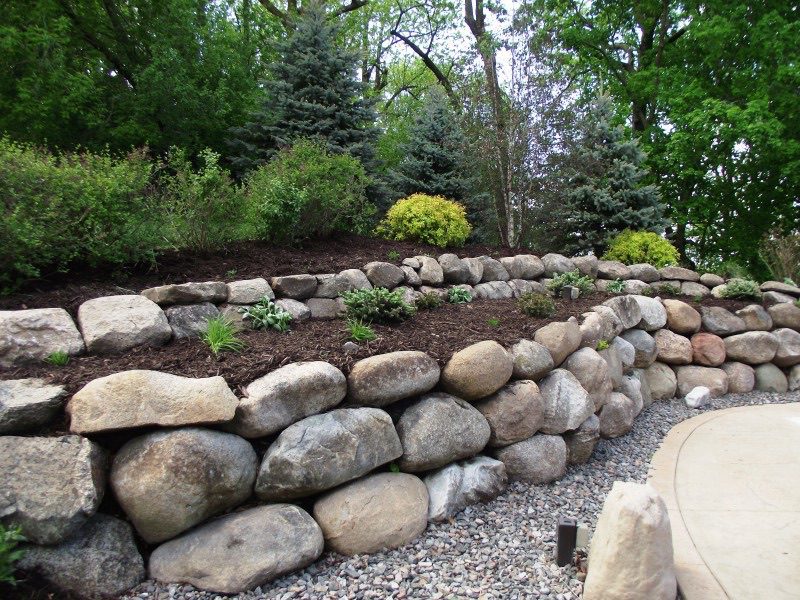
Terracing is one of the most common uses for retaining walls in residential landscaping. Instead of one tall wall—which can look imposing and requires more engineering—you build multiple shorter walls that step down the slope. Each level becomes a distinct area. One terrace might hold a garden bed. Another could be a seating area or fire pit. The bottom level might be lawn or a patio.
This approach doesn’t just make the space usable. It makes it interesting. A flat yard is a flat yard. A terraced yard has dimension, layers, and purpose. You’re not fighting the slope—you’re working with it. And because each wall is shorter, the structural requirements are simpler. Shorter walls mean less pressure on the footing, easier drainage management, and more flexibility in material choice.
For Long Island properties, terracing also helps with drainage. Instead of water rushing straight down a slope, it moves through each level, slowing down and soaking into the ground. That reduces runoff, prevents erosion, and keeps water from overwhelming drainage systems at the bottom of your property. If you’ve ever had water pooling near your foundation after a storm, terracing can solve that.
The material you choose for terraced walls matters. Natural stone gives a more organic, layered look that blends into the landscape. Concrete block offers clean lines and consistency, which works well for modern designs. Brick adds a traditional feel. All of these materials can handle the structural load of a terraced wall, but the choice comes down to aesthetics and how the wall fits into the rest of your property.
One thing to keep in mind: terraced walls need space between them. If the walls are too close together, the upper wall puts pressure on the lower one, and you end up with stability issues. Most designs space walls at least as far apart as the height of the lower wall—sometimes more. That spacing also gives you room to plant, build pathways, or create functional outdoor areas between the tiers.
Not every material works in every climate. Long Island’s freeze-thaw cycles, coastal moisture, and sandy soil mean you need materials that can handle movement, moisture, and temperature swings without cracking or shifting. The wrong material might look good for a few years, then fail. The right one lasts decades with minimal maintenance.
The three most common materials for retaining walls here are stone, concrete block, and brick. Each has strengths and trade-offs. Stone is durable and ages well, but it’s labor-intensive and expensive. Concrete block is affordable, versatile, and easy to install, but it doesn’t have the same natural look. Brick offers a classic aesthetic and holds up well, but it requires mortar and skilled installation.
Your choice depends on the wall’s purpose, your budget, and how the wall fits into your overall landscape design. A wall that’s purely functional—like one holding back soil near a driveway—might be fine with concrete block. A wall that’s part of your backyard entertaining area might benefit from natural stone or brick for the visual appeal.
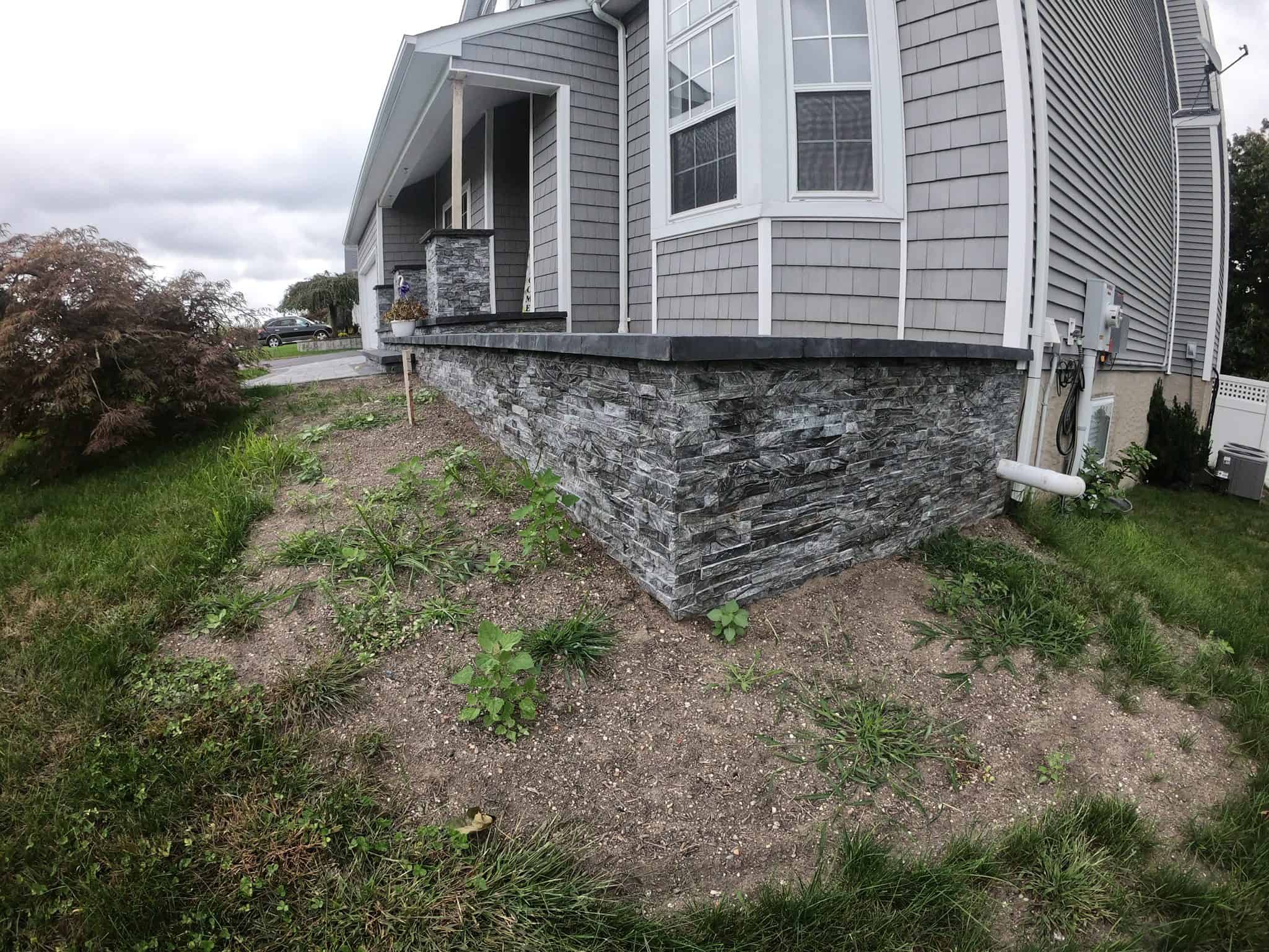
Natural stone retaining walls have been around forever, and there’s a reason. Stone is heavy, durable, and doesn’t degrade. It handles moisture without issue, and freeze-thaw cycles don’t crack it the way they can with poured concrete. A stone wall built correctly can last a century or more. It also looks timeless—whether you’re going for a rustic, stacked fieldstone look or a more formal cut-stone design.
The downside is cost and labor. Stone is expensive to source and transport, and installation takes time. You can’t just stack stones and call it done—at least not for anything structural. Dry-stacked stone walls (no mortar) work for shorter walls, but anything over a few feet needs mortar or engineered support. That means skilled labor, which adds to the price. But if you want a wall that blends into the landscape and never looks dated, stone is hard to beat.
Concrete block, on the other hand, is the workhorse of retaining walls. Interlocking concrete blocks are designed specifically for retaining walls—they lock together without mortar, they’re engineered for stability, and they come in a range of textures and colors. Installation is faster than stone, and the cost is significantly lower. A concrete block wall can be installed in a fraction of the time it takes to build a stone wall, and the results are just as durable if done correctly.
The trade-off is aesthetics. Concrete block doesn’t have the same natural variation as stone. It’s uniform, which some people like and others don’t. But manufacturers have gotten better at making blocks that mimic stone textures, so the gap has narrowed. If you’re on a budget or need a wall installed quickly, concrete block is the smarter choice. If aesthetics are the priority and budget isn’t a concern, stone wins.
One thing both materials have in common: they need proper drainage. It doesn’t matter how good the material is if water builds up behind the wall. Hydrostatic pressure—water pressure from saturated soil—is the number one cause of retaining wall failure. Both stone and concrete walls need gravel backfill, perforated drain pipes, and filter fabric to manage that pressure. Without it, even the best materials will fail.
For Long Island properties, both materials work well if installed correctly. The sandy soil here drains better than clay, which helps, but you still need a proper drainage system. Coastal moisture means the wall will be exposed to more water than properties inland, so materials need to handle that without degrading. Both stone and concrete block do that, as long as the installation follows best practices.
You can pick the most expensive stone, hire the best mason, and still end up with a failed wall if the drainage isn’t right. Drainage is the most important part of any retaining wall, and it’s the part that gets skipped or done poorly more than anything else. When water saturates the soil behind a wall, it creates hydrostatic pressure. That pressure pushes against the wall constantly, and over time, it wins. The wall bulges, cracks, or collapses.
Proper drainage means water never builds up behind the wall in the first place. That starts with a gravel backfill—usually 12 inches of clean stone behind the wall. Gravel doesn’t hold water, so it creates a drainage zone where water can move freely. At the base of that gravel layer, you install a perforated drain pipe that collects water and channels it away from the wall. The pipe needs an outlet—somewhere downhill where the water can exit safely.
Between the gravel and the native soil, you install filter fabric (geotextile). This keeps soil from washing into the gravel and clogging the system. Without it, fine particles migrate into the gravel over time, and eventually, the drainage stops working. The fabric is cheap, easy to install, and critical to long-term performance.
Some walls also use weep holes—small openings at the base of the wall that let water escape. These work in combination with the gravel backfill and drain pipe, giving water multiple paths out. Weep holes are especially useful in areas with heavy rain or high water tables, which includes a lot of Long Island.
The drainage system isn’t optional. It’s not something you can add later if problems show up. If the wall is built without proper drainage, you’re looking at failure within a few years—sometimes sooner. And fixing it means tearing out the wall, adding the drainage, and rebuilding. That costs more than doing it right the first time.
For properties in Suffolk County, drainage is even more critical because of the soil and climate. Sandy soil drains well on its own, but that doesn’t mean you can skip the gravel and pipe. Coastal moisture and storm surges mean there’s more water moving through the ground than you’d see inland. High water tables can saturate soil from below, not just from rain above. All of that water needs a way out, and the drainage system provides it.
Retaining walls solve real problems—erosion, drainage, unusable slopes—and they do it in a way that adds value and function to your property. But only if they’re done right. That means understanding your soil, planning for drainage, choosing materials that fit the environment, and working with someone who knows how Long Island’s conditions affect the build.
If you’re dealing with a slope, water issues, or wasted yard space, a retaining wall is likely the solution. The key is getting it designed and built for your specific property, not just following a generic plan. Suffolk County’s sandy soil, freeze-thaw cycles, and coastal moisture all play a role in how the wall needs to be engineered.
We’ve been building retaining walls across Long Island with a focus on durability, proper drainage, and local conditions. If you’re ready to turn problem terrain into functional outdoor space, reach out for an in-person estimate.
Article details:
Share:
Continue learning: