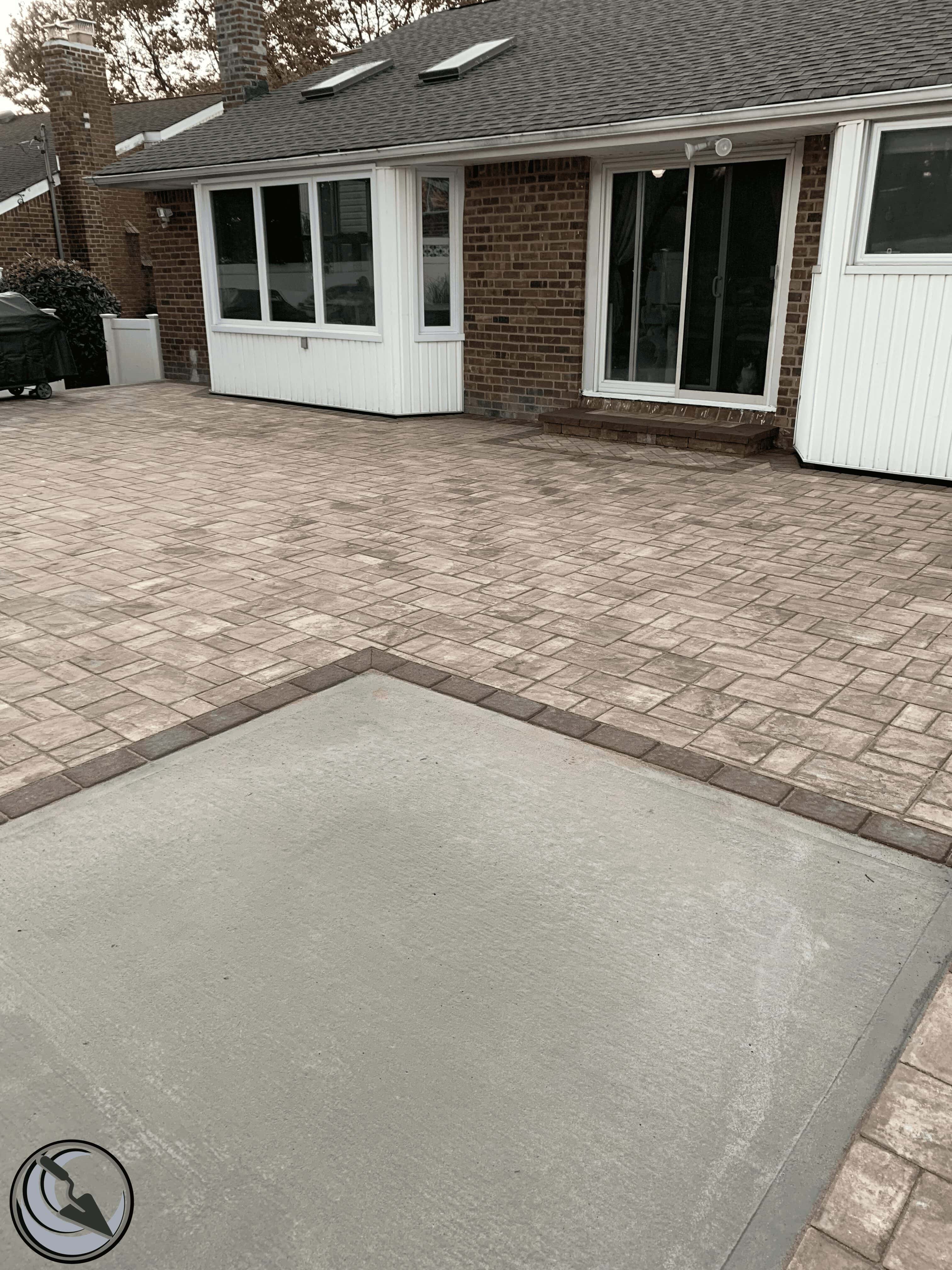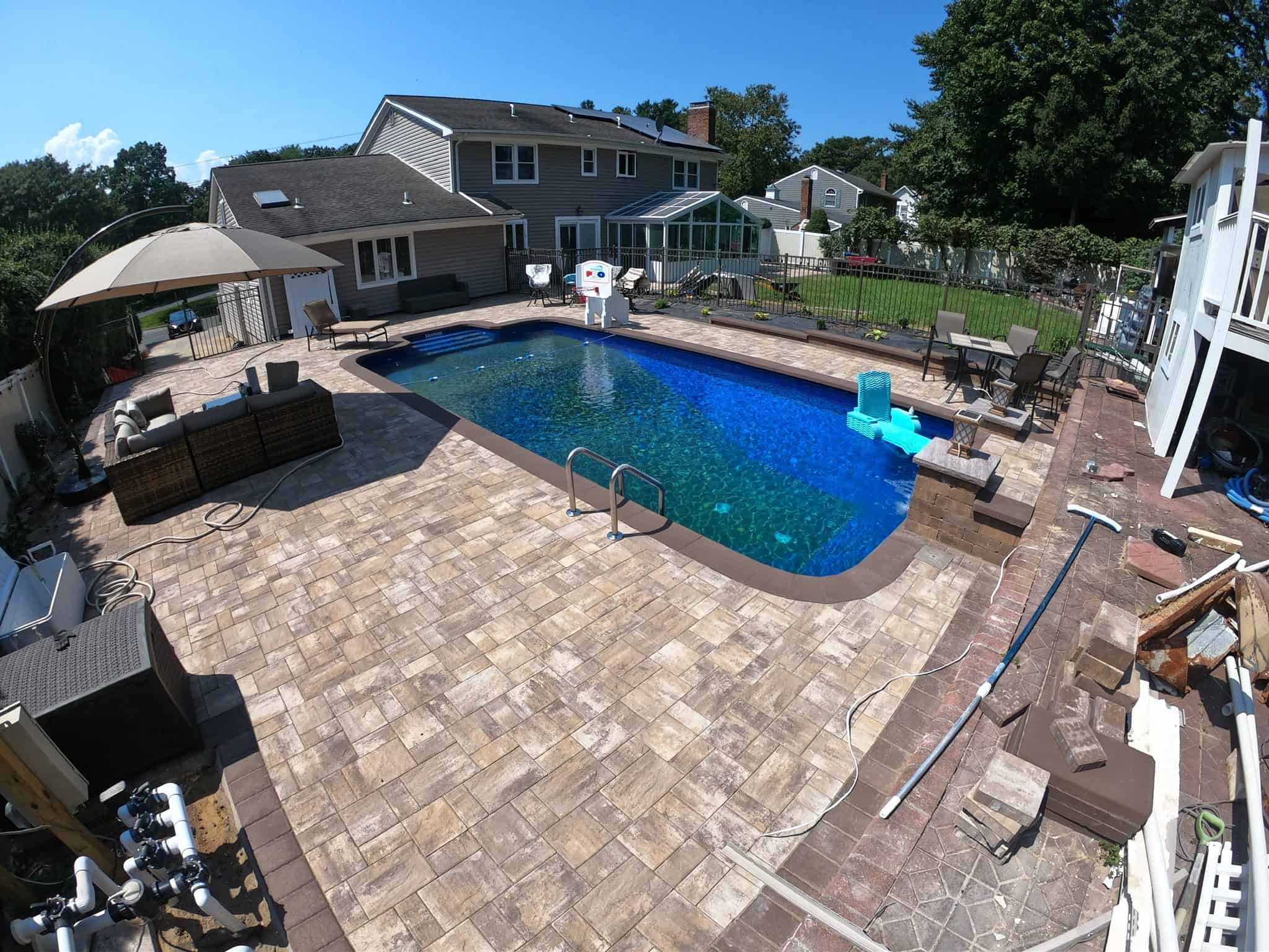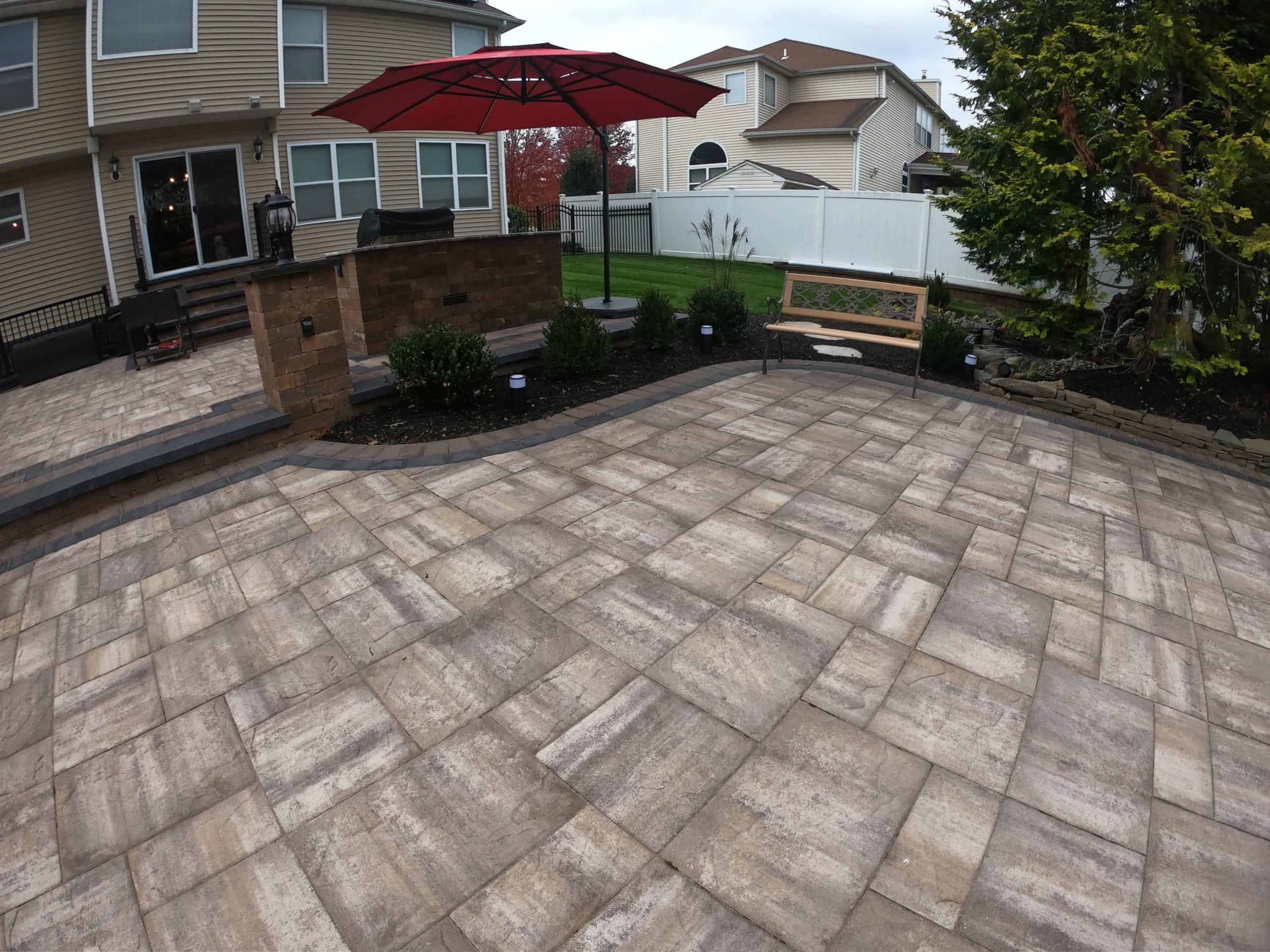
Transform your pool area with strategic hardscaping, non-slip pavers, fire features, and lighting that create a resort-style backyard retreat.
Share:

Summary:
Hardscape is the backbone of any functional poolside design. It’s what you walk on, sit on, and build around. Get it wrong and you’re dealing with cracked pavers, drainage problems, and surfaces that turn into slip hazards every time someone gets out of the water.
The materials you choose need to handle constant moisture, foot traffic, pool chemicals, and temperature swings. In Suffolk County, that also means freeze-thaw cycles and coastal conditions that test every installation. Travertine, textured concrete pavers, and porcelain are popular because they balance durability with aesthetics. But the material is only half the equation. How it’s installed determines whether your pool deck lasts two years or twenty.
Proper hardscape installation starts below the surface. You need adequate excavation depth, a stable base that won’t shift in sandy soil, and drainage systems that move water away from both your pool and your foundation. Edge restraints prevent pavers from creeping apart over time. Without these fundamentals, even premium materials fail.
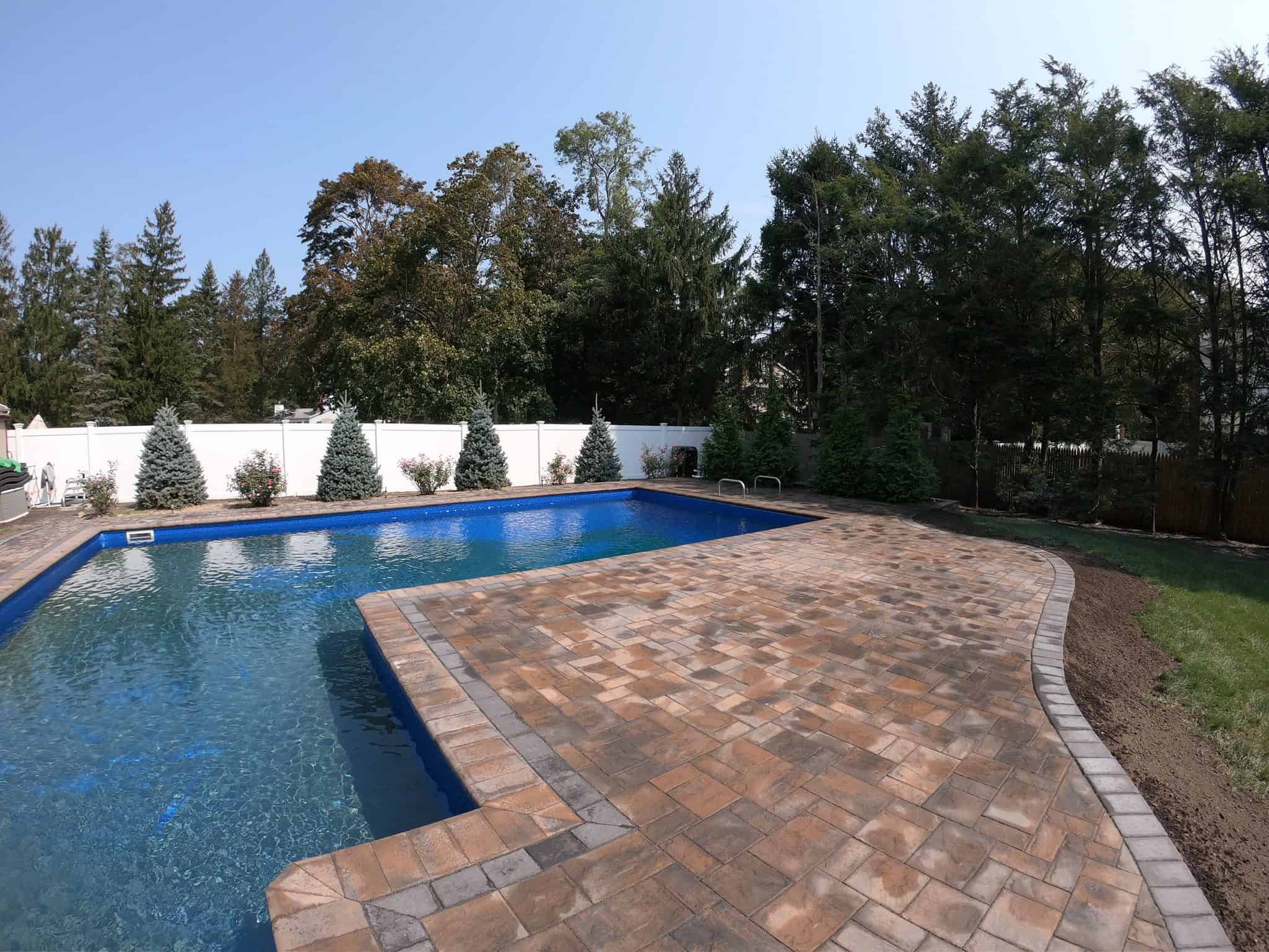
Pool patio pavers need to do more than look good in a showroom. They need to perform when wet, stay cool enough to walk on barefoot, and hold up through years of chlorine splash and weather exposure.
Travertine pavers are a go-to for pool decks because of their natural texture and heat resistance. The stone stays cooler than concrete even in direct sun, and its porous surface provides grip when wet. It’s also available in neutral tones that complement most architectural styles without competing with your home’s design. The tradeoff is that natural stone requires periodic sealing to maintain its appearance and protect against staining.
Textured concrete pavers offer more design flexibility at a lower price point. Modern manufacturing creates pavers that mimic natural stone while delivering consistent slip resistance and durability. They’re engineered to handle freeze-thaw cycles, which matters in areas where winter temperatures fluctuate. You can mix colors, sizes, and patterns to create custom designs that range from traditional to contemporary. The key is choosing pavers with a textured finish specifically rated for wet applications.
Porcelain pavers are gaining popularity for pool decks because they’re nearly maintenance-free. They don’t absorb water, resist staining without sealing, and come in finishes that provide traction when wet. The material stays relatively cool and won’t fade from sun exposure or pool chemicals. Porcelain works especially well in modern designs where clean lines and consistent color matter. The higher upfront cost pays off in reduced maintenance over the life of your pool deck.
Installation technique matters as much as material choice. Pavers need a properly compacted base, correct spacing for drainage, and edge restraints that prevent shifting. In Long Island’s sandy soil, that means excavating deeper than standard and creating a stable foundation that won’t settle unevenly. Proper slope directs water away from the pool and structures, preventing the standing water issues that create safety hazards and damage foundations over time.
The best poolscapes don’t stop at the water’s edge. They extend the living space with defined areas for different activities. Think of it as creating outdoor rooms that flow together but serve distinct purposes.
A sun deck area right along the pool perimeter gives you space for loungers and towel storage. Keep this zone simple with durable, slip-resistant pavers that can handle constant wet traffic. The focus here is function and safety, not elaborate design. You want a surface that dries quickly and provides secure footing when people are moving between the pool and other areas.
Seating and dining zones work best when they’re slightly elevated or separated from the immediate pool area. A raised patio with outdoor furniture creates a natural gathering spot that feels distinct from the swimming space. You can use different paver patterns or materials to visually define these zones while maintaining a cohesive look. Built-in seating walls made from the same stone as your pavers provide extra seating without cluttering the space with furniture.
Fire features add both warmth and ambiance. A fire pit or outdoor fireplace extends your pool season into cooler months and creates a natural focal point for evening entertaining. Position fire features where they’re visible from the pool but far enough away to maintain comfortable temperatures. The contrast between fire and water creates visual interest while serving a practical purpose.
Outdoor kitchens eliminate the constant back-and-forth to your indoor kitchen when you’re hosting. Even a basic setup with a grill, counter space, and small refrigerator makes poolside entertaining significantly easier. Built-in options using the same stone or pavers as your pool deck create a custom look that feels intentional rather than like an afterthought. Include adequate counter space for food prep and serving, storage for supplies, and proper lighting for evening use.
Pathways connect these different zones while directing foot traffic away from planted areas. Use the same pavers as your main pool deck or choose a complementary material that adds visual interest. Curved paths feel more natural and create opportunities for landscaping along the edges. Straight, geometric paths work better in modern designs where clean lines are part of the aesthetic.
The key to making all these elements work together is planning them as a complete system rather than adding features one at a time. Each zone should flow logically into the next, with clear circulation paths and visual connections that make the entire space feel cohesive.
Your pool area shouldn’t shut down when the sun goes down. Strategic lighting and water features transform the space after dark while adding layers of functionality and atmosphere that work during the day too.
Lighting serves three purposes around pools: safety, functionality, and ambiance. You need enough illumination to move around safely, see what you’re doing at an outdoor kitchen or dining area, and create the kind of atmosphere that makes people want to stay outside. The best designs layer different types of lighting to achieve all three without over-lighting the space.
Water features add movement and sound that make your poolscape feel more dynamic. The gentle sound of flowing water creates a calming backdrop that masks neighborhood noise. Visually, water features become focal points that draw the eye and add dimension to your design. They also provide opportunities for lighting effects that wouldn’t work elsewhere.
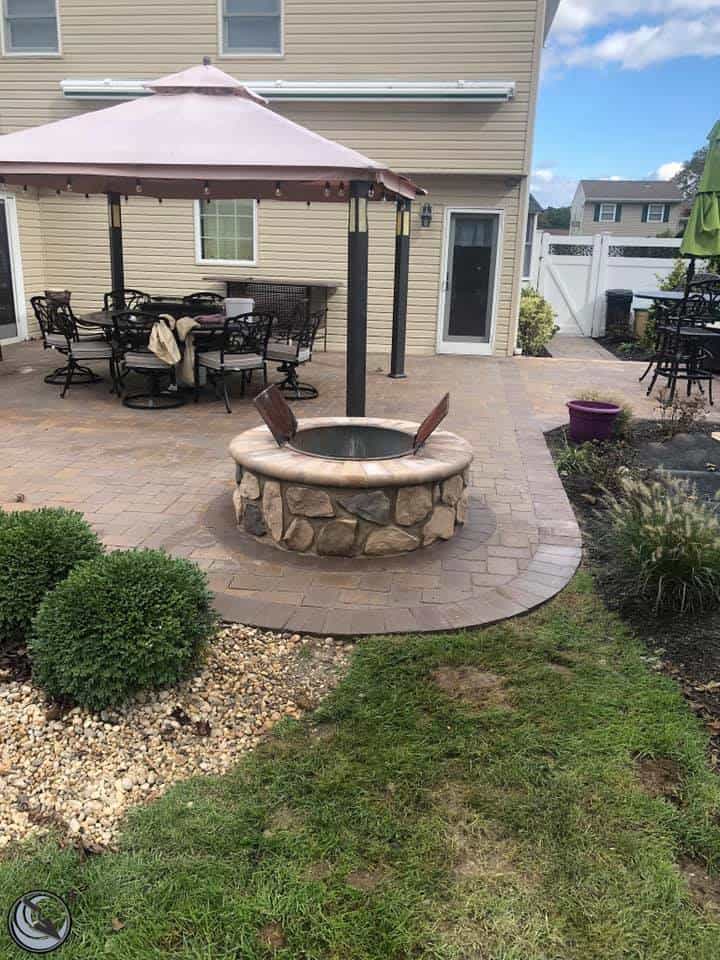
Start with pathway lighting that guides movement around the pool area. Low-voltage LED fixtures along walkways and stairs prevent trips and falls while adding subtle illumination that doesn’t overpower the space. These lights should be bright enough for safety but positioned to avoid glare. Recessed deck lights work well because they’re flush with the paving surface and won’t get kicked or damaged.
Accent lighting highlights architectural features and landscaping. Uplights positioned at the base of trees create dramatic shadows and add depth to your nighttime view. Wall-mounted fixtures on outdoor structures or your home’s exterior provide broader illumination for activity areas. Use these to light outdoor kitchens, dining spaces, and seating areas where you need functional light for cooking, eating, or conversation.
Pool lighting has evolved beyond basic underwater bulbs. Modern LED systems offer color-changing options, smart controls, and energy efficiency that older halogen systems can’t match. You can adjust colors and intensity from your phone, create preset scenes for different moods, and integrate pool lighting with your broader landscape lighting system. Perimeter lighting around the pool edge adds safety while creating a soft glow that defines the water’s shape after dark.
Fire features double as light sources with a warmth that LED systems can’t replicate. Fire bowls, tiki torches, and fire pits provide both illumination and heat, making outdoor spaces comfortable on cooler evenings. The flickering light creates ambiance that feels organic and inviting. Position fire features where they’ll be visible from multiple areas but won’t create uncomfortable heat near seating zones.
Smart lighting systems let you control everything from one interface. You can program scenes for different occasions, adjust brightness throughout the evening, and set schedules that turn lights on at sunset. Integration with voice control or home automation systems makes operation effortless. The technology has become reliable enough that it’s worth considering even if you’re not generally interested in smart home features.
The key is creating layers of light at different heights and intensities. Low pathway lights, mid-level accent lights on structures and landscaping, and higher ambient lighting from walls or poles work together to eliminate dark spots without over-lighting. Dimming capability gives you control over the overall brightness, letting you adjust from bright functional lighting for activities to softer ambient lighting for relaxation.
Water features around pools might seem redundant, but they serve different purposes than the pool itself. Fountains, waterfalls, and bubblers add movement and sound that make your poolscape feel more complete. They also create opportunities for lighting effects and visual interest that enhance the overall design.
Spillover spas are one of the most popular water features because they combine functionality with aesthetics. The spa sits slightly elevated from the pool, with water cascading over the edge into the pool below. This creates a waterfall effect while giving you a hot tub that’s integrated into your pool design rather than sitting separately. The sound of flowing water adds ambiance, and the visual effect makes your pool look more resort-like.
Standalone fountains work well in pool deck areas where you want a focal point that doesn’t require pool integration. A bubbling urn or tiered fountain on a patio provides the sound of water without the maintenance of a full water feature. These can be positioned in planted areas, near seating zones, or as a centerpiece in a courtyard-style pool deck. The key is choosing a scale that fits your space without overwhelming it.
Waterfalls built into retaining walls or landscape features create a natural look that softens hardscape-heavy designs. If your property has elevation changes, a waterfall can turn that into an asset rather than a challenge. The falling water creates white noise that masks traffic and neighbor sounds. Lighting behind or beneath the waterfall adds drama after dark.
Deck jets shoot arcs of water from the pool deck into the pool itself. They’re playful, visually interesting, and can be programmed to operate on schedules or activated manually. Kids love them, and they add movement to your pool surface without requiring separate plumbing systems. The effect works especially well in modern, geometric pool designs where clean lines and simple shapes dominate.
Bubblers and sheer descent features provide water movement with minimal maintenance. Bubblers create a gentle fountain effect in shallow areas like tanning ledges or steps. Sheer descent features create a smooth sheet of water that falls from a wall or raised structure into the pool. Both add visual and auditory interest without the complexity of larger water features.
Installation considerations matter as much as the feature itself. Water features need proper plumbing, drainage, and often dedicated pumps or circulation systems. They should be planned during initial pool construction or hardscape installation rather than added later. Integration with your lighting system lets you illuminate the water at night, creating effects that wouldn’t be possible with lighting alone.
Maintenance requirements vary by feature type. Spillover spas and integrated waterfalls use your pool’s circulation system, so they don’t require separate upkeep beyond normal pool maintenance. Standalone fountains need periodic cleaning and winterization in areas with freezing temperatures. Factor in these ongoing requirements when choosing which features to include.
Transforming your pool area from basic to resort-worthy comes down to thoughtful design and proper execution. The right hardscape materials, strategic lighting, and integrated water features create a cohesive space that works as well as it looks. But the foundation—literally—determines whether your investment lasts or becomes a maintenance headache.
In Suffolk County and throughout Long Island, that means addressing drainage, soil conditions, and climate challenges that generic approaches can’t handle. Proper excavation, base preparation, and material selection make the difference between a pool deck that shifts and cracks within a few years and one that improves with age.
The ideas we’ve covered give you a framework for planning your poolside landscaping project. Whether you’re starting from scratch or upgrading an existing pool area, focus on creating defined outdoor rooms, choosing materials that balance safety with aesthetics, and layering lighting that works after dark. When it’s done right, your pool becomes the centerpiece of an outdoor living space that you’ll actually want to use. If you’re ready to explore what’s possible for your property, we bring the Long Island-specific expertise needed to turn these ideas into reality.
Article details:
Share:
Continue learning: