Paver patios offer durability and customization that concrete can't match. Explore professional installation processes, top material choices, and design strategies for Long Island backyards.
Share:

Summary:
Poured concrete cracks. It’s not a question of if, it’s when. Long Island’s freeze-thaw cycles force water into porous surfaces, then expand as temperatures drop, creating internal pressure that leads to cracks and surface damage. Once concrete cracks, you’re looking at complete replacement, not just a simple fix.
Pavers work differently. Individual units flex with ground movement and temperature changes instead of fighting against them. When sandy soil shifts underneath—which happens frequently in Suffolk County—pavers adjust without cracking. If one does get damaged, you replace that single piece, not the entire patio.
The drainage advantage matters more than most people realize. Water moves between paver joints instead of pooling on the surface. That reduces ice formation in winter and keeps water away from your foundation year-round. Properly installed pavers with correct grading direct water exactly where it needs to go.

Suffolk County’s coastal location creates specific challenges that inland contractors don’t always understand. Salt air accelerates fading and deterioration in materials not designed for coastal exposure. Winter brings freeze-thaw cycles that can wreck poorly installed surfaces in just a few seasons. Sandy soil drains fast in some areas but holds water in others, especially near foundations or in low spots.
Concrete pavers engineered for freeze-thaw climates handle these conditions without the maintenance headaches of poured concrete. Manufacturers like Cambridge, Techo-Bloc, and Unilock design pavers with compressive strengths exceeding 8,000 PSI specifically for Northeast weather patterns. They resist cracking from ice formation and maintain color retention despite UV exposure and salt air.
Natural stone options like bluestone and granite offer extreme durability but require more maintenance to prevent staining and weathering. They work well in Long Island’s climate when properly sealed every few years. The key isn’t just material choice—it’s understanding how coastal moisture, sandy soil, and temperature extremes interact with your installation.
Base preparation makes the difference between patios that last decades and ones that fail within years. Long Island’s sandy soil requires deeper excavation than standard installations—typically 8 to 10 inches instead of the 6 inches many contractors use. Proper base layering with compacted stone creates stability that prevents the settling and shifting that plague inferior work.
Edge restraints keep everything locked in position through seasonal changes. Without them, pavers gradually spread apart as the ground freezes and thaws. Polymeric sand fills joints and hardens to prevent weeds and shifting while still allowing drainage. These details seem small but they determine whether your patio performs correctly for 25 years or needs repairs within five.
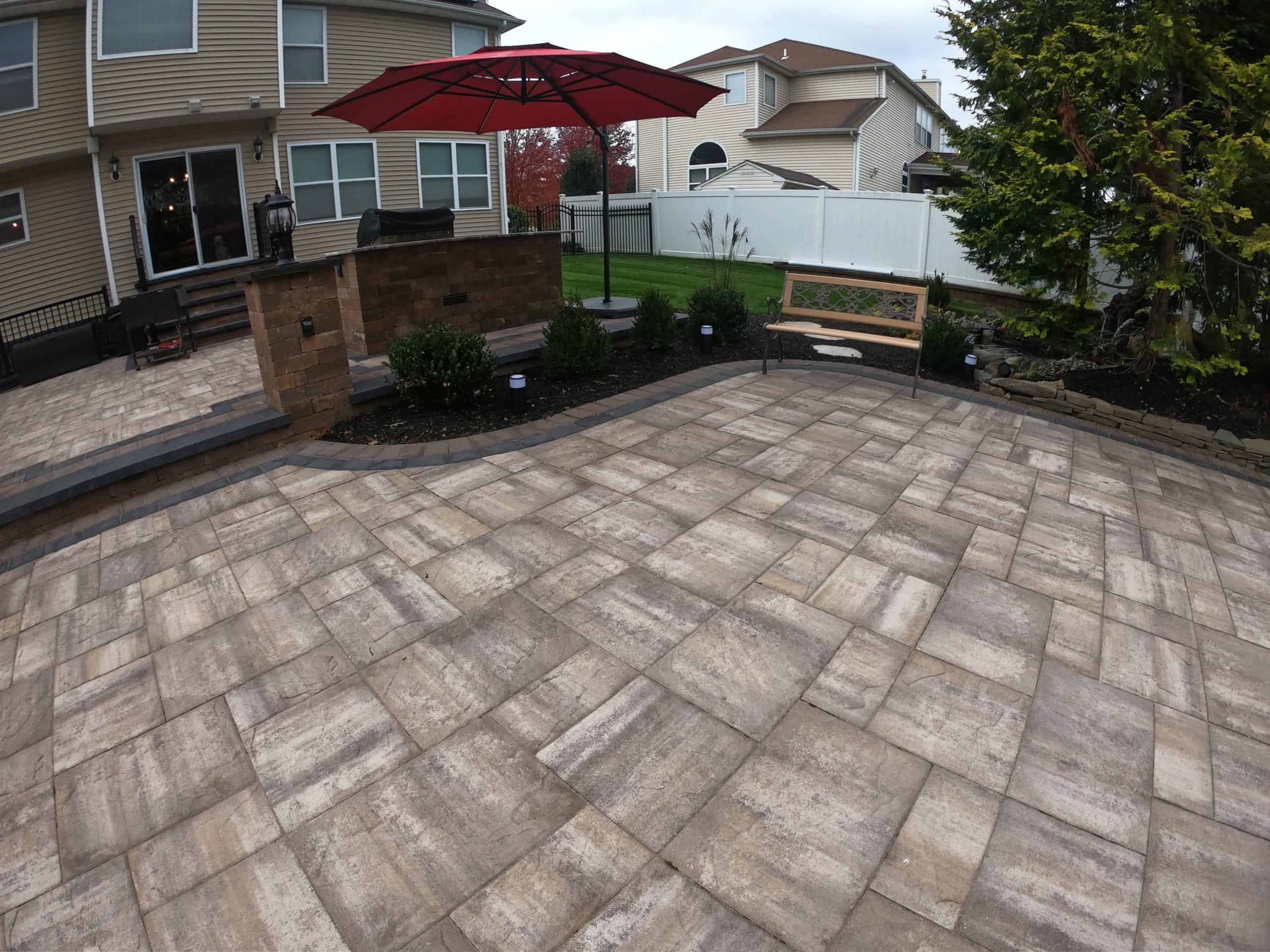
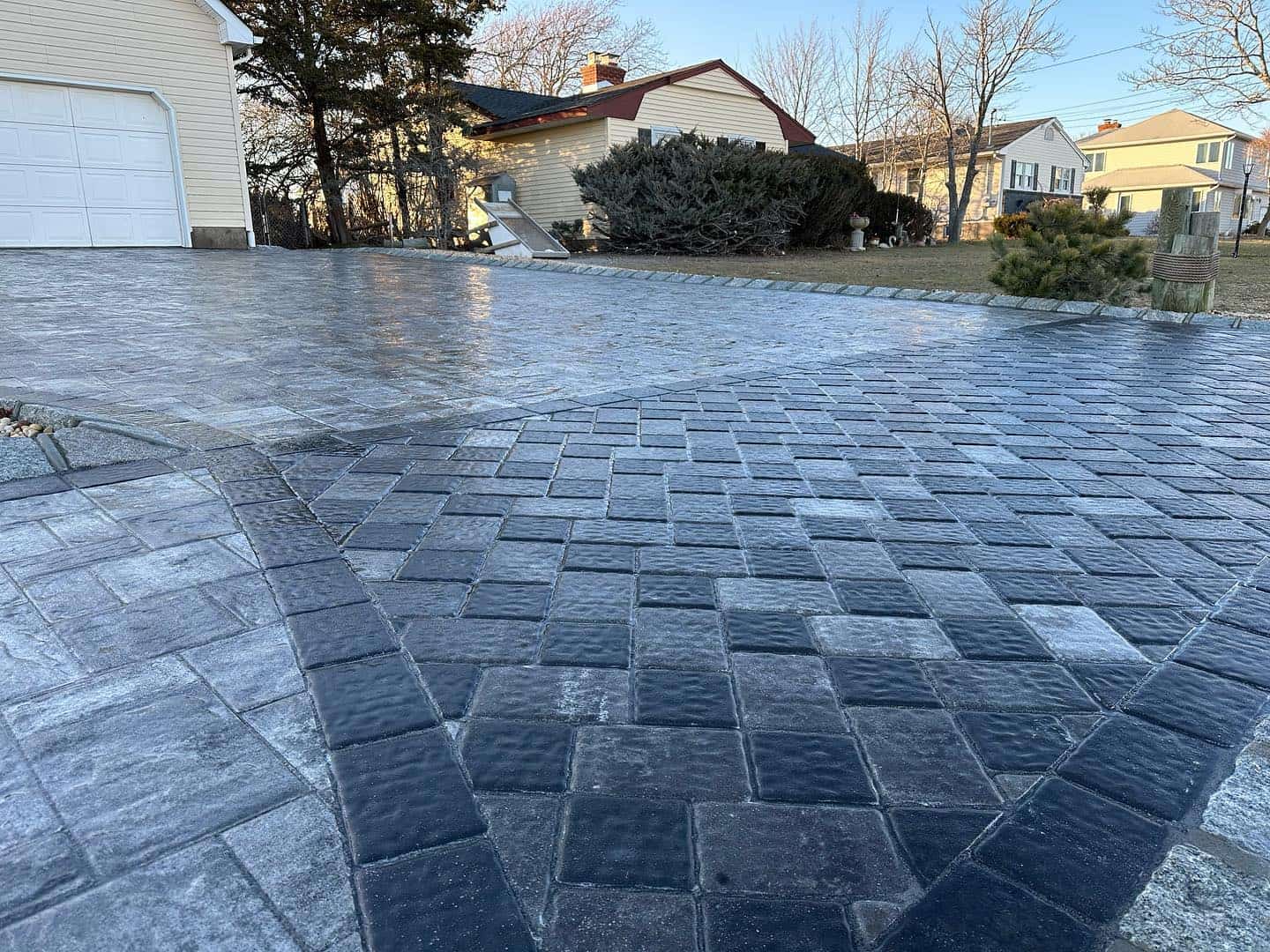
Concrete pavers hit the sweet spot between cost, durability, and design flexibility for most Suffolk County homeowners. They’re manufactured to consistent standards, which means predictable performance through Long Island’s weather patterns. You get a wide range of colors, textures, and sizes that can mimic natural stone at a fraction of the cost. Brands offer everything from smooth finishes for modern looks to textured surfaces with better grip around pools.
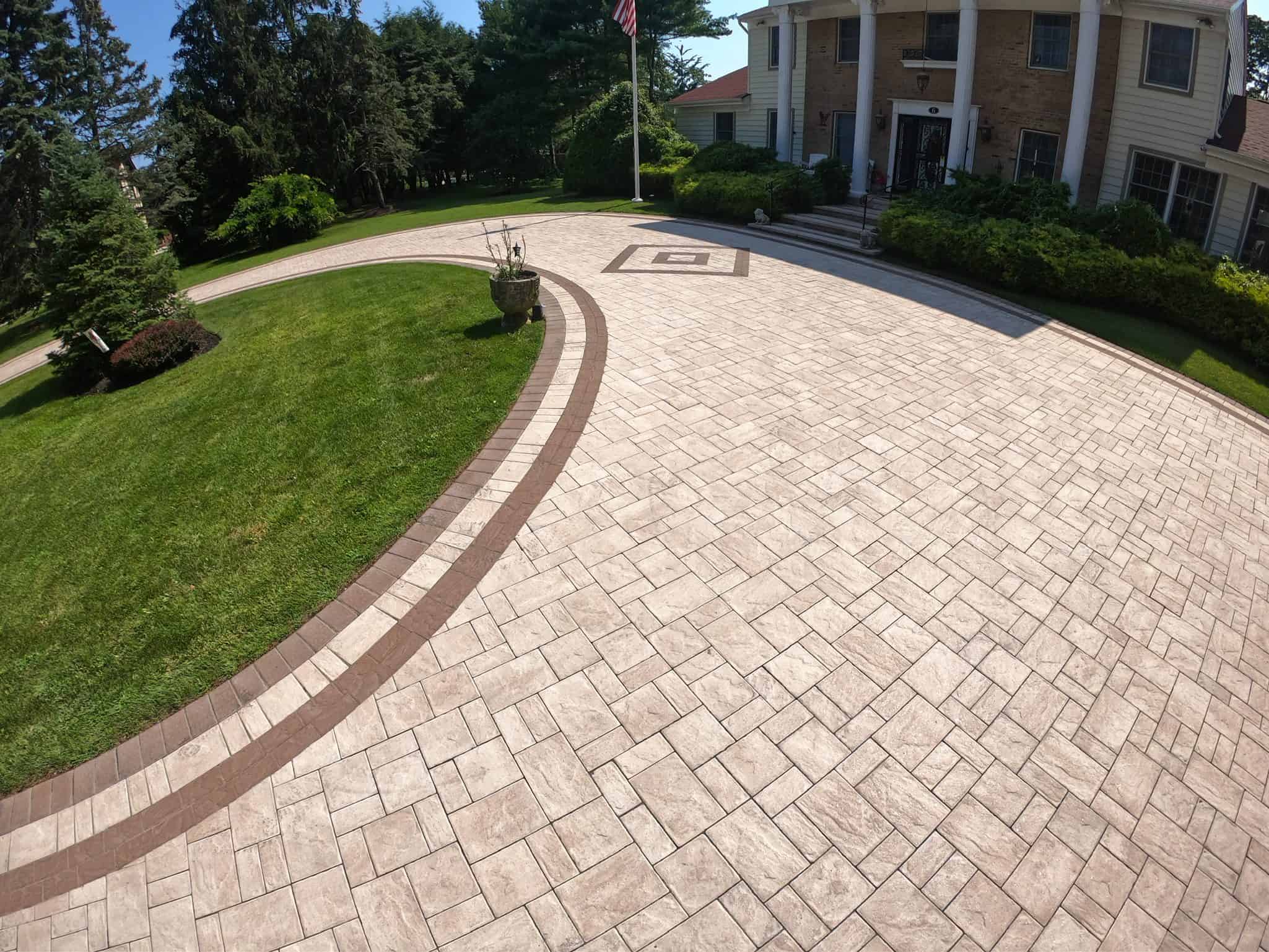
The variety is genuinely impressive. You can choose patterns like herringbone for maximum strength and visual interest, running bond for clean contemporary lines, or circular designs for focal points around fire pits. Concrete pavers handle freeze-thaw cycles without cracking because they’re engineered specifically for that purpose. If you’re after a modern aesthetic with minimal maintenance, they deliver.
Natural stone brings timeless appeal that manufactured products can’t quite replicate. Bluestone, granite, and flagstone offer unique color variations and textures that age beautifully. Each piece tells its own geological story through distinctive veining and natural characteristics. Properties in Southampton and East Hampton often choose natural stone for its organic connection to the landscape and premium appearance.
The tradeoff comes in cost and maintenance. Natural stone runs significantly more expensive than concrete pavers—often $20-$50+ per square foot for materials alone compared to $6-$10 for quality concrete pavers. Stone also requires periodic sealing to prevent staining and discoloration, especially in Long Island’s coastal environment. But if you want authenticity and are willing to invest in upkeep, natural stone provides a look that manufactured materials simply can’t match.
Brick pavers offer classic charm that works particularly well with traditional and colonial-style homes common throughout Suffolk County. They’ve been used in harsh climates for centuries and actually become more attractive as they age. The warm, earthy tones create an inviting feel that complements both historic properties and new construction.
For Long Island conditions, you need SW-grade (severe weathering) brick pavers specifically manufactured for freeze-thaw resistance. Standard brick won’t hold up to our winters. Properly sealed brick pavers resist moisture absorption and winter damage while maintaining their appearance through decades of use. They cost more than concrete pavers but less than premium natural stone, landing in a middle price range that balances aesthetics with practicality.
Professional installation starts with understanding your specific site conditions. Every Suffolk County property is different—drainage patterns, soil composition, existing landscaping, proximity to the water. A proper assessment evaluates these factors before any digging begins. You need to know where water goes now and where it will go after your patio is installed.
Excavation depth matters more than most homeowners realize. Standard installations elsewhere might use 6 inches, but Long Island’s sandy soil and freeze-thaw cycles demand 8 to 10 inches. This accommodates proper base layers and accounts for the local frost line. Shortcuts here lead to settling, shifting, and premature failure.
Grading establishes proper water flow—typically 1.5 inches of pitch every 10 feet, directing water away from your foundation. This prevents pooling that damages the patio structure over time and keeps moisture away from your home. All excavated material gets removed from the site, leaving a clean foundation for the next steps.
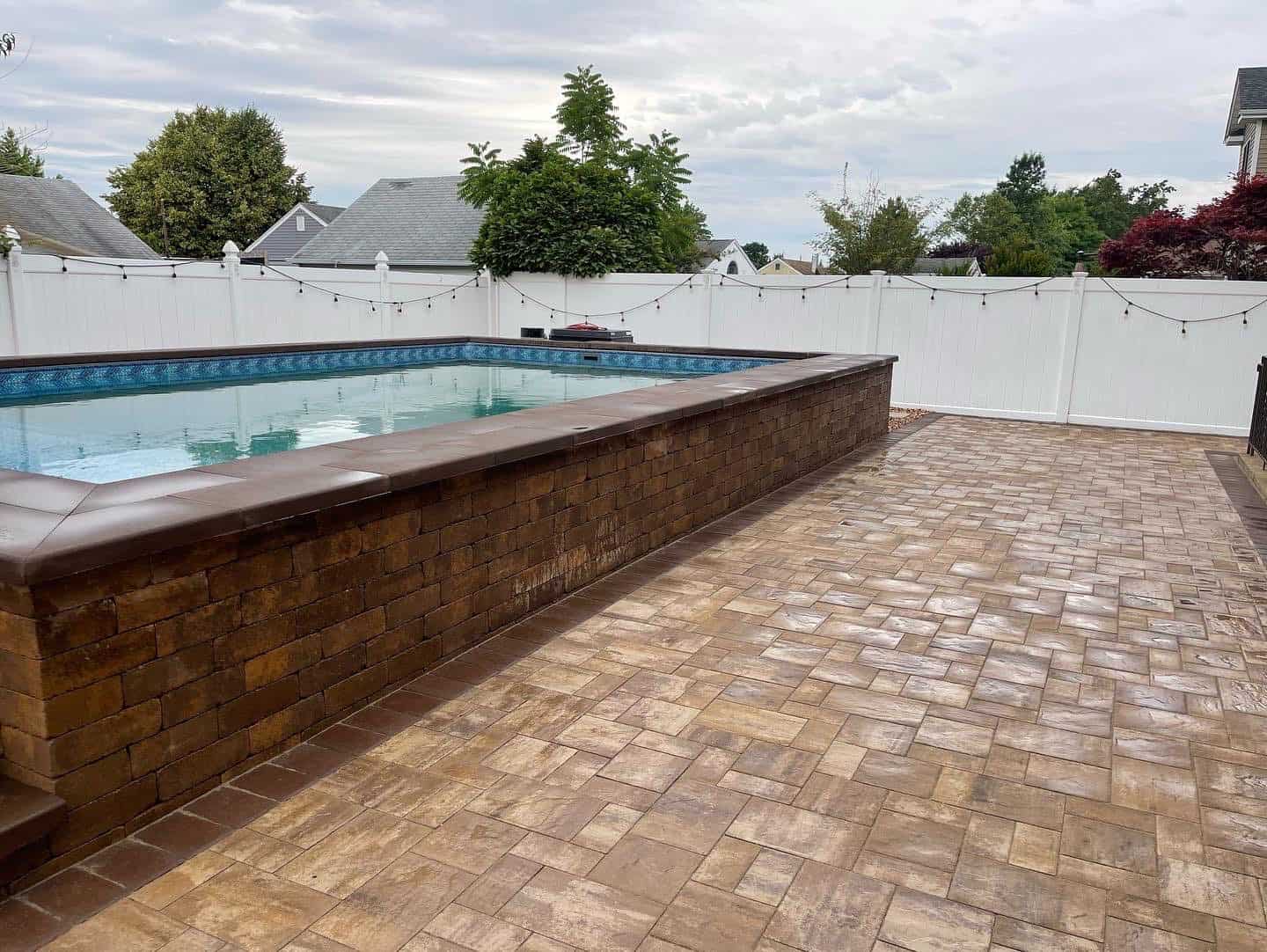
The base is everything. You never see it once the patio is finished, but it determines whether your investment lasts 25 years or needs repairs within five. We use 4 to 6 inches of crushed stone base, compacted in layers with commercial equipment. Each layer gets properly compacted because loose base material leads to uneven settling and premature failure.
Geotextile fabric goes down first in areas where sandy soil might migrate into the base. This prevents base materials from washing out during heavy rains and strengthens sections where the soil is particularly soft. It’s a detail many contractors skip to save time, but it makes a significant difference in long-term performance.
Drainage planning is critical for Suffolk County properties. Sandy soil drains well naturally, but it can channel water in unexpected ways. Some areas drain too fast, others hold water. Proximity to the water table, low spots in the yard, and foundation proximity all affect how water moves through your property.
We create proper slope to direct water away from structures—not toward them. For problem areas, subsurface drainage or dry wells handle excess water before it reaches your foundation. The joints between pavers also help with drainage by allowing water to percolate through instead of running off, which reduces surface water and prevents the pooling issues that damage other patio materials in coastal areas.
Edge restraints lock everything in position. Without them, pavers gradually spread apart as the ground freezes and thaws, creating gaps and uneven surfaces. We use concrete, steel, or heavy-duty plastic restraints around the entire perimeter—not the flimsy edging that shifts after one winter.
Once the base is prepared and properly graded, a sand leveling layer goes down. This typically measures about 1 inch and provides the final leveling bed for pavers. The sand gets screeded to exact specifications—too much and pavers sink over time, too little and they don’t seat properly.
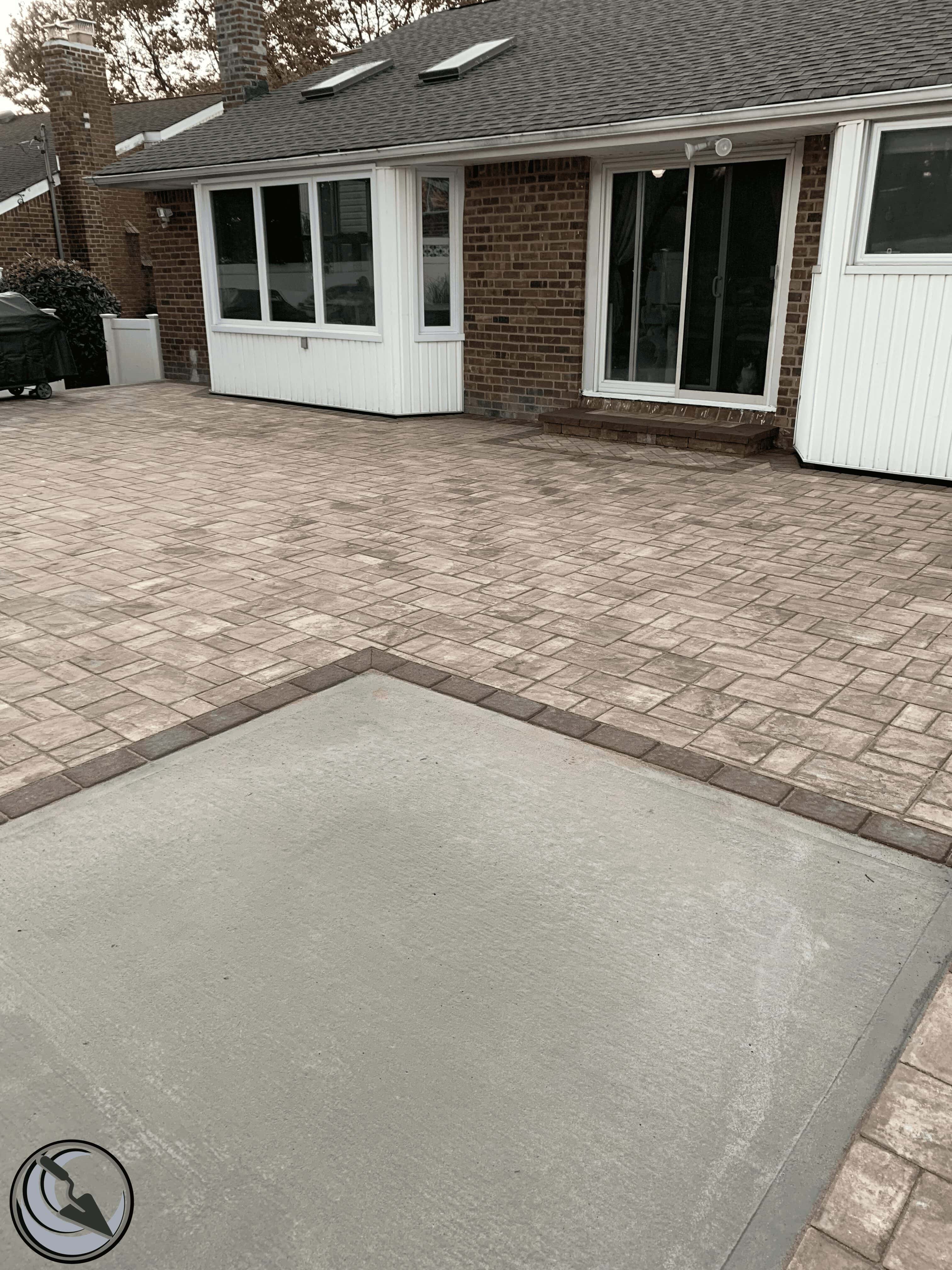
Paver installation follows your chosen pattern with constant level checks and precise cutting for edge pieces. Herringbone patterns create natural resistance to shifting because the interlocking design distributes pressure evenly. Running bond offers clean lines for rectangular patios. Circular patterns work well around fire pits or as focal points in larger spaces.
We maintain consistent joint spacing throughout—usually 1/8 to 3/16 inch. This allows for proper drainage while keeping the surface stable. Cutting pavers to fit around obstacles, curves, or borders requires specialized equipment and experience. Poor cuts look amateur and can create weak points where pavers crack under pressure.
Polymeric sand gets swept into joints and activated with water. Unlike regular sand, it hardens to prevent weeds from growing through while still allowing drainage. This locks pavers in place and prevents the shifting that occurs when regular sand washes out during heavy rains. The sand needs to be applied correctly—too wet and it stains the paver surface, too dry and it doesn’t activate properly.
Final compaction with a plate compactor ensures everything seats correctly into the base. This step can’t be skipped or done halfway. Proper compaction prevents the settling that creates uneven surfaces and trip hazards. The entire surface gets cleaned, removing any polymeric sand residue before it hardens on the paver faces.
Sealing is optional but recommended for certain applications. It enhances color, makes cleaning easier, and provides additional protection against stains. For pool areas and outdoor kitchens where spills are common, sealing makes sense. For standard patio applications, many homeowners prefer the natural weathered look that develops over time. Either choice works—it’s about your preference and how you plan to use the space.
Paver patios give you what concrete can’t—durability that handles Long Island’s climate, design flexibility that matches your home’s style, and longevity that makes the investment worthwhile. The difference between installations that last decades and those that need repairs within years comes down to understanding local conditions and doing the work correctly from the start.
Suffolk County’s sandy soil, coastal moisture, and freeze-thaw cycles demand specific techniques. Proper excavation depth, base preparation, drainage planning, and edge restraints aren’t optional extras—they’re requirements for performance. Materials matter too, whether you choose concrete pavers for versatility, natural stone for premium aesthetics, or brick for classic appeal.
Your outdoor space should work for how you actually live. Dining areas, lounging spaces, fire pit gatherings. Functional design that extends your home’s living area into the backyard. When you’re ready to create that space, we bring the expertise that comes from years of handling Long Island-specific challenges and the certifications that back up the work.
Article details:
Share:
Continue learning: