Discover practical solutions to prevent ice accumulation and protect your paver driveway from Suffolk County's harsh winter conditions.
Share:
Summary:
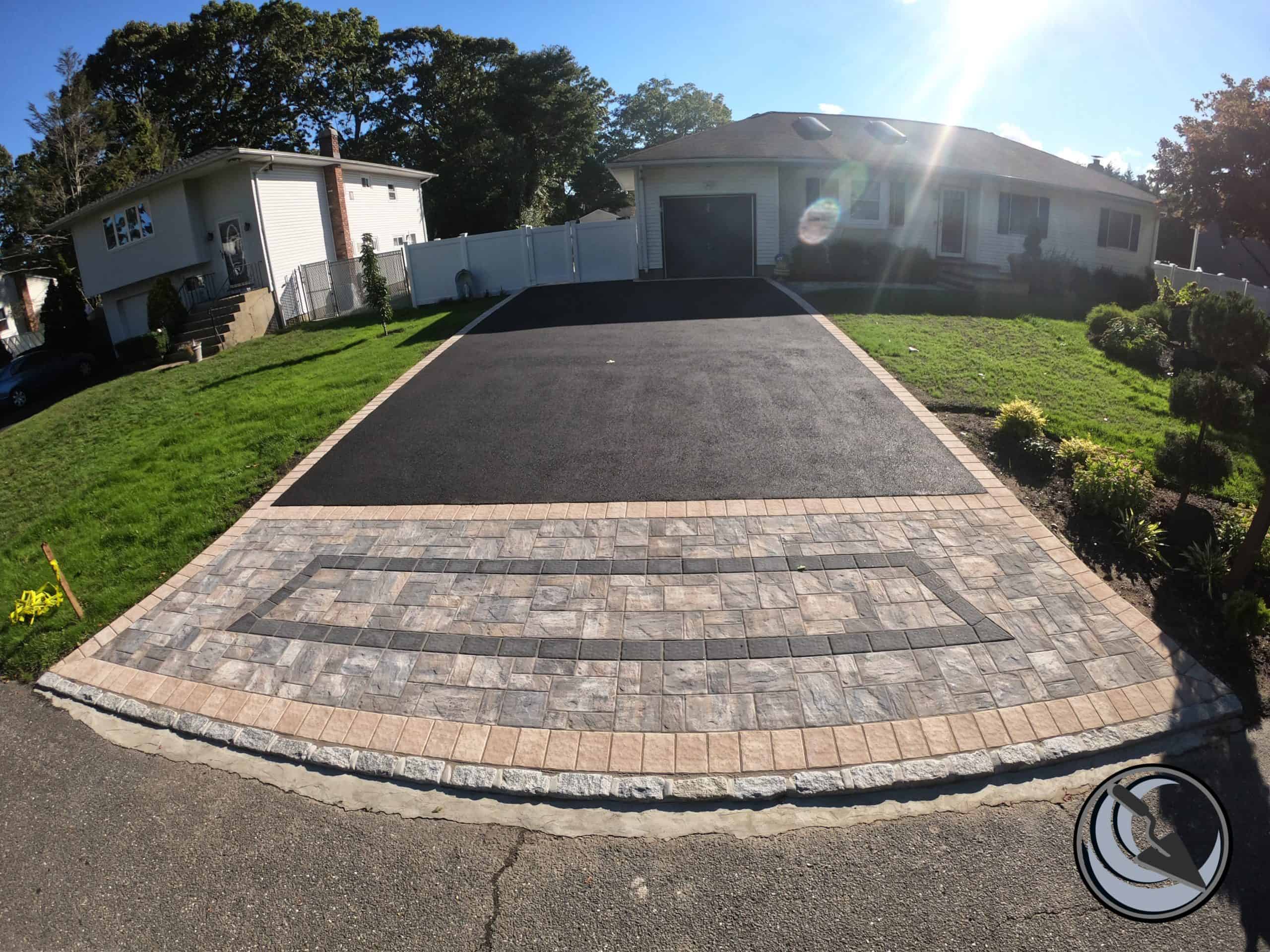
Your beautiful paver driveway shouldn’t become a skating rink every winter. Ice buildup isn’t just inconvenient—it’s dangerous for your family and costly for your property. Suffolk County’s freeze-thaw cycles can destroy improperly maintained driveways, leading to thousands in repair bills.
The good news? You can prevent most ice-related problems with the right approach. Here’s how to keep your driveway safe and protect your investment through even the harshest Long Island winters.
Ice formation starts when water seeps into small cracks in your driveway, then freezes and expands with up to 25,000 psi of pressure. This destructive cycle happens repeatedly throughout Suffolk County winters.
Your driveway takes a beating from Suffolk County’s freeze-thaw cycles, coastal moisture, and heavy traffic. Unlike inland areas, Long Island’s coastal location creates perfect conditions for ice damage. Morning frost melts during sunny afternoons, then refreezes overnight.
Poor drainage makes everything worse. When water pools instead of flowing away, you’re guaranteed ice problems. That’s why proper installation and maintenance aren’t optional—they’re essential for preventing expensive damage.
Water is your driveway’s biggest enemy during winter months. Here on Long Island, water is one of your patio’s biggest enemies, and without proper drainage and a compacted base, you’re going to get movement, erosion, and eventually repairs.
Most ice problems start with drainage issues that developed during installation. If your contractor didn’t excavate deep enough or properly slope the base, water collects in low spots. These become ice patches that expand every freeze-thaw cycle.
Trapped water leads to damage and erosion, creating poor drainage for your driveway, while cleaning and sealing paving stones gives pavers a smooth surface that enables roll-off. Professional drainage solutions redirect water away from problem areas before it can freeze.
Signs you have drainage problems include water puddles that linger after rain, ice patches that form in the same spots repeatedly, and pavers that seem to shift or settle unevenly. These issues only get worse over time, so addressing them quickly saves money and prevents safety hazards.
The solution involves proper grading to create positive drainage flow. Proper drainage starts with correct grading during excavation, sloping the base away from your home and toward appropriate drainage areas, with paver joints allowing water to infiltrate through the surface instead of running off like concrete.
Professional sealants protect your driveway pavers from stains and surface damage while ensuring color retention and minimizing freeze-thaw damage, with sealants needing reapplication every 3-5 years. This isn’t just about appearance—it’s about structural protection.
Unsealed pavers absorb water like sponges. Most pavers are naturally porous, making them susceptible to water damage and erosion. When that absorbed water freezes, it expands and creates micro-cracks that grow larger each winter.
Professional sealing creates a protective barrier that prevents water penetration. Professional paver sealing is designed to protect pavers from the elements, preventing discoloration, fading, and erosion, with sealant specially formulated to repel water and protect against stains.
The timing matters too. The ideal time for paver sealing is during dry, mild weather conditions, typically in late spring or early fall, and you shouldn’t wait until after winter damage has occurred. Fall sealing gives you maximum protection through the harsh winter months ahead.
Quality sealers penetrate deep into the paver surface, not just coating the top. This creates long-lasting protection that withstands Suffolk County’s challenging weather patterns. A good sealer penetrates the paver surface and stays there for many years, even if the look of the sealer goes away, the color and texture of the pavers will stay new.
Prevention beats reaction every time. Properly maintaining your driveway throughout the year helps reduce the likelihood of ice formation in winter, with proper drainage being key to preventing ice buildup through grading your driveway to direct water away and installing drainage channels.
The most effective approach combines multiple strategies. You need proper drainage, professional sealing, and smart snow removal techniques. Each element works together to prevent ice formation rather than just dealing with it after it happens.
It’s essential to be proactive and have a plan in place before the snow arrives to avoid potential dangers from snow and ice buildup. Waiting until winter hits means you’re already behind.
When it comes to snow removal on paver driveways, you can use anything you would use on asphalt or concrete driveways—shovels, snowblowers, and snowplows—but you want to be careful not to scrape the actual pavement with snow removal tools.
The key is setting your equipment correctly. You want to set the plow or shovel about 2 inches above the ground so you don’t catch the edge of a paver and accidentally pull it up or break it. This prevents damage while still removing snow effectively.
Keeping a paver driveway cleared of snow minimizes the amount of water that seeps between pavers and prevents ice from expanding the joints. Quick removal after snowfall prevents the melt-refreeze cycle that creates dangerous ice patches.
For chemical de-icers, choose carefully. While most driveway pavers resist staining from chemical de-icers, you want to use as little as possible to protect adjacent landscaping, and we recommend using only rock salt de-icers while avoiding magnesium chloride and calcium chloride.
Alternative methods work well too. Sugar beet juice stands out as a fantastic substitute for traditional salt, containing substances that prevent water from freezing while being eco-friendly and safe for plants and aquatic life. Sand provides traction without chemical damage.
Consider timing your snow removal strategically. Shoveling during daytime is smart because natural sunlight makes it easier to see and clear snow effectively, with warmer daytime temperatures making the task more comfortable and helping prevent ice formation.
Proper installation prevents most winter problems before they start. A well-constructed patio or walkway with properly compacted base materials and solid edge restraint will have little or no damage during freeze-thaw cycles. The foundation work makes all the difference.
Paver driveways that weren’t constructed properly can suffer severe structural damage, with insufficient base material or improper installation allowing pavers to shift as the ground moves during freeze-thaw cycles, especially when edge restraint is failing or missing.
At Stone Escapes, we understand Suffolk County’s unique challenges. We understand Long Island’s freeze-thaw cycles and build patios that won’t crack or settle, with every installation including professional drainage planning to prevent water damage and foundation issues using commercial-grade pavers and materials designed to withstand coastal weather.
The excavation depth matters significantly. Proper preparation includes excavating 8-10 inches deep with appropriate base layering. This creates a stable foundation that won’t shift during freeze-thaw cycles.
Edge restraints prevent lateral movement that leads to joint separation and ice infiltration. If jointing sand levels are low, resweep joint sand into paver joints before winter to help hold pavers in place and allow for proper drainage. This maintenance step prevents bigger problems.
For persistent ice problems, advanced solutions exist. If you have a driveway that’s constantly iced over, one solution is to install heat cables underneath the pavers, which is easier during installation but can be retrofitted at any time. This eliminates ice formation entirely in problem areas.
Your paver driveway represents a significant investment that deserves proper protection. Regular maintenance scheduling is far more cost-effective than dealing with extensive repairs or replacement due to freeze-thaw damage and salt infiltration.
The strategies we’ve covered—proper drainage, professional sealing, and smart snow removal—work together to prevent ice problems before they start. Taking action now protects your family’s safety and preserves your property value through Suffolk County’s challenging winter months.
Don’t wait until ice damage forces expensive repairs. Contact Stone Escapes Masonry & Outdoor Design Inc for professional assessment and solutions tailored to your specific drainage and sealing needs. Our expertise in Suffolk County conditions ensures your driveway stays safe and functional all winter long.
Article details:
Share:
Continue learning: