Finding masonry contractors near me shouldn't feel like gambling. Discover what separates reliable Suffolk County pros from contractors who disappear mid-project or deliver work that fails.
Share:
Summary:
Reliability isn’t about having a shiny truck or a smooth-talking sales pitch. It’s about showing up consistently, communicating in plain English, and delivering work that can survive a Long Island winter without having a structural breakdown.
When you’re hunting for masonry contractors, you’re hoping for a professional who answers the phone (revolutionary, we know), gives you a straight answer on cost, and doesn’t pull a vanishing act halfway through the dig. That’s the bare minimum. But the real pros go further. We show you actual projects in your zip code. We explain why Suffolk County’s sandy soil is a total diva. We provide written estimates that don’t spontaneously “evolve” into higher prices once the shovel hits the dirt.
The contractors worth your coffee understand that your time is valuable. We don’t “no-show” on estimates. We don’t promise a Monday start and roll in on a Thursday afternoon. And when the dust settles, we don’t leave piles of rubble and sad, crushed bushes for you to apologize to.

Every contractor with a clipboard says they’re “licensed and insured.” But when you ask to see the papers, some suddenly get as vague as a teenager explaining a broken vase. That’s your cue to exit stage left.
Suffolk County, Nassau County, and towns like Southampton have specific masonry hoops we have to jump through. A contractor with multiple local licenses isn’t just a fan of paperwork; we’re proving we know the local “rules of the road,” from drainage codes to permit hurdles. It’s the difference between a pro and someone who just watched a YouTube tutorial.
Insurance is the big one. If a worker decides to take an unplanned nap on your property after a trip-and-fall, you want to be sure their insurance handles the bill—not your homeowner’s policy. Ask for the certificates. Don’t feel bad about calling the carrier to make sure the policy isn’t as expired as the milk in the back of your fridge.
Licensed pros also tend to exist next year. We aren’t fly-by-night operations working out of a mystery van; we have an actual reputation to protect. If a stone wiggles three years from now, you’ll be able to find us.
The pros who handle their own permits are usually the ones who know what they’re doing. We know what the inspectors are looking for (and what makes them grumpy). We understand how our coastal location turns “simple drainage” into a science project.
If a contractor looks confused when you mention building codes, or suggests “skipping the permit” to save a buck, that’s a massive red flag. Real Suffolk pros should be able to nerd out about local soil challenges and the specific engineering we use to beat them.
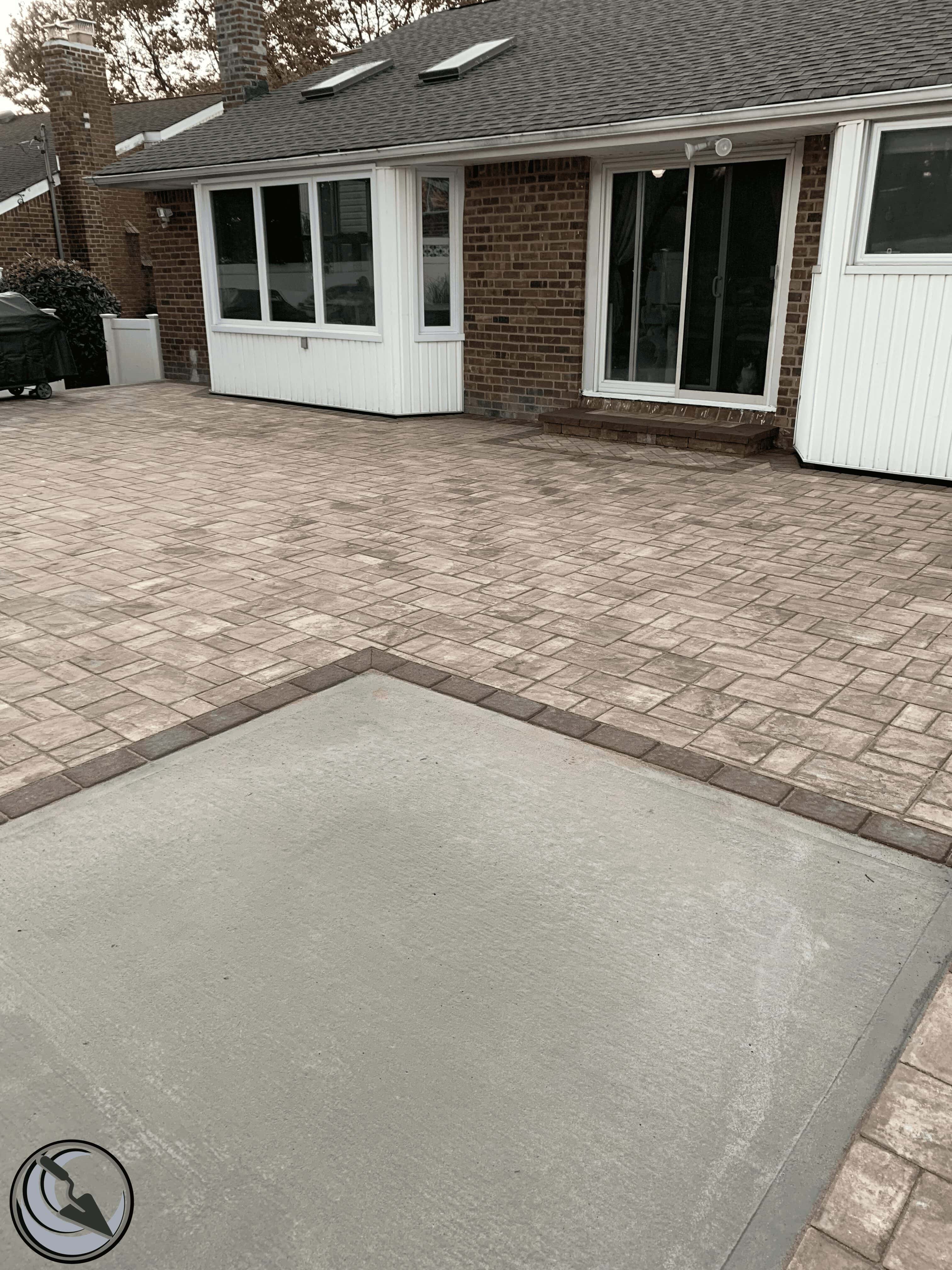
In the masonry world, the lowest bid usually comes with a “hidden discount” on quality. Shortcuts in stone-work might stay hidden for a season, but they always come out eventually. A proper paver patio in Suffolk needs at least 8-10 inches of excavation. This isn’t a suggestion; it’s a requirement for work that doesn’t move. Our frost line is no joke, and a shallow base means your patio will start looking like a roller coaster after the first hard freeze. If a contractor says they “only need to dig a little,” they’re basically building you a temporary floor.
Then there’s the base. Sandy soil is tricky—it doesn’t compact like clay, and coastal moisture loves to mess with stability. A real Long Island base needs layers of gravel, precision grading, and edge restraints to keep your stones from “wandering” into the neighbor’s yard.
Contractors who skip these steps finish faster and cheaper, sure. But you’ll be the one paying for the “re-do” when your pavers start sinking or water begins pooling near your foundation. Fixing a “cheap” job almost always costs more than doing it right the first time.
Watch out for the “vague” guys. Ask them: How deep are you digging? What’s the base material? How are you handling the rain? If they get annoyed or give you a “trust me,” don’t. Quality pros take pride in the “ugly” part of the job—the part underground.
We use state-approved RCA aggregates because they stay put. We install drainage systems before your yard turns into a swamp. We use polymeric sand to lock those pavers tight and keep the weeds from throwing a party in the cracks.
The gap between a 20-year patio and a 2-year disaster is pure engineering. When you’re comparing quotes, look at the “guts” of the project. That $3,000 “savings” usually means someone is planning to dig 4 inches instead of 10, or use “mystery dirt” instead of real gravel.
The questions you ask are your best defense against a masonry nightmare. Don’t be afraid to be the “annoying” customer; a real pro will love your attention to detail.
Start with: “Where have you worked lately?” Not just “Long Island,” but actual neighborhoods. A contractor with real Suffolk roots will be able to tell you exactly how they handled the specific drainage or soil issues in your neck of the woods. If they can’t give you a local reference, they might be from out of town—or just out of luck.
Ask about the warranty—and get it in writing. Does it cover just the stones, or the labor too? Some guys will warranty the “bricks” for life but only cover the “installation” for 30 days. That’s like a car company warranting the tires but not the engine.
Get into the weeds. How do you handle sandy soil? What happens when it freezes? How do you stop my patio from becoming a pond? Our answers will prove if we’re experts or just reading from a script. If the “expert” gives you generic fluff, keep looking.

Price is a factor, but “cheap” can be very expensive. In masonry, you aren’t just paying for the stones; you’re paying for the assurance that those stones won’t move.
Suffolk County masonry is naturally a bit pricier because our environment is demanding. We need deeper holes, better drainage, and materials that can handle salt air without turning to dust. A contractor who understands this will explain why the quote looks the way it does.
The guy who dramatically undercuts the field is usually doing one of three things: cutting corners on the base, using “seconds” (slightly messed up stones), or planning to hit you with “surprise” costs once your yard is already torn up. If the price seems like a miracle, it probably is.
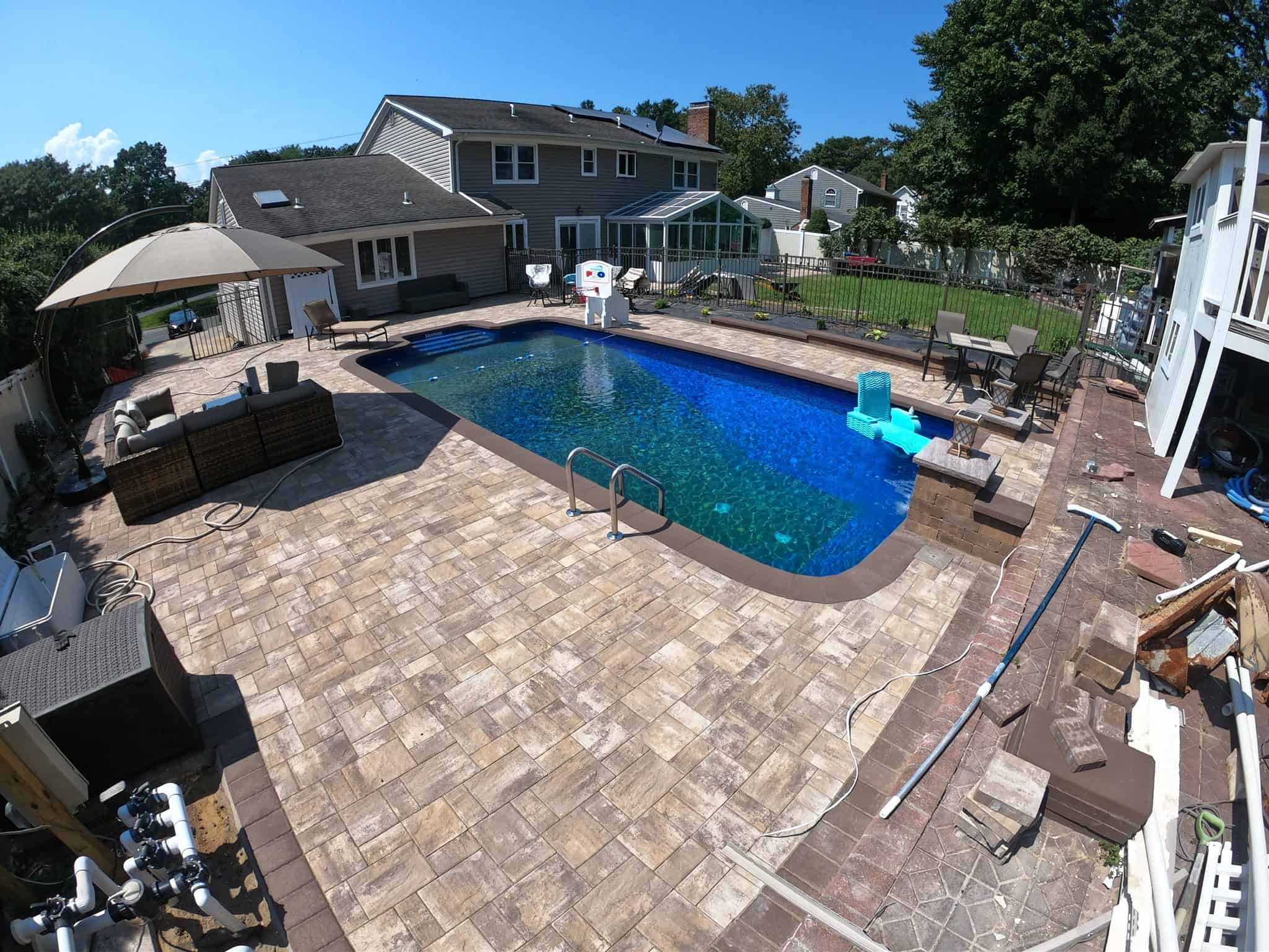
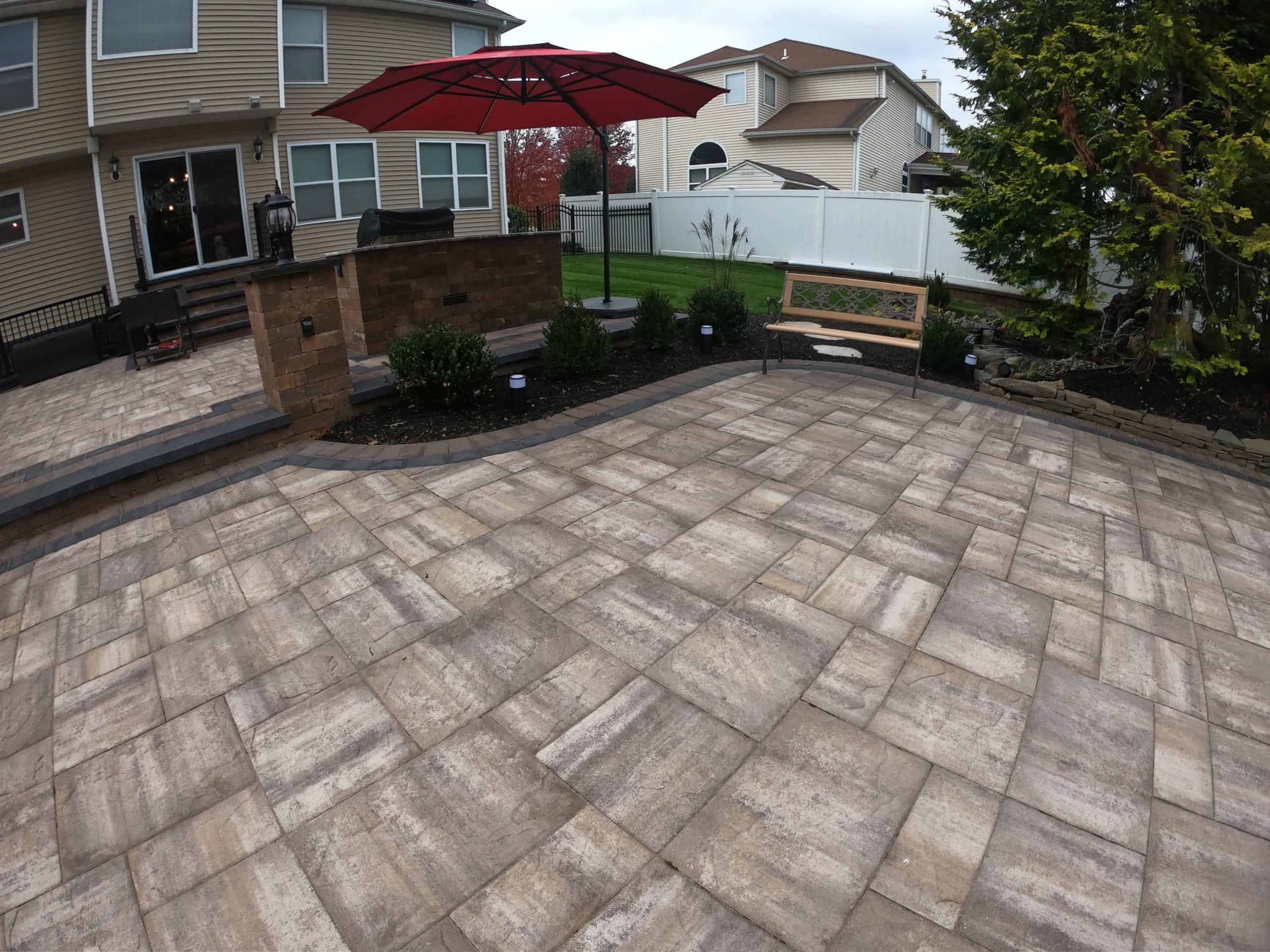
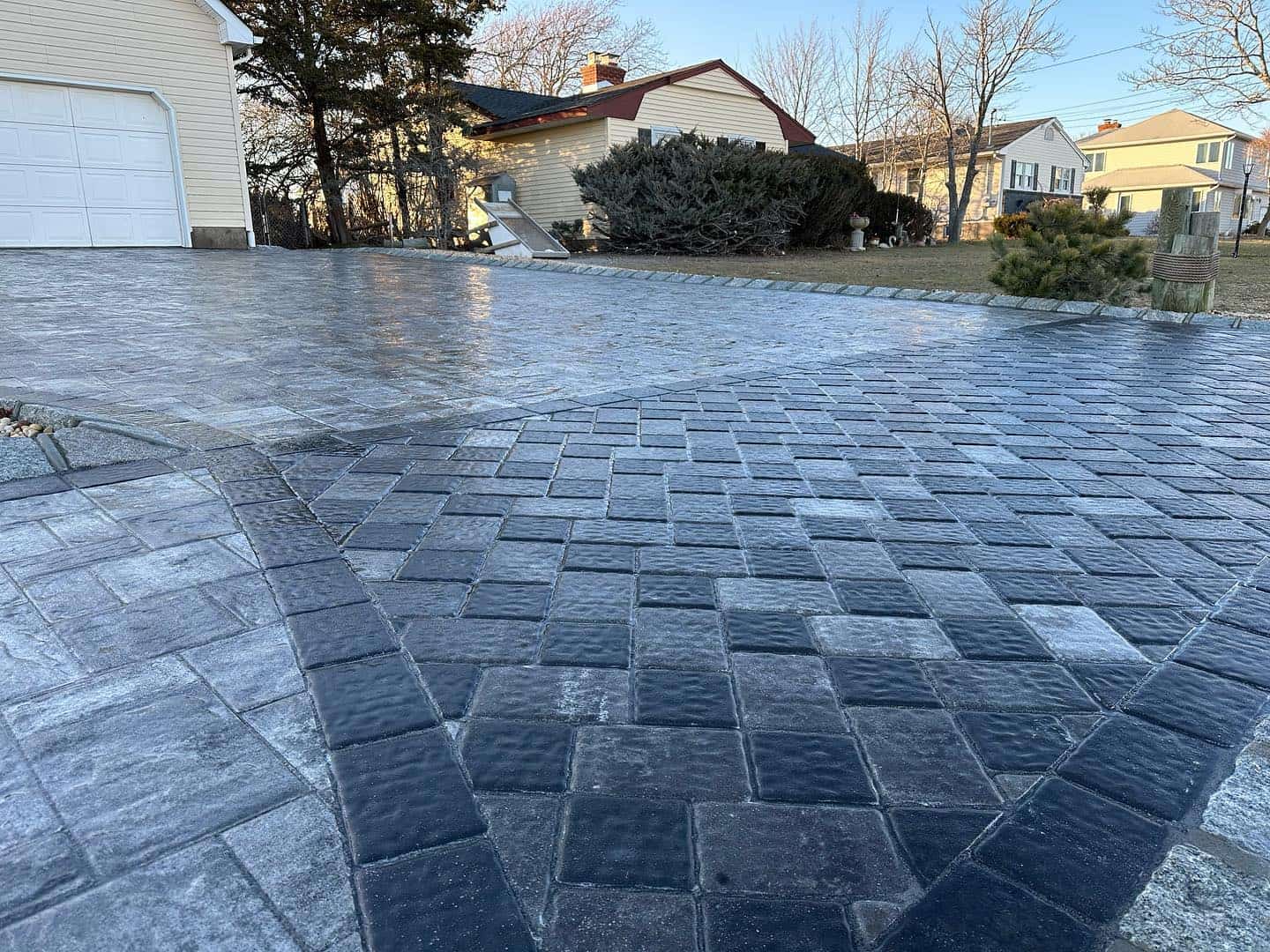
Quality materials like Cambridge or Techo-Bloc are built for our mood swings. They resist cracking and don’t care about salt air. Cheap “no-name” pavers might look okay in the showroom, but they’ll look like old sponges in a few years.
Installation is king. A perfectly installed gravel path is better than a poorly installed marble driveway. On Long Island, “perfectly installed” means knowing things that out-of-towners don’t. It means respecting the ocean and the frost.
Check the estimate for specifics. Does it cover the dump fees? The permits? The cleanup? The edge restraints? The detailed pros are the ones who have actually thought through the whole job.
Finally, look at the money trail. Reputable pros don’t need 50% upfront just to buy a shovel. We usually ask for a reasonable deposit for materials and then tie payments to actual milestones. If someone wants the whole check before they’ve broken ground, run—don’t walk—to the nearest exit.
Some big masonry outfits send a “closer” to do the estimate, and then you never see that person again. You end up playing a giant game of “telephone” with rotating project managers and crews who weren’t there for the original plan. That’s how you end up with a square patio when you asked for a circle.
The best contractors are the ones with skin in the game. When you talk to the owner or the lead pro during the estimate, you’re talking to the person who is actually accountable. We can answer technical “how-to” questions on the fly, and we know exactly what our crew can (and can’t) do.
Direct communication means zero surprises. The person who promised you a specific timeline is the same person who has to make it happen. You aren’t being sold a dream that the actual crew can’t build.
It also means the quality stays consistent. When the same crew works your yard from start to finish, they know the plan. They catch the little things—like a weird drainage angle—before it becomes a big thing. You don’t have to re-explain your vision to a new guy every Tuesday morning.
Ask: “Who will I be talking to every day?” Will the person who sold me the job be on-site? Is it the same crew or a rotation? If the answer is “we sub everything out,” you’re just hiring a middle-man with a markup.
Contractors who give you a direct line to the decision-maker tend to run much smoother ships. You get answers in minutes, not days. If a change needs to be made, it gets made. There’s no “let me check with my supervisor” while your yard sits empty.
This creates real accountability. When my name is on the line, I have a very strong incentive to make sure you’re happy. We’re not just clearing a ticket in a database; we’re building our reputation in our own neighborhood.
Searching “masonry contractors near me” is the start of a journey toward a better home. But to get there, you have to be the one who asks the tough questions and demands real standards. Suffolk County doesn’t play nice with poor construction, and neither should you.
Look for the licenses, ask about the “guts” of the installation, and get everything in writing. Pay attention to the vibes—if they communicate well during the quote, they’ll likely communicate well during the build. If they’re a mess now, expect a mess later.
The pros worth hiring won’t just tell you they’re the best; they’ll show you exactly how they’re the best, from the specific gravel they use to the way they handle the local permits. At Stone Escapes Masonry & Outdoor Design Inc, we bring that “no-nonsense” expertise to every project, guaranteeing your outdoor space survives Long Island’s moods for decades.
Article details:
Share:
Continue learning: