Hiring a paving contractor in Suffolk County takes more than picking the lowest bid. Here's what actually separates a lasting installation from an expensive mistake.
Share:
Summary:
Most people approach hiring a paving contractor the same way: get three quotes, pick the middle one, hope for the best. And most of the time, that works out fine — until the first hard winter, when the pavers start shifting or the driveway cracks straight through. Then you realize the quote you chose wasn’t really the middle option. It was the cheapest base preparation dressed up as a fair price.
If you’re a homeowner in Suffolk County, this guide is written for you. We’ll walk through what actually matters when evaluating paving and asphalt companies — from licensing and insurance to the technical standards that determine whether your installation holds up for decades.
Long Island isn’t like most of the Northeast. The soil here is glacial outwash — sandy, loose, and prone to shifting under load. That’s not a problem you can see on the surface, but it’s the single biggest reason paving jobs fail prematurely across Suffolk County.
A contractor who doesn’t account for this will install a beautiful-looking driveway or patio on a compromised base. It might look fine for a year. By year three, you’re watching the edges creep outward, joints widen, and pavers rock underfoot. That’s not a material problem — it’s a base problem, and it starts before a single paver is laid.
The right preparation for Suffolk County’s conditions means excavating to 8–10 inches, not the 4–6 inches that some contractors treat as sufficient. It means compacting aggregate base in lifts, planning drainage around the South Shore’s high water table, and installing edge restraints that prevent lateral movement over time. We do all of this on every project — not because it’s the easiest approach, but because it’s the only one that actually works here.

Suffolk County sees roughly 20 to 30 freeze-thaw cycles in an average winter. That number might not mean much in the abstract, but here’s what it means for your driveway: every time water works its way under a paved surface and freezes, it expands. Every time it thaws, it contracts. Do that 25 times a year on a surface with a thin or improperly compacted base, and you’re going to see cracking, heaving, and joint failure — usually within the first two or three winters.
This is why base depth isn’t a minor technical detail. It’s the variable that determines whether you’re calling for repairs in year four or still looking at a clean, level surface in year twenty. When you’re talking to asphalt driveway paving contractors, ask them specifically how deep they excavate and why. If they can’t answer that question clearly, that’s your answer.
Beyond depth, drainage matters just as much. Properties along the South Shore — in communities like Babylon, Bay Shore, or East Islip — often have water tables close to the surface. A paved area without proper slope and drainage planning becomes a collection point for water, and that water has nowhere to go but under your installation. We ask about your site’s drainage before we quote you anything, because we know that Suffolk County’s water conditions are the difference between a surface that lasts and one that fails early.
No two sites in Suffolk County are exactly the same. A property in Holbrook sits on different soil conditions than one in Hampton Bays. A driveway in Sayville drains differently than one in Smithtown. That kind of local knowledge only comes from years of working this specific ground — and it’s the kind of thing that never shows up in a price comparison.
“Licensed and insured” appears on virtually every contractor’s website, truck, and business card in Suffolk County. It’s become so common that most homeowners stop reading it. But what that phrase actually means — and whether it’s verifiable for your specific project — is worth understanding before you hand over a deposit.
In New York, contractor licensing is handled at the county level, not the state level. A Home Improvement Contractor license issued by Suffolk County is not automatically valid in Nassau County, and neither county license covers work in Southampton or East Hampton townships, which have their own separate licensing requirements. This matters more than most people realize. If you’re in Westhampton, Bridgehampton, or East Hampton and your contractor is only licensed for Suffolk County proper, they’re technically operating outside their authorization — and if something goes wrong, your recourse is significantly limited.
Ask any contractor you’re considering for their specific license number and the jurisdictions it covers. A legitimate contractor will hand that over without hesitation. One who gets vague or redirects the conversation is telling you something important.
Insurance is equally specific. General liability coverage protects against property damage caused during the project. Workers’ compensation is different — and it’s the one that catches homeowners off guard. Under New York State law, if a contractor’s employee is injured on your property and that contractor doesn’t carry workers’ comp, you as the homeowner can be held liable for medical costs and lost wages. This isn’t a hypothetical risk. It’s a real financial and legal exposure, and it’s completely avoidable by requesting a Certificate of Insurance before work begins.
We’re licensed in Suffolk County, Nassau County, Southampton, and East Hampton — and we carry both general liability and workers’ compensation coverage. That documentation is available before any contract is signed, because we’d rather you verify everything upfront than have any doubt later.
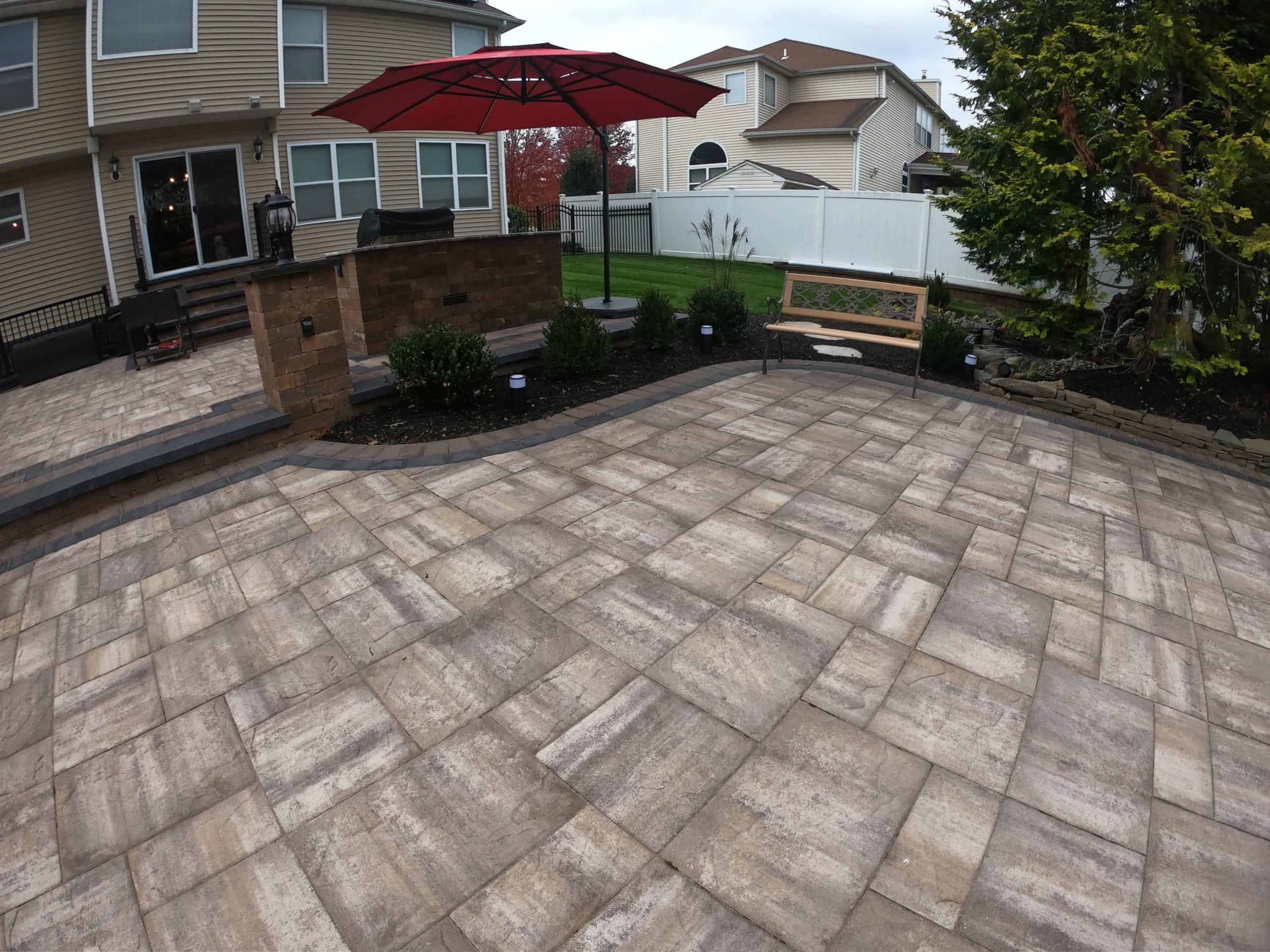
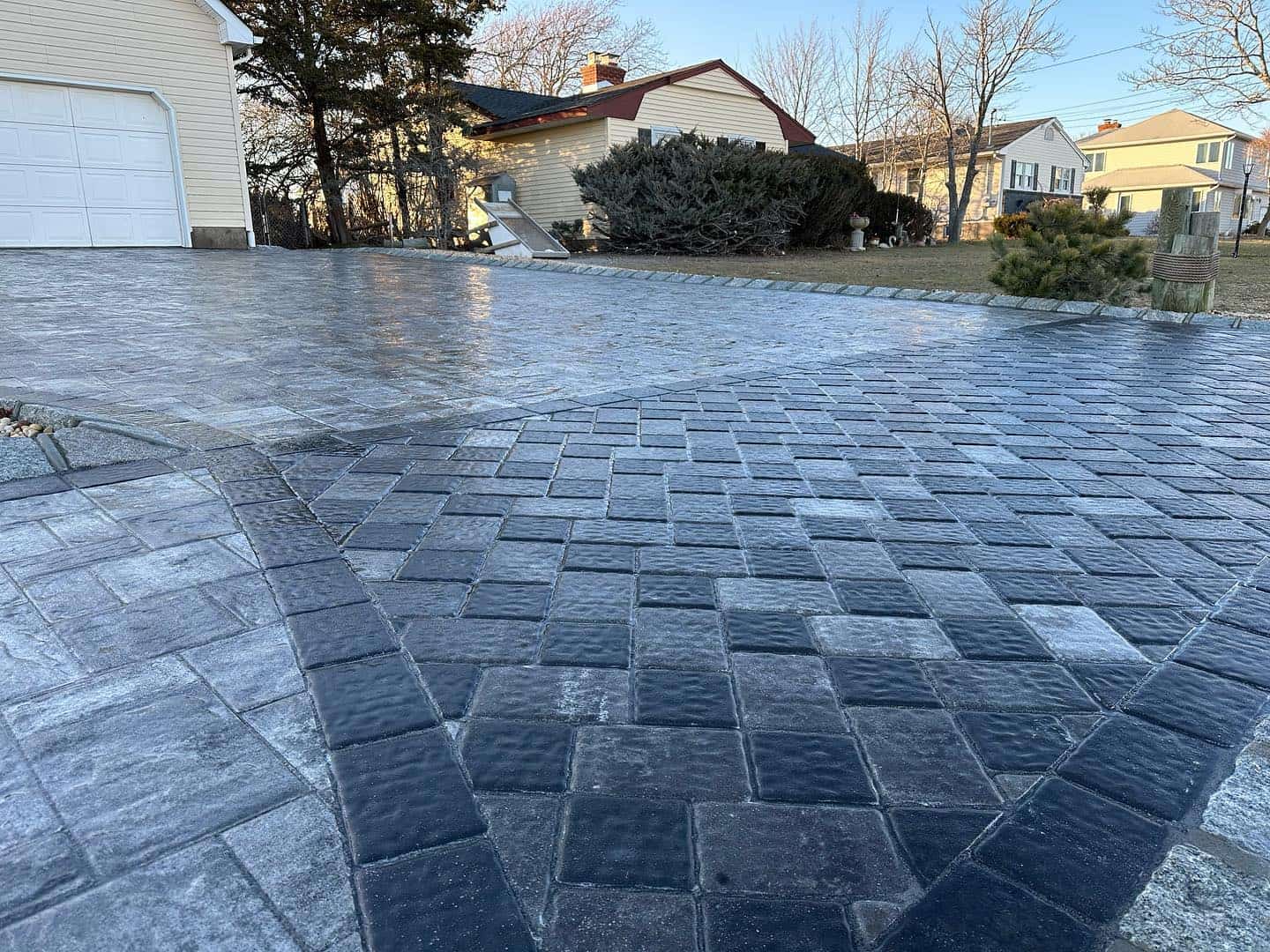
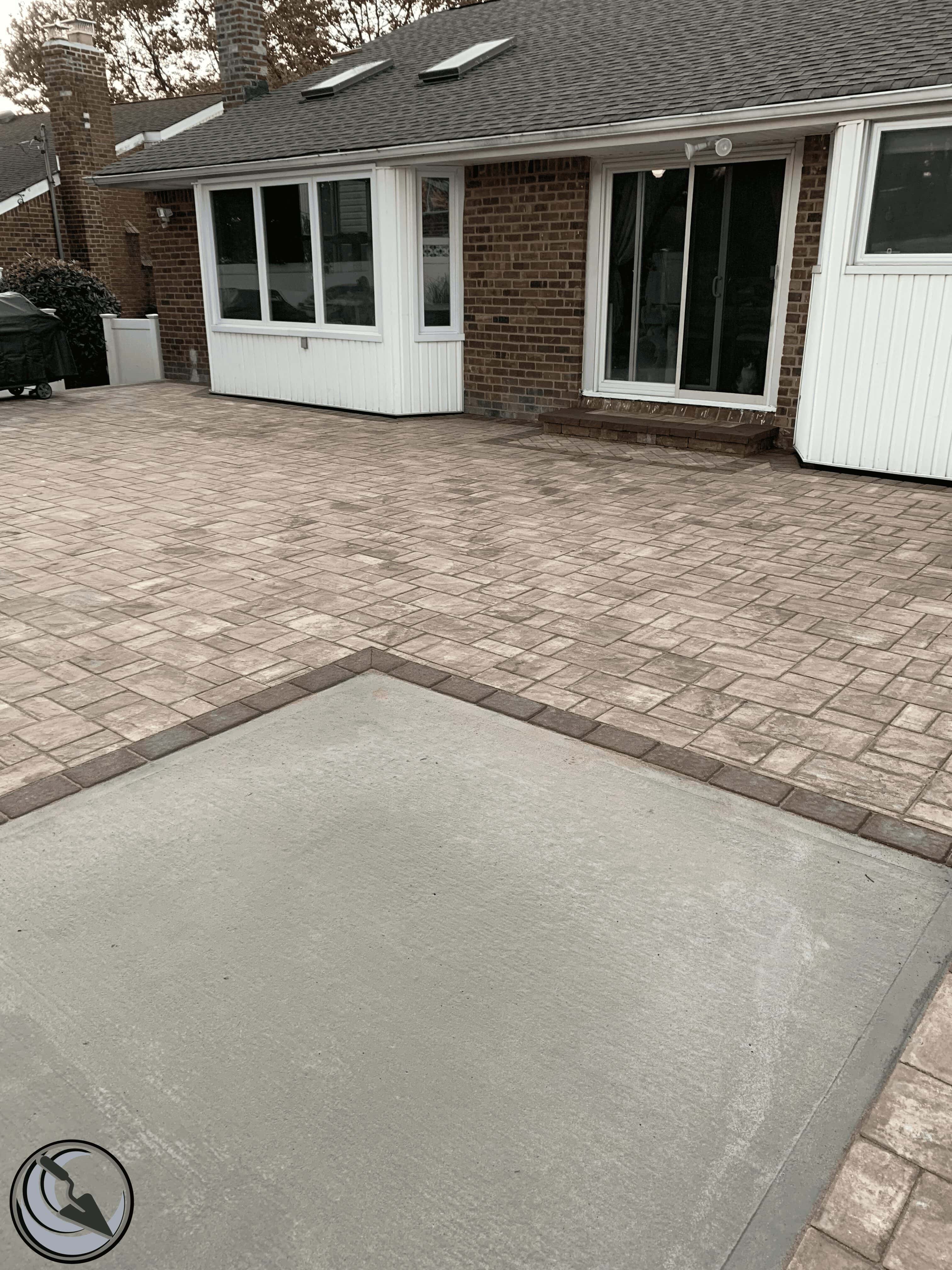
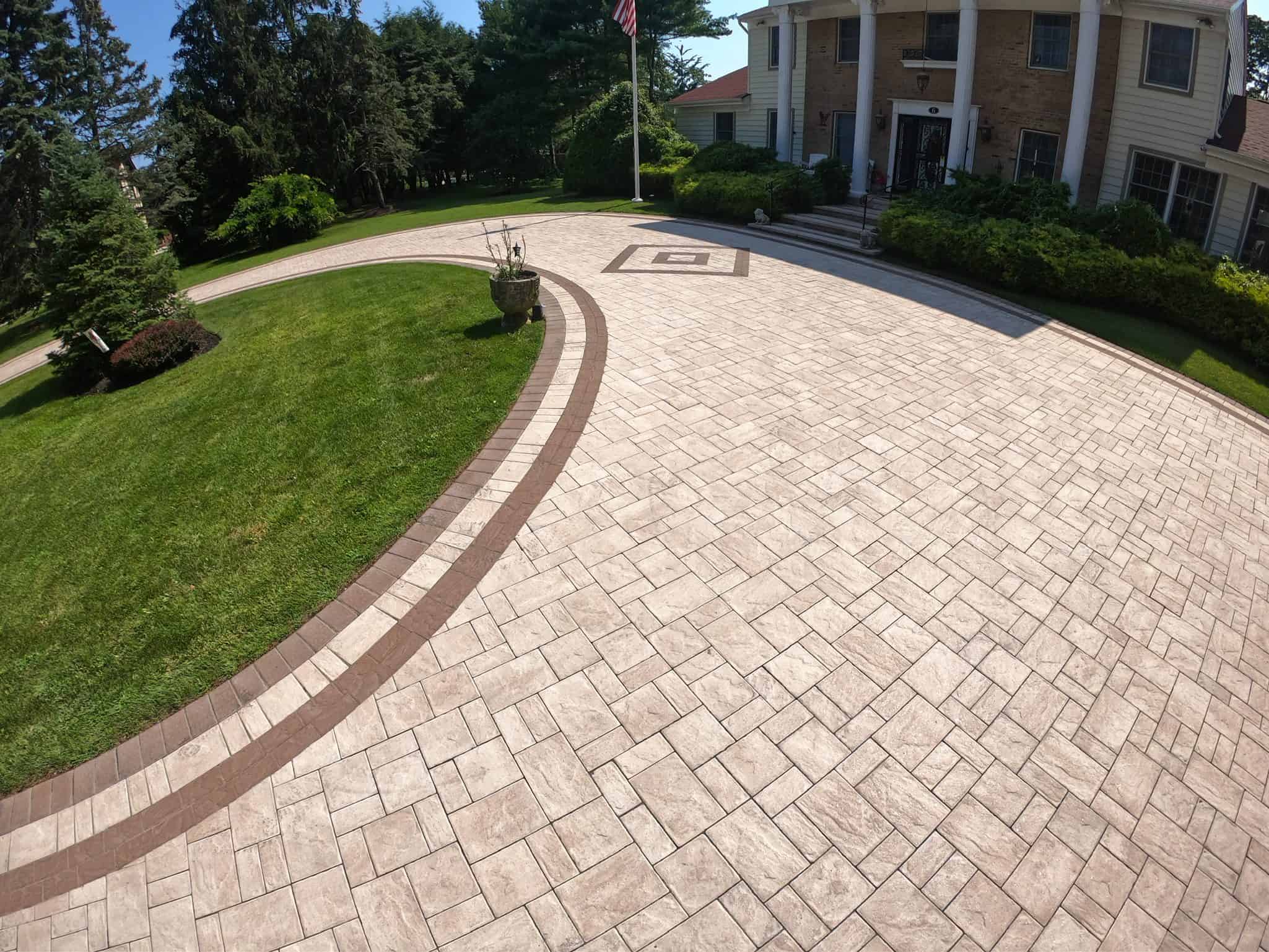
A lot of homeowners searching for a paving contractor in Suffolk County are actually looking for paver installation — interlocking concrete or natural stone systems for driveways, patios, and walkways — not traditional asphalt. These are fundamentally different products, different installation processes, and different long-term maintenance commitments.
Asphalt driveways typically need sealcoating every three to five years and resurfacing every fifteen to twenty. A properly installed paver driveway, by contrast, can last twenty-five to fifty years with minimal maintenance — and individual pavers can be replaced if one section is damaged, without disturbing the rest of the surface. That repairability alone changes the long-term cost calculation significantly.
Understanding which type of installation you actually want — and finding a contractor with genuine expertise in that specific system — is the starting point for any good hiring decision.

Manufacturer certifications in the paving and masonry industry aren’t just marketing. When a contractor is certified by Cambridge, Techo-Bloc, Unilock, or Nicolock, it means they’ve been trained by the manufacturer on proper installation techniques — the specific base requirements, edge restraint systems, joint sand specifications, and pattern tolerances that the manufacturer’s warranty depends on.
This matters to you as a homeowner for one concrete reason: if you have a problem with your installation and the contractor wasn’t certified by that manufacturer, the product warranty may not apply. The manufacturer’s warranty follows the installation method, not just the product. So a contractor who buys Cambridge pavers and installs them without certification isn’t giving you a Cambridge-warranted installation — they’re giving you pavers that happen to carry that name.
We hold certifications from Cambridge, Techo-Bloc, Unilock, Nicolock, Eldorado, and Boral. That represents years of manufacturer-specific training that directly affects how every project is built. When we spec a material for your project, we’re installing it the way the manufacturer designed it to be installed, which is what protects your investment over the long term.
When you’re comparing driveway paving companies in Suffolk County, ask specifically which manufacturers they’re certified with and what those certifications cover. A contractor who installs premium materials without certification is taking a shortcut that you’ll pay for eventually — either in failed installations or voided warranty claims.
One of the most common conversations we have with homeowners across Suffolk County is about whether to repair or replace. A cracked driveway or a section of shifted pavers doesn’t automatically mean you need to start over — but it also doesn’t always mean a patch will hold.
The honest answer depends on what’s underneath. Surface cracks in asphalt or isolated paver movement can sometimes be addressed with targeted repairs. But if the base has failed — if the aggregate has shifted, if drainage has been compromised, or if the edge restraints have given way along a significant stretch — patching the surface is a temporary fix on a structural problem. You’ll be back in the same conversation in two or three years, having spent money twice on the same section of driveway.
We assess the base condition before recommending anything. That means more than a visual inspection — it means understanding the installation history of the surface, the soil conditions on your specific property, and the drainage patterns that may have contributed to the failure. In Suffolk County, where sandy soil and seasonal freeze-thaw cycles put real stress on any paved surface, base failure is more common than homeowners expect, particularly on driveways and walkways installed more than fifteen or twenty years ago.
The post-WWII housing stock across Suffolk County means a significant number of properties have driveways and walkways that were installed in the 1960s, 70s, or 80s — often to standards far below what we’d consider acceptable today. If your surface is that old, the question isn’t usually whether to repair or replace. It’s how soon and with what materials. An honest assessment upfront saves you from a cycle of repairs that never quite solve the underlying problem.
If you take one thing from this guide, let it be this: the contractor you hire matters more than the material you choose. The best pavers in the world will fail on a bad base. The most reputable manufacturer’s warranty won’t protect you if the installer wasn’t certified. And the lowest bid almost always reflects a compromise somewhere — usually underground, where you won’t see it for a year or two.
Ask about base depth. Ask for the license number and the specific jurisdictions it covers. Request a Certificate of Insurance before any work begins. And pay attention to how the contractor communicates — whether you’re talking to the owner or being passed between people who don’t know your project.
We built Stone Escapes Masonry & Outdoor Design Inc around the idea that none of those things should be hard to verify. If you’re ready to talk through your project — whether it’s a driveway replacement in Holbrook, a patio in Southampton, or something you haven’t fully figured out yet — reach out to us directly. No portals, no callbacks from someone you’ve never met. Just a real conversation with someone who knows this ground.
Article details:
Share:
Continue learning: