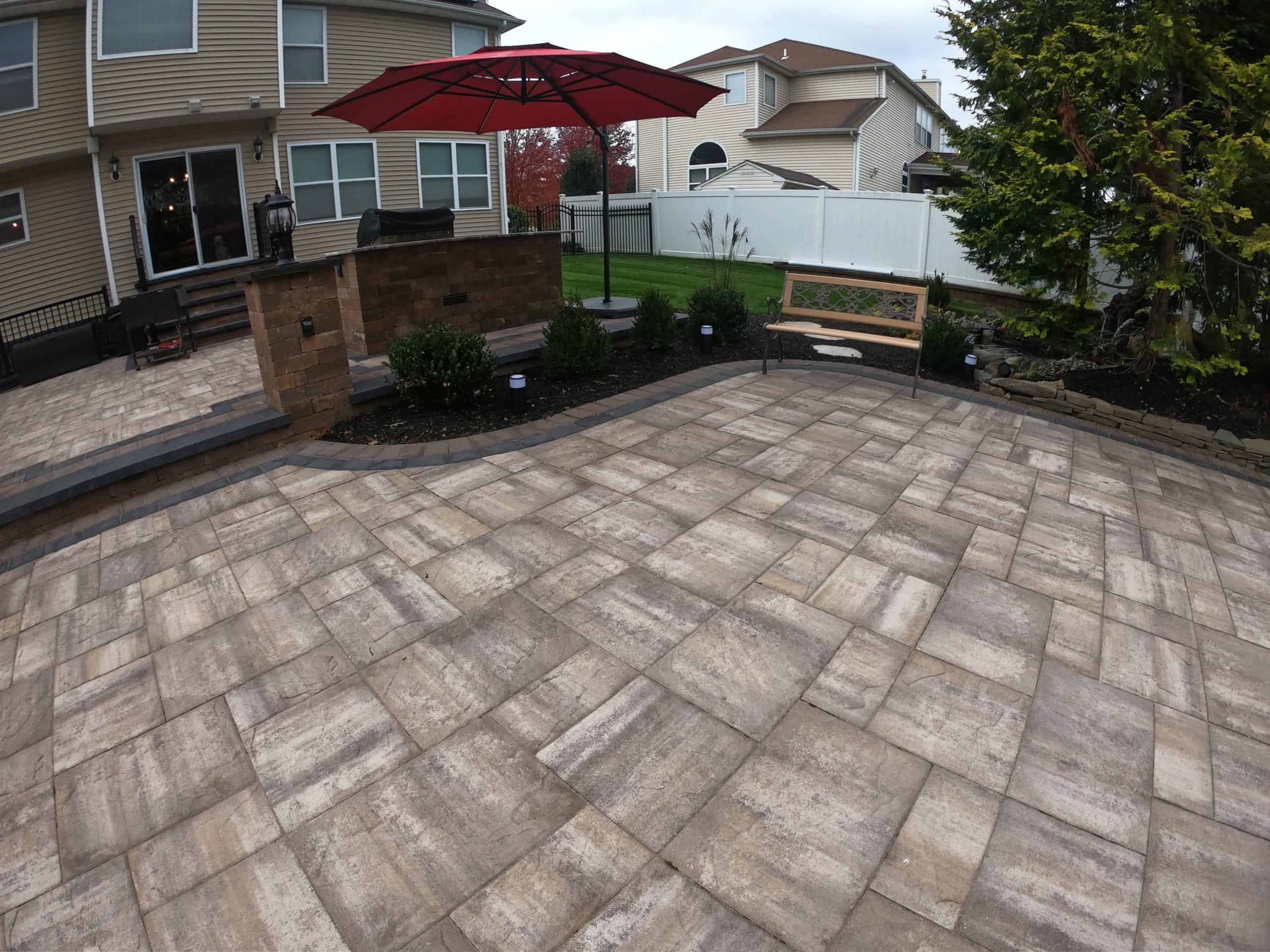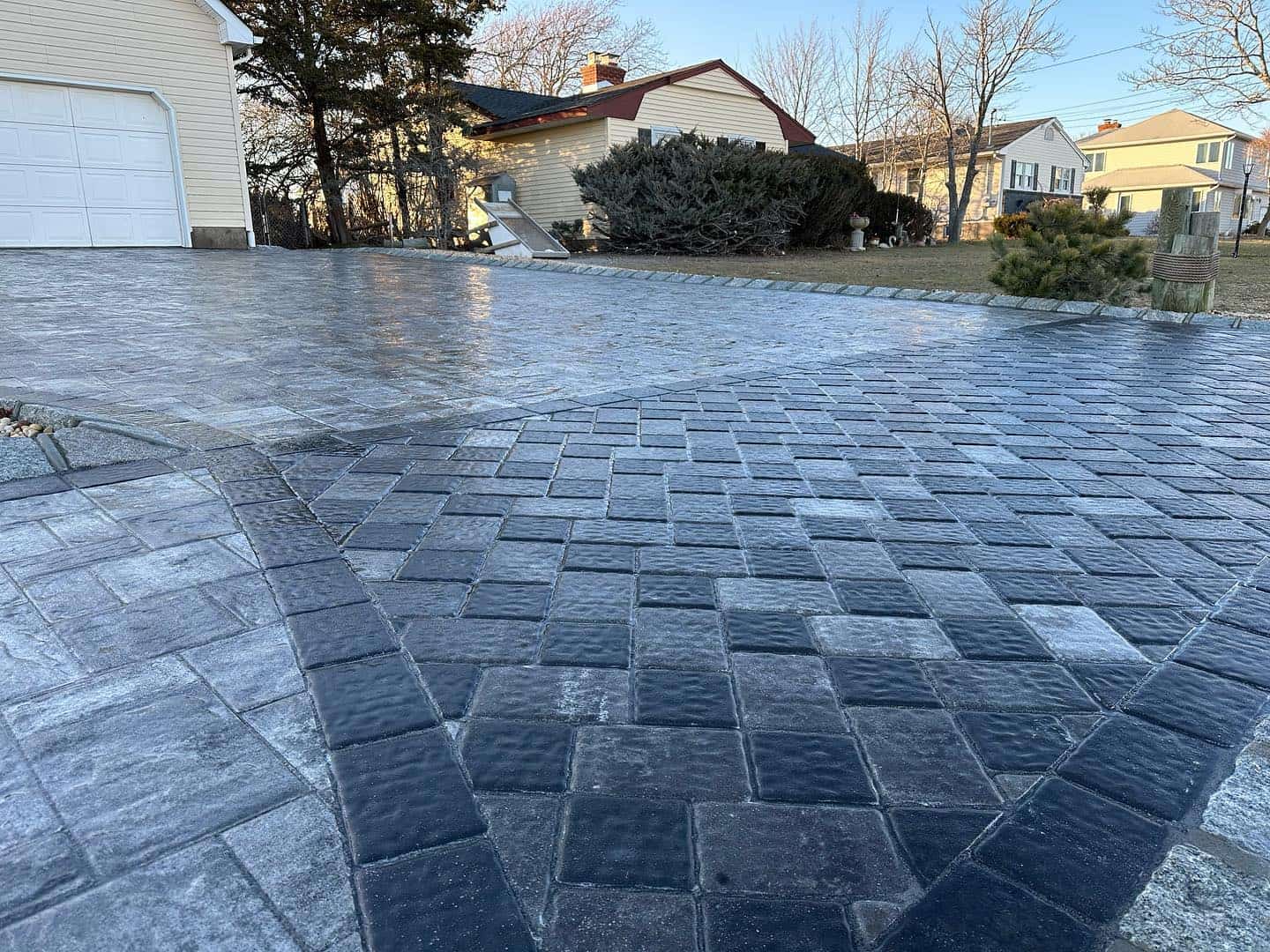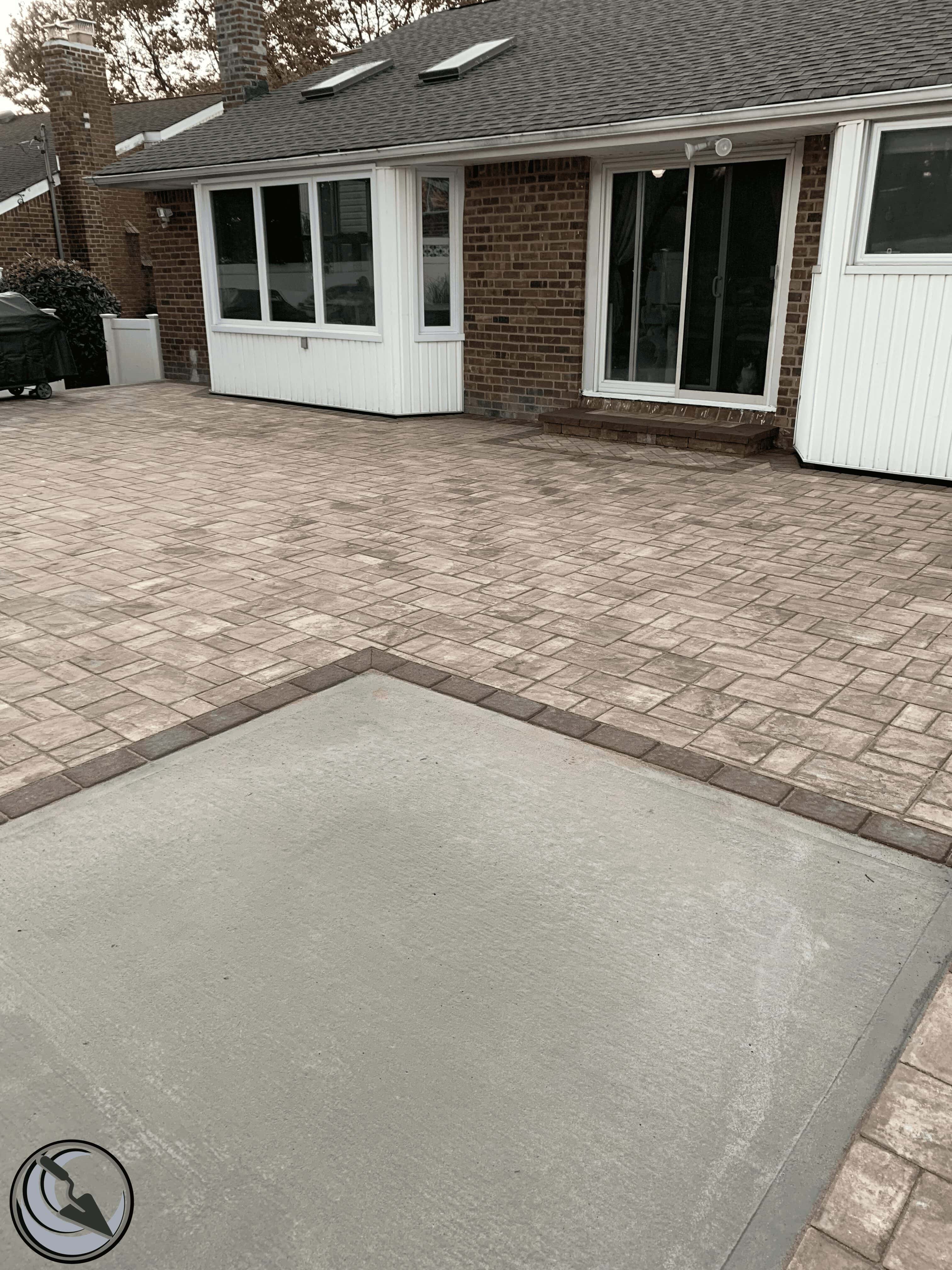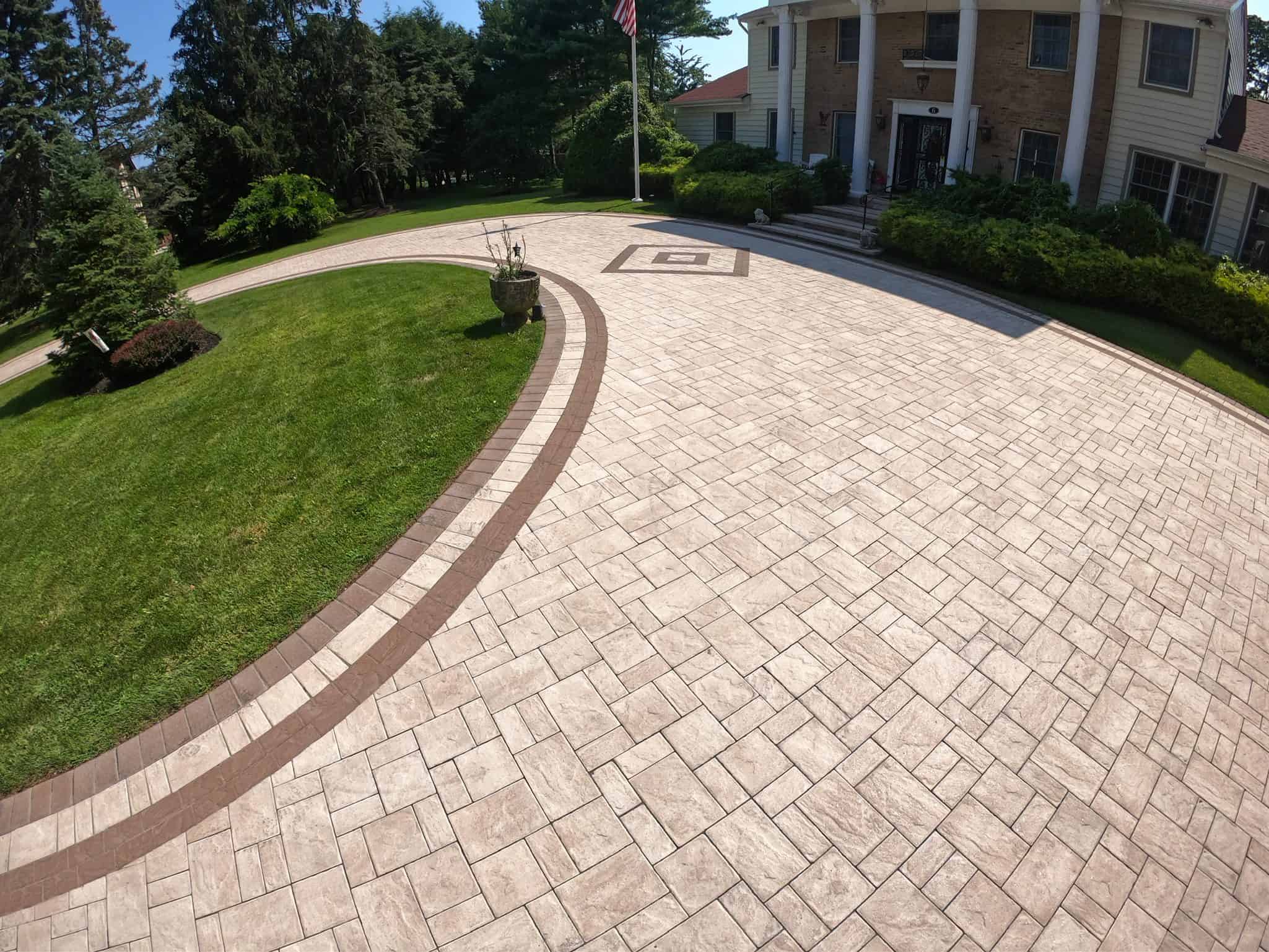
Not all patio builders handle Long Island's sandy soil and coastal conditions the same way. Here's what actually determines whether your patio lasts decades or fails within years.
Share:
Summary:
When you search “patio builder near me,” you’re not just hiring someone to lay pavers. You’re hiring an engineer who hopefully didn’t skip science class. You need someone who knows how to negotiate with Long Island’s unique terrain.
The difference shows up in how they talk about the “dirty” work. A contractor who knows their stuff won’t just talk about “vibes” and colors; they’ll ask about your property’s drainage and how your yard handles a Nor’easter. They’ll explain why excavation depth is the secret sauce and what happens if the base isn’t compacted with professional-grade muscle. If they skip the “boring” foundation talk and go straight to showing you the $200-per-stone premium catalogs, consider that a giant red flag with “Run” written on it.

Long Island basically sits on a giant pile of glacial sand. While that’s great for the beach, it’s a total diva when it comes to supporting thousands of pounds of stone.
Sand drains fast, which is a blessing, until you realize it doesn’t compact like clay. If a patio builder treats our sand like regular dirt, the base will shift, the pavers will settle, and suddenly you have a patio with more “waves” than the Atlantic. Within a few years, those low spots will turn into puddles, and your patio will look like a topographical map of the Moon.
The right approach starts with a deep dive—literally. You need to dig down 8 to 10 inches to make room for a real base. That base (usually crushed stone) needs to be compacted in “lifts” or layers. You can’t just dump a foot of rock and hope for the best. Each 2-to-3-inch layer needs to be hammered down with a plate compactor before the next one goes on. This creates a foundation so stable it won’t throw a tantrum when the ground freezes.
Edge restraints are the “seatbelts” of your patio. Without them, your pavers will slowly migrate toward the neighbor’s yard. You’ll end up with gaps big enough to lose a set of car keys in. We install heavy-duty restraints as a standard, because “drifting” should be for the racetrack, not your backyard.
Drainage in sandy soil is a balancing act. You need to make sure water moves away from your house foundation unless you’re planning on an indoor pool in the basement. This means grading the patio with a slight “pitch”—about 1.5 inches of drop for every 10 feet. It’s enough to move the rain, but not so steep that your margarita slides off the table. This is especially vital for pool patio construction where water management is the difference between a resort and a swamp.
When you’re comparing contractors, certifications aren’t just “participation trophies.” They tell you if the guy with the shovel has actually been trained or if he’s just “winging it” on your dime.
Manufacturer certifications from big names like Cambridge, Techo-Bloc, or Unilock are like a Master’s degree in masonry. These companies don’t hand out stickers to just anyone. They require contractors to prove they understand base prep, drainage, and how to handle the heavy stuff without breaking it. Regardless of if you’re doing an outdoor kitchen installation or a fire pit, you want someone who has been vetted by the people who actually make the stones.
Local licensing is your insurance policy against a disaster. It means the contractor is legally allowed to be there and follows the rules of Suffolk or Nassau County. It also means they have a reputation to protect. An unlicensed contractor might give you a “friend price,” but you’ll have zero backup if your patio starts sliding into the sunset three months later.
Insurance is the final piece of the puzzle. A real pro carries liability and workers’ comp. If a worker trips over a rogue garden gnome on your property, you shouldn’t be the one paying the medical bills. Always ask to see the paperwork—if they get defensive, that’s your cue to find a new builder.
The combo of certifications, licenses, and insurance tells you that you aren’t dealing with a “weekend warrior” who just bought a truck. You’re dealing with a professional who takes their craft seriously. This is what you should look for whether you’re searching for “mason near me” or a “retaining wall contractor” in Suffolk County.
Most homeowners get distracted by the “shiny” parts of the project. They look at the lowest price, get excited about the fancy fire pit photos, or hire whoever can start tomorrow. Then, three years later, they’re calling us to fix a sinking mess.
Here is the “pro dirt” on what usually goes wrong—and how you can avoid the problem.

The lowest bid is almost always a “shortcut special.” This isn’t just us being salty—it’s basic math. Quality stone, deep excavation, and skilled labor aren’t cheap. If someone is $5,000 lower than the average, they are cutting something, and it’s usually the stuff you can’t see (until it fails).
Often, they cut the excavation depth. Digging 5 inches instead of 10 saves them a lot of sweat and disposal fees, but it leaves your patio on a shaky foundation. Or they skip the compaction layers because it takes too long. The patio looks “Instagrammable” when they leave, but after one Long Island winter, the pavers will be sitting at different heights like a set of crooked teeth.
Material quality is another easy place to hide a “bargain.” Cheap base stone doesn’t lock together. Low-grade pavers fade or crack when they see the first bit of ice. Skipping edge restraints saves a few bucks today but leads to “creeping” pavers tomorrow. This applies to everything from driveway paving to walkway installation.
When you look at an estimate, don’t just look at the bottom line. Look for specifics: how deep are they digging? What kind of base stone are they using? How many times will they compact it? If the quote is just a number on a napkin, walk away. You want a detailed breakdown so you know you aren’t paying for a “veneer” of quality.
Value is the goal, not the lowest price. In Suffolk, you’re looking at $30 to $45 per square foot for a job done right. If a quote is way below that, it’s probably because they’re planning to be in and out before the first rain hits.
Think of it this way: fixing a botched patio is way more expensive than doing it right once. You have to pay for the demolition, the disposal of the old mess, and then the actual correct install. That “cheap” contractor is secretly the most expensive person you’ll ever hire.
Drainage is the king of patio longevity, but it’s usually the last thing homeowners think about—usually while standing in a puddle on their brand-new patio. Don’t be that person.
Our local weather is a nightmare for masonry. We’ve got salt air, “freeze-thaw” cycles that expand water like a balloon, and sand that moves. If your builder doesn’t plan for water, that rain is going to find its way into your foundation or settle under the pavers and create “soft spots” that sink. A quality install always includes a “pitch.” Your patio should tilt away from the house at about 1.5 inches per 10 feet. It’s subtle enough that your lawn chair won’t roll away, but steep enough to keep your basement dry. If a builder tells you “level is better,” they are giving you a recipe for a flooded house.
Sometimes you need a little extra help, like a French drain or a catch basin, especially if your yard already has a “lake” every time it rains. A pro will look at your property’s “water story” before they even give you a price. They’ll identify the low spots and plan a route for the water to escape.
If a contractor doesn’t mention drainage during the walkthrough, you should mention it to them—by showing them the door. If they say “it’ll be fine” without explaining how, they’re just hoping for a dry summer.
Case in point: we once saw a homeowner in Huntington who went with a budget guy who ignored drainage. Two years later, the base eroded from underneath, and the pavers looked like a wavy ocean. The fix cost more than the original job because we had to undo all the bad work first. Getting the drainage right on day one is the cheapest insurance policy you can buy.
Searching “patio builder near me” will give you a lot of names, but only a few know the “Suffolk Shuffle” required to make a patio last on this island. It takes more than just a truck and a level; it takes an understanding of our sand, our salt, and our seasons.
Look for the certifications, check the licenses, and ask the “nerdy” technical questions. If a contractor can’t explain their compaction process or their drainage plan, they aren’t the one for you. Whether you need a simple paver repair or a full-blown backyard resort, the details are what keep the stones under your feet.
The right builder doesn’t just “lay stones.” We build foundations that survive New York winters and look great doing it. If you want a patio that stays level for decades, we bring the licensing, the union-trained skill, and the Long Island expertise to make it happen.
Article details:
Share:
Continue learning: