Most homeowners searching for "cement driveway contractors" actually need concrete — and the distinction matters more than you'd think when hiring in Suffolk County.
Share:
Summary:
If you typed “cement driveway contractors” into Google, you’re not alone — and you’re not wrong for searching it that way. Most people use cement and concrete interchangeably their whole lives. But when you’re about to spend real money on a driveway that’s supposed to last 25 to 30 years, the distinction starts to matter. Not just as a vocabulary lesson, but as a filter for finding a contractor who actually knows what they’re doing. Here’s what the difference means in practice, why it’s especially relevant in Suffolk County, and what separates a driveway that holds up through Long Island winters from one that’s cracking by year three.
Cement is a powder — a binding agent made primarily from calcium silicate compounds. On its own, it doesn’t form a driveway. Concrete is what you actually get when cement is mixed with water and aggregate, meaning sand and gravel. That finished material is what gets poured, finished, and cured into the surface you drive on every day. So technically, a “cement driveway” doesn’t exist. What you’re looking for is a concrete driveway contractor.
This isn’t just semantics. A contractor who uses these terms interchangeably might also not know the difference between a 3,000 PSI mix and a 4,500 PSI mix — or why that gap matters in a climate like Suffolk County’s. The terminology is a small signal, but it points to something larger: whether the person you’re hiring understands the material well enough to spec it correctly for your specific conditions.
Here’s where things get practical. Not all concrete is the same, and the mix design — the specific combination of cement content, water ratio, aggregate type, and air entrainment — has a direct impact on how your driveway performs over time. For a residential driveway in a mild climate, a 3,000 PSI mix might be fine. For Suffolk County, it’s not the right call.
Our region gets roughly 20 to 30 freeze-thaw cycles every winter. That means water infiltrates the surface, freezes, expands, contracts, and repeats — dozens of times between November and March. Without the right mix, that process causes surface scaling and internal cracking that becomes visible within a few years. The correct specification for this climate is a 4,000 to 4,500 PSI air-entrained mix, with somewhere between 5 and 7 percent air content and a water-cement ratio kept tight, around 0.40 to 0.45. Those numbers create microscopic air pockets in the concrete that give water somewhere to expand without fracturing the slab.
When you’re talking to a contractor, ask them what PSI they typically pour for residential driveways in Suffolk County and whether they use air-entrained concrete. A contractor who can answer that question clearly — and explain why — is one who understands the material. One who says “we use good concrete” or deflects the question is telling you something important.
Beyond the mix itself, the base preparation is where a lot of contractors cut corners. Long Island’s soil is sandy and glacially deposited, which means it shifts and settles differently than clay-heavy soils you’d find in other parts of the country. A properly prepared driveway here requires excavation to 8 to 10 inches, followed by mechanically compacted base layers and drainage planning that accounts for the high water table in low-lying areas near the South Shore. Skip those steps and it doesn’t matter how good the concrete is — the driveway will move, and it will crack.
A driveway that lasts on Long Island isn’t just about the surface you see. It’s about everything underneath it. The process starts well before the first truck shows up — with a real site assessment that looks at drainage, soil conditions, existing grade, and how the driveway connects to the street or apron.
Excavation should go down 8 to 10 inches for a standard residential driveway in this area. That’s significantly deeper than the 4-inch shortcut that some contractors use to move faster and keep costs down. After excavation, the subbase needs to be compacted in lifts — not dumped in and left to settle on its own. The concrete itself should be poured at a minimum of 4 inches thick, with edges reinforced to 5 or 6 inches to handle the load where vehicles turn and stop most often. A 6-inch slab, for context, is more than twice as strong as a 4-inch slab — the relationship between thickness and load capacity isn’t linear.
Control joints — the shallow grooves cut into fresh concrete at regular intervals — are another detail that separates a professional installation from a rushed one. They give the slab a place to crack predictably, at controlled seams, instead of randomly across the surface. It’s a small step that makes a real difference in how the driveway looks and performs five years from now.
Curing time matters too. Concrete needs at least 7 days before light foot traffic and a full 28 days before heavy vehicle use. A contractor who’s pushing you to drive on it in 48 hours is cutting the curing short and compromising the final strength of the slab. These aren’t obscure technicalities — they’re the basics of doing the job right, and any contractor worth hiring should be able to walk you through each one without hesitation.
Finding a qualified contractor in Suffolk County involves more than reading reviews and picking the lowest bid. Licensing here is more layered than most homeowners realize, and the consequences of hiring someone who isn’t properly licensed can fall entirely on you — not them.
Under Suffolk County’s home improvement contractor requirements, any contractor doing driveway or masonry work needs a valid county license, which requires passing a written exam, carrying at least $500,000 in liability insurance, maintaining workers’ compensation coverage, and passing a background check. That’s the baseline. But if you’re in Southampton or East Hampton, your contractor also needs a separate township license — and a Suffolk County license alone doesn’t cover it.
You can verify any Suffolk County home improvement contractor license through the official Accela Citizen Access portal at the Suffolk County Department of Labor, Licensing and Consumer Affairs. It takes about two minutes and it’s free. If a contractor can’t give you a license number to check, that’s your answer.
Beyond the license itself, ask for proof of liability insurance and workers’ compensation. A contractor who hesitates on either of those is one you don’t want working on your property. If something goes wrong — a worker gets hurt, a neighbor’s property gets damaged — you need to know you’re not the one absorbing that liability.
Reviews matter, but volume and consistency matter more than the rating alone. A 5.0 from 12 reviews is very different from a 5.0 from 129 reviews. At higher volumes, patterns emerge. You start to see whether people mention the contractor showed up when they said they would, whether the crew was consistent throughout the job, and whether the owner was actually involved or handed everything off after the estimate. Those details tell you more than the star rating does.
One thing that’s easy to overlook: ask whether the same crew will be on your project from start to finish. Some contractors use rotating subcontractors or bring in day labor for different phases. When the crew changes mid-project, quality control gets harder to maintain and accountability gets blurry fast. It’s a reasonable question to ask upfront, and a confident contractor will answer it directly.
A lot of homeowners come into this process thinking they’ve already decided — concrete or pavers — without fully understanding the tradeoffs. Both are good options in the right context, and the honest answer is that it depends on your property, your priorities, and your budget.
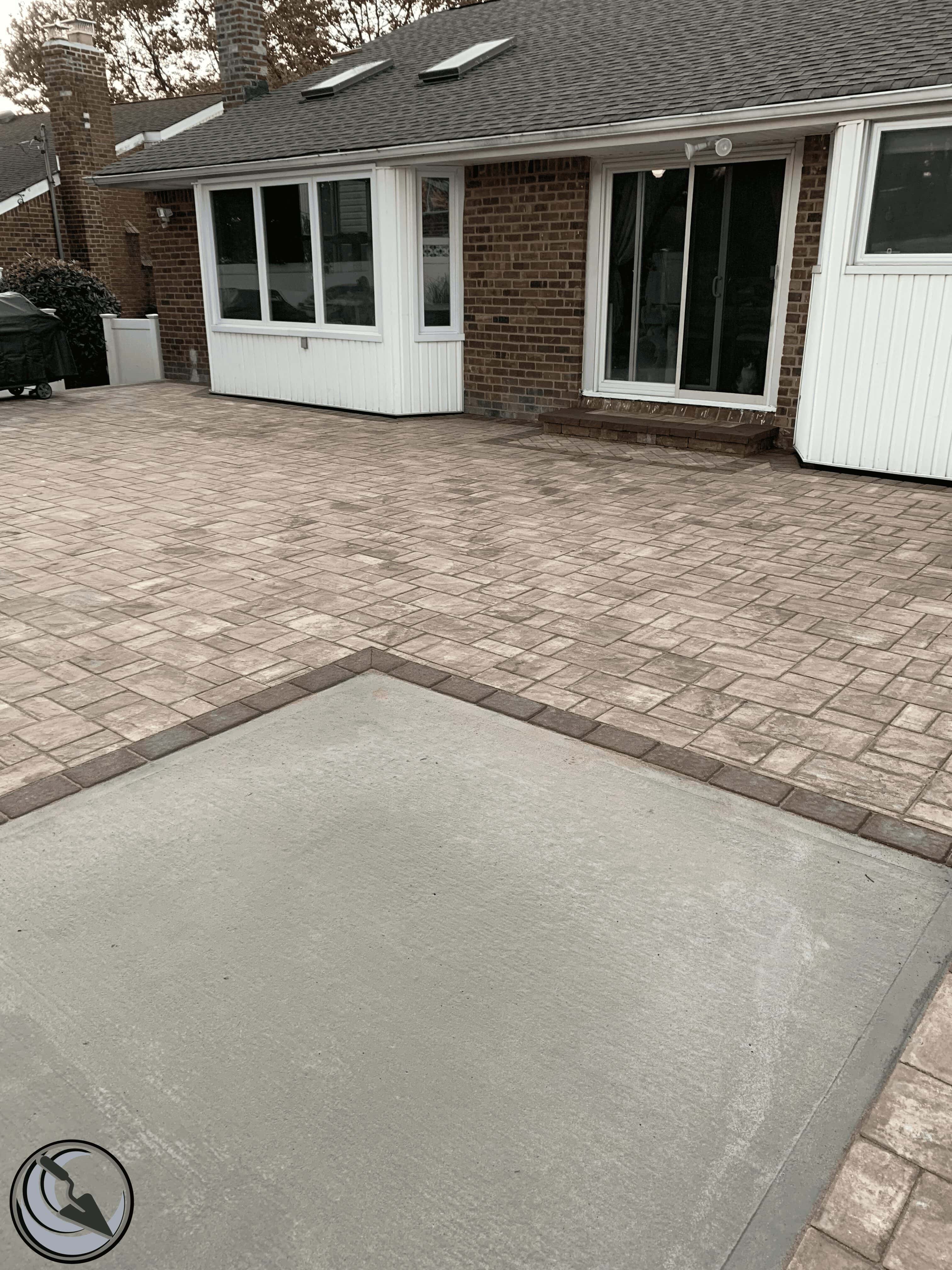
Concrete driveways are lower maintenance over time, typically cost less upfront than a full paver installation, and provide a clean, continuous surface that works well for larger driveways. When installed correctly with the right mix and base preparation, a concrete driveway in Suffolk County can last 25 to 30 years. The tradeoff is that if a section cracks or settles, you’re usually looking at a larger repair — you can’t just swap out one piece the way you can with pavers.
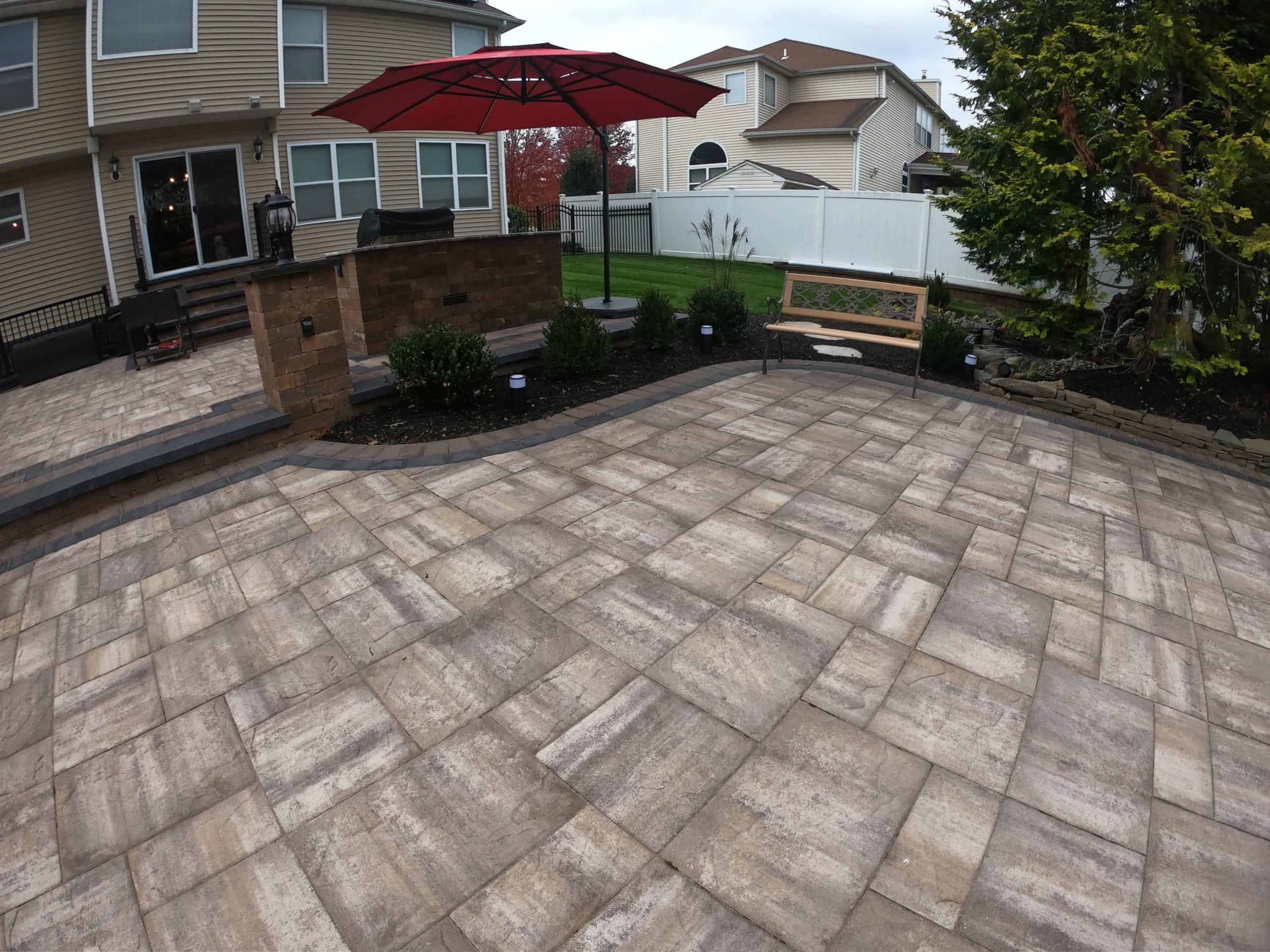
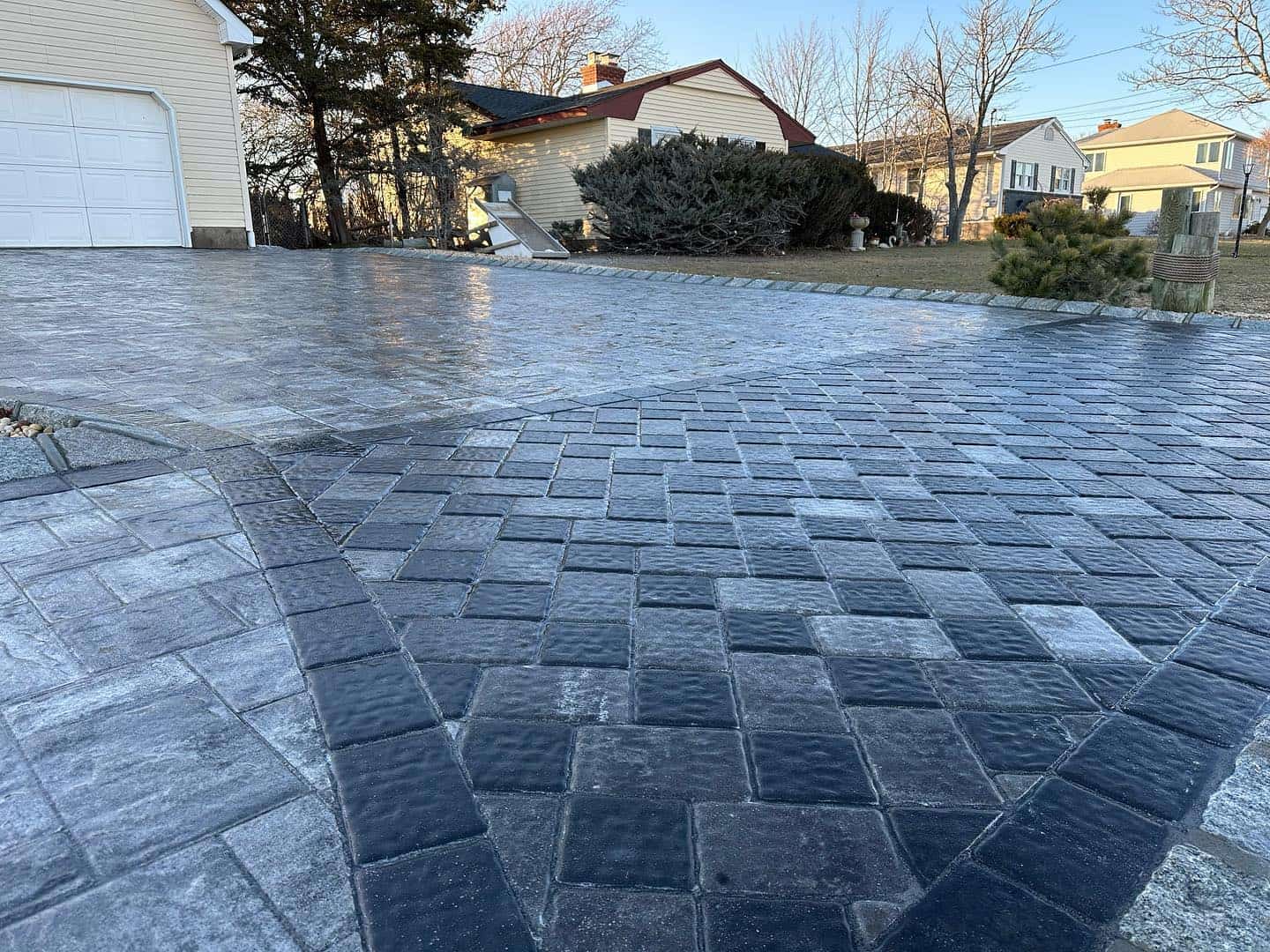
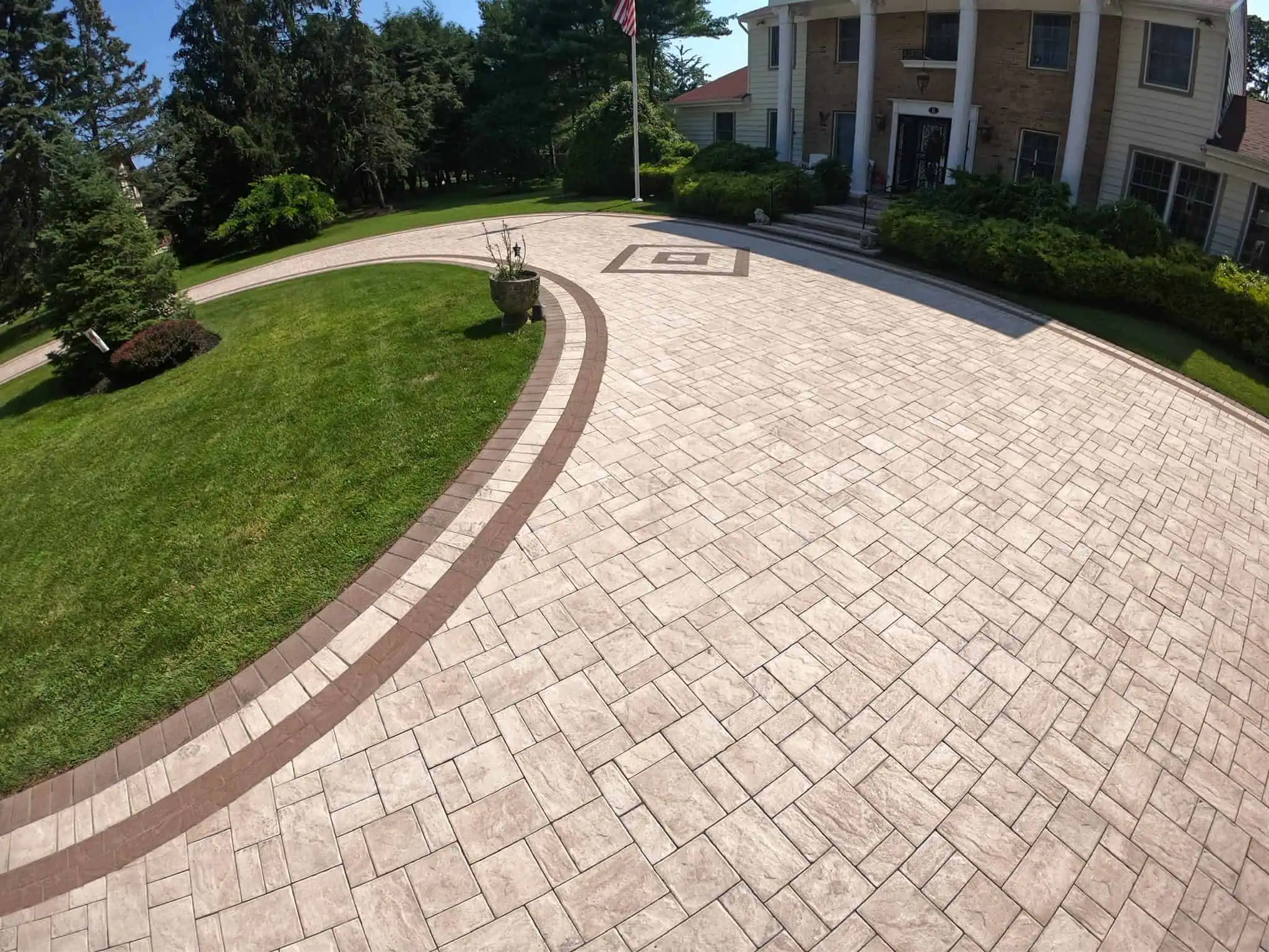
Paver driveways offer more design flexibility and are easier to repair in sections. They also handle freeze-thaw movement somewhat differently — because each paver unit is independent, the surface can flex slightly without the same cracking risk you’d see in a solid concrete slab. For properties near the water, where soil movement and drainage are more variable, pavers can be a smart choice. The installation cost is generally higher, and the long-term maintenance involves occasional re-sanding and re-leveling of individual units.
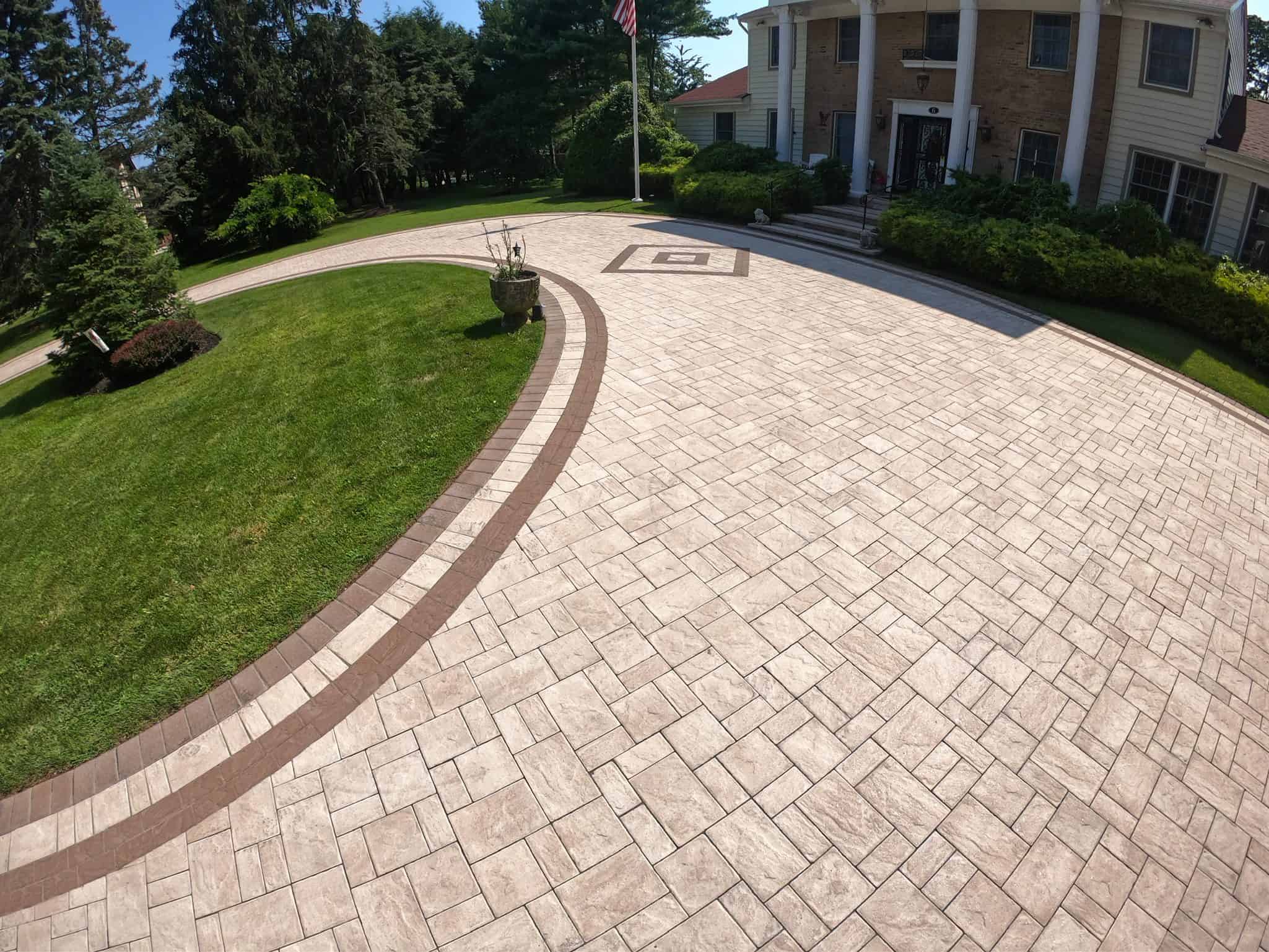
The right material also depends on what the rest of your property looks like. A paver driveway that flows into a paver walkway and patio creates a cohesive, designed look that adds real curb appeal — and real value — to a Long Island home. A concrete driveway with a stamped or brushed finish can achieve a similar effect at a lower price point. Neither is objectively better. What matters is that whoever you hire understands both options well enough to give you an honest recommendation based on your specific situation, not just whatever they happen to install most.
Whether you came here searching for cement driveway contractors or concrete driveway contractors, you’re now asking the right questions — and that puts you ahead of most homeowners going through this process. The terminology matters less than finding someone who understands the material, specs it correctly for Suffolk County conditions, holds the right licenses for your town, and actually shows up to do the work they promised.
Long Island’s sandy soil, coastal moisture, and hard winters aren’t forgiving of shortcuts. A driveway installed without proper excavation depth, the right mix design, or adequate drainage planning will show you the consequences within a few years. The good news is that a well-built concrete driveway here can last decades — it just has to be done right from the start.
We serve all of Suffolk County and the surrounding areas, and we’re happy to walk you through your options before you commit to anything. Reach out to Stone Escapes Masonry & Outdoor Design Inc to talk through your project with someone who handles every estimate personally and stays involved from the first shovel to the final walkthrough.
Article details:
Share:
Continue learning: