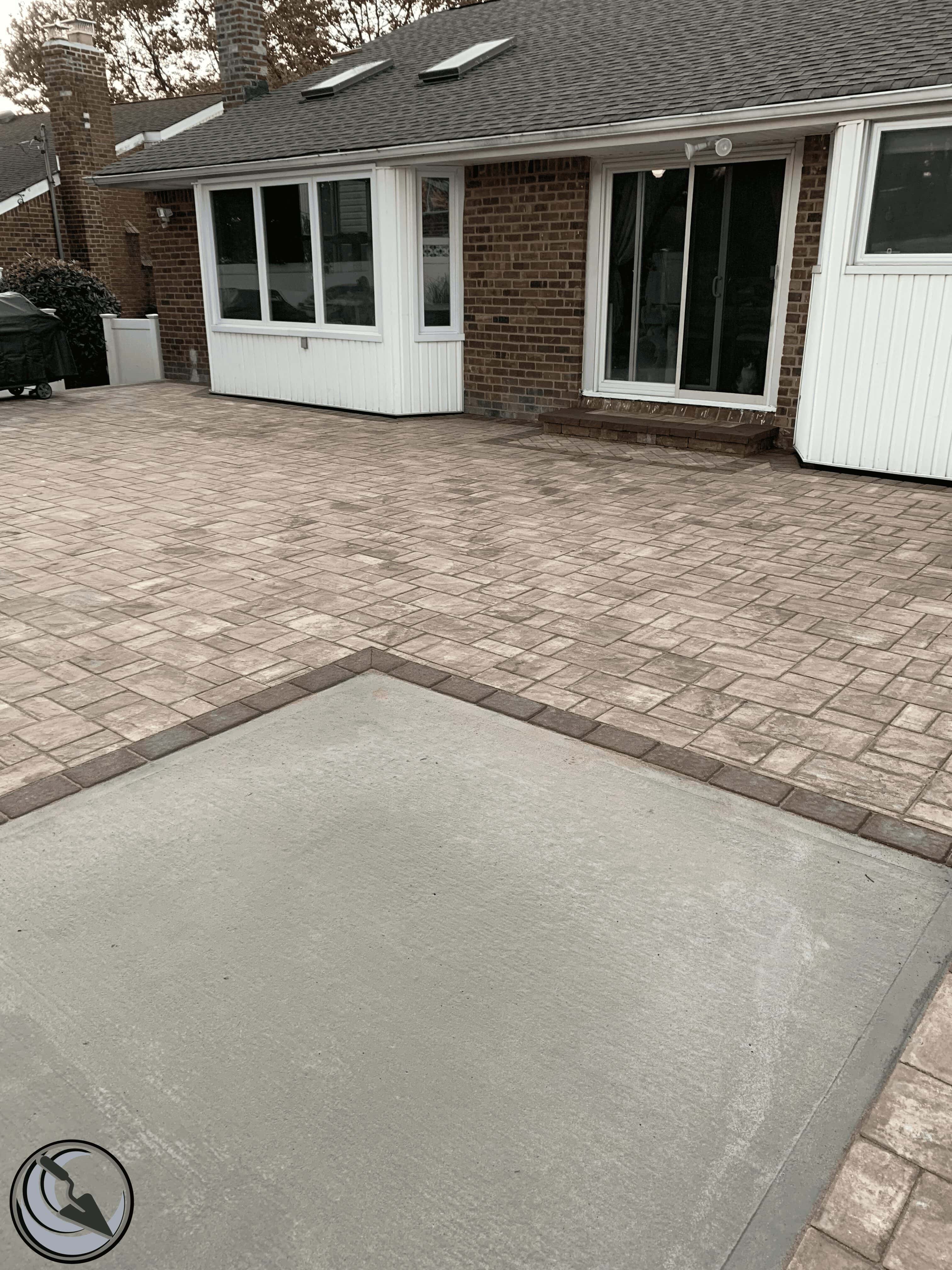
Thinking about a new patio? Discover masonry ideas that actually work for Long Island's soil, weather, and entertaining lifestyle in 2026.
Share:
Summary:
Long Island isn’t a neutral climate. Your patio will face 30 to 40 freeze-thaw cycles every winter. Water gets into joints, expands by 9%, and pushes pavers apart. Add sandy soil that drains fast but doesn’t hold structure, and you’re looking at settling issues if the base isn’t done right.
Coastal moisture and salt air don’t help either. Materials that work fine inland can corrode, fade, or crack here. That’s why working with masonry contractors who understand Suffolk County conditions matters more than a great portfolio from somewhere else. Local expertise means we’ve solved these problems before—on properties like yours.

Most patio problems start underground. If water can’t move away from your patio, it pools under the surface. That saturates the base material—usually gravel and sand—and washes it out over time. You won’t see it happening. But one day a section drops, pavers tilt, or cracks appear.
Proper grading is the fix. Your patio should slope about a quarter inch per foot, directing water away from your foundation. That keeps moisture from building up under the hardscape or near your house. It also prevents the freeze-thaw damage that comes when trapped water expands in winter.
The base itself matters just as much. We typically excavate 8 to 10 inches deep, then build up layers of compacted gravel and sand. This creates a stable platform that won’t shift when the ground moves. Edge restraints lock everything in place so pavers don’t creep or separate over time.
Drainage planning isn’t optional here. It’s the difference between a patio that lasts 20 years and one that needs repairs in five. French drains, trench drains, or permeable pavers can all be part of the solution depending on your yard’s slope and soil conditions. The goal is simple—get water out and keep it out.
Not all pavers are built for Long Island. You need materials engineered to handle freeze-thaw cycles and low water absorption. That rules out cheaper options that crack or fade after a few seasons.
Interlocking concrete pavers from manufacturers like Cambridge, Techo-Bloc, and Unilock are popular for good reason. They’re rated for freeze-thaw resistance, come in dozens of colors and textures, and can last 25 to 50 years when installed correctly. They also offer flexibility—if one paver cracks, you can replace it without tearing up the whole patio.
Natural stone is another solid choice. Bluestone and granite handle coastal conditions well and bring a timeless look that works with most home styles. They’re heavier and often more expensive, but they don’t fade and they age gracefully. Bluestone in particular is common across Long Island because it stays cool underfoot during summer and resists salt exposure.
Belgium block edging adds durability and a finished look. It creates a strong border that prevents pavers from shifting outward. It also holds up better than plastic or aluminum edging, which can crack or warp over time.
Material quality impacts more than appearance. It affects how your patio performs during storms, how much maintenance it needs, and whether it still looks good in ten years. Choosing the right stone or paver upfront saves money and frustration later.
Outdoor living is part of the Long Island lifestyle. Patios aren’t just decorative—they’re where you grill, host, and spend summer evenings. That means your design needs to support how you actually use the space.
Size and layout depend on what you’re planning. A 300-square-foot patio positioned well beats a 500-square-foot slab in the wrong spot. Think about sight lines from inside your home, privacy from neighbors, and how people will move through the space. Strategic placement makes the patio feel like a natural extension of your house, not an afterthought.

The best patios have distinct zones. One area for cooking, another for seating, maybe a third around a fire pit. This keeps activities from overlapping and makes the space more functional.
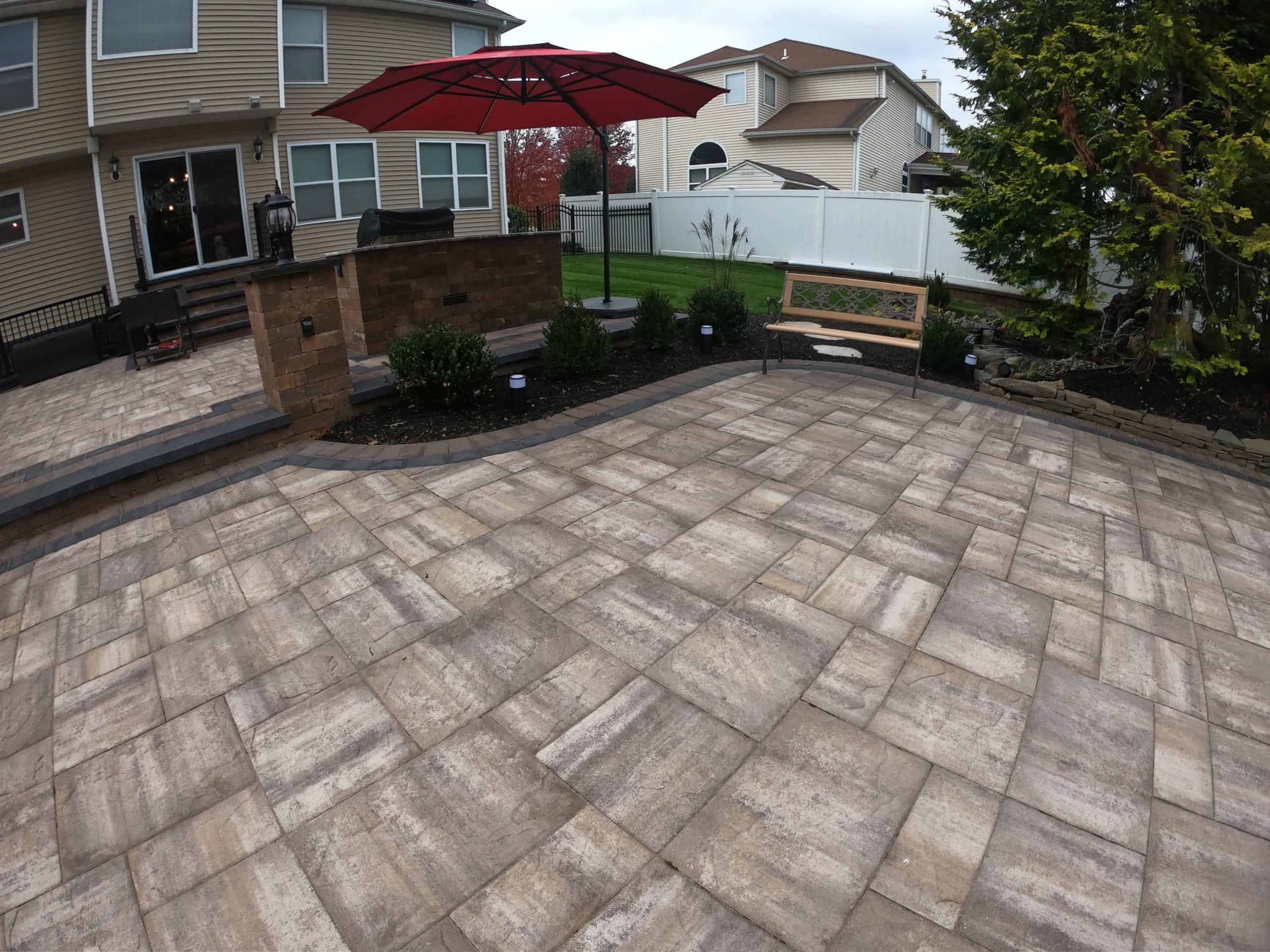
Outdoor kitchens are a major trend in 2026. They’re no longer just a grill on a cart. Built-in setups include countertops, storage, sinks, and sometimes refrigerators. This makes entertaining easier because you’re not running back and forth to the indoor kitchen. It also keeps cooking smells and heat outside where they belong.
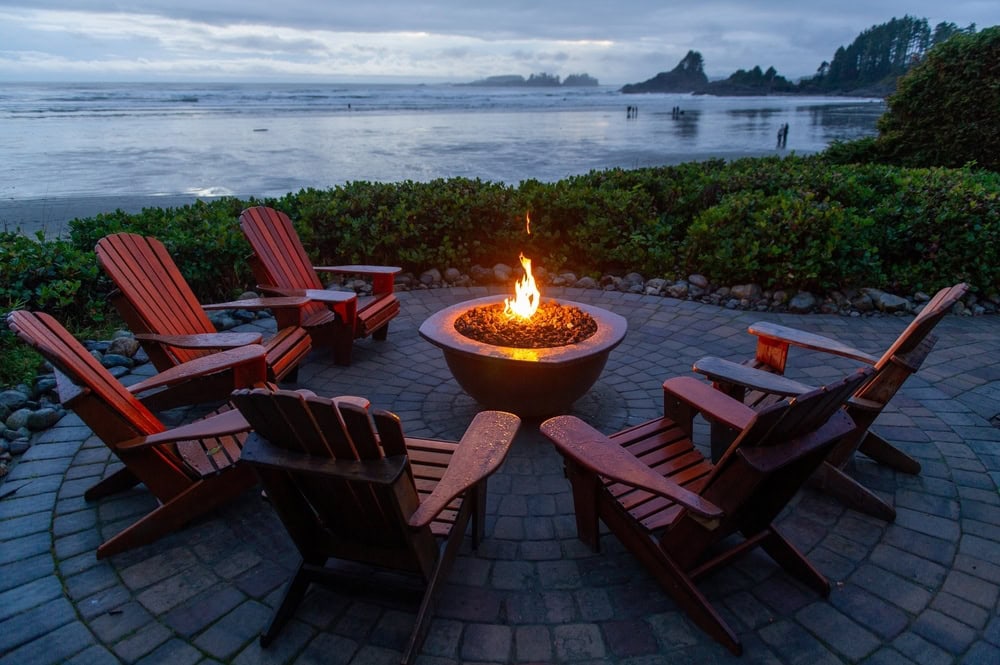
Fire pits and fireplaces extend your patio’s usability into fall and early spring. They create a natural gathering spot and add warmth during cooler evenings. Masonry fire features built from stone or brick integrate seamlessly with the rest of your hardscape and can be fueled by wood or natural gas depending on your preference and local codes.
Seating walls serve double duty. They provide permanent seating without the need for extra furniture, and they help define different zones within your patio. You can also integrate planters or lighting into the walls for added functionality and ambiance.
The key is making each zone feel intentional but connected. Use consistent materials and subtle transitions—like a change in paver pattern or a step down—to guide movement without creating hard barriers. This keeps the space open and flexible while still giving each area its own purpose.
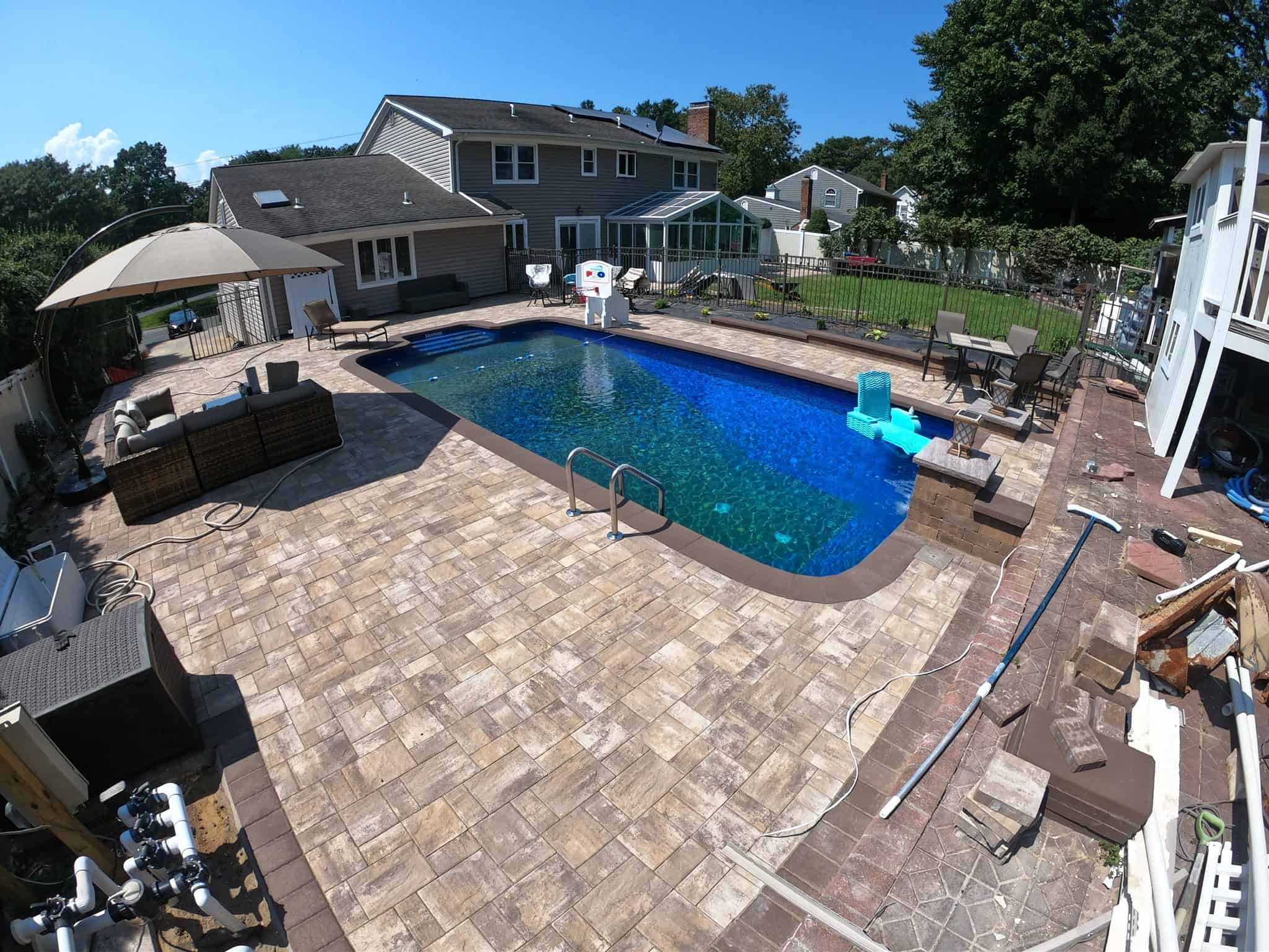
Pool patios have their own requirements. Safety comes first. You need slip-resistant surfaces with enough texture to prevent accidents, especially when wet. Many pavers designed for pool areas have a slightly rougher finish that provides grip without being uncomfortable on bare feet.
Light-colored pavers are a smart choice around pools. They reflect heat instead of absorbing it, which keeps the surface cooler during hot Long Island summers. Dark pavers can get too hot to walk on, which defeats the purpose of having a pool deck in the first place.
Drainage is even more critical around pools. You’re dealing with splashing, wet feet, and pool backwash. The patio needs to shed water quickly to avoid standing puddles that become slip hazards or breeding grounds for mosquitoes. Proper grading and drainage channels keep the area dry and safe.
Coping stones create a finished edge between the pool and patio. They provide a comfortable perch for swimmers and help protect the pool liner or shell. Coping comes in various profiles and materials, so you can match it to your paver choice for a cohesive look.
Pool patios also need to accommodate furniture, umbrellas, and foot traffic. That means planning for wider walkways and open areas where people can move around comfortably. The layout should feel spacious, not cramped, even when you have guests over.
A well-designed patio solves real problems while adding value to your home. It handles Long Island’s weather, supports how you entertain, and holds up for decades when built right. The upfront investment pays off in usable outdoor space, increased property value, and fewer headaches down the road.
Most residential patio installations in Suffolk County take 7 to 14 days depending on size and complexity. That includes excavation, base prep, paver installation, and finishing work. Choosing a masonry contractor who understands local soil conditions, drainage challenges, and climate factors makes the process smoother and the results longer-lasting.
If you’re ready to move forward with a patio project that’s built for Long Island, we bring over 15 years of local experience, manufacturer certifications, and hands-on project oversight to every installation across Suffolk and Nassau Counties.
Article details:
Share:
Continue learning: