Choosing the right driveway material for Suffolk County means understanding how asphalt, pavers, and concrete handle Long Island's freeze-thaw cycles and coastal conditions.
Share:

Summary:
Three materials dominate driveway paving in Suffolk and Nassau Counties: asphalt, stone pavers, and concrete. Each handles Long Island’s conditions differently.
Asphalt remains popular because it flexes with temperature changes instead of cracking like rigid materials. That flexibility matters here, where temperatures can swing from below freezing to above 50 degrees in a single day during spring and fall.
Stone pavers offer a different advantage. Individual units move independently during soil shifts and temperature changes, preventing the large-scale cracking that destroys solid surfaces. Concrete sits somewhere in the middle—durable when properly installed, but vulnerable to our freeze-thaw cycles without the right preparation and maintenance.
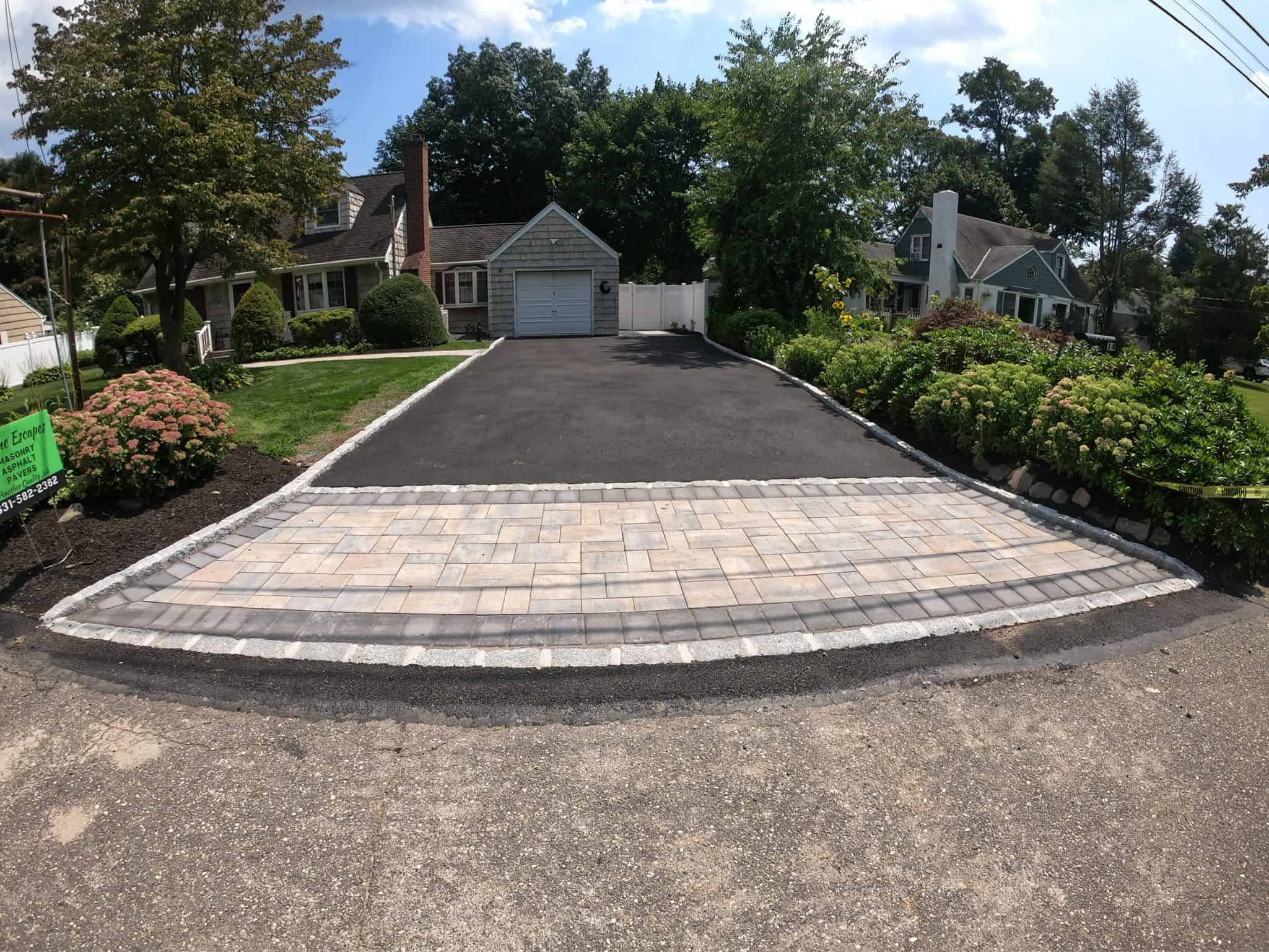
Asphalt’s petroleum-based composition gives it natural flexibility that concrete and some other materials lack. When temperatures drop and the ground contracts, asphalt can handle that movement without catastrophic cracking.
The material works especially well for Long Island because it absorbs heat from the sun. That dark surface melts snow faster than lighter-colored materials, which means less time shoveling and fewer ice patches forming during those tricky periods when temperatures hover around freezing. You’ll notice your asphalt driveway clears faster after storms compared to your neighbor’s concrete.
Cost plays a role too. Most Long Island contractors charge between $3 and $8 per square foot for asphalt installation. For a standard 600-square-foot driveway, that’s roughly $1,800 to $4,800. The lower upfront investment appeals to homeowners working within a budget.
But asphalt demands regular maintenance. You’ll need to seal it every 2-3 years to protect against water infiltration, UV damage, and the salt we use on roads here. That maintenance runs about $1-2 per square foot each time. Skip it, and you’ll see cracks developing much faster than they should.
The typical asphalt driveway lasts 15-20 years in Long Island’s climate when properly maintained. That’s a solid lifespan, but it means you’re likely looking at replacement at least once during your time in the home. Factor that into your long-term planning.
Water remains asphalt’s biggest enemy. Poor drainage allows water to seep beneath the surface, where it freezes and expands during winter. That expansion creates pressure from below, eventually causing the surface to crack and develop potholes. Proper installation with adequate base preparation and drainage planning prevents most of these issues.
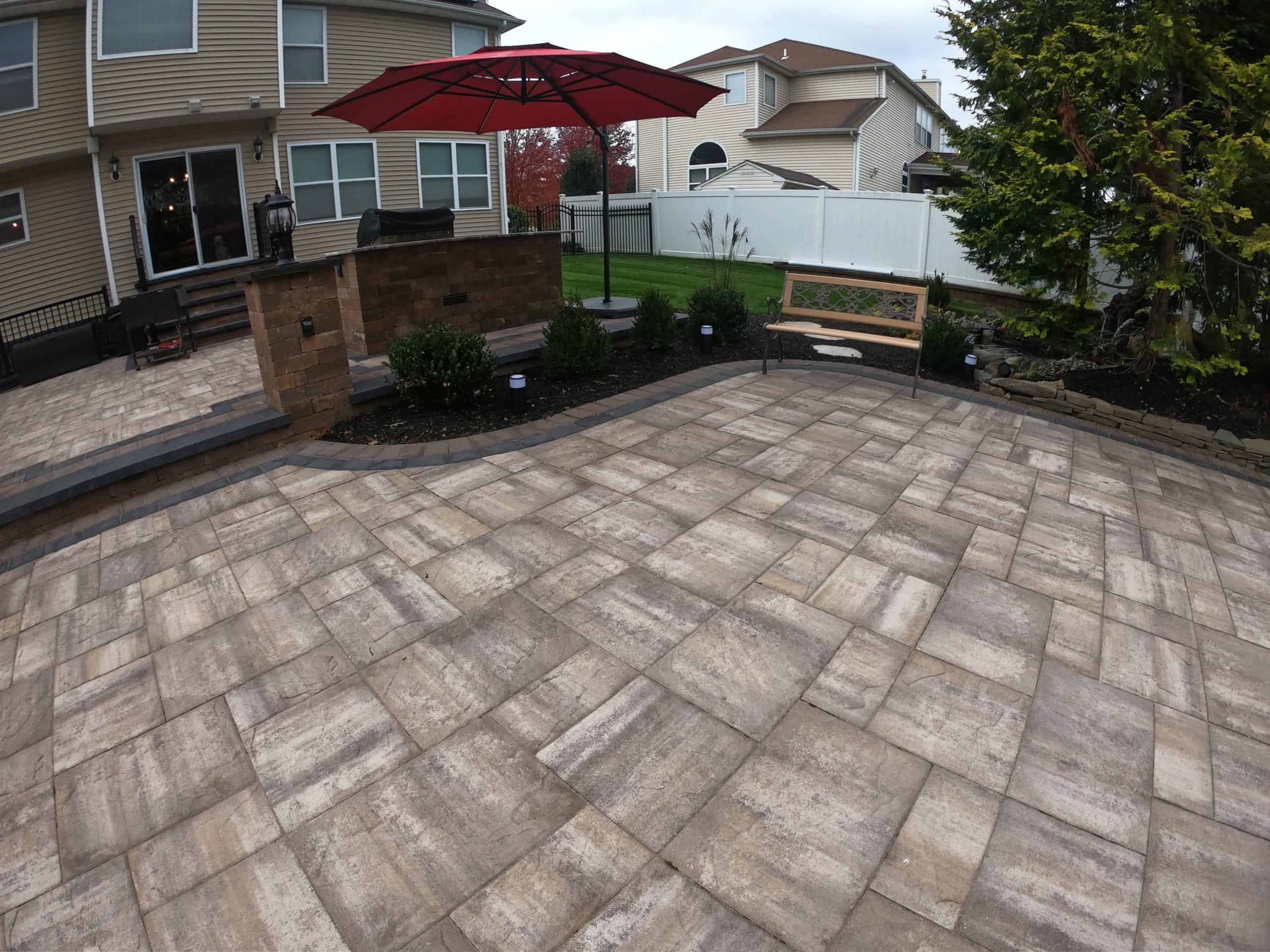
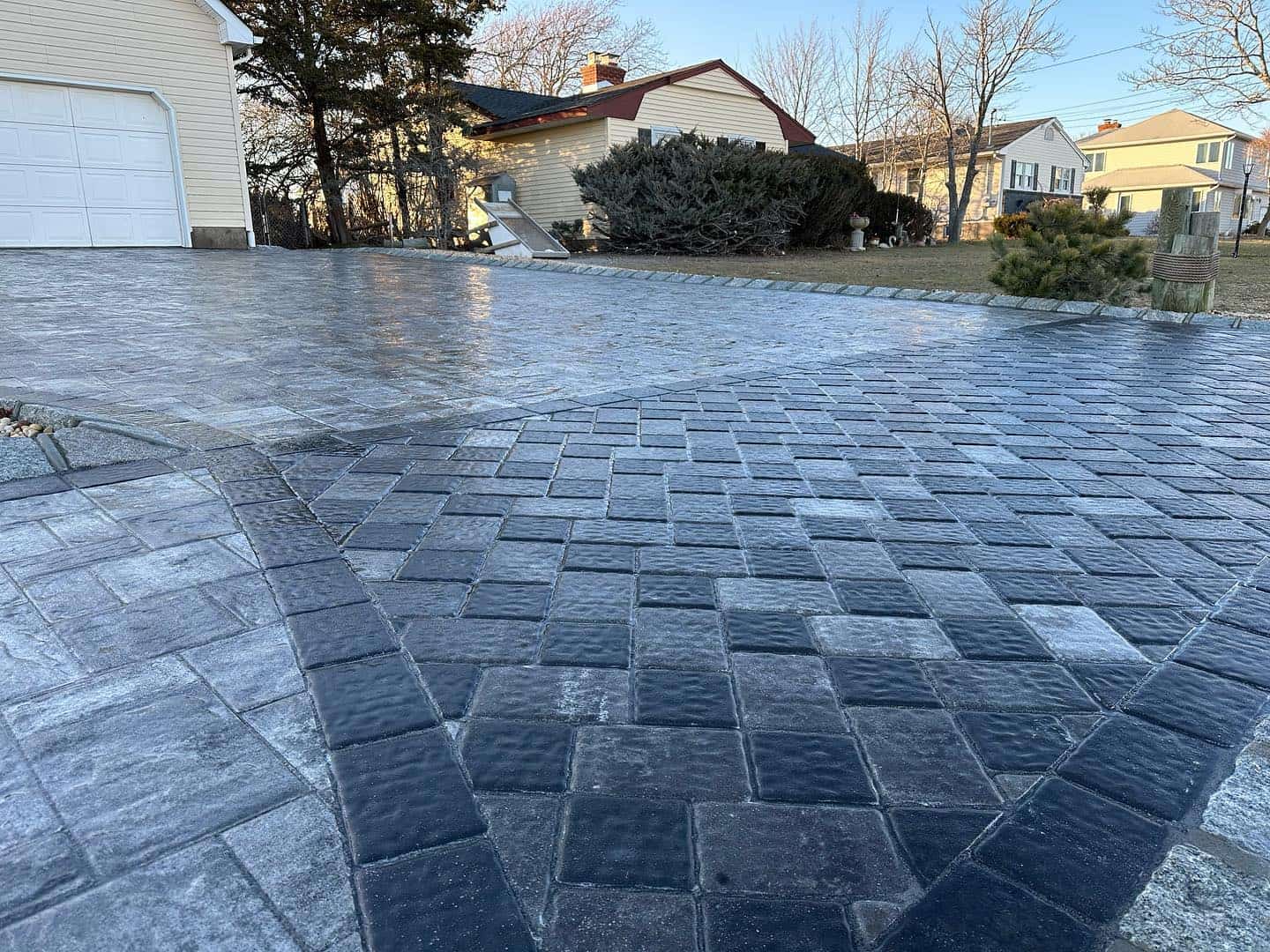
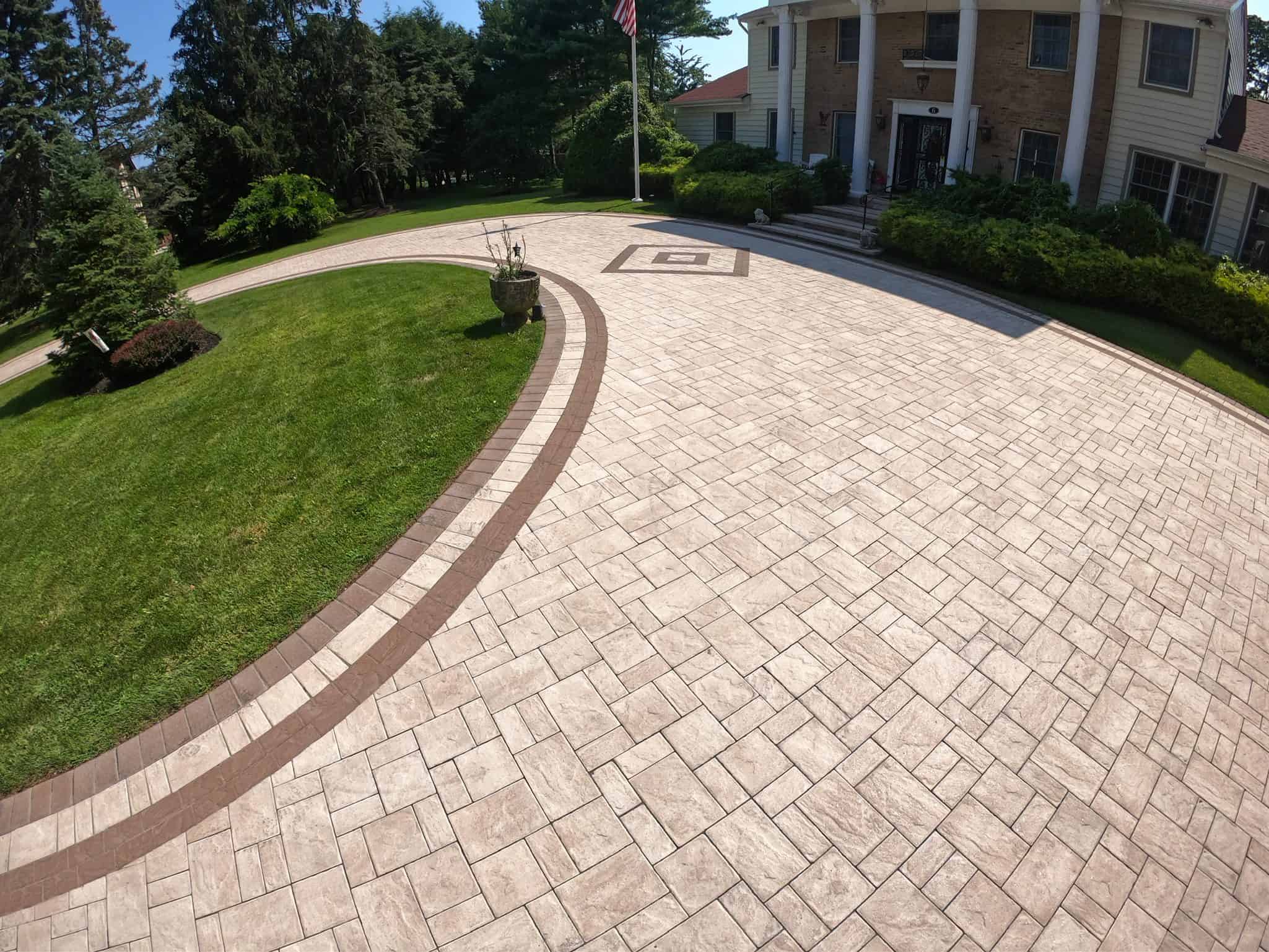
Stone pavers cost significantly more upfront—typically $17 to $23 per square foot installed in Suffolk County. That puts a standard driveway somewhere between $10,200 and $13,800, roughly double or triple what you’d pay for asphalt.
Here’s what that premium buys you. Pavers handle Long Island’s freeze-thaw cycles through a completely different mechanism than asphalt. Instead of flexing as a single unit, each paver can move independently. When the ground shifts during temperature swings or soil settlement, individual pavers adjust without transferring stress to their neighbors.
That independent movement prevents the spider-web cracking you see in concrete driveways after a few harsh winters. Water that seeps between pavers drains through the joints before it can freeze and cause damage. The individual units essentially absorb ground movement that would crack a solid surface.
Maintenance requirements drop dramatically with pavers. You won’t need regular sealcoating the way you do with asphalt. Most paver driveways need resealing every 3-5 years at most, and even that’s optional depending on the look you want and your exposure to salt. If a paver cracks or stains, you can replace that single unit without disturbing the entire driveway.
Longevity is where pavers really shine for Long Island conditions. Quality paver installations regularly last 25-75 years with minimal maintenance. That’s potentially three or four times longer than asphalt. When you calculate total cost of ownership over 30 years—including maintenance and replacement—the gap between asphalt and pavers narrows considerably.
The installation process matters more with pavers than with any other material. Proper base preparation is critical. Suffolk County’s sandy soil and coastal conditions demand excavation to at least 8-10 inches, followed by compacted gravel base, bedding sand, and proper edge restraints. Contractors who cut corners on this prep work create driveways that fail within years instead of decades.
Design flexibility gives pavers another advantage. You can create patterns, borders, and color combinations that aren’t possible with asphalt or concrete. That customization appeals to homeowners in areas like Southampton and East Hampton where curb appeal directly impacts property values.
Long Island’s coastal location creates a perfect storm for driveway damage. Our winters bring frequent temperature swings above and below freezing—sometimes multiple times in a single week.
Here’s what happens during those cycles. Water seeps into tiny cracks and pores in your driveway material during the day. When temperatures drop overnight, that water freezes and expands by roughly 9%. Ice expansion creates tremendous pressure—up to 30,000 pounds per square inch in confined spaces.
That pressure widens existing cracks and creates new ones. Come spring, you’re looking at damage that seemed to appear overnight but actually developed over months of repeated freezing and thawing. This cycle repeats every year, progressively weakening driveways that weren’t designed to handle it.
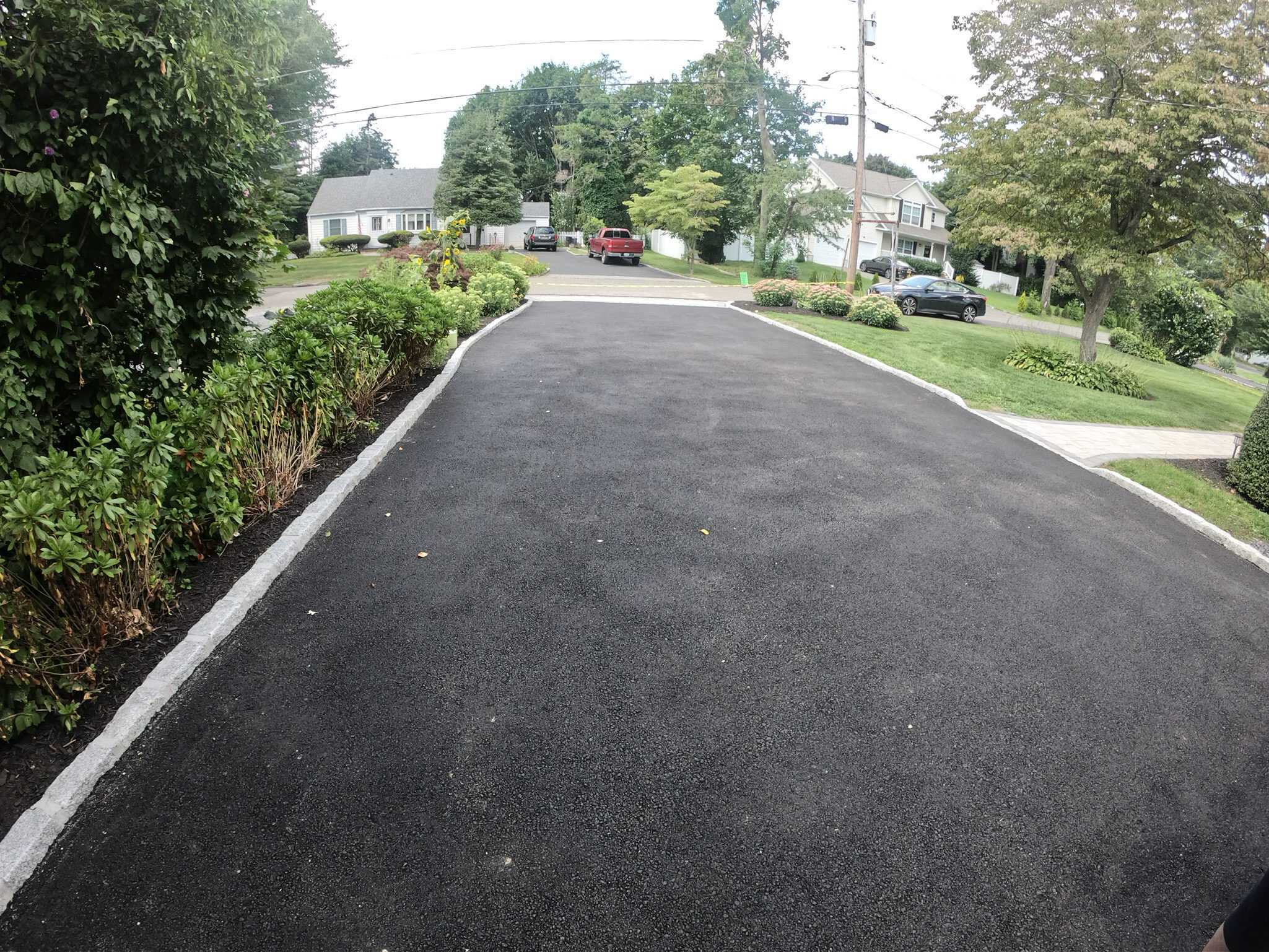
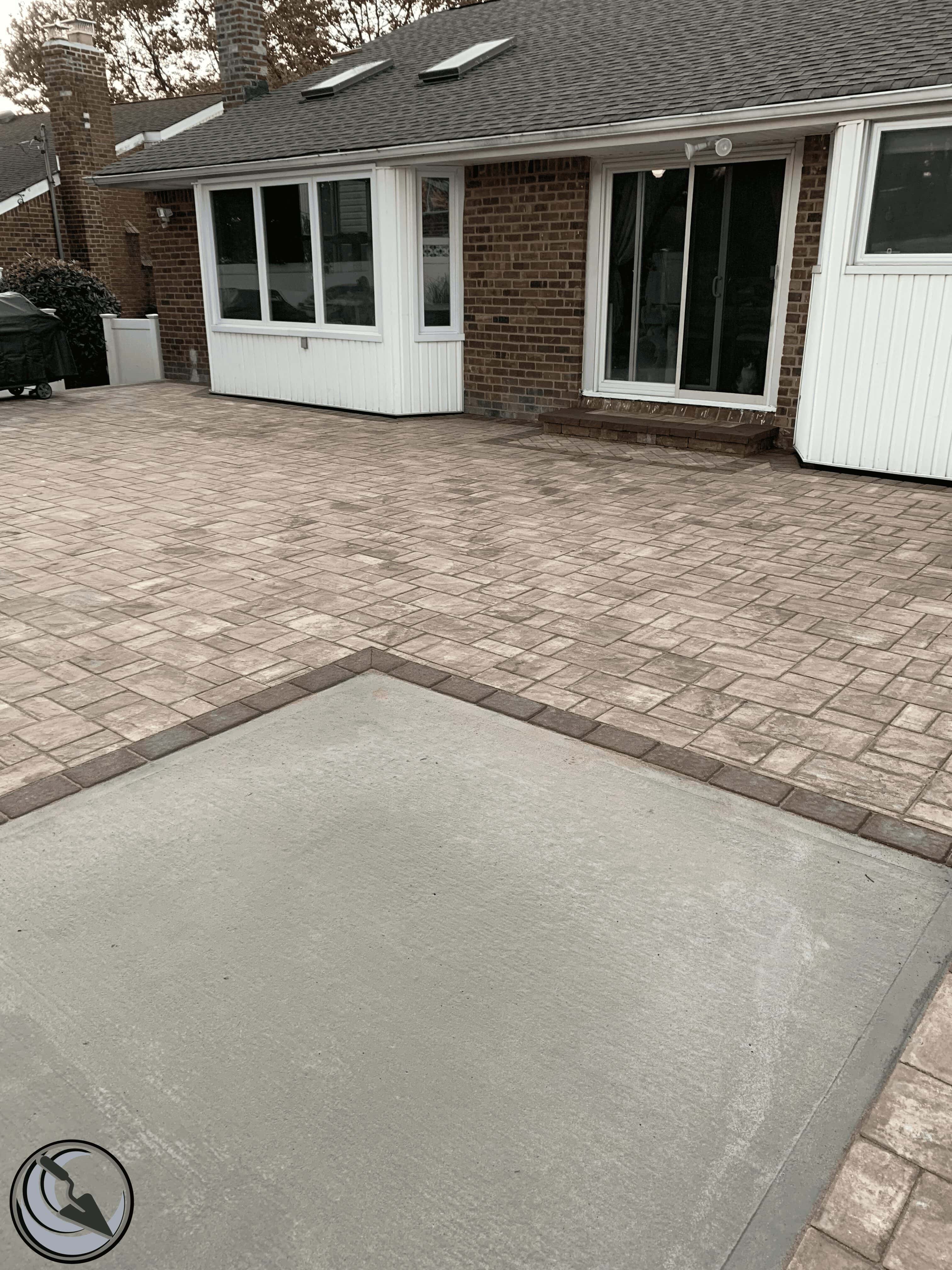
Concrete driveways cost $8-12 per square foot installed in Nassau and Suffolk Counties. That positions them between asphalt and pavers price-wise, which makes them tempting for homeowners who want something more substantial than asphalt but can’t justify paver costs.
The material offers real advantages. Concrete is incredibly strong and can last 30+ years when properly installed and maintained. It handles heavy loads well and provides a smooth, clean surface that many homeowners prefer aesthetically to asphalt’s black appearance.
But concrete’s rigidity creates problems in Long Island’s climate. Unlike asphalt, which flexes, concrete is essentially stone. When water freezes inside concrete, the rigid material has nowhere to go except apart. Once concrete cracks from freeze-thaw damage, those cracks typically continue growing each winter until major repairs become necessary.
Concrete crack repair is more complicated and expensive than fixing asphalt. You can’t simply seal concrete cracks the way you can with asphalt. When concrete fails, it often requires cutting out and replacing entire sections. That work is labor-intensive and costly.
Salt damage accelerates concrete deterioration in Long Island. The salt we use on roads and driveways during winter seeps into concrete’s porous surface. When that salty water freezes, it causes scaling—the surface literally flakes and peels away in layers. You’ve probably seen this on older concrete driveways around Suffolk County.
Proper installation helps concrete survive our climate. The key is adequate base preparation, proper drainage, control joints to manage cracking, and regular sealing to prevent water infiltration. Even with perfect installation, concrete remains more vulnerable to freeze-thaw damage than asphalt or pavers in our climate.
Maintenance costs for concrete run lower than asphalt in terms of frequency, but higher when problems develop. You should seal concrete every 2-3 years, similar to asphalt. But when repairs are needed, expect to pay significantly more than you would for comparable asphalt work.
Most driveway failures in Suffolk County trace back to inadequate base preparation, not material choice. Long Island’s sandy soil and coastal moisture create unique challenges that demand proper excavation and drainage planning.
Standard preparation should include excavation to 8-10 inches depth. That removed soil gets replaced with compacted gravel or crushed stone in layers. Each layer needs proper compaction before the next goes down. This creates a stable platform that resists the shifting and settling that plague poorly prepared driveways.
Drainage planning separates driveways that last from those that fail prematurely. Water is the enemy. It weakens the base, accelerates freeze-thaw damage, and creates the conditions for cracking and potholes. Your driveway needs proper slope to move water away from the surface and toward appropriate drainage points.
Edge restraints prevent the spreading and shifting that occurs when driveway edges aren’t properly secured. This is especially important with pavers, but even asphalt and concrete benefit from solid edge support. Many contractors skip this step to save time and money, but you’ll pay for that shortcut within a few years.
Suffolk County’s soil varies significantly from the sandy conditions near the coast to clay deposits inland. Each soil type requires different base preparation approaches. We’re familiar with Long Island conditions and know how to adjust our methods based on your specific location.
The freeze-thaw cycle we discussed earlier attacks from below as well as above. Water that collects beneath your driveway expands when it freezes, creating pressure that pushes up from underneath. Proper base preparation with adequate drainage prevents water from collecting where it can cause this type of damage.
Many homeowners don’t realize that base preparation represents a significant portion of total installation cost. It’s not the visible part of the work, which makes it tempting for contractors to cut corners here. But this invisible foundation determines whether your driveway lasts 5 years or 50 years.
Quality contractors excavate properly, install adequate base material, compact thoroughly, and plan drainage before they ever put down your final surface material. That preparation costs more upfront but saves thousands in repairs and premature replacement down the road.
The right driveway material for your Suffolk or Nassau County home depends on your priorities. Asphalt offers the lowest upfront cost and good performance with regular maintenance. Pavers provide maximum longevity and design flexibility at a premium price. Concrete sits in the middle, offering strength but requiring careful installation to survive our freeze-thaw cycles.
What matters more than material choice is proper installation designed for Long Island’s specific conditions. Adequate base preparation, drainage planning, and attention to our climate challenges determine whether any material succeeds or fails. We understand Suffolk County’s sandy soil, coastal moisture, and temperature extremes, and we create driveways that last.
If you’re ready to discuss driveway paving options that actually work in Long Island’s climate, we bring the local expertise and proper installation methods that prevent the premature failure so common here.
Article details:
Share:
Continue learning: