Choosing the right driveway material and contractor for Long Island's climate isn't simple. Here's what actually matters when planning your driveway project.
Share:
Summary:
When you’re looking at driveway paving, you’re really choosing between three main options: pavers, asphalt, or concrete. Each has trade-offs, and what works for your neighbor might not work for you.
Paver driveways use individual stones—concrete, natural stone, or specialty materials like travertine or cobblestone—laid over a compacted base. Asphalt is the traditional blacktop you see everywhere. Concrete is poured in sections with control joints.
The choice isn’t just about looks or budget. It’s about how each material handles Long Island’s specific challenges and how much driveway maintenance you’re willing to do over the next 20 years.
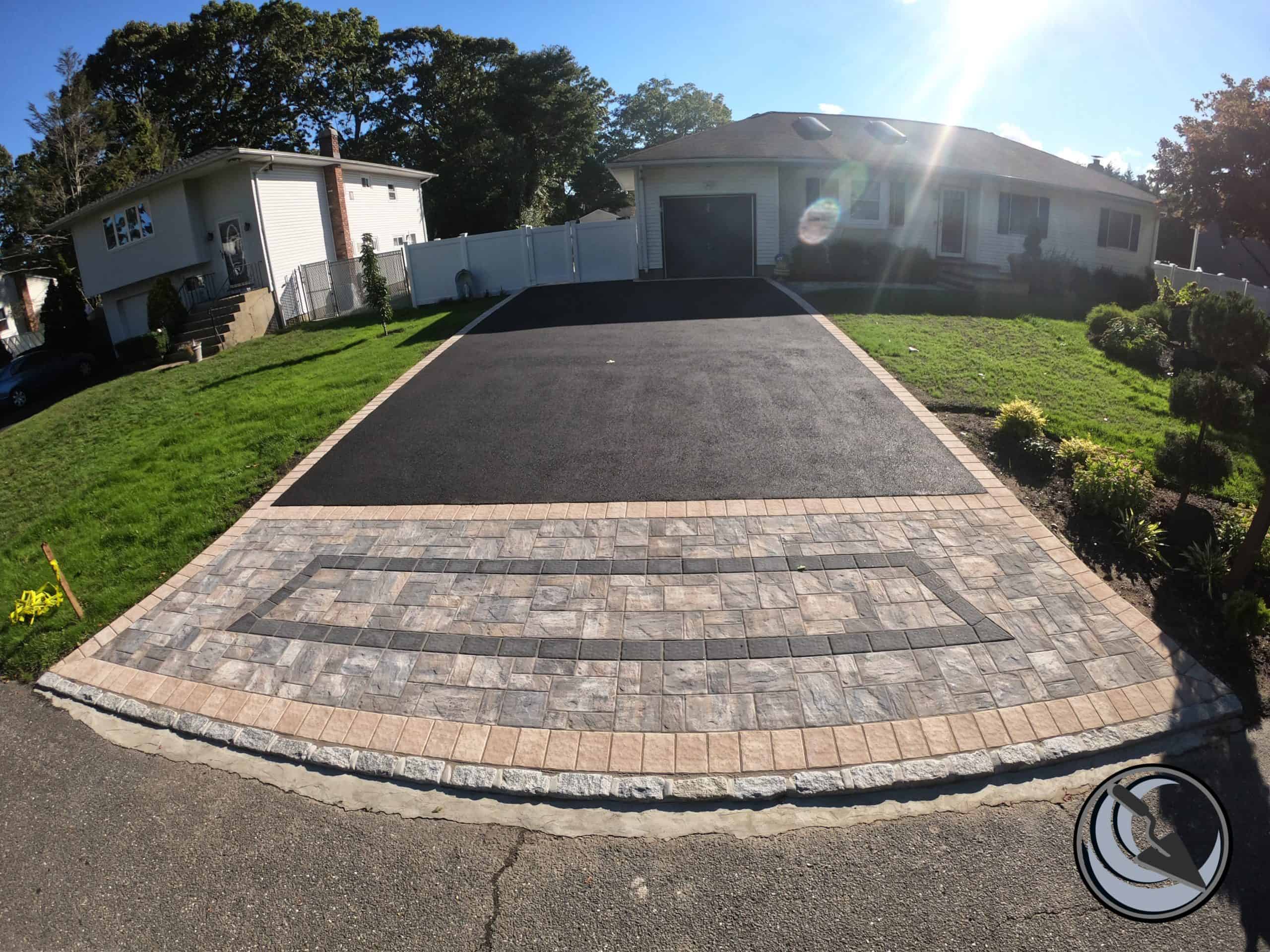
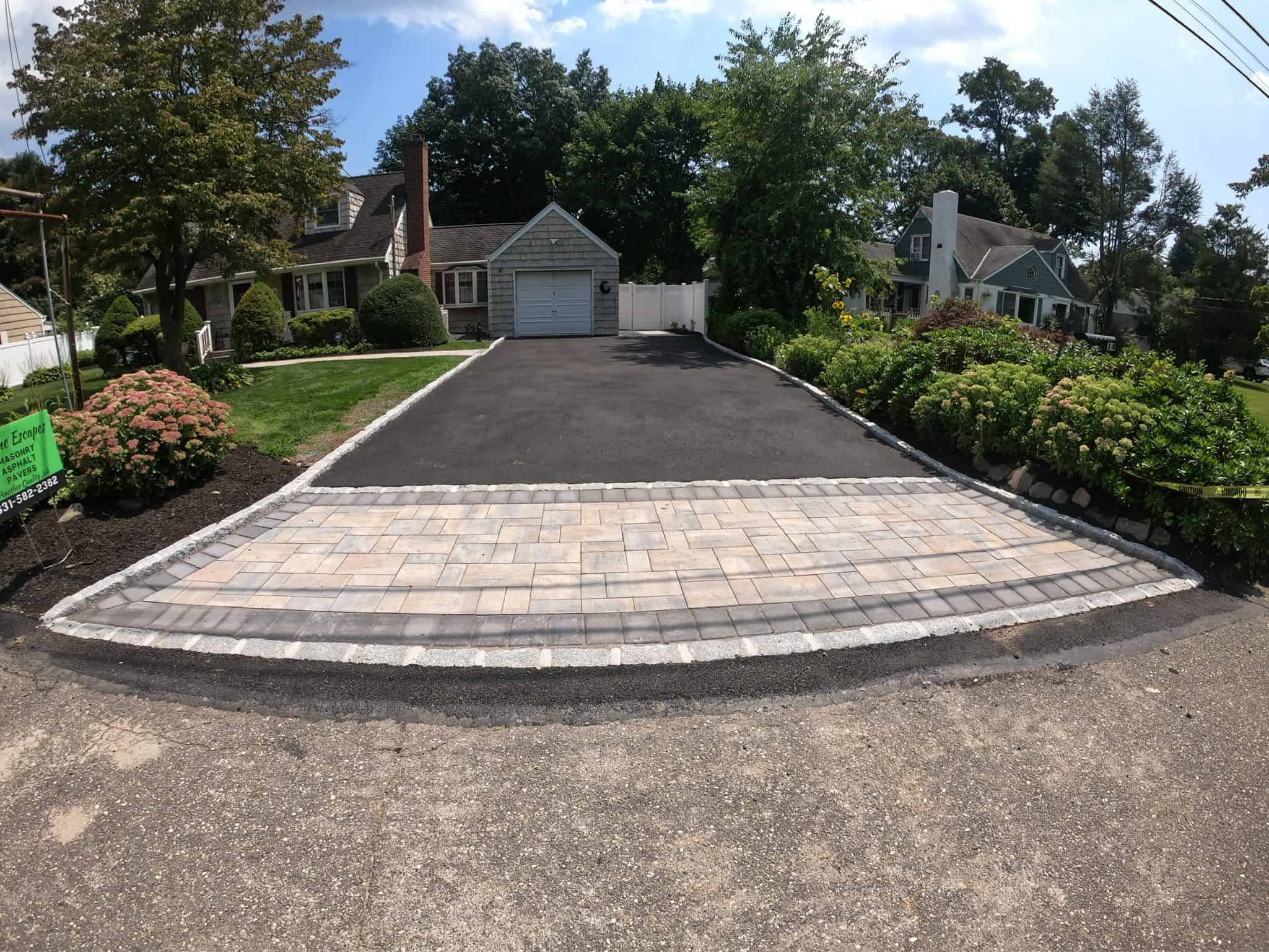
The debate between paver driveways Long Island homeowners face and traditional asphalt comes down to upfront cost versus long-term value. Asphalt driveways Suffolk County contractors install typically cost $5 to $8 per square foot. Pavers run $10 to $30 per square foot depending on the material. On a 600-square-foot driveway, that’s the difference between $3,600 and potentially $18,000.
But here’s what that price difference actually buys you. Asphalt needs resealing every 2-3 years to prevent cracking—that’s $300-600 per application. It softens in summer heat, can develop permanent tire marks, and when you patch it, those patches stay visible forever. With proper driveway maintenance, asphalt lasts 15-30 years in our climate.
Pavers last 25-75 years with minimal maintenance. They don’t soften in heat. Individual pavers can be replaced without leaving visible patches—something you can’t do with asphalt. They handle freeze-thaw cycles better because the joints between pavers allow for movement that rigid materials can’t accommodate.
The real difference shows up around year five. Your neighbor with asphalt is scheduling another sealcoat, filling cracks, maybe patching a section near the apron. You’re hosing off your paver driveway once a season. That maintenance cost adds up, often closing the gap between the initial price difference by year ten.
There’s also the performance factor specific to Long Island. Pavers stay cooler underfoot than asphalt—important if you have kids playing basketball in the driveway. They don’t develop the same drainage issues. And they won’t crack from freeze-thaw damage the way asphalt does when water seeps in and expands during winter.
Asphalt makes sense if you need the lowest possible upfront cost and don’t mind scheduling regular maintenance. Pavers make sense if you want something that’ll still look good in 20 years without constant attention. Neither choice is wrong—it depends on what matters more to you right now.
Beyond the paver-versus-asphalt question, you’ve got material choices within the paver category that affect both performance and cost in ways most homeowners don’t realize until they’re comparing quotes.
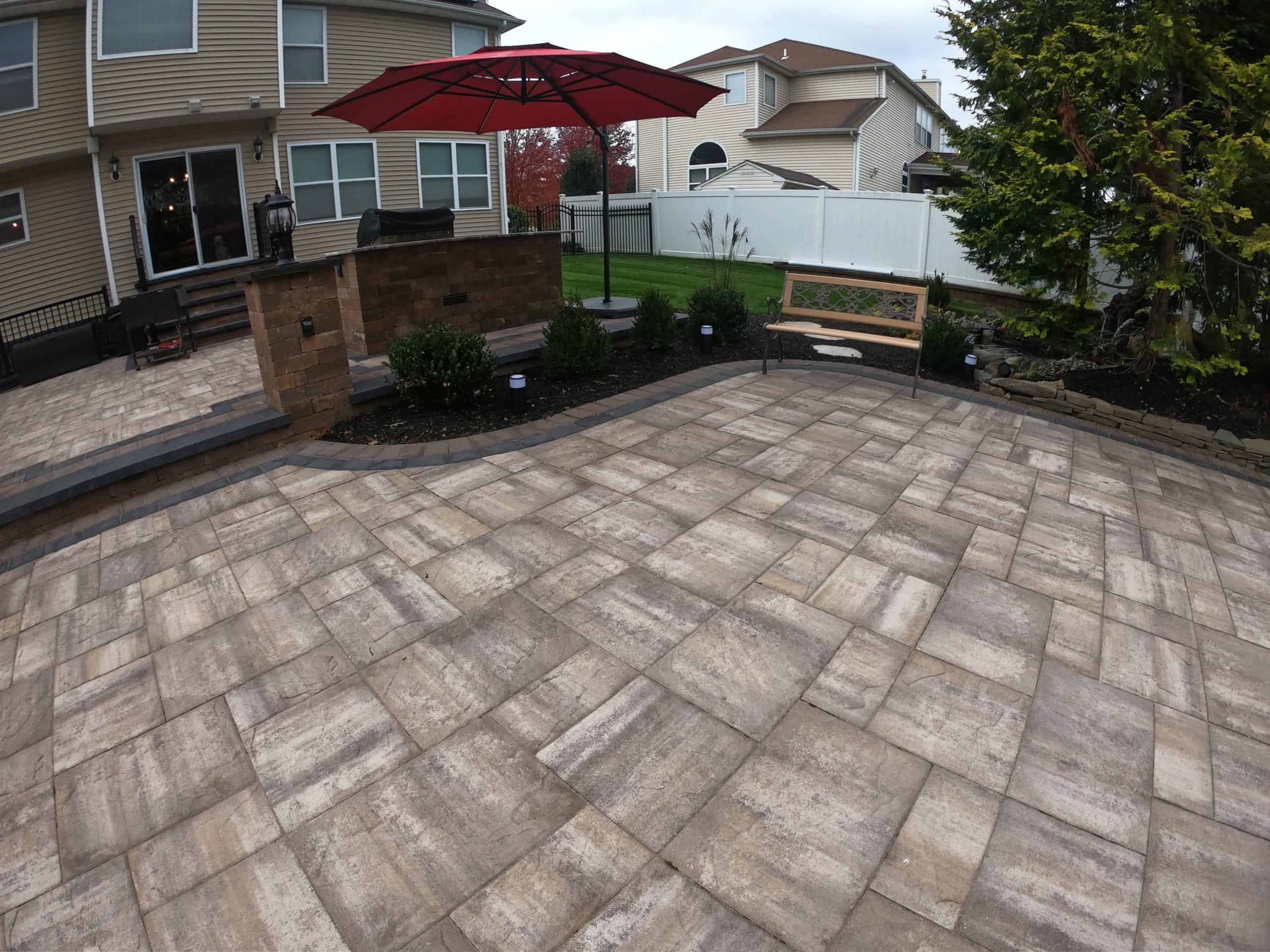
Concrete pavers are the most common choice for paver driveways Long Island contractors install. They’re manufactured in consistent sizes and colors, they’re durable enough for vehicular traffic, and they’re more affordable than natural stone. You can get concrete pavers that mimic the look of natural stone or cobblestone at a fraction of the cost—often saving $10-20 per square foot compared to the real thing. They handle freeze-thaw cycles well and repairs are straightforward—just pop out the damaged paver and replace it.
Travertine is natural stone that’s become popular for higher-end driveway projects. It stays noticeably cooler than concrete or asphalt, even in direct sun. Walk barefoot across a travertine driveway in July and you’ll feel the difference immediately. That’s because of its porous nature and lower thermal mass. Travertine is also naturally slip-resistant and has twice the compressive strength of concrete, making it more than capable of handling vehicle weight. The downside is cost—expect to pay $15-25 per square foot or more—and it does require sealing every few years to prevent staining from oil or other spills.
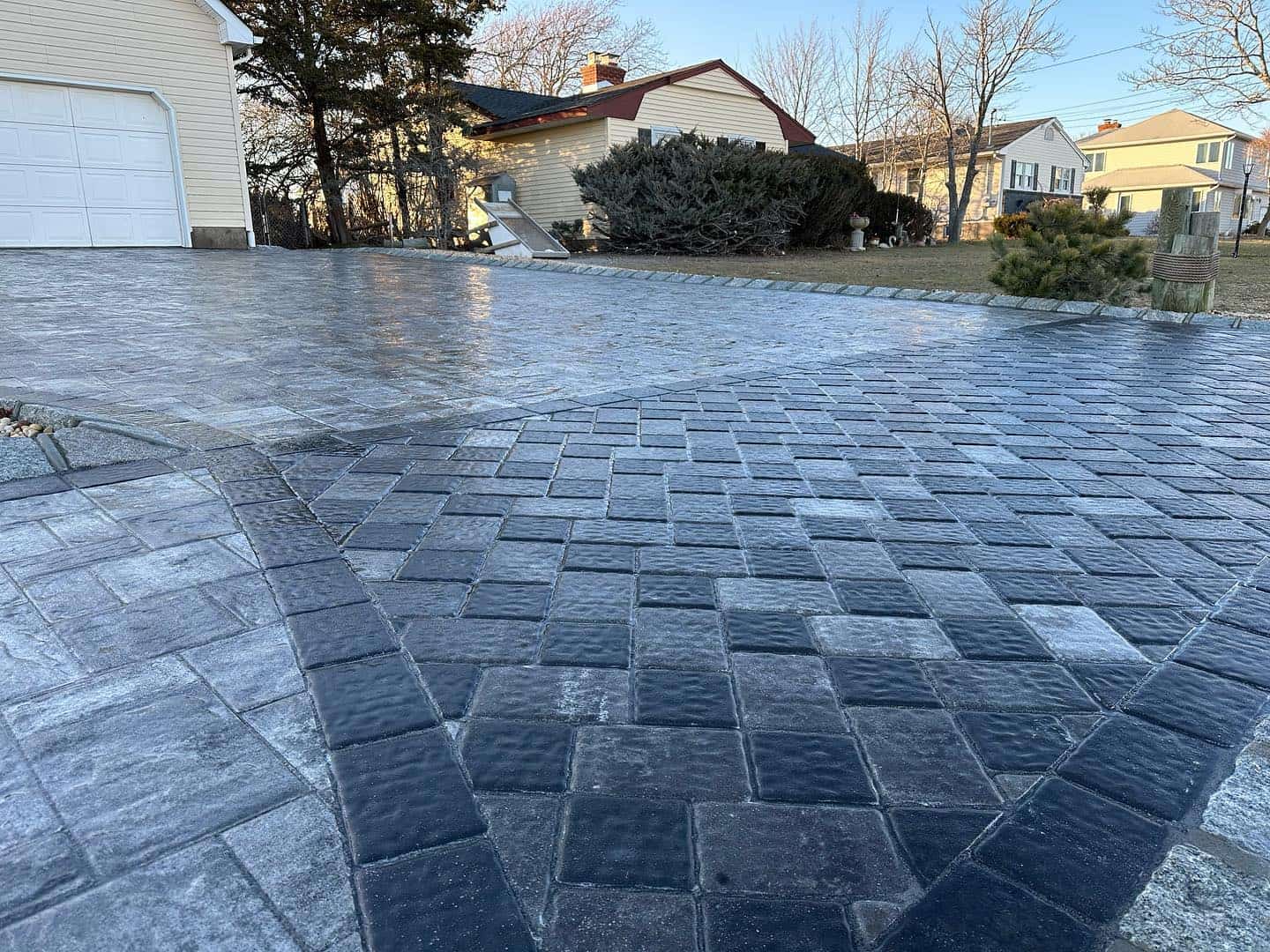
Cobblestone (or Belgian block) is granite, limestone, or basalt cut into small stones. It’s the most durable option available. Period. There are cobblestone roads in Europe that have lasted centuries with nothing more than occasional releveling. Granite cobblestone is incredibly hard, about 95% stain-resistant, and handles freeze-thaw conditions without issue because the material itself is nearly impervious to water absorption. The trade-off is cost—cobblestone can run $40-75 per square foot installed—and installation is more labor-intensive because each stone needs to be individually set and leveled.
For Suffolk County conditions specifically, all three work if installed properly. The decision comes down to budget and aesthetic preference. Concrete pavers give you the most design flexibility at the best price point. Travertine adds a luxury element and stays cooler around pools or outdoor living areas. Cobblestone is the ultimate in durability and old-world charm, if you can afford it.
One thing to watch: some driveway paving contractors will try to sell you on stamped concrete as a “paver alternative.” It’s not. Stamped concrete is still a solid slab that will crack with freeze-thaw cycles. It doesn’t have the flexibility of individual pavers. If someone’s pushing stamped concrete for a Long Island driveway, that’s a red flag about their understanding of local conditions.
Installation quality matters more than material choice. A properly installed asphalt driveway will outlast a poorly installed paver driveway every time. And in Long Island, “proper installation” means accounting for conditions that driveway paving contractors from other regions might not understand.
The process starts with excavation. For Long Island conditions, you need to go 8-10 inches deep minimum. That’s not negotiable. The frost line here is about 20 inches, but building code requires footings at 36 inches for a reason—the ground moves. A shallow base means your driveway will shift, crack, or settle within a few years.
After excavation comes base preparation. This is where most problems start. Sandy soil doesn’t compact the same way clay soil does. Coastal moisture affects stability. A proper base for Long Island includes multiple layers of compacted gravel, proper grading for drainage, and edge restraints to prevent lateral movement.
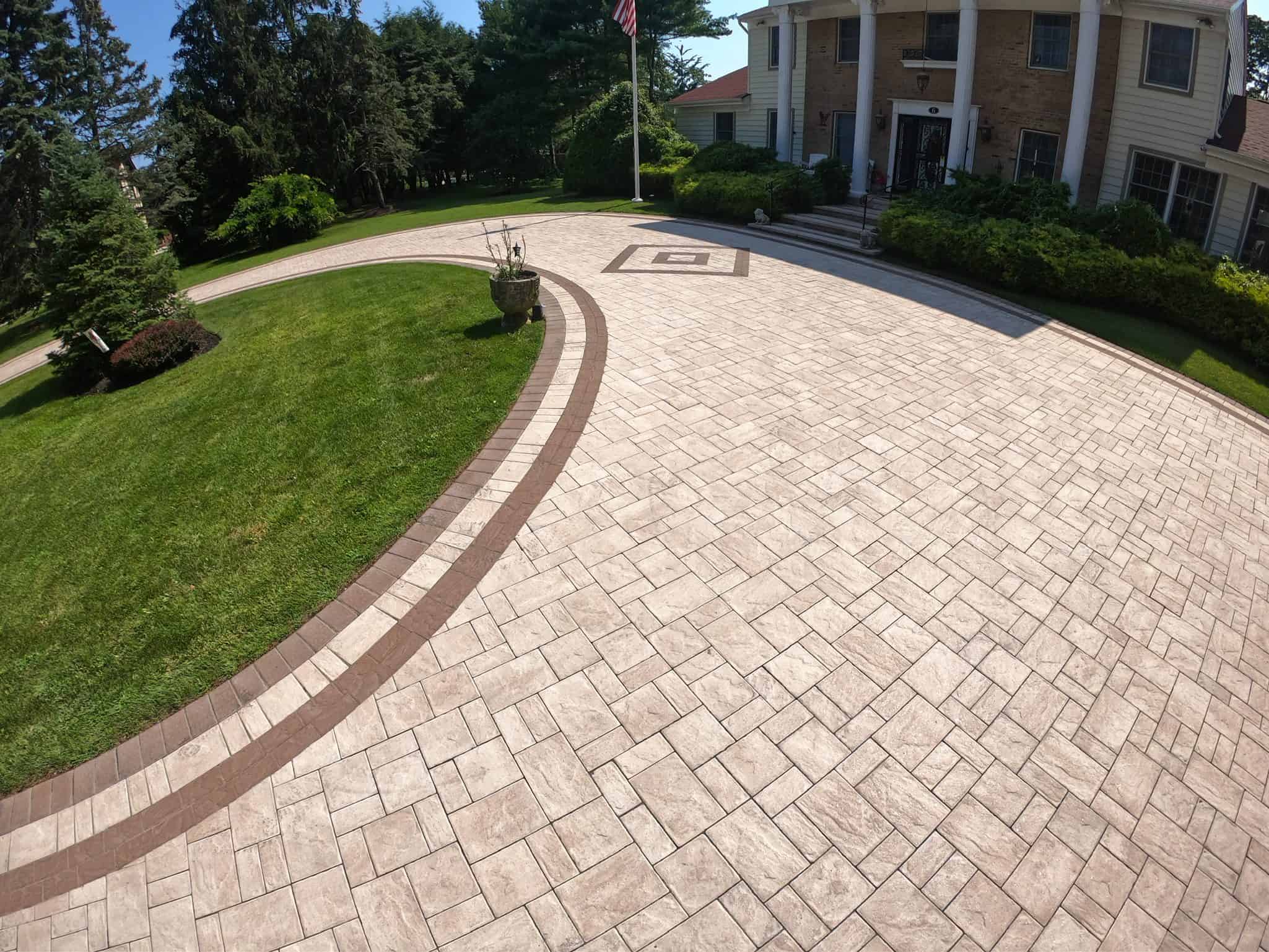
Water is your driveway’s biggest enemy, especially in Suffolk County where we deal with coastal moisture, heavy rainfall, and freeze-thaw cycles that can destroy improperly prepared surfaces. In Long Island’s climate, water gets into cracks, freezes, expands, and destroys the surface from within. This is why drainage planning isn’t optional—it’s the difference between a driveway that lasts 30 years and one that fails in five.
Proper drainage starts with slope. Your driveway needs to slope away from your house and away from areas where water can pool. Even a slight grade—as little as 1-2% slope—makes a massive difference. That’s about 1-2 inches of drop over 10 feet. Water should never sit on your driveway surface. If you see puddles the day after rain, your drainage is wrong.
The base layers also affect drainage in ways you won’t see but will definitely feel in your wallet if they’re done wrong. A well-designed base includes drainage stone that allows water to percolate through rather than sitting under the surface. This is especially important in Suffolk County where we get heavy rain and coastal moisture. Water that sits under your driveway will cause settling, which leads to cracking or sinking. You’ll see this as dips in the driveway or areas where pavers have dropped below the surrounding surface.
Edge restraints are another critical piece that homeowners don’t usually think about. These are barriers installed along the edges of your driveway that prevent the pavers or asphalt from spreading outward over time. Without proper edge restraint, you’ll see separation between pavers, cracking along edges, and eventual failure of the entire structure. This is particularly important in Long Island’s sandy soil where lateral movement is more likely.
For paver driveways specifically, the sand layer between the base and the pavers needs to be exactly right—typically about 1 inch of bedding sand, no more, no less. Too thick and pavers will shift under vehicle weight. Too thin and they won’t sit level. This is where experienced driveway paving contractors separate themselves from general laborers who think they can figure it out.
All of this preparation work happens before you ever see the actual driveway surface go down. It’s not visible in the finished product, but it’s what determines whether your driveway is still level and intact 20 years from now or whether you’re calling contractors for repairs after the first winter.
Once the base is right, design comes into play. Paver patterns aren’t just about aesthetics—some patterns are structurally stronger than others, especially for driveways that handle vehicular traffic. This matters more than most homeowners realize when they’re flipping through design catalogs.
Herringbone is the most popular paver pattern for driveways, and for good reason. The V-shaped interlocking design distributes weight better than any other pattern. When a car drives over herringbone pavers, the load spreads across multiple stones rather than concentrating on individual pieces. This prevents shifting and maintains structural integrity over time. You’ll see herringbone recommended for high-traffic areas and commercial applications because it simply performs better under stress. It can be installed at 45-degree or 90-degree angles depending on your aesthetic preference.
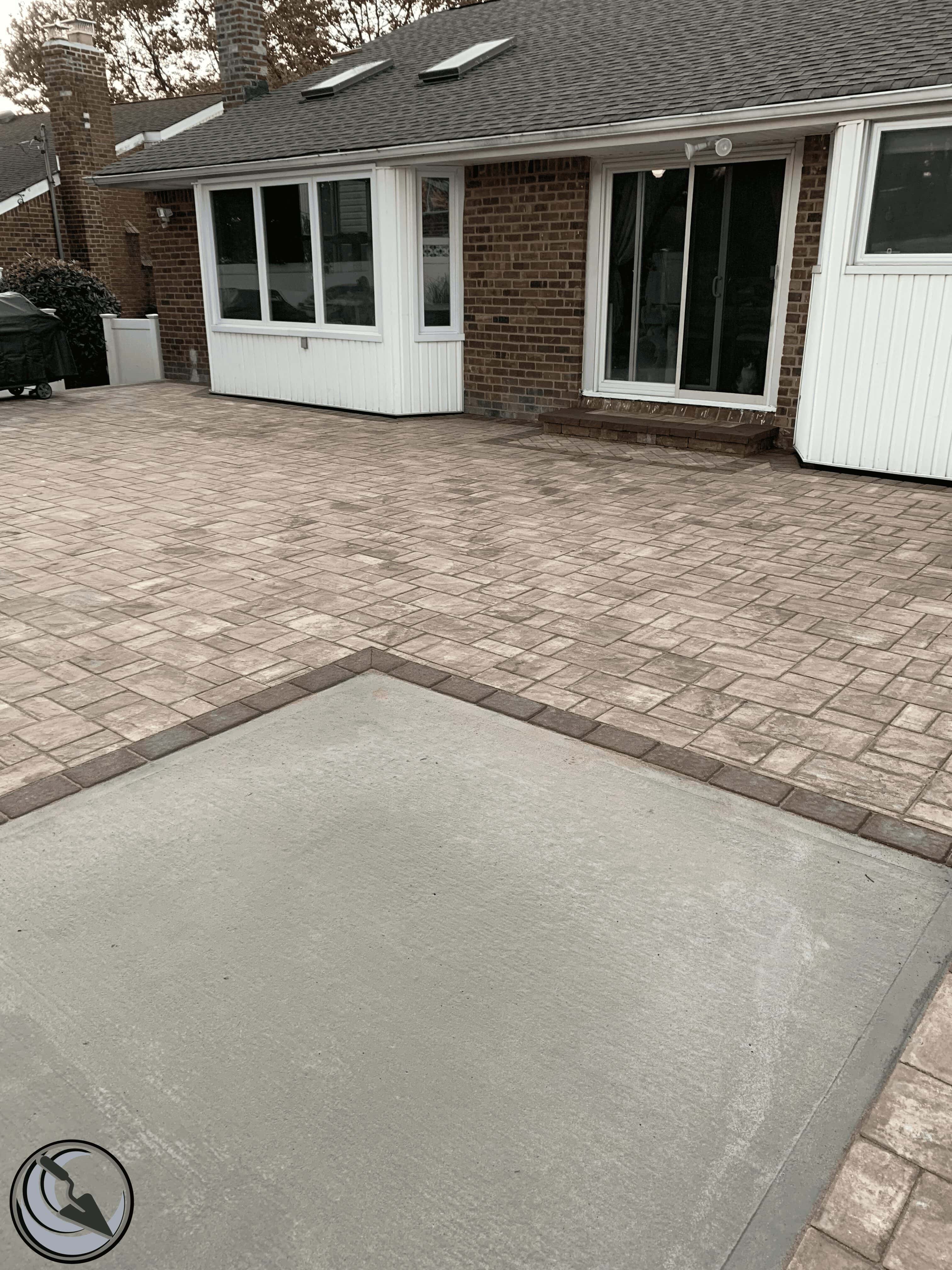
Running bond is another common choice for paver driveways Long Island homeowners select. It’s simpler to install—pavers are laid in straight rows with each row offset by half a paver length. It creates clean, modern lines and works well for contemporary homes. It’s not quite as strong as herringbone for weight distribution, but for standard residential driveways, it’s more than adequate and often costs slightly less to install because of the simpler layout.
Basketweave creates a traditional, woven appearance using pairs of pavers laid perpendicular to each other. It’s visually interesting and works well with colonial or rustic architectural styles. The pattern is stable for residential use but not typically recommended for commercial driveways or areas with heavy truck traffic because it doesn’t interlock as tightly as herringbone.
Random modular or ashlar patterns use different sized pavers arranged in an irregular layout. This mimics natural stone and creates an organic, high-end look that you can’t achieve with standard patterns. It’s more complex to install correctly but offers unique aesthetic appeal that standard patterns can’t match. Expect to pay slightly more for installation because of the additional planning and precision required.
Beyond the pattern itself, you can add borders in contrasting colors or materials, create focal points at the garage apron or entry, or coordinate your driveway design with walkways and patios for a cohesive look. These design elements don’t just make your driveway look better—they can actually increase your property value by improving curb appeal. A well-designed driveway can add 5-10% to your home’s perceived value.
The key is working with driveway paving contractors who understand both the structural requirements and the design possibilities. Some patterns look great but won’t hold up to Long Island winters. Others are incredibly durable but might not match your home’s style. The right contractor helps you find the balance between performance and aesthetics.
Everything we’ve covered—material choice, proper installation, drainage, climate considerations—only matters if your contractor actually knows what they’re doing. And in Suffolk County, that means finding someone who understands local conditions, not just general paving principles.
Look for driveway paving contractors who are properly licensed in Suffolk County and Nassau County. Check that they’re insured. Ask about manufacturer certifications—companies like Cambridge, Techo-Bloc, and Unilock only certify contractors who meet their installation standards. These aren’t just pieces of paper; they indicate training and accountability.
Ask how they handle Long Island-specific challenges. If they can’t explain how they account for sandy soil, freeze-thaw cycles, and drainage in coastal areas, that’s a problem. The right contractor will walk you through their excavation depth, base preparation, and drainage planning without you having to prompt them. They should be talking about 8-10 inch excavation, proper base layering, and edge restraint installation before you even ask.
Get multiple estimates, but don’t just pick the lowest number. Understand what’s included. A low bid often means shortcuts on base preparation or thinner material—problems that won’t show up until after the contractor is long gone. A detailed estimate that breaks down excavation, base layers, materials, labor, and driveway maintenance recommendations tells you the contractor is thinking through the entire project.
Finally, look for contractors who stay involved throughout the process. Owner-operated companies where the person giving the estimate is also overseeing the work tend to deliver more consistent results than large operations using subcontractors. Direct communication and accountability make a difference when issues come up.
Your driveway is a significant investment—typically several thousand dollars minimum—and it’s one of the most visible features of your property. Taking the time to choose the right approach and the right contractor means you’ll have a driveway that still looks good and functions properly decades from now. That’s worth doing right the first time.
If you’re ready to explore options for your property, we specialize in driveway paving throughout Suffolk County with a focus on Long Island-specific installation requirements and manufacturer-certified quality.
Article details:
Share:
Continue learning: