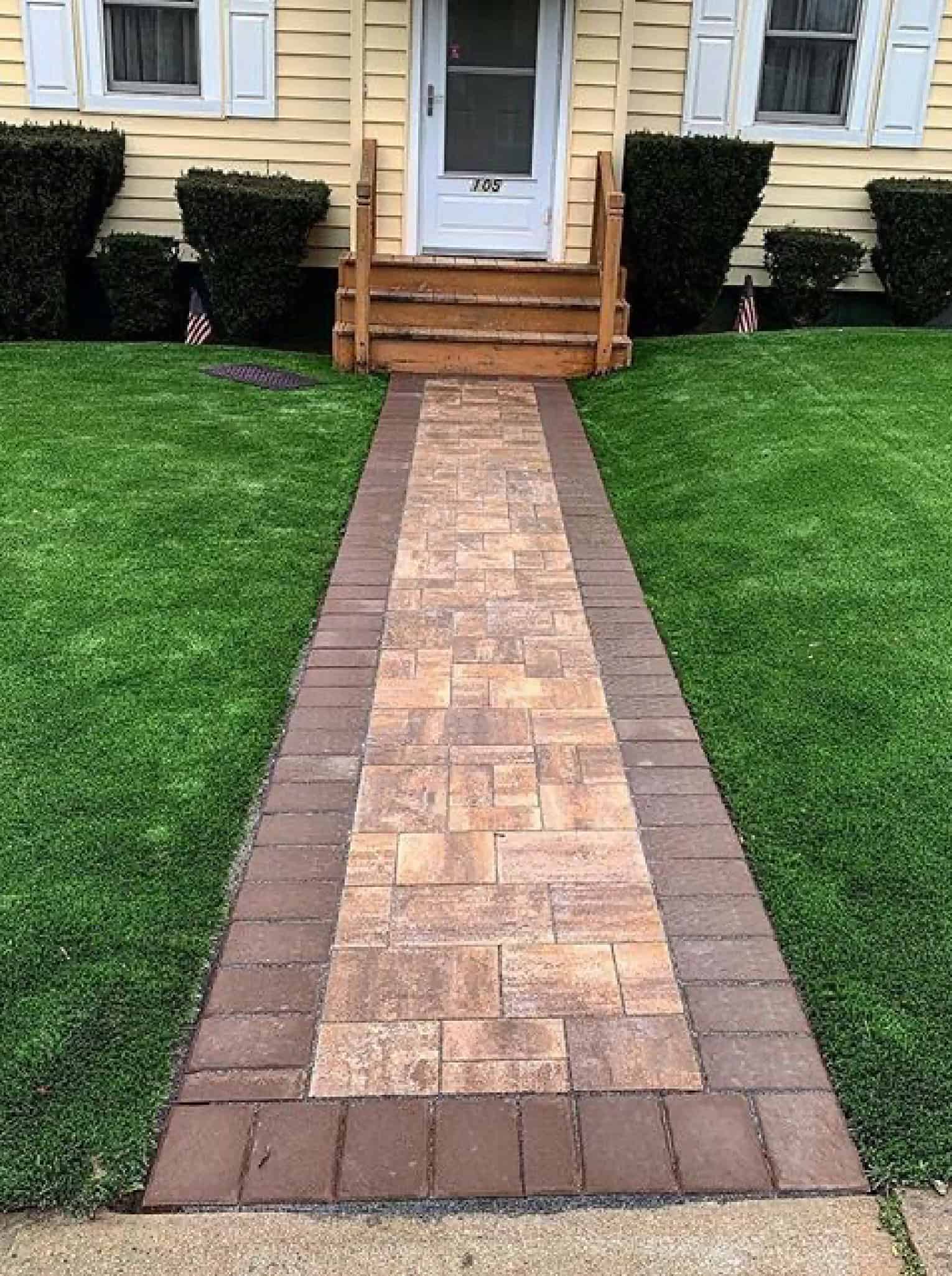
Your front walkway sets the tone for your entire property. Discover which materials, patterns, and installation methods work best in Suffolk County's unique climate.
Share:
Summary:
The material you choose determines how your walkway performs for the next 20 to 50 years. It affects drainage, safety, maintenance, and how well it handles winter.
Concrete might seem like the obvious choice because it’s affordable and quick to install. But it’s rigid. When the ground shifts or freezes, concrete fights back and loses. You end up with cracks that spread, uneven sections that trip people, and repairs that are expensive and obvious.
Pavers work differently. They’re individual pieces that move with the ground instead of against it. Water drains between them naturally. If one shifts or chips, you replace that one piece. The rest stays intact.

Long Island’s weather isn’t kind to outdoor surfaces. You’ve got freeze-thaw cycles all winter, coastal moisture year-round, and sandy soil that drains fast but doesn’t always provide stable support.
When water gets into cracks and freezes, it expands. That expansion pushes concrete apart from the inside. By spring, those hairline cracks are wider. By next winter, they’re worse. It’s not a question of if concrete will crack here—it’s when.
Sandy soil adds another layer of complexity. It drains well, which is good. But it also shifts more easily than clay or loam, especially when it’s saturated. That’s why proper base preparation matters so much in Suffolk County. You need excavation deep enough to get below the frost line and a compacted base that won’t settle unevenly over time.
Coastal moisture accelerates wear on some materials. Salt air can pit certain types of stone. Humidity keeps surfaces damp longer, which means more freeze-thaw cycles and more opportunities for damage. The materials that hold up best here are the ones designed to handle moisture without breaking down—dense pavers, natural stone with low absorption rates, and properly sealed surfaces.
If your walkway wasn’t built with these conditions in mind, you’re going to see problems. Settling. Cracking. Sections that tilt toward your foundation instead of away from it. Water pooling in spots where it shouldn’t. These aren’t cosmetic issues. They’re signs that the installation didn’t account for how this specific environment works.
The good news is that when you build it right the first time—with the right materials, proper excavation, and attention to drainage—your walkway can handle everything Long Island throws at it. You’re not fighting the climate. You’re working with it.
Let’s talk about what you’re actually comparing when you look at walkway materials. Concrete is poured as one solid slab. It’s affordable upfront and goes in fast. But it’s also inflexible, prone to cracking, and difficult to repair without it being obvious. Once it starts to fail, the whole section usually needs replacement.
Pavers are individual units—concrete, clay, or stone—that interlock over a compacted base. They cost more initially, but they last longer and they’re easier to maintain. If the ground shifts, pavers adjust. If one breaks, you swap it out. The rest of the walkway stays intact. They also drain better because water moves through the joints instead of pooling on the surface.
Natural stone—like bluestone or flagstone—offers a high-end look and excellent durability. It doesn’t absorb much water, it handles temperature swings well, and each piece is unique. The tradeoff is cost and installation time. Stone requires skilled labor to set properly, and the material itself is more expensive. But if you want a walkway that looks custom and lasts decades, it’s worth considering.
Then there’s the question of texture and safety. Smooth concrete can be slippery when wet or icy. Pavers and stone typically have more texture, which gives you better traction in bad weather. That matters when you’re walking out to your car on a February morning or when guests are arriving in the rain.
Maintenance is another factor people underestimate. Concrete needs sealing to protect against moisture and salt. When it cracks, repairs are visible and often temporary. Pavers need occasional re-sanding of joints and maybe some edge restraint adjustments, but the work is straightforward. Stone might need resealing depending on the type, but it doesn’t crack the same way concrete does.
Cost-wise, you’re looking at different timelines. Concrete is cheaper now. Pavers cost more upfront but can outlast concrete by 10 to 20 years. Stone is the most expensive initially, but it can last 50 years or more with minimal maintenance. When you factor in repairs, replacements, and how long you plan to stay in your home, the math shifts.
If you’re in Suffolk County, the material that performs best is the one that handles moisture, temperature swings, and ground movement without falling apart. That usually means pavers or stone. Concrete works if budget is the main concern and you’re okay with the likelihood of cracks down the line. But if you want something that stays level, drains well, and doesn’t need major work every few years, pavers are the sweet spot.
Here’s the thing nobody tells you until it’s too late: the surface material you see is only part of the equation. What’s underneath determines whether your walkway lasts five years or fifty.
Drainage is the single biggest factor in walkway longevity. If water pools on the surface or saturates the base, you’re going to have problems. In Long Island’s sandy soil, water moves fast, but it doesn’t always move in the right direction. Without proper grading and drainage planning, you end up with water flowing toward your foundation, settling under your walkway, or creating soft spots that cause pavers to sink.
Proper installation starts with excavation. You need to dig down 8 to 10 inches to make room for the base layers. That base—usually crushed stone—gets compacted in layers to create a stable foundation that won’t shift when the ground freezes or gets saturated. Edge restraints keep everything locked in place so pavers don’t creep outward over time.
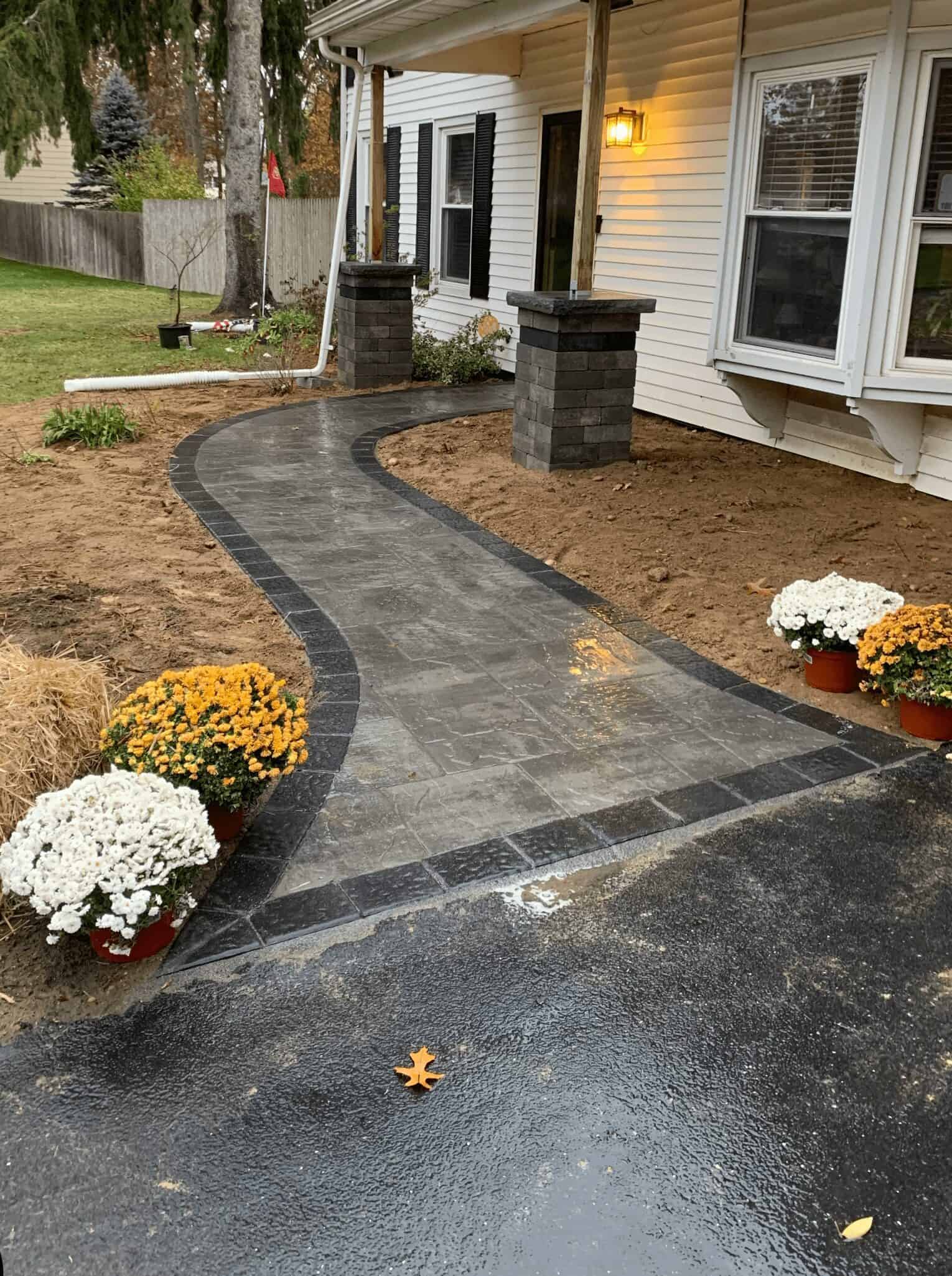
Long Island’s sandy soil drains well, which sounds like a good thing. And it is—until you realize that sand doesn’t compact the same way as clay or loam. It shifts more easily. It doesn’t hold edges as firmly. And when it gets saturated, it can wash out from under your walkway if the installation isn’t done right.
That’s why base preparation matters so much here. You can’t just dig a shallow trench, dump some gravel, and call it done. The base needs to be deep enough to get below the frost line—usually 8 to 10 inches in Suffolk County. It needs to be compacted in layers, not all at once. And it needs proper drainage so water doesn’t sit at the base and create soft spots.
Edge restraints are critical in sandy soil. Without them, pavers will gradually spread outward as the sand beneath them shifts. You’ll see gaps forming between pavers, uneven edges, and sections that start to sink. A proper edge restraint—whether it’s plastic, metal, or concrete—locks the pavers in place and prevents that lateral movement.
Drainage planning also looks different in sandy soil. Because water moves through sand quickly, you need to make sure it’s moving away from your foundation and not pooling in low spots. That usually means grading the walkway with a slight slope—about 1.5 inches of drop for every 10 feet—so water runs off the surface instead of soaking into the base.
If your property has high water tables or areas where water tends to collect, you might also need subsurface drainage. That could mean a French drain, a catch basin, or a drainage channel that redirects water before it reaches your walkway. It’s not always necessary, but it’s worth evaluating during the planning phase.
We understand Long Island soil and know these details matter. We don’t cut corners on excavation depth. We don’t skip the compaction steps. We plan for drainage before the first paver goes down. That’s the difference between a walkway that lasts and one that starts sinking within a few years.
Professional installation isn’t just about making it look good. It’s about building a walkway that performs the way it’s supposed to for as long as you own your home. That starts with an in-person assessment of your property—looking at slope, drainage patterns, soil conditions, and how the walkway will connect to your existing hardscape.
The process typically begins with excavation. The crew digs down to the proper depth, removes the soil, and hauls it away. Then they bring in the base material—usually crushed stone—and compact it in layers. Each layer gets compacted separately to create a dense, stable foundation. This step takes time, and it’s not something you want to rush.
Next comes the sand layer, which provides a smooth bed for the pavers. The sand gets screeded to create an even surface, and then the pavers go down one by one. Patterns get cut to fit around curves, edges, or obstacles. The crew checks for level and makes adjustments as they go.
Once the pavers are in place, edge restraints get installed to lock everything together. Then polymeric sand goes into the joints. This sand hardens when it gets wet, which keeps the pavers from shifting and prevents weeds from growing between them. Finally, the surface gets compacted with a plate compactor to set everything firmly in place.
Most walkway projects in Suffolk County take two to five days, depending on size and complexity. Straight paths go faster than curved designs. Simple patterns install quicker than intricate layouts. But the timeline also depends on site conditions—if there’s existing concrete to remove, poor drainage to address, or grading issues to fix, that adds time.
What you should expect from a professional contractor is clear communication about the process, realistic timelines, and attention to the details that matter. We explain why we’re excavating to a certain depth, how we’re handling drainage, and what materials we’re using. If a contractor is rushing through the base preparation or skipping steps, that’s a red flag.
We don’t just install walkways—we solve problems. We look at your property and figure out how to build something that works with your soil, your drainage, and your climate. We use materials that are certified for performance and installed according to manufacturer specs. And we stand behind our work because we know it’s built to last.
When you’re evaluating contractors, ask about their process. How deep do they excavate? How do they handle drainage? What kind of base material do they use? How do they address edge restraint? The answers to these questions tell you whether they understand what it takes to build a walkway that holds up in Long Island’s conditions.
Your front walkway is an investment in your home’s safety, curb appeal, and long-term value. The right material, proper installation, and attention to drainage make the difference between a walkway that lasts decades and one that needs constant repairs.
If you’re in Suffolk County, you’re dealing with sandy soil, freeze-thaw cycles, and coastal moisture. That means you need materials that handle those conditions and installation methods that account for how the ground behaves here. Pavers offer the best combination of durability, drainage, and repairability for most homeowners. Stone works if you want a high-end look and are willing to invest more upfront. Concrete is an option if budget is the priority, but expect cracks over time.
The most important decision you’ll make isn’t just which material to use—it’s who installs it. Proper excavation, base preparation, and drainage planning determine whether your walkway performs the way it should. When you’re ready to move forward, we bring the experience, certifications, and local knowledge to build walkways that handle everything Long Island’s climate throws at them.
Article details:
Share:
Continue learning: