Everything you need to know about choosing, designing, and safely installing outdoor fire pits in Suffolk County's unique coastal environment.
Share:
Summary:
The type of fire pit you choose affects everything from your daily maintenance routine to how well it handles Long Island’s weather extremes. Each option comes with distinct advantages depending on your lifestyle and property conditions.
Wood burning fire pits create a cozy, warm, traditional atmosphere and can produce more than 100K BTU, making them great for keeping warm on chilly nights. However, they require more work to maintain and may not be suitable for family members with health conditions due to smoke inhalation hazards.
Gas and propane fire pits burn cleaner than wood, with little to no smoke or sparks, and can be more energy-efficient because they provide direct radiant heat without the need for a warm-up period. This makes them particularly appealing for Long Island homeowners dealing with close neighbors or air quality concerns.

Wood fire pits usually generate more heat than gas fire pits, making them perfect for cooking up some hot dogs or making s’mores with the family, and firewood is typically a cheaper and more readily available fuel source. For Long Island families who love the authentic campfire experience, wood-burning pits offer unmatched ambiance.
However, wood-burning fire pits come with significant considerations for Suffolk County residents. During burn bans, backyard fire pits are typically permitted under strict conditions, provided they are no larger than three feet in height and four feet in diameter and use only clean, untreated wood or charcoal. The annual statewide burn ban in New York runs from March 16 through May 14, and Governor Kathy Hochul recently issued an early burn ban for Long Island due to brush fires in Suffolk County.
You’ll also need adequate storage space for seasoned firewood, and you have to ensure that it stays dry, and it must be away from the home because wood can hold termites. One of the biggest drawbacks of wood-burning fire pits is the amount of time and effort it can take to light them, plus the ongoing cleanup of ash and debris.
The heat output advantage is significant though. Those living in the Northeast can experience drastic temperature changes into the night. Since wood fire pits emit more heat, it makes for perfect late-night fires, and if you are looking for a winter activity, wood fire pits make having a winter fire in the backyard convenient.
The convenience of using natural gas when compared to using wood to fuel a fire pit is undeniable. A dedicated natural gas line provides a never-ending supply of fuel. Once it’s installed, your only concern will essentially be paying your monthly gas bill. This makes gas fire pits particularly attractive for busy Long Island families who want the ambiance without the work.
Gas fire pits and tables are easy to light and offer temperature-control options — extending your outdoor season. Temperature settings allow owners to decrease or increase the flame, creating a comfortable setting. This control becomes especially valuable during Long Island’s unpredictable spring and fall weather when you need to adjust heat output quickly.
Propane fire pits offer a little less convenience since the tanks they use need to be refilled or switched out. You can invest in a larger permanent propane tank to cut down on the need to regularly refill your fuel supply. For Suffolk County homeowners, propane offers the advantage of portability – you can move the fire pit for different occasions or store it during severe weather.
Natural gas fireplaces are considered an appliance and can be placed within 25 feet of any structure or on a deck. Because there is no smoky smell or particulate pollution, a gas fireplace won’t bother the neighbors. This proximity flexibility works well for Long Island’s typically smaller lot sizes where fire pit placement options may be limited.
The installation costs vary significantly. A decent wood fire pit can cost around $300 to $1,000, while gas fire pits have a much higher price tag, ranging from $800 to $3,000+, plus ongoing costs for fuel. However, gas fire pits have higher upfront costs, but they can increase the value of your property and require less maintenance. Additionally, they are more energy-efficient than wood fire pits and emit fewer atmospheric pollutants.
Long Island’s regulations and environmental conditions create specific requirements for fire pit installation that differ from other regions. Understanding these rules protects both your investment and your family’s safety.
Every fire pit should be contained in an approved container, positioned no closer than 15 feet from any structure or combustible material. This safety buffer not only minimizes the risk of accidental fires, but also ensures that the enjoyment of your fire pit is harmonious with the surrounding environment.
Place your fire pit at least 10 feet away from trees, structures, shrubs or decks. Position seating at least 7 feet away from open flames. These distances become critical in Suffolk County where coastal winds can quickly spread sparks to neighboring properties.

According to the New York State Department of Environmental Conservation, backyard fire pits and campfires less than three feet in height and four feet in length, width, or diameter are allowed. Small cooking fires are allowed. Only charcoal or dry, clean, untreated, or unpainted wood can be burned. People should never leave these fires unattended and must extinguish them.
However, local municipalities can impose stricter rules. In some Long Island areas, it is illegal to have an open fire or flame of any type on a property. The only exception is an outdoor grill, a similar cooking appliance or an appliance that cooks over a wood flame. This varies by township, so checking with your local fire marshal is essential before installation.
Fire pit regulations vary by location. For example, fire pits are allowed in certain New York City zoning districts and are subject to clearance requirements and other restrictions, while other areas like Syracuse allow gas fire pits generally but prohibit them inside structures, under or upon roofs, and upon balconies or porches.
The distinction between gas and wood-burning pits matters legally. Wood burning fire pits fall into the category of “open burning,” as the flame can’t be promptly or precisely extinguished. However, gas fire pits do not fall under the same classification as they can be controlled by a switch, key, or button. This classification often makes gas fire pits easier to permit and use year-round.
Violating burn ban regulations could result in hefty fines, starting at $500, along with potential criminal enforcement actions. During recent Suffolk County fires, helicopters conducted 88 missions, dropping over 24,000 gallons of water, with state resources including drones, bulldozers, and ground personnel deployed to monitor and contain fire outbreaks efficiently, highlighting why these regulations exist.
Long Island’s sandy soil creates unique installation challenges that many contractors underestimate, leading to failed fire pit installations within just a few years. Understanding these conditions is crucial for a successful project.
Sandy soil’s primary characteristic is its ability to drain water quickly due to the large spaces between particles. This drainage capability, while beneficial in many contexts, can pose significant challenges for construction, including high drainage capacity which can lead to instability in wet conditions.
An important part of making a DIY in-ground fire pit is to make sure it drains properly. An insufficiently draining fire pit will become a breeding ground for mosquitos. It can also grow mold or other organisms. However, Long Island’s sandy soil creates the opposite problem – too much drainage can cause settling and instability.
If the soil doesn’t drain well or there is heavy precipitation, dig a trench from the center out. If you’re adding a drainpipe, dig about 10 feet from the fire pit. The drainage trench should be 6 inches wide. Make sure the depth of the trench gradually gets deeper. For Suffolk County installations, this drainage planning becomes even more critical during storm seasons.
A gravel/sand base lets water pass through, preventing puddles around your fire pit. No one wants a muddy ring where they sit. A properly prepared gravel or sand area can be made quite level, giving a stable footing for chairs and a flat base for the fire pit itself.
Professional installation addresses these soil challenges through proper excavation depth, engineered base preparation, and comprehensive drainage systems. Some homeowners have purchased manufactured fire pit kits; however, these fire feature kits can be a nightmare if not installed correctly. We’ve repaired many DIY fire pits that Long Island homeowners have installed in their backyard space. Ensuring your outdoor stone fire pit is constructed and installed correctly is extremely important.
Your fire pit should complement your existing outdoor space while handling Long Island’s unique environmental challenges. The right design balances functionality, safety, and aesthetic appeal for your specific property conditions.
A fire pit allows you to enjoy your backyard well into the cooler months. By providing warmth, it creates a cozy atmosphere that encourages outdoor gatherings during chilly spring and fall nights, effectively extending your outdoor season. This seasonal extension proves especially valuable for Long Island homeowners who want to maximize their outdoor investment.
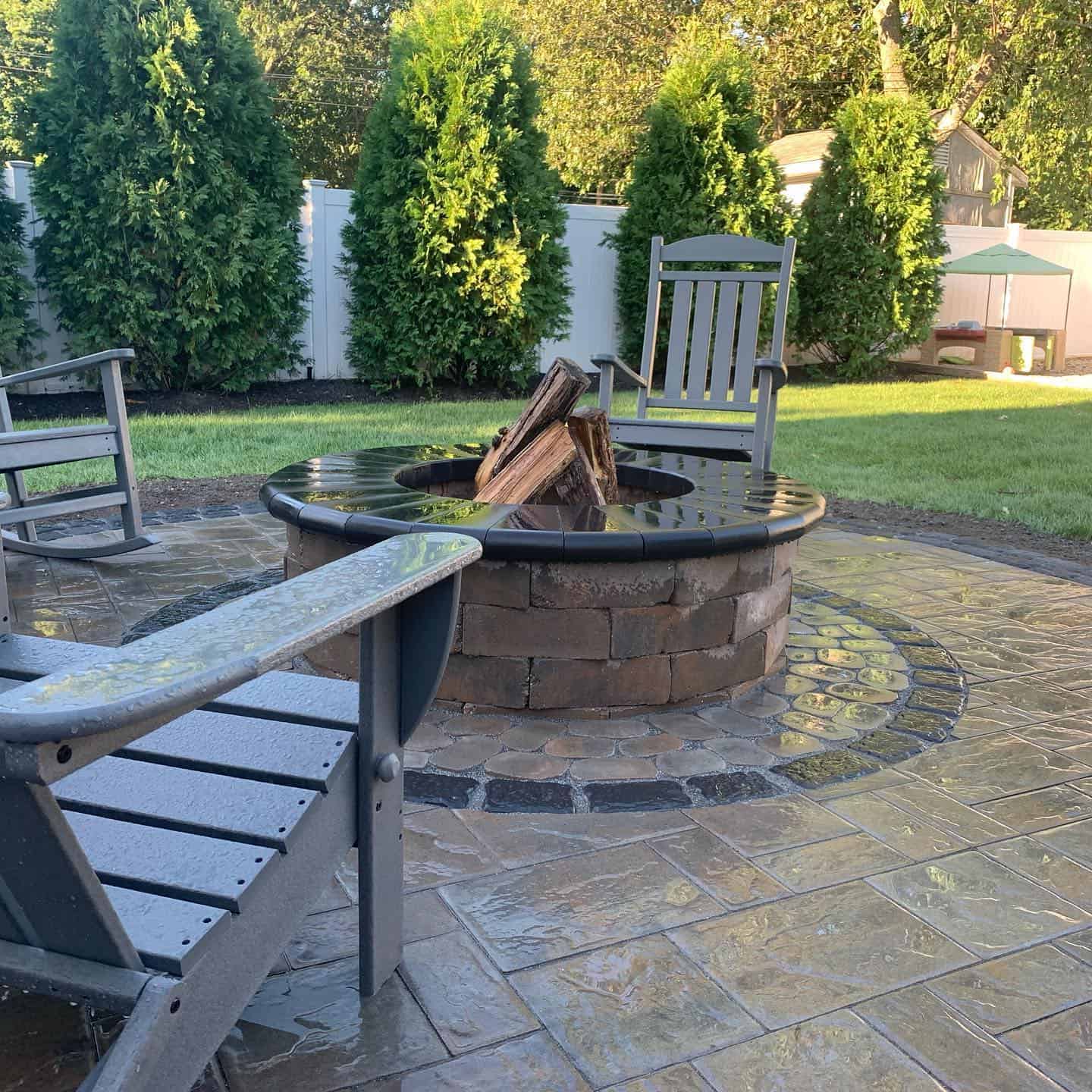
Modern fire pits and fire tables take the concept to new heights. These features offer warmth, ambiance, and comfort on chilly evenings, becoming a focal point for social gatherings. With various styles and materials to choose from, such as natural stone, concrete, or metal, there is a fire feature to perfectly complement your outdoor space.
Consider your Long Island property’s specific conditions when planning. Coastal moisture, seasonal temperature swings, and sandy soil all influence material selection and placement. Professional installation ensures your fire pit handles these challenges while providing decades of reliable performance. We specialize in creating fire features that work specifically with Suffolk County’s environmental conditions, from proper drainage solutions to compliance with local regulations.
Article details:
Share:
Continue learning: