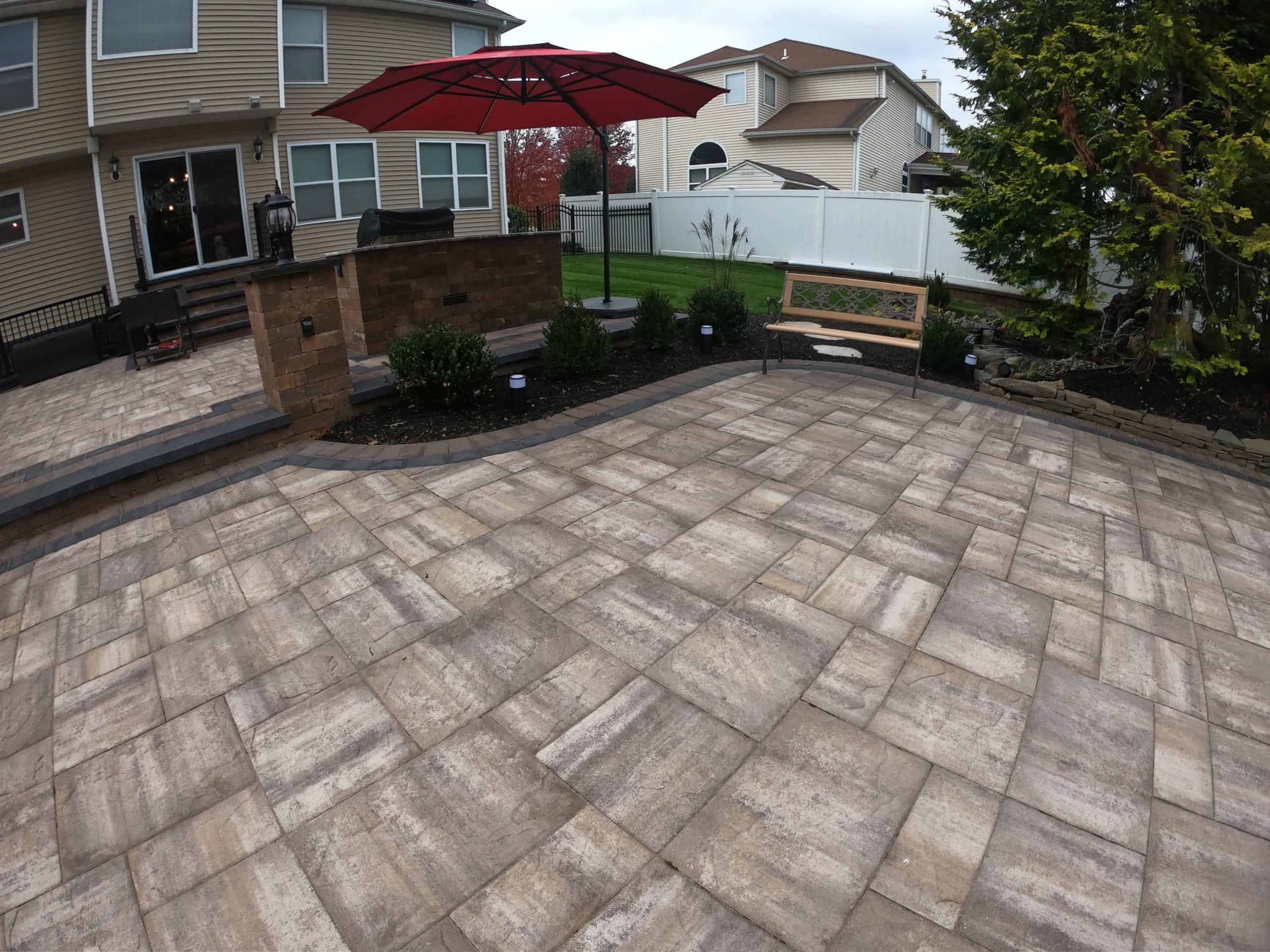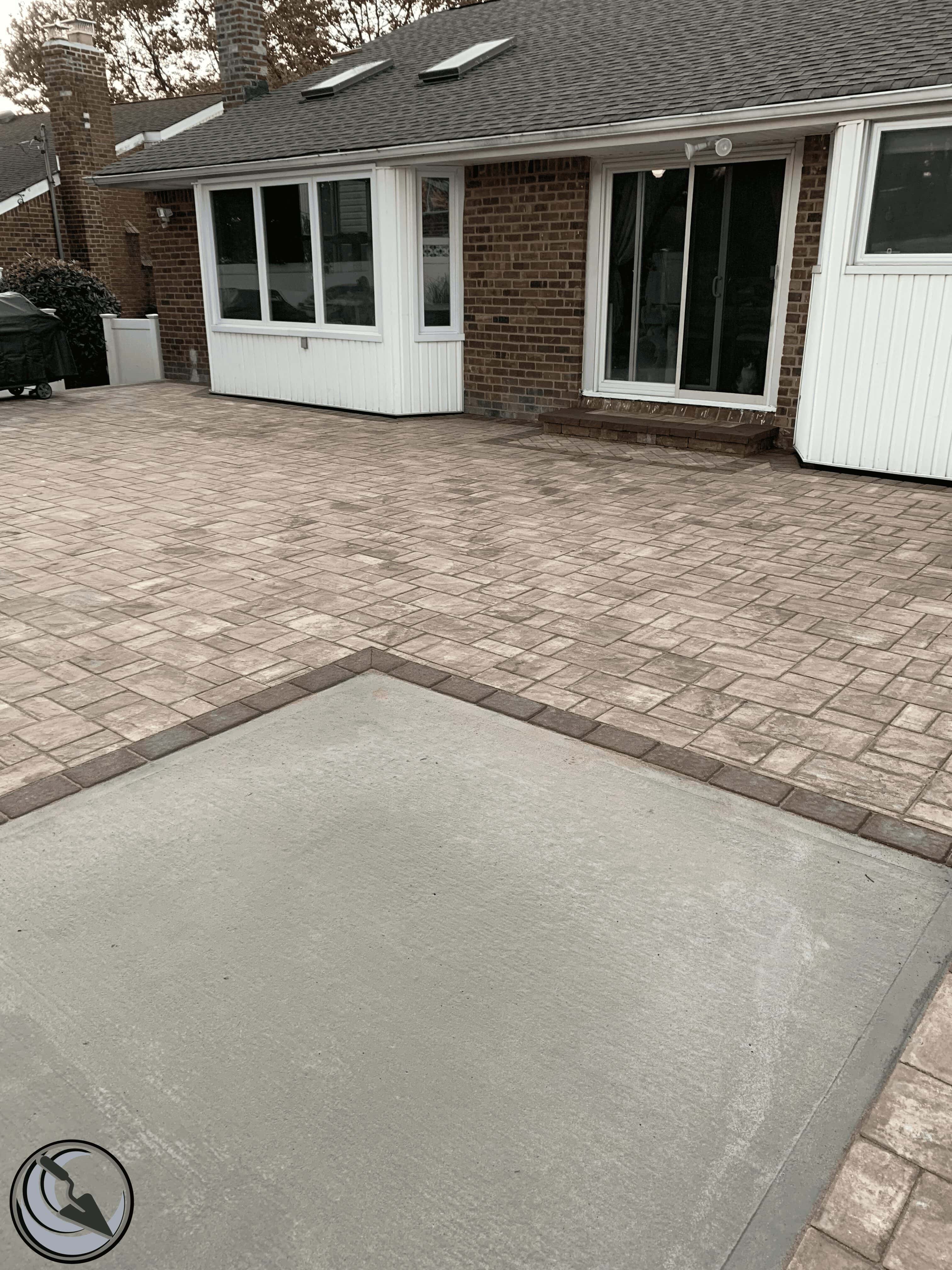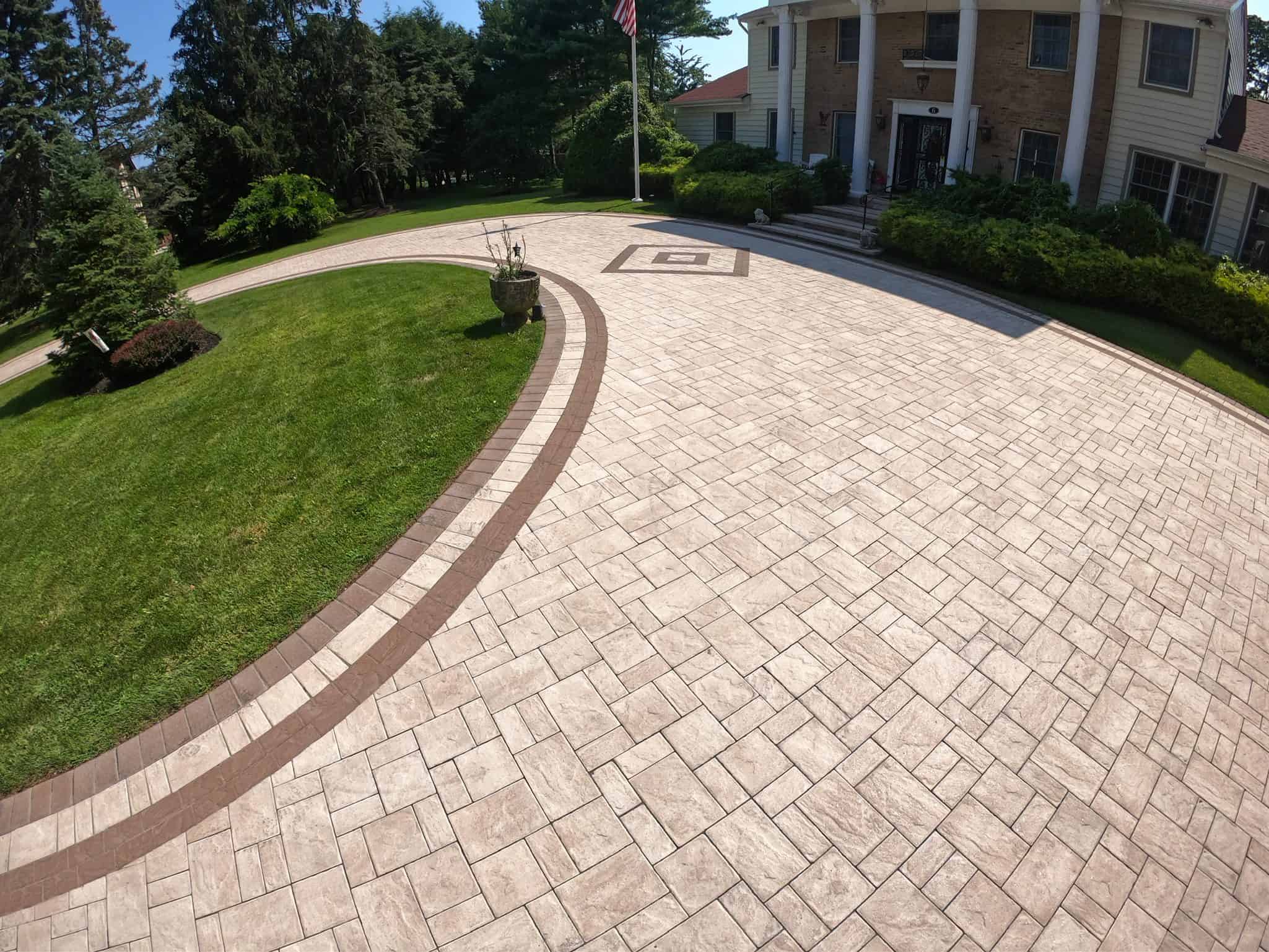
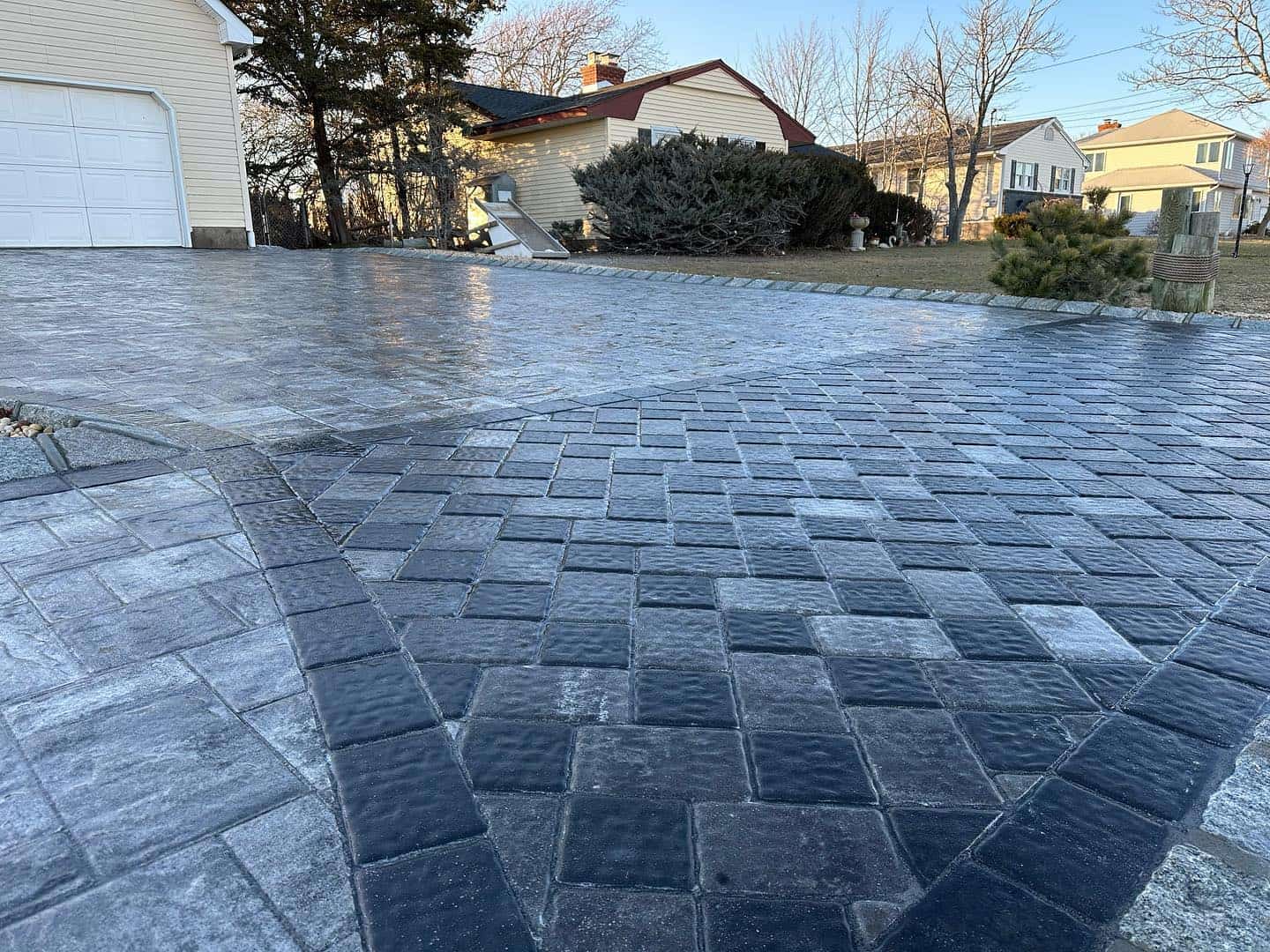
Learn which paver materials handle Long Island's brutal winters, from freeze-thaw cycles to road salt damage.
Share:
Summary:
Your driveway takes a beating every winter. Suffolk County’s freeze-thaw cycles, coastal moisture, and heavy traffic create the perfect storm for paver failure. Choose the wrong material, and you’re looking at cracks, shifting, and expensive repairs within a few years.
But here’s the thing—some paver materials actually thrive in these conditions. The key is knowing which ones can handle the punishment and understanding why proper installation matters more than the material itself. A professionally executed paver patio installation follows the same principles that ensure long-lasting driveways in harsh Long Island winters.
Let’s break down what really works when Long Island winter hits your driveway.
The harsh freeze-thaw cycles here make quality installation critical for longevity, but most contractors skip the foundation work that prevents problems. The freeze and thaw cycle starts as water seeps into small cracks in the pavement. When temperatures drop, the water freezes and expands, exerting as much as 25,000 psi of pressure.
That’s just the beginning. Nassau and Suffolk County face a relentless assault from road salt and freeze-thaw cycles every winter. Salt naturally attracts additional water. This salty water seeps into small cracks and crevices in concrete, pavers or other porous hardscaping. The damage occurs when the water refreezes when temperatures drop below 25 degrees.
Most materials simply weren’t designed for this punishment.
Rock salt (sodium chloride) is one of the most damaging substances that will ever contact your . It accelerates the deterioration caused by winter’s freeze-thaw cycles and shortens the lifespan of your concrete pavements. The damage goes deeper than surface staining.
Calcium hydroxide in concrete reacts with the calcium chloride in salt, forming calcium oxychloride (CAOXY). When it forms inside concrete, the crystals expand, causing damaging internal cracks and ultimately crumbling and surface flaking called spalling. This chemical reaction is permanent and progressive.
Even worse, salt is “hydroscopic,” meaning that it attracts water to itself. Rock-salt infused concrete can hold up to 10% extra water in it, which is that much more potentially destructive pressure. Every freeze-thaw cycle compounds the damage.
Standard concrete pavers face the same issues. Calcium chloride is safer for lawns and plants, but will damage hardscaping such as concrete patios, pavers and walkways. Magnesium chloride is very destructive to concrete and pavers. The problem isn’t just the salt type—it’s the material’s vulnerability to chemical attack.
The solution isn’t avoiding salt entirely. Salt spray from passing cars and snow plows can travel up to 150 feet, so even careful homeowners deal with salt exposure. You need materials that can handle it.
Living near the coast adds another layer of complexity. Salt air exposure in coastal environments creates a perfect storm of corrosive conditions. Salt air is a combination of moisture and tiny salt particles carried inland by ocean breezes. Salt particles are naturally corrosive. When they settle on surfaces, they attract moisture and create an environment that speeds up rust and deterioration.
This isn’t just about metal surfaces. This process significantly impacts porous materials like concrete pavers, brick, and natural stone. The constant moisture exposure means your pavers never fully dry out, creating ideal conditions for freeze damage.
Cold Spring Harbor’s unique location on Long Island’s North Shore creates particularly challenging conditions for outdoor hardscapes. The salt air, the winter freeze cycles, the summer heat – it all takes a toll on all types of paving materials. Similar conditions exist throughout Suffolk County’s coastal areas.
Most homeowners don’t realize their pavers are fighting a two-front war: direct salt application from winter maintenance and constant salt air exposure. In Suffolk and Nassau County, where salt is often used to combat winter weather, paver sealing is especially important to protect pavers from damage. But sealing only works if you start with the right material.
The key is choosing materials that resist both chemical attack and moisture penetration. Standard concrete pavers, even when sealed, struggle with this dual assault. You need materials engineered for coastal conditions.
Not all paver materials are created equal. As far as which materials (natural stone, pavers, or concrete) stand up best to the cold weather, it goes in the same order: Natural stone will stand up best, followed by pavers, and lastly by concrete. Slate, travertine, porcelain and terracotta pavers are especially effective at withstanding frigid weather.
The performance gap is significant. One of the significant advantages of pavers is their ability to withstand Long Island’s freeze-thaw cycles without cracking. Additionally, they are easy to replace if one becomes damaged. But material choice determines whether you’re replacing individual pavers occasionally or dealing with widespread failure.
Here’s what actually works when Suffolk County winter hits your driveway.
Stone pavers can withstand various weather conditions, including extreme heat and cold. They resist fading and require little maintenance compared to other materials. But not all natural stone performs equally in our climate.
Bluestone’s density provides excellent durability and resistance to harsh weather, while its textured surface helps prevent slips, making it ideal for outdoor areas. Often sourced from the Catskills and northeastern Pennsylvania, it is especially favored in the Long Island, Hamptons, and New York areas for its traditional charm. The local sourcing means it’s proven in similar climate conditions.
Natural stone pavers, like granite or limestone, hold up well in both hot and cold climates. They can take the heat and the cold without breaking down. Granite offers exceptional strength for high-traffic driveways, while limestone provides natural slip resistance.
The secret is in the structure. The natural clay composition of quality brick pavers actually becomes more durable when exposed to freeze-thaw cycles, unlike manufactured alternatives that can break down. Natural stone follows similar principles—the material structure actually benefits from thermal cycling rather than degrading.
Cost is the main drawback. Natural stone pavers are more expensive than brick and concrete due to the cost of quarrying and transportation. But when you factor in replacement costs and the headaches of repeated repairs, the math often works in stone’s favor for Suffolk County conditions.
Porcelain pavers are man-made ceramic tiles that undergo extreme pressure and high temperatures at the moment of their fabrication. This creates an incredibly resistant material. What’s even more interesting is that porcelain pavers are completely non-porous. That means they don’t absorb any type of fluid and are especially resistant to freeze-thaw cycles.
This non-porous nature solves the fundamental problem that destroys other materials. They are inherently strong, durable, and impervious which means water cannot pass through them. While materials made of porcelain, in general, are shiny and slippery, manufacturers have designed slip-resistant types of these pavers.
The performance advantage is clear: no water absorption means no freeze damage, no salt penetration, and no chemical attack. Porcelain is a ceramic tile that is fired at a higher temperature than regular ceramic tile. This makes it very hard and absolutely waterproof. Porcelain pavers come in many colors, and since the colors permeate the entire paver, they won’t fade.
Porcelain pavers are also way cheaper than natural stone options, costing about $7 – $9 per square foot. This puts them in the middle range for initial cost while delivering top-tier performance. For Suffolk County conditions, they offer the best balance of durability and value.
The installation requirements are similar to other pavers, but the long-term performance is superior. Porcelain pavers are renowned for their excellent durability. For a more natural approach, granite stone is also incredibly hardwearing. You get the durability of natural stone with the consistency of engineered materials.
Even the best materials fail without proper installation. Correct excavation and base work prevent settling and extend your driveway’s lifespan significantly. This is especially critical in Suffolk County, where Long Island’s ever-changing weather requires a 4-6 inch layer of gravel or crushed stone, firmly compacted, to create a level and sturdy foundation.
About 10-12 inches of soil will need to be removed, though adjustments will need to be made for the specific soil conditions of your Suffolk or Nassau County location. Most contractors cut corners here, but we follow the proven process: excavation to 8-10 inches, proper base layering, drainage planning, and edge restraint installation to reduce shifting over time.
The difference shows up within the first winter. Properly installed pavers using quality materials can handle decades of Suffolk County weather, while shortcuts lead to failure within a few years. Choose your materials wisely, but choose your contractor even more carefully.
Article details:
Share:
Continue learning: