Choosing the right fire pit material for your Long Island patio can transform your outdoor entertaining space and extend your season.
Share:

Summary:
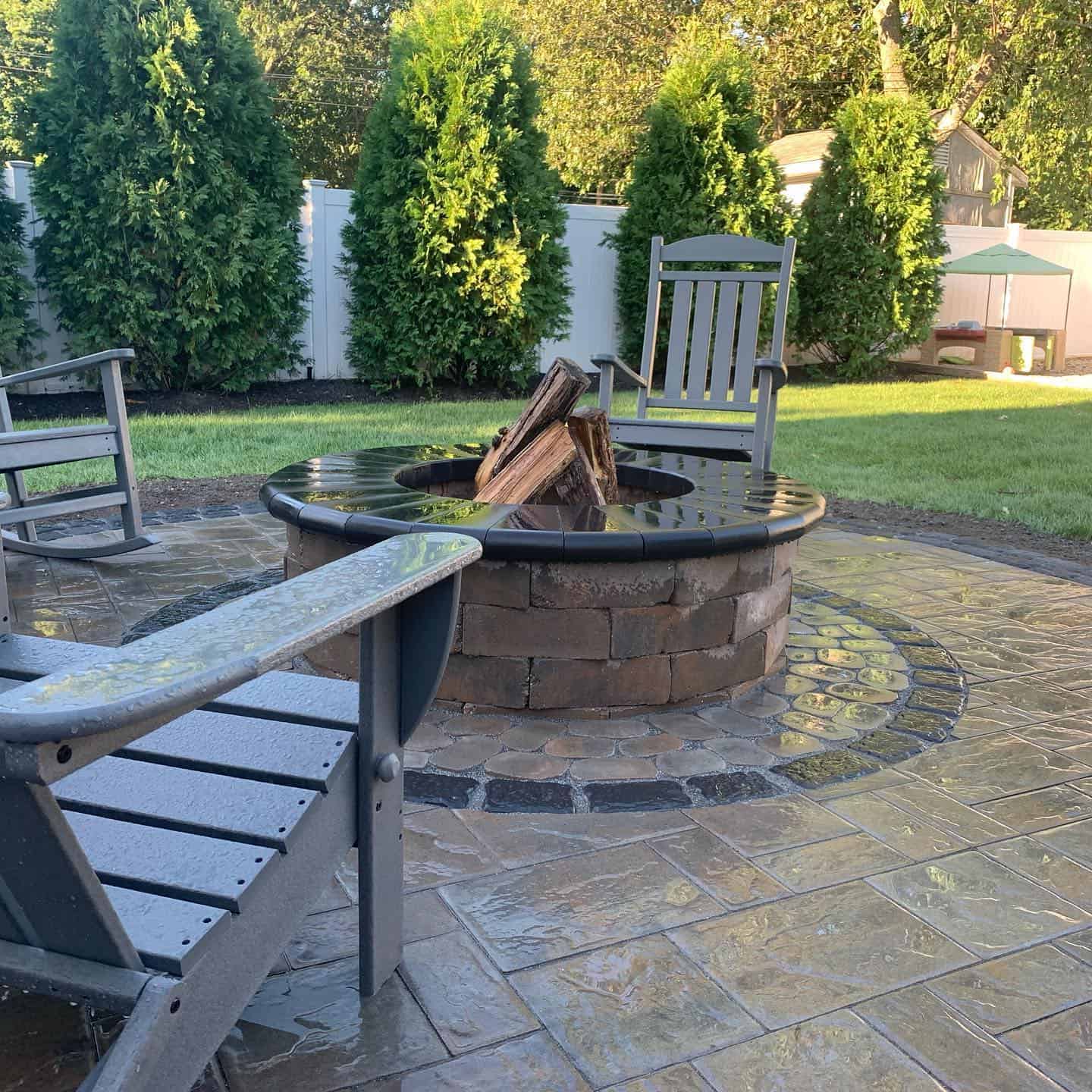
Stone fire pits bring that classic campfire feel to your backyard—the kind that makes you want to gather around with marshmallows and stories. They’re built to last, especially when properly installed with the excavation and drainage techniques that Long Island’s sandy soil and coastal conditions demand.
Natural stone options like fieldstone or bluestone complement the architectural styles you see throughout Greenlawn, Huntington, and Ridge. They age beautifully, developing character over time rather than looking worn out. The heat retention is excellent too, keeping your space warm long after the flames die down.

Before you fall in love with the idea of a crackling wood fire, you need to understand Long Island’s fire regulations. The rules are stricter than many homeowners realize, and they vary by municipality.
In many Long Island areas, wood-burning fire pits must be positioned at least 10 feet from any combustible materials—that includes your house, deck, fence, or even outdoor furniture. Some neighborhoods have additional restrictions during dry seasons or high wind conditions. You’ll also need to check with your local building department about permit requirements, especially if you’re planning a permanent stone installation.
The maintenance factor is significant with wood-burning stone pits. You’re dealing with ash cleanup, spark control, and the ongoing cost of quality firewood. But there’s something undeniably satisfying about the authentic experience—the sound, the smell, the ritual of building and tending a real fire.
Safety equipment becomes essential. Keep a garden hose or fire extinguisher nearby, and never leave the fire unattended. The stone itself needs to be heat-resistant; regular decorative stones can crack or even explode when heated, which is why professional installation matters.
Before you fall in love with the idea of a crackling wood fire, you need to understand Long Island’s fire regulations. The rules are stricter than many homeowners realize, and they vary by municipality.
In many Long Island areas, wood-burning fire pits must be positioned at least 10 feet from any combustible materials—that includes your house, deck, fence, or even outdoor furniture. Some neighborhoods have additional restrictions during dry seasons or high wind conditions. You’ll also need to check with your local building department about permit requirements, especially if you’re planning a permanent stone installation.
The maintenance factor is significant with wood-burning stone pits. You’re dealing with ash cleanup, spark control, and the ongoing cost of quality firewood. But there’s something undeniably satisfying about the authentic experience—the sound, the smell, the ritual of building and tending a real fire.
Safety equipment becomes essential. Keep a garden hose or fire extinguisher nearby, and never leave the fire unattended. The stone itself needs to be heat-resistant; regular decorative stones can crack or even explode when heated, which is why professional installation matters.
Fire glass transforms gas fire pits into something that looks almost magical—flames dancing through jewel-like pieces that reflect and amplify the light. It’s tempered glass specifically designed to withstand high temperatures without melting, cracking, or producing toxic fumes.
The aesthetic appeal is undeniable, especially for contemporary homes or anyone wanting to create a more upscale outdoor entertaining space. Fire glass comes in dozens of colors and finishes, from subtle clear options to bold blues and coppers that make a statement even when the fire isn’t lit.
The choice between fire glass and lava rock often comes down to your priorities: appearance versus heat retention, maintenance versus cost.
Fire glass wins on looks and cleanliness. It doesn’t absorb odors, doesn’t collect soot, and maintains its appearance year after year. A simple rinse with water is usually enough to keep it sparkling. It also provides better flame distribution, creating more even heat across the fire pit surface.
Lava rock, on the other hand, excels at heat retention. The porous volcanic material absorbs heat during operation and continues radiating warmth long after you turn off the gas. This makes it ideal for extending those shoulder-season gatherings when the evening air gets chilly.
Cost-wise, lava rock is significantly more affordable, especially if you’re filling a large fire pit. Fire glass can cost three to four times as much, but many homeowners find the visual impact worth the investment. You can also combine them—using lava rock as a base layer with fire glass on top to get some of the benefits of both while managing costs.
Maintenance requirements differ significantly. Lava rock can trap dust and debris over time, requiring occasional cleaning or replacement of individual pieces. It can also break down gradually, creating dust that needs to be cleared from your burner system. Fire glass stays cleaner but can shift during use, occasionally needing to be redistributed for optimal flame patterns.
Long Island’s unique environmental conditions require specific installation approaches, regardless of which fire pit material you choose. The sandy soil that’s common throughout Nassau and Suffolk counties actually provides good drainage, but it also means less stable foundations without proper preparation.
Professional installation typically involves excavating 8-10 inches deep, creating a stable base with compacted gravel, and installing proper edge restraints to prevent shifting over time. This is especially important for stone fire pits, which need solid foundations to prevent cracking as the ground goes through freeze-thaw cycles.
Gas line installation requires licensed professionals and permits from your local building department. The routing needs to account for existing utilities, landscaping, and future maintenance access. Proper shutoff valves and pressure regulators are essential for both safety and optimal flame performance.
Drainage planning becomes critical because Long Island’s coastal location means dealing with occasional heavy rains and high humidity. The fire pit area needs to shed water effectively without creating pooling that could damage your installation or create safety hazards.
Consider the prevailing wind patterns on your specific property. Long Island’s coastal location means wind direction can shift frequently, affecting both flame behavior and smoke patterns. We factor this into the placement and design of your fire feature during our professional installation process.
The proximity to your house, property lines, and neighbors also influences your options. Some materials and fuel types require greater clearances than others, which might determine your choice if you’re working with limited space.
Your perfect fire pit design depends on how you actually want to use your outdoor space. If you love the authentic experience of building and tending a wood fire, stone construction with proper safety measures might be worth the extra maintenance. If convenience and clean operation are priorities, gas with stone surrounds offers the best of both worlds. And if you want to make a visual statement that impresses guests, fire glass creates an undeniably modern focal point.
The key is working with contractors who understand Long Island’s specific challenges—from soil conditions to local regulations to weather patterns. Proper installation makes the difference between a fire feature that enhances your property for decades and one that becomes a maintenance headache.
When you’re ready to move forward, we bring the local expertise and professional installation techniques that ensure your fire pit performs beautifully through every season.
Article details:
Share:
Continue learning: