Suffolk County's permit rules depend on your town, your project type, and a few thresholds most homeowners don't know about until it's too late.
Share:
Summary:
If you’re planning a patio, retaining wall, outdoor kitchen, or new driveway in Suffolk County, the permit question is probably somewhere on your list — right between “how much will this cost?” and “how long will it take?” The honest answer is that it depends, and not in a frustrating, evasive way. It genuinely depends on your town, your project, and a few specific thresholds that vary more than most people expect. Suffolk County isn’t one jurisdiction — it’s ten. Each town runs its own building department and sets its own rules. Here’s what you actually need to know before breaking ground.
Most homeowners assume there’s a single permit office for Suffolk County — one set of rules, one application, one answer. There isn’t. Suffolk County is made up of ten separate towns: Babylon, Brookhaven, Huntington, Islip, Riverhead, Shelter Island, Smithtown, Southampton, Southold, and East Hampton. Each one runs its own Building Department and enforces its own permit thresholds. The state sets a floor through the New York State Building Code, but towns can — and do — go further.
What this means in practice is that a project that’s completely exempt in one town might require a full building permit with engineering drawings in the next. That’s not a bureaucratic quirk — it’s the reality of doing hardscape work in Suffolk County, and it’s why the advice you get from a neighbor two towns over might not apply to your property at all.
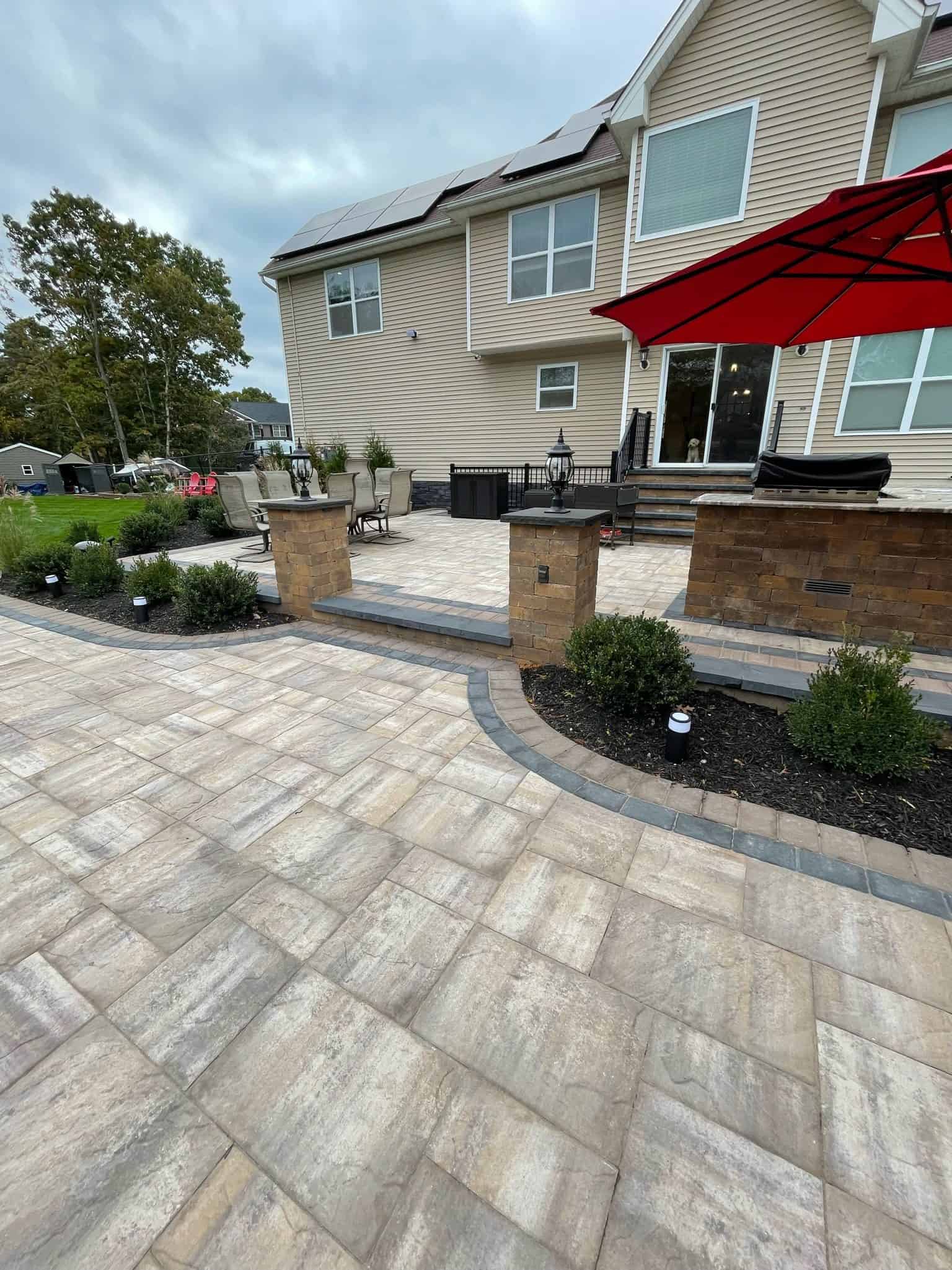
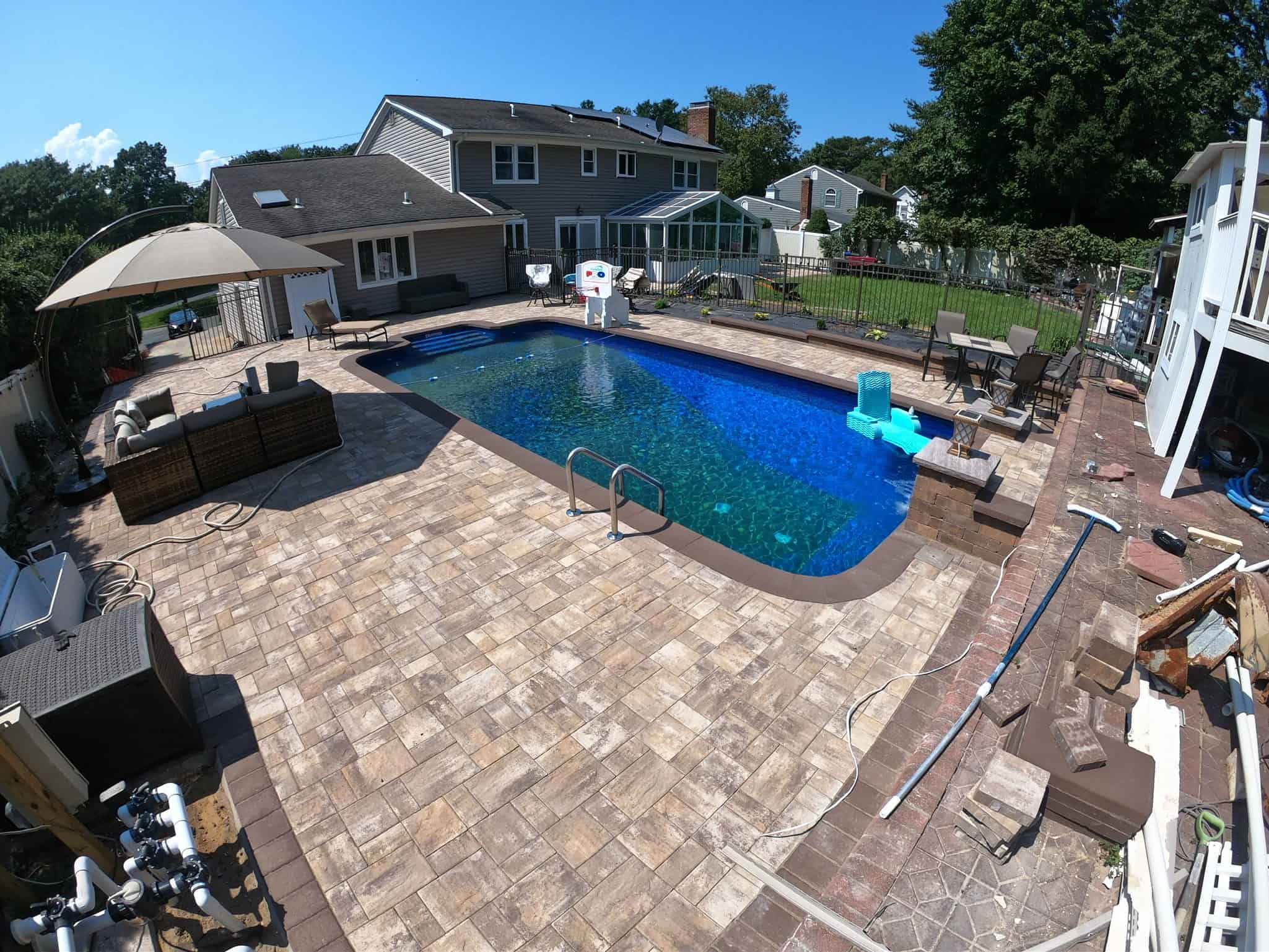
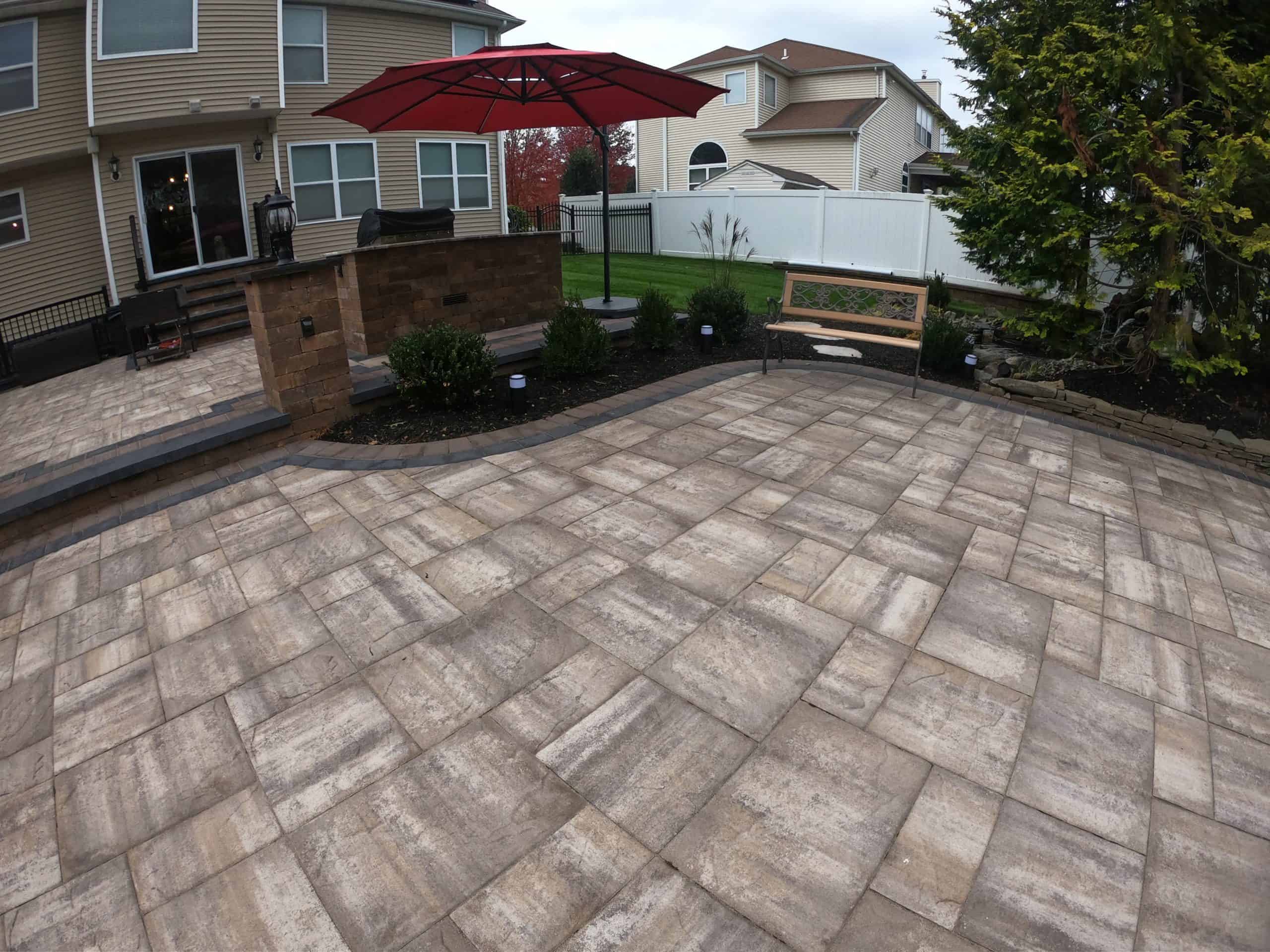
This is the question we hear most often, and the answer depends on where you live and what you’re building. In the Town of Brookhaven — the largest town in Suffolk County by both land area and population — patios and walkways that sit no more than eight inches above grade are generally exempt from permit requirements. That covers most standard ground-level paver patios, which is good news for homeowners in communities like Medford, Selden, and Holbrook.
But that exemption has real limits. The moment you add a pergola, a covered roof structure, a built-in outdoor kitchen, or a fire feature to that patio, you’re looking at a permit requirement in Brookhaven — even if the patio base itself would have been exempt on its own. Fixed outdoor BBQs, gazebos, and fire pits all require permits there.
The Town of Islip follows a similar logic for retaining walls: no permit is required for walls 18 inches high or less, but an engineering site plan determination is still required even for those shorter walls. That’s a meaningful distinction. “No permit” doesn’t always mean “no paperwork.”
Lot coverage is another factor that catches homeowners off guard. Most residential zones in Suffolk County allow somewhere between 25 and 40 percent lot coverage. A new patio — even an uncovered one at grade — adds to that number. If your property is already close to the limit, a new hardscape installation could push you over, which triggers a different kind of review altogether. One option worth knowing about: permeable pavers can reduce or eliminate the impervious surface impact of a patio, which sometimes helps properties stay within their coverage threshold.
The takeaway here isn’t that permits are unavoidable for every patio. It’s that the answer isn’t simple, and the wrong assumption can cost you significantly more to fix than the permit would have cost to pull in the first place.
Retaining walls are where the permit question gets serious, fast. Most towns in Suffolk County require a building permit for walls that exceed two to three feet of exposed height, but the specific threshold varies. Smithtown requires a permit for retaining walls over 30 inches. Islip’s threshold is 18 inches before engineering review kicks in. Huntington goes a step further — their retaining wall permit application specifically requires a copy of your contractor’s Suffolk County Home Improvement License photo ID.
For walls over four feet, most towns require stamped engineering drawings from a licensed professional engineer. On Long Island, that typically costs between $1,500 and $4,000 depending on the wall’s complexity. It’s not a small add-on, but it’s also not optional — and it’s the kind of thing an experienced contractor will flag upfront rather than let you discover mid-project.
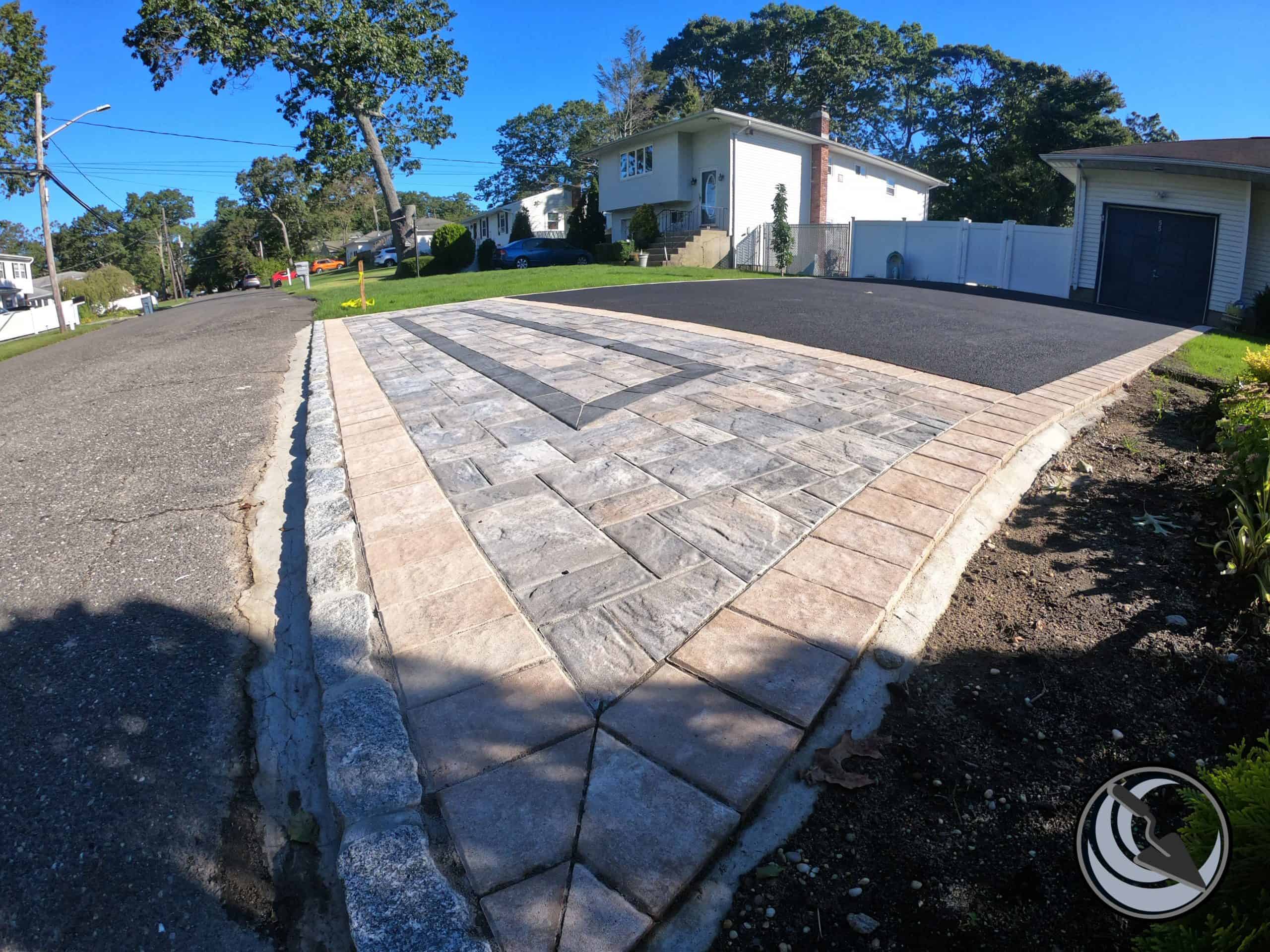
Driveways are another category homeowners often assume are permit-free. In Suffolk County, repaving or replacing a driveway or curb requires a homeowner building permit. It doesn’t matter whether you’re going with asphalt or pavers — the permit requirement applies to the replacement itself.
Outdoor kitchens and fire features are in a category of their own. A gas connection for an outdoor kitchen requires a separate permit and inspection regardless of the town. Fire pits and built-in fire features follow similar rules. Water features that involve plumbing connections also typically require permits. These aren’t edge cases — they’re standard components of outdoor living spaces that homeowners frequently plan without realizing the permit picture is more involved than a basic patio.
The plan review fee for Suffolk County is $300. That’s the baseline cost for submitting plans and specifications for review. Depending on the project scope and the town, additional fees may apply — but $300 is the figure to know for initial planning purposes.
Here’s something most permit guides don’t mention: the contractor you hire is directly tied to your permit outcome. In Suffolk County, home improvement work requires a licensed Home Improvement Contractor — a credential issued by Suffolk County Consumer Affairs after a written exam, proof of insurance, and workers’ compensation documentation. It’s not a formality. It’s the legal foundation for any residential hardscape project valued at $500 or more.
New York State doesn’t have a single statewide contractor license. Suffolk County runs its own licensing system, and the rules in Huntington or Southampton can differ from what applies in Nassau County. Working with a contractor who holds licenses in the specific jurisdictions where your project gets permitted isn’t just a nice-to-have — in some towns, it’s a requirement before the permit application even gets reviewed.
Suffolk County’s home improvement law requires that a contractor’s license number appear in all advertising. That’s not just a rule for the contractor — it’s a tool for you. If you can’t find a license number on a contractor’s website, their estimate, or their contract, that’s a red flag worth taking seriously.
Under New York General Business Law Article 36-A, any home improvement contract at $500 or more must be in writing and must include the contractor’s HIC license number, a description of the work, start and completion dates, and a payment schedule. If a contractor hands you a verbal agreement or a one-page quote with none of that information, you have no legal footing if something goes wrong.
There’s also a practical financial protection tied to this. Suffolk County maintains a Licensed Home Improvement Contractor Restitution Fund. If a licensed contractor fails to complete work or causes damage, homeowners have a legal avenue for restitution through the county. Homeowners who hire unlicensed contractors are not eligible for that fund. It’s a meaningful distinction that most people only learn about after they’ve already made the wrong choice.
We hold licenses in four separate jurisdictions: Suffolk County (#HI-62761), Nassau County (#167041), Southampton (#L005914), and East Hampton (#9808). Those numbers are verifiable through the respective Consumer Affairs offices. In a county with ten different building departments, holding licenses across multiple townships means we know the specific permit requirements in your town — not a generic answer that may or may not apply to your property.
If a building department discovers unpermitted hardscape construction, they issue a stop-work order. Everything stops until the situation is resolved — which typically means paying retroactive permit fees, often at a penalty rate, and scheduling inspections after the work is already done. In cases where the construction doesn’t meet code, you may be required to partially or fully demolish and rebuild the structure.
The longer-term consequence is what catches most homeowners off guard. Unpermitted work shows up in title searches. When you go to sell your home, a buyer’s attorney or lender will identify unpermitted structures. At that point, you’re looking at one of three outcomes: retroactive permitting (slow and expensive), a price reduction to compensate the buyer, or removal of the structure entirely. In Suffolk County’s active real estate market — where East End properties especially carry significant value — that’s a risk that can cost far more than the permit ever would have.
A contractor who tells you not to worry about permits is transferring that risk to you. They move on to the next job. You’re the one left holding the liability when the property changes hands.
The permit process also serves a function most homeowners don’t think about: it’s a quality check. Inspectors review base preparation and drainage before pavers go down. On Long Island, where sandy soil, coastal moisture, and freeze-thaw cycles put real stress on hardscape installations, that inspection catches problems that are invisible once the work is finished. A properly permitted project is one where the base depth, drainage planning, and edge restraint installation have been verified by someone other than the contractor who installed them. That’s accountability built into the process.
The permit question doesn’t have a single answer — it has ten, one for each town in Suffolk County. What matters is knowing which rules apply to your property, your project type, and your specific site conditions before any work begins. Getting that wrong costs more to fix than getting it right from the start.
If you’re planning a patio, retaining wall, driveway, outdoor kitchen, or fire feature anywhere in Suffolk County, the best first step is an in-person conversation with someone who knows the local permit landscape — not just in general terms, but in your specific town. We work across all of Long Island and hold licenses in Suffolk County, Nassau County, Southampton, and East Hampton. Every estimate starts with the owner on your property, reviewing your site conditions and walking through exactly what your project will require. Reach out to schedule yours.
Article details:
Share:
Continue learning: