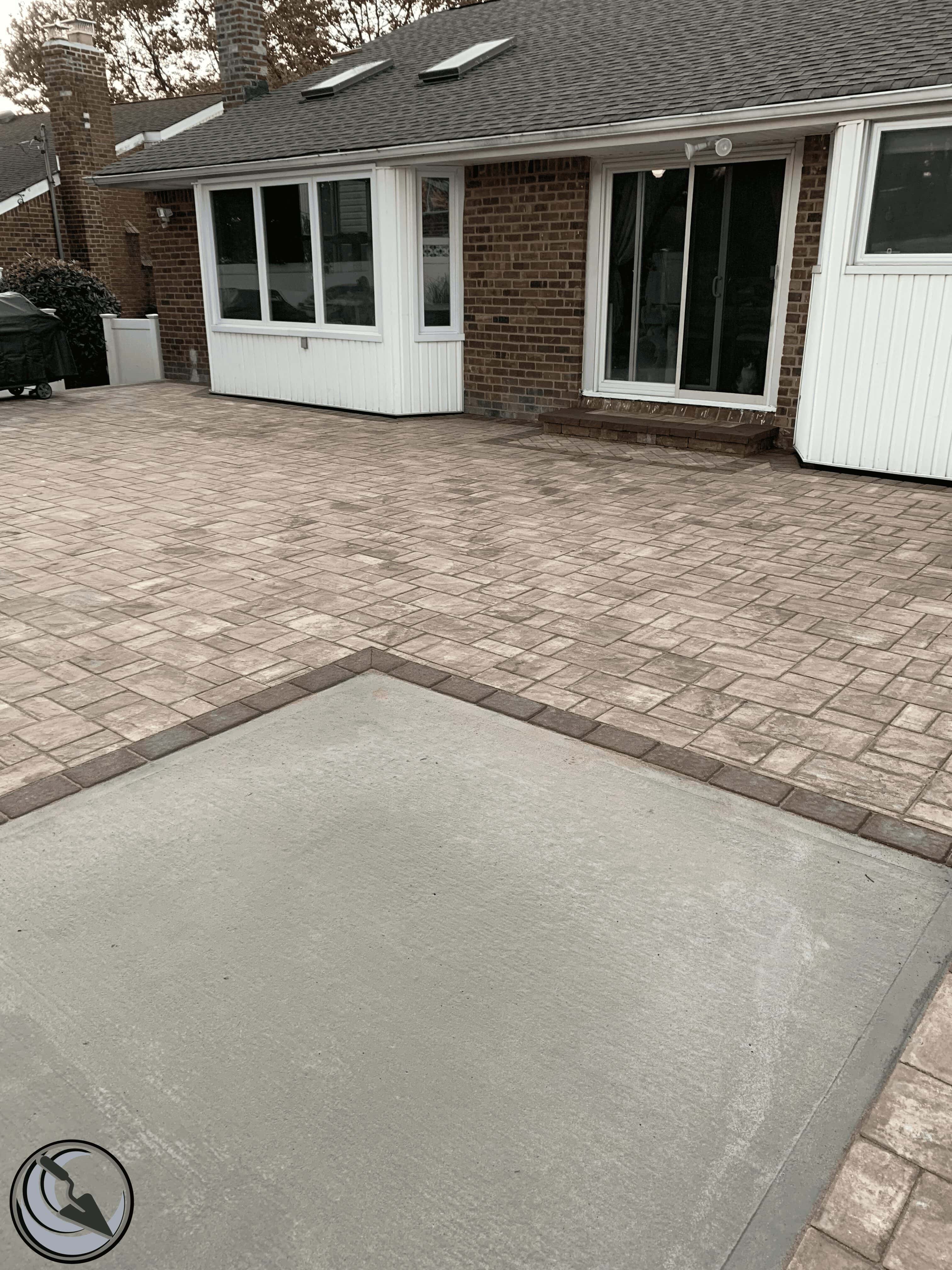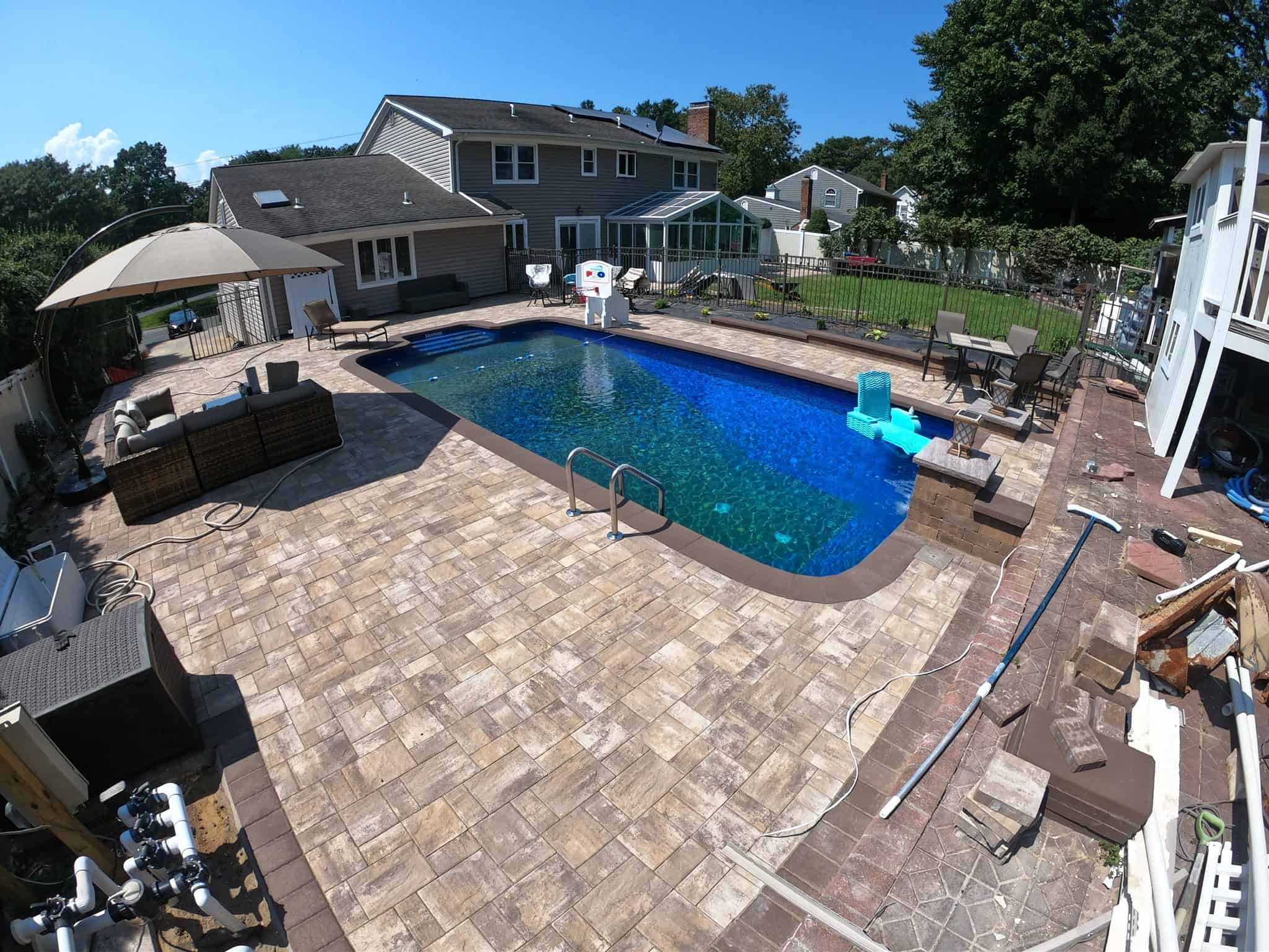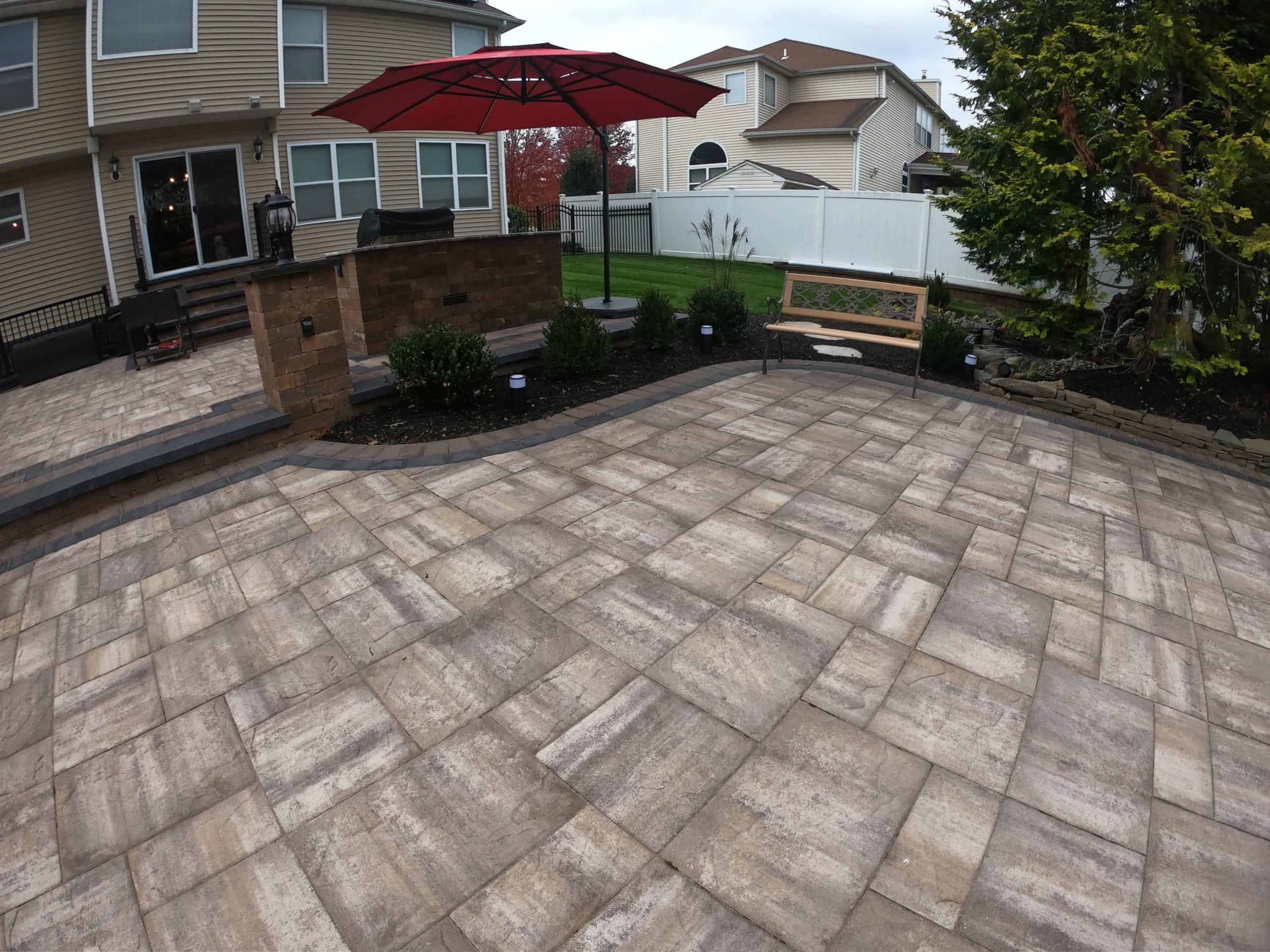
Discover how professional stone walkway design transforms your front entrance while addressing Long Island's unique weather challenges and drainage requirements.
Share:

Summary:
Concrete walkways crack. It’s not a matter of if, but when, especially here in Suffolk County where freeze-thaw cycles hit hard every winter.
Stone walkways handle our climate differently. Individual pavers flex with ground movement instead of fighting it. When moisture gets underneath, stone systems drain it away rather than letting it pool and freeze.
The difference shows up in your daily life too. No more worrying about guests tripping on uneven concrete slabs or dealing with that embarrassing front entrance that makes your whole property look dated.
Most walkway failures happen below ground, not above it. That’s why every Stone Escapes project starts with excavation to 8-10 inches—deeper than most contractors bother with.
We’re dealing with Long Island’s sandy soil conditions, which means proper base layering makes the difference between a walkway that lasts decades and one that starts settling within two years. The process involves removing existing material, grading for proper pitch (typically 1.5 inches per 10 feet away from your home), and installing compacted gravel base with edge restraint systems.
This isn’t just about following manufacturer specs, though we do that religiously as certified Cambridge, Techo-Bloc, and Unilock installers. It’s about understanding that Suffolk County’s coastal moisture and drainage challenges require specific solutions. We install drainage planning from day one, not as an afterthought when problems develop.
The base preparation also addresses something most homeowners don’t consider: accessibility. Proper grading eliminates trip hazards while ensuring water flows away from your foundation. You get safety, function, and longevity built into the foundation of your project.
Most walkway failures happen below ground, not above it. That’s why every Stone Escapes project starts with excavation to 8-10 inches—deeper than most contractors bother with.
We’re dealing with Long Island’s sandy soil conditions, which means proper base layering makes the difference between a walkway that lasts decades and one that starts settling within two years. The process involves removing existing material, grading for proper pitch (typically 1.5 inches per 10 feet away from your home), and installing compacted gravel base with edge restraint systems.
This isn’t just about following manufacturer specs, though we do that religiously as certified Cambridge, Techo-Bloc, and Unilock installers. It’s about understanding that Suffolk County’s coastal moisture and drainage challenges require specific solutions. We install drainage planning from day one, not as an afterthought when problems develop.
The base preparation also addresses something most homeowners don’t consider: accessibility. Proper grading eliminates trip hazards while ensuring water flows away from your foundation. You get safety, function, and longevity built into the foundation of your project.
Your front walkway should guide visitors naturally from street to door while creating visual interest along the way. Width matters—anything less than 4 feet feels cramped, while 5-6 feet creates the sense of grandeur your front entrance deserves.
Pattern and layout choices affect both aesthetics and functionality. Herringbone patterns add visual interest and structural stability. Running bond layouts create clean lines that complement modern architecture. Border treatments frame the walkway and provide transition zones to landscaping.
Integration with existing hardscaping and architectural elements makes the difference between a walkway that looks added-on and one that feels like it was always meant to be there.
LED lighting transforms your walkway from a daytime feature into evening elegance. But placement requires planning during installation, not as an afterthought. We coordinate with electrical work to ensure lighting enhances safety and aesthetics without creating maintenance headaches.
Landscape integration happens at the design phase. Planting beds alongside walkways need proper drainage and root barriers to prevent future heaving. The walkway should complement your existing landscaping, not compete with it.
Raised planters, low retaining walls, and step transitions add dimension while solving grade changes. These elements require coordination between masonry and landscape work, which is why working with contractors who understand both trades makes sense.
Consider seasonal changes too. Your walkway will look different surrounded by spring flowers versus winter dormancy. Design choices that account for year-round appeal ensure your investment pays off every season, not just during peak growing months.
The goal is creating a cohesive entrance experience that feels intentional and welcoming. Every element should work together—walkway materials, lighting placement, landscape borders, and architectural details—to create something greater than the sum of its parts.
Stone walkways require different maintenance than concrete, but significantly less overall upkeep. Annual joint sand refreshing takes an afternoon and keeps everything locked in place. Occasional pressure washing removes organic buildup and keeps colors vibrant.
Seasonal maintenance mostly involves clearing debris from drainage areas and checking for any settling around edges. The modular nature of stone systems means individual pavers can be lifted and releveled if needed, something impossible with poured concrete.
Winter maintenance is actually easier with stone systems. Snow removal equipment doesn’t catch on smooth joints the way it does on cracked concrete. Salt and ice melt products won’t cause the spalling and deterioration you see with concrete surfaces.
Long-term performance depends on installation quality more than material choice. Properly installed stone walkways in Suffolk County regularly last 20-30 years with minimal maintenance. Compare that to concrete walkways that start showing significant cracking within 5-7 years and require replacement within 15.
The investment math works in your favor over time. Higher upfront costs get offset by lower maintenance requirements and longer service life. Plus, quality stone walkways add measurable value to your property, while deteriorated concrete walkways actually detract from home values.
Your front walkway handles more daily stress than any other hardscape feature on your property. It needs to manage Suffolk County’s challenging weather, provide safe access year-round, and enhance your home’s curb appeal for decades.
The difference between a walkway that achieves these goals and one that becomes a maintenance headache comes down to proper planning, quality materials, and expert installation. Stone systems offer the durability and flexibility that concrete simply can’t match in our climate.
When you’re ready to transform your front entrance with a walkway that works as hard as it looks good, we bring the experience and certifications to deliver results that last. We understand Long Island conditions and have the manufacturer relationships to ensure your investment performs exactly as promised.
Article details:
Share:
Continue learning: