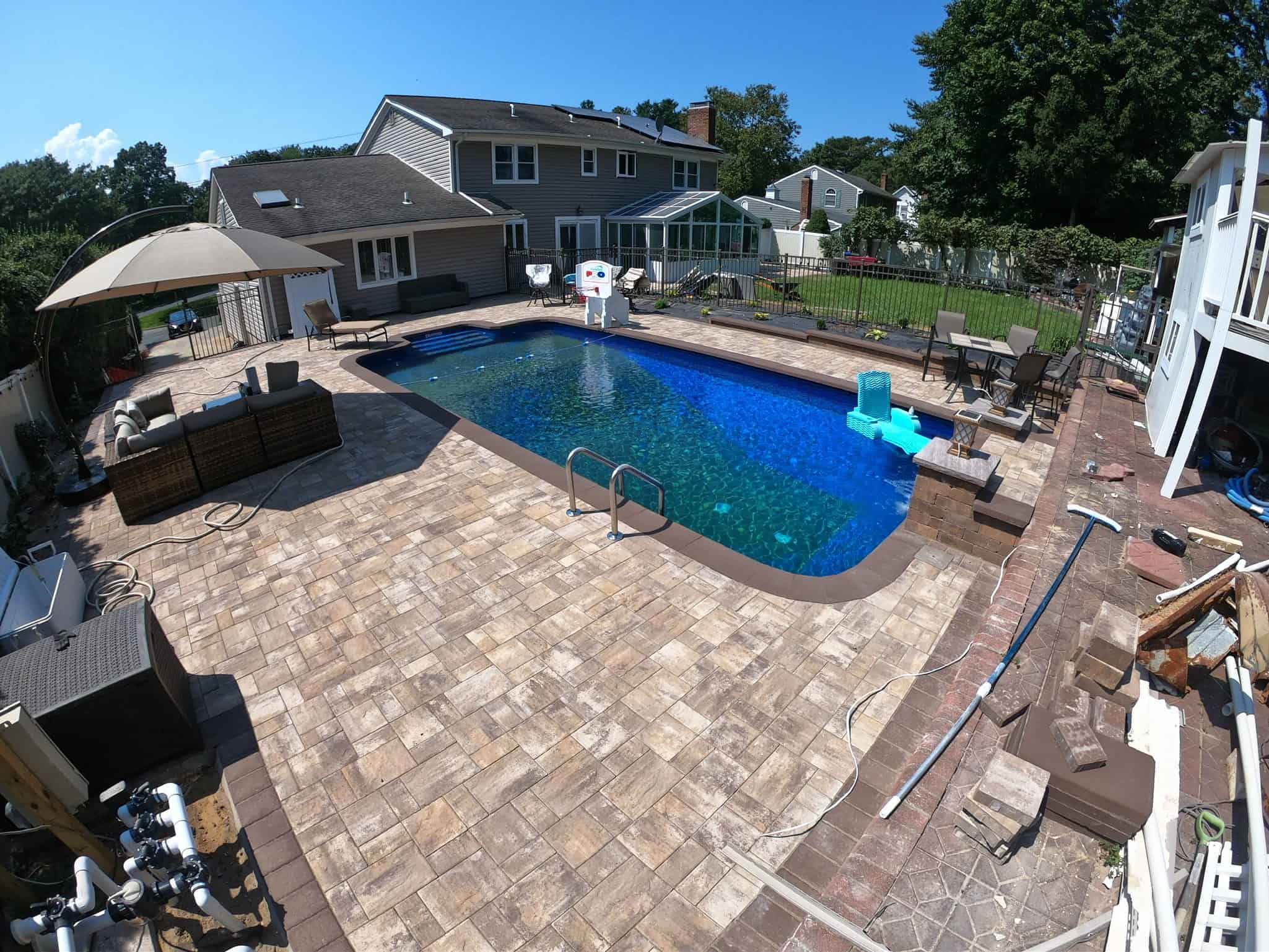
Confused by wildly different paver quotes? Here's what installation actually costs in Suffolk County — and why the numbers look nothing like what Google says.
Share:
Summary:
You searched the cost online, saw numbers that seemed reasonable, and then the quotes came in — and suddenly nothing matches. That’s not a coincidence. Paver installation pricing in Suffolk County operates in a completely different range than the national averages floating around most cost guides, and the gap isn’t explained anywhere that’s actually useful to you right now.
We put this guide together to fix that. By the end of it, you’ll know what installation realistically costs here on Long Island, what’s actually behind the price differences you’re seeing, and what questions to ask before you sign anything.
Most national cost guides put paver installation somewhere between $21 and $28 per square foot. Those numbers aren’t wrong for the rest of the country — but they don’t apply here. Professional paver installation in Suffolk County typically runs $30 to $45 per square foot all-in, and that range exists for real reasons: Long Island’s labor market, material delivery costs, permitting complexity across different municipalities, and — most importantly — the additional base preparation that Suffolk County’s soil conditions actually require.
A 200-square-foot patio and a 600-square-foot patio won’t cost the same per square foot, either. Fixed costs like equipment mobilization, delivery, and setup get spread across more area on larger jobs, so the per-square-foot rate tends to come down as the project grows. The total scope, the materials you choose, and the specific conditions of your property all move the number.
The single most common frustration we hear from homeowners in Suffolk County goes something like this: “I looked it up online and saw $15 per square foot — why is everyone quoting me $35?” It’s a fair question, and it deserves a straight answer.
The national averages you find on sites like Angi or Homewyse are calculated across the entire country, including markets where labor is cheap, soil is stable, and winters are mild. Long Island is none of those things. Suffolk County sits on glacial outwash plain — essentially sandy soil that drains well but shifts easily if a base isn’t built deep enough to hold. Add coastal moisture from the Atlantic and Great South Bay, and then layer in freeze-thaw cycles that push January and February temperatures into the low 20s, and you have an environment that punishes shallow installations fast.
A proper installation here means excavating 8 to 10 inches deep, laying 4 to 6 inches of compacted crushed concrete base, fine mason sand for leveling, and edge restraints to hold everything in place. That’s not overkill — it’s what the ground underneath your property actually demands. Contractors who build to national minimums on Long Island soil aren’t saving you money. They’re borrowing time from your patio’s future.
Labor costs on Long Island are also above the national average, and that’s reflected in every legitimate quote you receive. When a local contractor’s price looks dramatically lower than everyone else’s, the most common explanation is a shallower base — which costs less to install on day one and more to fix in year two or three.
Permitting adds another layer of complexity that most national guides ignore entirely. Different municipalities within Suffolk County have different requirements, and towns like Southampton and East Hampton have their own licensing standards on top of the county level. A contractor who isn’t licensed in your specific jurisdiction can’t legally pull a permit there — and that becomes your problem if something goes wrong.
Two quotes can say “$28 per square foot” and represent completely different scopes of work. This is where a lot of homeowners get burned — not by outright fraud, but by comparing numbers that aren’t actually measuring the same thing.
A complete paver installation quote should include excavation to proper depth, removal and disposal of the excavated material, a compacted crushed stone or crushed concrete base, bedding sand, the pavers themselves, edge restraints, and polymeric joint sand to lock everything in place. It should also include drainage planning — especially in Suffolk County, where improper drainage is one of the fastest ways to destroy an otherwise well-built patio.
When you’re reviewing quotes, ask each contractor specifically: how deep is the excavation? What is the base material and how thick will it be? Are edge restraints included? What’s the plan for drainage? A contractor who can answer those questions with specifics — not vague reassurances — is a contractor who actually knows what they’re doing. One who deflects or treats those questions as unnecessary is telling you something important.
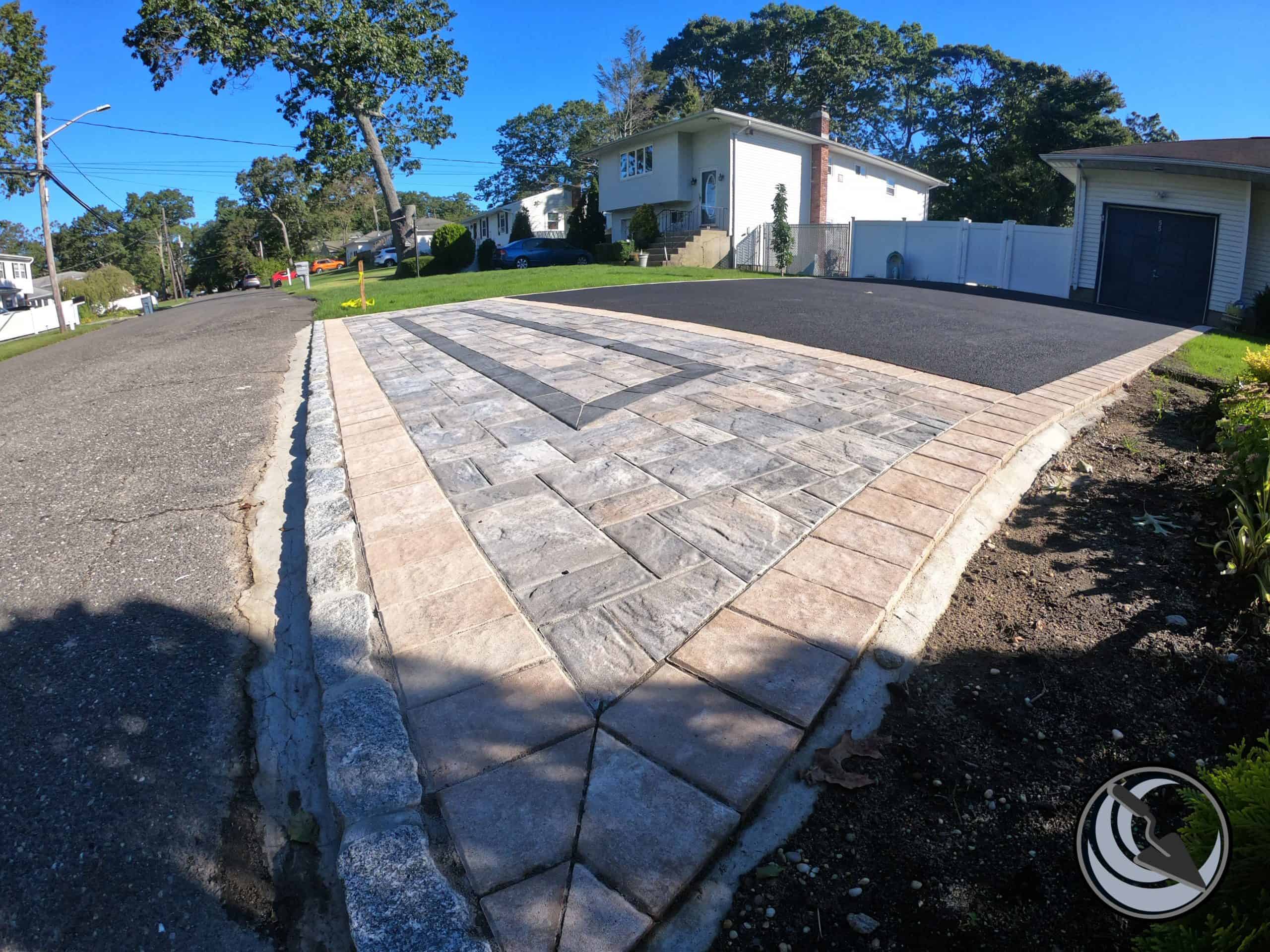
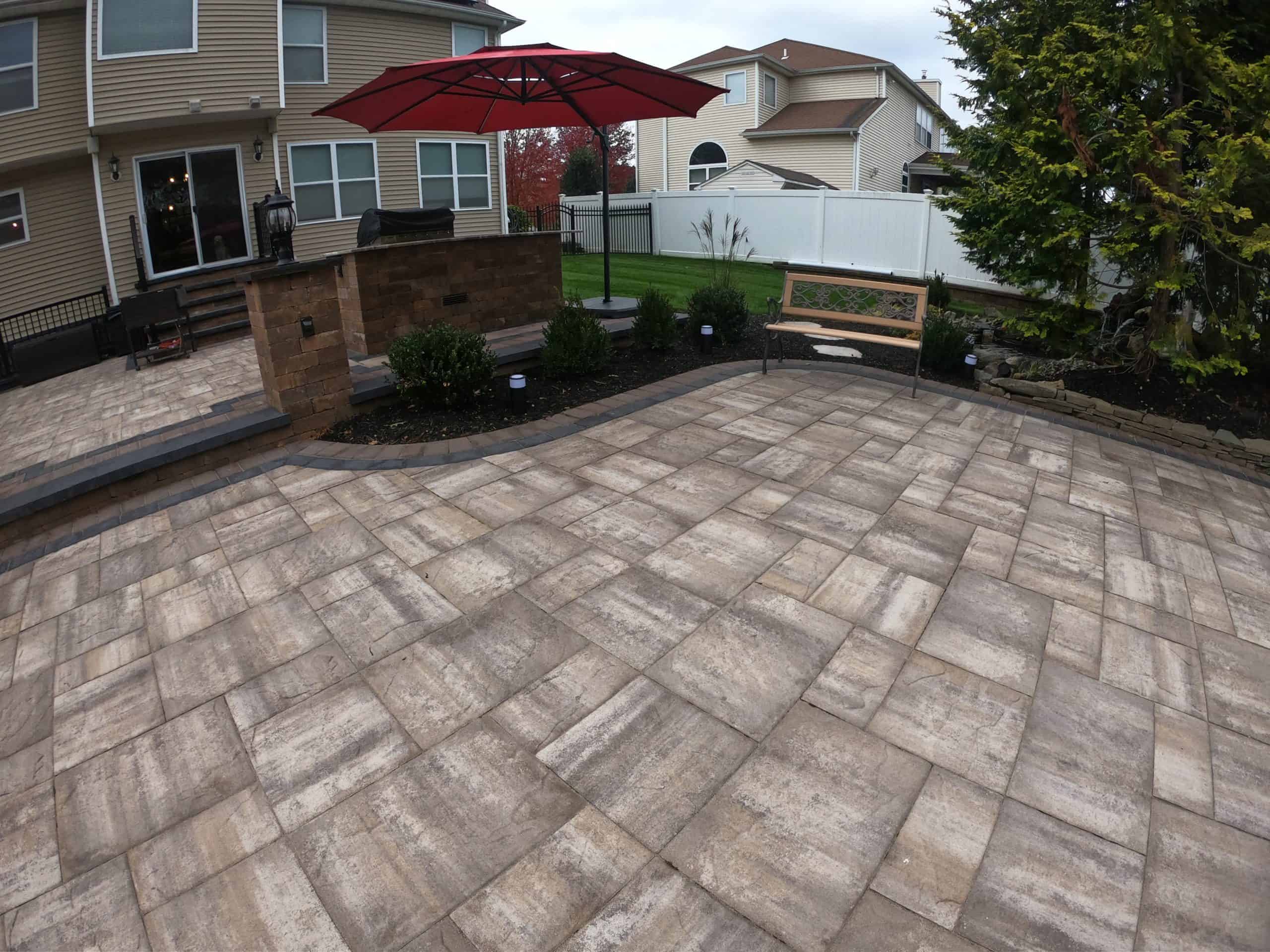
Materials also move the number significantly. Concrete pavers, natural stone, porcelain, and reclaimed materials all sit at different price points per square foot, and the right choice depends on your budget, your aesthetic, and how the space will be used. A paver driveway that needs to handle vehicle weight requires a different base specification than a backyard patio, and the quote should reflect that distinction.
We’re certified installers for Cambridge, Techo-Bloc, Unilock, Nicolock, Eldorado, and Boral — which means we work across the full range of materials and can spec the right product for what you’re actually building, not just the one brand we happen to stock.
Every estimate we do is free, done in person, and scheduled directly with Iain Traynor — the owner. Not a sales rep, not a project coordinator. The person who trained with the Local 1 Bricklayers Union in Manhattan and has been installing pavers on Long Island for over 15 years is the same person who shows up to your property, looks at your soil, understands your drainage situation, and gives you a number you can actually trust.
That matters more than it might sound. The estimate is where the real work of understanding your project begins — and the decisions made at that stage determine what you’re living with for the next 20 years.
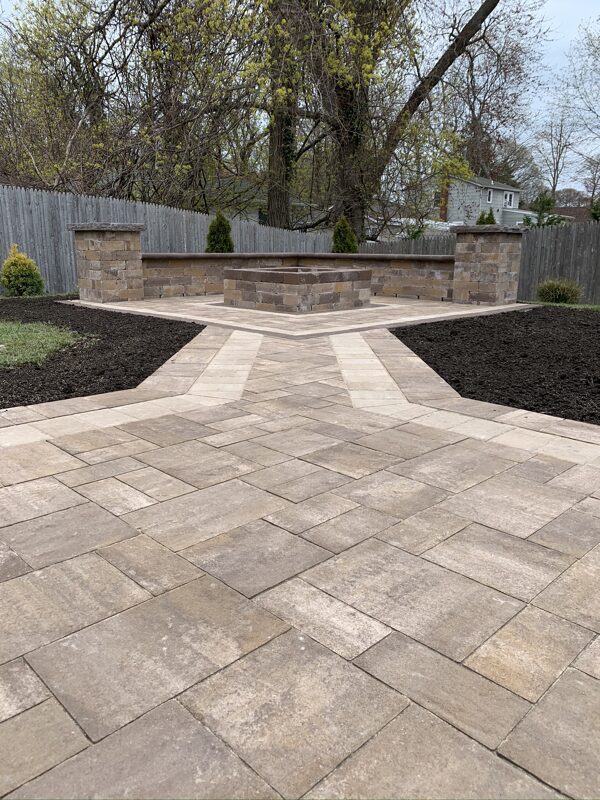
Suffolk County’s environment isn’t forgiving of shortcuts, and we design every project around that reality. The sandy soil that runs through much of the county — a legacy of Long Island’s glacial geology — drains well but offers very little natural stability for a paver base. Without deep excavation and proper compaction, that base migrates. And when it migrates, pavers heave, gaps open up, and what looked great in June looks broken by March.
Freeze-thaw cycling is the mechanism that accelerates all of this. Water infiltrates a shallow or poorly-drained base, freezes overnight, expands, and pushes the surface upward. Do that 30 or 40 times over a Long Island winter and you’ll see the results by spring. Our standard of excavating 8 to 10 inches and compacting a 4-to-6-inch crushed concrete base with gas-powered equipment isn’t a premium add-on — it’s the baseline for doing this work correctly in this specific environment.
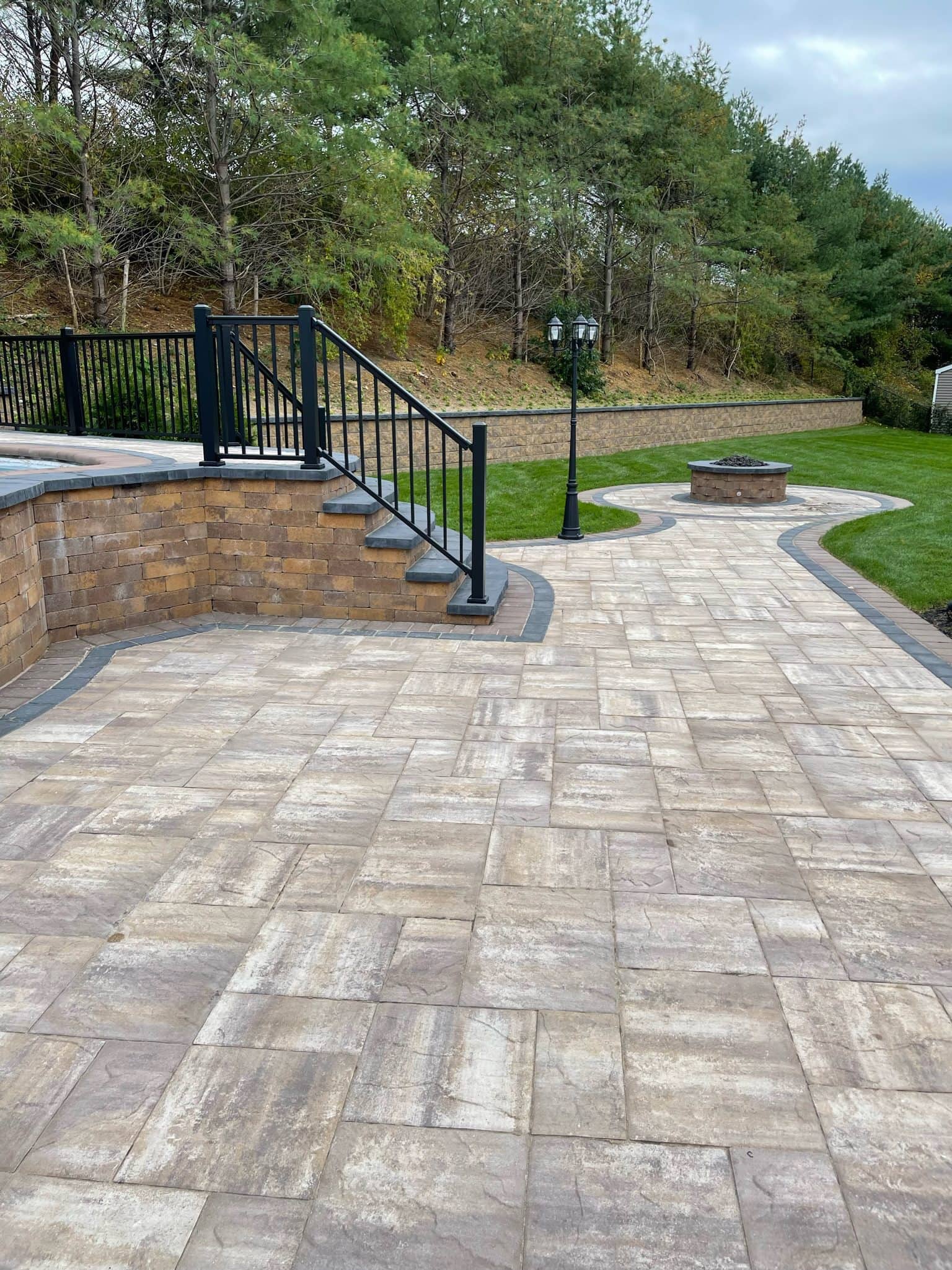
Coastal communities in eastern Suffolk County — Shoreham, the Hamptons corridor, waterfront neighborhoods along the Sound — also deal with elevated humidity and salt air that affect both material selection and joint sand longevity. We account for that at the design stage, not after the fact. Projects we’ve completed in Huntington Station, Medford, and Farmingdale have held up through multiple winters and still draw compliments from neighbors years later. That’s the standard we build to.
Drainage planning is part of every project, not an optional upgrade. On Long Island, water that has nowhere to go finds somewhere to go — usually under your base. We slope every installation away from structures and plan for drainage from the start, because fixing it after the fact means pulling everything up and starting over.
**How much does paver installation cost per square foot on Long Island?**
For professional installation in Suffolk County, the realistic range is $30 to $45 per square foot all-in. Where your project lands within that range depends on the materials you choose, the size and complexity of the installation, site conditions, and whether permits are required. Smaller projects tend to cost more per square foot because fixed costs — equipment, mobilization, delivery — are spread across less area.
**What does a 20×20 paver patio cost in Suffolk County?**
A 400-square-foot patio is a common project size. At Long Island’s professional installation rates, you’re looking at a meaningful investment that reflects proper base preparation, materials, labor, and drainage planning. Every property in Suffolk County is different — your soil conditions, existing grade, drainage needs, and material choices all affect the final number. What we can tell you is that a quote significantly below the local market range is almost always cutting something out of the base preparation.
**Do pavers cost more than concrete?**
Upfront, yes — typically. But concrete in a freeze-thaw climate like Long Island’s cracks. When it does, you’re looking at full slab removal and replacement. Individual pavers can be pulled and reset if something shifts. Over a 20-to-30-year horizon, properly installed pavers often cost less to maintain than concrete in this climate.
**How do I know if a contractor is actually licensed in Suffolk County?**
Ask for their license number and look it up. We’re licensed in Suffolk County (#HI-62761), Nassau County (#167041), Southampton (#L005914), and East Hampton (#9808). Those numbers are publicly verifiable. A contractor who says “licensed and insured” without being able to give you a specific number for your jurisdiction is worth asking more questions.
**What’s the pavers installation cost per square foot for a driveway versus a patio?**
Driveways require a heavier base specification because they carry vehicle weight — that typically means more material and more compaction work, which affects cost. The per-square-foot rate for a driveway installation is generally at the higher end of the range compared to a backyard patio. We assess each project individually because the right answer depends on your specific site conditions in Suffolk County.
The best thing you can do before signing a paver installation contract is slow down and ask the questions most homeowners don’t think to ask until after something goes wrong. How deep is the excavation? What’s in the base? Are edge restraints included? Is the contractor licensed specifically in your municipality?
Price matters, but it’s not the only thing that matters — and on Long Island, the gap between a quote that looks great and an installation that holds up through ten winters often comes down to what’s happening six inches underground, where you can’t see it.
If you’re in Suffolk County and you want a straight conversation about what your project actually involves and what it will realistically cost, we’re happy to have it. Stone Escapes Masonry & Outdoor Design Inc offers free onsite estimates scheduled directly with the owner — no automated systems, no runaround, just an honest look at your property and a number you can evaluate with confidence.
Article details:
Share:
Continue learning: