Retaining Wall Contractor in Yaphank, NY

Turn Your Slope Into Usable Space

Professional retaining wall installation that actually handles Long Island’s sandy soil and coastal weather – built to last decades, not seasons.
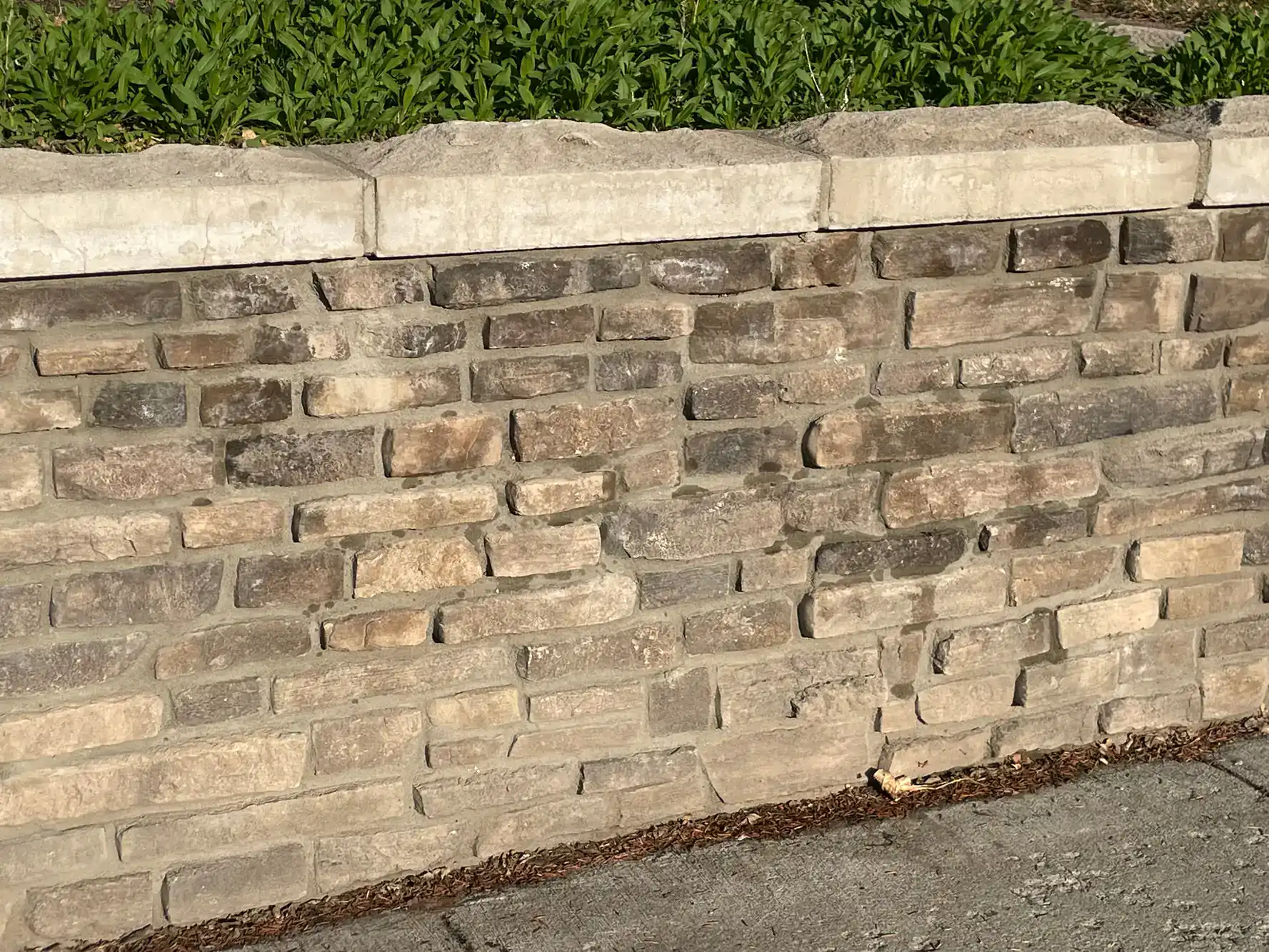
A stone retaining wall made of rectangular, tan and brown bricks supports a raised bed with green plants. Sunlight casts shadows on the textured wall and gray sidewalk below.

Hear from Our Customers

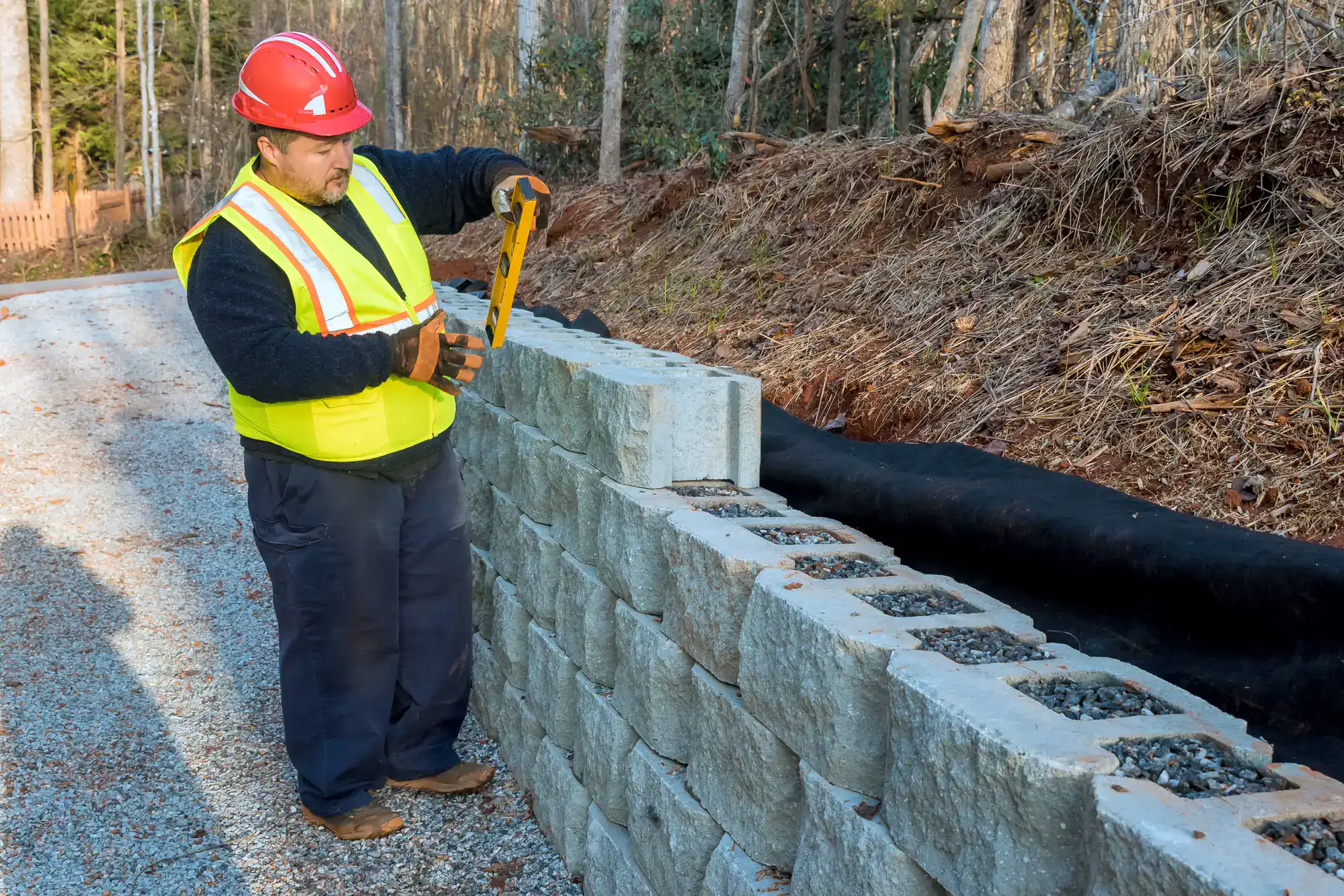
A construction worker in a yellow safety vest and red helmet uses a level to check concrete blocks while building a retaining wall next to a gravel road and a slope with trees.

Retaining Wall Installation Yaphank, NY

Stop Losing Your Yard to Erosion
Your sloped property doesn’t have to stay unusable. A properly built retaining wall transforms that challenging terrain into functional outdoor space while protecting your landscape investment from washouts and soil movement. Long Island’s sandy soil and coastal storms create unique challenges that generic contractors miss. You need a retaining wall installer who understands how to build foundations that go below the frost line, install proper drainage systems, and select materials that won’t fail when nor’easters hit. When done right, you get stable, level areas perfect for patios, gardens, or simply a yard that doesn’t wash away every heavy rain. Your property value increases, maintenance headaches disappear, and you finally have the outdoor space you’ve been wanting.

Stone Wall Installer Suffolk County, NY

15+ Years Solving Long Island's Soil Problems
We’ve been handling Suffolk County’s unique masonry challenges since day one. Owner Iain Traynor brings union masonry experience from Manhattan’s Local 1 Bricklayers, plus hands-on knowledge of how Long Island’s sandy soil, high water tables, and freeze-thaw cycles affect retaining wall performance. We’re licensed in Suffolk County, Nassau County, Southampton, and East Hampton – and we earned a feature in Cambridge Pavingstone’s magazine in our first year. That doesn’t happen by accident. You’ll work directly with Iain on every estimate and see him on your job site. No middlemen, no surprises, no wondering who’s actually building your retaining wall. Just straightforward expertise from someone who’s been solving these exact problems for over 15 years.
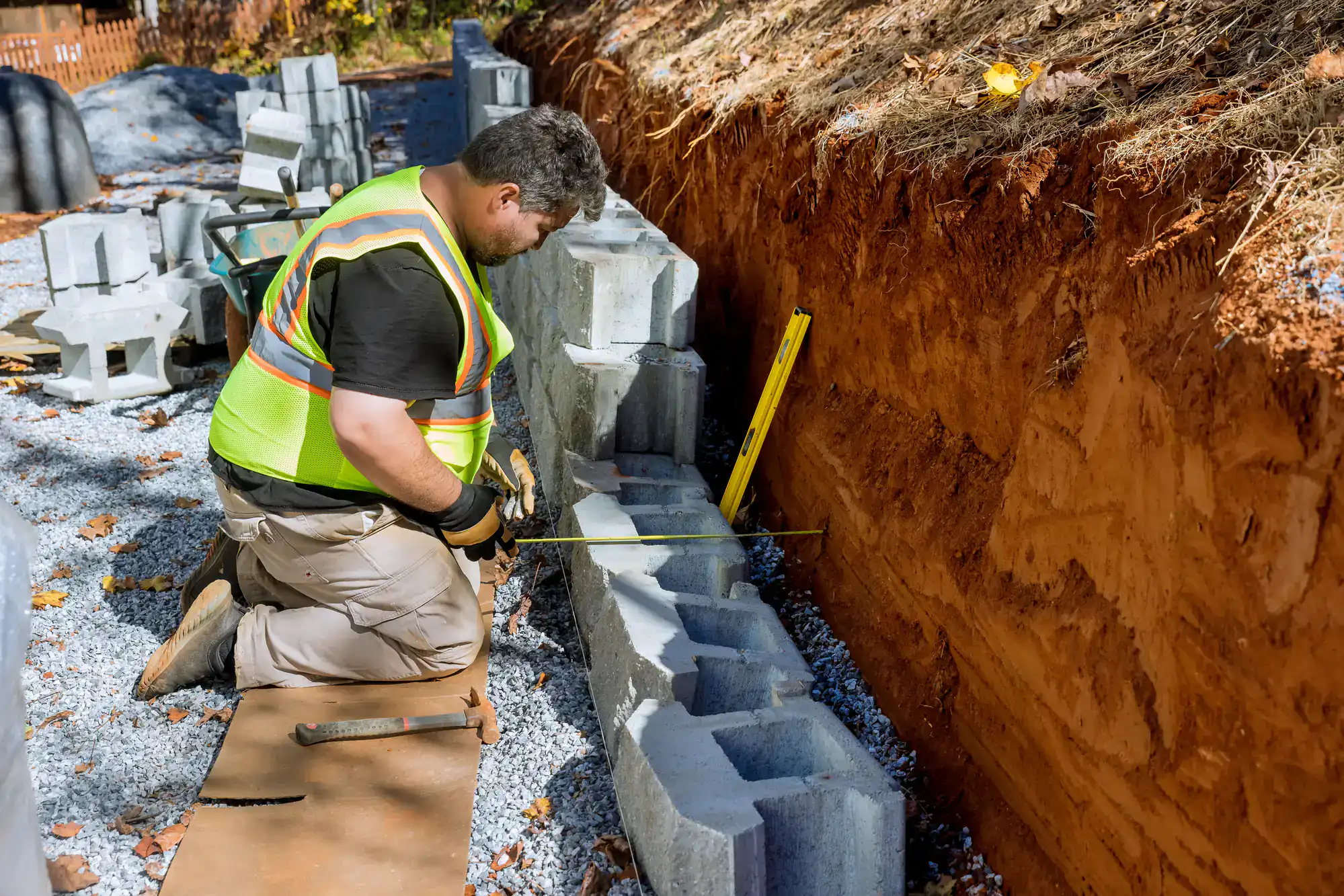
A construction worker in a safety vest kneels on gravel, measuring concrete blocks as he builds a retaining wall beside an exposed dirt slope. Tools and blocks are scattered around the worksite.

Retaining Wall Builder Suffolk County, NY

Built Right for Long Island Conditions
Every project starts with Iain personally evaluating your property’s specific challenges – soil composition, drainage patterns, grade requirements, and how coastal weather will affect the installation. No cookie-cutter approaches here. Excavation goes 8-10 inches deep with proper base layering and drainage planning. We excavate below Long Island’s frost line (30-36 inches) to prevent heaving during freeze-thaw cycles. Foundation preparation includes crushed stone base with proper compaction designed for sandy soil characteristics. Edge restraint installation and drainage systems prevent shifting and water buildup – the two biggest causes of retaining wall failure on Long Island. Materials are selected based on your specific site conditions and certified by manufacturers like Cambridge, Techo-Bloc, and Unilock for coastal climate performance.
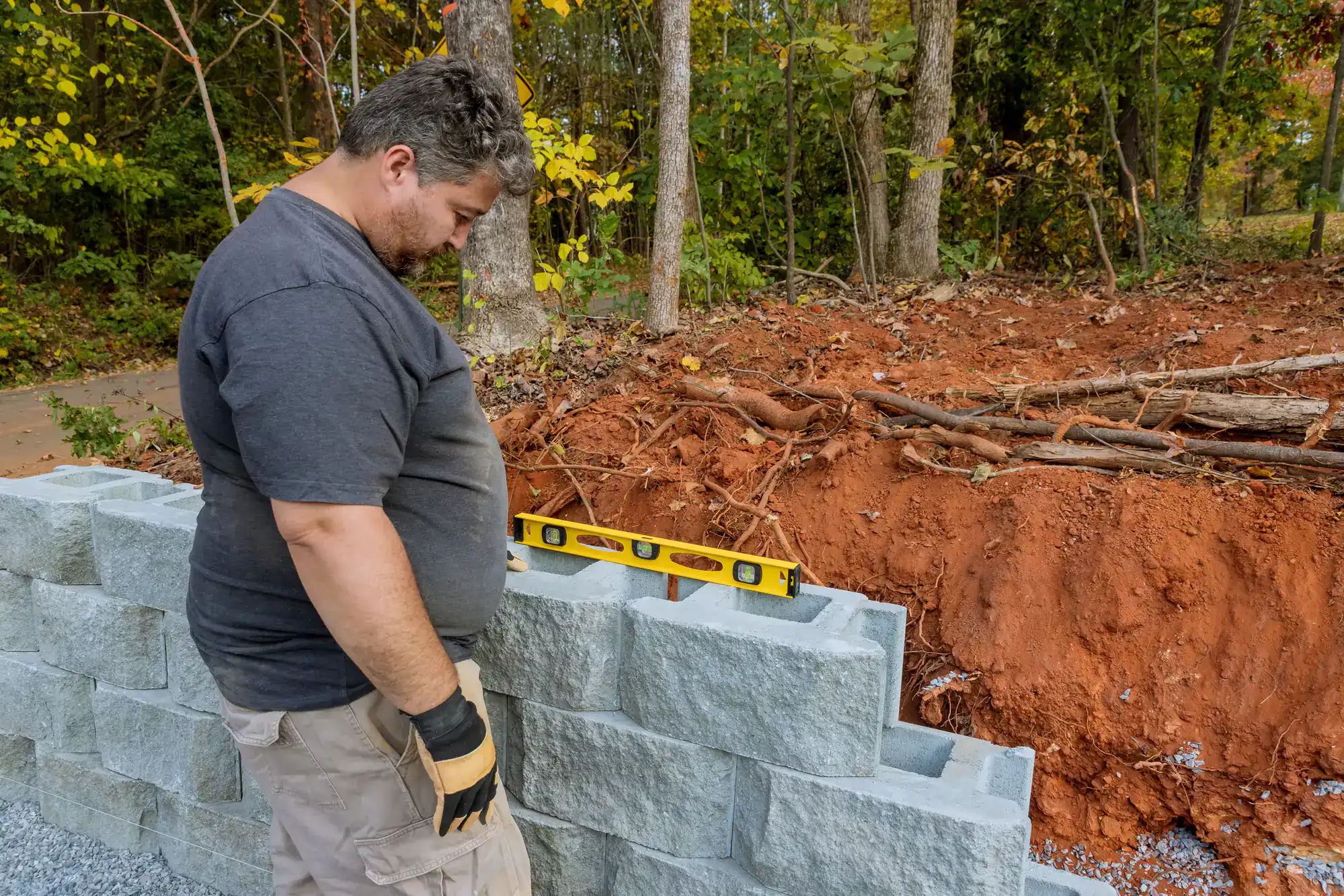
A man wearing gloves checks the level of a gray stone retaining wall with a yellow spirit level, next to a dirt embankment and forested area.

Ready to get started?

Explore More Services

About Stone Escapes Masonry & Outdoor Design

Get a Free Consultation

Retaining Wall Specialist Yaphank, NY

What You Get With Professional Installation
Your retaining wall installation includes complete site evaluation, proper excavation and foundation work, certified materials, and drainage systems designed for Long Island’s specific challenges. We handle permits when required and ensure compliance with Suffolk County building codes. Yaphank, NY properties often deal with sandy soil that drains quickly but lacks structural support, plus seasonal water level changes from the coastal water table. Our installations account for these local conditions with deeper foundations, specialized backfill materials, and enhanced drainage to prevent the hydrostatic pressure that causes wall failures. You get materials certified by major manufacturers, direct owner oversight throughout construction, and installation techniques proven to handle Long Island’s coastal storms, freeze-thaw cycles, and soil movement. The result is a retaining wall that performs reliably for decades, not just the first few seasons.

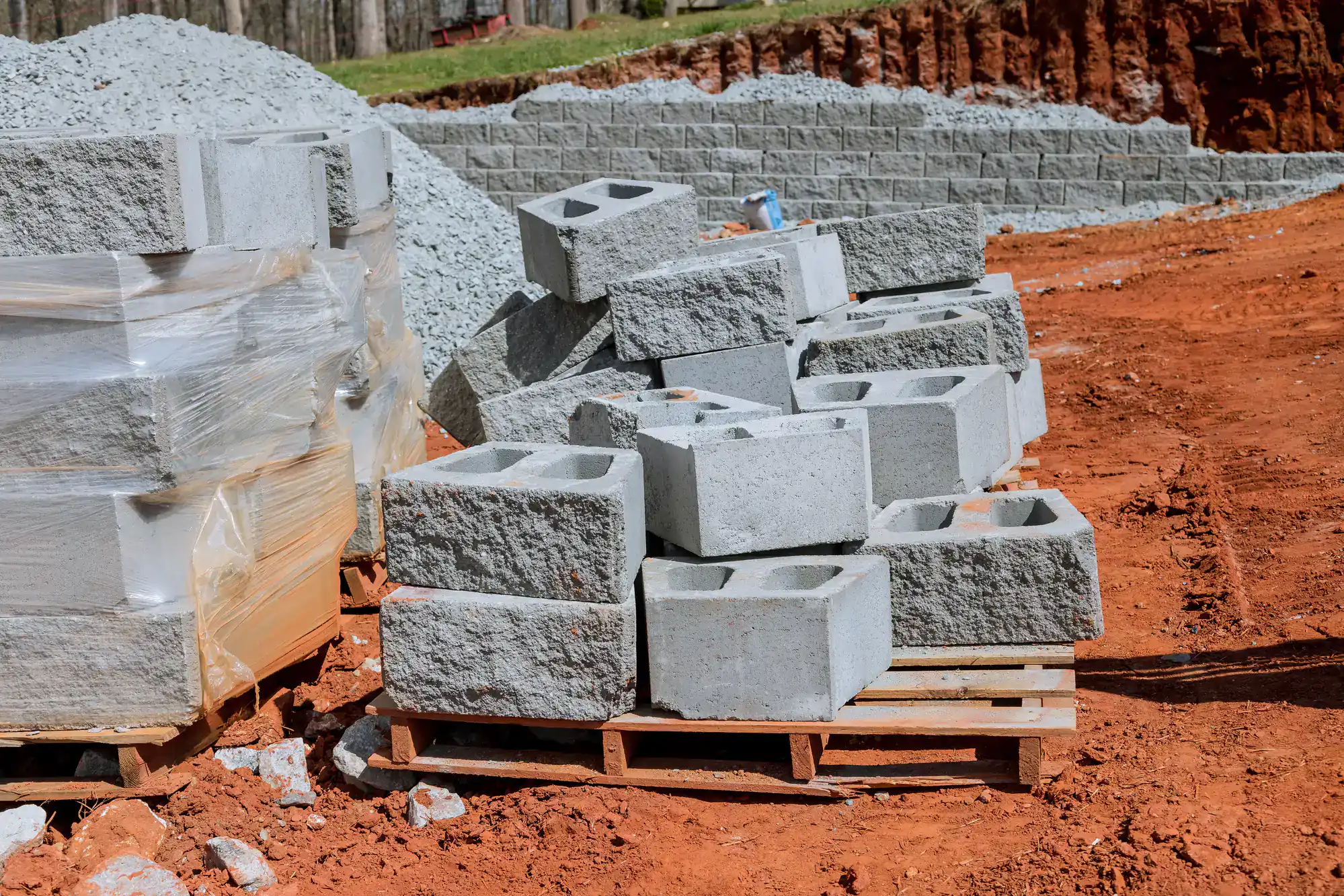
A stack of concrete cinder blocks is arranged on wooden pallets at a construction site with red soil and gravel. Wrapped blocks and a partially built stone retaining wall are visible in the background.

How deep do retaining wall foundations need to be in Yaphank, NY?

Retaining wall foundations in Yaphank, NY need to extend 30-36 inches deep to reach below Long Island’s frost line. This prevents frost heaving during winter freeze-thaw cycles that can crack or shift the wall structure. Sandy soil conditions common in Suffolk County require additional considerations beyond standard depth requirements. We excavate 8-10 inches for the base layer, then install crushed stone foundation material with proper compaction to create stable support that accommodates how sandy soil moves and drains. The depth also depends on wall height and soil pressure, but going below the frost line is non-negotiable for Long Island installations. Shallow foundations are one of the main reasons retaining walls fail within a few years instead of lasting decades.
Segmental block walls using interlocking concrete systems perform exceptionally well for Long Island retaining walls. These materials accommodate slight movement in sandy soil while maintaining structural integrity against coastal weather exposure and salt air. We work with certified manufacturers like Cambridge, Techo-Bloc, Unilock, and Nicolock because their products are specifically engineered for coastal conditions. Natural stone and concrete blocks also work well, offering durability against salt air and storm surge conditions that cheaper materials can’t handle. Materials need to resist freeze-thaw cycles, handle moisture from high water tables, and withstand the soil movement that’s common with Long Island’s sandy composition. Generic materials or those not rated for coastal climates often fail within 5-10 years, requiring complete rebuilds.
Professional retaining wall installation in Yaphank, NY typically costs $25-45 per square foot for segmental block systems, with final pricing depending on height, site access, and specific material selection. Long Island costs run higher than inland areas due to coastal climate requirements and local labor rates. Factors affecting cost include wall height (taller walls need engineering), site accessibility for equipment, drainage complexity, and permit requirements. Walls over 4 feet typically require permits and may need structural engineering, adding to the investment but ensuring safety and code compliance. The upfront cost reflects proper foundation work, certified materials, and installation techniques designed for Long Island’s specific challenges. Cheaper installations often fail within years, requiring complete rebuilds that cost significantly more than doing it right the first time.
Suffolk County, NY typically requires permits for retaining walls over 3-4 feet tall, with costs ranging from $50-450 depending on wall size and complexity. Walls over 4 feet usually need structural engineering to ensure safety and code compliance with local building standards. Permit requirements vary by municipality within Suffolk County, and some areas have additional restrictions for properties near water or in flood zones. We handle permit applications as part of our service and ensure all installations meet local building codes and safety requirements. Even when permits aren’t required, proper installation following building code guidelines is essential for safety and insurance purposes. Unpermitted work can create liability issues and problems if you sell your property later, making professional installation worthwhile.
The most common causes of retaining wall failure on Long Island are inadequate drainage, shallow foundations, and materials not rated for coastal conditions. Poor drainage allows water buildup behind the wall, creating hydrostatic pressure that pushes the structure outward and causes bulging or collapse. Long Island’s sandy soil and high water tables create unique challenges that many contractors don’t understand. Walls built without proper foundation depth (below the 30-36 inch frost line) heave during freeze-thaw cycles. Sandy soil also shifts more than clay, requiring specialized backfill and base preparation techniques. Coastal weather exposure accelerates material breakdown if the wrong products are used. Salt air, storm surges, and temperature fluctuations destroy walls built with generic materials or installation methods designed for inland conditions rather than Long Island’s specific environment.
Well-built retaining walls using quality materials and proper installation techniques typically last 50+ years on Long Island when maintained appropriately. The key is using materials rated for coastal conditions and installation methods that address local soil and climate challenges from day one. Segmental block systems from certified manufacturers like Cambridge or Unilock, when properly installed with adequate drainage and foundation work, often outlast the original property owners. Natural stone installations can last 75-100+ years with minimal maintenance requirements. Regular maintenance includes keeping drainage systems clear, checking for vegetation growth that could damage the structure, and addressing any minor settling or shifting early. Annual inspections help catch small issues before they become expensive problems requiring major repairs or reconstruction.