Retaining Wall Contractor in Stony Brook University

Walls That Actually Handle Long Island's Conditions

Built for sandy soil, coastal moisture, and everything Long Island throws at your property.
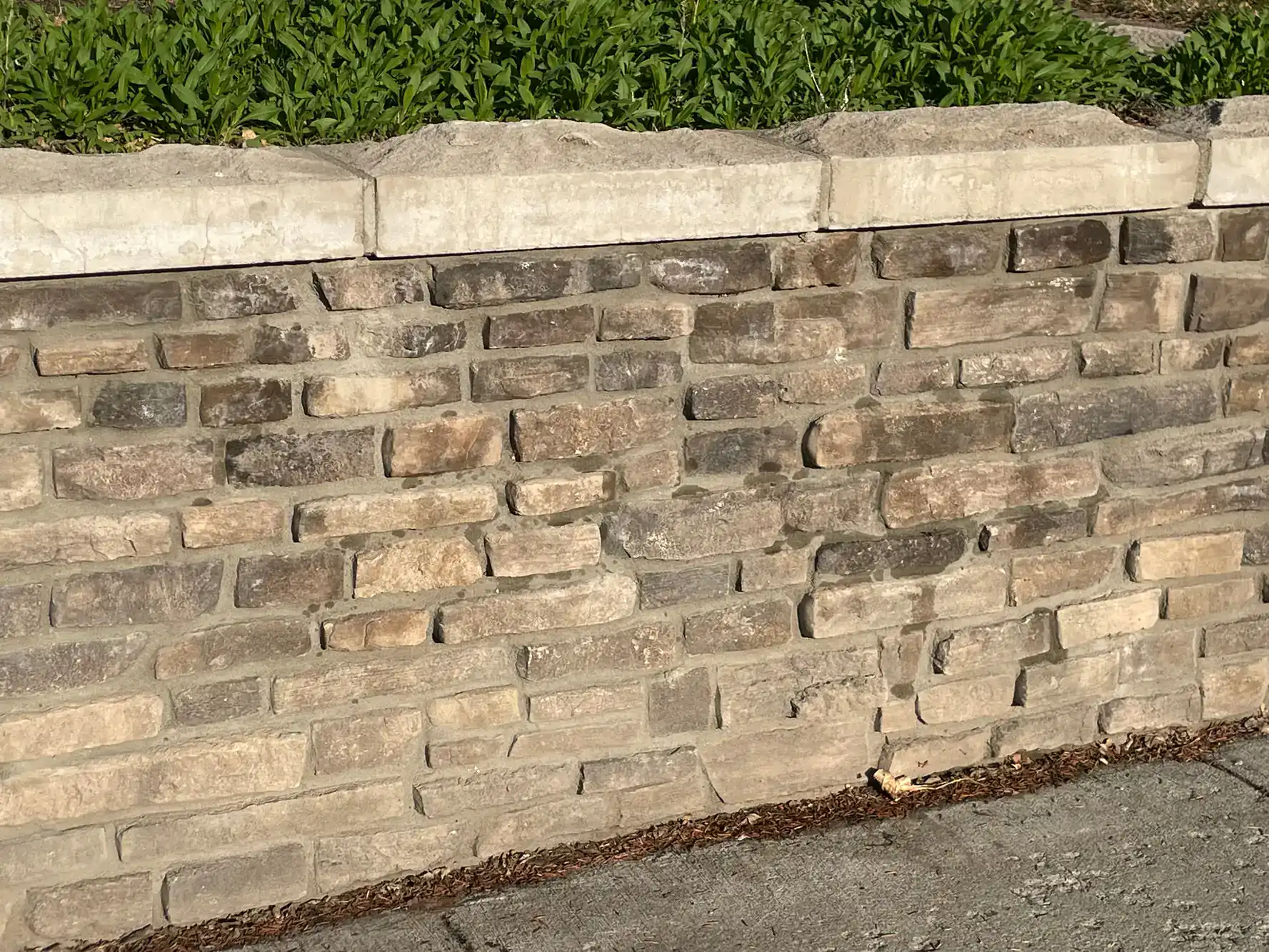
A stone retaining wall made of rectangular, tan and brown bricks supports a raised bed with green plants. Sunlight casts shadows on the textured wall and gray sidewalk below.

Hear from Our Customers

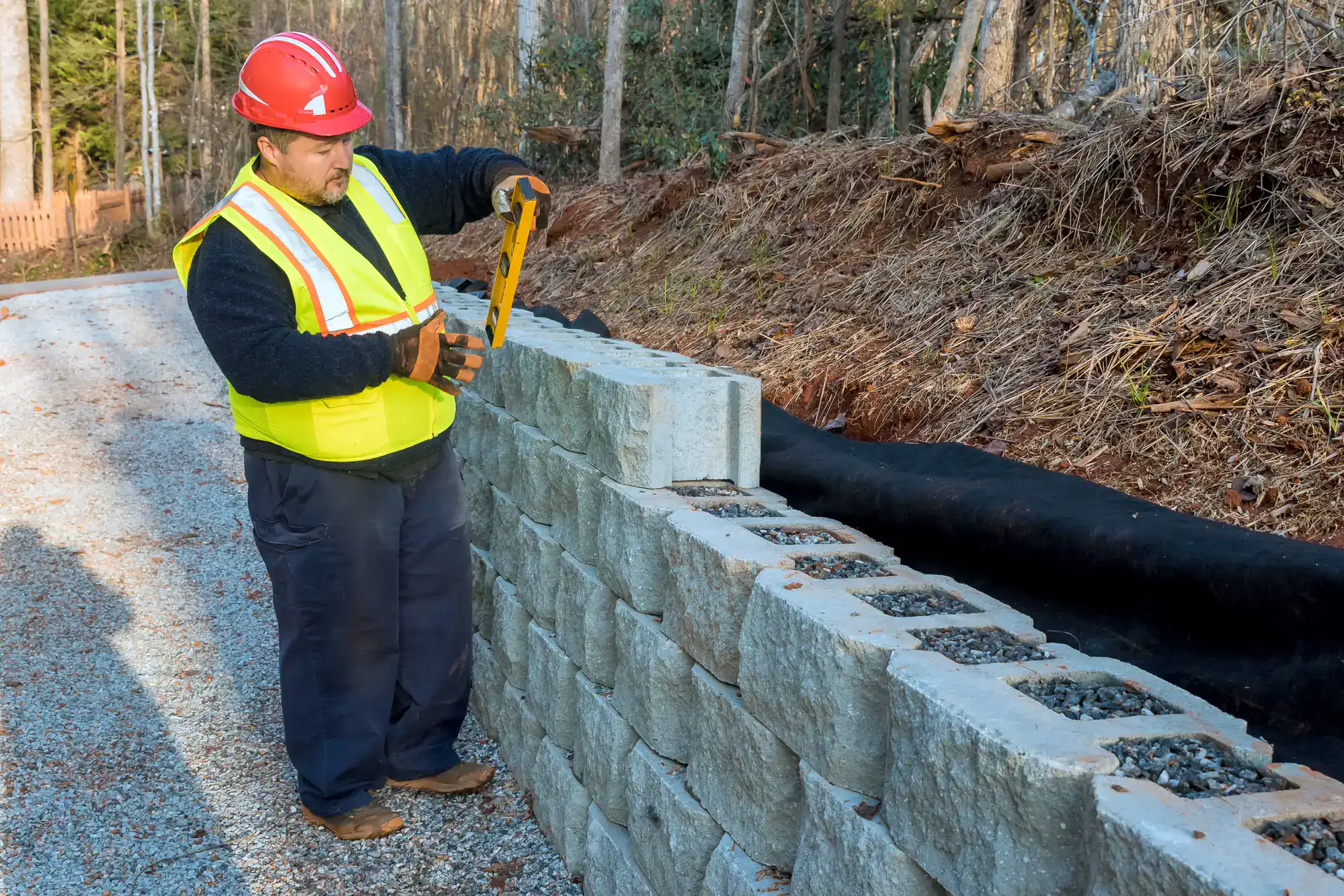
A construction worker in a yellow safety vest and red helmet uses a level to check concrete blocks while building a retaining wall next to a gravel road and a slope with trees.

Professional Retaining Wall Installation Stony Brook University

Your Property Protected, Your Investment Secured
You’re dealing with more than just a slope problem. Between Long Island’s sandy soil, high water table, and those flash floods that hit Stony Brook University last year, your property faces challenges most contractors don’t understand. When we build your retaining wall, you get a structure engineered for exactly these conditions. No more watching soil wash away during storms. No more worrying about foundation damage or flooded basements. Your wall holds. Your drainage works. Your property value stays protected.

Licensed Masonry Contractor Stony Brook University NY

Local Knowledge, Proven Methods
We’ve been handling Long Island’s unique masonry challenges from our Holbrook location. Owner Iain Traynor brings union masonry experience and carpentry background to every project. We’re licensed across Suffolk (#HI-62761), Nassau (#167041), Southampton (#L005914), and East Hampton (#9808). Certified by Cambridge, Techo‑Bloc, Unilock, Nicolock, Eldorado, and Boral. Most importantly, we understand Stony Brook University area conditions. Sandy soil that drains too fast. Water tables that shift with the seasons. Coastal moisture that breaks down inferior work over time.
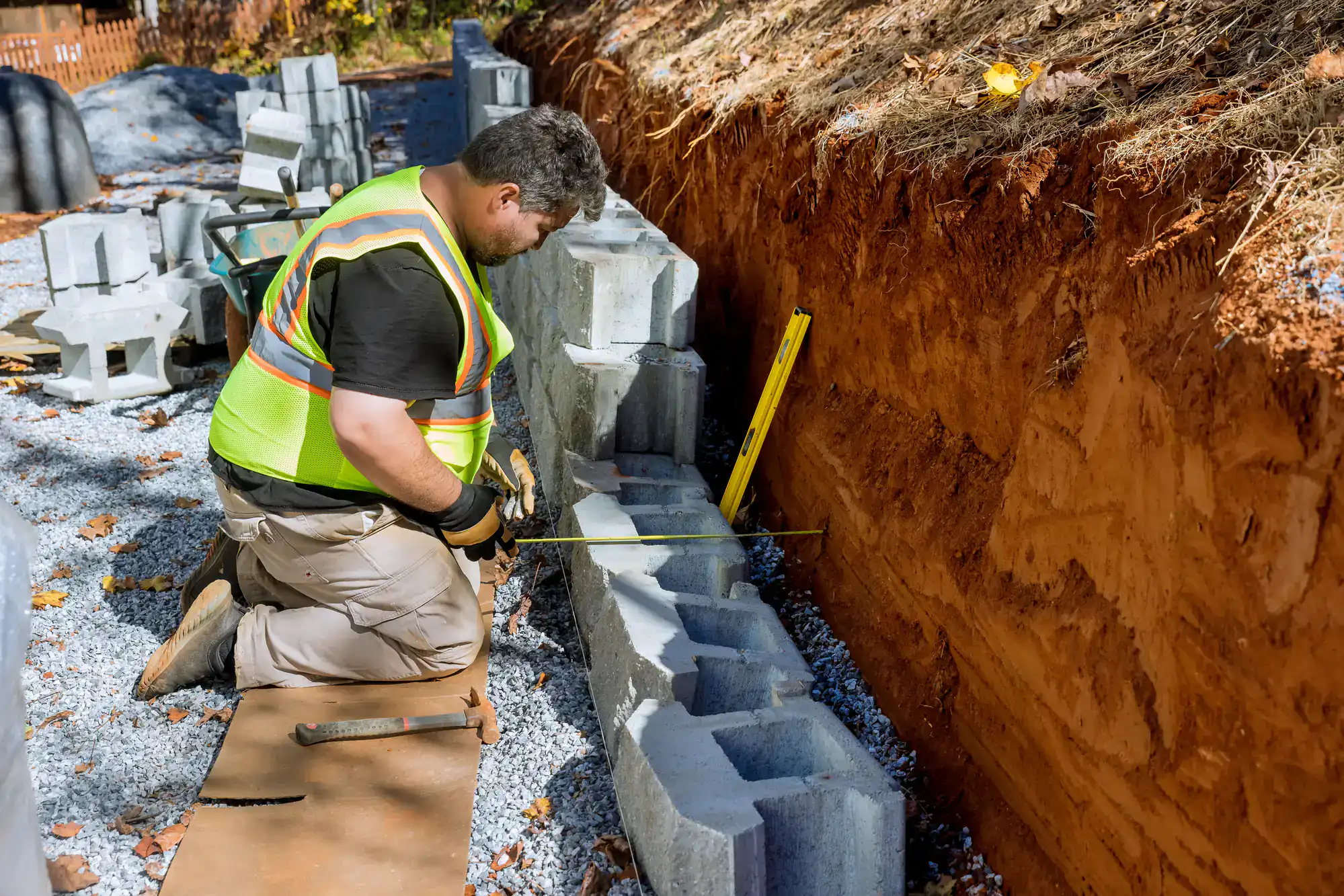
A construction worker in a safety vest kneels on gravel, measuring concrete blocks as he builds a retaining wall beside an exposed dirt slope. Tools and blocks are scattered around the worksite.

Retaining Wall Installation Process Stony Brook University

How We Build Walls That Last
First, we excavate 8-10 inches deep—deeper than most contractors go. This isn’t just digging a trench. We’re creating a foundation that accounts for Long Island’s freeze-thaw cycles and sandy soil composition. Next comes proper base layering with drainage planning built in. We install edge restraints to prevent the shifting that destroys cheaper installations. Every step addresses the specific conditions your Stony Brook University area property faces. You get in-person estimates, direct communication throughout, and the same crew from start to finish. No subcontractors. No surprises. Just a wall built right the first time.
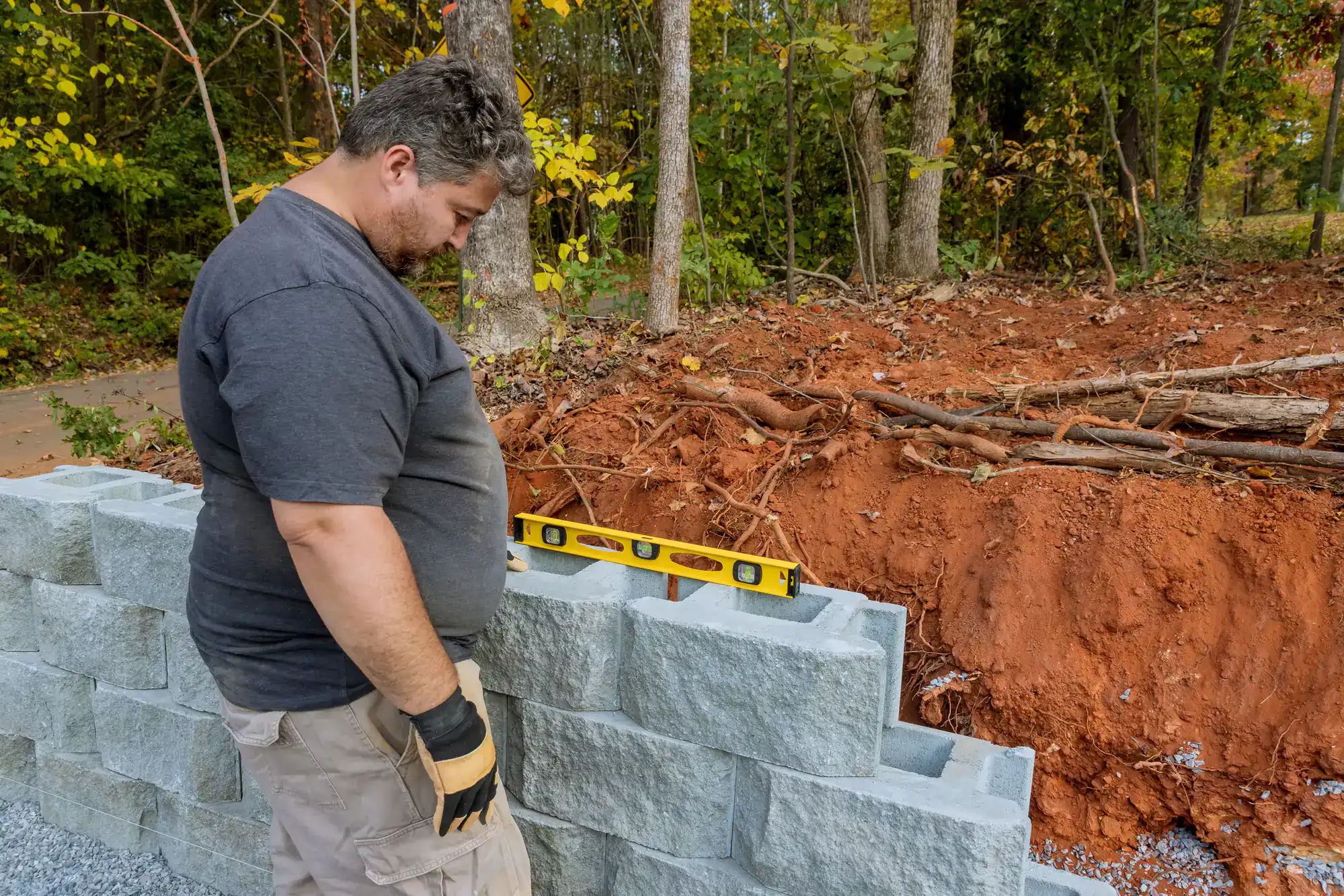
A man wearing gloves checks the level of a gray stone retaining wall with a yellow spirit level, next to a dirt embankment and forested area.

Ready to get started?

Explore More Services

About Stone Escapes Masonry & Outdoor Design

Get a Free Consultation

Stone Retaining Wall Specialist Stony Brook University

What You Get With Our Installation
Your retaining wall project includes proper excavation, specialized base preparation, and drainage systems designed for Long Island conditions. We use materials from certified manufacturers—Cambridge, Techo‑Bloc, Unilock, Nicolock, Eldorado, and Boral. Every wall gets edge restraint installation to prevent shifting. Drainage planning prevents water buildup that destroys walls over time. Foundation depth accounts for our area’s freeze-thaw cycles. For Stony Brook University area properties, this means walls that handle coastal moisture, sandy soil drainage, and the kind of flash flooding that hit campus recently. Your investment stays protected through Long Island’s toughest conditions.

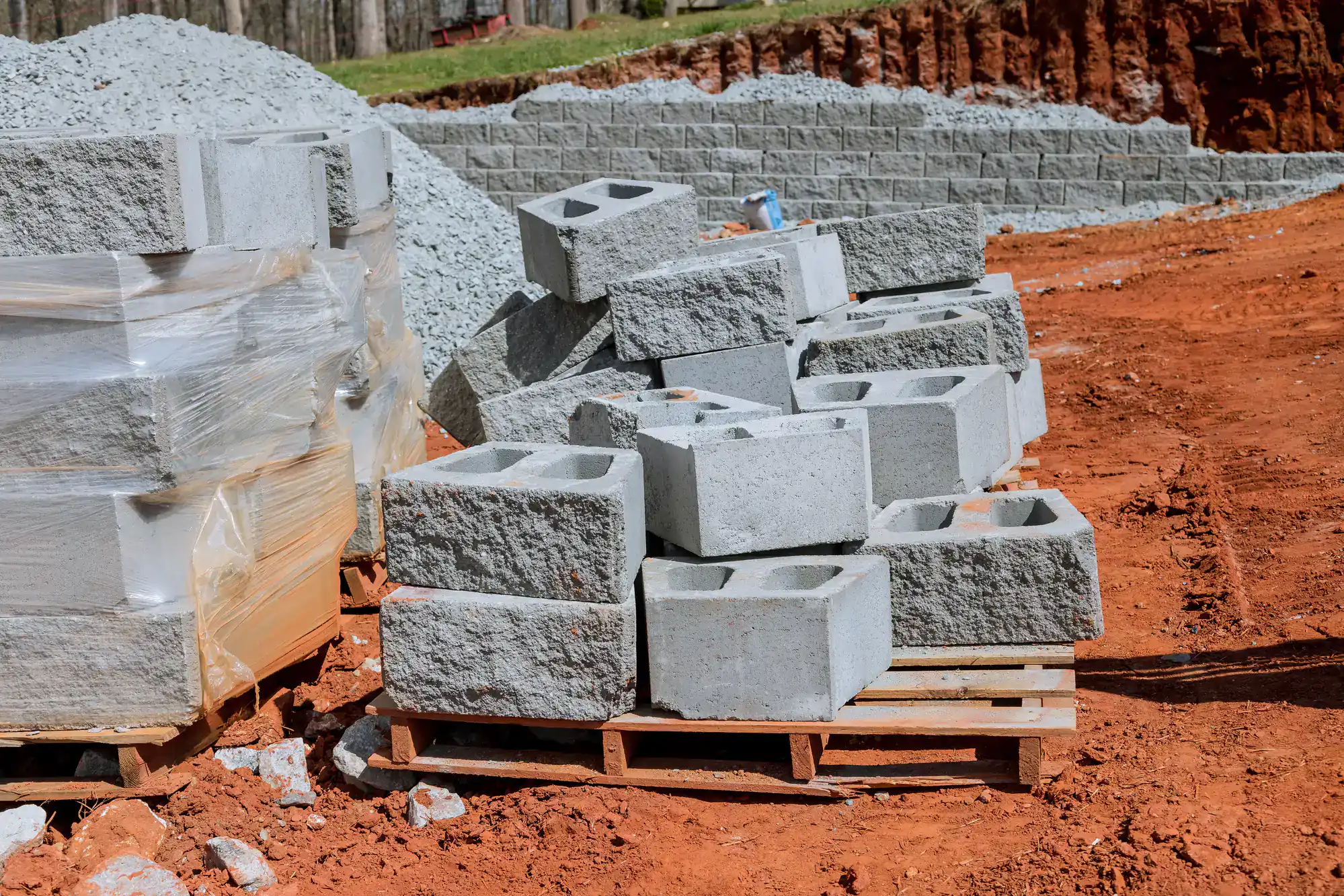
A stack of concrete cinder blocks is arranged on wooden pallets at a construction site with red soil and gravel. Wrapped blocks and a partially built stone retaining wall are visible in the background.

How deep do retaining walls need to be in Stony Brook University area?

We excavate 8-10 inches deep for most installations, going deeper than many contractors. Long Island’s sandy soil and freeze-thaw cycles require this depth to prevent shifting and settling over time. The exact depth depends on your wall height, soil conditions, and drainage requirements. Higher walls need deeper foundations. Areas with poor drainage need additional base preparation. We assess your specific site conditions during the estimate. Sandy soil drains well but shifts easily without proper foundation work. That’s why we don’t cut corners on excavation depth.
Long Island’s sandy soil, high water table, and coastal conditions create unique challenges. Most contractors use standard methods that fail here within a few years. Sandy soil drains quickly but shifts easily without proper edge restraints. High water tables mean drainage planning is critical—water buildup behind walls causes failure. Coastal moisture accelerates deterioration of inferior materials. We use specialized base layering, proper drainage systems, and materials certified for these conditions. Every installation accounts for freeze-thaw cycles and the kind of flash flooding Stony Brook University experienced recently.
Most residential retaining wall projects take 2-5 days, depending on wall size and site conditions. We use the same crew throughout your project—no rotating teams or subcontractors. Complex drainage situations or difficult access can extend the timeline. We’ll give you a realistic schedule during the estimate based on your specific site conditions. Weather affects the schedule since proper curing is essential. We don’t rush work to meet artificial deadlines. Your wall needs to be built right, especially with Long Island’s challenging soil and weather conditions.
Most walls over 3-4 feet require permits in Suffolk County. We handle permit applications and ensure compliance with local building codes. Permit requirements vary by township and wall height. Structural walls supporting driveways or buildings have different requirements than landscape walls. Engineering may be required for taller walls. We’re licensed in Suffolk (#HI-62761), Nassau (#167041), Southampton (#L005914), and East Hampton (#9808). We know local requirements and handle the paperwork so your project stays compliant.
We recommend concrete block systems from Cambridge, Techo‑Bloc, Unilock, or Nicolock for most Long Island applications. These materials handle coastal moisture and freeze-thaw cycles better than alternatives. Natural stone works well but requires more complex drainage planning. Timber walls deteriorate quickly in our coastal environment. Poured concrete can crack with soil shifting. The best material depends on your wall height, soil conditions, and aesthetic preferences. We’re certified installers for major manufacturers and help you choose materials that will last in Long Island conditions.
Drainage planning starts with excavation. We install proper base layers and drainage systems designed for sandy soil conditions. Edge restraints prevent shifting that creates drainage problems. Sandy soil drains quickly but can wash away without proper preparation. We use filter fabric and graded stone to maintain drainage while preventing soil migration. Drainage outlets direct water away from structures. Poor drainage destroys retaining walls over time. With Long Island’s high water table and flash flooding potential, proper drainage isn’t optional. We build it into every installation from the foundation up.