Retaining Wall Contractor in Port Jefferson Station

Walls Built for Long Island's Toughest Conditions

Sandy soil, coastal storms, and high water tables demand more than standard installation—get the retaining wall contractor Port Jefferson Station properties depend on.
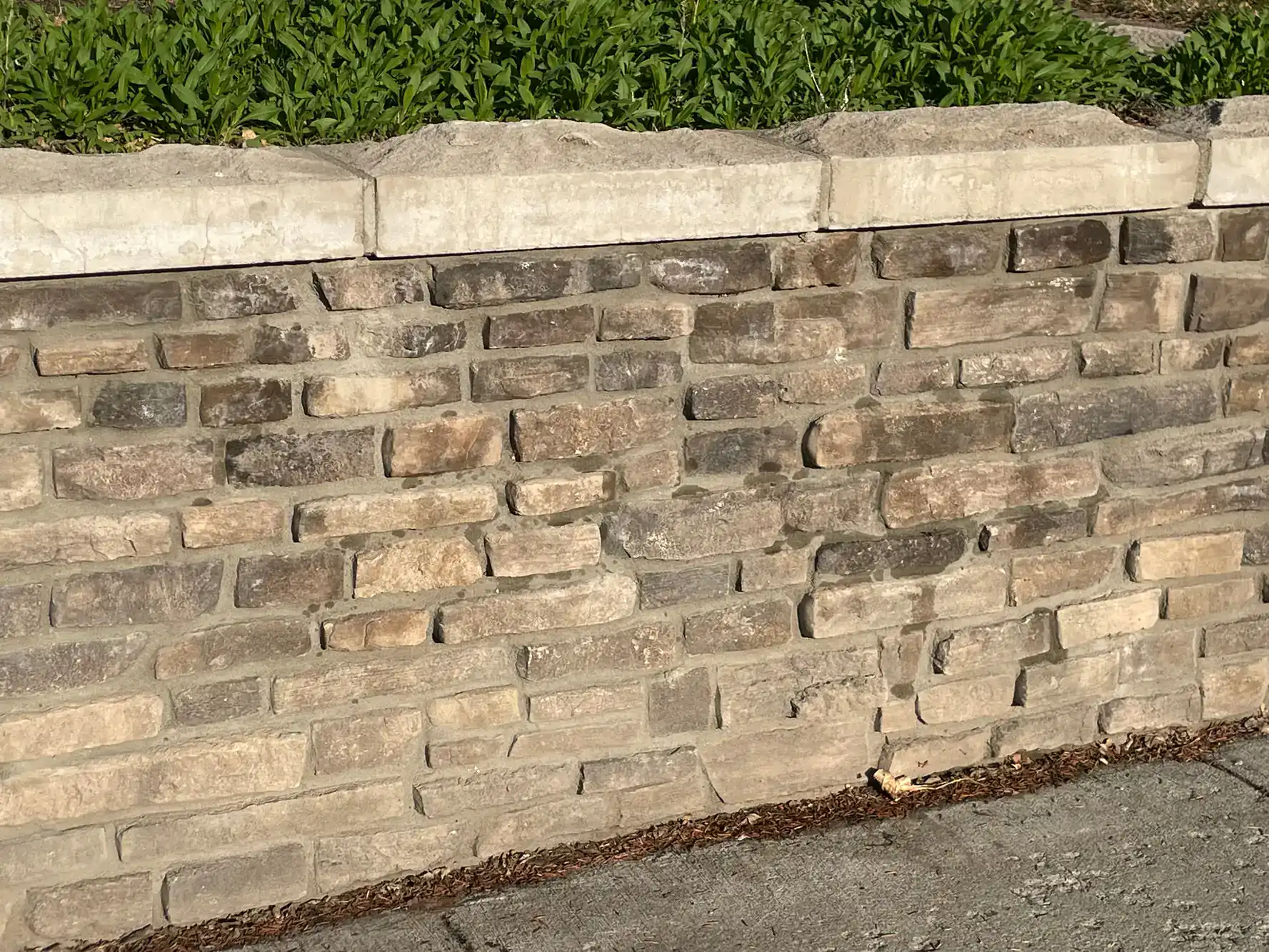
A stone retaining wall made of rectangular, tan and brown bricks supports a raised bed with green plants. Sunlight casts shadows on the textured wall and gray sidewalk below.

Hear from Our Customers

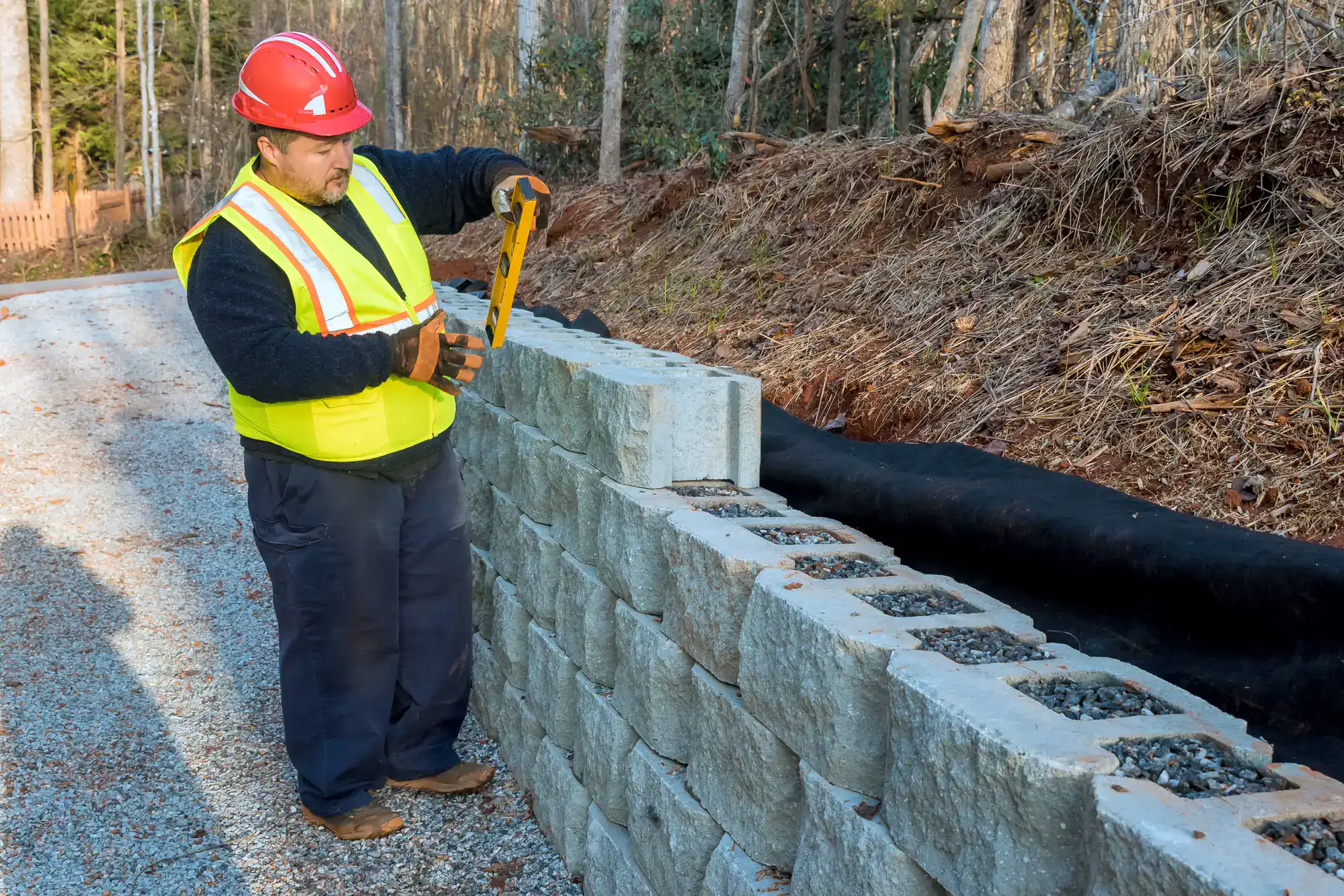
A construction worker in a yellow safety vest and red helmet uses a level to check concrete blocks while building a retaining wall next to a gravel road and a slope with trees.

Professional Retaining Wall Installation Port Jefferson Station

Stop Soil Problems Before They Damage Your Property
That slope behind your house isn’t just an eyesore. Long Island’s sandy soil shifts during every storm, and without proper retention, you’re watching your investment wash away one heavy rain at a time. When we install your retaining wall, you get immediate soil stabilization and long-term peace of mind. No more worrying about foundation damage from shifting soil. No more losing usable yard space to erosion. No more wondering if your property can handle the next nor’easter. You get a wall that works with Port Jefferson Station’s unique conditions, not against them. Built right the first time, designed to last decades.

Licensed Retaining Wall Specialist Port Jefferson Station

Union-Trained, Long Island-Tested, Owner-Operated
Stone Escapes brings serious credentials to your project. Owner Iain Traynor trained with Local 1 Bricklayers Union in Manhattan and spent over 15 years mastering Long Island’s specific challenges. He shows up for every estimate and stays involved through completion—no handoffs, no surprises. We hold active licenses in Suffolk County, Nassau County, Southampton, and East Hampton. We’re certified installers for Cambridge, Techo-Bloc, Unilock, Nicolock, Eldorado, and Boral. Cambridge Pavingstone even featured our work in their magazine during our first year in business. Most of our clients come from referrals because in Port Jefferson Station’s tight-knit community, quality work speaks for itself.
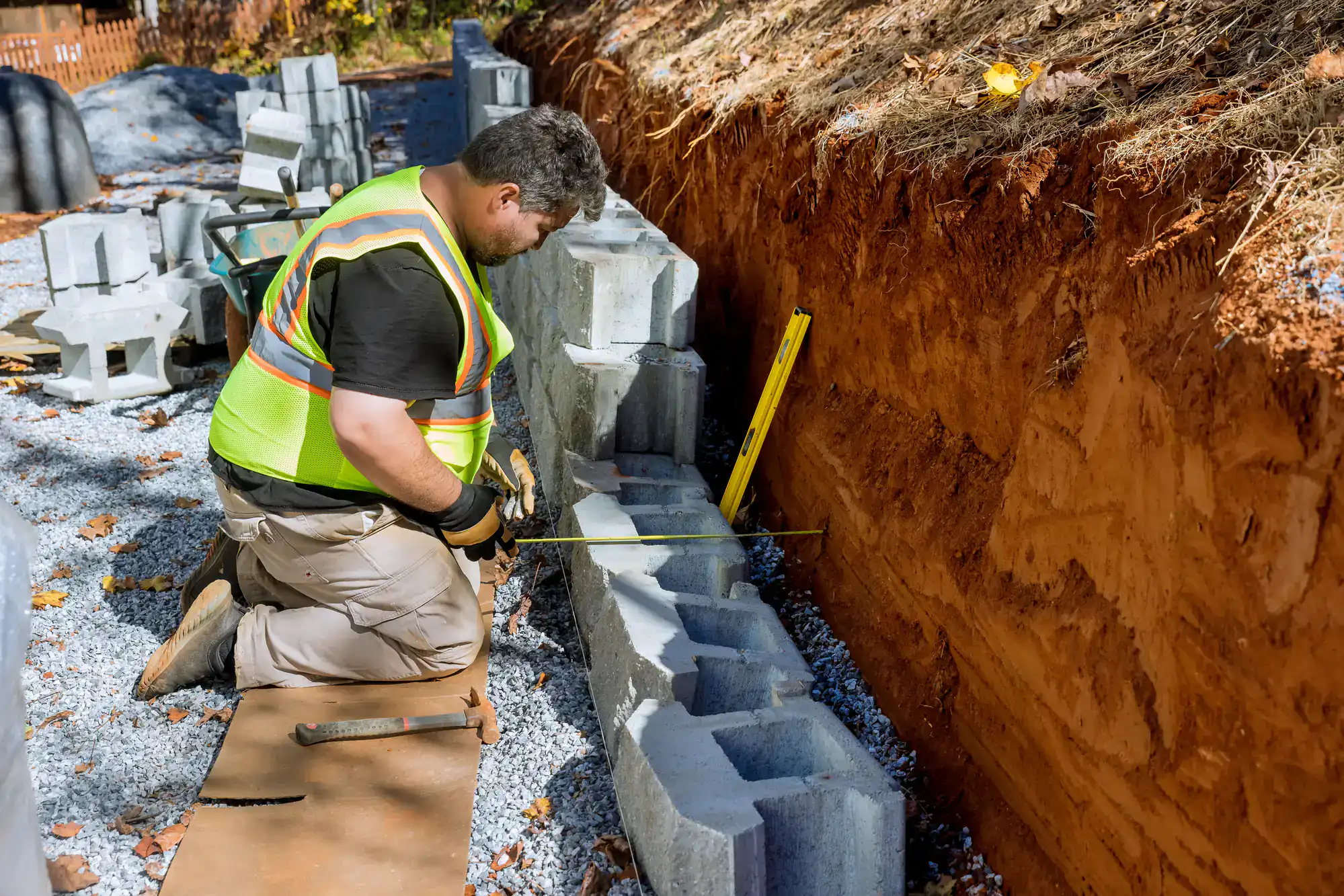
A construction worker in a safety vest kneels on gravel, measuring concrete blocks as he builds a retaining wall beside an exposed dirt slope. Tools and blocks are scattered around the worksite.

Retaining Wall Builder Port Jefferson Station Process

The Right Way to Handle Sandy Soil and Coastal Weather
Every project starts with understanding what makes your property unique. We assess soil composition, drainage patterns, and the specific challenges your location faces. What works in other parts of New York doesn’t necessarily work here. Excavation goes 8-10 inches deep minimum, often deeper based on wall height and soil conditions. We excavate below Suffolk County’s 30-36 inch frost line to prevent heaving. Base preparation uses proper materials for Long Island’s sandy soil, and drainage gets planned from day one—not added as an afterthought. Wall construction follows manufacturer specifications exactly. We use materials designed for coastal moisture, salt air, and freeze-thaw cycles. Edge restraints prevent shifting over time, and every component gets installed to handle the lateral pressure that comes with Long Island’s soil conditions.
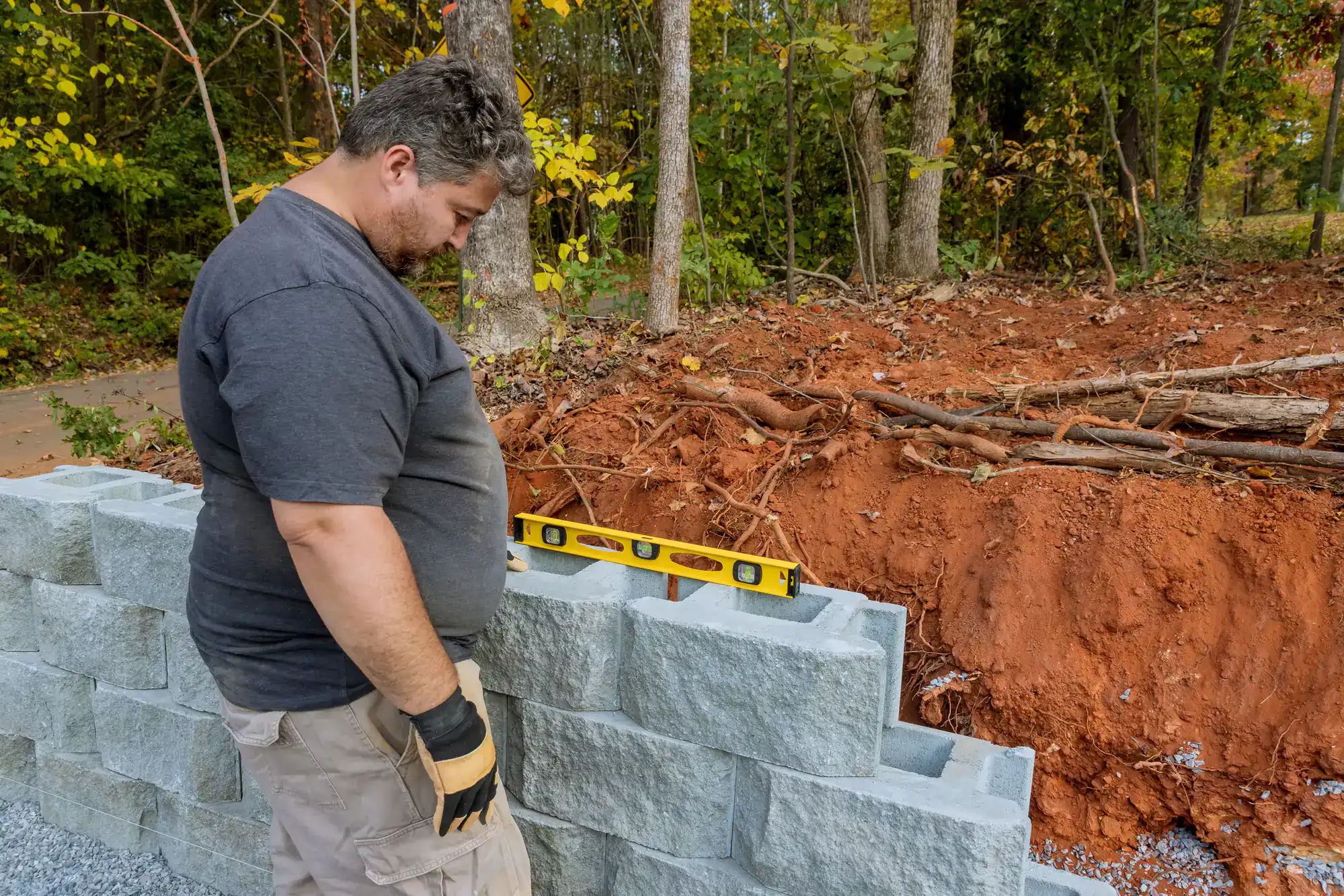
A man wearing gloves checks the level of a gray stone retaining wall with a yellow spirit level, next to a dirt embankment and forested area.

Ready to get started?

Explore More Services

About Stone Escapes Masonry & Outdoor Design

Get a Free Consultation

Stone Wall Installer Port Jefferson Station Services

Complete Installation Built for Local Conditions
Your retaining wall project includes everything needed to handle Port Jefferson Station’s specific challenges. Excavation to proper depth, base preparation with the right materials, filter fabric installation, and drainage systems that actually work when storms hit. You work directly with the owner throughout the project. No project managers or subcontractors—just clear communication about what your property needs and how we deliver it. Most retaining wall jobs qualify as capital improvements, so no sales tax gets added to your final cost. Installation includes proper backfill with drainage-friendly materials, quality blocks from manufacturers like Cambridge and Unilock, and construction techniques designed for Long Island’s coastal environment. Every wall gets built to handle hydrostatic pressure and soil movement that comes with sandy soil and high water tables.
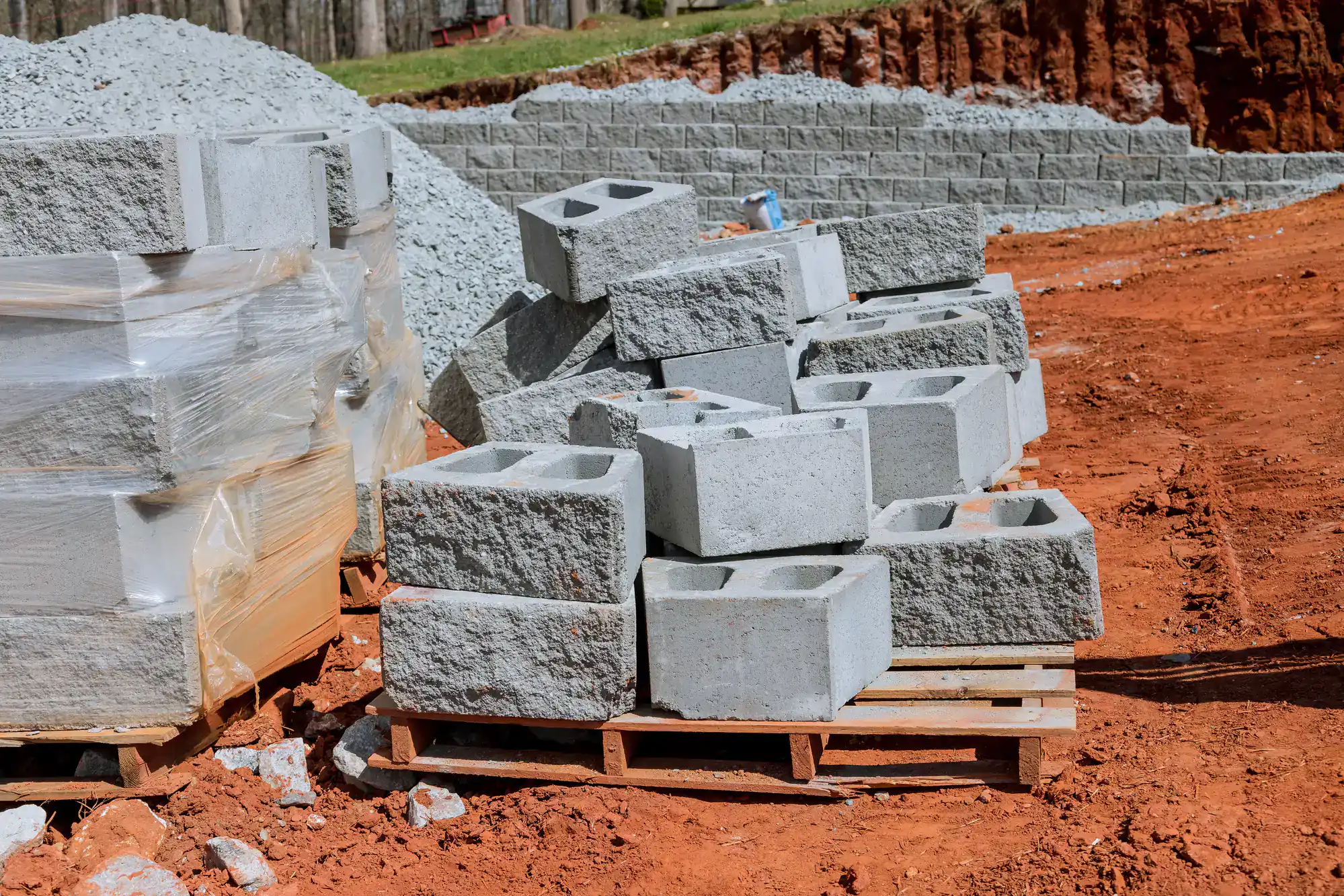
A stack of concrete cinder blocks is arranged on wooden pallets at a construction site with red soil and gravel. Wrapped blocks and a partially built stone retaining wall are visible in the background.

How deep do retaining walls need to be in Port Jefferson Station?

In Suffolk County, retaining walls need excavation below the frost line—30 to 36 inches minimum. This prevents frost heave that destroys walls during winter freeze-thaw cycles. Actual depth depends on wall height and soil conditions. Taller walls need deeper foundations, and Long Island’s sandy soil requires specific base preparation to prevent settling. We excavate to the right depth for your specific situation, not just minimum code requirements. Proper drainage matters as much as depth. Without it, water pressure builds behind your wall and pushes it out of place, regardless of how deep the foundation goes.
Long Island’s sandy soil drains fast but shifts easily, especially during coastal storms. Salt air corrodes materials over time, high water tables create hydrostatic pressure, and freeze-thaw cycles are more severe than inland areas. We deal with nor’easters and hurricanes that saturate slopes and cause dangerous soil movement. Local building codes reflect these unique challenges, and materials that work upstate often fail here because conditions are completely different. That’s why we use specific installation techniques and materials designed for coastal environments. Your wall needs to handle what Long Island throws at it, season after season.
Retaining wall costs in New York typically range from $3,500 to $5,000 for standard projects, but every property is different. Wall height, length, soil conditions, drainage requirements, and material choice all affect final pricing. Most retaining wall projects qualify as capital improvements—no sales tax gets added to your quote. We provide detailed estimates that break down exactly what you’re getting, so you understand where every dollar goes. The real comparison should focus on long-term value. A properly built wall that lasts 30 years costs less than a cheap wall that fails in five years and needs complete replacement.
Suffolk County requires permits for most structural retaining walls, especially those over 3-4 feet tall. The permitting process typically takes several weeks and costs $50 to $450 depending on wall size and complexity. We handle permit applications and ensure your project meets all local regulations. Getting permits upfront prevents problems later—unpermitted work can create issues when selling your property and insurance claims sometimes get denied. Proper permits also mean inspections that verify your wall meets engineering standards for Long Island’s soil and weather conditions.
Retaining wall failure usually stems from poor drainage, insufficient foundation depth, or wrong materials for local conditions. When walls fail, you face property damage, safety hazards, and expensive emergency repairs. Warning signs include bulging, cracking, leaning, or water pooling behind the wall. Early problems might be repairable, but complete failure often means starting over from scratch—at much higher cost than proper installation. Prevention costs less than dealing with failure. We build walls that handle Long Island’s sandy soil, coastal weather, and storm conditions because getting it right the first time protects your investment.

Properly built retaining walls last 20-50 years or more, depending on materials and installation quality. Concrete block and stone walls typically outlast timber, especially in Long Island’s coastal environment. Our conditions are tough on retaining walls—salt air, freeze-thaw cycles, and severe storms all take their toll. Material selection and drainage design become critical for long-term performance in this environment. Regular maintenance helps, but a well-built wall shouldn’t need major repairs for decades. We use materials and techniques specifically chosen to handle what Port Jefferson Station’s climate delivers, year after year.