Retaining Wall Contractor in Patchogue, NY

Walls That Actually Hold Against Long Island Weather

Sandy soil, coastal storms, and shifting ground demand retaining wall contractors who understand Patchogue’s unique challenges—not generic solutions.
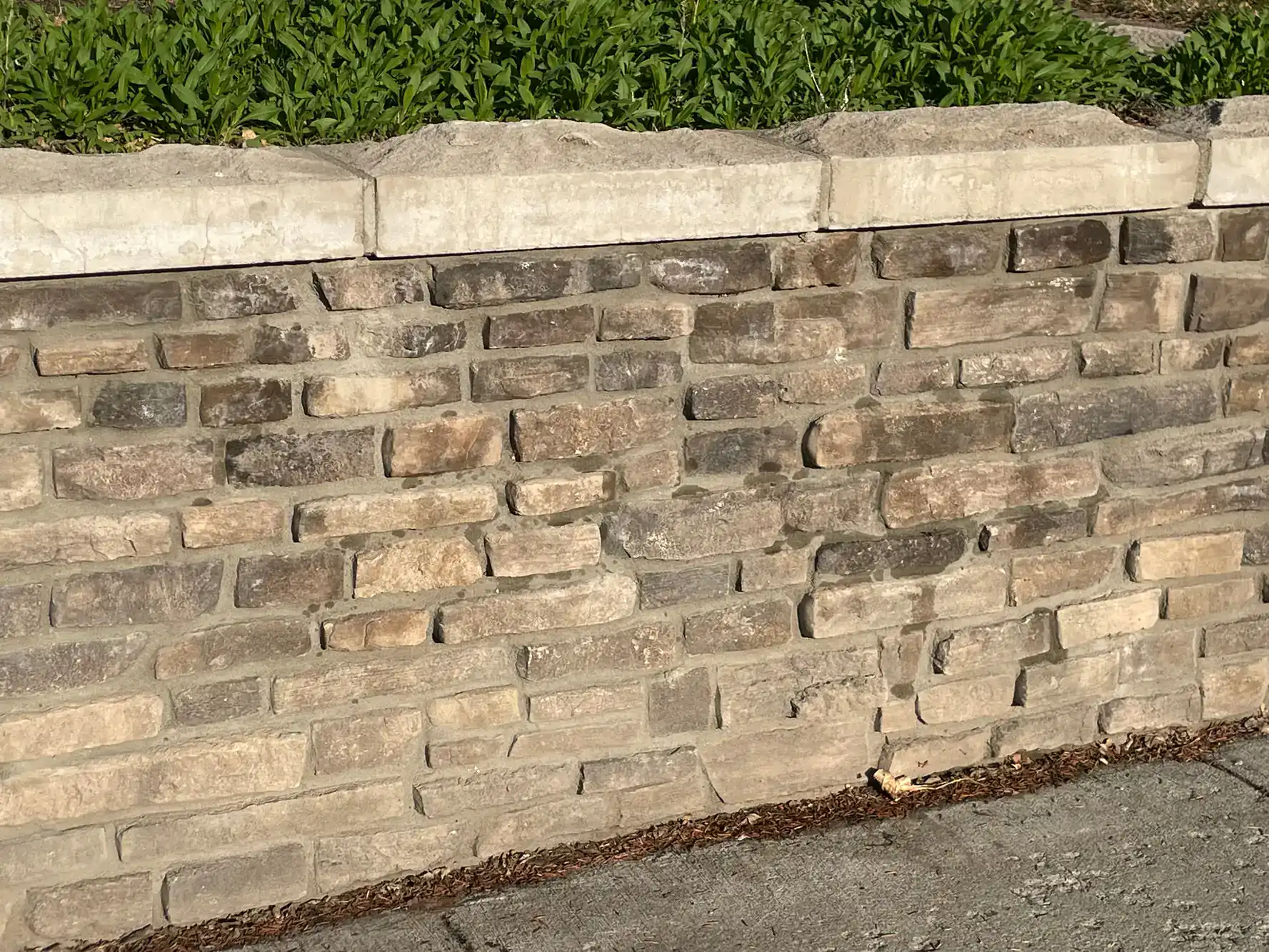
A stone retaining wall made of rectangular, tan and brown bricks supports a raised bed with green plants. Sunlight casts shadows on the textured wall and gray sidewalk below.

Hear from Our Customers

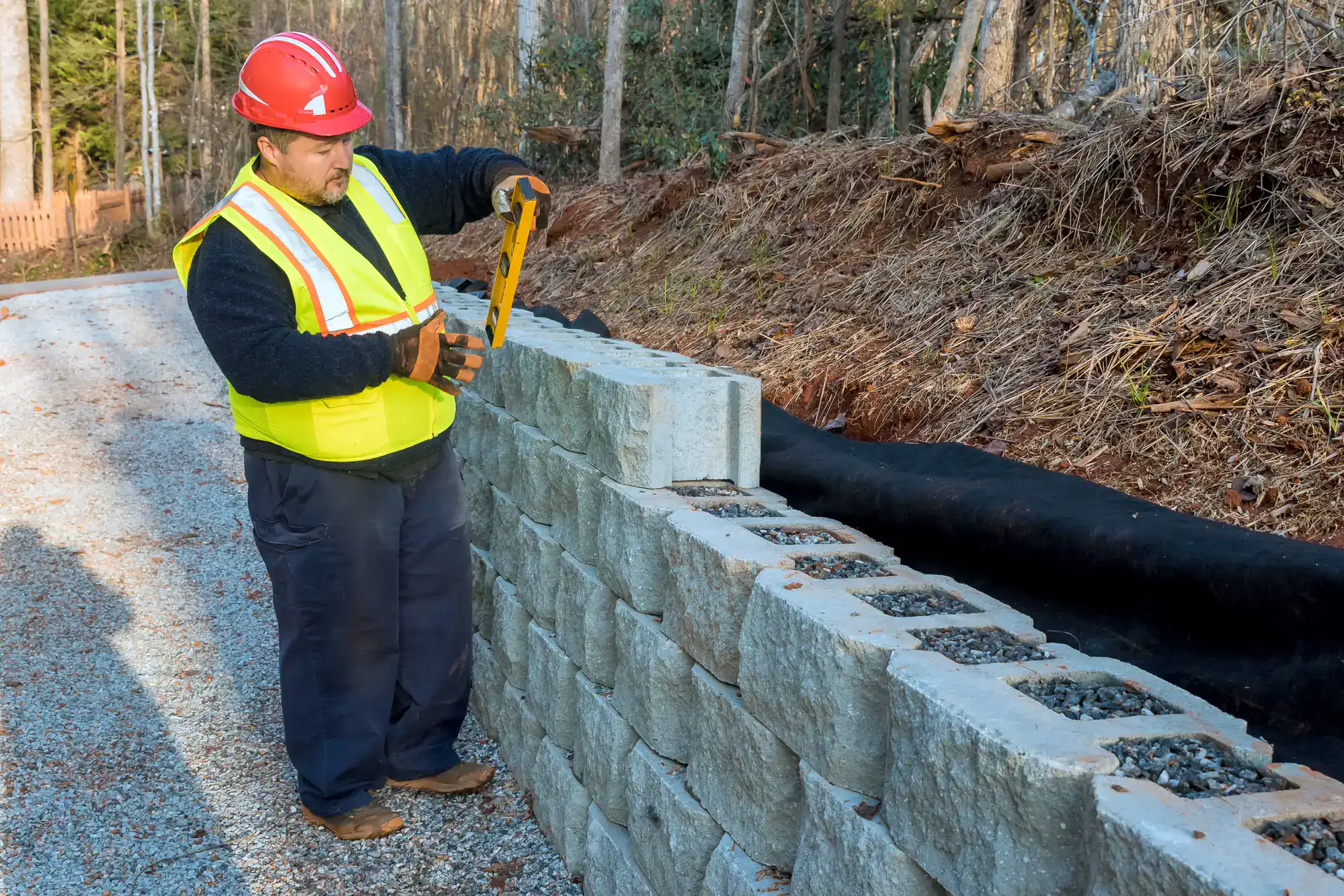
A construction worker in a yellow safety vest and red helmet uses a level to check concrete blocks while building a retaining wall next to a gravel road and a slope with trees.

Professional Retaining Wall Installation Patchogue

Turn Problem Slopes Into Usable Outdoor Space
Your sloped yard stops being a headache when it’s properly contained. No more watching soil wash away during storms or dealing with unusable areas that limit your outdoor living options. Professional retaining wall installation transforms challenging terrain into functional spaces you can actually use. Whether you’re looking to create level areas for entertaining, protect your foundation from erosion, or simply stop losing landscaping to every heavy rain, the right wall system solves these problems permanently. Long Island’s sandy soil and coastal conditions require specific construction approaches that generic contractors often miss. When your retaining wall installer understands local soil composition, drainage patterns, and weather challenges, you get a solution that works for decades instead of failing after the first few storms.

Stone Wall Contractor Patchogue NY

Licensed Across Long Island Since Day One
Stone Escapes Masonry & Outdoor Design Inc has been building retaining walls throughout Suffolk County, Nassau County, East Hampton, and Southampton with proper licensing and insurance coverage. Owner Iain Traynor remains directly involved in estimates, planning, and project execution. We’re certified by major manufacturers including Cambridge, Techo-Bloc, Unilock, Nicolock, Eldorado, and Boral. This means access to quality materials and proven installation techniques that work specifically for Long Island conditions. Patchogue homeowners deal with unique challenges—sandy soil that drains quickly but shifts easily, coastal weather that brings salt air and storm surges, and high water tables that create pressure behind walls. We design every project around these local realities, not generic approaches that work elsewhere but fail here.

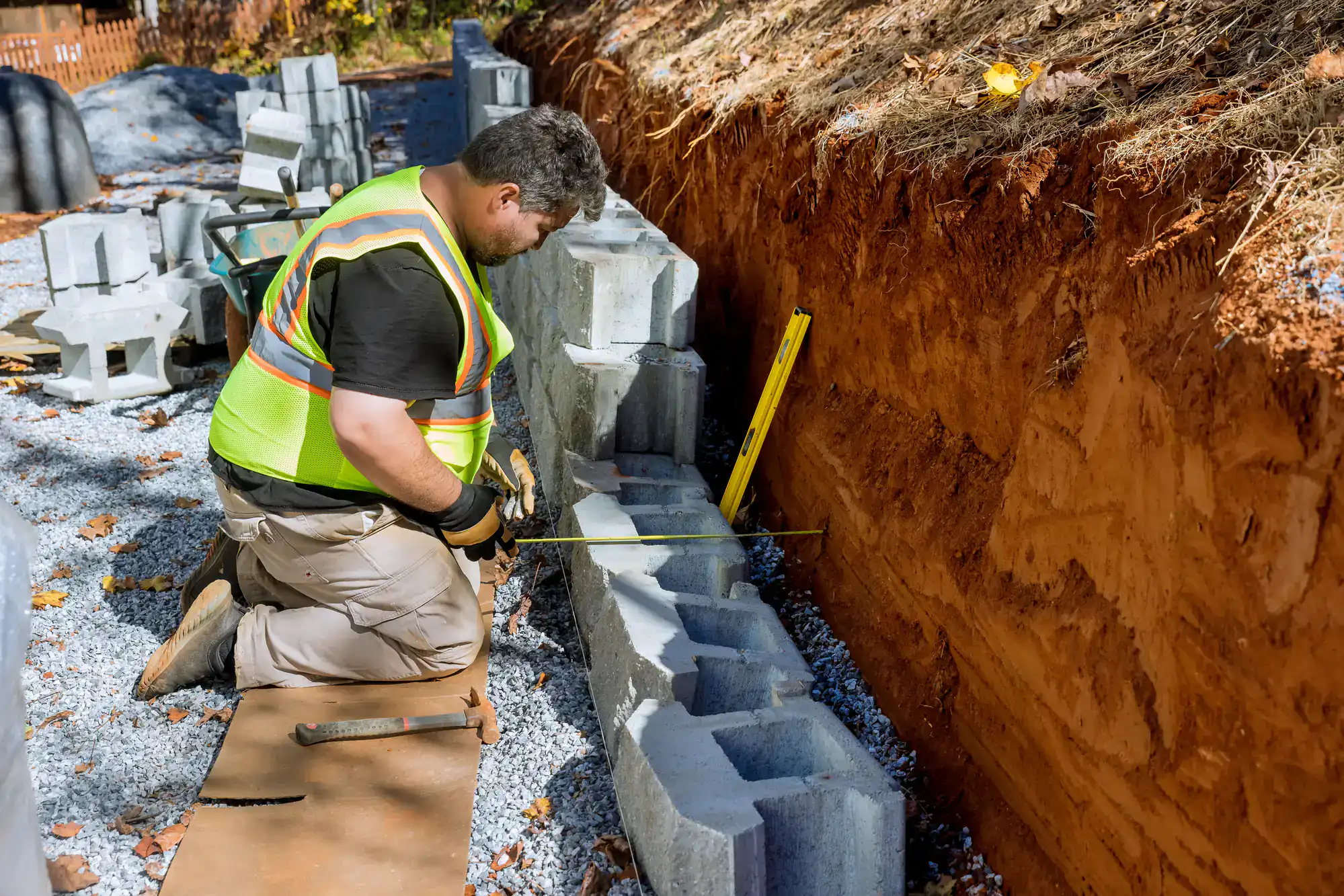
A construction worker in a safety vest kneels on gravel, measuring concrete blocks as he builds a retaining wall beside an exposed dirt slope. Tools and blocks are scattered around the worksite.

Retaining Wall Specialist Patchogue Process

How We Build Walls That Last Decades
Every project starts with an in-person evaluation of your specific site conditions. We assess soil composition, drainage patterns, slope angles, and proximity to existing structures. This isn’t a quick look—it’s a thorough analysis that determines the right approach for your property. Excavation goes 8-10 inches deep with proper base preparation using crushed stone and compaction techniques designed for sandy soil. We install drainage systems behind the wall because water buildup is the number one cause of retaining wall failure. This includes perforated pipes, gravel backfill, and proper grading to direct water away from the structure. Wall construction uses manufacturer-approved techniques with materials selected for coastal exposure and freeze-thaw cycles. We install edge restraints and use specialized backfill materials that accommodate slight movement in sandy soil while maintaining structural integrity. Every project includes final grading and cleanup, leaving you with a functional solution that protects your property long-term.
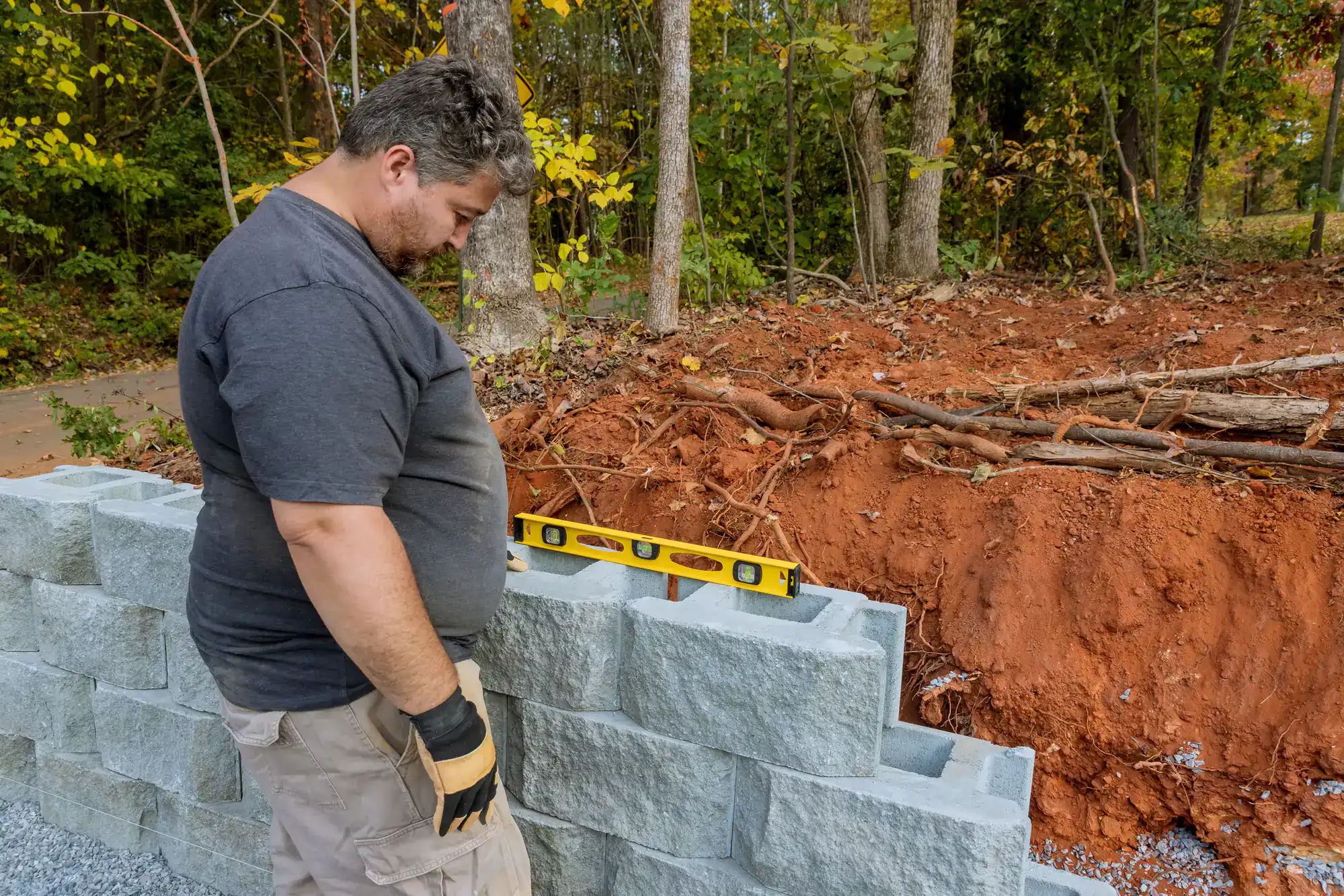
A man wearing gloves checks the level of a gray stone retaining wall with a yellow spirit level, next to a dirt embankment and forested area.

Ready to get started?

Explore More Services

About Stone Escapes Masonry & Outdoor Design

Get a Free Consultation

Masonry Contractor Patchogue Retaining Walls

What's Included In Professional Installation
Professional retaining wall installation in Patchogue includes site evaluation, proper excavation to frost line depth (30-36 inches), crushed stone base preparation, and drainage system installation. We use materials specifically rated for coastal conditions and salt air exposure. Every project includes manufacturer warranties on materials and our guarantee on workmanship. You get direct communication throughout the process—no automated systems or project managers you never meet. The same crew that starts your project finishes it, ensuring consistency and accountability. Patchogue’s location brings specific challenges that affect material selection and construction techniques. Properties near the water face salt air exposure that corrodes inferior materials. Areas with high water tables require enhanced drainage systems. Sandy soil conditions demand deeper foundations and specialized backfill materials. We address these local factors in every installation, not as afterthoughts but as primary design considerations that determine project success.
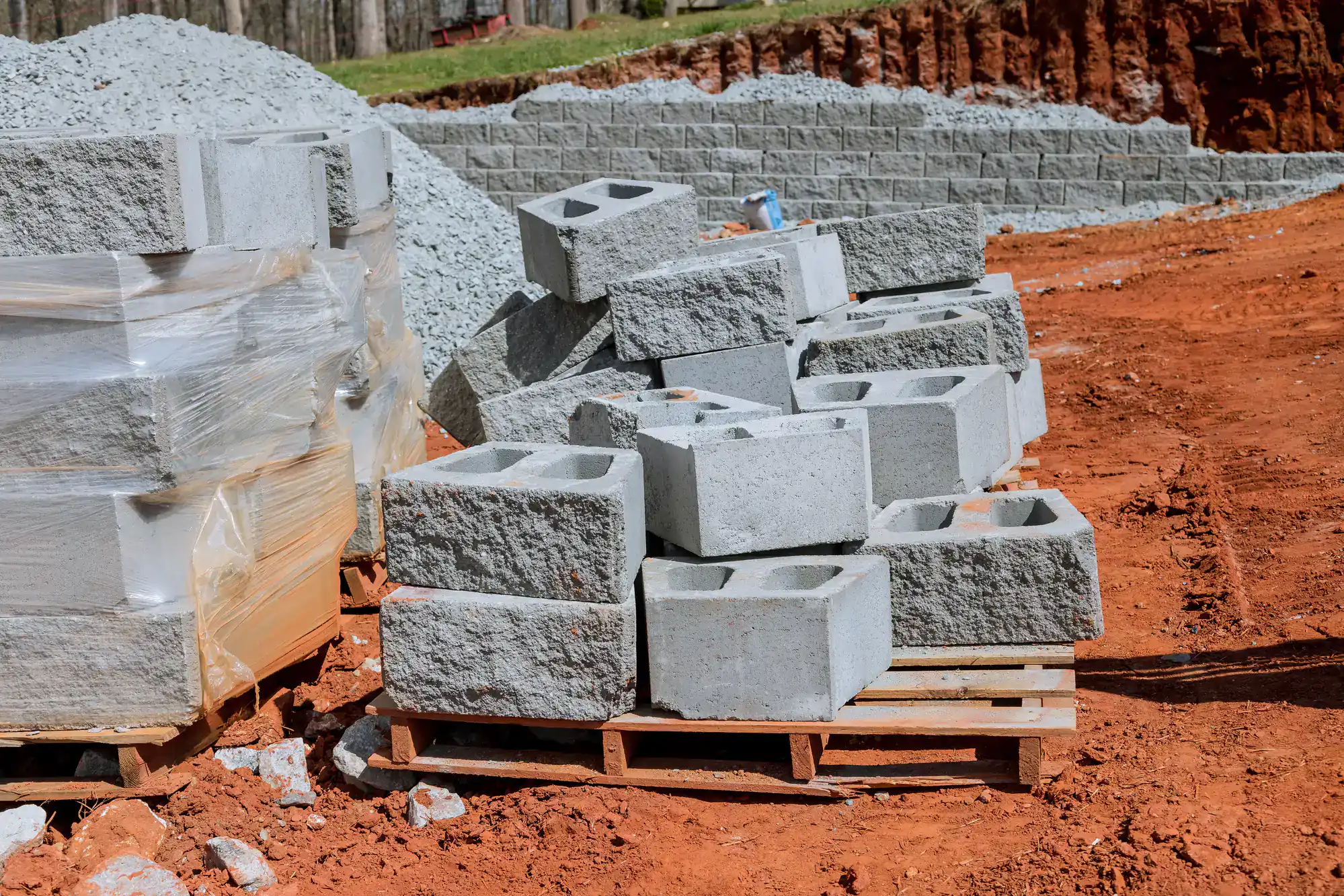
A stack of concrete cinder blocks is arranged on wooden pallets at a construction site with red soil and gravel. Wrapped blocks and a partially built stone retaining wall are visible in the background.

How deep do retaining walls need to be in Patchogue's sandy soil?

Retaining walls in Patchogue require foundations 30-36 inches deep to reach below the frost line and provide adequate stability in sandy soil conditions. This depth prevents frost heave during winter months and ensures the wall maintains structural integrity. Sandy soil drains well but lacks the natural cohesion of clay or rocky soils. Deeper foundations distribute the wall’s weight over a larger area and provide better resistance to lateral soil pressure. We excavate to proper depth and install a compacted crushed stone base that creates stable footing for long-term performance. Shallow foundations might seem adequate initially but often fail within a few years as soil shifts and settles. Professional installation with proper depth requirements costs more upfront but prevents expensive repairs or complete rebuilding later.
Effective drainage for Long Island retaining walls requires perforated pipes at the base, gravel backfill, and proper grading to direct water away from the structure. Coastal conditions with high water tables and storm surge potential demand robust drainage systems. We install 4-inch perforated PVC pipes wrapped in filter fabric and surrounded by clean gravel. This system collects water before it builds pressure behind the wall and channels it to appropriate outlets. Surface drainage includes proper grading and sometimes French drains to intercept groundwater. Poor drainage causes 90% of retaining wall failures. Water buildup creates hydrostatic pressure that can crack, lean, or collapse even well-built walls. Coastal properties face additional challenges from storm surge and seasonal water level changes that make comprehensive drainage essential for long-term stability.
Retaining wall costs in Patchogue typically range from $25-45 per square foot for professional installation, depending on height, materials, and site conditions. Segmental block walls offer good value and performance in local sandy soil conditions. Factors affecting cost include wall height, material selection, site accessibility, and drainage requirements. Walls over 4 feet require permits and often engineering, which adds to project costs. Complex sites with difficult access or extensive excavation increase labor expenses. Quality installation costs more initially but provides better long-term value than cheaper alternatives that fail prematurely. We provide detailed estimates that include all necessary components—excavation, materials, drainage, and proper backfill—so you understand exactly what’s included in your investment.
Segmental concrete blocks and natural stone perform best in Patchogue’s coastal environment because they resist salt air corrosion and accommodate slight movement in sandy soil. These materials maintain structural integrity through freeze-thaw cycles and storm conditions. Concrete blocks offer consistent quality and proven performance with various color and texture options. Natural stone provides premium aesthetics and exceptional longevity but costs more initially. Both materials work well with proper drainage and installation techniques designed for local conditions. We avoid materials that corrode in salt air or become brittle in freeze-thaw conditions. Steel reinforcement gets proper coating for coastal exposure. All materials meet manufacturer specifications for coastal installations and carry appropriate warranties for Long Island conditions.
Retaining walls over 3-4 feet typically require permits in Patchogue, with costs ranging from $50-450 depending on wall size and location. Walls supporting driveways or near property lines often need permits regardless of height. Permit applications require engineered drawings for walls over 4 feet or those supporting significant loads. We handle permit applications and ensure all work meets local building codes and safety requirements. This protects your investment and ensures proper construction standards. Building without required permits can create problems during property sales or insurance claims. Professional contractors understand local permit requirements and include necessary applications in project planning. While permits add time and cost, they ensure your retaining wall meets safety standards and legal requirements.
Properly installed retaining walls using quality materials typically last 50-100 years in Long Island conditions when built with appropriate drainage and foundation systems. Coastal exposure and sandy soil require specific construction techniques for maximum longevity. Key factors affecting lifespan include foundation depth, drainage system quality, material selection, and installation techniques. Walls built to manufacturer specifications with proper backfill and drainage systems perform well for decades. Regular maintenance like clearing drainage outlets extends service life. Poor installation or inadequate drainage can cause failure within 5-10 years, requiring expensive repairs or complete rebuilding. Professional installation with quality materials costs more initially but provides better long-term value through extended service life and reduced maintenance requirements.