Retaining Wall Contractor in North Sea, NY

Stop Losing Your Yard to Erosion

Get retaining walls built specifically for North Sea’s sandy soil and coastal storms—no more watching your property wash away.
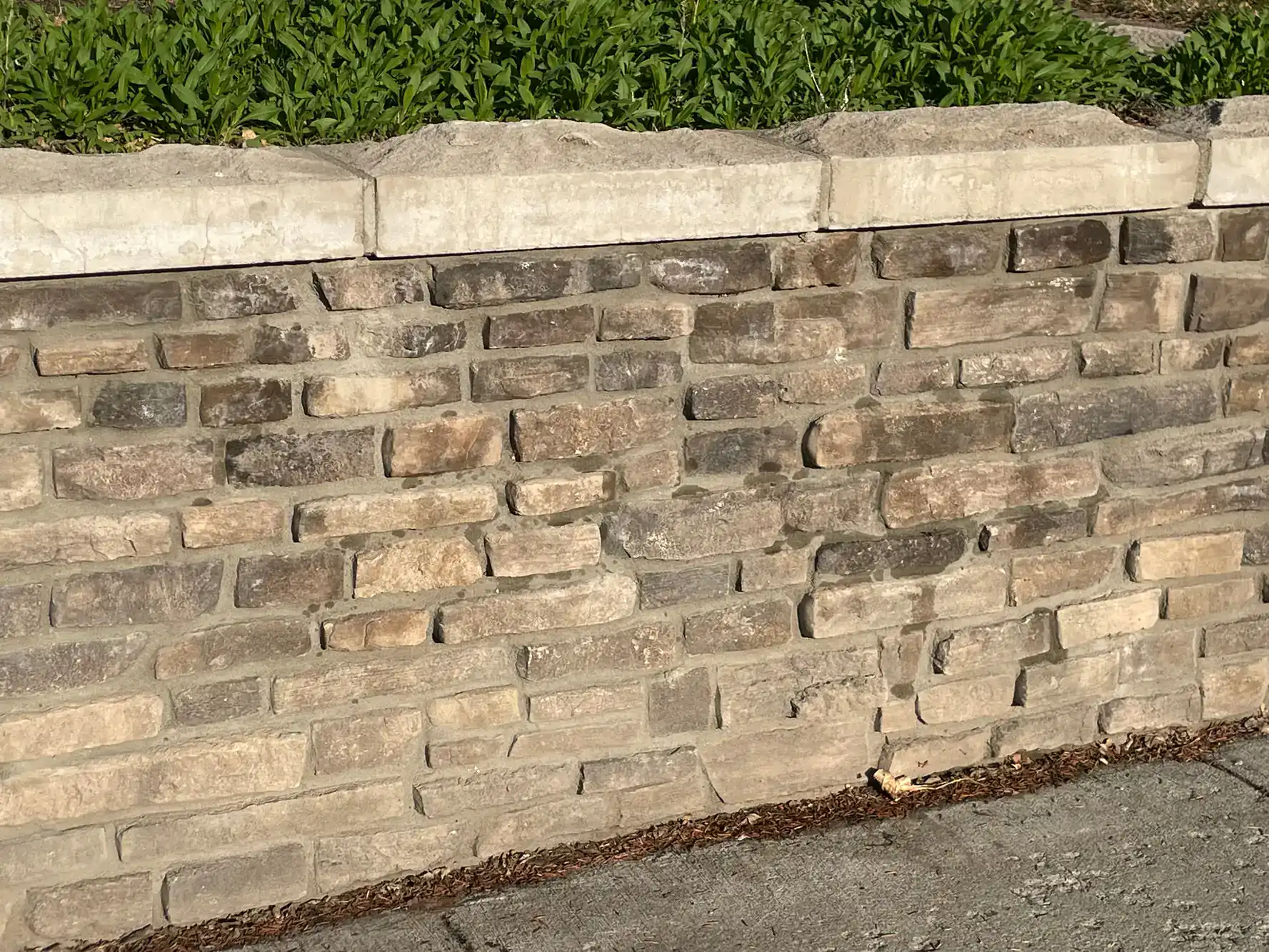
A stone retaining wall made of rectangular, tan and brown bricks supports a raised bed with green plants. Sunlight casts shadows on the textured wall and gray sidewalk below.

Hear from Our Customers

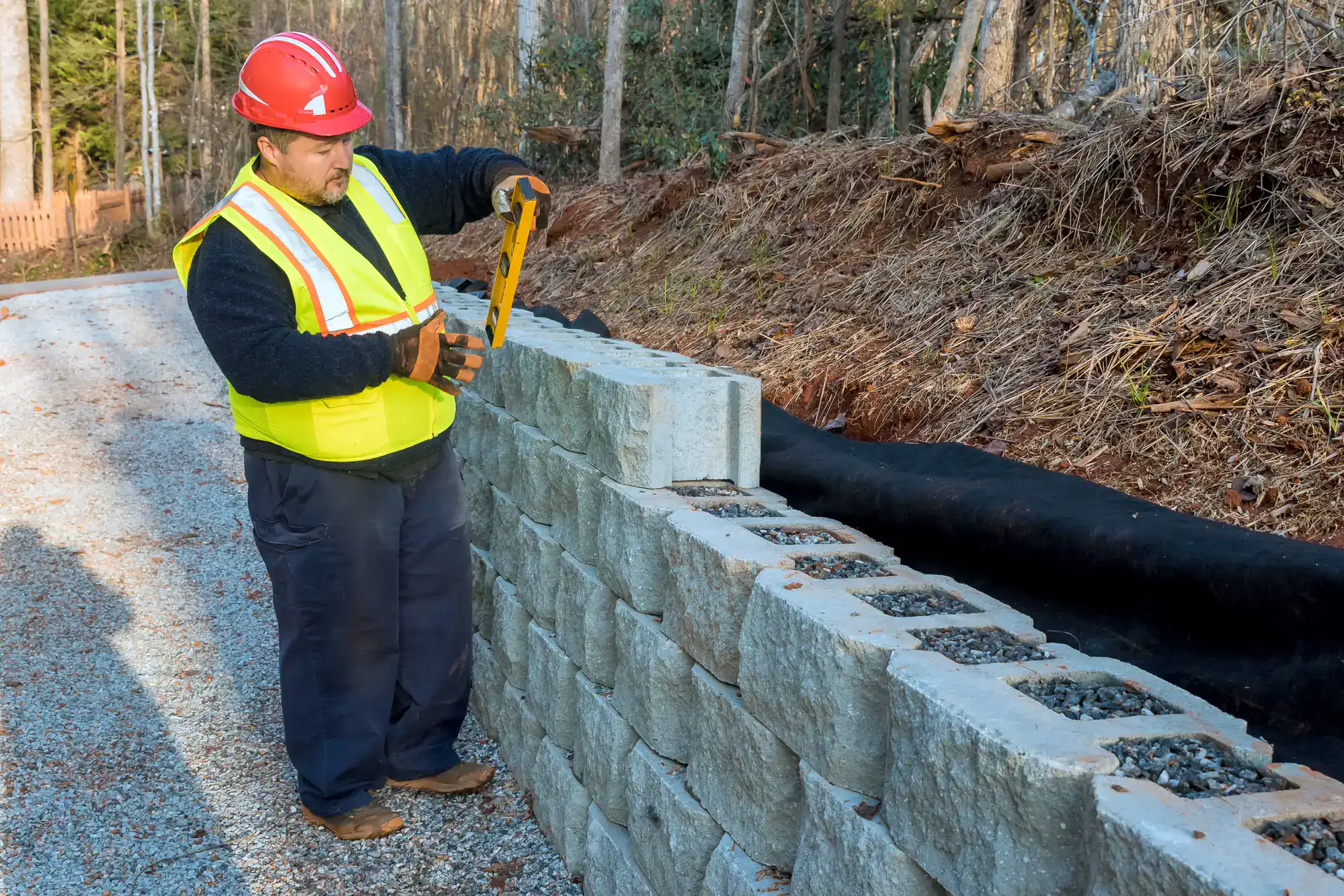
A construction worker in a yellow safety vest and red helmet uses a level to check concrete blocks while building a retaining wall next to a gravel road and a slope with trees.

Retaining Wall Installation North Sea NY

Turn Problem Slopes Into Usable Space
That steep slope eating up your backyard? It’s fixable. A properly installed retaining wall gives you level ground where you can actually use your property—patios, gardens, play areas that were impossible before. You stop worrying about soil washing away during storms. Your foundation stays protected from the shifting and settlement that’s common with North Sea’s sandy conditions. Most importantly, you get peace of mind knowing your property investment is secure, even when Long Island’s nor’easters and hurricanes hit your area.

Retaining Wall Specialist North Sea NY

We Know North Sea's Soil Challenges
Stone Escapes has been solving North Sea’s retaining wall challenges for over 15 years. We’re the local family-owned company that actually understands what Long Island’s sandy soil and coastal weather do to poorly built walls. Owner Iain Traynor brings union masonry experience to every project. He’s on-site for estimates and stays involved through completion—no disappearing act after you sign the contract. We’re licensed and insured throughout Suffolk County because we know North Sea homeowners need contractors who follow the rules and stand behind their work. Your neighbors trust us, and we’ve earned that reputation one properly built wall at a time.
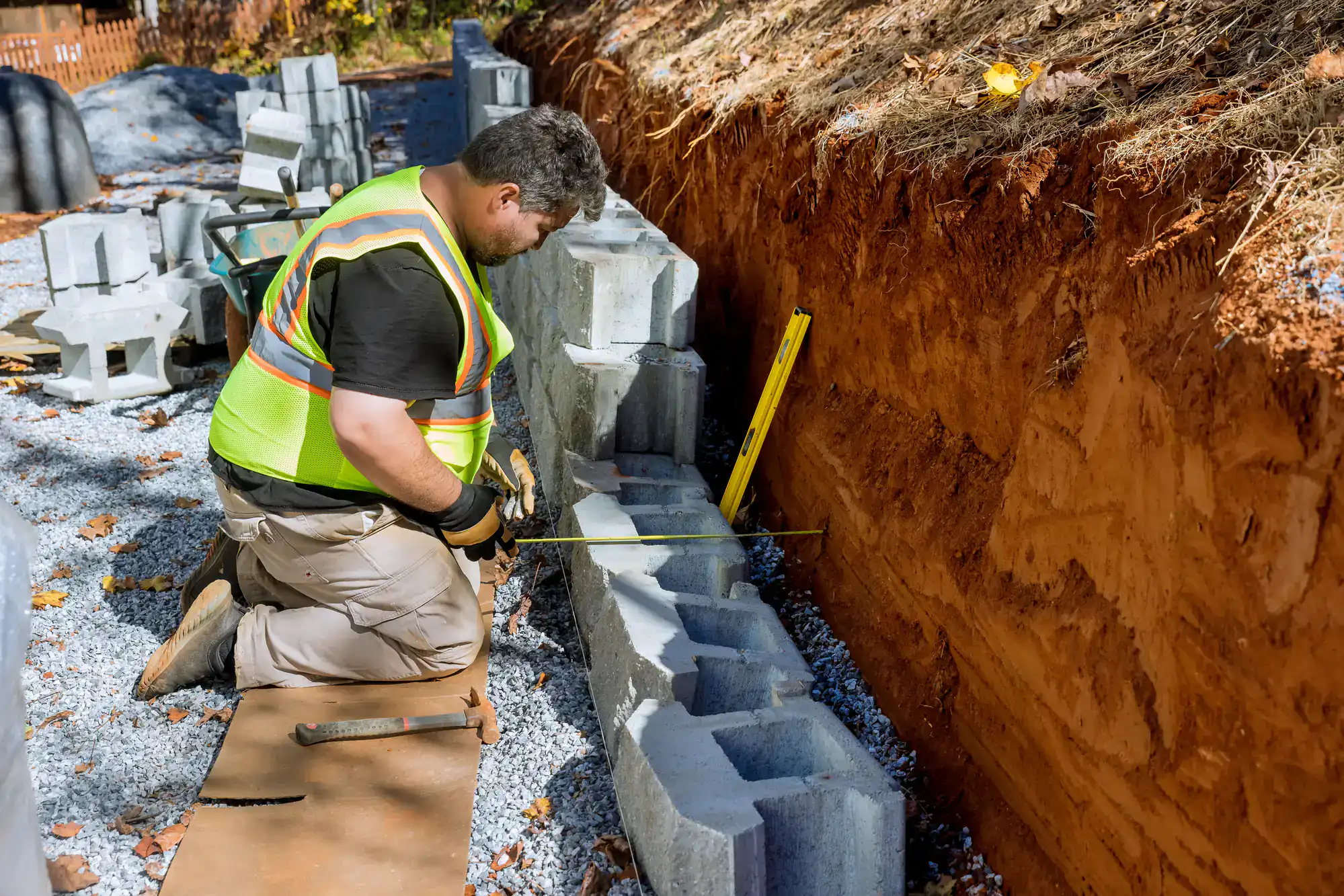
A construction worker in a safety vest kneels on gravel, measuring concrete blocks as he builds a retaining wall beside an exposed dirt slope. Tools and blocks are scattered around the worksite.

Retaining Wall Builder North Sea Process

Built Right the First Time
We start with a real site evaluation—not a quick look from your driveway. We’re checking soil conditions, measuring slopes, and figuring out drainage patterns that affect your wall’s performance. Excavation goes deep enough to reach stable soil below North Sea’s frost line. That’s typically 30-36 inches, sometimes deeper for taller walls. We install proper crushed stone bases and drainage systems that handle Long Island’s heavy rains. Wall construction follows manufacturer specifications with materials rated for coastal conditions. We backfill with proper drainage materials, install edge restraints, and finish with grading that directs water away from your new wall.
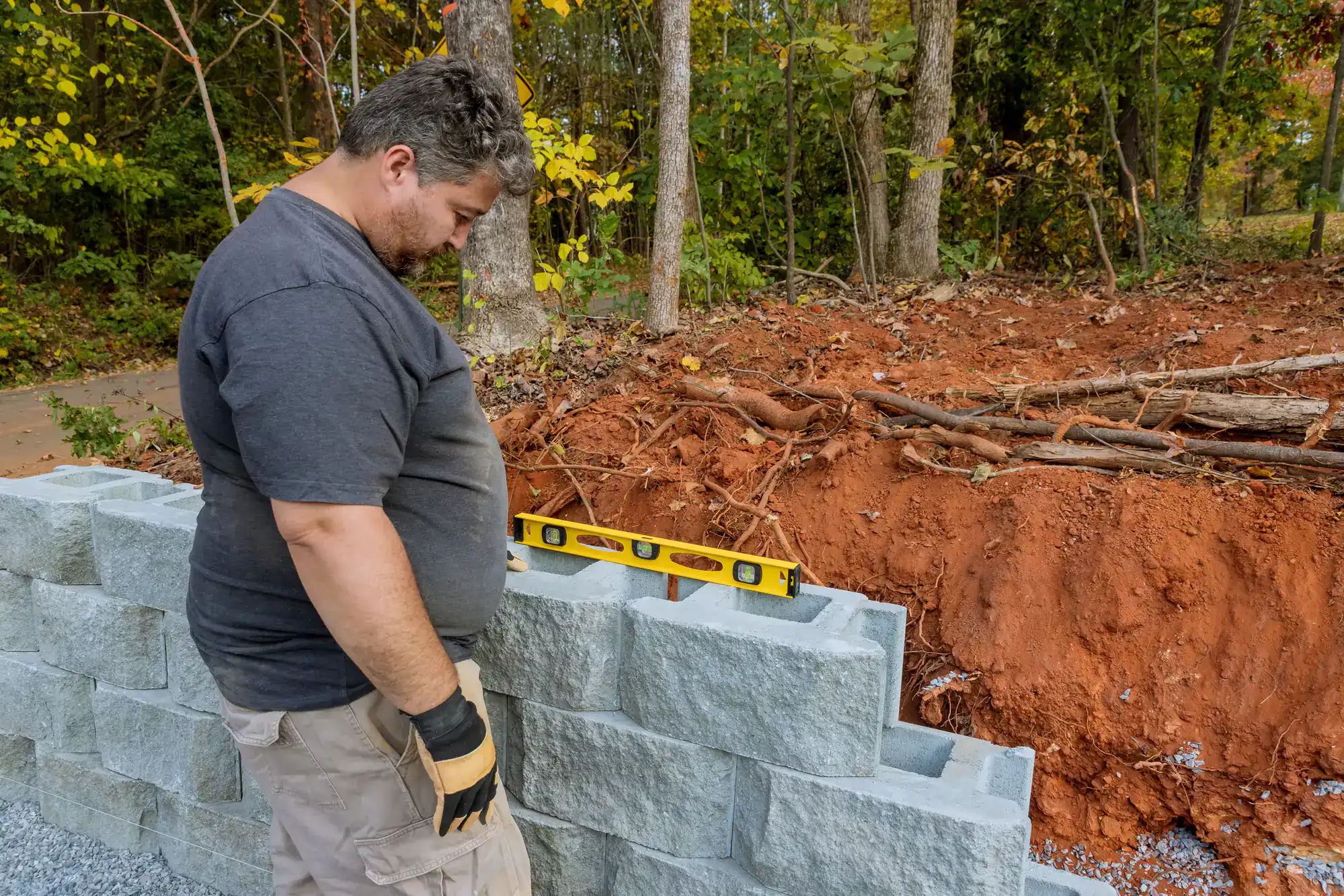
A man wearing gloves checks the level of a gray stone retaining wall with a yellow spirit level, next to a dirt embankment and forested area.

Ready to get started?

Explore More Services

About Stone Escapes Masonry & Outdoor Design

Get a Free Consultation

Stone Wall Installer North Sea Services

Everything Included for Coastal Conditions
Your retaining wall installation includes everything needed for North Sea’s challenging environment. We handle permits, coordinate with Suffolk County building departments, and arrange engineering consultation for taller walls. Material options include segmental block systems that flex with sandy soil movement, natural stone that handles salt air exposure, and manufactured products from Cambridge, Techo-Bloc, and Unilock that we’re certified to install. Every wall gets comprehensive drainage with gravel backfill, filter fabric, and weep holes or drain pipes. We use corrosion-resistant materials and construction techniques developed specifically for Long Island’s coastal conditions—not generic approaches that fail in a few years.
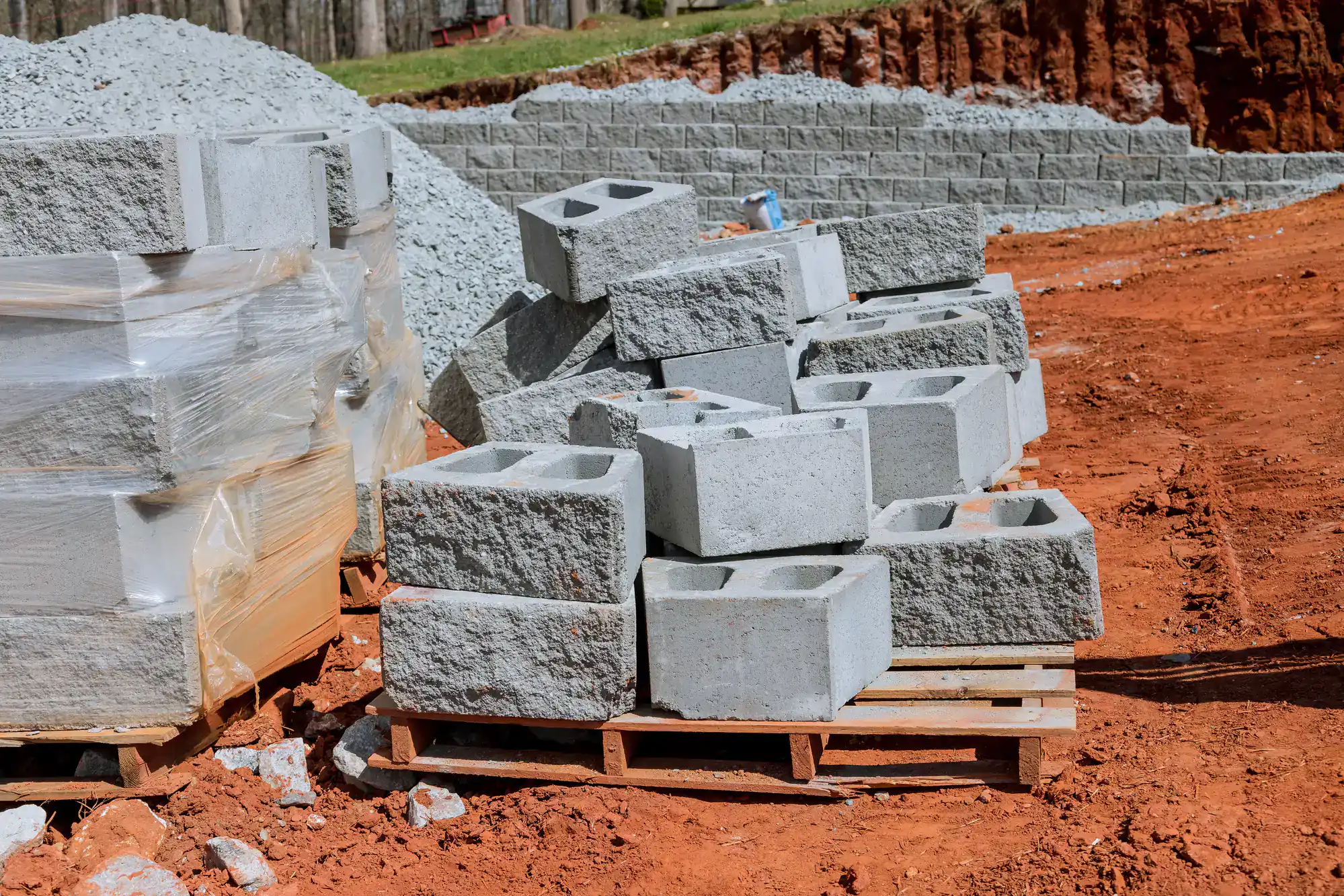
A stack of concrete cinder blocks is arranged on wooden pallets at a construction site with red soil and gravel. Wrapped blocks and a partially built stone retaining wall are visible in the background.

How deep do retaining walls need to be in North Sea?

Your retaining wall foundation needs to go below North Sea’s frost line, which is 30-36 inches deep in Suffolk County. This prevents frost heave from destroying your wall during winter freeze-thaw cycles that are brutal on Long Island. Taller walls over 4 feet often need deeper foundations for stability in sandy soil. We determine exact depth requirements during our site evaluation based on your specific conditions. Shallow foundations are the main reason retaining walls fail in North Sea. Contractors who cut corners on foundation depth create problems that show up within 2-3 years. Proper depth means your wall lasts decades, not just a few seasons.
Every retaining wall in North Sea needs serious drainage because Long Island gets hammered by storms. We install 12-24 inches of gravel backfill behind your wall so water can drain away instead of building pressure. Filter fabric keeps soil from clogging the drainage gravel, and weep holes or drain pipes at the base channel water away from the structure. This prevents the hydrostatic pressure that destroys walls during nor’easters. North Sea’s sandy soil helps with drainage, but storm water can still overwhelm natural capacity. Without proper drainage systems, even the strongest wall fails when water pressure builds up behind it during heavy rains.
Most North Sea retaining wall projects run $35-65 per square foot for professional installation. Typical residential projects range from $3,500-13,000 depending on size, materials, and site conditions. Costs vary based on wall height, length, and material choice. Walls over 4 feet require engineering ($2,000-5,000 extra) and permits ($50-450 in Suffolk County). Sandy soil can reduce excavation costs, but coastal drainage requirements may increase materials. We provide detailed estimates that include everything needed for North Sea’s specific conditions—no surprise costs after we start work. You get accurate pricing upfront so you can make informed decisions about your investment.

Segmental concrete block systems perform exceptionally well in North Sea because they’re designed for sandy soil conditions and handle coastal weather. These interlocking systems flex during freeze-thaw cycles instead of cracking. Natural stone like granite and limestone offers excellent durability against salt air exposure. We also install manufactured systems from Cambridge, Techo-Bloc, and Unilock that meet Long Island’s performance requirements. Material choice depends on your budget, appearance preferences, and wall height. We recommend options that balance cost with the durability needed for North Sea’s challenging coastal environment—materials that perform for decades, not just look good initially.
Most walls over 3-4 feet tall need permits in Suffolk County, and walls over 4 feet typically require engineering drawings. Requirements depend on height, property line proximity, and location relative to septic systems or wells. We handle permit applications and coordinate with local building departments to ensure compliance. Permit costs run $50-450, and approval typically takes 2-4 weeks. Shorter walls may still need permits if they’re near wetlands or in flood zones, which are common in coastal North Sea. We evaluate these requirements during our site visit and include all necessary permitting in your project timeline and costs.
Properly built retaining walls in North Sea last 50+ years when constructed with appropriate materials and drainage for Long Island’s coastal conditions. The key is using corrosion-resistant materials and proper installation techniques. North Sea’s salt air and storm exposure require enhanced construction compared to inland areas. We use marine-rated materials and comprehensive drainage systems that handle moisture and freeze-thaw cycles common in Suffolk County. Regular maintenance like cleaning drainage weep holes extends wall life significantly. Our installations include warranties and maintenance guidelines specific to coastal conditions to maximize your investment’s longevity.