
Hear from Our Customers
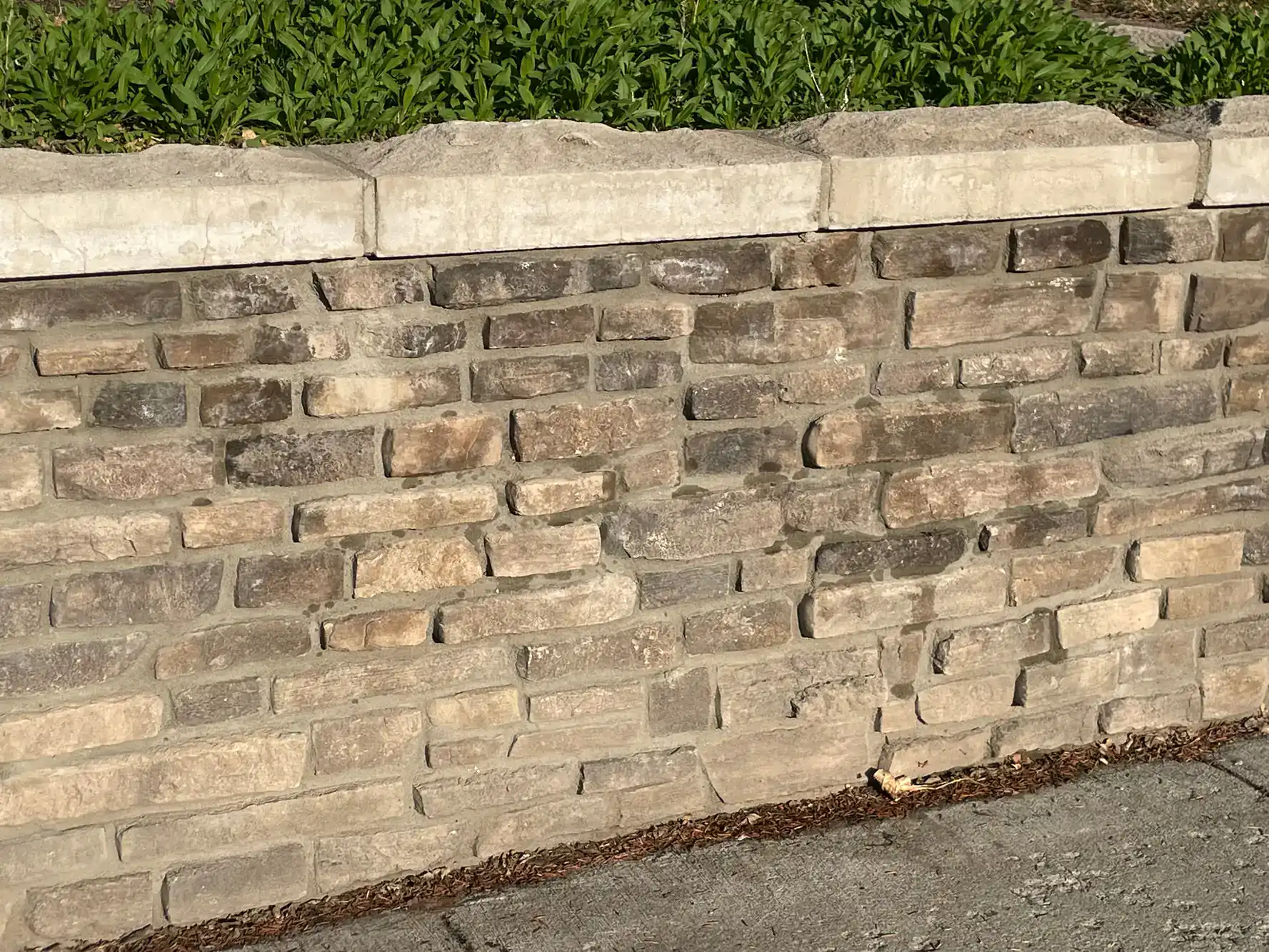
You get walls that actually work in Long Island’s challenging conditions. No more worrying about frost heave cracking your investment or water pressure pushing walls out of place. Your sloped yard becomes usable space that adds real value to your property.
We build to handle North Amityville’s sandy soil and coastal weather. That means proper foundation depth below the frost line, drainage systems that prevent hydrostatic pressure, and materials that withstand salt air exposure.
The result? Walls that protect your landscape from erosion while creating attractive outdoor areas you’ll actually use. Your property value increases, your drainage issues disappear, and you get decades of reliable performance.
Stone Escapes has been building retaining walls across Suffolk County with owner Iain Traynor personally handling every estimate and staying on-site throughout each project. His union masonry background and carpentry experience from working with his father means you get someone who actually knows construction.
We’re licensed in Suffolk County and Nassau County, plus Southampton and East Hampton townships. Our BBB accreditation since 2020 and feature in Cambridge Pavingstone’s magazine reflect the quality that keeps clients referring their neighbors.
North Amityville homeowners choose us because we understand Long Island’s specific challenges – from sandy soil that shifts to coastal moisture that demands proper drainage. We use certified materials from Cambridge, Techo-Bloc, Unilock, and other trusted manufacturers.
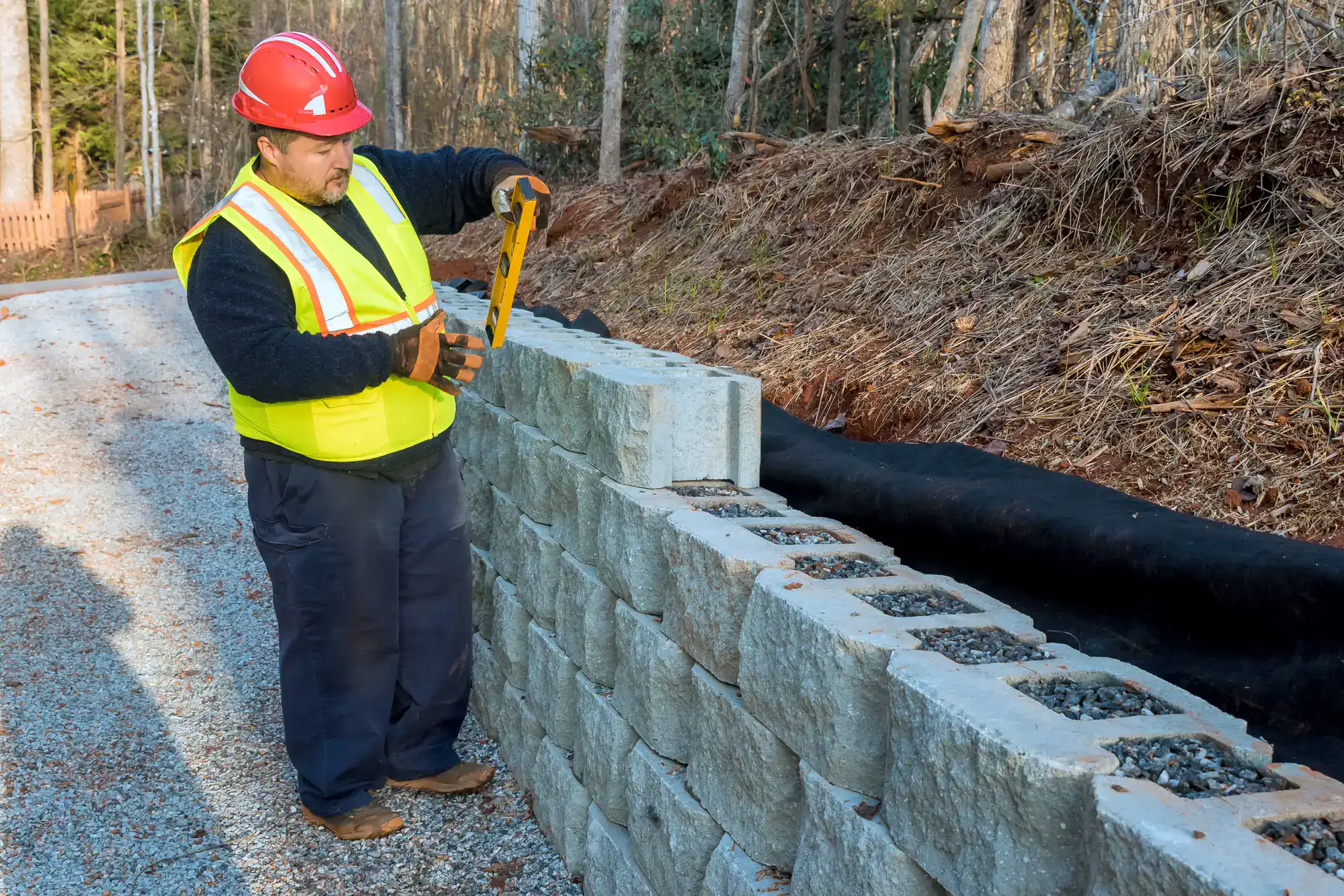
First, we assess your property’s soil conditions, drainage patterns, and grade requirements. This isn’t guesswork – Long Island’s sandy soil and high water tables demand specific approaches that differ from inland construction methods.
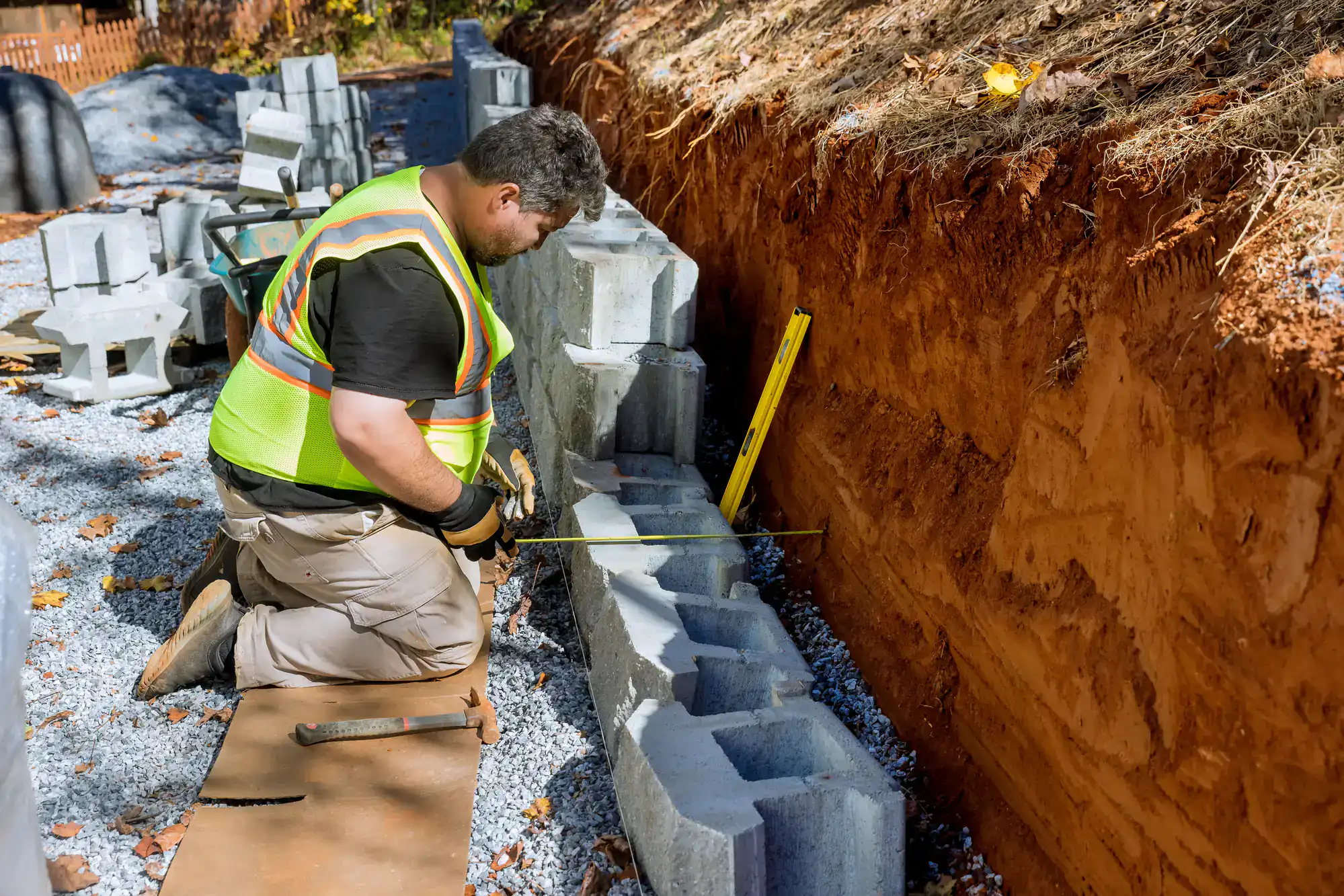
Next, we excavate to proper depth, typically 30-36 inches in Nassau and Suffolk Counties to reach below the frost line. We install a crushed stone base with proper compaction to create stable foundation support that accommodates North Amityville’s soil characteristics.
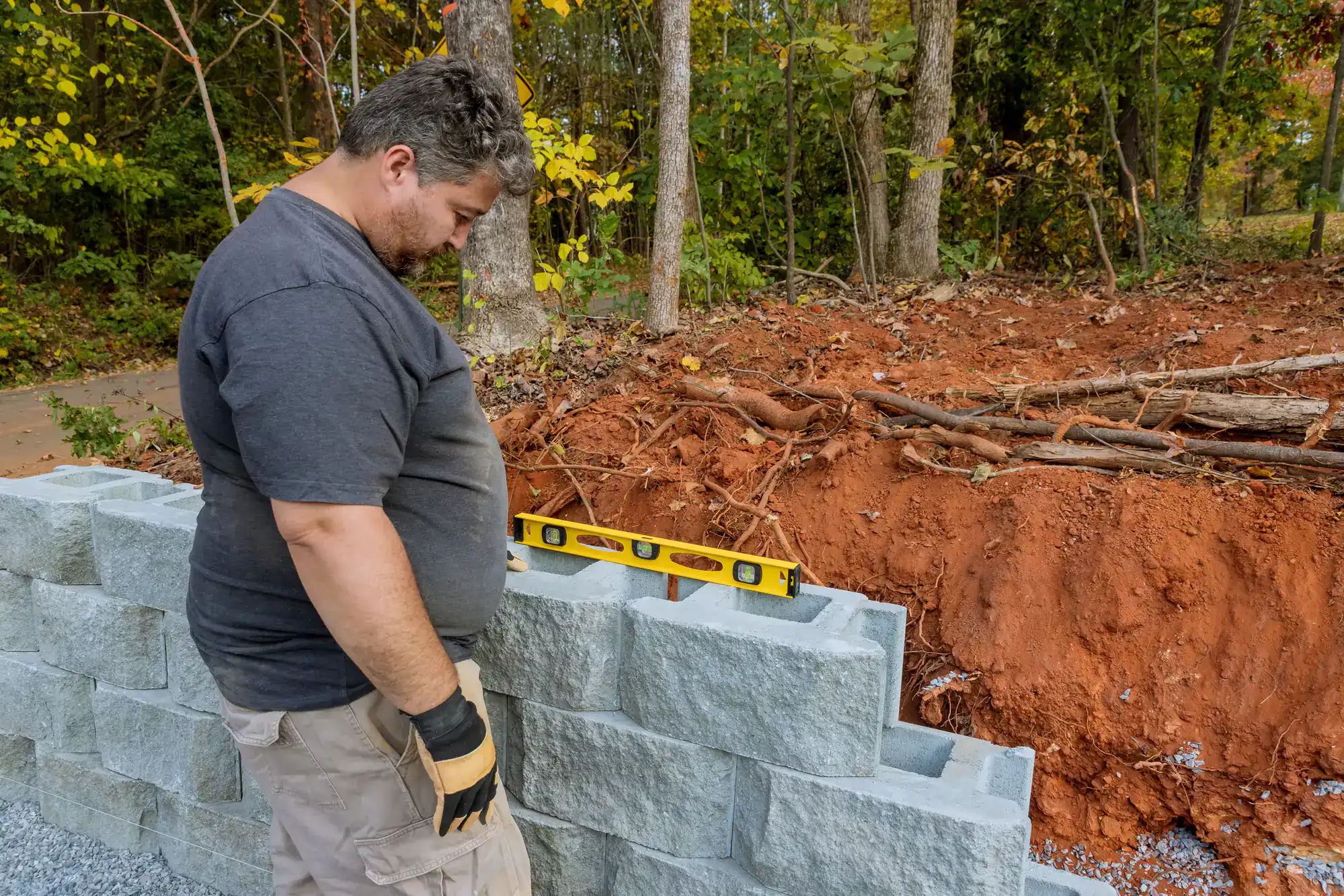
Then we build the wall using materials selected for coastal conditions, incorporating drainage systems like gravel backfill, perforated pipes, and weep holes. Every course gets proper alignment and the drainage system gets tested before backfilling. You get a wall engineered to handle decades of Long Island weather while looking exactly like you envisioned.
Ready to get started?
Your retaining wall project includes proper excavation below frost line, engineered foundation preparation, and drainage systems designed for Long Island’s coastal climate. We use materials from Cambridge, Techo-Bloc, Unilock, Nicolock, Eldorado, and Boral – all certified for durability and performance.
North Amityville properties get special attention for salt air exposure and storm surge considerations. That means corrosion-resistant materials and enhanced drainage systems that prevent the hydrostatic pressure buildup that destroys walls over time.
You also get direct communication with owner Iain Traynor throughout the project, not a rotating crew of subcontractors. Our walls accommodate the slight movement common in Long Island’s sandy soil while maintaining structural integrity. The result is a wall system that protects your property from soil erosion while creating attractive solutions for usable space expansion.
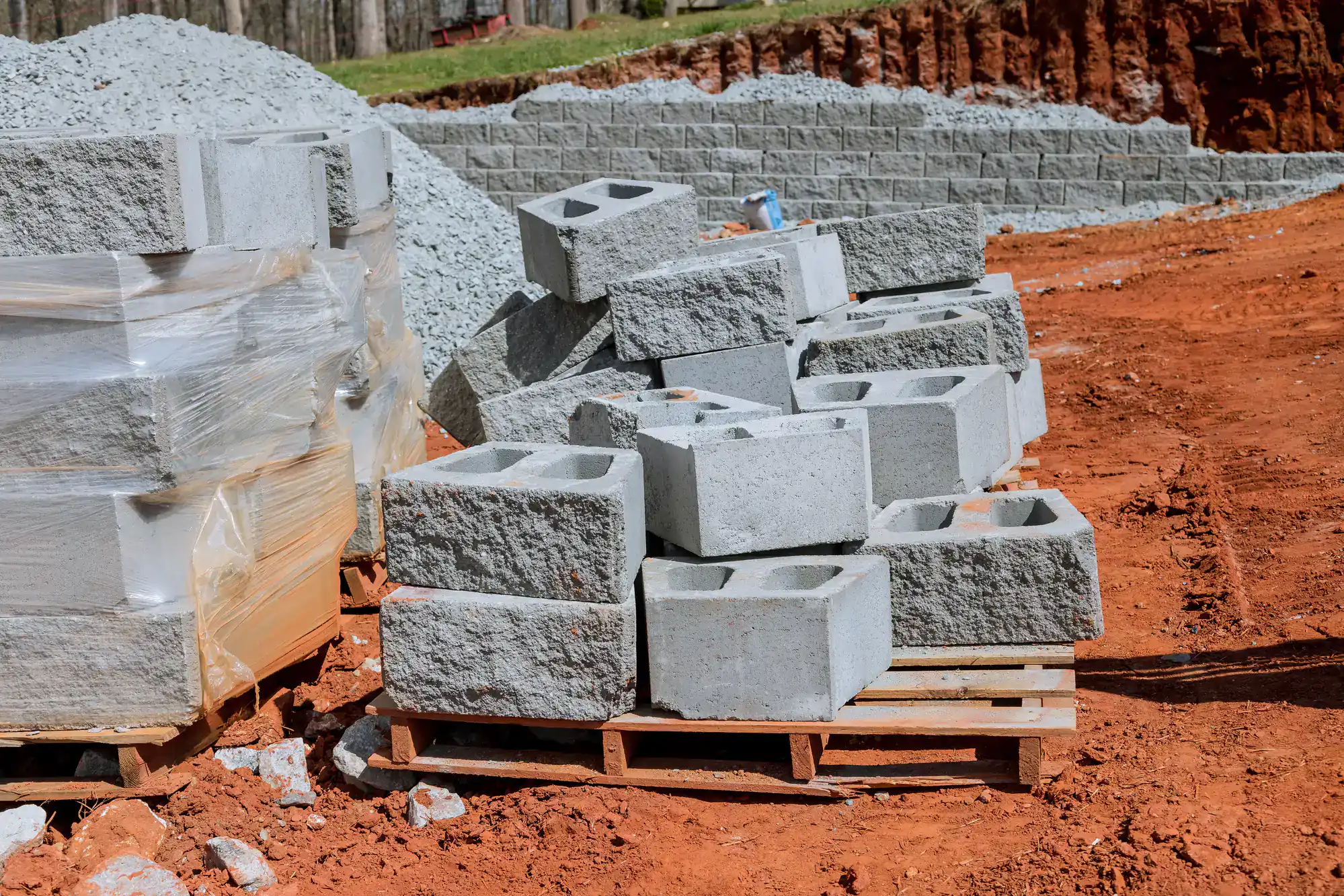
In North Amityville and throughout Suffolk County, retaining wall foundations must extend 30-36 inches deep to reach below the frost line. This prevents frost heave that can cause wall failure during Long Island’s freeze-thaw cycles.
The foundation depth also depends on wall height and soil conditions. North Amityville’s sandy soil requires specific foundation preparation with compacted crushed stone base material to create stable support. Walls over 4 feet typically need engineering design to ensure proper foundation specifications for local conditions.
Long Island retaining walls need multi-layered drainage systems because of our high water tables and coastal weather. This includes at least 12 inches of gravel backfill directly behind the wall, perforated drainage pipes at the base, and weep holes to channel water away from the foundation.
North Amityville’s sandy soil and coastal moisture require additional drainage considerations like filter fabric to prevent soil infiltration and proper grading to direct surface water away from the wall structure. Without these systems, hydrostatic pressure builds up and can push walls outward or cause structural failure.
Professional retaining wall installation in North Amityville typically costs $25-45 per square foot for segmental block walls, though costs can range up to $54-58 per square foot depending on materials, height, and site conditions. Natural stone walls cost more but offer premium aesthetics and exceptional longevity.
Factors affecting cost include wall height, drainage requirements, site access, material selection, and permit requirements. Walls over 4 feet need engineering design which adds $500-2000 to the project. The investment pays off with proper installation that prevents costly repairs and increases property value.
North Amityville’s coastal climate demands materials that resist salt air exposure and handle moisture fluctuations. Interlocking concrete block systems from Cambridge, Techo-Bloc, and Unilock perform exceptionally well because they accommodate slight movement in sandy soil while maintaining structural integrity.
Natural stone like fieldstone offers timeless appeal and can last 50-200 years when properly installed with reinforcement and drainage systems. These materials resist freeze-thaw cycles and coastal weather better than wood options, which require frequent replacement in Long Island’s harsh conditions.
Most municipalities require permits for retaining walls over 3-4 feet tall, and North Amityville follows Suffolk County regulations for structural walls. Permit costs range from $50-450 depending on wall size and complexity. Walls over 4 feet typically need structural engineer design for safety and code compliance.
Your contractor should handle permit applications and ensure compliance with local building codes. This includes proper foundation depth, drainage requirements, and material specifications for Long Island conditions. Skipping permits can result in costly violations and insurance issues if problems develop.
Well-built retaining walls in North Amityville can last 50-200 years when properly designed for Long Island’s soil conditions and coastal climate. The lifespan depends on materials used, foundation preparation, drainage systems, and installation quality. Stone walls typically outlast concrete block, which outlasts wood options.
Professional installation with proper excavation, foundation depth, and drainage systems ensures maximum longevity. Regular maintenance like clearing drainage systems and monitoring for settlement helps walls perform reliably for decades. Cheap installation or inadequate drainage can cause failure within just a few years.