
Hear from Our Customers
You’re tired of seeing your landscaping disappear down the slope after every heavy rain. Your neighbors have solid, attractive retaining walls that actually work, while you’re left dealing with erosion and unusable space.
Here’s what changes when your retaining wall is built correctly for Mount Sinai’s conditions. Your property stays put during storms because the wall includes proper drainage designed for Long Island’s high water table and sandy soil. The space behind your wall becomes usable instead of a muddy mess, giving you room for gardens, patios, or simply a level lawn.
Your home value increases with professional hardscaping that complements Mount Sinai’s North Shore aesthetic. Most importantly, you stop worrying about soil washing away because the wall is engineered to handle coastal weather and freeze-thaw cycles that destroy poorly built walls within a few seasons.
Stone Escapes has been building retaining walls across Mount Sinai and Long Island for over 15 years. Owner Iain Traynor brings union masonry experience and stays personally involved in every project from estimate to completion.
We hold certifications from Cambridge, Techo-Bloc, Unilock, Nicolock, Eldorado, and Boral – manufacturers that understand coastal conditions. We’re licensed in Suffolk and Nassau counties, which means we know local building codes and soil requirements specific to areas like Mount Sinai.
Every project addresses Long Island’s unique challenges: sandy soil that shifts, coastal moisture that corrodes inferior materials, and freeze-thaw cycles that crack poorly designed walls. We excavate to proper depth (8-10 inches minimum), install appropriate drainage, and use materials rated for Long Island’s climate.
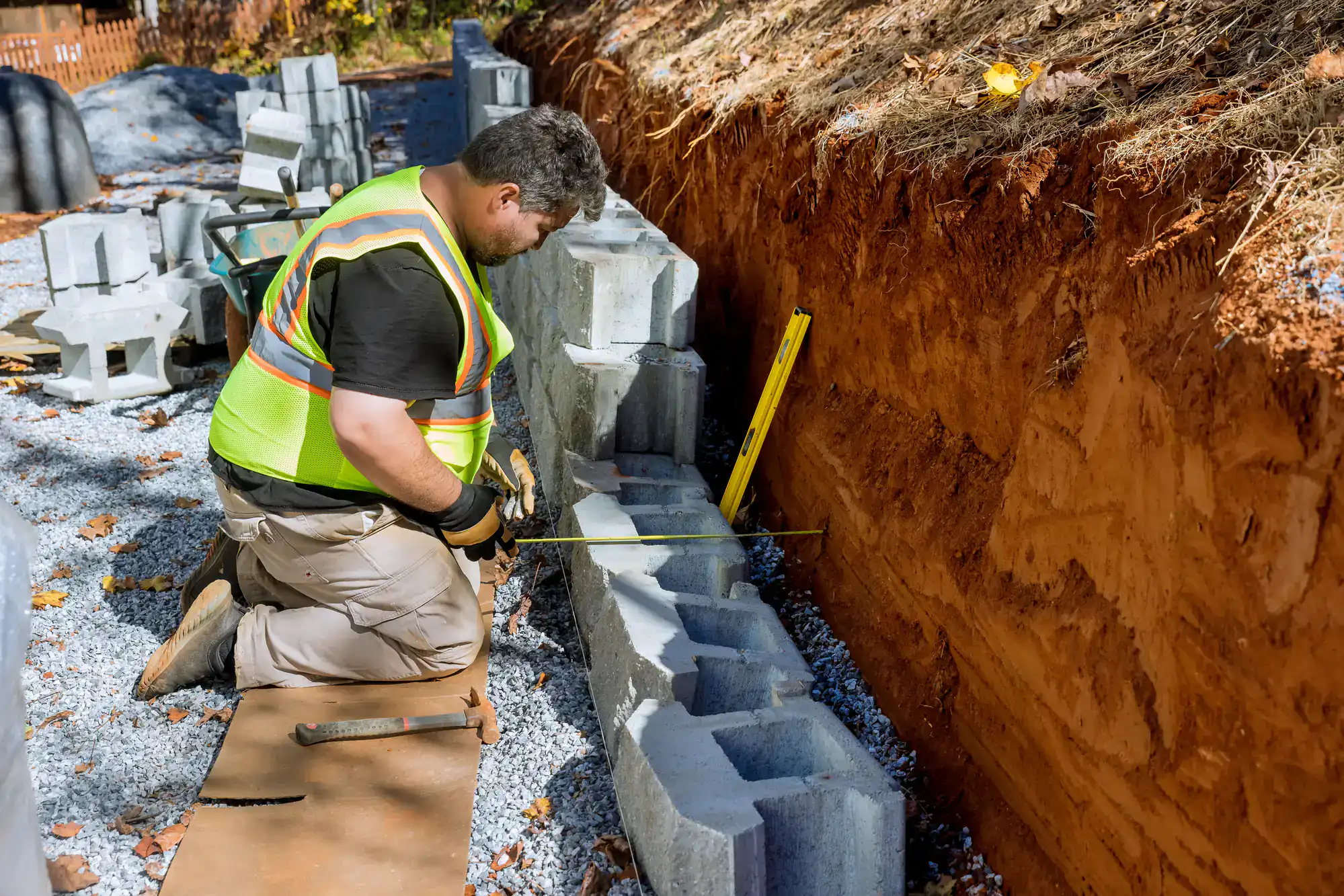
First, Iain personally evaluates your property’s slope, drainage patterns, and soil conditions. He identifies problem areas and explains why your current situation isn’t working. You get a detailed estimate that covers excavation, materials, drainage systems, and timeline.
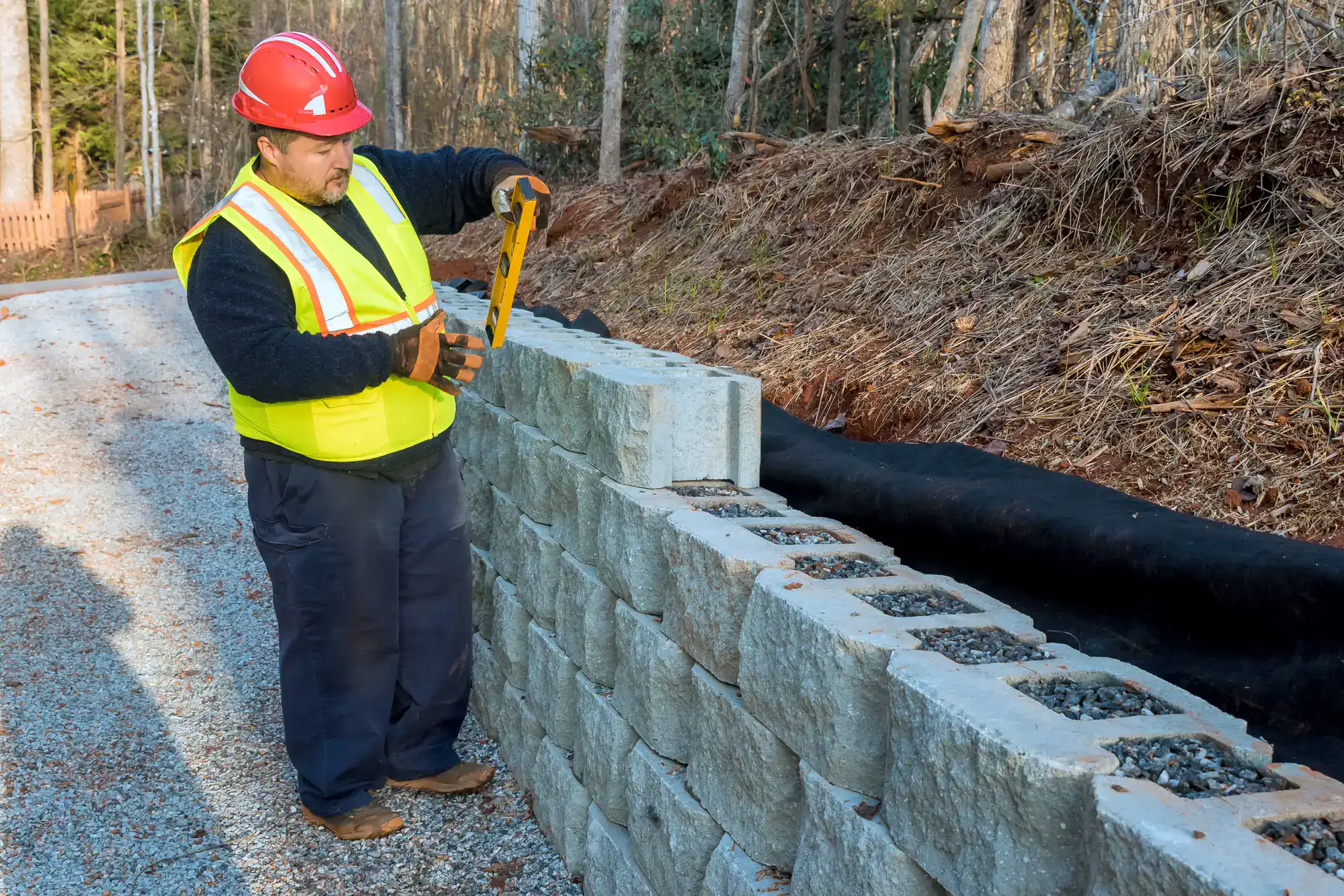
Next, our crew excavates to below frost line – typically 30-36 inches deep in Mount Sinai to prevent frost heave damage. We install a proper stone base with compaction, then add the drainage system that actually works: perforated pipes, gravel backfill, and filter fabric to prevent soil infiltration.
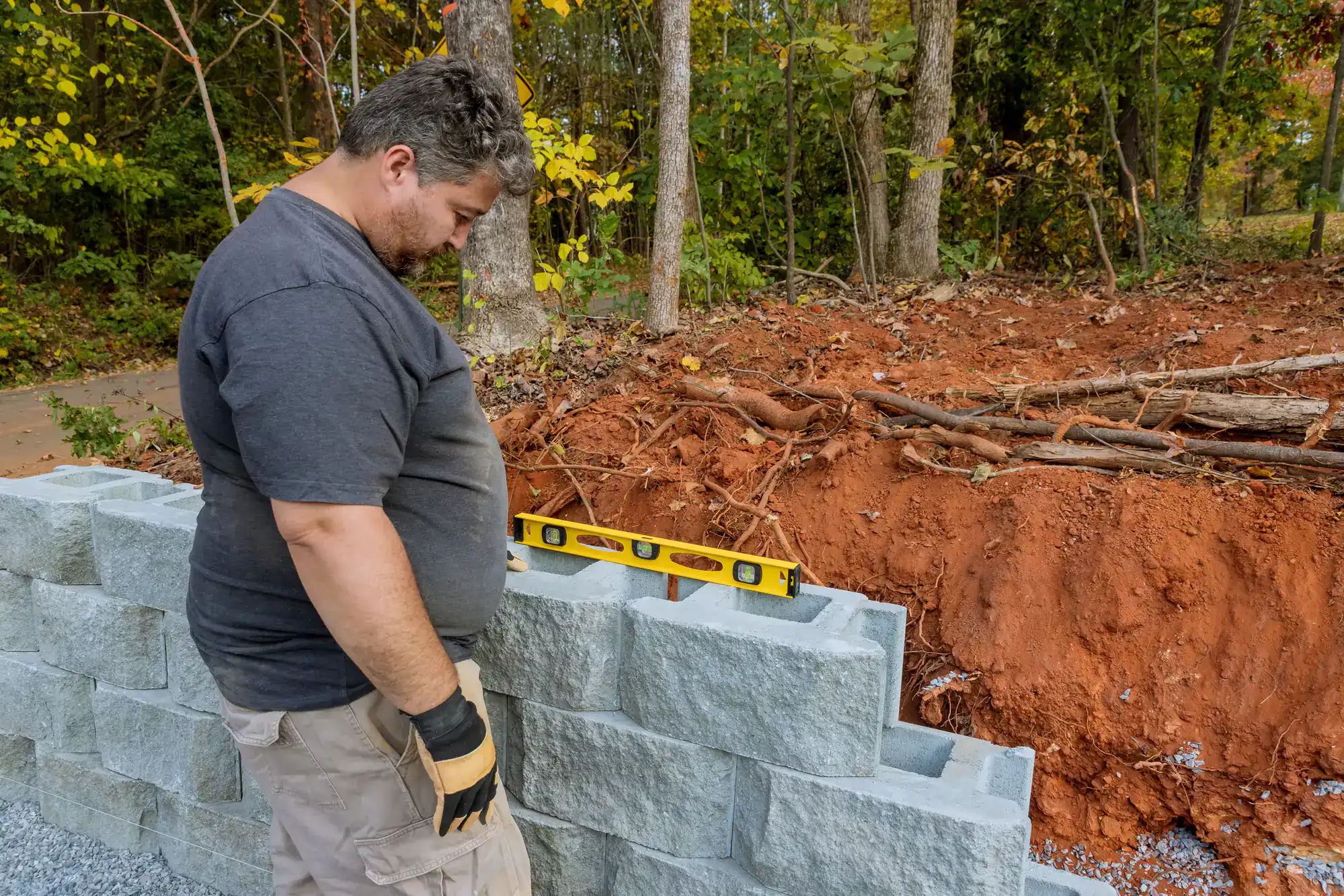
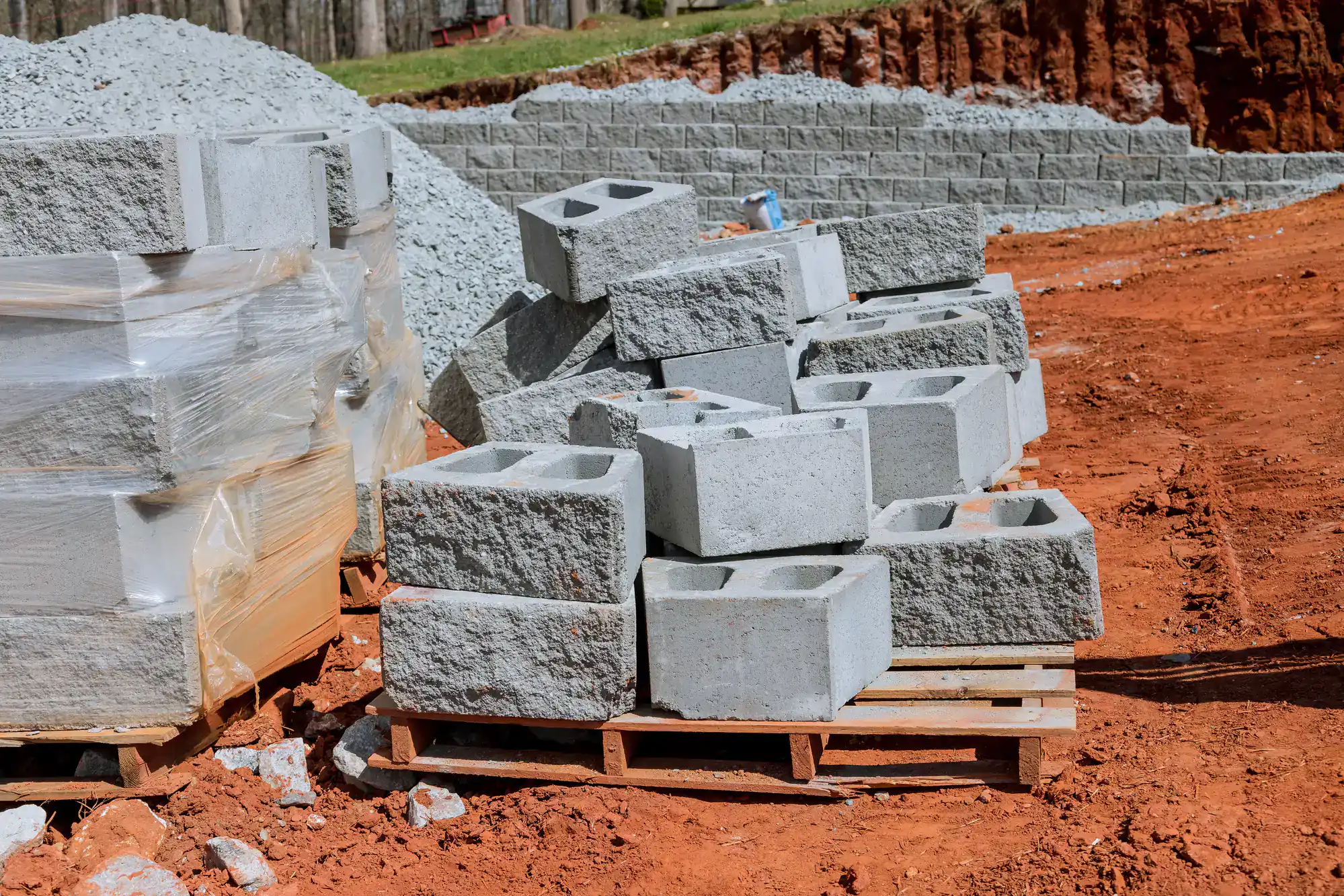
The wall goes up with manufacturer-approved techniques, whether you choose natural stone, concrete blocks, or interlocking pavers. Each course is checked for level and proper setback. Finally, we backfill with clean stone (not dirt that holds water), compact everything properly, and clean up completely. You get a wall that handles Long Island weather instead of failing after two winters.
Ready to get started?
Your retaining wall project includes proper site evaluation, not just a quick look at the slope. Stone Escapes assesses soil composition, existing drainage issues, and how Mount Sinai’s coastal location affects material selection. You get recommendations based on what actually works here, not generic solutions.
Our installation covers excavation to below frost line, engineered base preparation, and drainage systems designed for Long Island’s high water table. Materials are selected for coastal weather resistance – no shortcuts with products that deteriorate in salt air or fail during freeze-thaw cycles.
Mount Sinai properties often deal with sandy soil that doesn’t provide stable support for retaining walls. Our process includes proper compaction techniques and base materials that create stability in challenging soil conditions. You also get cleanup that’s actually complete, plus a warranty backed by a licensed contractor who stays in business and stands behind the work.
Your retaining wall foundation needs to extend 30-36 inches below ground level in Mount Sinai to reach below the frost line. This prevents frost heave damage that destroys shallow foundations during winter freeze-thaw cycles.
The depth also depends on wall height and soil conditions. Walls over 4 feet typically need deeper foundations, while sandy soil common in Mount Sinai requires additional base preparation with compacted stone. Professional installation includes proper excavation and base materials that provide stable support in local soil conditions.
Skipping proper foundation depth is why many retaining walls fail within a few years. You end up paying twice – once for the cheap installation, then again for complete rebuilding when the wall shifts or collapses.
Effective drainage for Mount Sinai retaining walls includes perforated pipes at the base, minimum 12 inches of gravel backfill, and filter fabric to prevent soil infiltration. This system handles Long Island’s high water table and coastal moisture conditions.
The drainage pipe runs the full length of the wall and connects to a proper outlet – not just dumping water at the base where it creates new problems. Gravel backfill extends the full height of the wall, not just partway up, preventing water from pooling behind the structure.
Without proper drainage, hydrostatic pressure builds up behind the wall during heavy rains. This pressure can push over even well-built walls, which is why drainage failures cause most retaining wall collapses in coastal areas like Mount Sinai.
Natural stone, interlocking concrete blocks, and engineered pavers perform best in Mount Sinai’s coastal environment. These materials resist salt air corrosion and handle freeze-thaw cycles without cracking or deteriorating rapidly.
Avoid pressure-treated wood for walls over 3 feet or in areas with poor drainage – coastal moisture accelerates rot even in treated lumber. Railroad ties and basic concrete blocks often fail within 5-7 years due to salt air exposure and inadequate drainage integration.
Quality materials cost more upfront but last decades instead of requiring replacement every few years. Manufacturer certifications like Cambridge, Unilock, and Techo-Bloc ensure the products are tested for coastal conditions and come with proper installation guidelines for Long Island soil.
Retaining wall installation in Mount Sinai typically ranges from $25-60 per square foot depending on materials, site conditions, and wall height. Natural stone and engineered block systems cost more than basic concrete blocks but provide better longevity in coastal conditions.
Additional costs include drainage systems ($10-15 per linear foot), excavation in difficult soil conditions, and permits for walls over 4 feet. Most contractors have minimum project costs of $2,500-4,000 to make smaller jobs economically viable.
The total investment depends on addressing Mount Sinai’s specific challenges – sandy soil, coastal moisture, and freeze-thaw cycles. Proper installation costs more initially but prevents the expense of rebuilding failed walls within a few years.
Mount Sinai requires permits for retaining walls over 4 feet in height or any wall that affects drainage patterns on neighboring properties. Permit costs typically range from $150-450 depending on wall size and complexity.
The permit process includes submitting engineering plans for taller walls and ensuring compliance with setback requirements from property lines. Professional contractors handle permit applications and know local building code requirements specific to Suffolk County.
Skipping permits can create problems when selling your home or if the wall fails and causes property damage. Insurance claims may be denied for unpermitted work, leaving you liable for repairs or damage to neighboring properties.
Well-built retaining walls in Mount Sinai last 25-50+ years when constructed with appropriate materials and drainage systems for coastal conditions. Natural stone walls can last over 100 years with minimal maintenance, while quality concrete block systems typically perform well for 30-40 years.
Lifespan depends on addressing Long Island’s specific challenges: salt air exposure, freeze-thaw cycles, and sandy soil conditions. Walls built without proper drainage or frost-resistant materials often fail within 5-10 years, requiring complete reconstruction.
Regular maintenance includes clearing drainage outlets, checking for cracks or movement, and addressing minor issues before they become major problems. Professional installation with manufacturer-certified materials and proper drainage systems provides the longest service life and best return on investment.