Retaining Wall Contractor in Melville, NY

Walls Built Right for Long Island Conditions

No shifting, no settling, no drainage headaches—just solid retaining wall construction designed for Melville’s sandy soil and coastal weather.
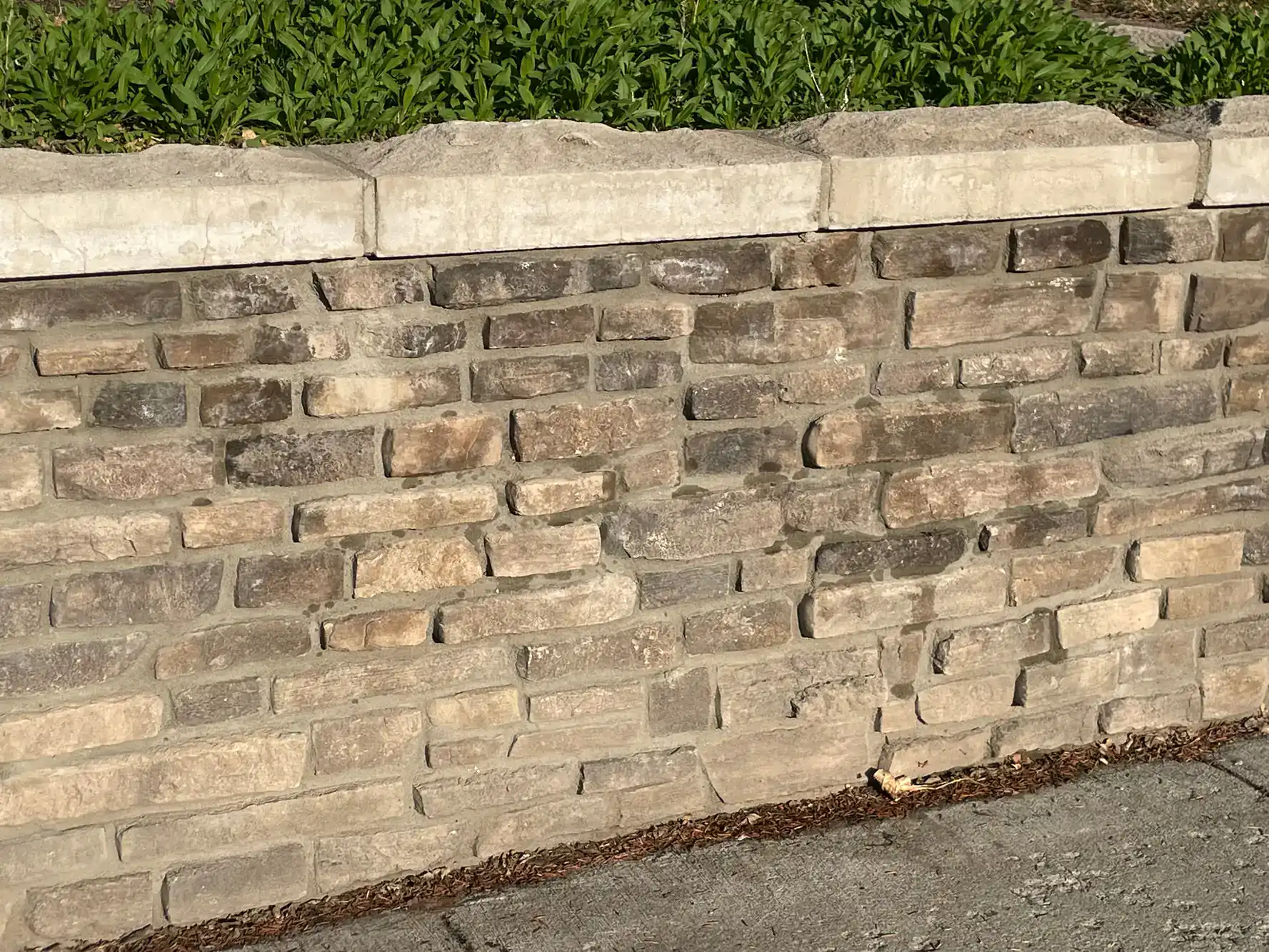
A stone retaining wall made of rectangular, tan and brown bricks supports a raised bed with green plants. Sunlight casts shadows on the textured wall and gray sidewalk below.

Hear from Our Customers

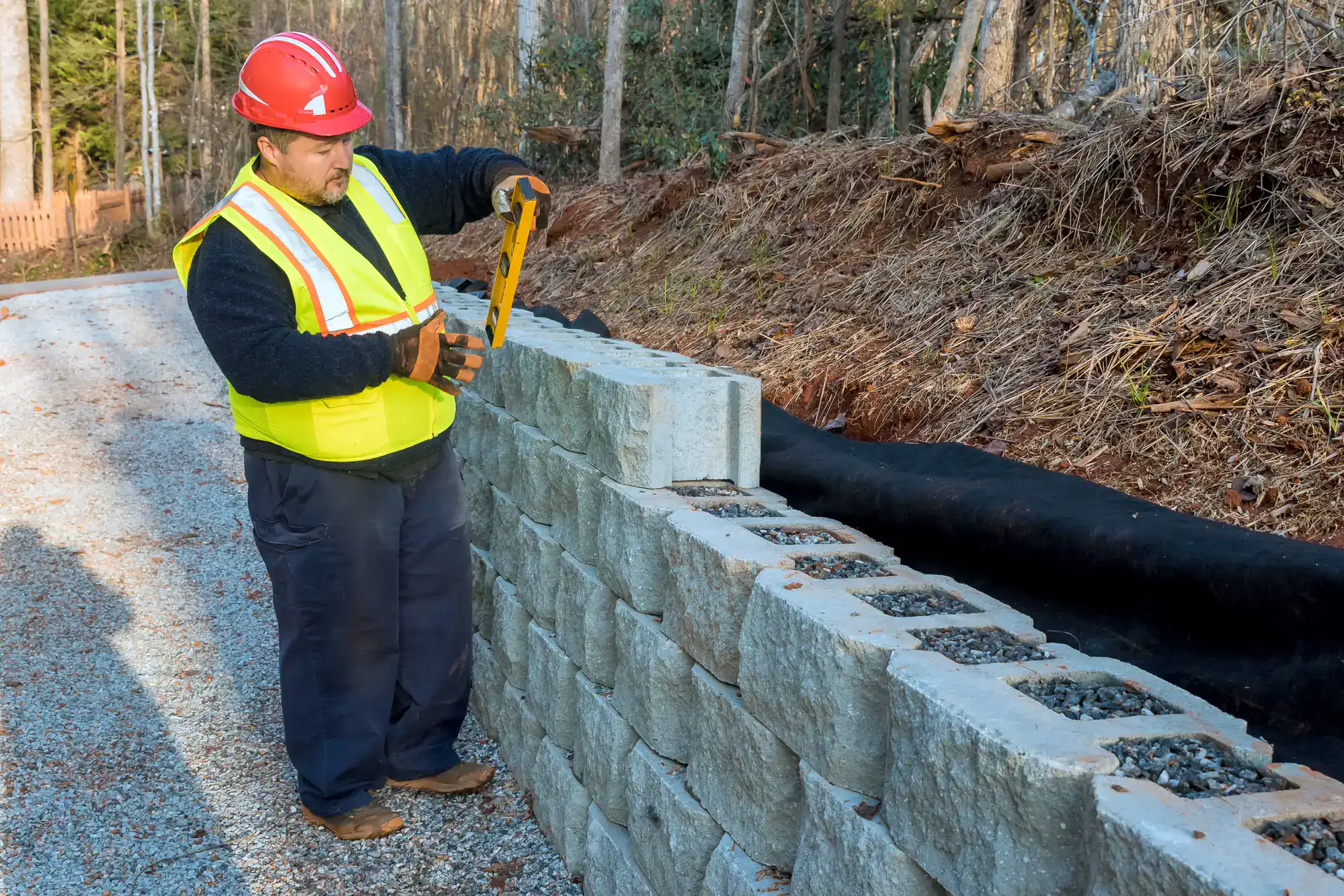
A construction worker in a yellow safety vest and red helmet uses a level to check concrete blocks while building a retaining wall next to a gravel road and a slope with trees.

Retaining Wall Installation Melville NY

Turn Problem Slopes Into Usable Space
Your sloped yard stops being a liability when you have the right retaining wall contractor handling the work. We’re talking about walls that actually hold back soil instead of shifting after the first heavy rain. Walls that manage water flow instead of creating new drainage problems. Long Island’s sandy soil and coastal conditions demand specific installation methods. We excavate 8-10 inches deep, install proper base layers, and build in drainage systems that prevent hydrostatic pressure from destroying your investment. The result? Stable, level areas where you can actually build something useful. Most importantly, you get walls engineered for Long Island’s freeze-thaw cycles and storm conditions. That means materials that won’t crack when temperatures drop and drainage systems designed to handle those summer downpours that flood everyone else’s yards.

Stone Wall Installer Melville NY

Licensed Across Suffolk and Nassau Counties
Stone Escapes has been handling retaining wall projects across Long Island since Iain Traynor started the company. He brings union masonry experience and a background in carpentry to every project, which means understanding both the structural requirements and the finishing details that matter. We hold licenses in Suffolk County, Nassau County, and the townships of Southampton and East Hampton. Cambridge Pavingstone featured our work in their magazine during our first year—not something that happens to contractors who cut corners. What sets us apart is staying on your job site throughout the entire project. When you call with questions, you talk to Iain or our project manager, not a call center. When there’s a decision to make about drainage or materials, the person who knows your specific site conditions is there to make it.
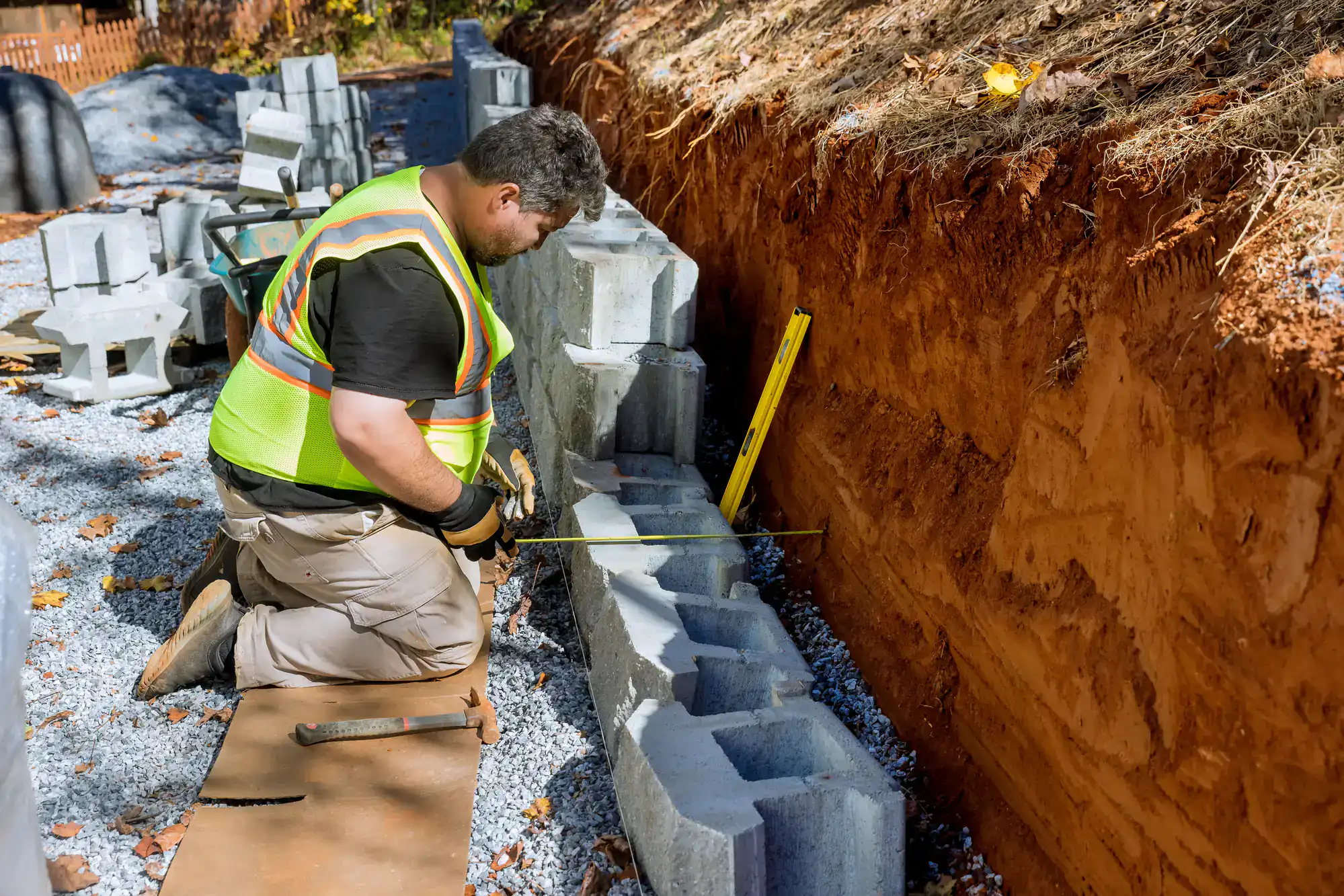
A construction worker in a safety vest kneels on gravel, measuring concrete blocks as he builds a retaining wall beside an exposed dirt slope. Tools and blocks are scattered around the worksite.

Retaining Wall Builder Melville NY

Built for Sandy Soil and Coastal Weather
Every retaining wall project starts with understanding your property’s specific conditions. We assess soil composition, drainage patterns, and grade requirements to engineer the right solution for Melville’s unique challenges. Excavation goes 8-10 inches deep minimum—often deeper depending on wall height and soil conditions. We install a proper crushed stone base with compaction that creates stable foundation support for Long Island’s sandy soil characteristics. This isn’t optional when you’re dealing with coastal conditions and freeze-thaw cycles. The wall construction uses materials certified by Cambridge, Techo-Bloc, Unilock, Nicolock, Eldorado, and Boral. We build in drainage systems with gravel backfill and proper weep holes to manage water flow and prevent the pressure buildup that destroys walls. Edge restraint installation prevents shifting over time. Final steps include backfilling with appropriate materials and establishing finished grades that direct water away from the structure. You get a wall system designed to handle Long Island’s weather for decades, not just until the next major storm.

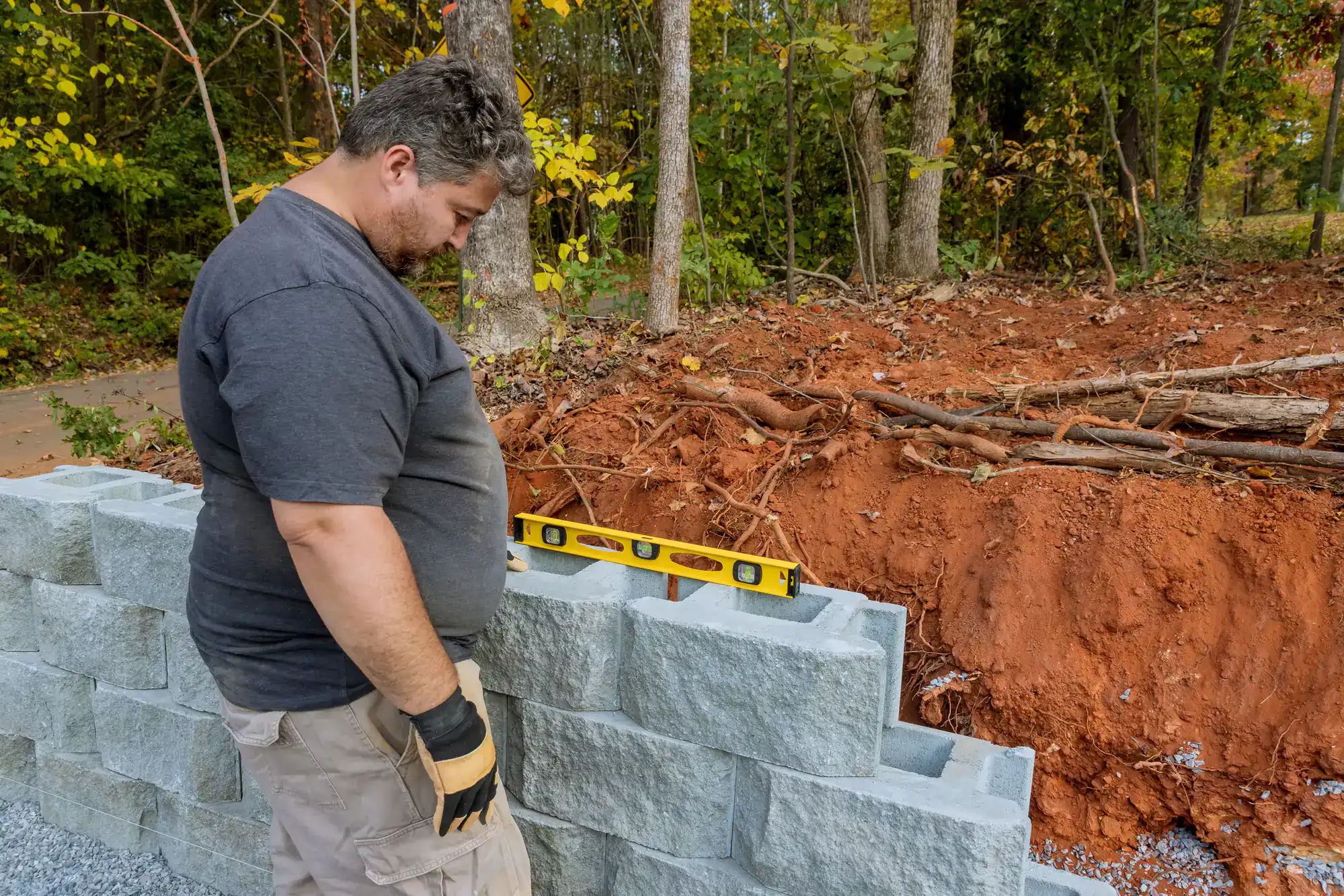
A man wearing gloves checks the level of a gray stone retaining wall with a yellow spirit level, next to a dirt embankment and forested area.

Ready to get started?

Explore More Services

About Stone Escapes Masonry & Outdoor Design

Get a Free Consultation

Retaining Wall Specialist Melville NY

What's Included in Professional Installation
Professional retaining wall installation in Melville means addressing the specific challenges Long Island properties face. Sandy soil composition requires deeper foundations—typically 30-36 inches to reach below the frost line and prevent wall failure during freeze-thaw cycles. Coastal proximity creates high water tables and seasonal fluctuations that affect wall design. We integrate drainage systems including crushed stone backfill, filter fabric, and drain tiles to manage water flow. Salt air exposure demands corrosion-resistant materials and enhanced weatherproofing measures that inland contractors often skip. Every project includes site evaluation, proper excavation, foundation preparation with compacted base materials, wall construction with certified materials, and drainage installation. We handle permit applications when required—walls over 3-4 feet typically need permits in Suffolk County. The installation process accounts for Melville’s specific soil conditions and coastal weather patterns. That means using materials and techniques proven to work in this environment, not generic approaches that fail when conditions get challenging.
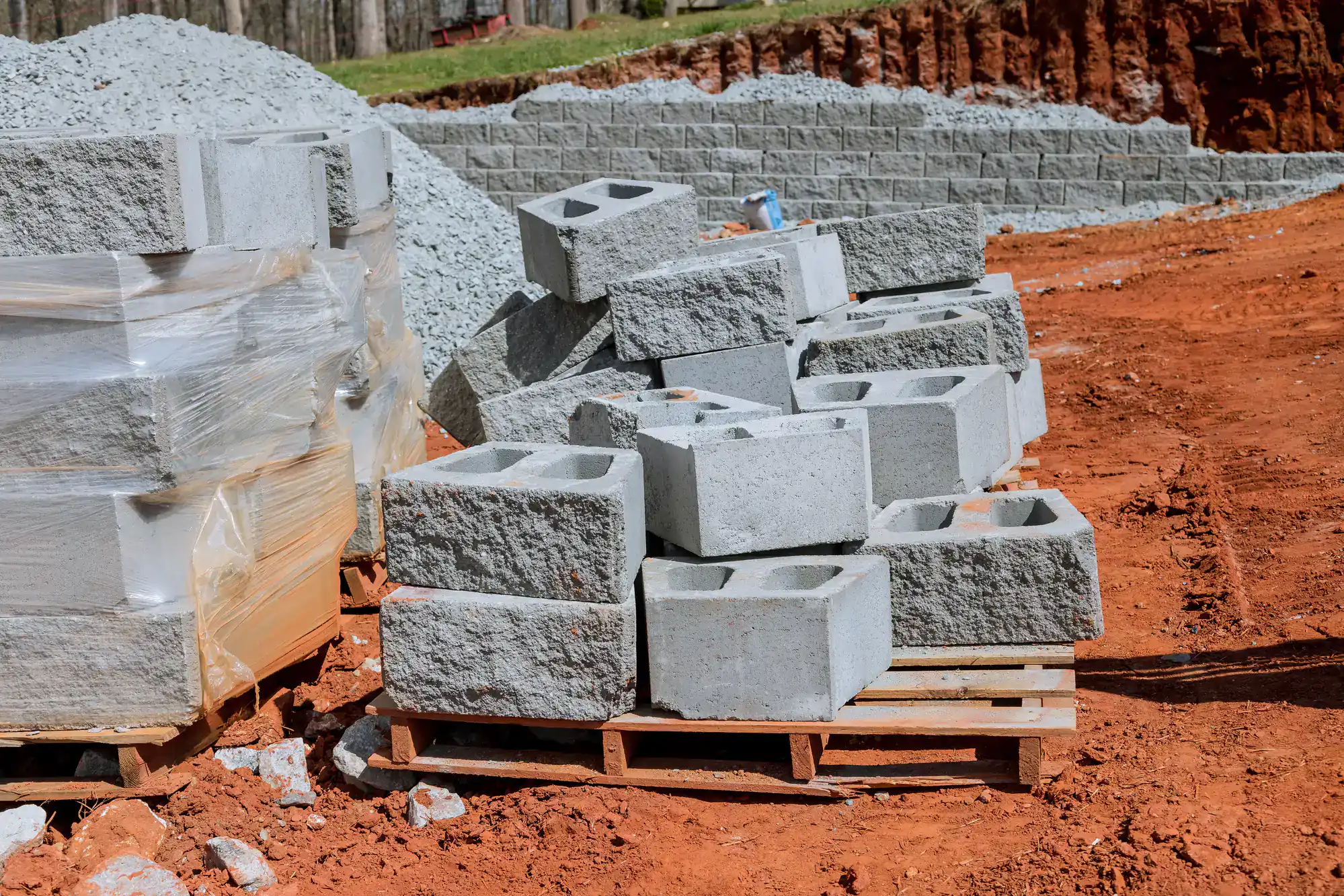
A stack of concrete cinder blocks is arranged on wooden pallets at a construction site with red soil and gravel. Wrapped blocks and a partially built stone retaining wall are visible in the background.

How deep do retaining wall foundations need to be in Melville?

Foundation depth depends on wall height and Long Island’s frost line requirements. Most retaining walls in Melville need foundations 30-36 inches deep to reach below the frost line and prevent frost heave damage. For walls under 3 feet, we typically excavate 8-10 inches for the base course plus additional depth for crushed stone foundation material. Taller walls require deeper foundations and may need engineering approval. Sandy soil conditions in Melville actually help with drainage but require proper compaction and base preparation to prevent settling. The key is reaching stable soil below the frost line and installing adequate base material. Shortcuts on foundation depth are why you see retaining walls failing after a few seasons—the freeze-thaw cycle pushes inadequately founded walls out of alignment.
Proper drainage prevents hydrostatic pressure buildup that causes walls to bulge, crack, or fail completely. Long Island’s coastal conditions and seasonal water level changes make drainage systems essential, not optional. We install crushed stone backfill (minimum 12 inches, preferably 24 inches) behind the wall to create a drainage zone. Filter fabric separates the drainage stone from soil to prevent clogging. Drain tiles or weep holes allow water to exit the system before pressure builds up. Coastal areas also need drainage systems designed for storm surge and heavy rainfall events. That means oversized drainage capacity and proper outlets that function even during high water conditions. Without adequate drainage, even the strongest wall materials will fail when water pressure exceeds structural limits.
Materials need to handle temperature fluctuations, salt air exposure, and moisture without cracking or deteriorating. Segmental concrete blocks, natural stone, and reinforced concrete perform best in Long Island’s coastal climate. Segmental block systems from manufacturers like Cambridge, Techo-Bloc, and Unilock are engineered for freeze-thaw resistance. They allow slight movement in sandy soil while maintaining structural integrity. Natural stone provides excellent durability but requires proper installation techniques for coastal conditions. Wood materials can work for shorter walls but need pressure treatment and proper moisture barriers in coastal environments. The key is selecting materials rated for your specific conditions and installing them with appropriate drainage and weatherproofing. Cheap materials or improper installation methods fail quickly in Long Island’s challenging climate.
Professional installation typically costs $25-45 per square foot for segmental block walls, with total project costs depending on height, length, site access, and material selection. Long Island costs run higher than inland areas due to material transportation, coastal conditions, and local permit requirements. Basic walls under 3 feet might cost $25-35 per square foot, while taller walls requiring engineering and permits can reach $45-60 per square foot. Natural stone walls cost more due to material and installation complexity. Site conditions like difficult access or poor drainage add to costs. Permits for walls over 3-4 feet cost $50-450 in Suffolk County. Engineering fees for structural walls add $500-2000 depending on complexity. While professional installation costs more upfront, proper construction prevents expensive failures and rebuilds. DIY mistakes on retaining walls often cost more to fix than hiring professionals initially.
Most municipalities in Suffolk County require permits for retaining walls over 3-4 feet in height. Structural walls supporting significant soil loads may need permits regardless of height. Each township has specific requirements, so permit needs depend on your exact location and wall specifications. The permit process typically requires engineered drawings for walls over 4 feet, showing foundation details, drainage systems, and structural calculations. Processing times vary but usually take 2-4 weeks. Permit costs range from $50-450 depending on wall size and complexity. Working without required permits creates liability issues and can complicate property sales. Professional contractors handle permit applications as part of their service and know local requirements. We recommend checking permit requirements early in the planning process to avoid delays and ensure compliance with local building codes.
Properly installed retaining walls using quality materials typically last 50-100 years in Long Island’s coastal environment. Lifespan depends on material choice, installation quality, drainage design, and maintenance practices. Concrete and stone walls offer the longest service life when installed with proper foundations and drainage systems. Segmental block systems can last 50+ years with minimal maintenance. Wood walls have shorter lifespans (10-20 years) but cost less initially. The key factors for longevity are adequate drainage, proper foundation depth, and materials rated for coastal conditions. Walls failing prematurely usually have drainage problems or inadequate foundations. Regular inspection and maintenance—clearing drainage systems, addressing minor cracks early—extends wall life significantly. Professional installation with proper materials and drainage is the best investment for long-term performance.