
Hear from Our Customers
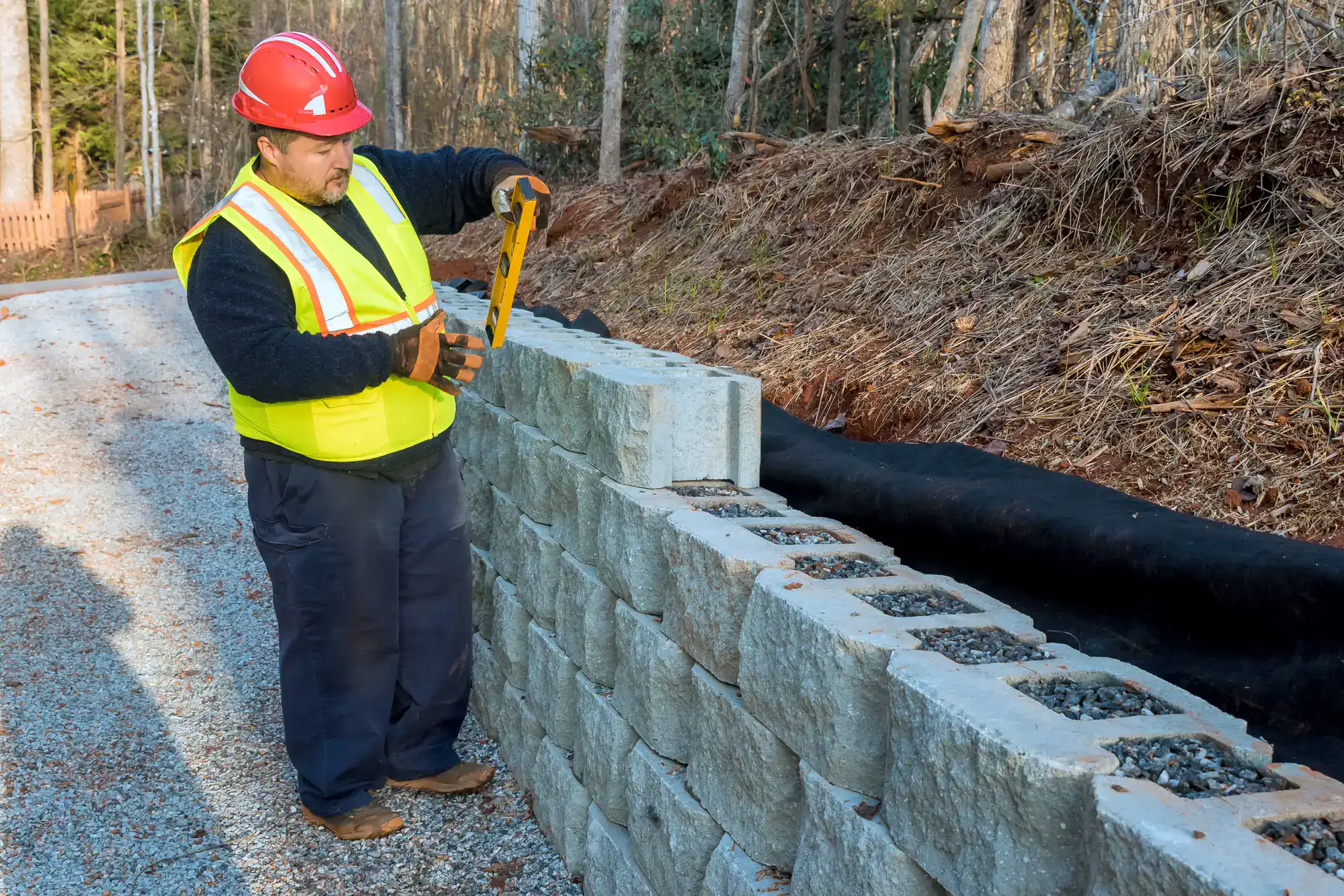
Your sloped yard doesn’t have to be a constant source of stress every time it rains. A properly engineered retaining wall transforms unstable terrain into usable space while protecting your property from the soil erosion that plagues so many Mastic Beach homes.
Long Island’s sandy soil creates unique challenges that most contractors don’t fully understand. When your retaining wall installer knows how to work with coastal conditions—not against them—you get a permanent solution that increases your property value and gives you outdoor space you can actually enjoy.
The difference between a wall that protects your investment for decades and one that starts failing after a few seasons comes down to understanding local soil behavior and installing drainage systems that actually work.
Stone Escapes has been serving Mastic Beach homeowners for over a decade, specializing in retaining walls that handle Suffolk County’s specific challenges. Owner Iain Traynor brings union masonry experience and understands exactly what happens when contractors cut corners on foundation depth or drainage in sandy coastal soil.
We’re licensed and insured throughout Suffolk County, with manufacturer certifications from Cambridge, Techo-Bloc, Unilock, and other leading brands. Every retaining wall specialist on our team knows that Mastic Beach properties require deeper excavation, specialized drainage, and foundation work that addresses freeze-thaw cycles and coastal moisture.
You’re not getting the same approach we’d use in Manhattan or upstate. Your wall gets engineered for the specific conditions that exist right here, where sandy soil meets coastal weather and storm surge.
We start with an on-site evaluation that goes deeper than most contractors bother with—literally and figuratively. We need to understand your soil composition, drainage patterns, and how water moves across your property during heavy rains and storm events.
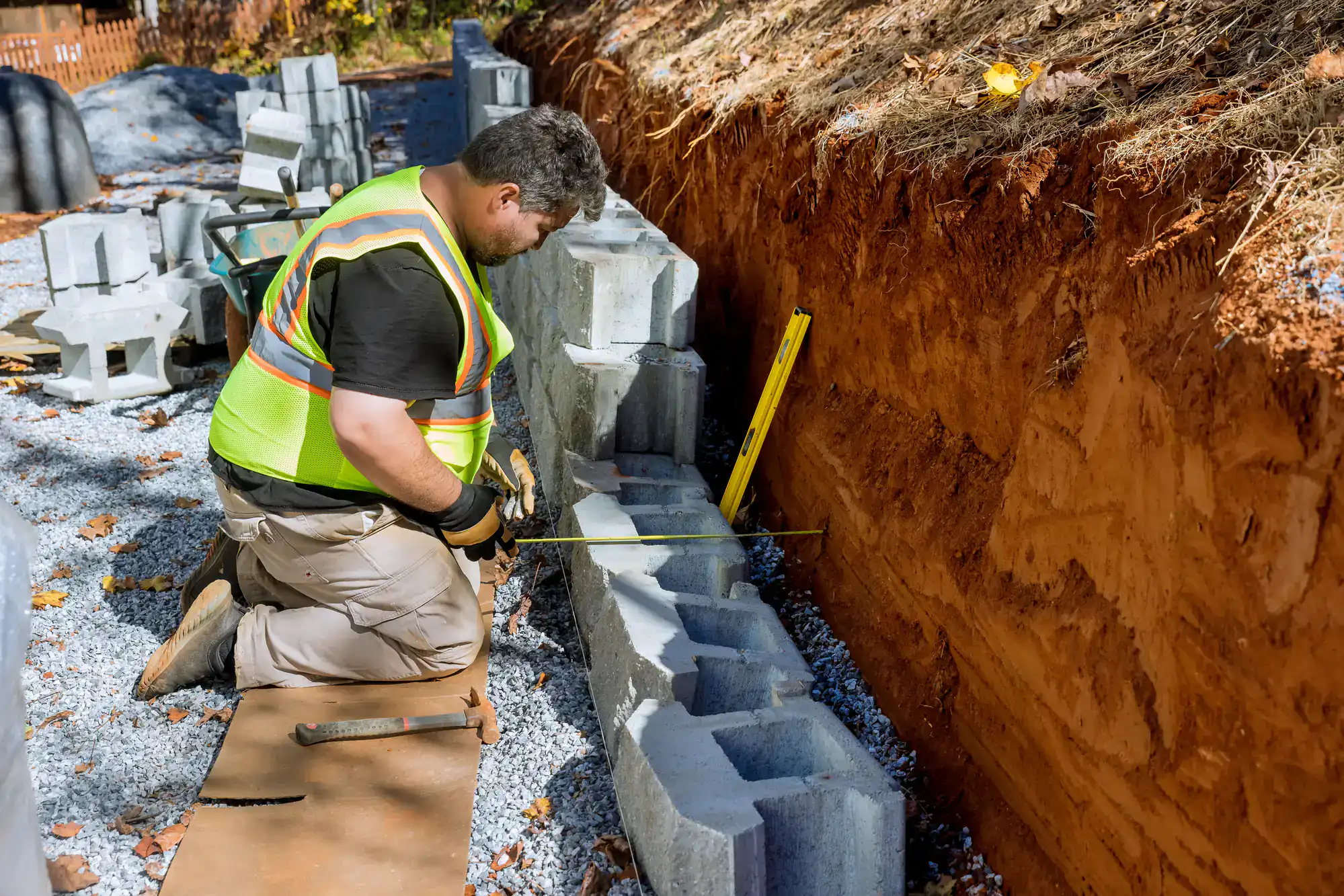
Excavation goes 8-10 inches minimum for basic walls, often 30-36 inches for taller structures to reach below Suffolk County’s frost line. We install proper base layering with crushed stone, then focus on drainage systems that prevent the water buildup behind walls that causes most failures in coastal areas like Mastic Beach.
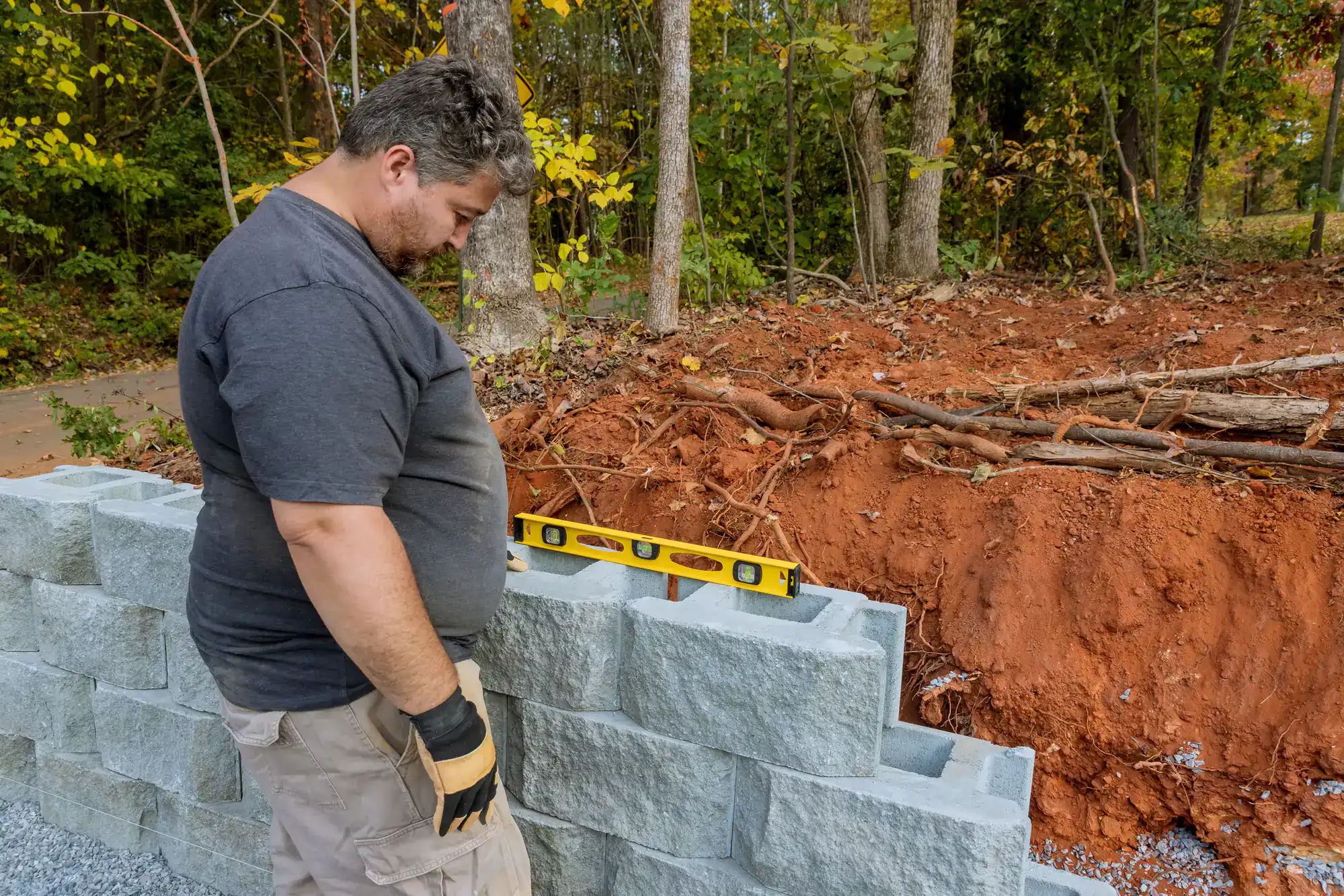
Construction follows manufacturer specifications and local building codes, with the same crew handling your project from excavation to final cleanup. You’ll know exactly what’s happening at each stage, with direct communication from start to finish—no project managers who’ve never been to your site.
Ready to get started?
Every retaining wall installation includes proper site preparation, foundation excavation to appropriate depth for your soil conditions, and drainage system installation that handles Mastic Beach’s coastal weather patterns. We use manufacturer-certified materials designed specifically for Long Island’s environment and back our work with direct project oversight from start to finish.
Mastic Beach properties face unique challenges that inland areas don’t deal with—sandy soil that shifts during storms, salt air that affects material longevity, and water table fluctuations that can undermine poorly built foundations. We account for these factors in material selection, drainage design, and construction techniques.
You’re getting walls built to handle the specific conditions that exist in your neighborhood, not generic solutions that work somewhere else. The goal is a structure that protects your property investment and increases its value for decades, handling whatever Long Island weather and soil conditions throw at it.
Foundation depth depends on wall height and your specific soil conditions, but we typically excavate 30-36 inches to reach below Suffolk County’s frost line. Mastic Beach’s sandy soil requires deeper foundations than many contractors realize because sand shifts more easily than clay or rocky ground, especially during heavy rains or storm surge events.
For walls over 4 feet, we often go deeper and add reinforcement systems that account for the lateral pressure sandy soil can create when saturated. The good news is that sandy soil drains well, which prevents some water pressure issues, but it also means less natural stability for wall foundations.
Every property has different drainage patterns and soil composition, so we evaluate your specific site conditions before determining exact foundation requirements. Cutting corners on foundation depth is the fastest way to end up with a failing wall.
Coastal properties deal with high water tables, storm surge effects, and heavy rainfall that can saturate slopes and cause dangerous soil movement that threatens foundations and landscaping. A properly designed drainage system prevents water from building up behind your wall, which is the number one cause of retaining wall failure in our area.
We install perforated drainage pipes at the wall base, use backfill materials that allow water to flow through rather than pool, and incorporate weep holes that channel water away from the structure. This prevents hydrostatic pressure that can cause even well-built walls to bow, crack, or collapse during major weather events.
Without proper drainage, you’re essentially building a dam that will eventually fail when water pressure builds up during nor’easters or heavy summer storms. The drainage system is just as important as the wall materials themselves.
Most residential retaining walls take 1-3 weeks depending on wall length, height, and site access conditions. Straightforward walls under 4 feet with good access move faster, while taller walls or properties with difficult terrain and drainage challenges take longer to complete properly.
Weather affects timelines, especially during winter months when frozen ground makes excavation more difficult, and during storm season when we can’t work safely. We build realistic timelines that account for these factors and keep you informed about any weather-related delays.
The actual wall construction moves efficiently once we start, but proper site preparation, foundation work, and drainage installation can’t be rushed. Taking time to do the foundation and drainage work correctly prevents expensive problems that would cost much more to fix later.
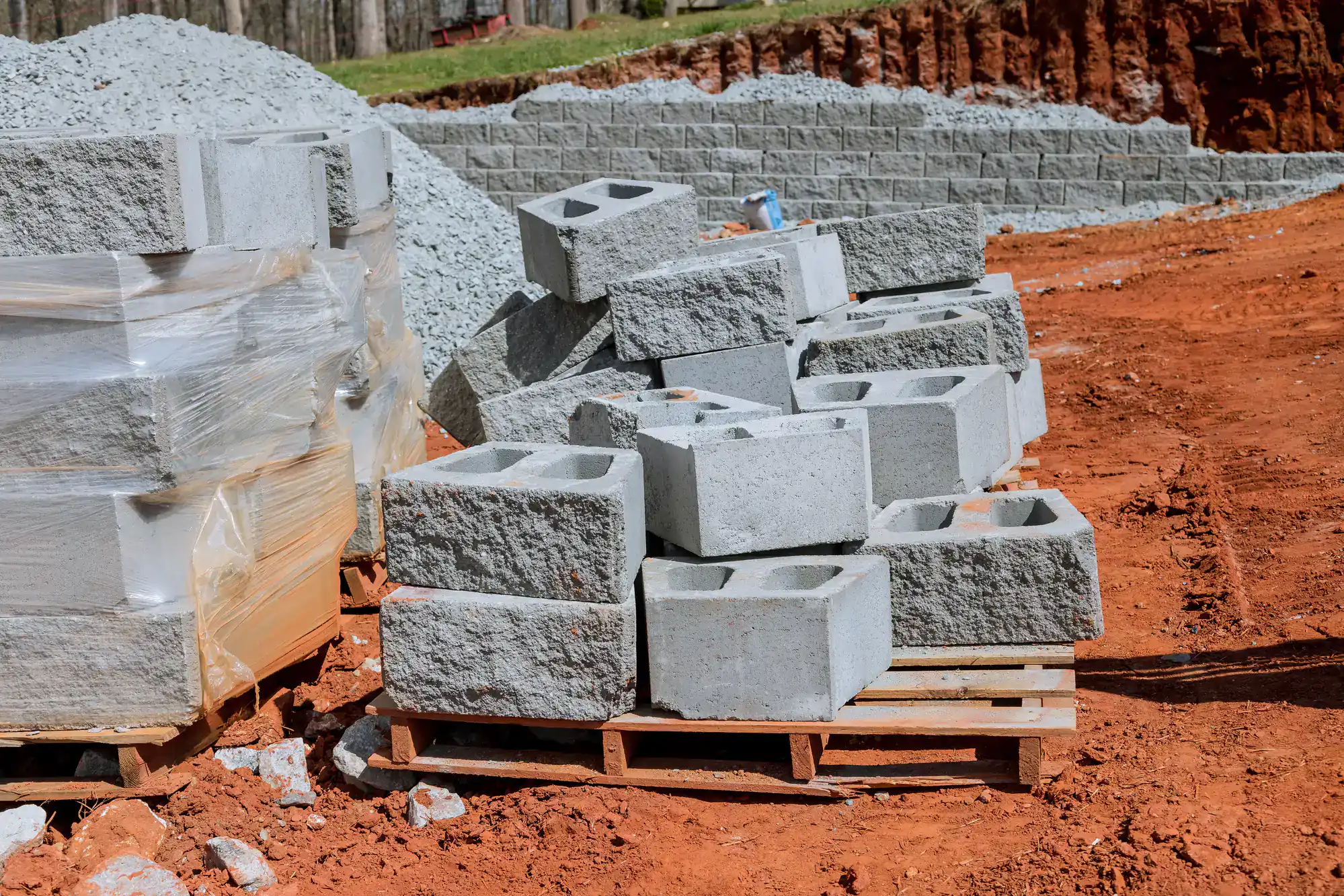
We use materials specifically rated for coastal environments that can handle salt air exposure, freeze-thaw cycles, and the moisture conditions that come with living near the water. Concrete block systems, natural stone, and manufactured stone products all perform well when properly installed with appropriate drainage and foundation work.
The wall material itself is only part of the equation—foundation preparation, drainage system design, and backfill materials determine long-term performance just as much as what you see above ground. We select materials based on your site conditions, budget, and aesthetic preferences, not just what’s cheapest or easiest to install.
Our manufacturer certifications from companies like Cambridge, Techo-Bloc, and Unilock ensure we’re using products designed and tested for Long Island’s specific environmental conditions. Cheap materials might save money upfront but cost significantly more when they fail prematurely in coastal conditions.
Permits are typically required for walls over 3-4 feet in height, and requirements can vary depending on your property’s location within Suffolk County and proximity to water. We handle permit applications as part of our service and ensure all work meets local building codes and safety requirements.
Properties in flood zones or near waterfront areas often have additional requirements that affect wall design, materials, and construction methods. We’re familiar with local regulations and work directly with building departments to ensure proper approvals before starting construction.
Getting permits upfront prevents construction delays and ensures your wall meets safety standards that protect your investment. It also ensures the work is done to code, which matters for insurance purposes and future property sales.
Retaining wall costs vary based on wall height, length, materials, site access, and drainage requirements, but most residential projects range from $3,500 to $9,400. Our minimum project size is typically around $2,500 for smaller residential walls.
Mastic Beach’s sandy soil conditions can reduce some excavation costs compared to rocky or clay soil areas, but proper drainage systems and foundation work are essential investments that shouldn’t be skipped. Walls over 4 feet require engineering and additional reinforcement that increases project costs but ensures long-term stability.
We provide detailed estimates that break down material costs, labor, site preparation, drainage work, and any permit fees so you understand exactly what you’re paying for. The goal is a wall that protects your property and increases its value for decades, not the cheapest option that might fail in a few years.