Retaining Wall Contractor Huntington Station

Walls That Actually Hold Up

Built for Long Island’s sandy soil, drainage challenges, and coastal weather—not just to look good.
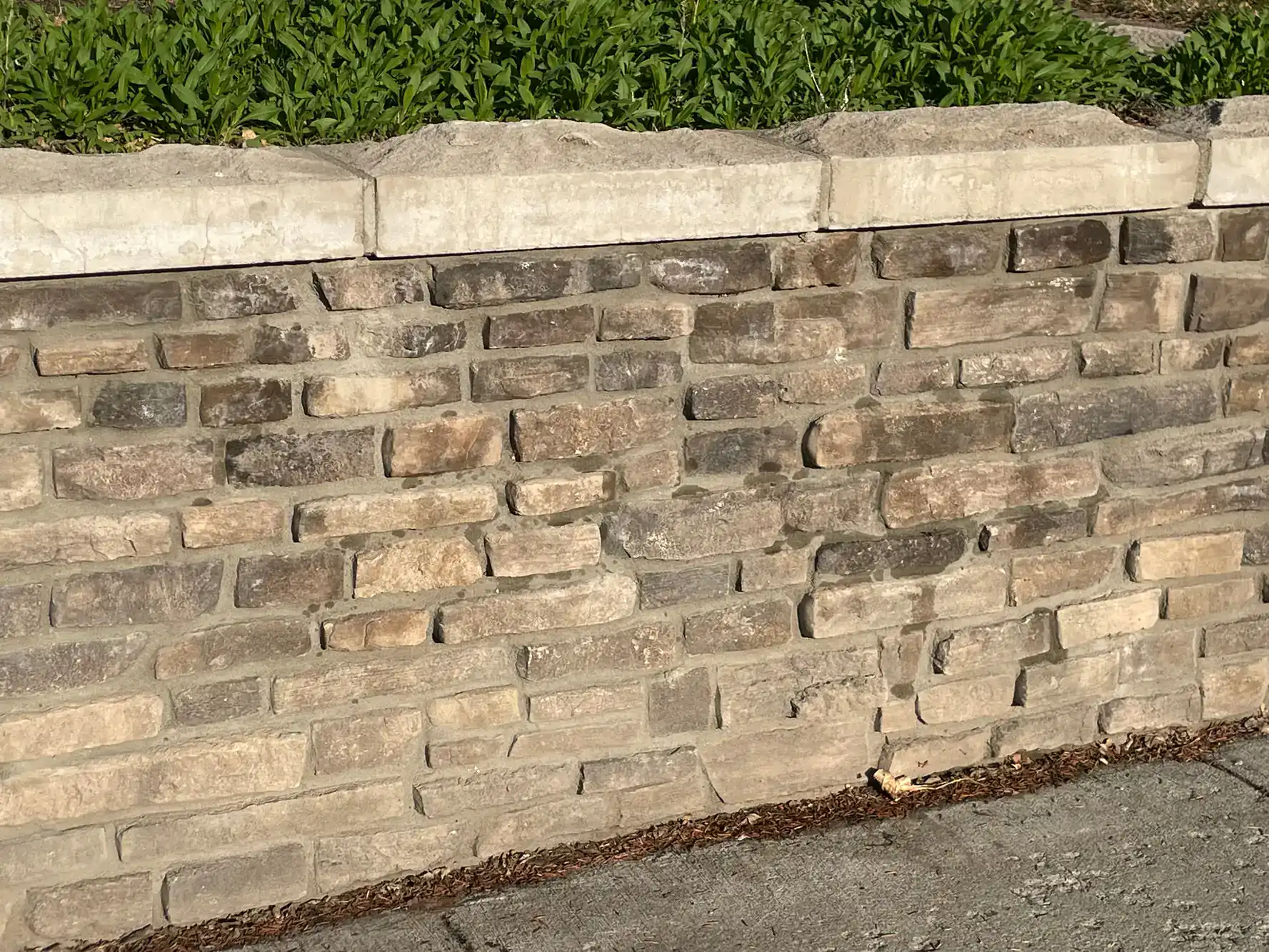
A stone retaining wall made of rectangular, tan and brown bricks supports a raised bed with green plants. Sunlight casts shadows on the textured wall and gray sidewalk below.

Hear from Our Customers

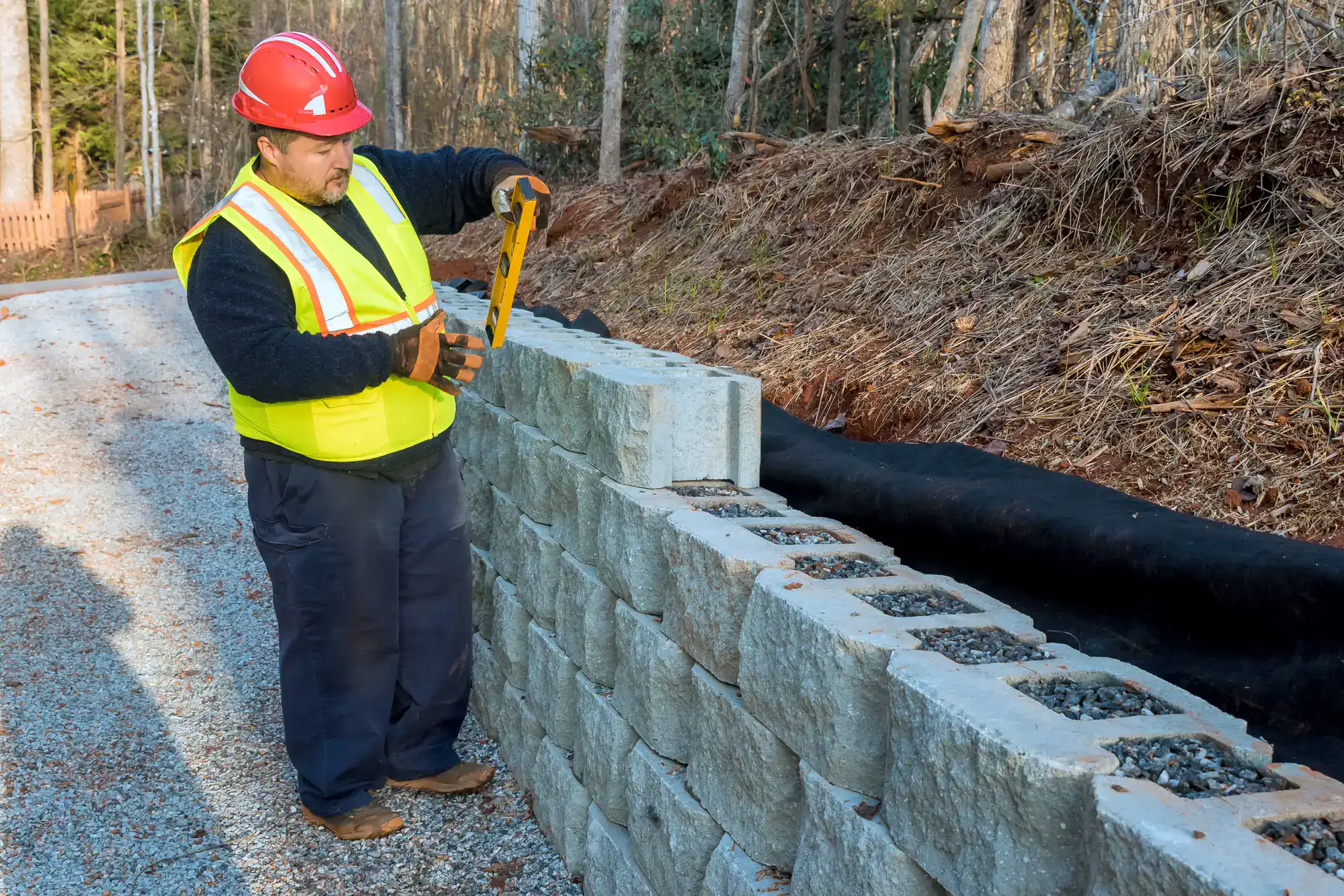
A construction worker in a yellow safety vest and red helmet uses a level to check concrete blocks while building a retaining wall next to a gravel road and a slope with trees.

Retaining Wall Installation Huntington Station

Your Property Problems Solved
You’re dealing with sloped yards that wash away every storm. Soggy areas where water pools. Unusable space that could be functional. We build retaining walls that stop erosion, create usable land, and manage water runoff properly. Your property becomes more functional, more valuable, and less of a headache to maintain. The difference? We excavate 8-10 inches deep, install proper drainage systems, and use materials certified for Long Island’s freeze-thaw cycles. Your wall works because it’s built for the conditions it’ll actually face.

Stone Wall Installer Huntington Station

Licensed for Suffolk County
Stone Escapes has served Long Island property owners for over 15 years. We’re licensed and insured in Suffolk County, Nassau County, East Hampton, and Southampton. Owner Iain Traynor brings union masonry experience and stays involved in every estimate, plan, and build. We’re certified by Cambridge, Techo-Bloc, Unilock, Nicolock, Eldorado, and Boral—the manufacturers whose materials actually last in coastal conditions. We understand Huntington Station’s sandy soil, high water tables, and drainage challenges because we’ve been solving them for years.

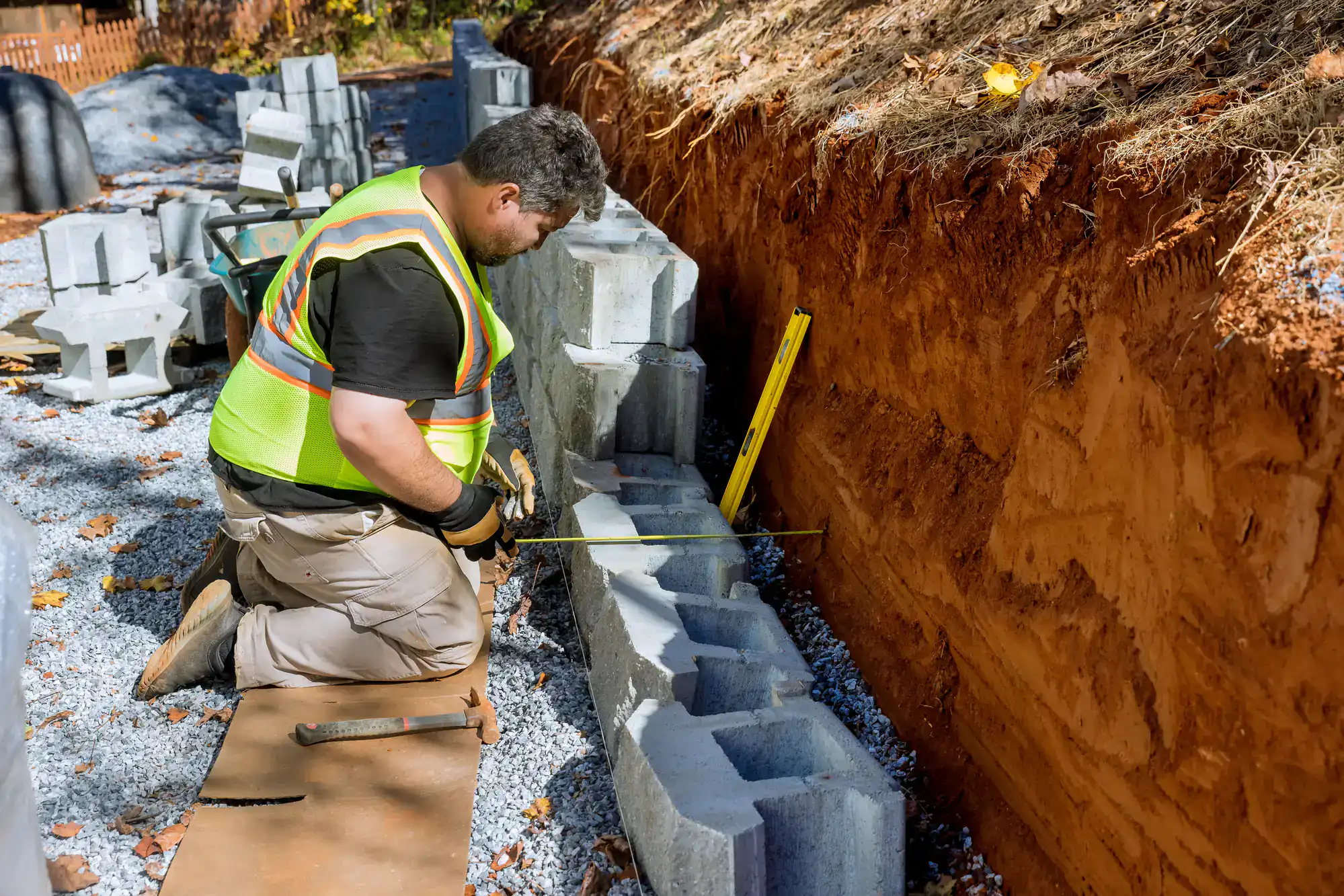
A construction worker in a safety vest kneels on gravel, measuring concrete blocks as he builds a retaining wall beside an exposed dirt slope. Tools and blocks are scattered around the worksite.

Retaining Wall Builder Huntington Station NY

Built Right From Day One
We start with an on-site assessment of your soil conditions, drainage patterns, and slope challenges. No cookie-cutter solutions. Excavation goes 8-10 inches deep to reach stable ground below the frost line. We install proper base materials, not shortcuts. Drainage systems go in during construction, not as an afterthought. Each course gets checked for level and alignment. Edge restraints prevent shifting. Backfill gets compacted in lifts. When we’re done, you have a wall that’s built to handle Long Island weather for decades.
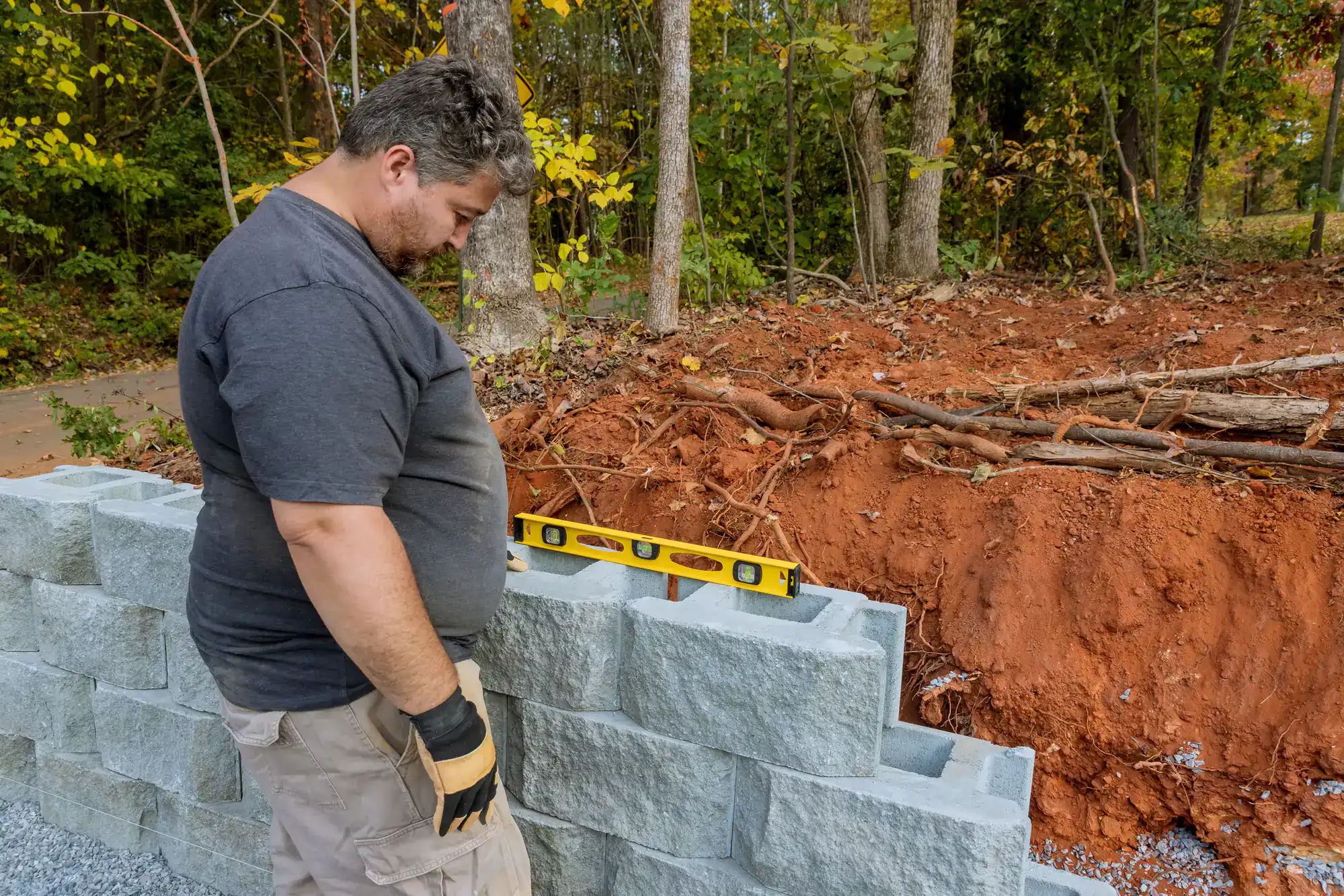
A man wearing gloves checks the level of a gray stone retaining wall with a yellow spirit level, next to a dirt embankment and forested area.

Ready to get started?

Explore More Services

About Stone Escapes Masonry & Outdoor Design

Get a Free Consultation

Retaining Wall Specialist Huntington Station

What Your Project Includes
Every retaining wall installation includes proper foundation preparation, drainage system installation, and certified materials rated for coastal conditions. We handle permits, site preparation, and cleanup. In Huntington Station, we see properties with sandy soil that drains well but needs deeper foundations. We account for seasonal water level changes and salt air exposure that can damage inferior materials. Your installation includes manufacturer warranties on materials and our guarantee on workmanship. We use segmental block systems, natural stone, or poured concrete depending on your site conditions and preferences.
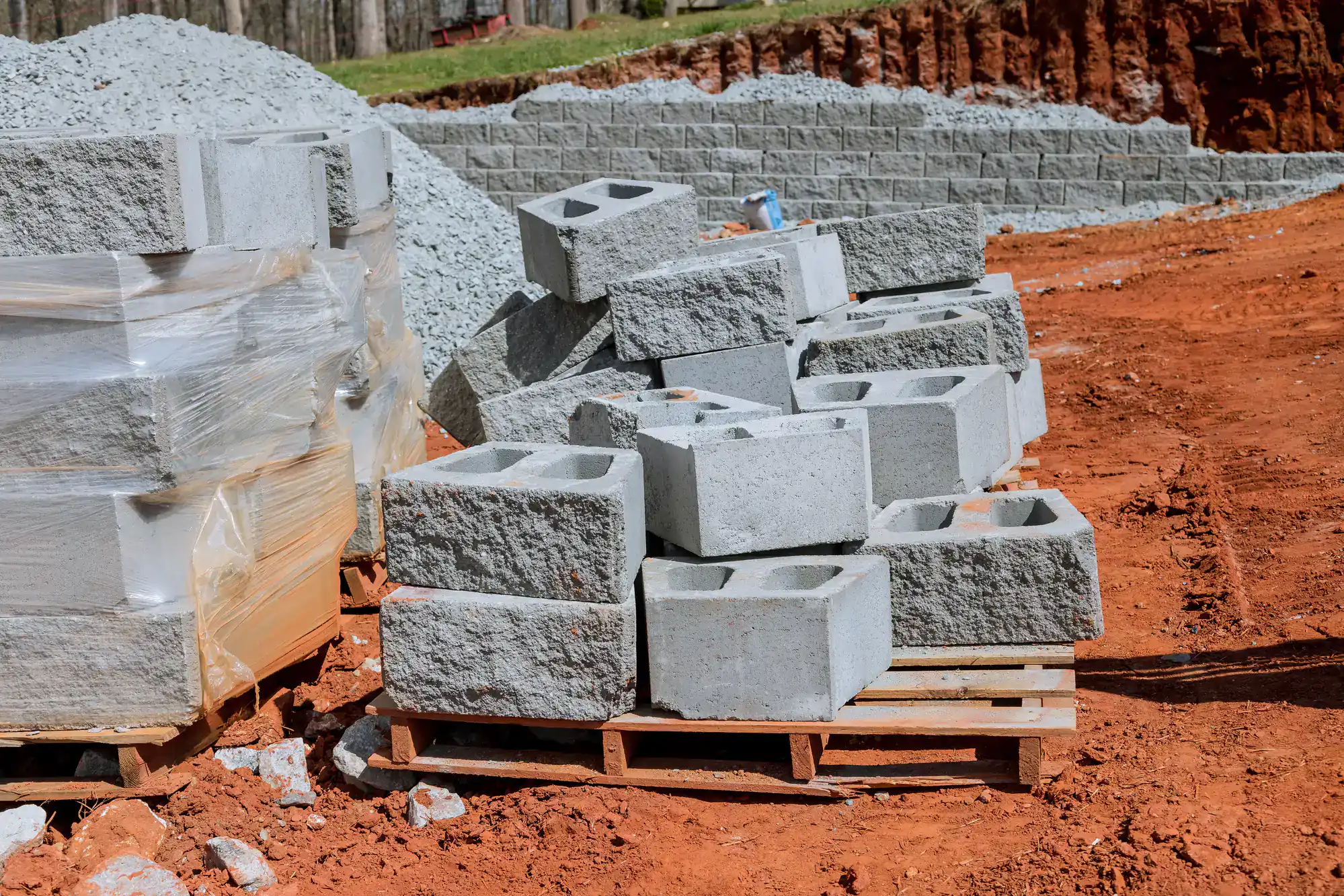
A stack of concrete cinder blocks is arranged on wooden pallets at a construction site with red soil and gravel. Wrapped blocks and a partially built stone retaining wall are visible in the background.

How much does a retaining wall cost in Huntington Station NY?

Professional retaining wall installation in Huntington Station typically costs $25-45 per square foot, depending on height, material choice, and site conditions. A 50-foot wall that’s 4 feet high runs roughly $5,000-9,000 installed. Costs vary based on excavation requirements, drainage complexity, and material selection. Natural stone costs more than segmental blocks, but both work well in Long Island conditions when installed properly. We provide detailed estimates that break down material, labor, and site preparation costs. No surprises, no change orders for basic drainage that should have been included from the start.
Poor drainage is the number one cause of retaining wall failure on Long Island. When water builds up behind the wall with no place to go, it creates pressure that cracks, tilts, or collapses the structure. Long Island’s sandy soil drains well naturally, but coastal storms and high water tables can overwhelm inadequate drainage systems. Freeze-thaw cycles compound the problem by expanding trapped water. We install perforated drain pipes, gravel backfill, and weep holes in every wall. Proper drainage isn’t optional—it’s what keeps your wall standing for decades instead of failing in a few years.
Most municipalities require permits for retaining walls over 3-4 feet tall. In Huntington Station, permit costs typically range from $50-450 depending on wall size and complexity. Walls over 4 feet usually need structural engineering to ensure safety and code compliance. Engineering fees run $500-2,000+ but prevent dangerous failures and liability issues. We handle permit applications and work with local engineers when required. It’s included in our service because proper permitting protects both you and us.
Well-built retaining walls last 20-50+ years in Long Island conditions when constructed with proper drainage and quality materials. The key is using materials rated for coastal exposure and freeze-thaw cycles. Segmental block systems with proper drainage typically last 30-50 years. Natural stone walls can last 50-100 years. Cheap materials or poor installation cut that lifespan dramatically. We use manufacturer-certified materials and proven installation methods. Your wall is built to handle Long Island weather, not just pass inspection.
Segmental interlocking blocks work exceptionally well for Long Island properties because they accommodate slight movement in sandy soil while maintaining structural integrity. They’re also cost-effective and offer various design options. Natural stone provides premium aesthetics and longevity but costs more upfront. Poured concrete works for complex shapes but requires more extensive forming and curing time. We recommend materials based on your specific site conditions, budget, and aesthetic preferences. What matters most is proper installation with adequate drainage, regardless of material choice.
Long Island retaining walls typically require foundations 30-36 inches deep to reach below the frost line and achieve stability in sandy soil conditions. Deeper foundations may be needed for taller walls or challenging soil conditions. The sandy soil composition formed by glacial deposits offers good drainage but requires deeper foundations and specialized backfill materials for long-term stability. Shallow foundations lead to settlement and failure. We excavate to proper depth based on soil conditions and wall height. Proper foundation depth isn’t negotiable—it’s what separates walls that last from walls that fail.