Retaining Wall Contractor in Holbrook

Built Right for Long Island's Soil

Proper drainage, deep foundations, and materials that handle sandy soil and coastal weather—your retaining wall contractor in Holbrook understands what works here.
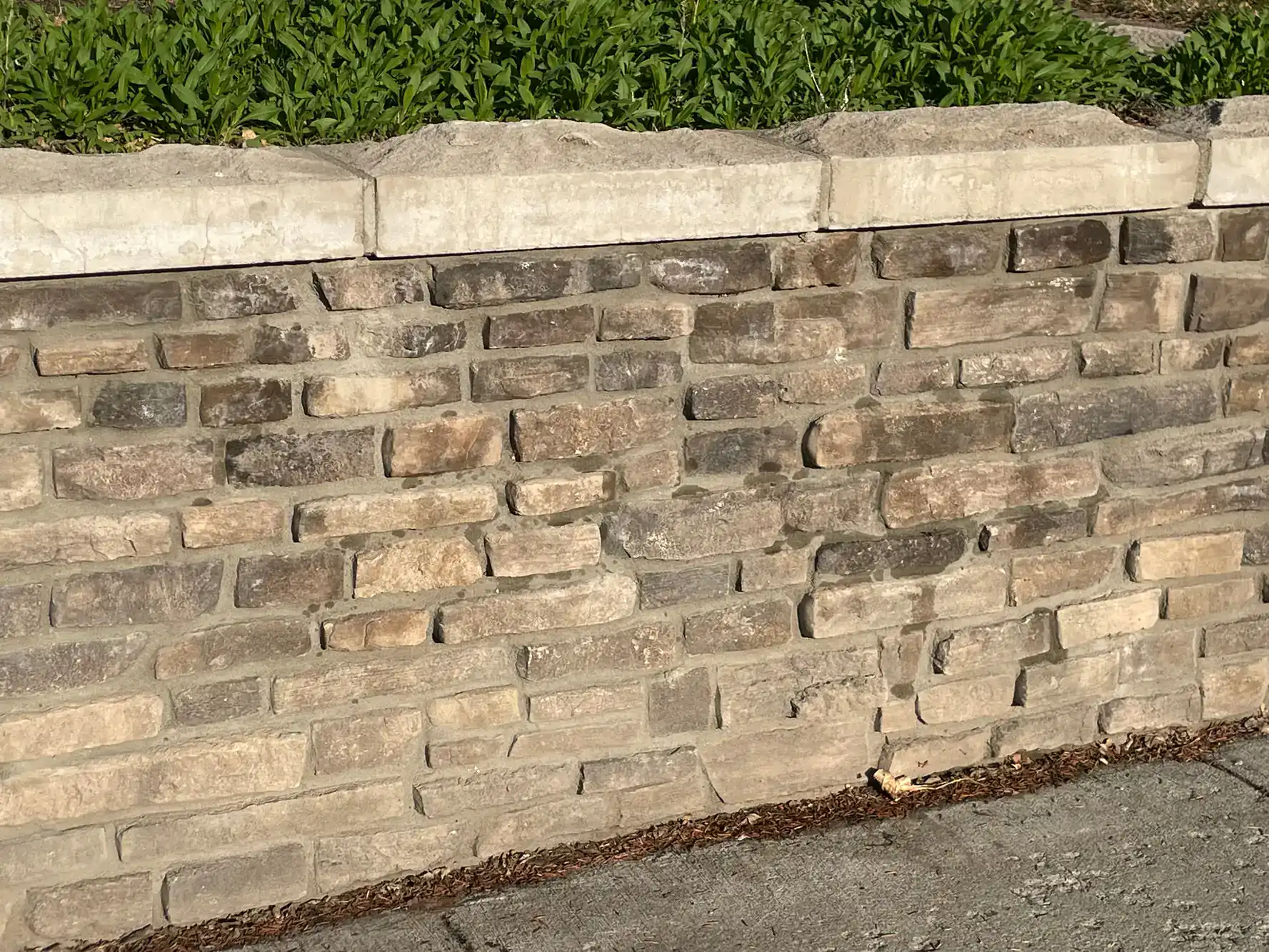
A stone retaining wall made of rectangular, tan and brown bricks supports a raised bed with green plants. Sunlight casts shadows on the textured wall and gray sidewalk below.

Hear from Our Customers

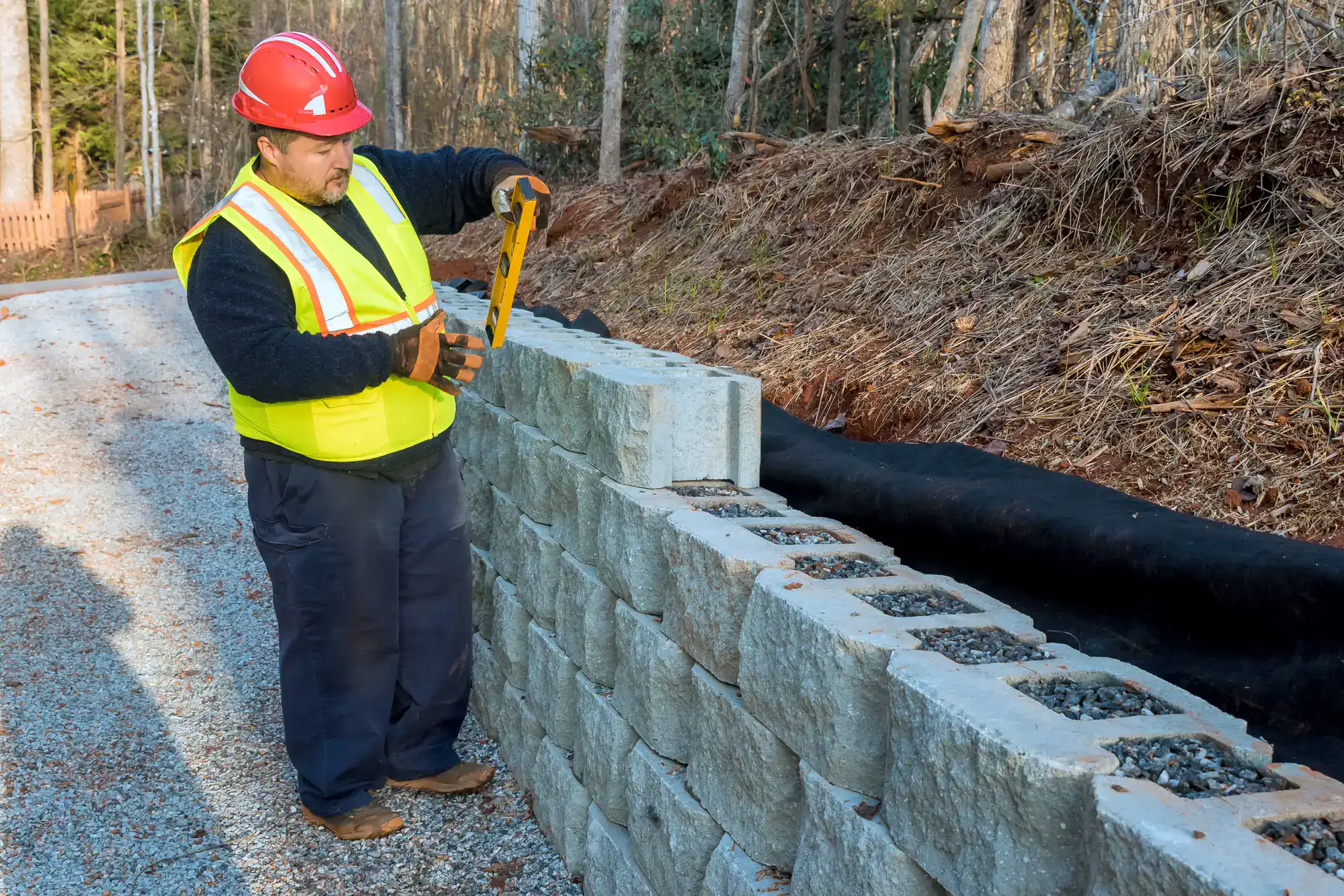
A construction worker in a yellow safety vest and red helmet uses a level to check concrete blocks while building a retaining wall next to a gravel road and a slope with trees.

Retaining Wall Installation Holbrook NY

Turn Problem Slopes Into Usable Space
You’re tired of watching your yard wash away every heavy rain. You need that sloped area to actually work for your family instead of against you. A properly built retaining wall stops the erosion, creates level ground you can use, and handles Long Island’s unique challenges. Sandy soil, high water tables, freeze-thaw cycles—we build for all of it. No more losing topsoil. No more unusable steep areas. Just solid ground that stays put and outdoor space that actually serves your needs.

Stone Wall Installer Suffolk County

We Know Long Island's Ground
Stone Escapes has been building retaining walls across Suffolk County for over 15 years. We’re licensed and insured in Suffolk, Nassau, East Hampton, and Southampton. Owner Iain Traynor comes from union masonry work and stays involved in every estimate and project. We’re not a big company that sends different crews every day—you get consistent people who know your job. Long Island’s sandy soil and coastal conditions aren’t problems for us. They’re just the conditions we build for every single day.
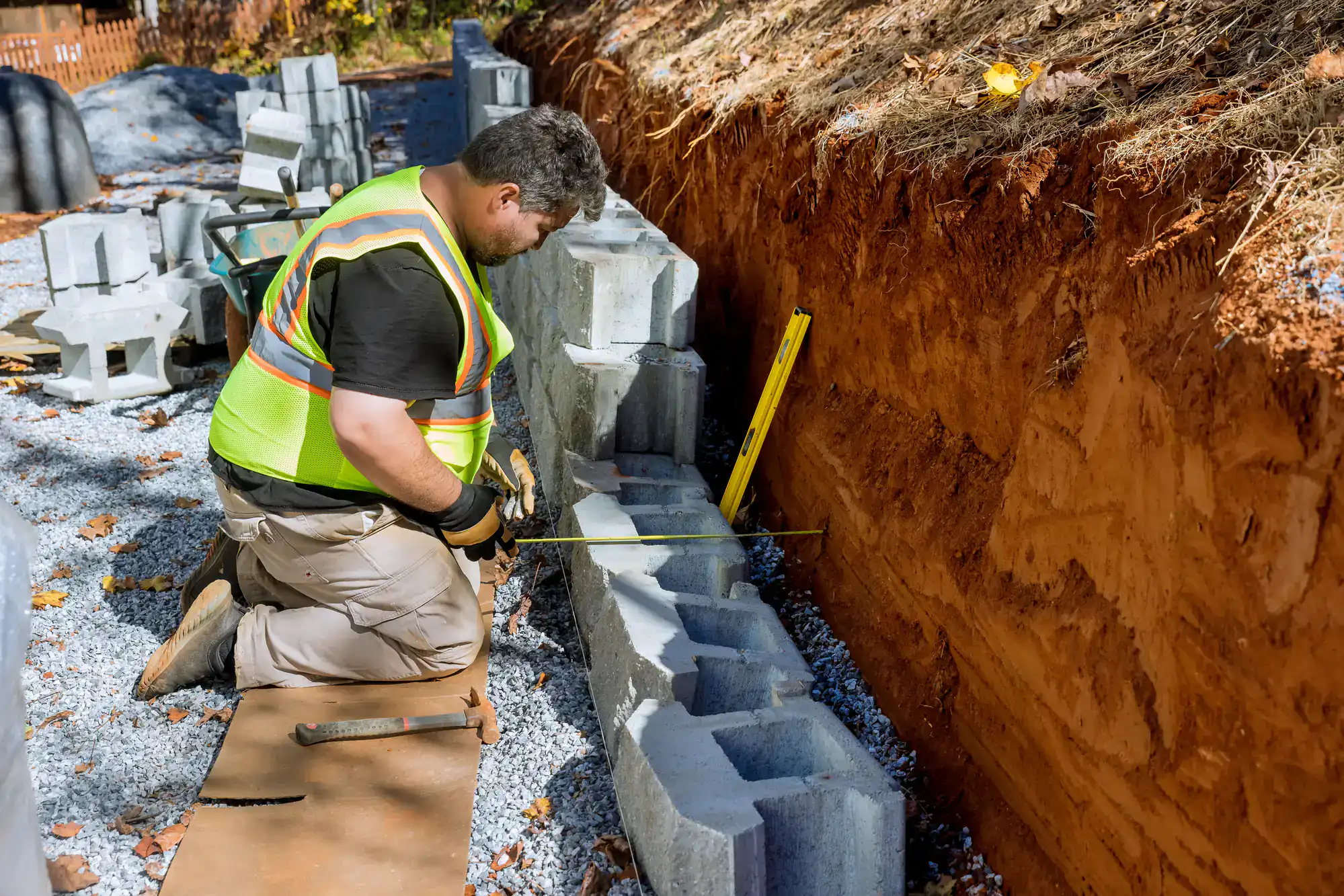
A construction worker in a safety vest kneels on gravel, measuring concrete blocks as he builds a retaining wall beside an exposed dirt slope. Tools and blocks are scattered around the worksite.

Retaining Wall Builder Near You

Built to Handle What Long Island Throws at It
We start with an in-person assessment of your property’s drainage, soil conditions, and slope challenges. No cookie-cutter estimates—every Long Island property is different. Next comes excavation 8-10 inches deep, often deeper to get below the frost line. We install proper base materials, not just whatever’s convenient. Filter fabric goes between the footing and ground to prevent soil migration. Then we build your wall with manufacturer-approved techniques, adding drainage systems as we go. Perforated pipes, gravel backfill, proper grading—all the stuff that prevents the failures you see around the neighborhood.

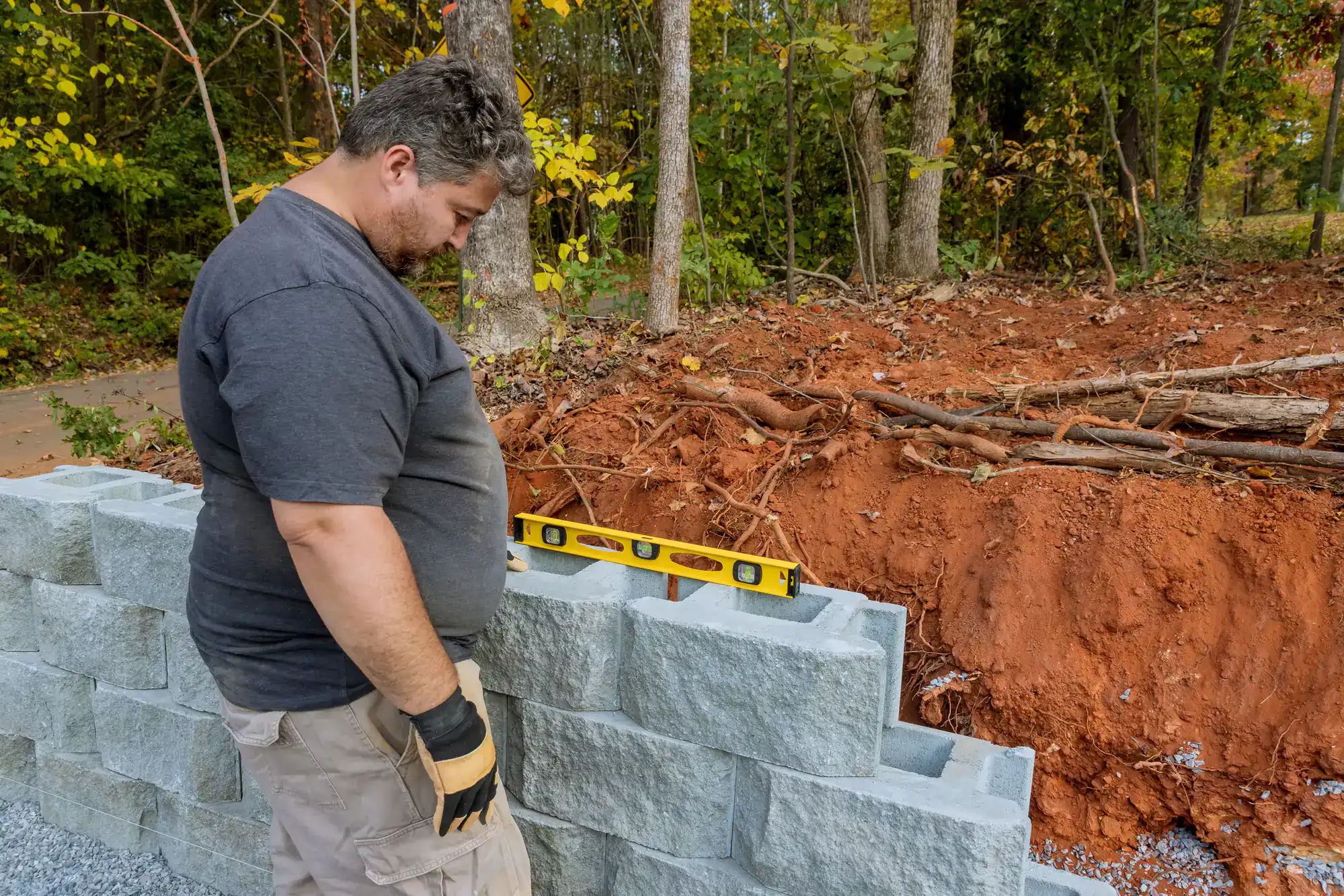
A man wearing gloves checks the level of a gray stone retaining wall with a yellow spirit level, next to a dirt embankment and forested area.

Ready to get started?

Explore More Services

About Stone Escapes Masonry & Outdoor Design

Get a Free Consultation

Retaining Wall Specialist Holbrook

What You Get With Professional Installation
Every retaining wall we build includes proper drainage systems—the number one thing that prevents wall failure. We use concrete footings (the standard here on Long Island) and backfill with drainage stone, not just dirt. You get materials from certified manufacturers like Cambridge, Techo-Bloc, and Unilock. These aren’t Home Depot blocks—they’re engineered systems designed to work together and handle Long Island’s soil movement. Holbrook sits right in Suffolk County’s sandy soil zone. That means excellent natural drainage but also soil that shifts. We account for both with deeper foundations and proper edge restraints that keep everything in place through freeze-thaw cycles.
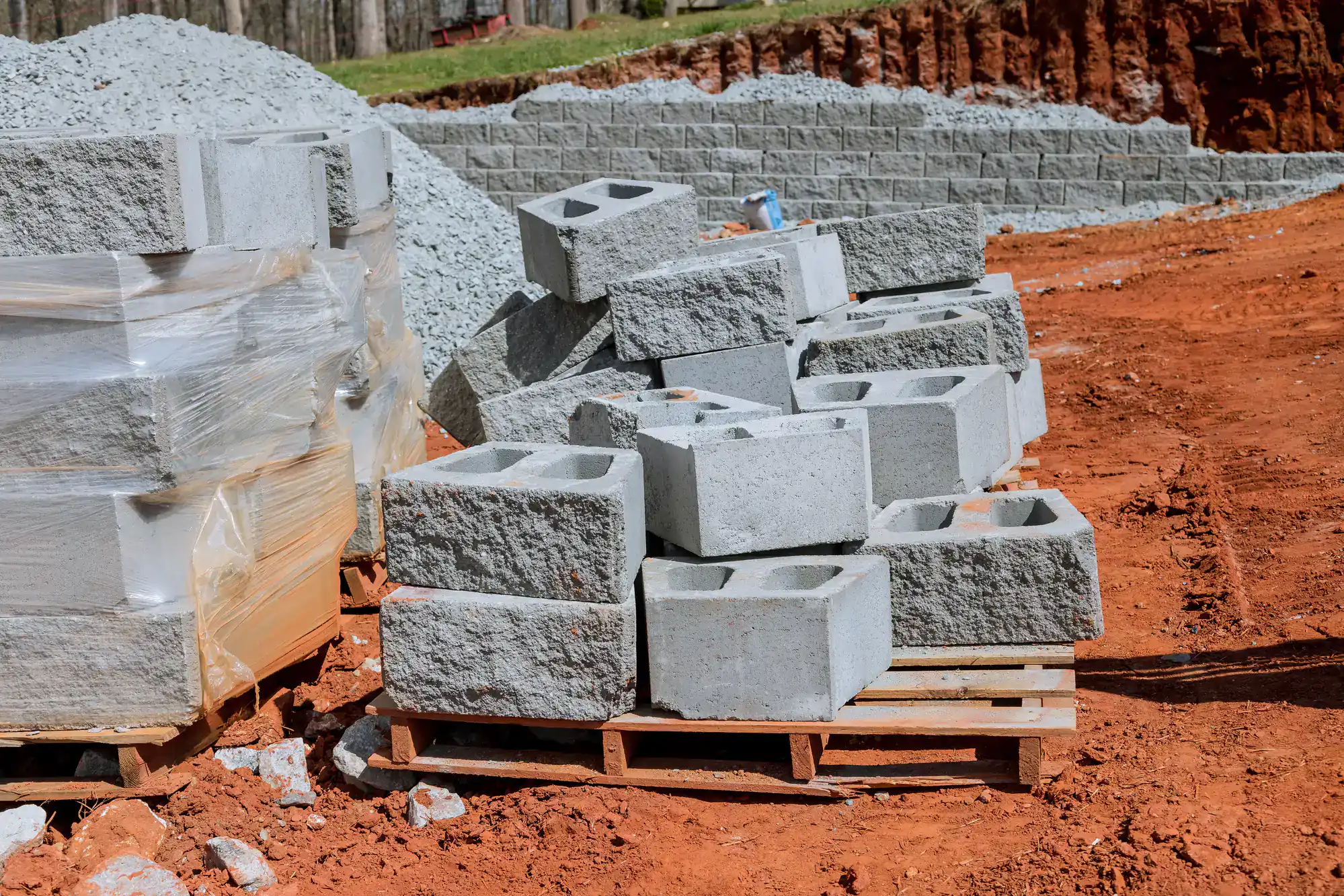
A stack of concrete cinder blocks is arranged on wooden pallets at a construction site with red soil and gravel. Wrapped blocks and a partially built stone retaining wall are visible in the background.

Why do so many retaining walls fail on Long Island?

Poor drainage is the number one cause. Long Island gets heavy rains, and when water builds up behind a wall with nowhere to go, it creates pressure that cracks, tilts, or collapses the structure. The second issue is ignoring our soil conditions. Sandy soil drains well but also shifts, especially during freeze-thaw cycles. Walls built without proper foundations below the frost line (typically 30-36 inches deep here) will heave and crack. Many contractors also skip proper backfill techniques, using regular soil instead of drainage stone and filter fabric. That creates a “bathtub effect” where water gets trapped behind the wall instead of draining away.
For Long Island conditions, we typically excavate foundations 30-36 inches deep to get below the frost line. This prevents heaving during our freeze-thaw cycles that can shift or crack the wall. The exact depth depends on your wall height and soil conditions, but anything less than 30 inches risks frost damage. We also use concrete footings (the standard here) rather than stone footings because they provide better stability in our sandy soil. The foundation width should be at least as wide as the wall blocks, often wider for taller walls. This isn’t where you want to cut corners—a proper foundation is what keeps your wall standing for decades instead of years.
Structural walls hold back significant soil pressure and prevent erosion or slope failure. These need engineered drainage systems, proper foundations, and often require permits for walls over 3-4 feet tall. Decorative walls are mainly for visual appeal—garden borders, raised planters, or defining spaces. They’re shorter (usually under 3 feet) and don’t carry the same load, but they still need proper drainage to prevent frost damage. Even “decorative” walls can fail if built wrong. We’ve repaired plenty of short walls that tilted or cracked because someone skipped the drainage or foundation work. The techniques matter regardless of the wall’s purpose.
Most residential retaining walls take 3-7 days depending on length, height, and site conditions. Simple walls under 3 feet might finish in 2-3 days, while structural walls over 4 feet can take a week or more. Weather affects timing—we can’t pour concrete footings in freezing temperatures or work in heavy rain. Spring and fall are ideal, but we work year-round when conditions allow. Access to your property also matters. If we can get equipment close to the work area, things move faster. Tight spaces or steep slopes where everything has to be moved by hand add time to the project.
Most towns in Suffolk County require permits for retaining walls over 3-4 feet tall. Holbrook follows Suffolk County building codes, so walls over 4 feet typically need permits and sometimes engineering plans. The permit process usually takes 2-3 weeks and costs $40-450 depending on the project size. We handle permit applications as part of our service—you shouldn’t have to navigate that paperwork yourself. Even if your wall doesn’t need a permit, it still needs to meet building codes for safety. Proper drainage, foundation depth, and construction techniques aren’t optional just because the town doesn’t require a permit.
Segmental concrete blocks work best for most Long Island applications. They’re engineered to handle soil movement, come in various colors and textures, and cost $25-45 per square foot installed. Natural stone looks great but requires more skill to install properly and costs more. Wood (like railroad ties) is cheapest upfront but rots in our humid climate and needs replacement every 10-15 years. For Long Island’s sandy soil and coastal conditions, we typically recommend interlocking concrete systems from manufacturers like Cambridge or Techo-Bloc. They’re designed to flex slightly with soil movement while maintaining structural integrity over decades.