
Hear from Our Customers
You get flat, stable ground where there used to be a muddy mess. No more watching your topsoil wash away every time it rains hard.
Your property becomes more functional. That steep backyard that nobody could use? Now it’s level space for whatever you need—patios, gardens, or just somewhere the kids can play without sliding down a hill.
The foundation problems stop. When soil shifts and water pools against your house, you’re looking at expensive repairs down the road. A properly built retaining wall redirects water and keeps soil where it belongs—away from your foundation.
We’ve been handling East Setauket’s tricky soil conditions since day one. Iain Traynor, our owner, comes from union masonry work and stays involved in every estimate and project.
We’re licensed in Suffolk and Nassau Counties because we do this right. No shortcuts, no surprises halfway through your job. You get the same crew from start to finish, not whoever shows up that day.
East Setauket’s sandy soil drains fast but shifts easily. We excavate 8-10 inches deep, install proper base layers, and plan drainage from the beginning. Your wall won’t shift or crack when the next nor’easter hits.
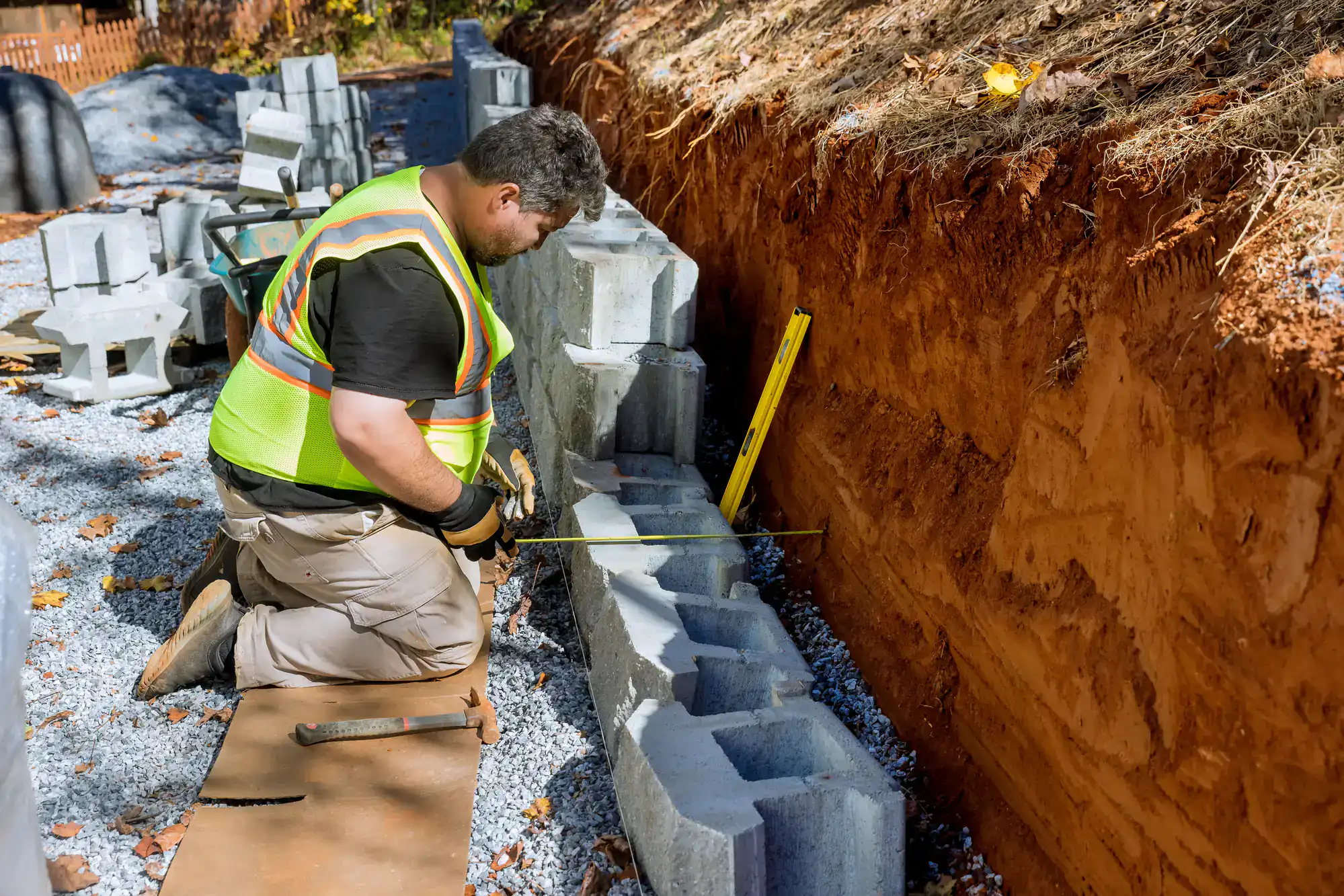
First, we come out and look at what you’re dealing with. Soil type, drainage patterns, how much slope we need to handle. No guessing—we measure everything.
Then we dig. Not just scraping the surface—we go 8-10 inches down, sometimes more depending on your soil. The foundation has to be right or nothing else matters.
Base prep comes next. Compacted gravel, proper drainage planning, edge restraints. This is where most contractors cut corners. We don’t. Your wall needs to handle freeze-thaw cycles and whatever water Long Island throws at it.
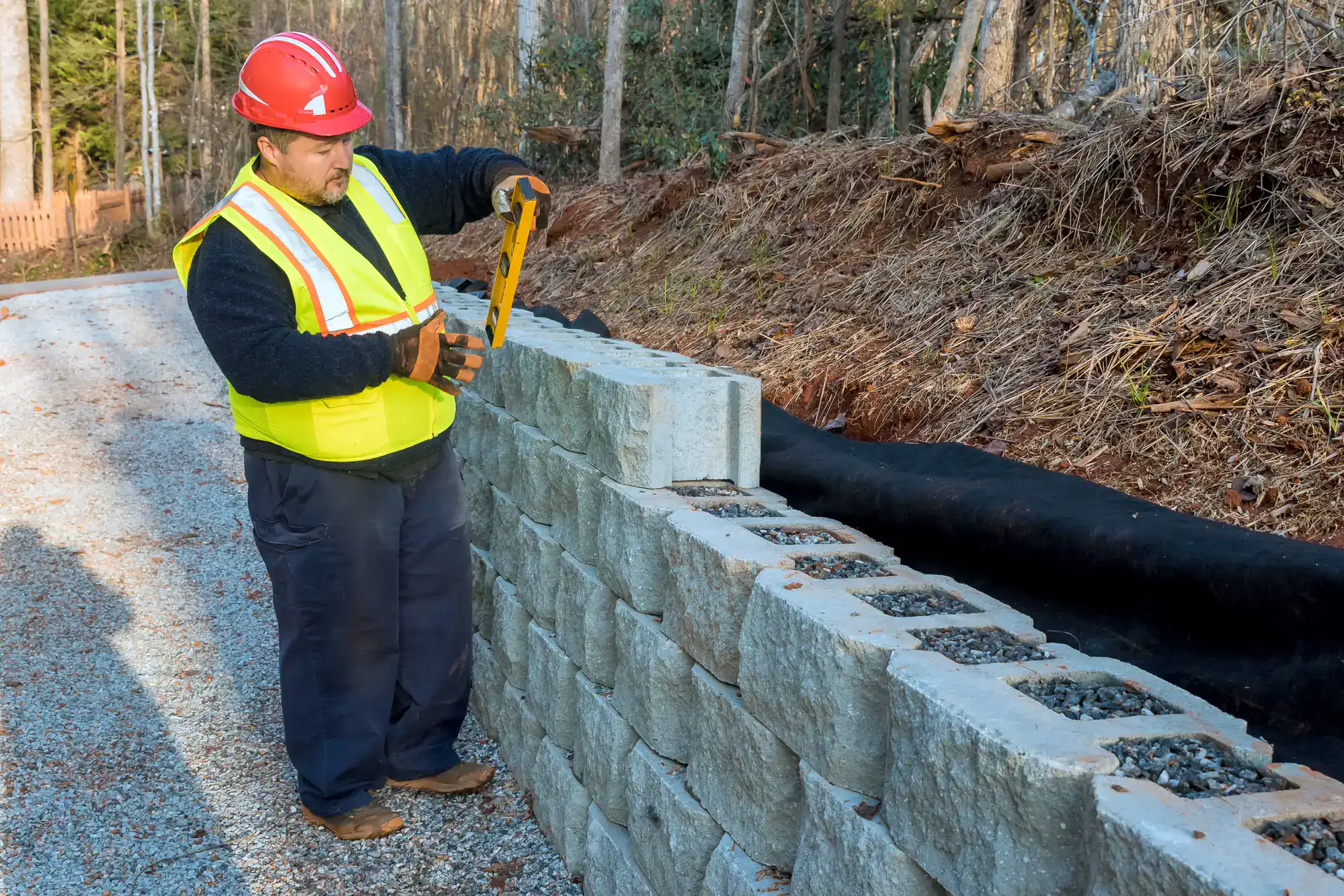
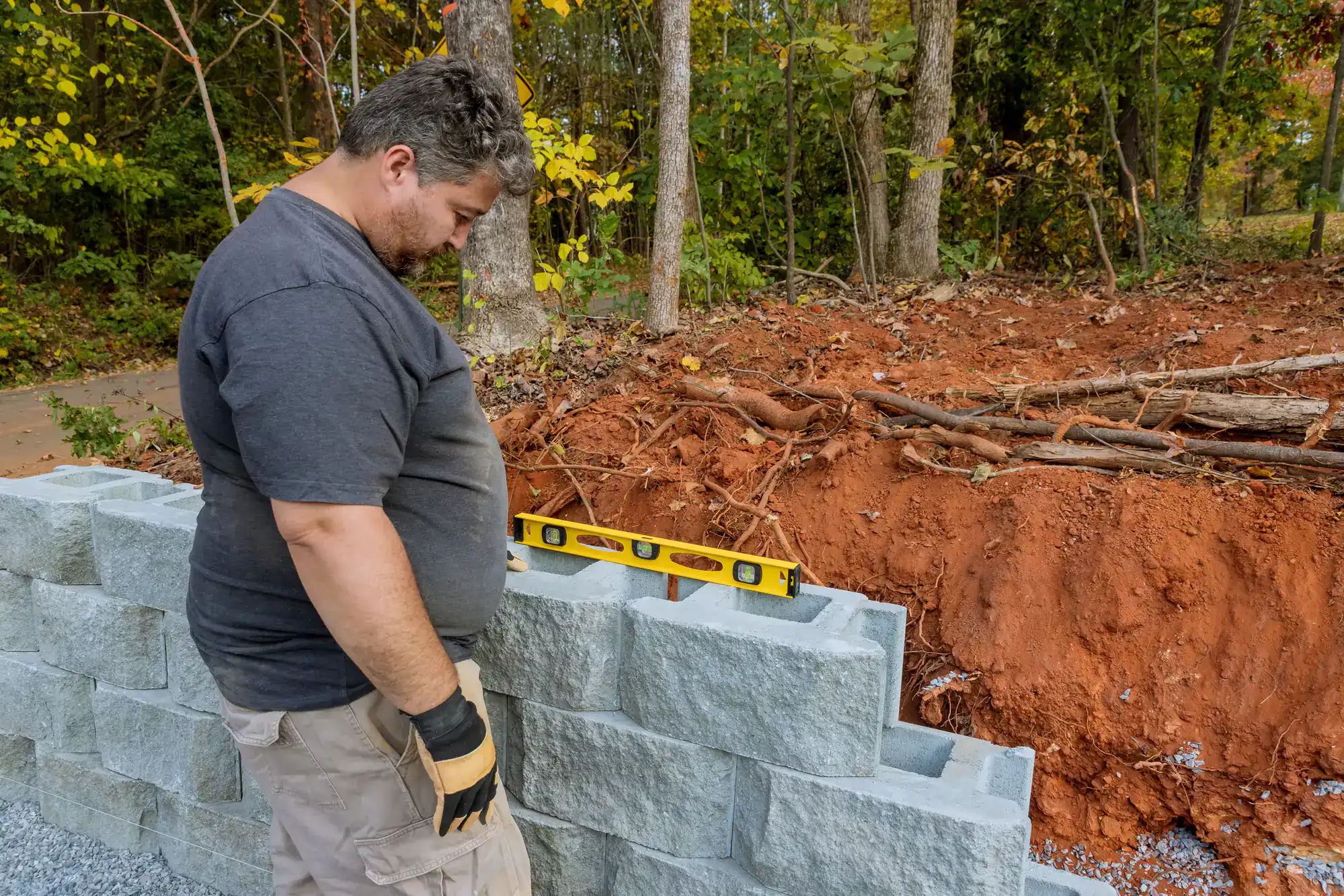
Finally, we build the wall itself. Stone, concrete, or whatever material works best for your situation. Each course gets checked for level and alignment. The drainage goes in as we build, not as an afterthought.
Ready to get started?
Every retaining wall includes proper drainage. That means perforated pipes, gravel backfill, and water management designed for East Setauket’s conditions. No standing water, no hydrostatic pressure buildup.
We use materials that work here. Cambridge, Techo-Bloc, Unilock—manufacturers that certify us because we know how to install their products correctly. Salt air and coastal moisture won’t destroy your investment.
Your project gets planned for Long Island’s reality. Sandy soil that shifts, high water tables, storms that dump inches of rain in hours. We’ve seen it all and we build accordingly.
The work comes with direct oversight. Iain handles estimates personally and stays involved throughout. No project managers who’ve never held a trowel—you get someone who knows masonry.
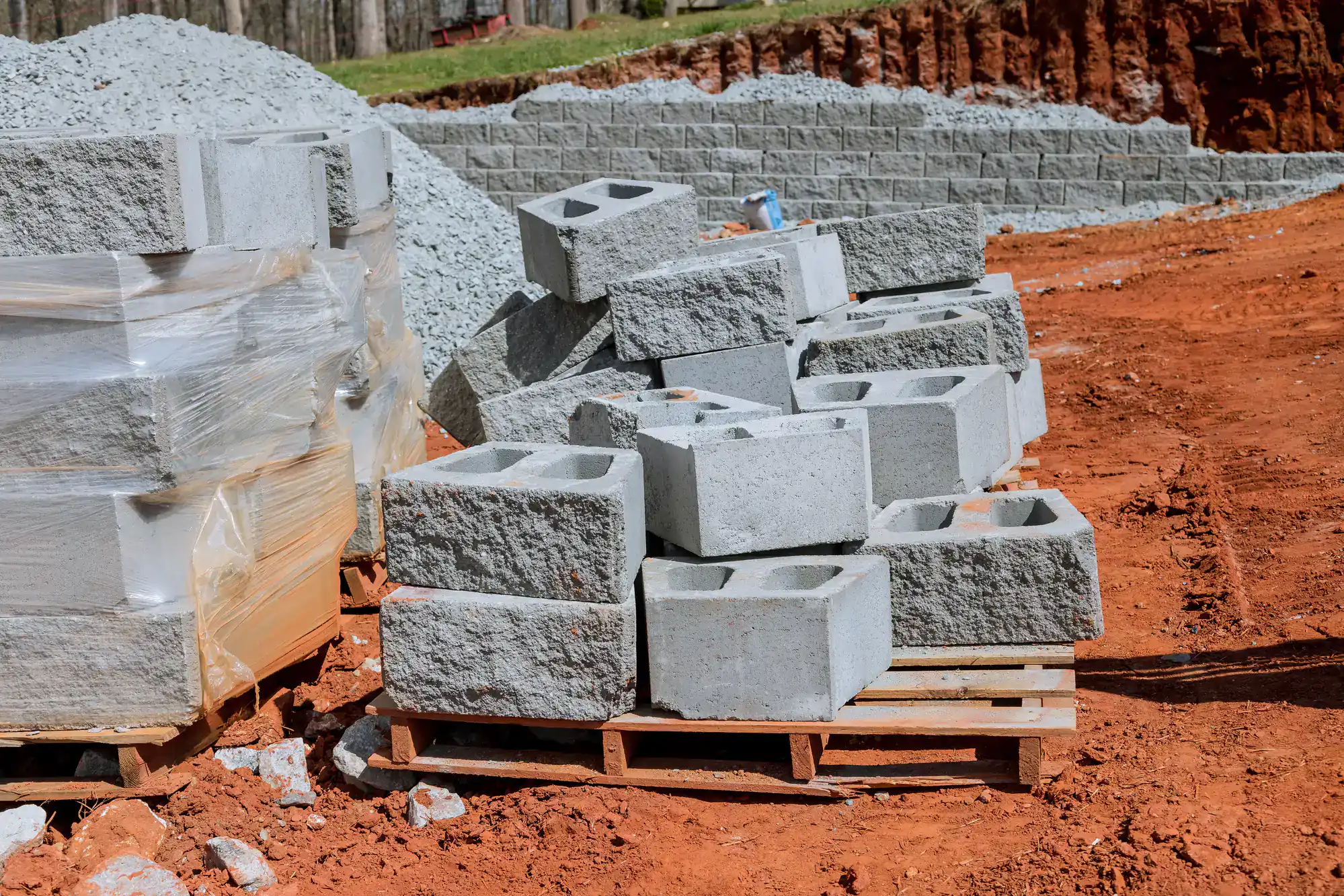
We excavate 8-10 inches minimum, often deeper depending on your specific soil conditions and wall height. East Setauket’s sandy soil requires reaching below the frost line to prevent shifting.
The foundation needs compacted gravel base and proper drainage from the start. Shallow foundations fail here because the soil moves when it gets saturated. We’ve seen too many walls that were built cheap and failed after the first heavy rain season.
Your wall’s stability depends on getting this right the first time. Fixing a failed foundation costs more than doing it properly from the beginning.
Concrete blocks, natural stone, and engineered systems that handle salt air and freeze-thaw cycles. We’re certified with Cambridge, Techo-Bloc, Unilock, Nicolock, Eldorado, and Boral because their products perform here.
Wood doesn’t last in our coastal moisture. Cheap concrete blocks crack when water gets in and freezes. You need materials designed for coastal conditions, not whatever’s cheapest at the supply yard.
The right materials cost more upfront but save money long-term. A wall that lasts 20+ years costs less than rebuilding every few years.
Sandy soil drains fast but also shifts easily, so we install perforated drainage pipes behind every wall with gravel backfill and filter fabric. Water needs somewhere to go besides building up behind your wall.
We plan drainage during design, not after problems start. Hydrostatic pressure destroys retaining walls, especially in East Setauket where we get heavy rains and high water tables.
The drainage system gets integrated as we build. Pipes, gravel, fabric—everything works together to move water away from your wall and foundation.
Depends on height and location, but we handle permit requirements as part of the job. Suffolk County has specific rules about retaining walls, especially near property lines or in flood zones.
We know local codes and work with building departments regularly. No surprises about permits halfway through your project—we figure this out during the estimate phase.
Getting permits right the first time prevents problems later. Code violations can force you to tear down and rebuild, which costs way more than doing permits correctly from the start.
20-30+ years when built correctly for Long Island conditions. The key is proper foundation depth, drainage planning, and materials that handle our climate.
Walls fail early because of shortcuts—shallow foundations, no drainage, cheap materials. We’ve repaired plenty of walls that should have lasted decades but failed after 5-10 years because they weren’t built right.
Your investment should last. We build walls that handle East Setauket’s sandy soil, coastal moisture, and weather cycles because that’s what you’re paying for.
Professional installation means proper excavation depth, engineered drainage, and materials that work in Long Island’s conditions. DIY projects usually fail because homeowners don’t understand soil mechanics or local requirements.
We have the right equipment for compaction, excavation, and material handling. Hand tools and weekend work don’t create the foundation stability your wall needs to last decades.
The cost difference between professional installation and rebuilding a failed DIY wall makes professional work the smart choice. Plus, we’re licensed and insured—if something goes wrong, you’re protected.