Retaining Wall Contractor in Copiague, NY

Stop Erosion Before It Costs You

Turn your sloped yard into usable space with retaining walls built for Long Island’s sandy soil and coastal conditions.
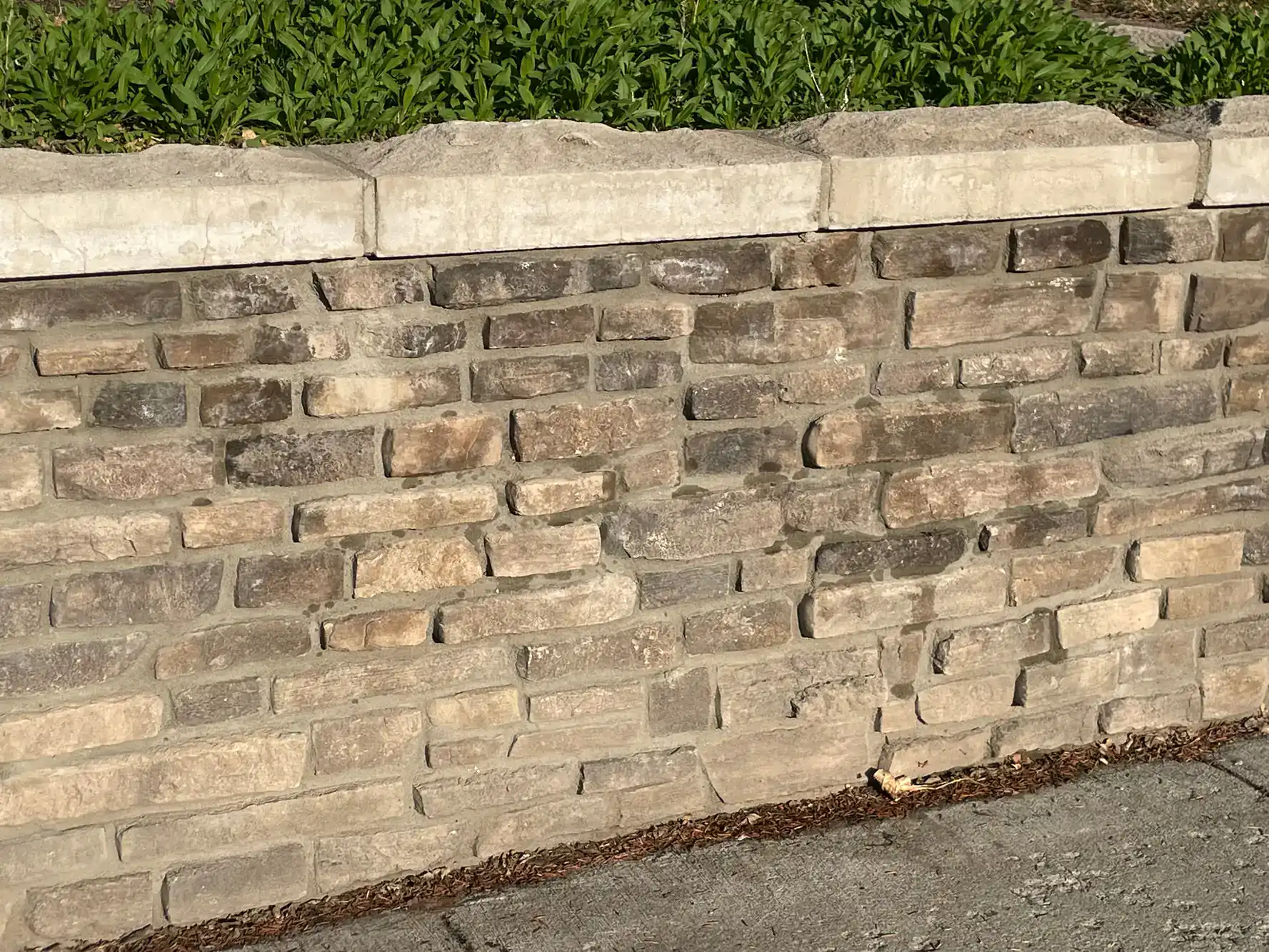
A stone retaining wall made of rectangular, tan and brown bricks supports a raised bed with green plants. Sunlight casts shadows on the textured wall and gray sidewalk below.

Hear from Our Customers

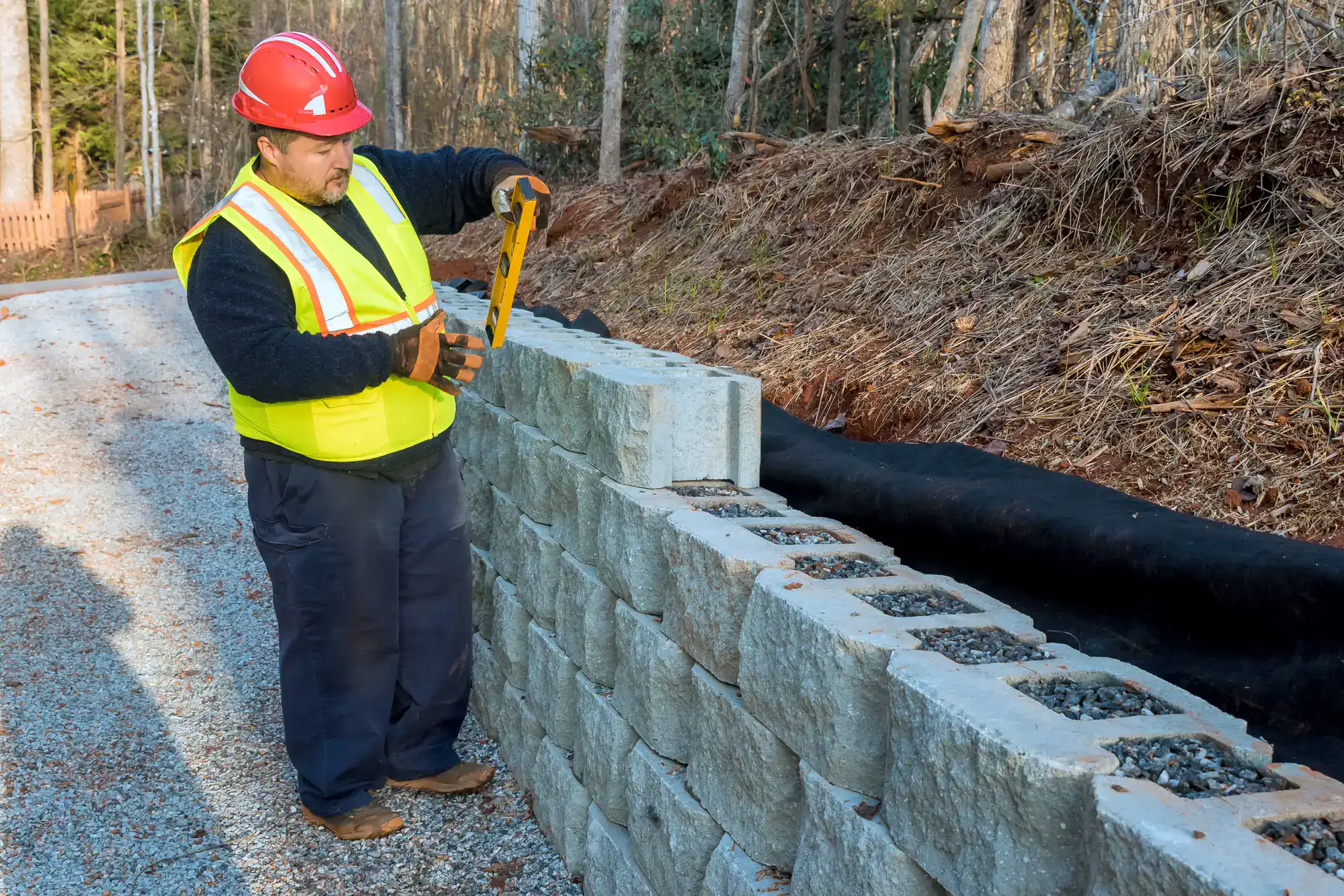
A construction worker in a yellow safety vest and red helmet uses a level to check concrete blocks while building a retaining wall next to a gravel road and a slope with trees.

Copiague Retaining Wall Installation

Your Property Protected and Improved
You get a retaining wall that actually works. No more watching soil wash away during storms or dealing with unusable sloped areas. Your new wall handles Long Island’s freeze-thaw cycles and coastal moisture. It prevents the erosion that threatens your landscaping and foundation while creating flat, functional space you can actually use. The drainage systems we install mean your wall won’t lean, crack, or fail like the ones built without proper water management. You’re looking at 20-50 years of protection when it’s done right.

Licensed Copiague Masonry Contractor

We Know Long Island Soil
We’ve been building retaining walls across Suffolk and Nassau Counties since our early days when we landed a feature in Cambridge Pavingstone’s magazine. Owner Iain Traynor comes to every estimate and job site personally. Iain’s background includes union masonry work in Manhattan and learning from a master carpenter father. He holds licenses in Suffolk County, Nassau County, Southampton, and East Hampton. Most of our work comes from referrals because we understand Copiague’s sandy soil conditions and what it takes to build walls that last. We excavate 8-10 inches deep, install proper drainage, and use the base preparation that prevents settling and failure.
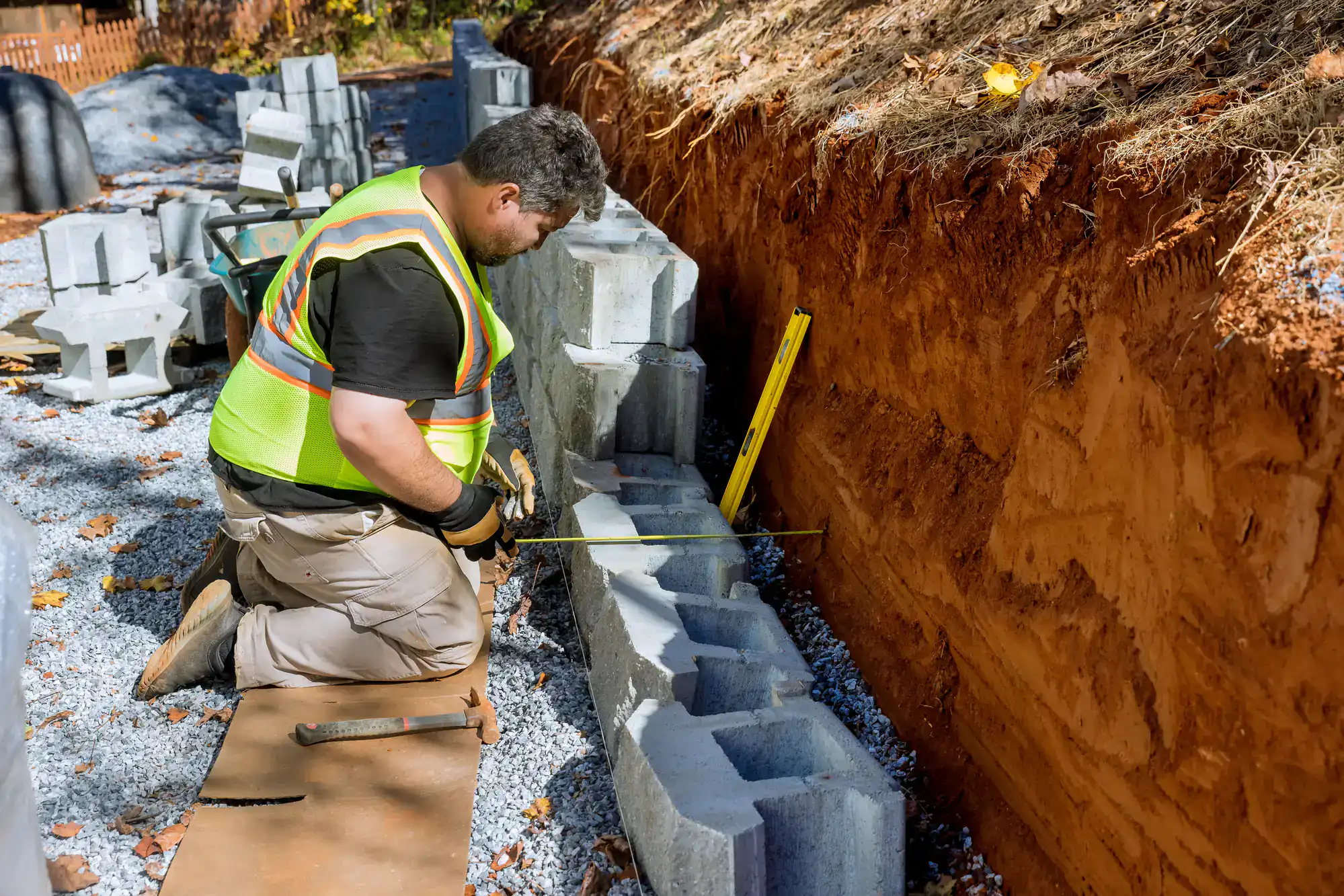
A construction worker in a safety vest kneels on gravel, measuring concrete blocks as he builds a retaining wall beside an exposed dirt slope. Tools and blocks are scattered around the worksite.

Retaining Wall Construction Process Copiague

Built Right From the Ground Up
We start with proper excavation—8 to 10 inches deep to get below Long Island’s sandy surface soil. The base gets leveled and compacted with the right materials, not shortcuts that cause problems later. Drainage goes in before the first block. We install perforated pipes, gravel backfill, and filter fabric to handle water properly. This prevents the hydrostatic pressure that makes walls lean and fail. Each course gets set level and secured. We backfill as we build, maintaining proper drainage throughout. The finished wall includes edge restraints and final grading that directs water away from the structure.
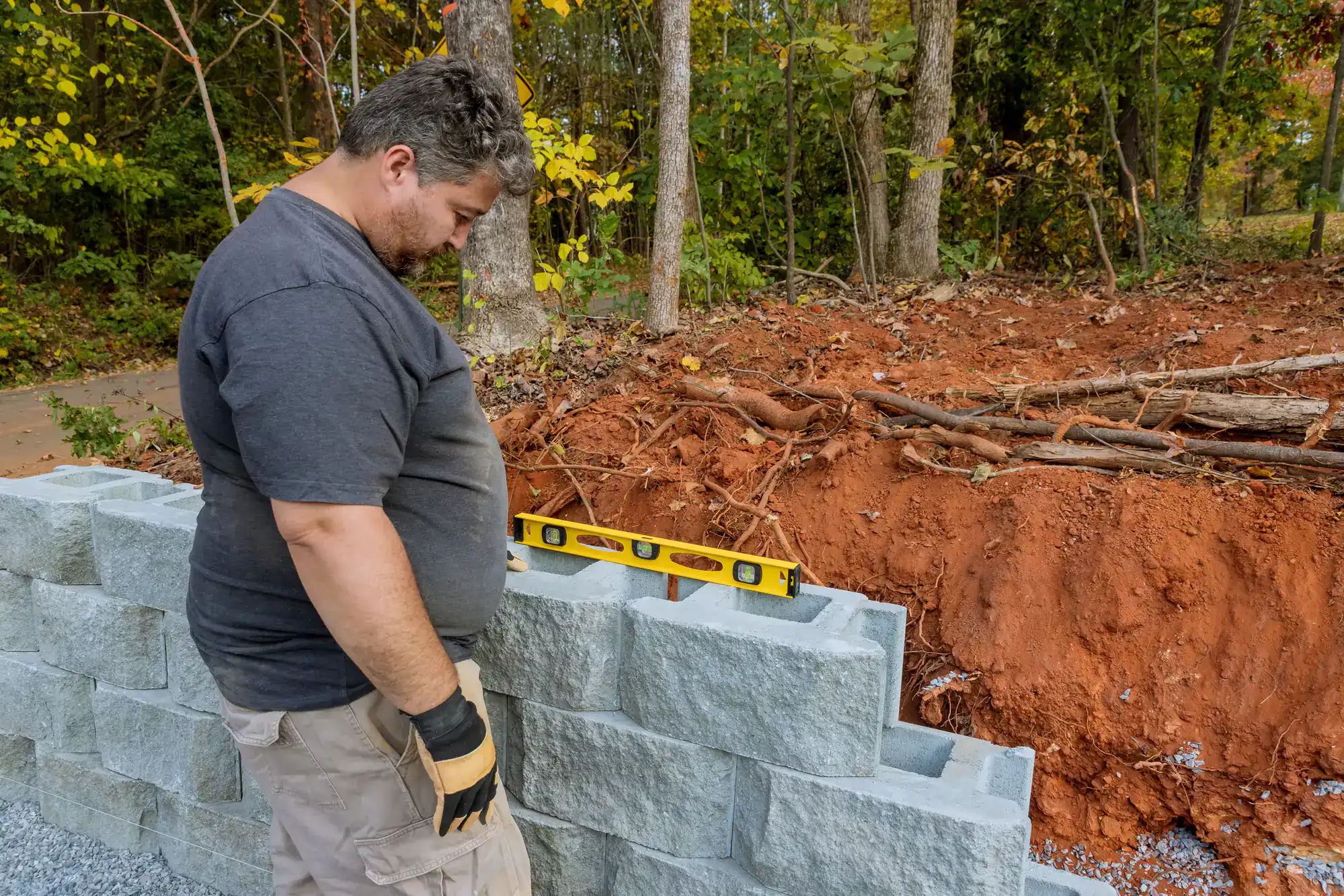
A man wearing gloves checks the level of a gray stone retaining wall with a yellow spirit level, next to a dirt embankment and forested area.

Ready to get started?

Explore More Services

About Stone Escapes Masonry & Outdoor Design

Get a Free Consultation

Copiague Stone Wall Installation

What You Get With Every Wall
Every retaining wall includes proper foundation depth—30 to 36 inches to reach below Copiague’s frost line. We use materials rated for Long Island’s coastal conditions and freeze-thaw cycles. Drainage systems are standard, not optional. Perforated pipes, gravel backfill, and filter fabric prevent the water buildup that destroys walls. We include weep holes and exit spouts at the correct heights. You get Cambridge, Techo-Bloc, Unilock, or Nicolock materials depending on your project needs. All installations meet manufacturer specifications and local building requirements. The work comes with our guarantee because we do it right the first time.

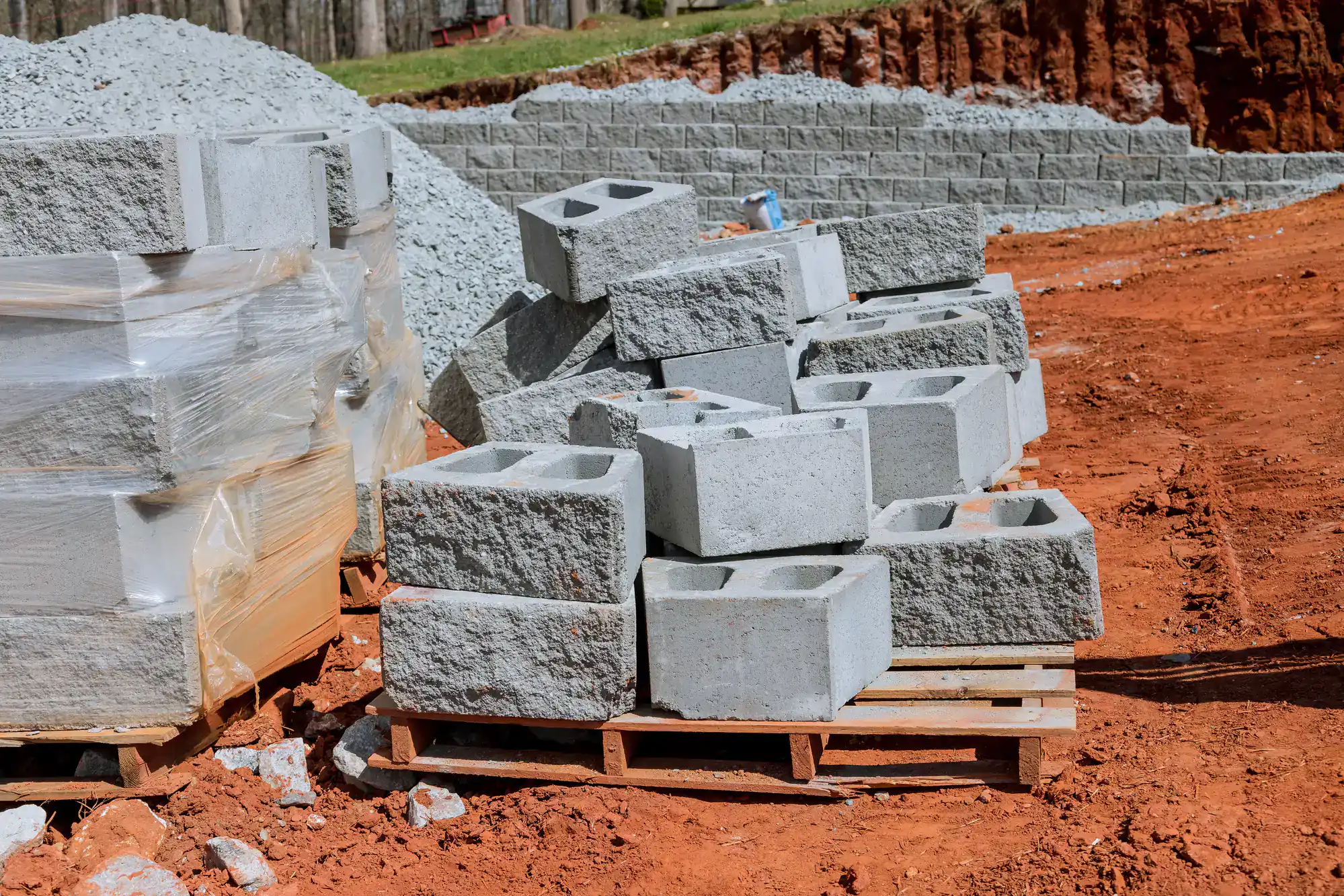
A stack of concrete cinder blocks is arranged on wooden pallets at a construction site with red soil and gravel. Wrapped blocks and a partially built stone retaining wall are visible in the background.

How deep should retaining wall foundations be in Copiague, NY?

Retaining wall foundations in Copiague need to go 30-36 inches deep to reach below the frost line. Long Island’s sandy soil and freeze-thaw cycles require this depth to prevent heaving and settling. Shallow foundations are the main reason walls fail here. The sandy soil composition means we need deeper excavation and specialized backfill materials compared to other areas. We excavate 8-10 inches for the base preparation, then go deeper for the actual foundation depending on wall height and soil conditions.
Poor drainage causes 90% of retaining wall failures on Long Island. Water builds up behind walls without proper drainage systems, creating hydrostatic pressure that cracks, tilts, or collapses the structure. Long Island’s coastal conditions make this worse. Salt air corrodes materials not rated for marine environments. High water tables and seasonal fluctuations add pressure. Sandy soil washes out easily without filter fabric protection. The freeze-thaw cycles we get here expand trapped water, splitting blocks and mortar joints. Proper drainage, marine-grade materials, and foundation depth below the frost line prevent these problems.
Concrete block systems like Cambridge, Techo-Bloc, and Unilock work best here. These materials handle Long Island’s freeze-thaw cycles and coastal moisture better than wood or basic concrete. Natural stone works well too, but requires more skilled installation for proper drainage. We avoid railroad ties and basic concrete blocks because they don’t last in our climate conditions. The key is using materials rated for marine environments with proper drainage systems. Even the best materials fail without correct installation techniques for our sandy soil and coastal weather patterns.
Well-built retaining walls last 20-50 years in Copiague when constructed with proper drainage and materials rated for Long Island conditions. The lifespan depends on installation quality, not just materials. Walls built without proper drainage fail in 5-10 years. Walls with correct foundation depth, drainage systems, and marine-grade materials easily reach 30+ years with minimal maintenance. Regular inspection for cracks or drainage issues extends life even further. The investment in proper construction pays off because you avoid costly rebuilds and property damage from wall failure.
Yes, even 2-3 foot retaining walls need basic drainage in Copiague. Long Island’s sandy soil and coastal moisture mean water accumulates behind any wall without proper management. Small walls without drainage develop frost damage and erosion problems. The sandy soil washes through gaps, creating voids that cause settling and tilting. We install compact drainage systems for shorter walls—perforated pipes, gravel backfill, and filter fabric scaled to the wall size. This prevents the water pressure and soil loss that cause even low walls to fail.
Retaining walls over 4 feet typically require permits in Suffolk County. Walls near property lines or supporting structures may need permits regardless of height. The permit process includes structural calculations and drainage plans. We handle permit applications and work with local building departments to ensure compliance with Suffolk County requirements. Some homeowner association areas have additional restrictions on materials and design. We check all local requirements during the planning phase to avoid delays and ensure your wall meets all codes.