
Hear from Our Customers
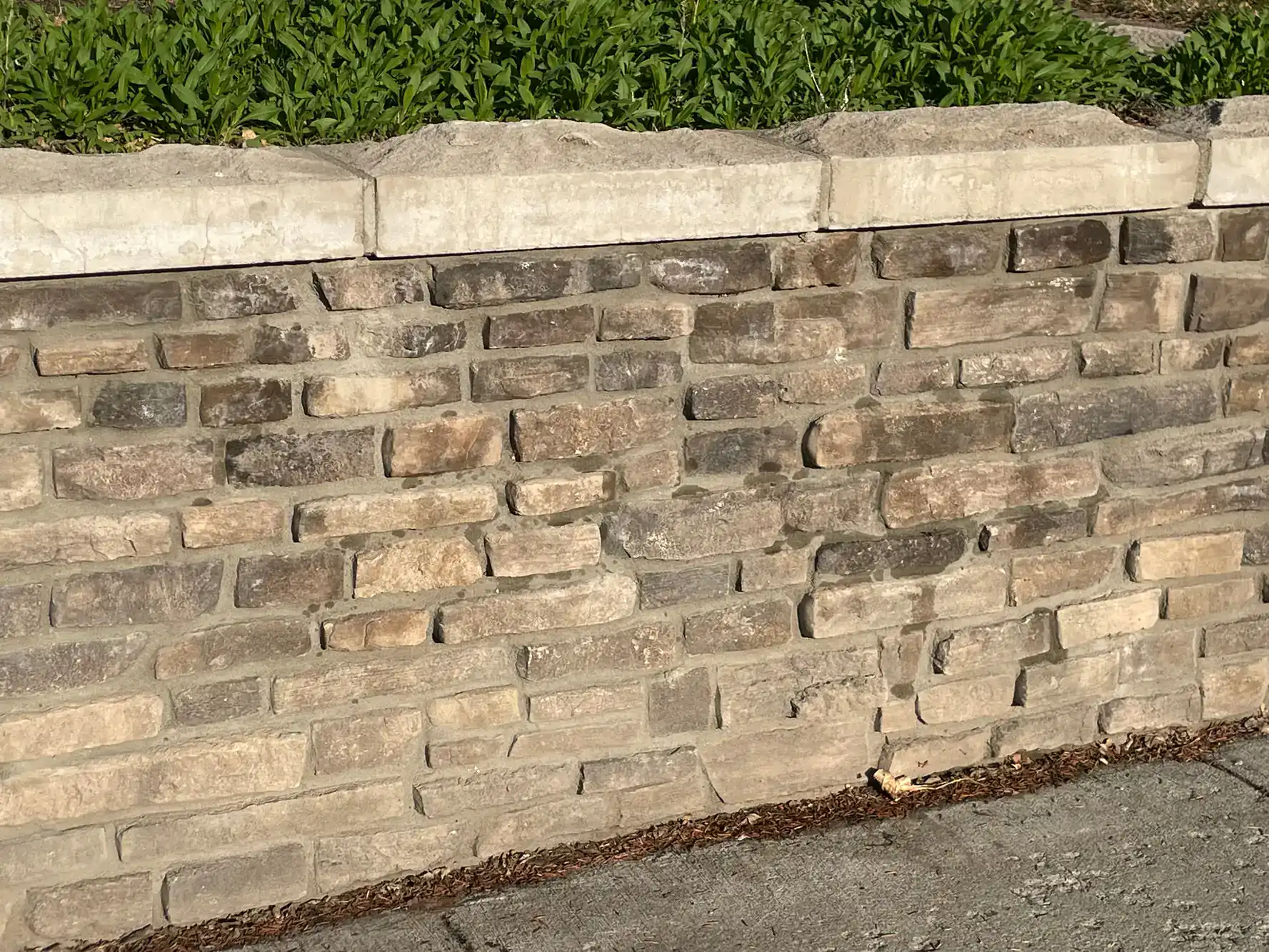
Your slope isn’t going to fix itself. Every heavy rain washes more soil away from your foundation, your landscaping, and your peace of mind.
A properly built retaining wall stops that cycle. You get stable ground that stays put, usable space where there used to be just a problematic slope, and protection for the investments you’ve already made in your property. No more watching your yard wash away or dealing with drainage problems that keep getting worse.
The difference is working with someone who understands that Long Island soil and weather conditions aren’t the same as everywhere else. Sandy soil, coastal moisture, freeze-thaw cycles—these aren’t just details, they’re the foundation of how your wall gets built.
We’ve been handling retaining wall projects across Suffolk and Nassau Counties since before most contractors understood what makes Long Island construction different. Owner Iain Traynor brings union masonry experience and stays directly involved in every estimate, every plan, and every build.
We’re licensed in Suffolk County, Nassau County, and townships including Southampton and East Hampton. More importantly, we’re certified by the manufacturers whose materials actually work in coastal conditions—Cambridge, Techo‑Bloc, Unilock, Nicolock, Eldorado, and Boral.
You won’t get shuffled to a project manager or handed off to whoever’s available. When you work with us, you get direct communication with people who’ve been solving Bohemia’s specific soil and drainage challenges for over a decade and a half.
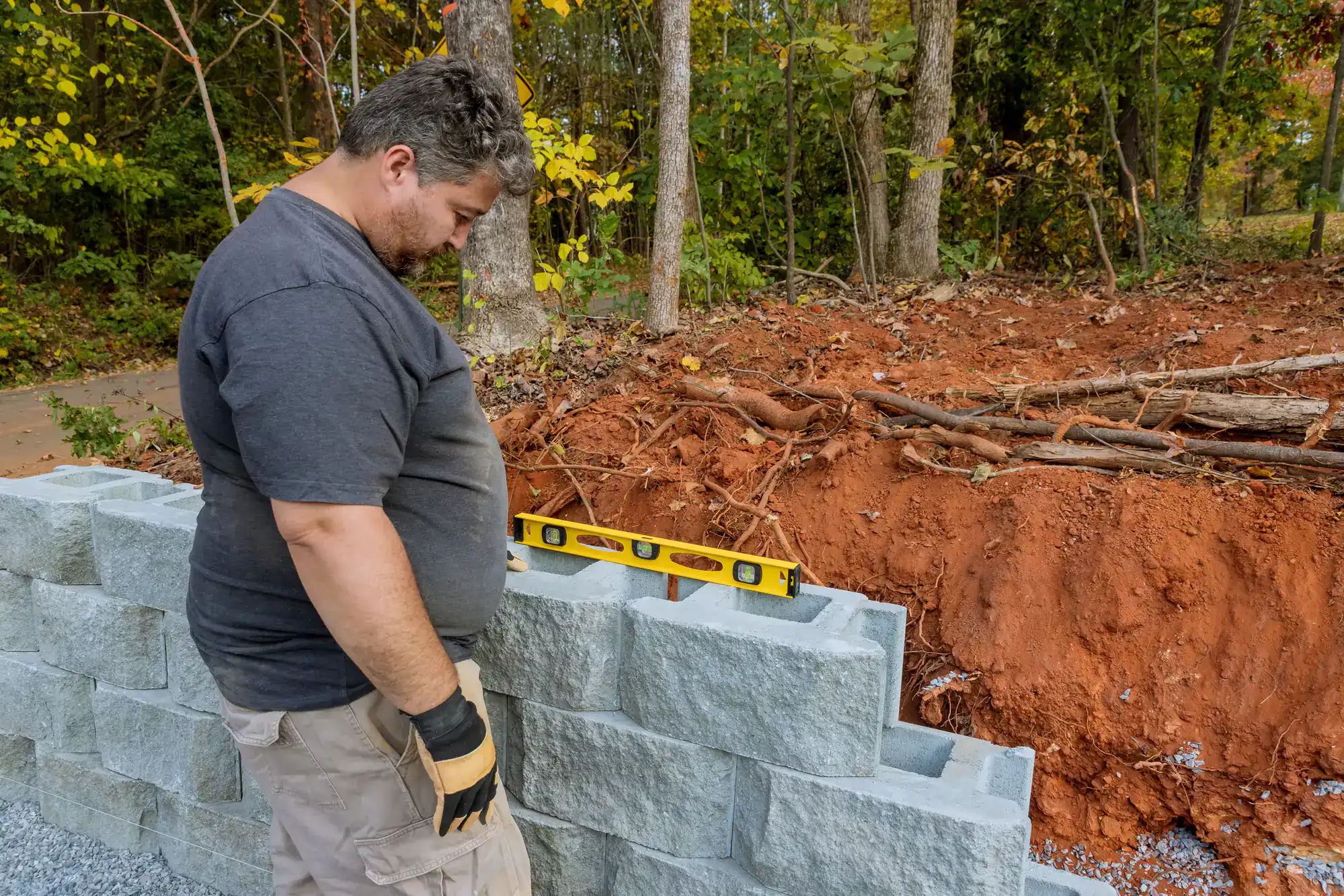
First, we assess your specific site conditions—soil type, drainage patterns, grade requirements—because what works in other places doesn’t automatically work here. Long Island’s sandy soil and coastal climate require different approaches than inland construction.
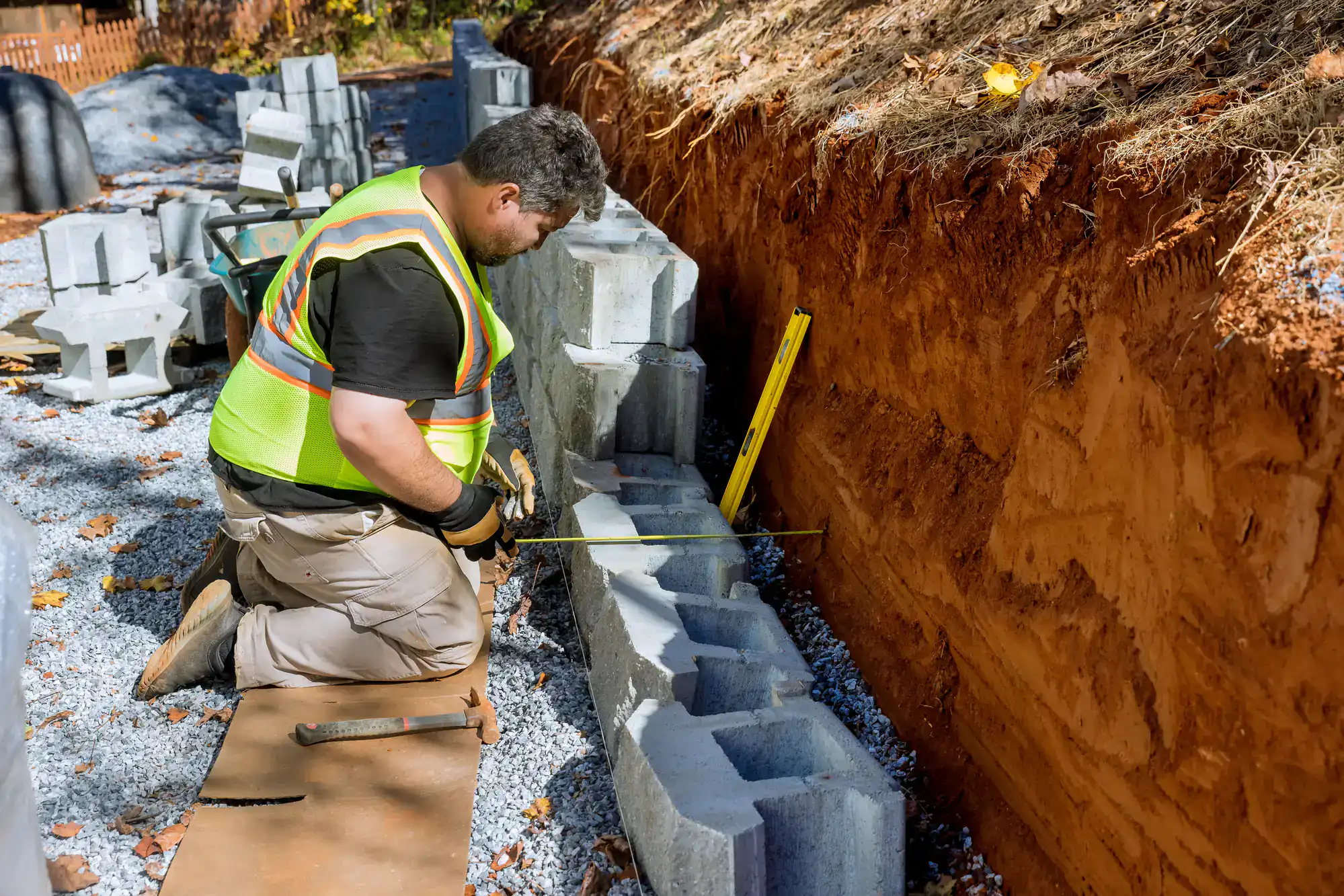
Next comes proper excavation. We dig to below the frost line, typically 30-36 inches deep in our area, to prevent frost heave that can destroy walls over time. The foundation gets built with compacted crushed stone that accommodates our sandy soil characteristics while providing stable support.
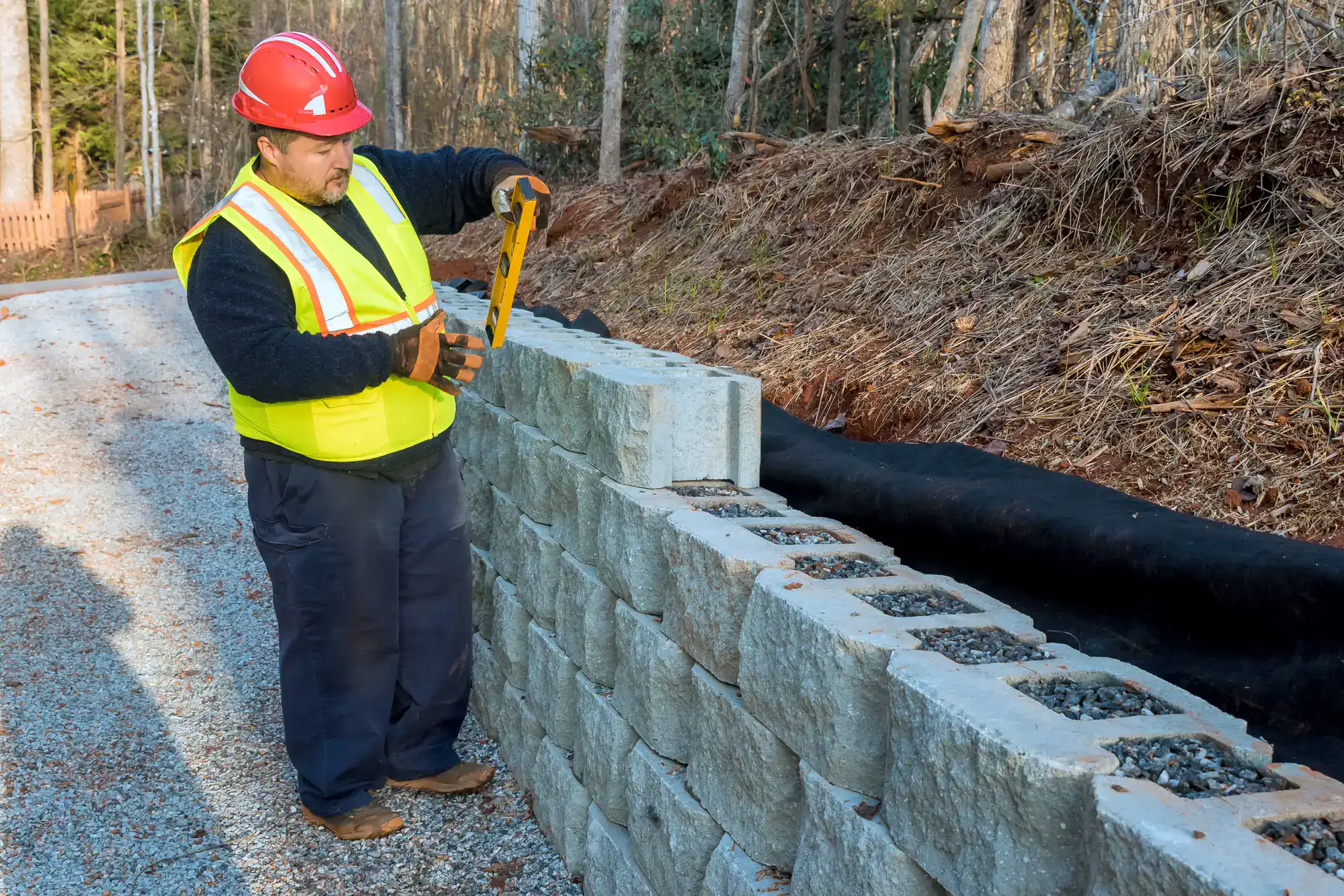
Then we install the wall system with built-in drainage solutions. Proper backfill, drainage pipes, and water management aren’t extras—they’re essential for preventing the hydrostatic pressure that causes walls to fail. Every project includes edge restraint installation and proper base layering to reduce shifting and cracking down the road.
Ready to get started?
Every retaining wall installation includes excavation to 8-10 inches, proper base preparation, drainage planning, and materials certified for coastal conditions. We handle permit applications when required and ensure compliance with local building codes specific to Nassau and Suffolk Counties.
Bohemia’s mix of ranch-style homes, raised Colonials, and wooded lots creates unique challenges for retaining wall placement and design. We account for your property’s existing drainage patterns, sun exposure, and how materials will age in Long Island’s salt air environment.
Your project includes manufacturer warranties on materials and our guarantee on workmanship. No automated tracking systems or generic communication—you get direct contact with the people actually building your wall, from initial consultation through project completion.
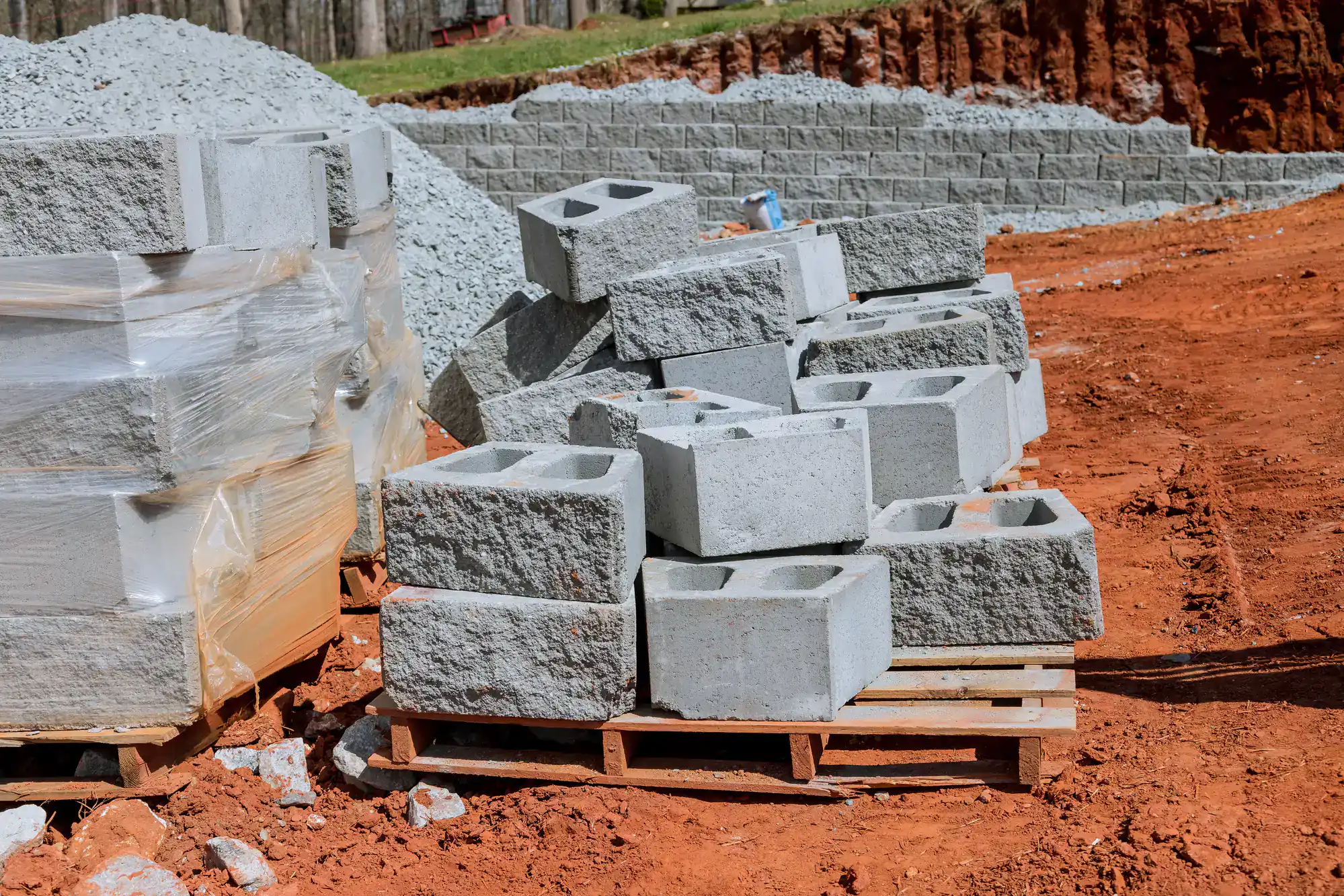
Retaining wall foundations in Bohemia need to extend below the frost line, which is typically 30-36 inches deep in Suffolk County. This prevents frost heave during freeze-thaw cycles that can crack or shift the wall structure over time.
Long Island’s sandy soil composition also requires specific foundation preparation. We excavate to proper depth, then install a compacted crushed stone base that provides stable support while accommodating the drainage characteristics of local soil conditions. Shallow foundations are one of the main reasons retaining walls fail in our area.
Materials need to handle salt air exposure, coastal moisture, and freeze-thaw cycles. We use products from manufacturers like Cambridge, Techo‑Bloc, Unilock, and Nicolock that are specifically engineered for these conditions.
Segmental block systems work exceptionally well because they accommodate slight movement in sandy soil while maintaining structural integrity. Natural stone options like fieldstone provide premium aesthetics and longevity. The key is selecting materials that won’t deteriorate from salt air or fail when soil shifts slightly, which happens more frequently in coastal areas than inland locations.
Most municipalities require permits for retaining walls over 3-4 feet tall. Walls exceeding 4 feet typically need structural engineer approval to ensure safety and code compliance. Suffolk County has specific requirements that differ from other areas.
We handle permit applications as part of our service and ensure your wall meets local building codes. The permit process exists for good reason—improperly designed tall walls can fail catastrophically, especially in sandy soil conditions. It’s worth getting it right the first time rather than dealing with expensive repairs or rebuilds later.
Retaining wall costs in Long Island typically range from $35-65 per square foot, with local rates around $54-58 per square foot depending on materials, height, and site conditions. A basic 20-foot long, 3-foot high wall usually runs $3,500-$8,700 including proper installation.
Factors affecting cost include excavation requirements, drainage complexity, material selection, and site accessibility. Walls requiring permits or engineering add $500-2,000+ to the project. While the upfront investment is significant, properly built retaining walls can increase property value by up to 15% and last decades with minimal maintenance.
Poor drainage is the biggest cause of retaining wall failure. Without proper drainage systems, water builds up behind the wall creating hydrostatic pressure that can cause bulging, cracking, or complete collapse. Long Island’s high water tables and heavy rains make drainage even more critical.
Insufficient foundation depth is another common problem. Walls that don’t extend below the frost line heave during freeze-thaw cycles. Using materials not suited for coastal conditions leads to premature deterioration from salt air exposure. Finally, inadequate understanding of sandy soil behavior causes many contractors to use inappropriate construction methods that work elsewhere but fail here.
Properly built retaining walls using appropriate materials can last 50-100+ years in Long Island’s coastal environment. The key factors are using corrosion-resistant materials, proper drainage installation, and foundations that extend below the frost line.
Segmental block walls with built-in drainage typically provide 50-75 years of service life. Natural stone walls can last over 100 years when properly constructed. Regular inspection for cracks, drainage issues, or soil movement helps identify small problems before they become major failures. Most maintenance involves clearing drainage systems and monitoring for any settlement or shifting.