Retaining Wall Contractor in Blue Point

Turn Your Slope Into Usable Space

Professional retaining wall installation that handles Blue Point’s sandy soil and drainage challenges the right way.
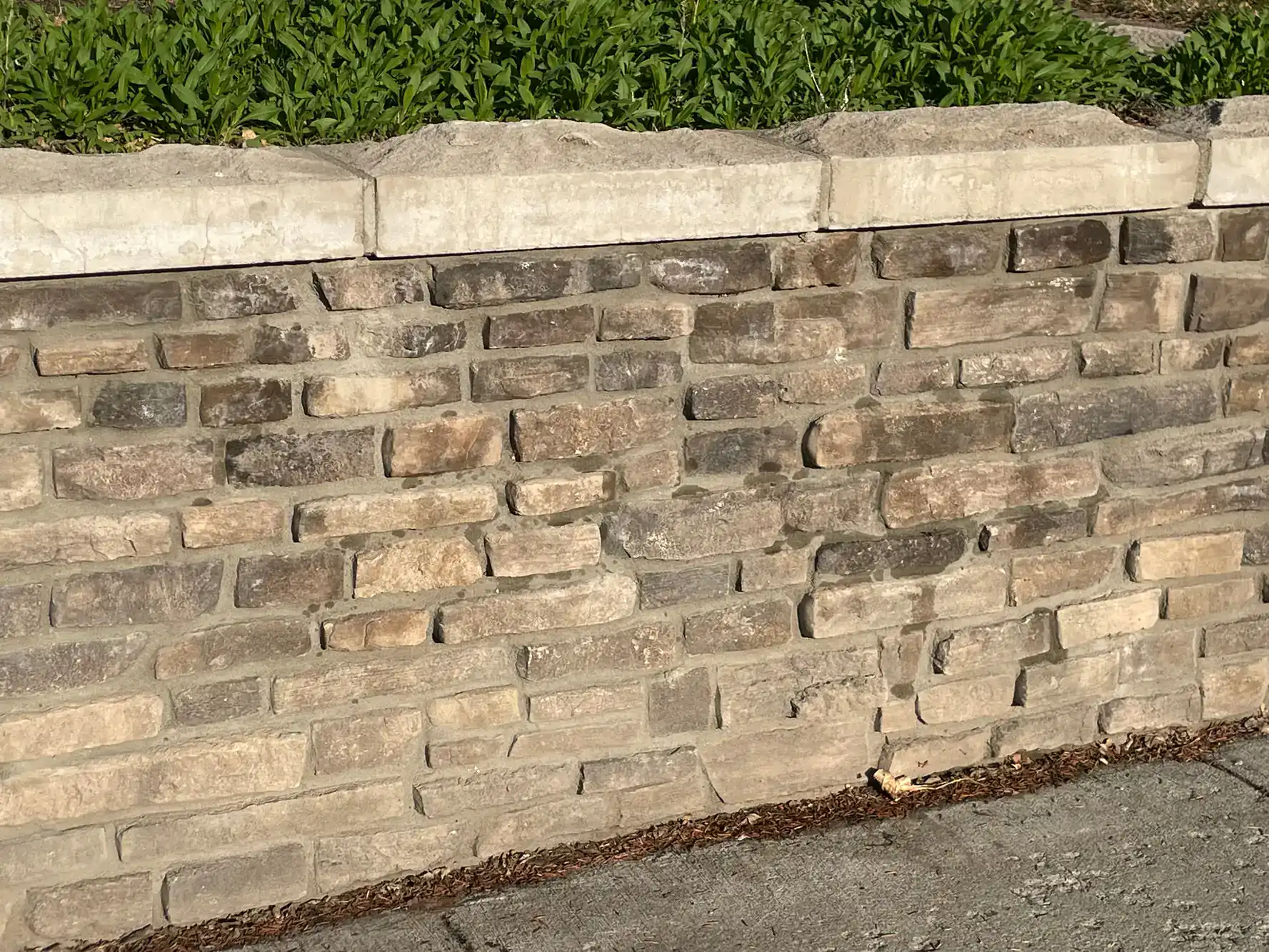
A stone retaining wall made of rectangular, tan and brown bricks supports a raised bed with green plants. Sunlight casts shadows on the textured wall and gray sidewalk below.

Hear from Our Customers

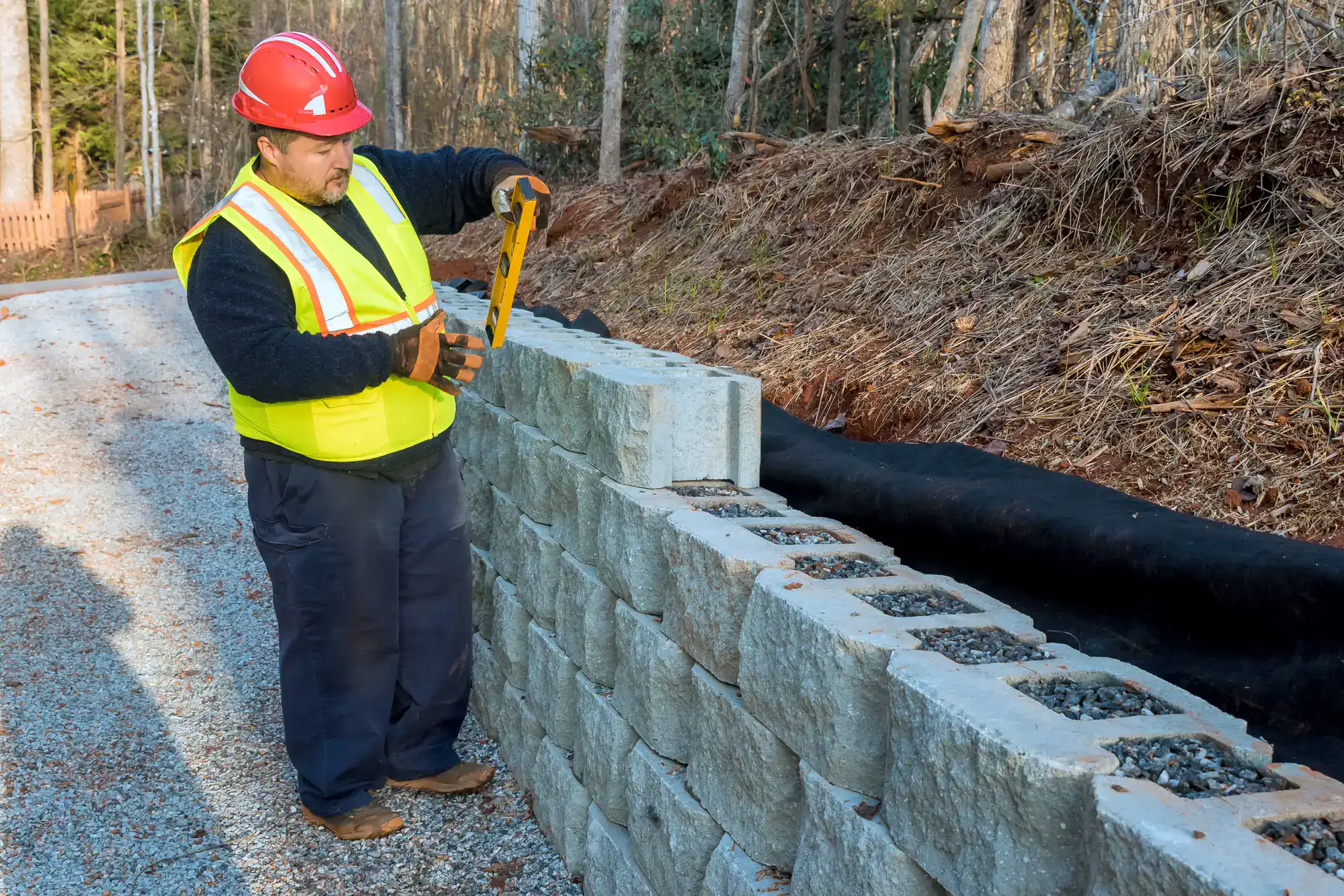
A construction worker in a yellow safety vest and red helmet uses a level to check concrete blocks while building a retaining wall next to a gravel road and a slope with trees.

Blue Point Retaining Wall Installation

Stop Erosion, Gain Outdoor Living Space
Your sloped yard doesn’t have to stay unusable. A properly built retaining wall transforms problem areas into functional outdoor space while protecting your property from soil erosion. You get stable ground where water used to wash away your landscaping. You create level areas perfect for patios, gardens, or play areas. Most importantly, you stop worrying about storm damage eating away at your property value. The difference comes down to understanding Blue Point’s specific challenges. Sandy soil drains well but needs deeper foundations. Coastal moisture and freeze-thaw cycles demand the right materials and proper drainage systems.

Licensed Blue Point Masonry Contractor

Local Expertise You Can Trust
We’ve been serving Blue Point and Suffolk County with retaining wall solutions designed for Long Island’s unique conditions. Owner Iain Traynor brings union masonry experience and handles every estimate personally. We’re licensed in Suffolk County and certified by major manufacturers including Cambridge, Techo-Bloc, and Unilock. This isn’t just paperwork – it means we know the proper techniques for your specific soil conditions and climate challenges. Blue Point homeowners deal with sandy soil that shifts differently than inland areas. We excavate to proper depths, install appropriate drainage, and use materials that handle coastal moisture and temperature changes.
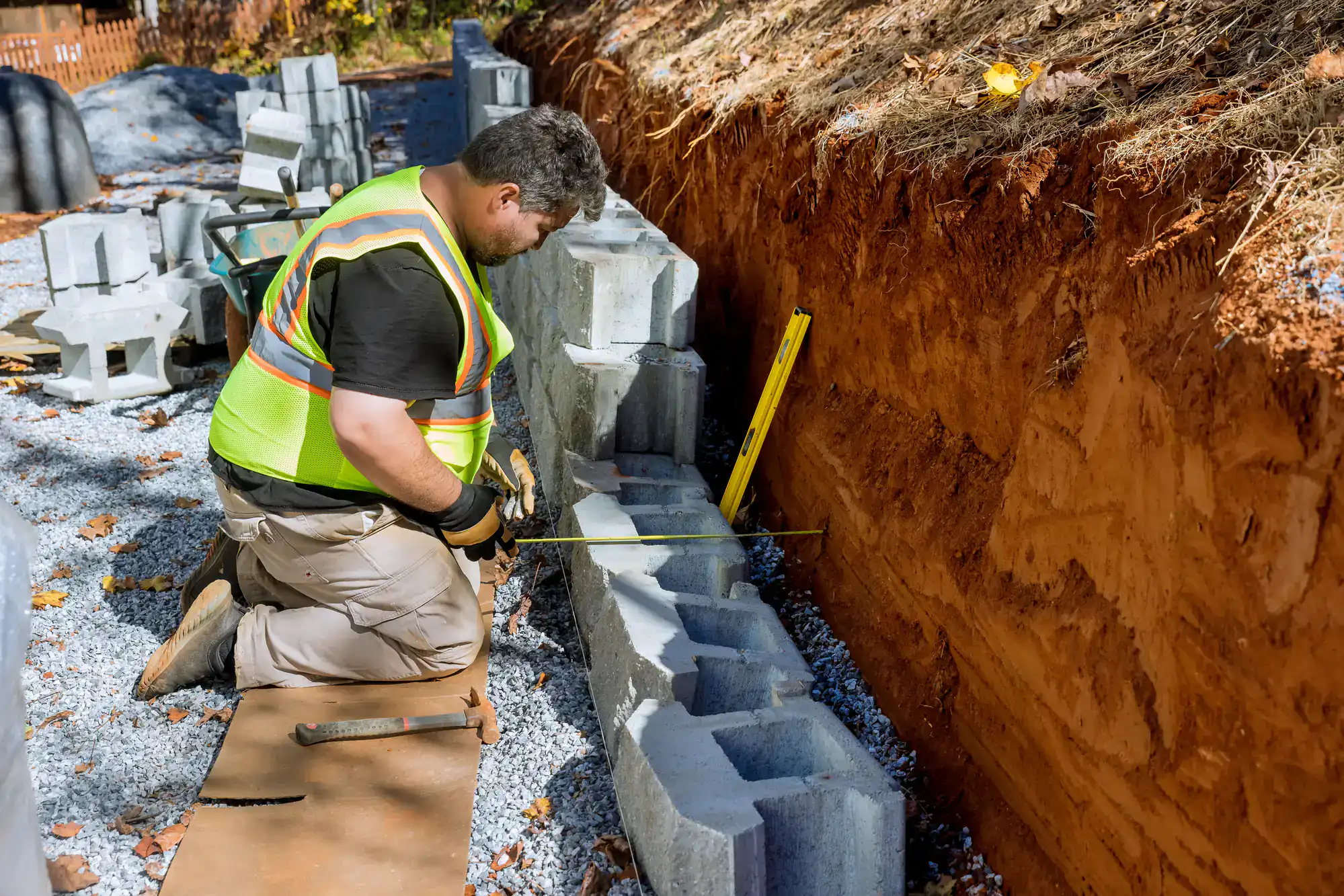
A construction worker in a safety vest kneels on gravel, measuring concrete blocks as he builds a retaining wall beside an exposed dirt slope. Tools and blocks are scattered around the worksite.

Retaining Wall Installation Process Blue Point

Built Right From Foundation Up
Every retaining wall starts with proper excavation. We dig 8-10 inches deep, going below the frost line to prevent shifting. This matters more in Blue Point because sandy soil behaves differently than clay or rocky ground. Next comes base preparation with compacted gravel layers. We install drainage systems behind the wall – not just basic backfill, but engineered solutions that handle water before it becomes pressure against your wall. The wall itself gets built with proper materials and techniques. Each course is level and properly secured. We backfill with drainage stone, install filter fabric, and ensure water has multiple ways to exit safely. You end up with a wall that works with Blue Point’s conditions instead of fighting them.
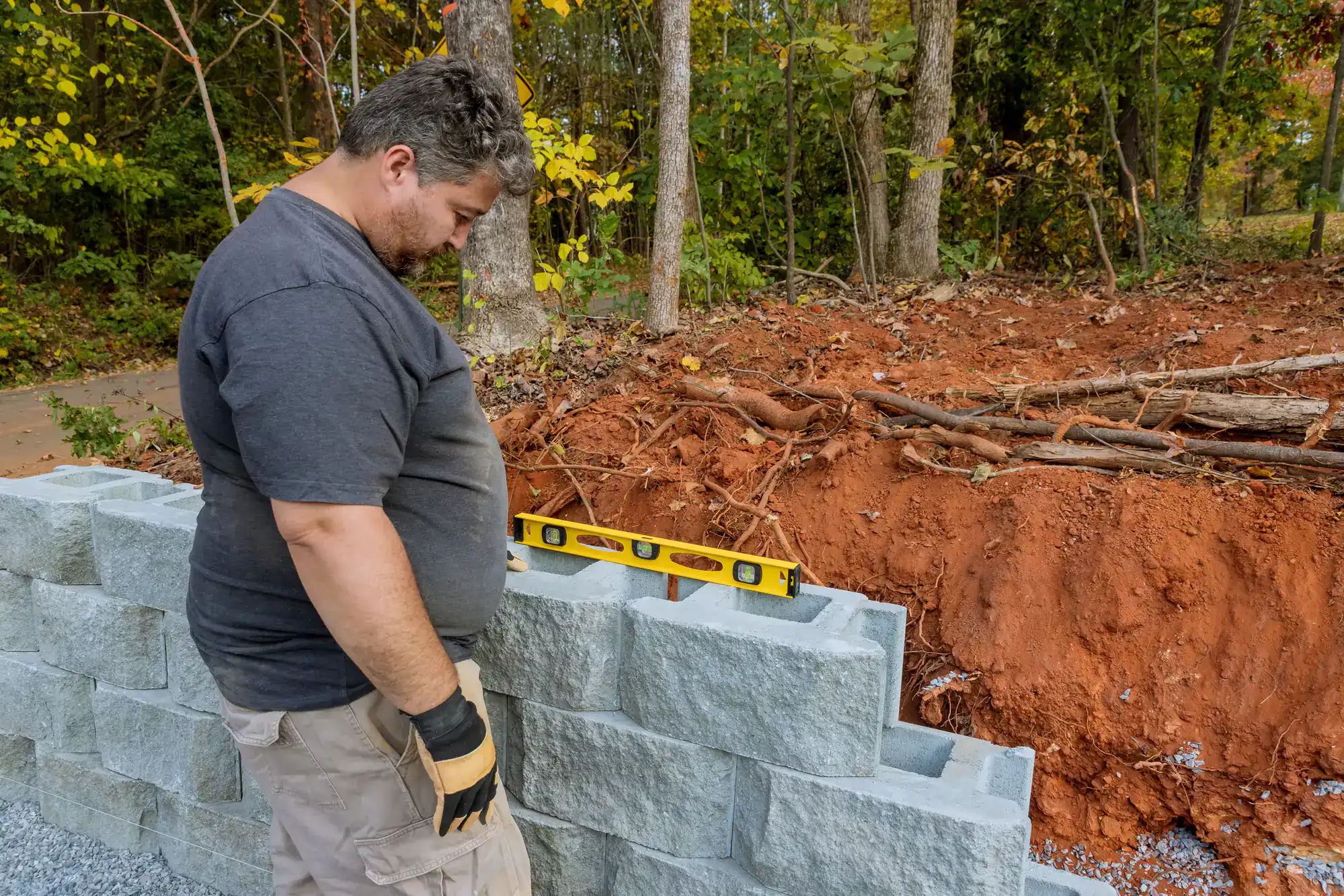
A man wearing gloves checks the level of a gray stone retaining wall with a yellow spirit level, next to a dirt embankment and forested area.

Ready to get started?

Explore More Services

About Stone Escapes Masonry & Outdoor Design

Get a Free Consultation

Blue Point Retaining Wall Specialists

What You Get With Professional Installation
Our retaining wall installation includes everything needed for Long Island conditions. Foundation excavation goes 30-36 inches deep to reach below the frost line. Base preparation uses compacted stone layers for stability in sandy soil. Drainage systems include perforated pipes, gravel backfill, and filter fabric to prevent water buildup. We use materials certified for coastal conditions – stone, concrete blocks, or interlocking systems that handle salt air and temperature changes. Blue Point’s location near the water means dealing with higher moisture levels than inland areas. Our installations account for this with proper waterproofing and drainage that prevent the hydrostatic pressure that causes most wall failures. Each project includes direct owner oversight and communication throughout the process.
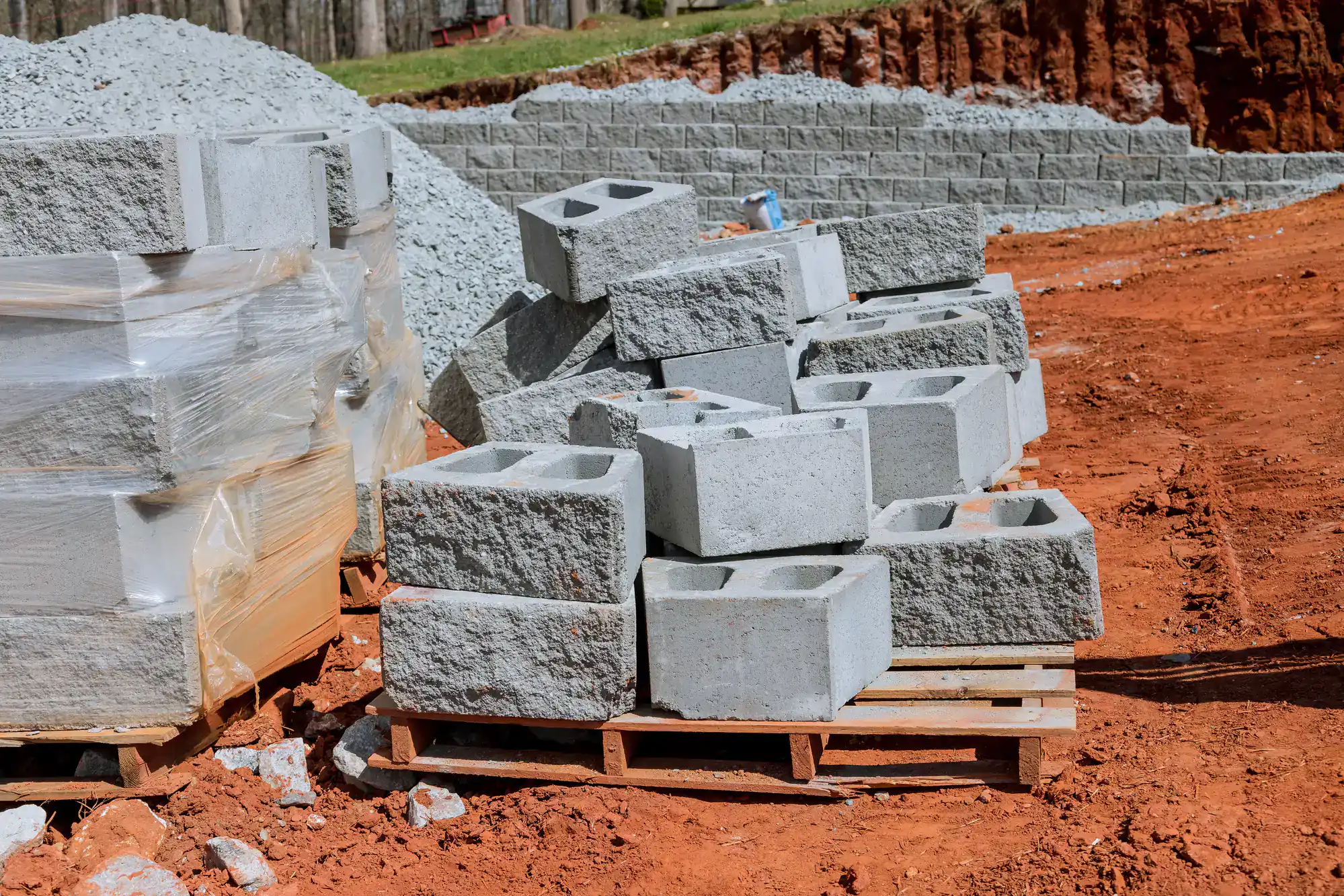
A stack of concrete cinder blocks is arranged on wooden pallets at a construction site with red soil and gravel. Wrapped blocks and a partially built stone retaining wall are visible in the background.

How deep should retaining wall foundations be in Blue Point NY?

Retaining wall foundations in Blue Point need to go 30-36 inches deep to reach below the frost line. This prevents the freeze-thaw cycles common in our area from shifting the wall. Sandy soil typical in Blue Point drains well but can shift more easily than other soil types. The deeper foundation provides the stability needed for long-term performance. We excavate to proper depth and install a compacted gravel base that works with your soil conditions. Shallow foundations are one of the main reasons retaining walls fail in our area. The extra excavation costs less than rebuilding a failed wall later.
Proper drainage prevents the water pressure that causes most retaining wall failures. We install perforated drainage pipes at the base of the wall, surrounded by gravel and wrapped in filter fabric. Behind the wall, we backfill with at least 12 inches of drainage stone instead of native soil. This allows water to flow down to the drainage pipe instead of building up pressure against the wall. The system includes outlets that carry water away from the structure. Blue Point’s sandy soil actually helps with drainage, but you still need engineered systems to handle heavy rains and coastal moisture. Without proper drainage, even the best-built wall will eventually fail from water pressure.
Retaining wall costs in Blue Point typically range from $25-50 per square foot depending on materials and site conditions. Interlocking block systems are often the most cost-effective for residential projects. The final price depends on wall height, drainage requirements, and site access. Walls over 4 feet require engineering, which adds to the cost. Sandy soil conditions in Blue Point sometimes require deeper excavation or specialized base preparation. We provide detailed estimates that break down material, labor, and site preparation costs. This helps you understand exactly what you’re paying for and avoid surprise charges later.

Interlocking concrete blocks perform well in Blue Point’s coastal conditions. They handle freeze-thaw cycles and resist salt air better than some alternatives. Natural stone also works well but requires more specialized installation. We avoid materials that don’t handle moisture well, like certain types of timber. The coastal environment means dealing with salt air, higher humidity, and temperature swings that can damage inappropriate materials. Manufacturer certifications matter too. We use Cambridge, Techo-Bloc, and Unilock products because they’re engineered for our climate conditions and come with proper warranties.
Walls over 4 feet typically require permits in Blue Point. The exact requirements can vary depending on your property’s location and the wall’s purpose. We help navigate the permit process as part of our service. Even shorter walls may need permits if they’re near property lines or affect drainage patterns. Suffolk County has specific requirements for retaining walls, especially in areas with environmental considerations. We handle permit applications and ensure installations meet local building codes. This protects you from potential issues when selling your property or dealing with insurance claims.
Well-built retaining walls in Blue Point can last 20-50 years with minimal maintenance. The key is proper installation that accounts for our specific soil and climate conditions. Walls fail early when contractors skip proper drainage, use inadequate foundations, or choose materials that don’t handle coastal conditions. Our installations include all the elements needed for long-term performance in Blue Point’s environment. Regular inspection helps catch small issues before they become major problems. We recommend checking for any settling, cracks, or drainage issues annually, especially after severe weather.