Retaining Wall Contractor in Baywood

Walls That Actually Hold Up

Built for Long Island’s sandy soil and coastal conditions with proper drainage systems that prevent the costly failures you see elsewhere.
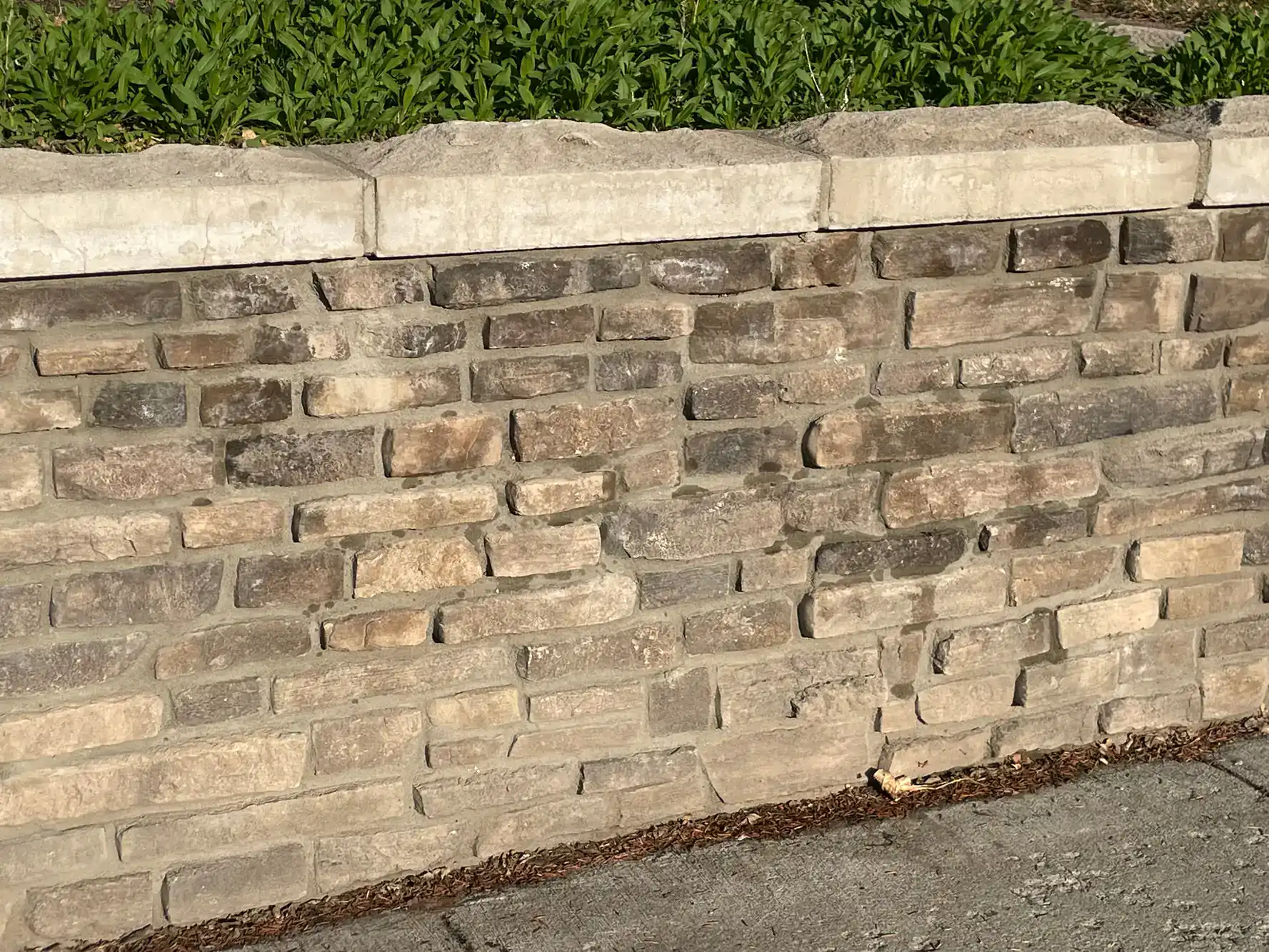
A stone retaining wall made of rectangular, tan and brown bricks supports a raised bed with green plants. Sunlight casts shadows on the textured wall and gray sidewalk below.

Hear from Our Customers

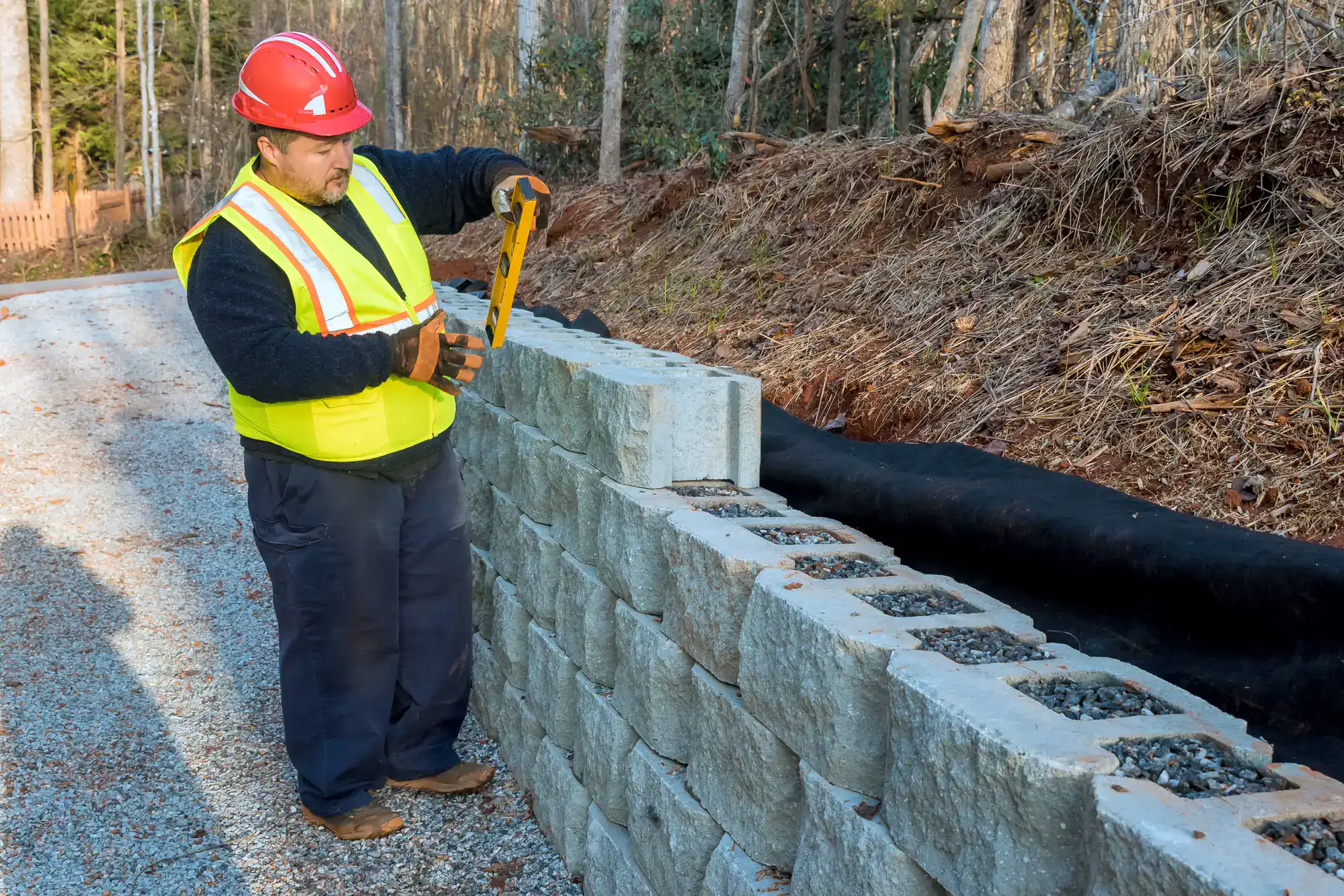
A construction worker in a yellow safety vest and red helmet uses a level to check concrete blocks while building a retaining wall next to a gravel road and a slope with trees.

Retaining Wall Installation Baywood

Your Property Protected and Functional
You’re not dealing with erosion anymore. No more watching your landscaping wash away after every storm, no more unusable sloped areas that serve no purpose. Your retaining wall creates level, usable space where there was once just a problematic slope. You can finally use that area for a patio, garden, or simply enjoy a yard that doesn’t require constant maintenance and repair. The peace of mind matters too. You know your investment is protected by proper drainage and foundation work that addresses Long Island’s specific challenges—sandy soil, freeze-thaw cycles, and coastal moisture that destroy poorly built walls within a few years.

Stone Wall Installer Baywood

We Know Long Island Conditions
Stone Escapes has been handling retaining walls across Suffolk County for over 15 years. We’re a family-owned company that understands what works here and what doesn’t. Iain Traynor, our owner-operator, brings carpentry and union masonry experience to every project. He’s on-site for estimates and planning because the details matter when you’re dealing with Long Island’s unique soil conditions. We hold certifications from Cambridge, Techo-Bloc, Unilock, and other major manufacturers. More importantly, we’ve learned through experience how to build walls that last in Baywood’s coastal environment.
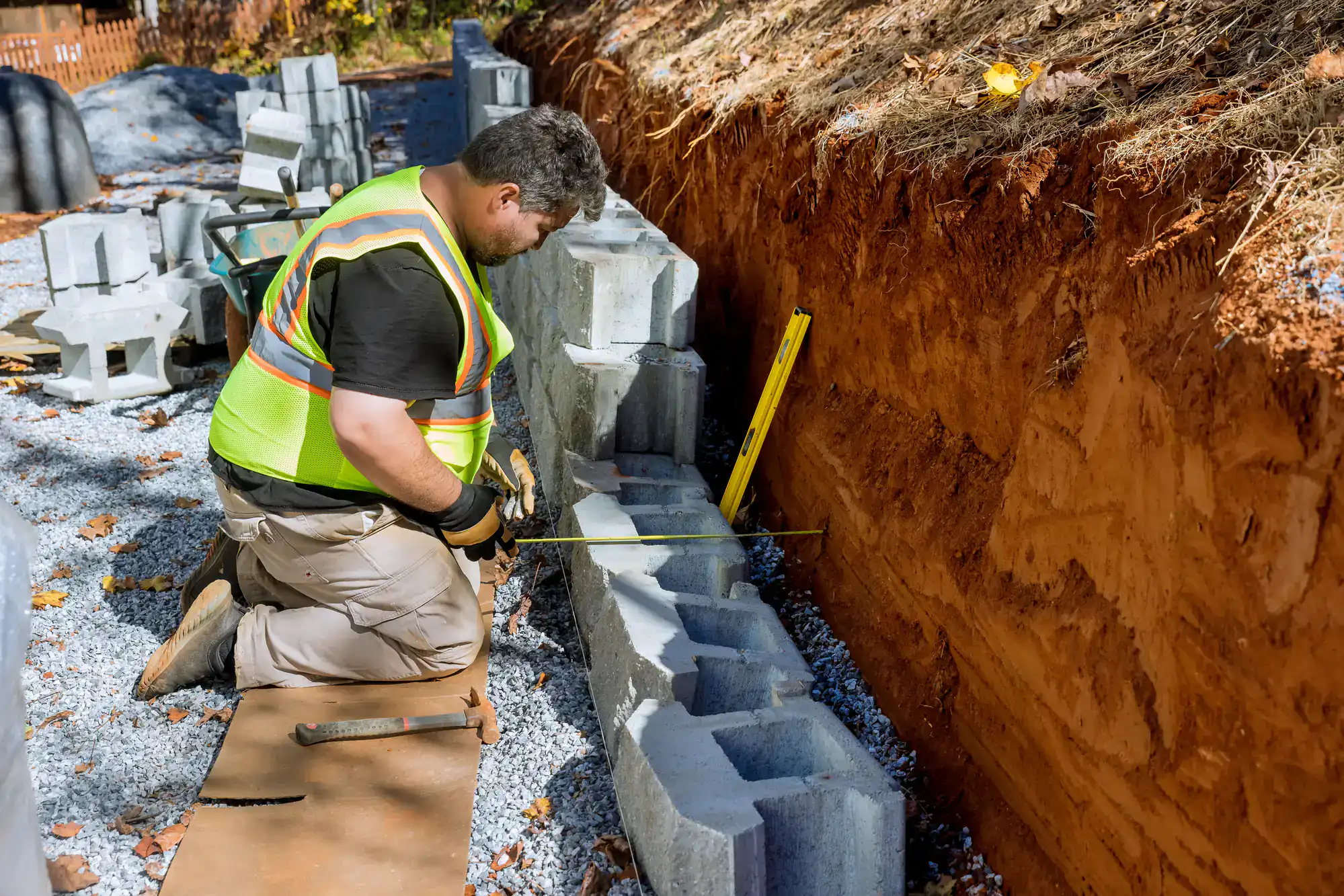
A construction worker in a safety vest kneels on gravel, measuring concrete blocks as he builds a retaining wall beside an exposed dirt slope. Tools and blocks are scattered around the worksite.

Retaining Wall Builder Baywood

The Process That Prevents Problems
We start with proper excavation—8 to 10 inches minimum, going below the frost line that’s crucial for Long Island installations. Most wall failures happen because contractors skip this step or don’t go deep enough. Next comes the foundation preparation with compacted gravel base and proper drainage planning. We install drainage systems behind the wall, not as an afterthought, because hydrostatic pressure is what destroys retaining walls here. The wall construction uses manufacturer specifications with each course properly aligned and secured. We backfill with appropriate materials and install edge restraints to prevent shifting. Every step addresses the sandy soil and moisture conditions that make Long Island different from inland areas.
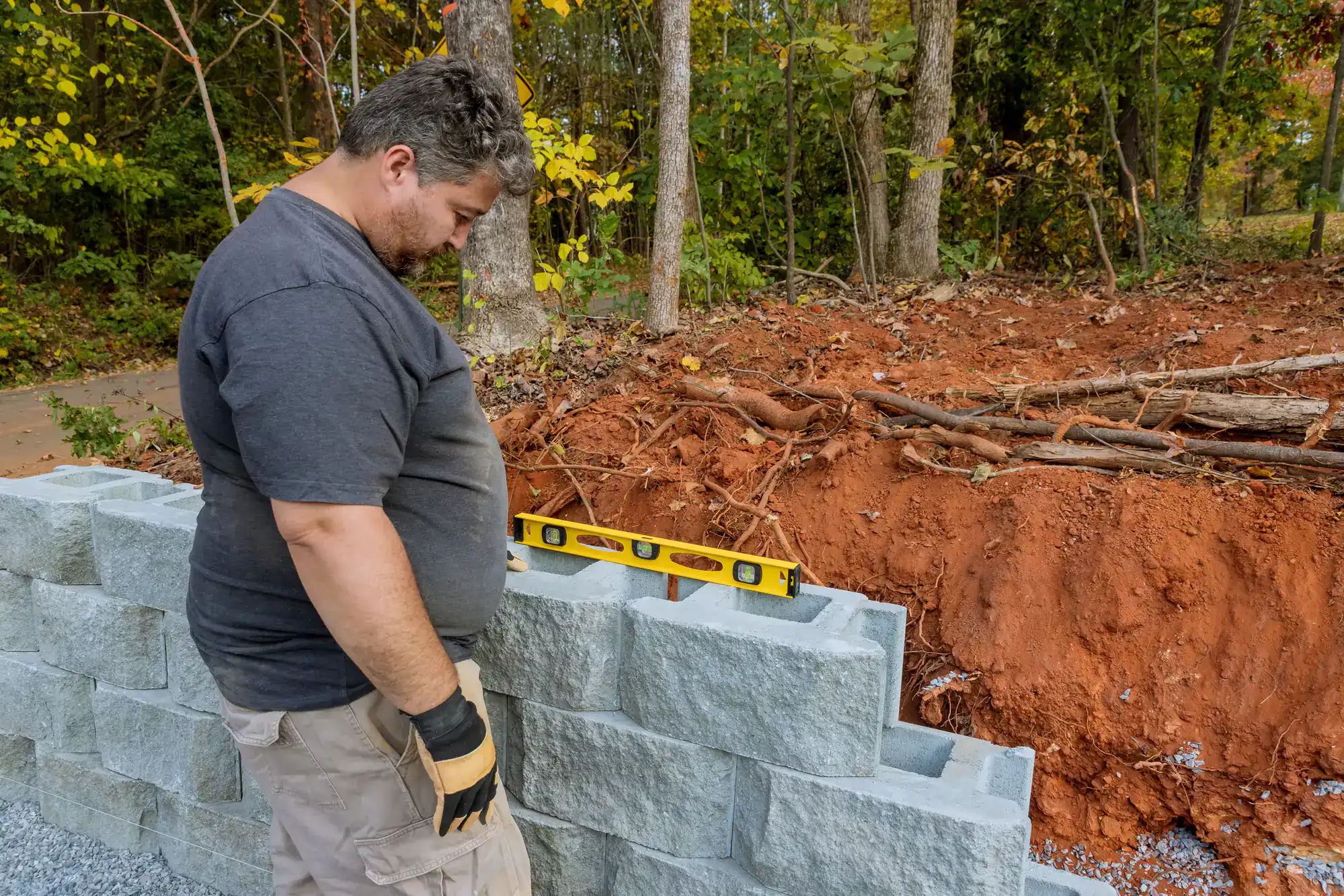
A man wearing gloves checks the level of a gray stone retaining wall with a yellow spirit level, next to a dirt embankment and forested area.

Ready to get started?

Explore More Services

About Stone Escapes Masonry & Outdoor Design

Get a Free Consultation

Retaining Wall Specialist Baywood

What Your Project Includes
Your retaining wall installation includes proper excavation below frost line, compacted stone base preparation, and integrated drainage systems designed for Long Island’s high water table and sandy soil conditions. We use materials certified for coastal environments—concrete blocks, natural stone, or segmental systems that handle freeze-thaw cycles and salt air exposure. Each installation includes backfill with drainage rock, filter fabric, and exit spouts at correct heights. In Baywood specifically, we account for the area’s proximity to the coast and the soil composition that requires deeper foundations than inland properties. The drainage planning considers both seasonal water table changes and storm water management that’s essential for Suffolk County properties.
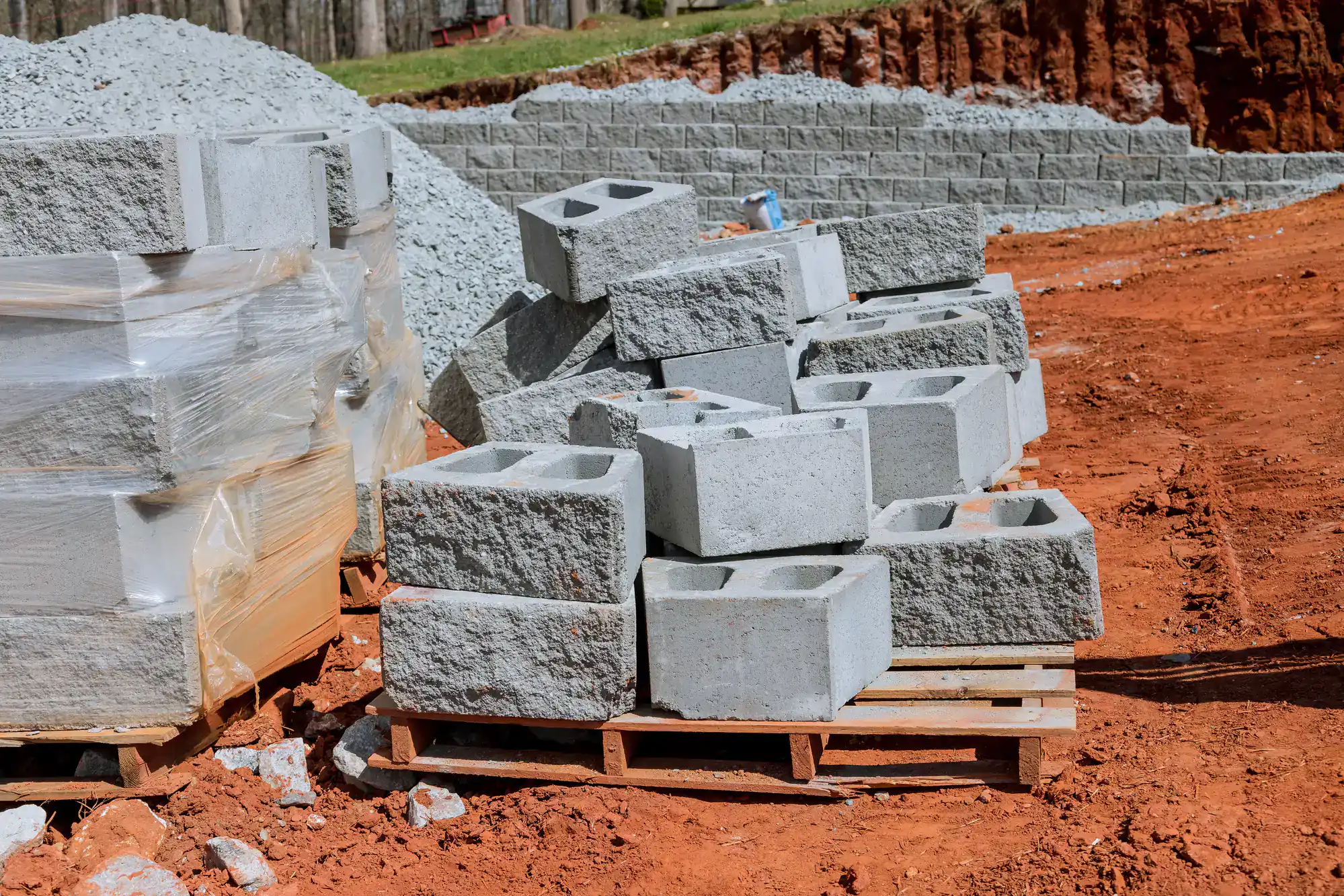
A stack of concrete cinder blocks is arranged on wooden pallets at a construction site with red soil and gravel. Wrapped blocks and a partially built stone retaining wall are visible in the background.

How deep does a retaining wall foundation need to be in Baywood?

Long Island properties require foundations 30-36 inches deep to reach below the frost line. In Baywood’s sandy soil conditions, we typically excavate 8-10 inches minimum with compacted stone base preparation. The depth depends on wall height and soil conditions, but going below the frost line is non-negotiable here. Shallow foundations lead to frost heave during winter, causing cracks and wall failure. We’ve seen too many walls built by contractors who don’t understand local requirements fail within a few seasons because they didn’t excavate properly.
Proper drainage includes perforated pipes behind the wall, drainage rock backfill, and filter fabric to prevent soil infiltration. We install exit spouts at correct heights and ensure water has a clear path away from the foundation. Long Island’s high water table and sandy soil create unique drainage challenges. Without proper systems, hydrostatic pressure builds up behind walls, causing bulging, tilting, or complete failure. We design drainage for both normal conditions and storm events that are common in coastal Suffolk County. The key is installing drainage during construction, not trying to add it later when problems develop.
Professional installation typically costs $25-45 per square foot for segmental block systems, with total project costs depending on height, length, site access, and material selection. Natural stone and complex designs increase costs. The investment includes proper excavation, foundation preparation, drainage systems, and materials rated for Long Island’s coastal conditions. While initial costs may seem significant, proper installation prevents the expensive repairs and rebuilds we see with cheaper installations. We provide detailed estimates that break down materials, labor, and site preparation so you understand exactly what you’re getting for your investment.

Segmental concrete blocks, natural stone, and interlocking systems perform well in Long Island’s freeze-thaw cycles and salt air exposure. We avoid materials like untreated wood that deteriorate quickly in coastal moisture. The material choice depends on wall height, soil pressure, and aesthetic preferences. Segmental blocks offer flexibility for sandy soil movement while maintaining structural integrity. Natural stone provides longevity and classic appearance but requires skilled installation. We use manufacturer-certified materials with proven performance in coastal environments. The right material selection, combined with proper installation techniques, ensures your wall handles Long Island’s specific environmental challenges.
Quality retaining walls with proper drainage and foundation work typically last 50-100 years in Long Island conditions. The key factors are correct installation depth, adequate drainage, and materials rated for coastal exposure. Walls that fail early usually have drainage problems or inadequate foundations. We’ve repaired walls that were only 5-10 years old because the original contractor didn’t account for local soil conditions or skipped proper drainage installation. Regular inspection helps catch small issues before they become major problems, but properly built walls require minimal maintenance beyond occasional cleaning and checking drainage outlets.
Most municipalities require permits for walls over 3-4 feet tall, with costs ranging from $50-450 depending on wall size and location. Walls over 4 feet typically need structural engineering review. We handle permit applications and ensure compliance with local building codes specific to Suffolk County. The permit process includes plan review and inspections to verify proper installation techniques and safety standards. While permits add time and cost to projects, they ensure your wall meets safety requirements and won’t create issues when you sell your property. Unpermitted walls can cause problems during home sales and insurance claims.