Paver Patio in West Bay Shore, NY

Transform Your Backyard Into Outdoor Paradise

Professional paver patio installation designed specifically for West Bay Shore’s sandy soil and coastal conditions.
Worker using a yellow plate compactor on soil next to newly laid gray stone tiles. The setup shows the process of flooring with tiles on one side and compacted earth on the other. Worker visible from the waist down.

Hear from Our Customers

A person wearing yellow gloves is placing a gray paver on a partially completed paved area. Nearby are additional pavers, a black and yellow rubber mallet, and an orange tape measure. Sand is visible next to the paved section.

Paver Patio Installation West Bay Shore

Your Property Value Jumps 80%
You’re not just getting a patio. You’re making one of the smartest investments you can make in your West Bay Shore, NY home. Paver patios deliver an 80% return on investment – significantly higher than concrete alternatives that only return 60-70%. That’s real money back in your pocket when you decide to sell. But the benefits start immediately. Your new outdoor space becomes the heart of family gatherings, weekend barbecues, and quiet morning coffee moments. No more avoiding your backyard because it’s unusable or unattractive. Instead, you get a seamless extension of your indoor living space that works year-round in Long Island’s changing seasons.

Paver Contractor West Bay Shore NY

Long Island Soil Experts Since Day One
We understand something most contractors miss: West Bay Shore’s sandy soil isn’t like everywhere else. It requires specific techniques that prevent the sinking, shifting, and drainage problems that plague so many patio installations. Owner Iain Traynor brings years of union masonry experience and remains hands-on with every project. He personally handles estimates, planning, and execution – no sales reps or subcontractors who disappear after signing your contract. We hold certifications from Cambridge, Techo-Bloc, Unilock, Nicolock, Eldorado, and Boral. More importantly, we’re licensed throughout Suffolk and Nassau Counties, including your specific area. That means we know local soil conditions, drainage requirements, and building codes that affect your project’s success.

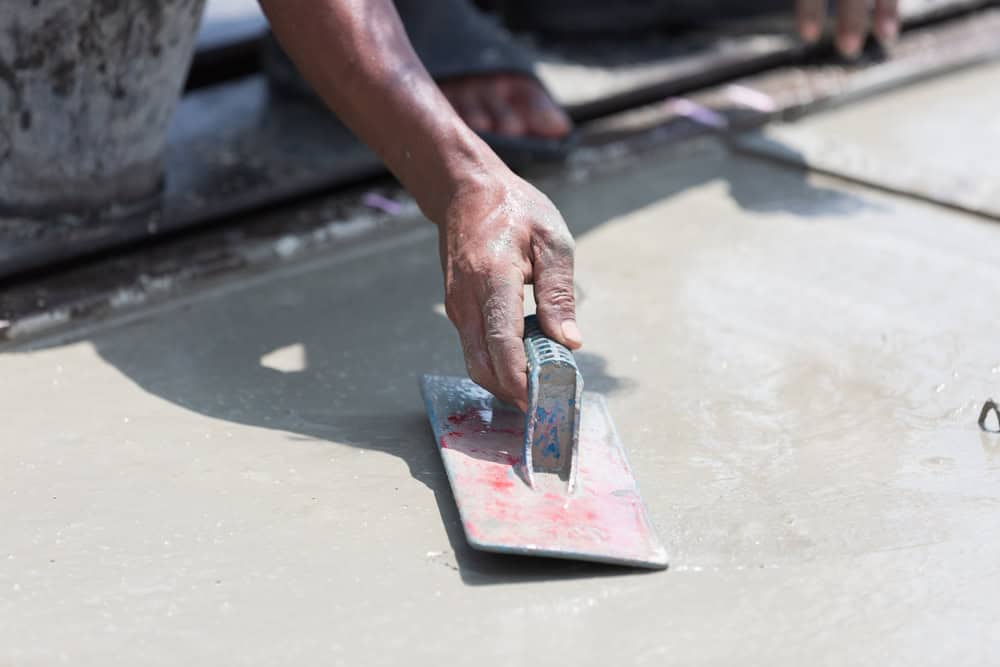
A person smoothing wet cement with a trowel. Their hand is steady as they work on the surface. The setting appears to be outdoors on a construction site.

Backyard Paver Installer West Bay Shore

The Right Way From Day One
Most paver failures happen because contractors skip the foundation work. We do the opposite. Every project starts with proper excavation – typically 8 to 10 inches deep, but sometimes more depending on what we find. If there’s old fill dirt, poor soil, or drainage issues, we keep digging until we hit solid ground. This isn’t about cutting corners or rushing to finish. Next comes the base layering system designed specifically for Long Island conditions. This includes proper drainage planning that accounts for sandy soil, coastal moisture, and freeze-thaw cycles. We install edge restraints that actually hold up over time, preventing the shifting that ruins so many DIY and budget installations. Finally, the pavers go down using techniques that ensure a strong, stable, and attractive finish. Each piece is set to precise specifications, with proper joint spacing and polymeric sand application that prevents weeds and maintains structural integrity.
A worker in a gray shirt and cap kneels on a partially paved surface, carefully placing a brick into an arrangement. A trowel and a leveling tool lie on the sand beside him, and a rubber mallet is nearby.

Ready to get started?

Explore More Services

About Stone Escapes Masonry & Outdoor Design

Get a Free Consultation

Interlocking Paver Installation West Bay Shore

Built for West Bay Shore Weather
Your paver patio needs to handle everything Long Island throws at it. Salt air from the nearby coast. Freeze-thaw cycles that crack inferior installations. Heavy summer rains that expose poor drainage planning. We design every patio with these specific challenges in mind. The base preparation goes deeper than standard because West Bay Shore’s sandy soil requires it. Drainage systems are planned from the beginning, not added as an afterthought when problems develop. The paver selection process considers both aesthetics and performance. Cambridge, Techo-Bloc, and Unilock pavers aren’t just beautiful – they’re engineered to withstand coastal conditions without fading, cracking, or shifting. The interlocking design distributes weight evenly, preventing the sunken spots that plague concrete slabs. Most importantly, the installation includes proper edge restraint systems. In sandy soil conditions, this isn’t optional. Without it, your pavers will gradually migrate outward, creating gaps and an unstable surface that becomes dangerous and expensive to repair.
A pattern of interlocking gray concrete pavers, neatly arranged. Some pavers are stacked in piles of various heights, creating a visual texture. The blocks vary in size and shape, forming a symmetrical and geometric design.

How much does a paver patio cost in West Bay Shore, NY?

Most West Bay Shore homeowners invest between $30-45 per square foot for professional paver patio installation. This includes materials, labor, and proper base preparation designed for Long Island’s specific soil conditions. The total cost depends on several factors: patio size, paver material choice, site accessibility, and any drainage solutions needed. A typical 300-square-foot patio ranges from $9,000 to $13,500. While this represents a significant investment, paver patios return 80% of their cost in added home value – substantially higher than concrete alternatives. We provide detailed estimates that break down all costs upfront. No surprises, no hidden fees, and no pressure to decide immediately. The investment makes sense when you consider you’re getting a permanent outdoor living space that enhances your property value while providing decades of enjoyment.
The primary culprit is inadequate base preparation combined with poor drainage planning. Long Island’s sandy soil creates unique challenges that many contractors either don’t understand or choose to ignore to save time and money. Sandy soil shifts more than clay or loam, especially when water infiltrates the base. Without proper excavation depth – typically 8-10 inches minimum – and appropriate base materials, pavers will sink and shift within a few seasons. Many contractors only excavate 4-6 inches and use inferior base materials to cut costs. Drainage problems compound these issues. Water that can’t escape properly saturates the base material, leading to erosion and instability. We address both problems from the start: deeper excavation, proper base layering, and comprehensive drainage planning that accounts for West Bay Shore’s specific soil and weather conditions.
Beyond aesthetics, the differences come down to performance, repairability, and long-term costs. Pavers offer significant advantages in all three areas, especially in Long Island’s climate conditions. Concrete slabs crack. It’s not a matter of if, but when. Freeze-thaw cycles, settling, and tree roots all cause cracking that’s expensive and often impossible to repair invisibly. When concrete fails, you typically need to replace the entire slab. Pavers, on the other hand, can be individually replaced if damaged. From a financial perspective, paver patios return 80% of their installation cost in added home value, while concrete returns only 60-70%. Pavers also don’t increase your property taxes like permanent concrete structures do. The modular nature of pavers means they can expand and contract with temperature changes without cracking, making them ideal for Long Island’s seasonal temperature swings.
Most paver patio installations in West Bay Shore take 3-5 days for proper completion, depending on size, complexity, and site conditions. This timeline assumes good weather and no unexpected drainage or soil issues. Day one typically involves excavation and site preparation. This is the most critical phase and can’t be rushed. If poor soil conditions are discovered, additional excavation may be needed. Days two and three focus on base preparation, compaction, and drainage installation. The final days involve paver installation, cutting, and finishing work. Weather plays a significant role in timing. Rain delays are common and necessary – proper base preparation can’t be completed in wet conditions. We schedule projects with weather contingencies built in, so you’re not left with an unusable backyard for extended periods. The goal is doing it right, not doing it fast.
Permit requirements in West Bay Shore depend on the patio’s size, location relative to property lines, and whether drainage modifications are involved. Most residential paver patios don’t require permits, but specific circumstances can trigger requirements. Patios within 10 feet of property lines often need permits. Any drainage work that connects to municipal systems requires permits. Large patios over certain square footage thresholds may also need approval. The good news is that properly installed paver patios typically don’t require the same permits as permanent concrete structures. We handle permit research and applications when needed. As a licensed contractor familiar with local requirements, we know what triggers permit needs and can navigate the process efficiently. This removes the guesswork and potential delays that come from permit surprises discovered mid-project.
Properly installed paver patios require minimal maintenance, but Long Island’s coastal environment does create specific care requirements. The key is staying ahead of small issues before they become expensive problems. Annual maintenance includes cleaning, joint sand replenishment, and sealer application every 2-3 years. The sealer protects against salt air, UV damage, and staining while preventing sand loss from joints. Polymeric sand in the joints should be inspected annually and topped off as needed to prevent weed growth and maintain stability. Seasonal maintenance involves removing leaves and debris that can stain pavers and clearing snow carefully to avoid salt damage. Power washing once or twice per year keeps pavers looking fresh, but proper technique is important to avoid damaging joint sand. We provide maintenance guidelines specific to your paver type and Long Island conditions, helping you protect your investment long-term.