Paver Patio in Middle Island, NY

Stop Settling for a Boring Backyard

Get the outdoor space you actually want to use with a paver patio designed for Middle Island’s unique conditions and built to last decades.
Worker using a yellow plate compactor on soil next to newly laid gray stone tiles. The setup shows the process of flooring with tiles on one side and compacted earth on the other. Worker visible from the waist down.

Hear from Our Customers

A person wearing yellow gloves is placing a gray paver on a partially completed paved area. Nearby are additional pavers, a black and yellow rubber mallet, and an orange tape measure. Sand is visible next to the paved section.

Middle Island Paver Patio Installation

Finally, Your Backyard Becomes the Favorite Room
You know that neighbor whose backyard everyone gravitates toward? The one where kids play longer, adults linger after dinner, and weekend gatherings just happen naturally? That’s what a properly designed paver patio does for your Middle Island home. No more staring at unused grass or concrete slabs that crack every winter. No more canceling outdoor plans because your “patio” is a puddle again. A real paver patio gives you dependable outdoor space that works through Long Island’s weather extremes. Your home value jumps. Your insurance company might even give you a break for proper drainage improvements. But mostly, you get a space that makes you want to be outside instead of stuck indoors scrolling your phone.

Middle Island Paver Contractors

We Actually Show Up and Stay Involved
Our owner Iain Traynor learned masonry the hard way – working union jobs in Manhattan before bringing that expertise back to Long Island. He’s the guy who estimates your project, shows up during construction, and makes sure it’s done right. We’re licensed in Suffolk County, Nassau County, Southampton, and East Hampton because we’ve been dealing with Long Island’s sandy soil, coastal moisture, and freeze-thaw cycles for years. Middle Island’s ground conditions aren’t a mystery to us. You won’t get handed off to random crews or deal with disappearing contractors after you sign. We’re a family business that depends on referrals from satisfied customers, not high-pressure sales tactics or the cheapest possible installation.

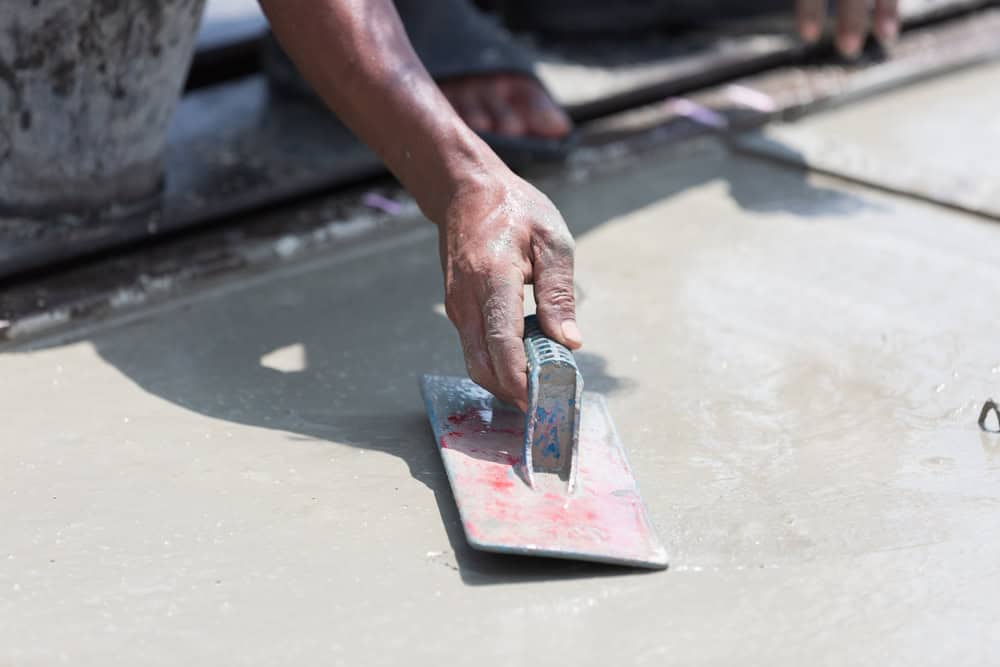
A person smoothing wet cement with a trowel. Their hand is steady as they work on the surface. The setting appears to be outdoors on a construction site.

Paver Installation Process Middle Island

How We Build Patios That Actually Last
Every project starts with proper excavation – usually 8-10 inches deep, sometimes more if we hit soft soil or construction debris. This step determines whether your patio stays level for decades or starts sinking within a few years. Base preparation comes next with the right stone materials, proper compaction, and drainage planning. We install edge restraints before laying pavers because that’s what prevents shifting and separation over time. These steps take longer but eliminate future problems. The pavers get set on leveled sand, properly spaced, and locked with polymeric sand in the joints. Everything slopes away from your house so water goes where it should instead of toward your foundation. Final compaction ensures the whole system works as one unit through weather changes.
A worker in a gray shirt and cap kneels on a partially paved surface, carefully placing a brick into an arrangement. A trowel and a leveling tool lie on the sand beside him, and a rubber mallet is nearby.

Ready to get started?

Explore More Services

About Stone Escapes Masonry & Outdoor Design

Get a Free Consultation

Paver Materials Middle Island NY

Materials That Handle Long Island Weather
We install Cambridge, Techo-Bloc, Unilock, Nicolock, and other premium manufacturers that make pavers tough enough for our climate. These aren’t the thin, cheap options you’ll find at big box stores that crack after one winter. Middle Island’s sandy soil and proximity to the coast create specific challenges. Salt air, ground movement, and drainage issues require materials and installation techniques that account for local conditions. We’ve learned what works here and what doesn’t. Permeable pavers perform especially well in Middle Island because they manage water runoff naturally in our sandy soil. They prevent surface puddles and reduce the drainage problems that plague many Long Island properties. Color and style options are extensive, but we recommend based on durability first.
A pattern of interlocking gray concrete pavers, neatly arranged. Some pavers are stacked in piles of various heights, creating a visual texture. The blocks vary in size and shape, forming a symmetrical and geometric design.

What does a paver patio cost in Middle Island, NY?

Most Middle Island homeowners invest between $30-45 per square foot for professional paver patio installation. Your final cost depends on patio size, material choices, and site preparation requirements. Simple rectangular designs with concrete pavers cost less than curved layouts with premium stone. Removing existing patios, correcting drainage issues, or dealing with difficult access adds to the price. We provide detailed estimates that break down all costs upfront. The investment makes sense when you consider how much value a quality patio adds to your home and how much you’ll actually use the space. Cheap installations that fail within a few years end up costing more than doing it right the first time.
Cambridge and Techo-Bloc pavers consistently perform well in Long Island’s freeze-thaw cycles without cracking or shifting. These manufacturers design their products specifically for northeastern climates and coastal conditions. Concrete pavers offer the best value for most homeowners – they’re durable, available in many styles, and cost significantly less than natural stone. Premium concrete pavers from quality manufacturers last decades with minimal maintenance. Natural stone costs more but provides unmatched appearance and longevity. Permeable pavers work especially well in Middle Island’s sandy soil because they prevent drainage problems while maintaining durability and style options.
Most Middle Island paver patio projects take 3-5 days to complete, depending on size and complexity. Weather delays are possible since we don’t work in heavy rain or frozen ground conditions. Excavation and base preparation typically take the longest because these steps can’t be rushed. Proper compaction requires time between layers, and we won’t compromise on foundation quality to meet arbitrary deadlines. We schedule projects in advance and communicate throughout the process so you know what to expect each day. If unexpected conditions arise – like hitting old concrete or dealing with drainage issues – we’ll explain the situation and adjust the timeline accordingly.
Some Middle Island paver projects need permits, particularly if you’re building close to property lines or installing drainage systems. Requirements vary based on patio size, location, and local regulations. We handle all permit applications and inspections as part of our service. We know what the local building department requires and ensure everything meets current codes. This protects your investment and prevents future compliance issues. Most basic patio installations don’t require permits, but it’s better to verify requirements upfront than deal with violations later. We’ll review your specific situation during the estimate and handle any necessary paperwork.
Proper drainage starts with correct excavation and grading. We slope the entire base away from your house and install drainage systems when site conditions require them. This prevents water from pooling on the surface or flowing toward your foundation. Middle Island’s sandy soil usually drains well naturally, but we still plan for heavy rainfall and seasonal water table changes. French drains, catch basins, or edge drainage may be necessary depending on your property’s existing conditions. Polymeric sand in the joints prevents water from washing out base materials over time. This keeps your patio stable and reduces long-term maintenance while preventing the weed growth that plagues poorly installed patios.
Properly installed paver patios require minimal maintenance. Annual pressure washing removes dirt and organic stains. Resealing every 3-5 years maintains color and prevents weed growth in the joints. You may need to top off joint sand occasionally as it settles or washes away during heavy storms. This normal maintenance takes a few hours once or twice yearly. Quality polymeric sand lasts much longer than regular sand. Individual damaged pavers can be replaced without redoing the entire patio – a major advantage over concrete slabs that crack and require complete replacement. This makes pavers a smart long-term investment for Middle Island homeowners.