Discover how outdoor fire pits transform Long Island backyards into year-round entertainment spaces, extending your outdoor season and creating lasting family memories.
Share:

Summary:
Long Island’s climate gives you about four solid months of perfect outdoor weather. But what about the other eight? That’s where outdoor fire pits change everything.
The coastal climate here means you’re dealing with moisture, salt air, and those unpredictable spring and fall temperatures. A properly installed fire pit lets you push your outdoor season from April straight through November. Instead of retreating indoors when the temperature dips, you’re still hosting friends on your patio in October.
Fire pits have become the new must-have feature for Long Island properties, and it’s not hard to see why. They create a natural gathering point that draws people together, whether you’re roasting marshmallows with the kids or having wine with neighbors on a crisp evening.

Here’s what most homeowners don’t realize: your outdoor space can be comfortable well into November with the right fire feature. Long Island’s fall weather is actually perfect for fire pit season—cool enough that the warmth feels amazing, but not so cold that you’re miserable.
Think about those perfect September evenings when it’s 65 degrees and there’s a slight breeze off the water. That’s prime fire pit weather. You can be outside in a light sweater, enjoying the warmth and ambiance while your neighbors are already closing up their outdoor furniture for the season.
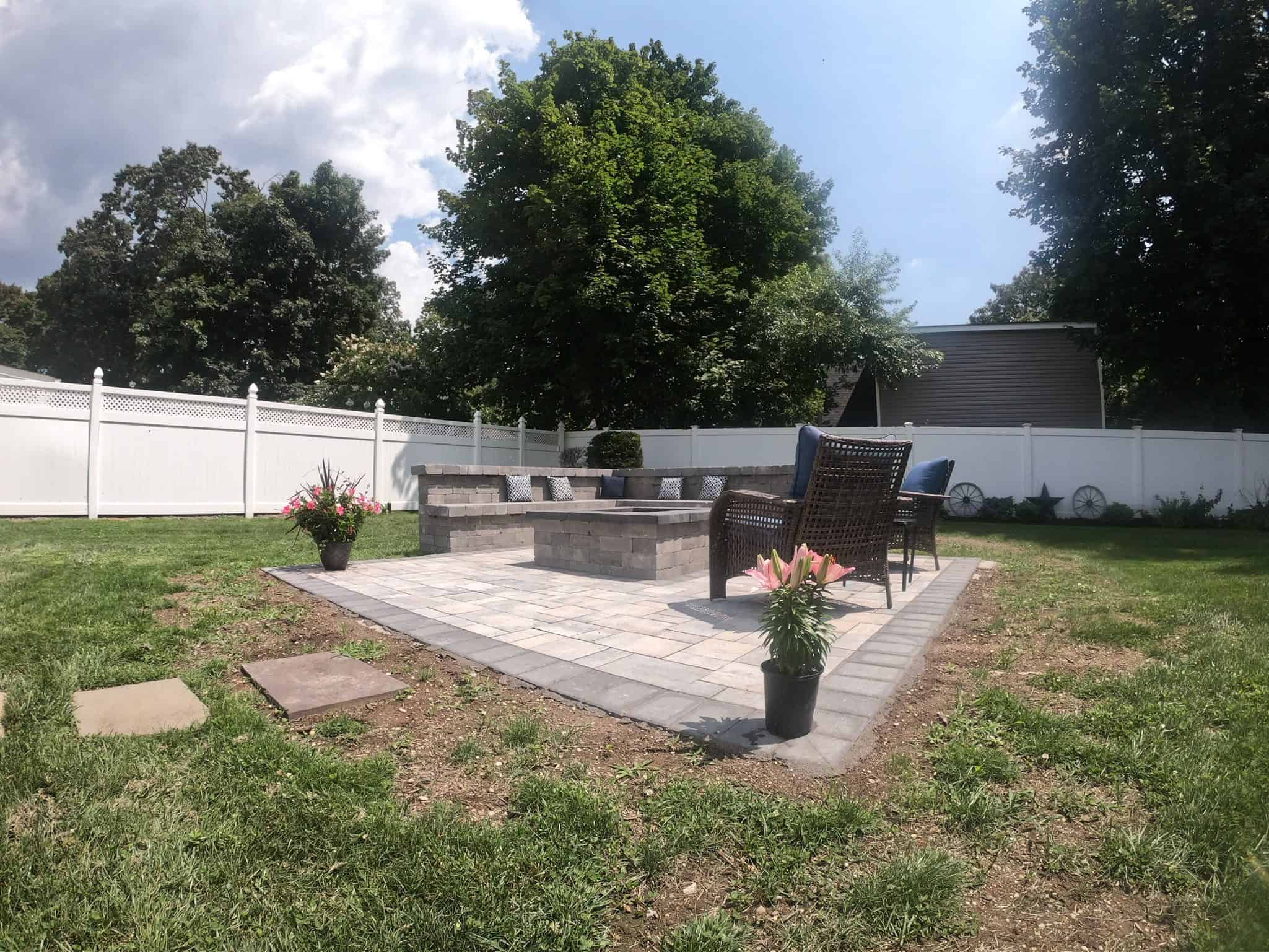
The key is choosing the right size and type of fire pit for your space. A larger fire pit throws more heat, which means you can comfortably entertain even when temperatures drop into the 50s. Gas fire pits give you instant warmth and easy control, while wood-burning options provide that authentic campfire experience.
But it’s not just about the temperature. Fire pits create atmosphere that no patio heater can match. The flickering flames, the crackling sounds, the way everyone naturally gathers around—it transforms your backyard into something special. You’re not just adding heat; you’re creating an experience.
Many Long Island homeowners find that their fire pit gets more use in the shoulder seasons than their pool does in summer. Spring evenings when the air is still cool but you’re eager to get outside. Fall nights when you want to squeeze every last bit of outdoor time before winter hits. These are the moments when your fire pit really shines.
Here’s what most homeowners don’t realize: your outdoor space can be comfortable well into November with the right fire feature. Long Island’s fall weather is actually perfect for fire pit season—cool enough that the warmth feels amazing, but not so cold that you’re miserable.
Think about those perfect September evenings when it’s 65 degrees and there’s a slight breeze off the water. That’s prime fire pit weather. You can be outside in a light sweater, enjoying the warmth and ambiance while your neighbors are already closing up their outdoor furniture for the season.
The key is choosing the right size and type of fire pit for your space. A larger fire pit throws more heat, which means you can comfortably entertain even when temperatures drop into the 50s. Gas fire pits give you instant warmth and easy control, while wood-burning options provide that authentic campfire experience.
But it’s not just about the temperature. Fire pits create atmosphere that no patio heater can match. The flickering flames, the crackling sounds, the way everyone naturally gathers around—it transforms your backyard into something special. You’re not just adding heat; you’re creating an experience.
Many Long Island homeowners find that their fire pit gets more use in the shoulder seasons than their pool does in summer. Spring evenings when the air is still cool but you’re eager to get outside. Fall nights when you want to squeeze every last bit of outdoor time before winter hits. These are the moments when your fire pit really shines.
Before you start planning your dream fire pit, you need to understand the rules. Long Island fire regulations can be confusing, and what’s legal in one town might not be in another.
The good news is that outdoor fire pits are generally allowed on Long Island, but there are specific requirements you need to follow. Distance from structures, proper materials, and size restrictions all come into play. Working with a licensed contractor who understands local codes isn’t just smart—it’s essential.
Safety goes beyond just following regulations. Proper installation, appropriate materials, and smart design choices all contribute to a fire pit that you can enjoy worry-free for years to come.
Long Island fire codes vary by municipality, but there are some common requirements you’ll encounter almost everywhere. Most areas require fire pits to be at least 25 feet from any structure, though some towns require even more distance.
The type of fire pit matters too. Portable fire pits have different rules than permanent installations. Gas fire pits often have fewer restrictions than wood-burning ones. And the materials you use—stone, brick, metal—can affect what’s allowed and what isn’t.
Here’s where it gets tricky: some towns require permits for permanent fire pit installations, while others don’t. Some have seasonal restrictions during high fire danger periods. Some allow recreational fires under certain conditions but prohibit them under others.
The key is getting this right from the start. A fire pit that doesn’t meet local codes isn’t just a safety risk—it can create problems when you try to sell your home or file an insurance claim. Working with a contractor who knows the local requirements in your specific town saves you headaches down the road.
Don’t forget about your homeowner’s insurance either. Some policies have specific requirements for fire features, and you want to make sure you’re covered before you start your first fire. A quick call to your agent can clarify what you need to know.
Long Island presents some unique challenges for fire pit installation that you won’t find in other parts of the country. The sandy soil, coastal moisture, and freeze-thaw cycles all affect how your fire pit should be built.
Sandy soil means you need proper foundation work to prevent settling and shifting over time. Coastal moisture means using materials that can handle salt air without deteriorating. And those winter freeze-thaw cycles can wreak havoc on improperly installed masonry.
This is where experience with Long Island conditions really matters. We understand these challenges and excavate deeper, use proper drainage materials, and choose construction methods that account for the local environment.
The base preparation is crucial. Most quality installations start with excavation 8-10 inches deep, followed by layers of crushed stone and proper compaction. Edge restraints prevent shifting, and drainage planning ensures water doesn’t pool around your fire pit.
Material selection matters too. Not all stone and brick perform the same way in coastal conditions. Some materials are more resistant to salt air, while others handle freeze-thaw cycles better. We guide you toward materials that look great and perform well in Long Island’s specific environment.
Proper installation also means thinking about the long term. How will you maintain your fire pit? How will it age? What happens if you need repairs? These considerations during installation save you time and money years down the road.
Your Long Island backyard has the potential to be so much more than a place you visit in July and August. With the right outdoor fire pit, you’re looking at a space that works from April through November, creating memories and bringing people together in ways you haven’t experienced yet.
The key is doing it right from the start. Proper installation that accounts for Long Island’s unique conditions, compliance with local regulations, and smart design choices that integrate with your existing outdoor space.
When you’re ready to transform your backyard into a year-round gathering place, we bring the experience and expertise to make it happen right the first time.
Article details:
Share:
Continue learning: